Home Blog Page 526

Despite Solar Innovations, Israel Lags Far Behind Europe and the US in Results

solar energy israelIsraeli solar energy ingenuity is involved in solar plants like this one in California, but not so much in Israel

Despite being a world leader in the innovation of renewable energy systems, including solar energy with companies like Arava Power, (launching next Sunday),  wind energy projects on the Golan Heights, and even ocean wave generated energy, Israel still lags behind most other countries in  actual implementation of its solar energy ideas. The irony of this issue, which never ceases to amaze many people, is that so many European countries are keen on obtaining at least 20% of their energy needs from both solar and wind energy.

In the case of solar energy, the number of sunny days, coupled with less solar radiation (especially northern European countries) would seem make these energy sources less attractive than in Mediterranean and Middle Eastern countries, where the sun shines more than 260 days a year and  more direct solar radiation is available.

5 Tips For Traveling Safely In Post-Revolution Egypt

4

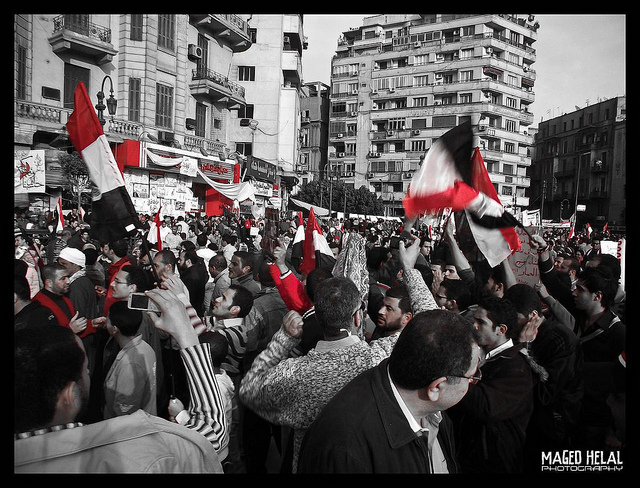
eco-tourism, egypt, cairo, travelThe revolution has been great for Egyptian sovereignty, but hard on the economy. Fearful tourists should know that traveling through the country can be safe (and fascinating!)

The cozy Felfela restaurant in downtown Cairo serves up delicious food with plenty of choices for both omnivores and vegetarians. Just one block from Tahrir Square, where hundreds of thousands of citizens assembled to reclaim their country, the restaurant offers weary travelers a welcome reprieve from the city din. But business is slow. On Saturday night I found this haven for foreigners virtually empty.

Since the revolution, tourism traffic has dropped precipitously, causing both citizens and the government to take drastic recovery measures. (One guy thinks he’s going to fight a lion!) Although security for locals is not as rigorous as it was when Egypt was a police state, foreigners who observe a few basic tips will find the country perfectly safe.

Killer Cucumbers Have Israelis Freaking Out

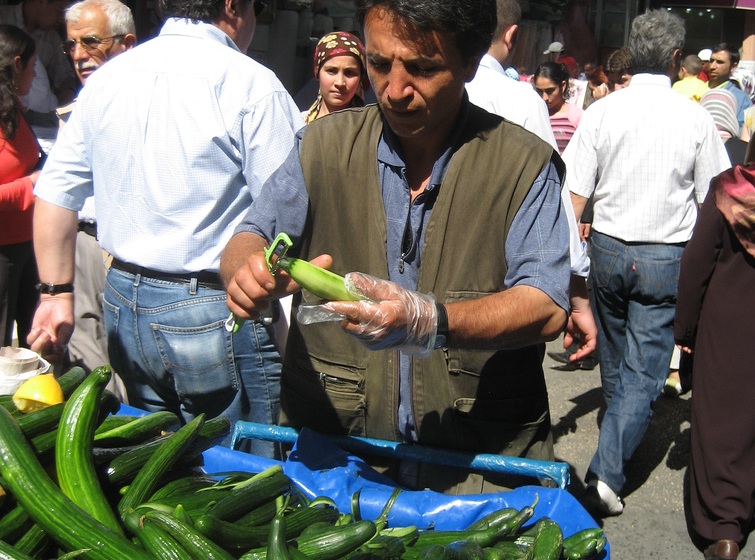
turkey cucumbersTelling Mediterraneans not to eat cucumbers is like taking baguettes away from Parisians.

At least 10 people have died, and one thousand more expected to be ill from eating tainted organic cucumbers and other fresh produce consumed in Germany. Contaminated with a rare and deadly form of E.coli, a bacteria, the organic cucumbers are causing widespread panic in Europe, as the exact origin of the cucumbers is still not known.

Gaddafi Could Use Water As A Weapon In Conflict

0

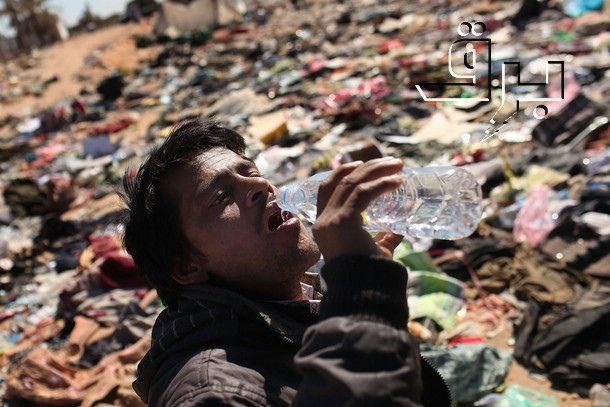
Libya’s government forces could use their control over enormous water reserves as a weapon in the current conflict between Gaddafi and rebels trying to overthrow his regime

The ‘Great Man-Made River’, a great civil water works project dubbed by Gaddafi as the 8th wonder of the world, was built to resolve Libya’s severe water scarcity problems. With many parts of the country receiving less than 100 millimeters of rainfall per year, the country is one of the driest in the world and many of its inhabitants now rely on the river and its water reserves for their existence.

Every day, the Great Man-Made River (GMMR) pumps around 5 million cubic metres of fresh water from underground aquifers in southern Libya to the country’s six million inhabitants in the north. Yet this reliance on the water from the GMMR could place inhabitants at risk, as the operating centre for their water is at the heart of the pro-Gaddaffi city of Tripoli.

Badly Injured Cheetah Found On Abu Dhabi Streets

3

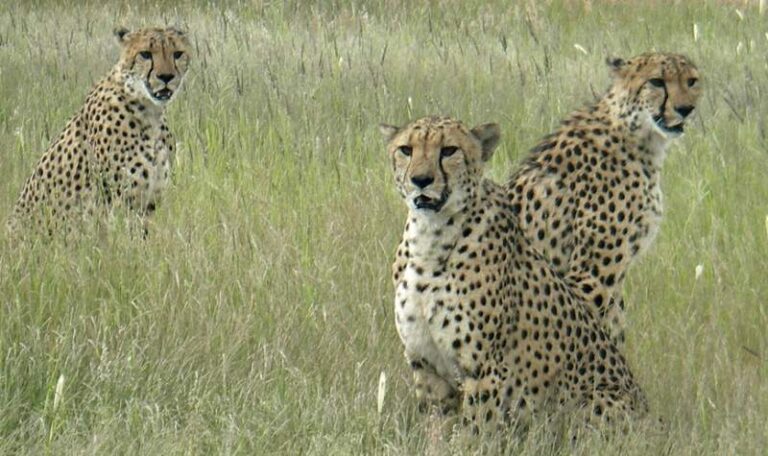
illegal wildlife trafficking, abu dhabi, cheetah, endangered species, wild animalsThe fastest animal on earth is found limping, badly injured, through the heavily-trafficked streets of Abu Dhabi in the UAE.

There are few sights more beautiful than a majestic cheetah in the wild. And few more upsetting than that same creature injured and limping through the streets of Abu Dhabi in the United Arab Emirates. Yet that is exactly the scene that greeted a few residents this morning.

We have covered way too many wild animal abuse cases this week: a lion cub was shot dead in Egypt, another Egyptian man plans to fight a grown African lion to boost tourism, and now this. But for each reported incident of illegal wildlife trafficking and abuse, there are probably dozens more that are hidden from public view. Read on to learn more.

Saudi Adds A Splash Of Green To Royal Weddings

0

green design, sustainable design, saudi arabia, royal family, wadi hanifa wetlands, aga khanGreen is the new gold: Saudi solicits sustainable designs for its Royal Wedding Hall.

Known worldwide for their obscene oil wealth, Saudi Arabia has invited international architects to submit sustainable designs for Riyadh’s new royal wedding celebration hall. The brief calls for a regal building that props up the country’s historic legacy without creating a detrimental impact on the natural environment. Celebration Hall in Riyadh’s key diplomatic quarter will overlook the Aga Khan award-winning Wadi Hanifa restored wetlands, as well as the vast desert landscape beyond. Dubai-based Godwin Austen Johnson Architects were among those invited to participate in this challenging competition. Step on in for a brief look at their proposal.

InnoSave Greens Big Electric Motors to Save Energy Costs

Large public escalator systems, like this one, can operate “greener” by using InnoSave’s energy saving systems.

Electric motors, running on both direct and alternating electrical current have made our lives much easier, ever since they were invented by such people as Thomas Edison and Nikola Tesla. The use of sophisticated electric motors are also being incorporated to power automobiles and other vehicles, including high speed electric sports cars like the Tesla Motors $100,000 sports coups and roadsters.

Larger electric motors that are in use in factories, as well as those that  power elevators and escalators in office buildings and shopping malls, are also heavy users of electricity, however. A new Israeli company InnoSave is finding solutions for electric motors, letting them run on less electricity and without the need to operate on a “combination” of both AC and DC current power. The WSJ blog mentions the company just landed an investment from Israel Cleantech Ventures.

Middle East Countries Prepare For Natural Disasters

0

From earthquakes to water scarcity, the Middle East faces its fair share of natural disasters but countries are only now starting to take disaster risk reduction seriously

Over the last 25 years, the Arab region has suffered 276 disasters in which 100,000 people died, 1.5 million were left homeless and 10 million affected – yet the region has systematically failed to prioritize disaster preparedness.

This all looks set to change, as for the first time ever the region has a strategy which outlines a commitment to reduce risk and vulnerability for Arab countries. And whilst experts state that the commitment is still low, they have welcomed the move as a step in the right direction.

Egyptian Man Plans To Fight African Lion For Tourism

9

lion-fighter, egyptian gladiator, tourism, egypt, endangered speciesThis man claims he will fight a 617 pound lion in order to boost Egyptian tourism.

A modern-day Egyptian gladiator has reportedly announced plans to fight an African lion. Al-Sayed al-Eassawy claims to have the Ministry of Interior’s blessings to fight the animal in front of the Giza pyramids, all in an exceedingly misguided effort to revive the country’s tourism industry. From Egypt’s Daqahlyia Governorate, the stunt man purchased the 617 pound animal (illegally) for approximately $4,200 and will fight it with a dagger and shield. This madness is supposed to happen on 25 June, 2011.

Turkish scientist faces jail for revealing cancer and nursing link

0

Professor Onur Hamzaoğlu could face jail time for publishing a report that found poisonous metals in the systems of Turkish townsfolk. But he is “not afraid,” he tells Green Prophet in an exclusive interview.

Earlier this week, officials from the Turkish province of Kocaeli filed a complaint against Onur Hamzaoğlu for inciting “fear and panic” amongst locals. Hamzaoğlu had indeed published something fearful and alarming: a study showing high levels of heavy metals, such as arsenic, mercury, and lead, in samples of infant feces and mother’s milk from the town of Dilovası.

According to the abstract of the study, it aimed to measure the levels of heavy metals in the population and figure out how it could affect the DNA of newborns.

But as reward for bringing this disturbing information to light, Hamzaoğlu is now being investigated by his employer, Kocaeli University. He could also face a court hearing, and a sentence of several years in prison, if the university decides to turn his case over to the public prosecutor.

“Politicians of local governments and the Council of Higher Education (YOK) [put] pressure on the universities” in Turkey, Hamzaoğlu tells Green Prophet. He acknowledges that Turkey’s treatment of scientists who publish disturbing findings casts it in a negative light, particularly in the context of the European Union, which Turkey’s leaders – publicly, at least – say they hope to join.

While most European countries are trying to move away from dirty industries and seek cleaner forms of energy and fuel, Hamzaoğlu says Turkey is “moving to high pollution factories, such as… cement, paint, and iron and steel.”

Turkey’s manufacturing industry

Dilovası is a stark illustration of this. According to Hamzaoğlu, the province of Kocaeli has been the site of 15 percent of Turkey’s cumulative manufacturing industry over the past decade. The main sectors include chemical products, metal products, and basic metals, so it’s little surprise that traces of these are showing up in the air of the region and the bodies of its residents.

Two highways pass through Dilovası itself, and the center of the town is an official industrial zone comprising 174 companies. Thirteen percent of the firms in Dilovası operate metal factories, and 11 percent are within the paint and chemical sectors.

“In summary, the problems are happening in front of everyone’s eyes,” says Hamzaoğlu.

In the nearby town of Kandıra, where there is practically no industrial activity, cancer rates are far lower than in Dilovası, according to Hamzaoğlu’s report.

Mother’s milk laced with mercury, lead, coppper

Hamzaoğlu is head of the public health department at Kocaeli University. Therefore, he says, “my basic task is to determine [the] health problems of populations and reasons of the problems, and produce solutions.”

That’s why he looked at samples of the purest, most basic fluids that come from babies and mothers: infant meconium, or the earliest stool of an infant, and colostrum, the concentrated milk rich in antibodies that mothers produce until their children are at least a few days old.

In addition to arsenic, mercury, and lead, Hamzaoğlu found trace amounts of copper, aluminum, zinc, cadmium, and iron in the samples.

Kocaeli University will likely hand down a decision on Hamzaoğlu’s case in the next few months. If the university chooses to turn his case over to the public prosecutor, he will face more investigations and a possible prison term of two to four years.

Read more about Hamzaoğlu and environmental hazards in the Middle East:

Turkish Officials File Complaint Against Scientist Over Health Report

Are ‘Sick Chicks’ Poisoning Jerusalem’s Ground Water?

Recycling Tires Can Rid Egypt of Fumes, Mosquitoes and Rats

Hayat Sindi: The Saudi Scientist Changing The World

Hayat Sindi holds up the postage stamp-sized invention that could save the lives of millions of people

Born in Saudi Arabia, Hayat Sindi’s path into science may be rather untraditional for a Muslim women but it is there she has excelled and developed technologies which could improve the health of people living in the developing world. A biotechnology researcher, she has helped develop a life saving tool that is the size of a stamp and costs just a penny, which helps detect disease by analysing body fluids.

In a world where humans are doing the majority of the destruction of this planet, it’s nice to be able to point to individuals who are working to improve our existence.

The National Geographic recently announced its list of 14 activists and scientists who could change the world for the better and Hayat Sindi was on their list. They remarked that the science entrepreneur has not only been a inspirational figure for female students to science in the Middle East but also her team’s invention “could be a medical breakthrough saving millions of lives.”

The low-tech diagnostic tool which is made of paper has micro-channels with chemicals which react when the drop of blood that is placed on the paper. They reaction takes around a minute to occur and a change in colour provides the result. In isolated and rural areas of the world where such health monitoring is rare, such a device could help cheaply and safely diagnose millions of patients.

As she told the NatGeo: “For me, science is a universal language that transcends nationality, religion, and gender. It can help solve any problem our world faces.”

Hayat Sindi left her home and family in Mecca as a teen to travel to the UK to become a scientists. After working hard to learn English, she became the first Saudi woman to be accepted at Cambridge University to study in the field of biotechnology. She went on to earn her Ph.D., and became a visiting scholar at Harvard University where she and her team invented the diagnostic life-saving device .

In 2009, Hayat Sindi became the first Arab woman to win a fellowship in the American innovation network PopTech and in 2010 she received the prestigious Prince Khalid Award for her innovative approach to the sciences.

There are nature conservationists who insist that we need to protect the survival of every animal and plant not simply because biodiversity is important but because certain species could hold the key to resolving our problems. Indeed, medical and scientific discoveries have often emerged from the study of the natural world.

In a similar line of argument, it seems that there are certain individuals, who with the right encouragement and opportunities, could also provide the solution to our world’s problem. Hayat Sindi is such an individual and I hope to see more individuals shaping the world for the better emerging from the Middle East.

For more individuals changing the world for better see:

Palestine’s Geothermal Pioneer Shares Expertise Online

Egypt May Survive Climate Change Thanks to AUC Students

Interview With Environmental Filmmaker Zeina Aboul Hosn

Climate Change Cracks Down On Middle East Nuts

0

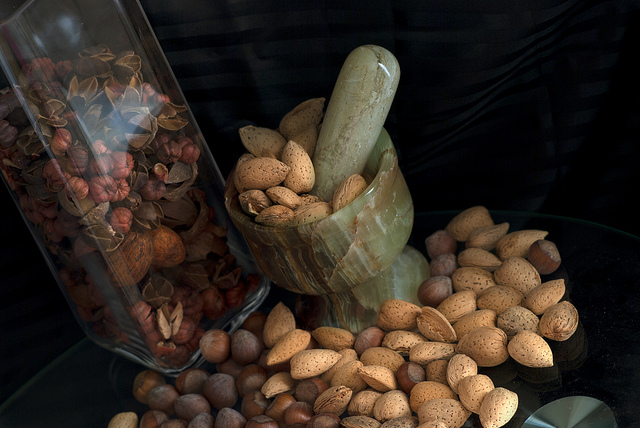
nuts, climate change, reduced crop production, greenhouse gas emissionsClimate change will disrupt every aspect of life in the next few decades,  including the kernel of Middle Eastern culture.

A Middle East without nuts is like Belgium without chocolate: virtually impossible to imagine. But a recent report published in the peer-reviewed journal PLoS ONE (hat tip to Grist) shows that warm (and warming) countries that grow nuts and drupes such as dates and olives could see a major reduction in crop production over the next several decades. Greenhouse gas emissions are the culprit.

Squirming Worms Found In Sharjah Easter Egg

2

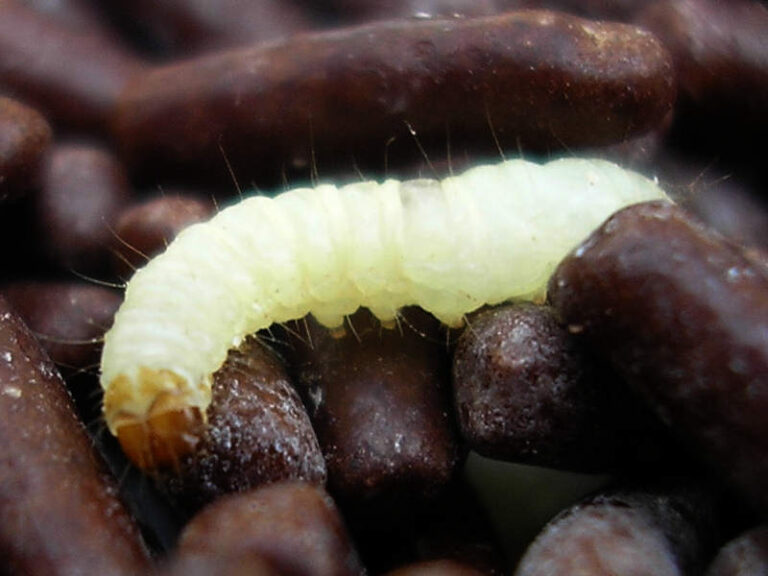
food and health, indian meal moth larvae, worms in chocolate eggIndianmeal moth larvae are frequently described as “worms” found in pantries and grocery stores.
Biting into a chocolate Easter egg full of squiggly insects is high on the list of experiences no consumer ever wants to have. Sharjah Municipality in the United Arab Emirates recently responded to a consumer complaint that an Easter egg purchased in a local supermarket was full of worms. Inspectors corroborated the complaint and  removed all remaining samples to protect unsuspecting children.

Meet Morocco’s Renewable Energy Market at EneR in November

ener morocco solarMeet billions of dollars in human capital and renewable energy finance at the EneR event in November. Morocco to invest 8 billion Euros in renewables over the next 8 years.

Despite unrest in the Arab world, Morocco has remained a relatively stable environment socially and financially. As the first Arab country to make a serious government commitment to renewables for the masses – 35 percent by 2040 –  it has kept true to its promise of an impressive 8 billion Euro commitment in renewable energies and energy efficiency within the next 8 years, in 2020. Investment opportunities will be on display in Casablanca in November.

Lion Cub Shot Dead In Egypt

0

A lion cub belonging to a suspected criminal was shot dead during a police raid in Egypt

The Egyptian police officers who raided the house of wanted suspect in the village of Kafr Essam in north Cairo were probably expecting some resistance but they definitely weren’t expecting a lion to be unleashed on them.  According to local press, the police officers were so shocked by the presence of the lion cub that some jumped from the second floor where the suspect lives to the street below to escape.

Sadly, the police went on to fire 200 bullets killing the lion cub while the wanted suspect managed to escape. A falcon in the suspect’s house was found unharmed. Whilst this story is certainly bizarre, it does illustrate the scale of the illegal trade in wildlife in Egypt as well as animals rights abuses.