It's sea turtles which may in the end save islands in the Seychelles. They may also better help us understand climate change. Like rings on a tree, scientists have found a way to read sea turtle shells and how they are impacted by climate change tells a story.
For centuries, the Sámi shaman drum was one of the most powerful sacred objects in northern Europe, and one of the most feared by church and state. If ISIS looks bad to us today for its religious fundamentalism, Christians were just as fervent.
In a real emergency, romance takes a back seat to physics, panic, and how fast 150 people can squeeze through a narrow tube. The Federal Aviation Administration says every aircraft must be evacuated within 90 seconds. That’s the gold standard. But new research suggests that in the real world, especially as we age, that number might be more aspirational than achievable.
Research from the Wildlife Conservation Society (WCS) and the University of Queensland, published in Ocean & Coastal Management, found that nearly three out of four marine protected areas (MPAs) worldwide are exposed to sewage pollution.
It's sea turtles which may in the end save islands in the Seychelles. They may also better help us understand climate change. Like rings on a tree, scientists have found a way to read sea turtle shells and how they are impacted by climate change tells a story.
For centuries, the Sámi shaman drum was one of the most powerful sacred objects in northern Europe, and one of the most feared by church and state. If ISIS looks bad to us today for its religious fundamentalism, Christians were just as fervent.
In a real emergency, romance takes a back seat to physics, panic, and how fast 150 people can squeeze through a narrow tube. The Federal Aviation Administration says every aircraft must be evacuated within 90 seconds. That’s the gold standard. But new research suggests that in the real world, especially as we age, that number might be more aspirational than achievable.
Research from the Wildlife Conservation Society (WCS) and the University of Queensland, published in Ocean & Coastal Management, found that nearly three out of four marine protected areas (MPAs) worldwide are exposed to sewage pollution.
It's sea turtles which may in the end save islands in the Seychelles. They may also better help us understand climate change. Like rings on a tree, scientists have found a way to read sea turtle shells and how they are impacted by climate change tells a story.
For centuries, the Sámi shaman drum was one of the most powerful sacred objects in northern Europe, and one of the most feared by church and state. If ISIS looks bad to us today for its religious fundamentalism, Christians were just as fervent.
In a real emergency, romance takes a back seat to physics, panic, and how fast 150 people can squeeze through a narrow tube. The Federal Aviation Administration says every aircraft must be evacuated within 90 seconds. That’s the gold standard. But new research suggests that in the real world, especially as we age, that number might be more aspirational than achievable.
Research from the Wildlife Conservation Society (WCS) and the University of Queensland, published in Ocean & Coastal Management, found that nearly three out of four marine protected areas (MPAs) worldwide are exposed to sewage pollution.
It's sea turtles which may in the end save islands in the Seychelles. They may also better help us understand climate change. Like rings on a tree, scientists have found a way to read sea turtle shells and how they are impacted by climate change tells a story.
For centuries, the Sámi shaman drum was one of the most powerful sacred objects in northern Europe, and one of the most feared by church and state. If ISIS looks bad to us today for its religious fundamentalism, Christians were just as fervent.
In a real emergency, romance takes a back seat to physics, panic, and how fast 150 people can squeeze through a narrow tube. The Federal Aviation Administration says every aircraft must be evacuated within 90 seconds. That’s the gold standard. But new research suggests that in the real world, especially as we age, that number might be more aspirational than achievable.
Research from the Wildlife Conservation Society (WCS) and the University of Queensland, published in Ocean & Coastal Management, found that nearly three out of four marine protected areas (MPAs) worldwide are exposed to sewage pollution.
It's sea turtles which may in the end save islands in the Seychelles. They may also better help us understand climate change. Like rings on a tree, scientists have found a way to read sea turtle shells and how they are impacted by climate change tells a story.
For centuries, the Sámi shaman drum was one of the most powerful sacred objects in northern Europe, and one of the most feared by church and state. If ISIS looks bad to us today for its religious fundamentalism, Christians were just as fervent.
In a real emergency, romance takes a back seat to physics, panic, and how fast 150 people can squeeze through a narrow tube. The Federal Aviation Administration says every aircraft must be evacuated within 90 seconds. That’s the gold standard. But new research suggests that in the real world, especially as we age, that number might be more aspirational than achievable.
Research from the Wildlife Conservation Society (WCS) and the University of Queensland, published in Ocean & Coastal Management, found that nearly three out of four marine protected areas (MPAs) worldwide are exposed to sewage pollution.
It's sea turtles which may in the end save islands in the Seychelles. They may also better help us understand climate change. Like rings on a tree, scientists have found a way to read sea turtle shells and how they are impacted by climate change tells a story.
For centuries, the Sámi shaman drum was one of the most powerful sacred objects in northern Europe, and one of the most feared by church and state. If ISIS looks bad to us today for its religious fundamentalism, Christians were just as fervent.
In a real emergency, romance takes a back seat to physics, panic, and how fast 150 people can squeeze through a narrow tube. The Federal Aviation Administration says every aircraft must be evacuated within 90 seconds. That’s the gold standard. But new research suggests that in the real world, especially as we age, that number might be more aspirational than achievable.
Research from the Wildlife Conservation Society (WCS) and the University of Queensland, published in Ocean & Coastal Management, found that nearly three out of four marine protected areas (MPAs) worldwide are exposed to sewage pollution.
It's sea turtles which may in the end save islands in the Seychelles. They may also better help us understand climate change. Like rings on a tree, scientists have found a way to read sea turtle shells and how they are impacted by climate change tells a story.
For centuries, the Sámi shaman drum was one of the most powerful sacred objects in northern Europe, and one of the most feared by church and state. If ISIS looks bad to us today for its religious fundamentalism, Christians were just as fervent.
In a real emergency, romance takes a back seat to physics, panic, and how fast 150 people can squeeze through a narrow tube. The Federal Aviation Administration says every aircraft must be evacuated within 90 seconds. That’s the gold standard. But new research suggests that in the real world, especially as we age, that number might be more aspirational than achievable.
Research from the Wildlife Conservation Society (WCS) and the University of Queensland, published in Ocean & Coastal Management, found that nearly three out of four marine protected areas (MPAs) worldwide are exposed to sewage pollution.
It's sea turtles which may in the end save islands in the Seychelles. They may also better help us understand climate change. Like rings on a tree, scientists have found a way to read sea turtle shells and how they are impacted by climate change tells a story.
For centuries, the Sámi shaman drum was one of the most powerful sacred objects in northern Europe, and one of the most feared by church and state. If ISIS looks bad to us today for its religious fundamentalism, Christians were just as fervent.
In a real emergency, romance takes a back seat to physics, panic, and how fast 150 people can squeeze through a narrow tube. The Federal Aviation Administration says every aircraft must be evacuated within 90 seconds. That’s the gold standard. But new research suggests that in the real world, especially as we age, that number might be more aspirational than achievable.
Research from the Wildlife Conservation Society (WCS) and the University of Queensland, published in Ocean & Coastal Management, found that nearly three out of four marine protected areas (MPAs) worldwide are exposed to sewage pollution.
There are good reasons not to eat apricots and hazelnuts from Turkey (after Chernobyl). Japan’s reactor is much worse. Brace for future horrors says expert Dr. Helen Caldicott.
The sting operation “Weeds in the Underbrush” uncovered a cartel of tree-trimmers in Israel.
It’s really quite common to see the entire tops of trees lobbed off, and sitting by the side of the road in Tel Aviv, and other cities in Israel. It makes one sad, especially since it’s often done in the summer time, when the foliage is perfect for providing much needed shade. I always thought it was a throwback from the settlement days, when people lived in the Kibbutz and were eager to get back to nature by pruning it. Perhaps over enthusiastically. Turns out there is a very good reason for the tree-trimming madness in Israel, and it’s about money: Bribes, scandals, the Jewish National Fund, and the tree-trimming mobsters are in it together.
My Berber guide Mohammed on our return journey from Mt. Toubkal, North Africa’s highest point.
“You should know that I haven’t hiked in a while,” I told Mohammed, my Berber guide for a two day trek to the highest point in North Africa. He nodded and grinned, understanding nary a word. I allowed myself to feel reassured knowing full well that he should have said, “lady – go hike a few smaller trails and then come back.” Instead, we set out at 9am the following morning for our 14 mile, 7, 826 foot climb from Imlil, a small village in the nook of the Atlas Mountains south of Marrakech, to Mt. Toubkal – the top of the range.
Beginning as a meeting once upon a time in Mexico, Trees Give Life is the co-effort of Arif Malik and performing artist Mohammed Yahya. Green Prophet talks to the organisation founders about why they are planting trees for religion. Less than a year old, the Trees Give Life campaign began with a trip to Latin America, one of the latest parts of the underprivileged world to embrace the Muslim faith. Founder of the campaign, Arif Malik was inspired by Islam’s environmental principles to reach out and make a difference.
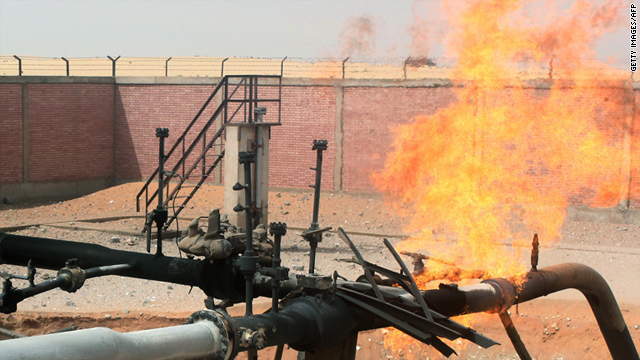
Third act of sabotage in 5 months may spell the end of Egyptian natural gas shipments of both Israel and Jordan.
Egypt’s natural gas pipeline to both Israel and Jordan suffered still another setback during the night when a third act of sabotage caused an explosion. This is three attacks since the beginning of the popular uprising in Egypt in February this year. The most recent, said by Egyptian security authorities to have been caused by men armed with machine guns caused the ill fated pipeline to blow apart again with “an explosive boom” that frightened people living in the vicinity and resulted in a “plume of fire” after the saboteurs, who had arrived in a small truck, forced security forces to leave and then planted explosive charges. Not being able to prevent this kind of attack doesn’t bode well for anyone who thinks about investing in Egypt’s future, even in renewables like solar energy.
A BBC report found the water to be “unsafe for human consumption”, stating that large amounts and regular intakes could pose a serious health risk – including cancer.
It’s not just excess calories anymore. It could be that environmental chemicals are ordering your body to put on the pounds.
We live surrounded by synthetic chemical substances. They’re in our food, our soaps, in hundreds of thousands of things we handle daily. Like parabens, a preservative found in moisturizers and bath products. Exposure to toxic chemicals is associated with a long and dismal list of ailments. An article in onearth magazine now shows us that toxic chemicals have a real link to obesity too.
I just returned from a 9 day trip in Morocco. Besides attending a conference, my mission was to pack lightly, and return home lightly, without piles of tourist junk I would quickly throw away. I hiked in the Atlas Mountains, took a bus from Fez to Rabat, a train from Casablanca to Marrakesh, endless bus trips from Rabat to Mehdiah for a 3 day conference, along with some taxi rides. It was a planes, trains, and automobiles sort of trip, energized by the local atmosphere. I did this all with a 10 month old baby on my back, and one small carry-on handbag with wheels. I had no need for a local StorageMart, and if I needed something while on the road I knew I could easily buy it.
After traveling on several international flights, I noticed that the richer the travelers (people on business class), the less luggage they hauled on the plane with them. Less luggage equals less fuel usage, and certainly less hassles and haggling when on the road. And how many of us have gone on backpacking trips, only to return home with much of what we’ve packed unused? I wanted to have a “richer” experience, and by that I mean one which was easier on me, the person who’d be hauling around stuff with a baby.
Want to travel lighter this summer? I’ve compiled some tips for you, should you decide to go traveling, in the lightest possible way, with baby, or without.
There’s no stopping Jordan: it will build a nuclear reactor outside of Amman despite risks.
In an unstable situation in good times, it’s surprising to learn that Jordan (with its plentiful sun) is intent on building its first nuclear reactor, for what it believes to be a source of nonpolluting, sustainable energy. In the wake of Chernobyl, and now Japan’s nuclear saga, the inability for humanity to learn from its past leaves me dumbfounded.
The environmental concerns of too much undersea drilling have now been expressed by Greek Cyprus Commerce Minister Antonis Paschalides , concerning his country’s exploration for natural gas in what is known as the Exclusive Economic Zone (EEZ) south-east of Cyprus, known as Block 12. In an interview in the Cyprus Mail, Paschalides expressed concerns that drilling for natural gas could result in environmental damage.
Jet fuel spurts into pristine nature zone in Israel. Who will pay for this unthinkable mistake?
A month ago, Israeli airlines suffered from a jet fuel contamination, grounding flights, and causing chaos as officials tried to figure out if planes loaded with the contaminated fuel would be damaged. This past Wednesday, there is another chapter in the country’s jet fuel saga. Some 1.5 million liters of jet fuel (about 400,000 gallons) spilled out into the desert, as a tractor ran over and damaged the Eilat-Ashkelon Pipeline. The jet fuel spilled out into a nature reserve, calling into question the legitimacy of running pipelines through protected areas. If the jet fuel seeps into the groundwater it can be especially damaging, and exposure to it can be linked to cancers, such as Hodgkin’s Disease.
Abnormally dry weather a nightmare for Afghanis who rely on wheat crops for survival.
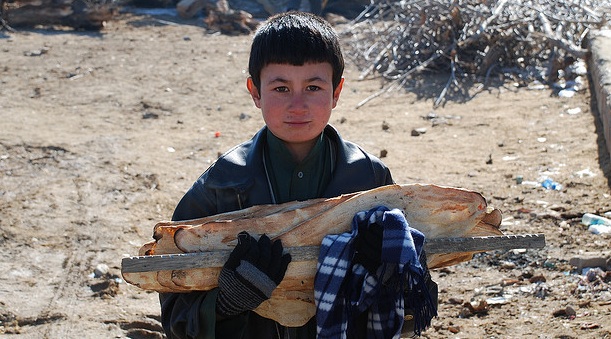
Afghanistan is likely to face a significant food shortage in the coming months, following poor rains which have affected this season’s wheat crop. Wheat is the primary food staple for most families. “There have been problems with rainfall, so there will be a significant shortfall in the harvest,” Challiss McDonough, spokesperson for the UN World Food Programme (WFP), said. “The Ministry of Agriculture is conducting an assessment to determine the numbers of those affected, but there are also concerns about livestock, especially in the northern and highland areas.”
If you buy vegetables in Cairo, they could be contaminated with human waste.
Faced with a shortage of water for irrigation (and the fact it might lose its right to the Nile), Ahmed Osman, a farmer in his late thirties, opted to divert local sewage water to irrigate his two-hectare vegetable plot in the heart of Egypt’s Nile Delta governorate of Sharkia. “Without water, any water, our plants will die, and we will go begging,” he said. “There can be no agriculture without water.”
He is not alone. Other farmers in his village, Kafr Saqr, are doing the same. But experts say the practice is dangerous, according to the UN news source IRIN.
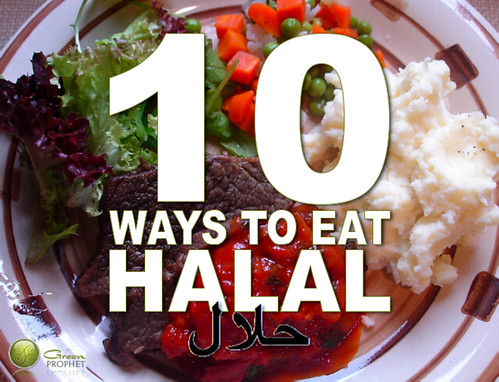
Have a low-carbon footprint by following this sustainable halal guide.
Muslims, whose dietary laws are similar to the Kashrut laws of Judaism, are obligated by their faith to eat only “clean” food that has been blessed in God’s name. The popularity in halal foods has resulted, in part, from the immense industry that packages and mass produces food for convenience to an international market.
When buying Muslims look for that “halal” label (Islamically permissible), or the more recognised vegetarian ‘V’ sign. Read on for Green Prophet’s guide.
What is halal food?
For Muslims, virtually everything available from nature is halal. The only exceptions are:
• Swine/Pork and its by-products
• Animals improperly slaughtered or dead before slaughtering
• Alcohol (and intoxicants)
• Carnivorous animals and birds of prey
• Blood
However, checking every label isn’t practical and more often than not, the full ingredients aren’t listed. This makes it hard for you to know if a food is truly halal. Your active lifestyle doesn’t permit “scratch” cooking for every meal.
This is where Green Prophet’s guide to eating halal can help.
1. Eat at home
Meals in restaurants are pricey and don’t always contain the best ingredients. Regular take-outs are not the healthiest lifestyle option either. Eating at home enables you to cook individualised easy, staple meals, save money, eat more slowly for improved digestion, and learn a few culinary skills. Invite neighbours around for family meals to build community spirit.
The Muslim market is exponentially expanding due to demand and we’re even seeing ‘halal carts’ on the streets of New York. When buying packaged food Muslims look for the ‘halal’ labels meaning it’s ok to eat in accordance with Islamic Shariah (law). Checking labels is important because even if a product is labelled vegetarian or vegan, it may contain alcohol which is haram (prohibited) for Muslims.
4. Eat less meat
100% vegan mac and cheese
Muslim vegetarians unfortunately get caught in the meat debate. There is good reason to become a Muslim vegetarian, and so long as you’re not on a mission to convert others, you can live without meat, raise awareness of animal welfare and stay true to eco principles.
Meat is expensive and too much meat isn’t good for our health. Meat can be responsible for high cholesterol and heart attacks. All you need to do is shift your sources of protein to vegetarian options such as lentils, beans and whole grains.
5. Balance your meals and eat smaller portions.
Consuming in moderation is a strong Muslim ethic. Reducing how much you eat will save you in cost in the long run. Smaller portions and frequent eating are two ways you can drastically improve your health. Balance your meals by colour – at least two portions of red, green or orange fruits and vegetables with each meal.
Eat more carrots –these orange gems are loaded with fibre are high in Vitamin K and A; they’re easy to pack, versatile sticks and easy to cook. Blend together two carrots for every apple to create a sweet and filling smoothie.
Go bananas – cheap to buy in bunches and available all year round, this monkey treat works well for replacing sweeteners in your meals. Try banana muffins, use in milkshakes or slice over cereals with honey.
6. Support sustainable agriculture
What you purchase is a powerful mechanism for creating change. As consumers, we can support sustainable agricultural businesses by buying food and drink that is produced according to sustainable principles: protecting the environment, the economy and society from negative environmental impacts and helping to ensure adequate supplies for future generations.
7. Buy organic
Is organic food better for us? There is no straightforward conclusion but opting for organic food and drink does avoid toxins that non-organic food can contain. Organic food can cost more; when you’re on a tight budget you do not have to buy everything organic. Buying just one organic item the next time you go shopping will at least make a difference to the environment because people will be doing the same thing all over the country.
Eating halal means you’ll experiment with organic food at some stage. Organic produce is the only practical way to avoid eating genetically modified (GM) food and tastes so much better and opens up many different varieties. In the UK alone there are 600 different types of apple. Bet you didn’t know that.
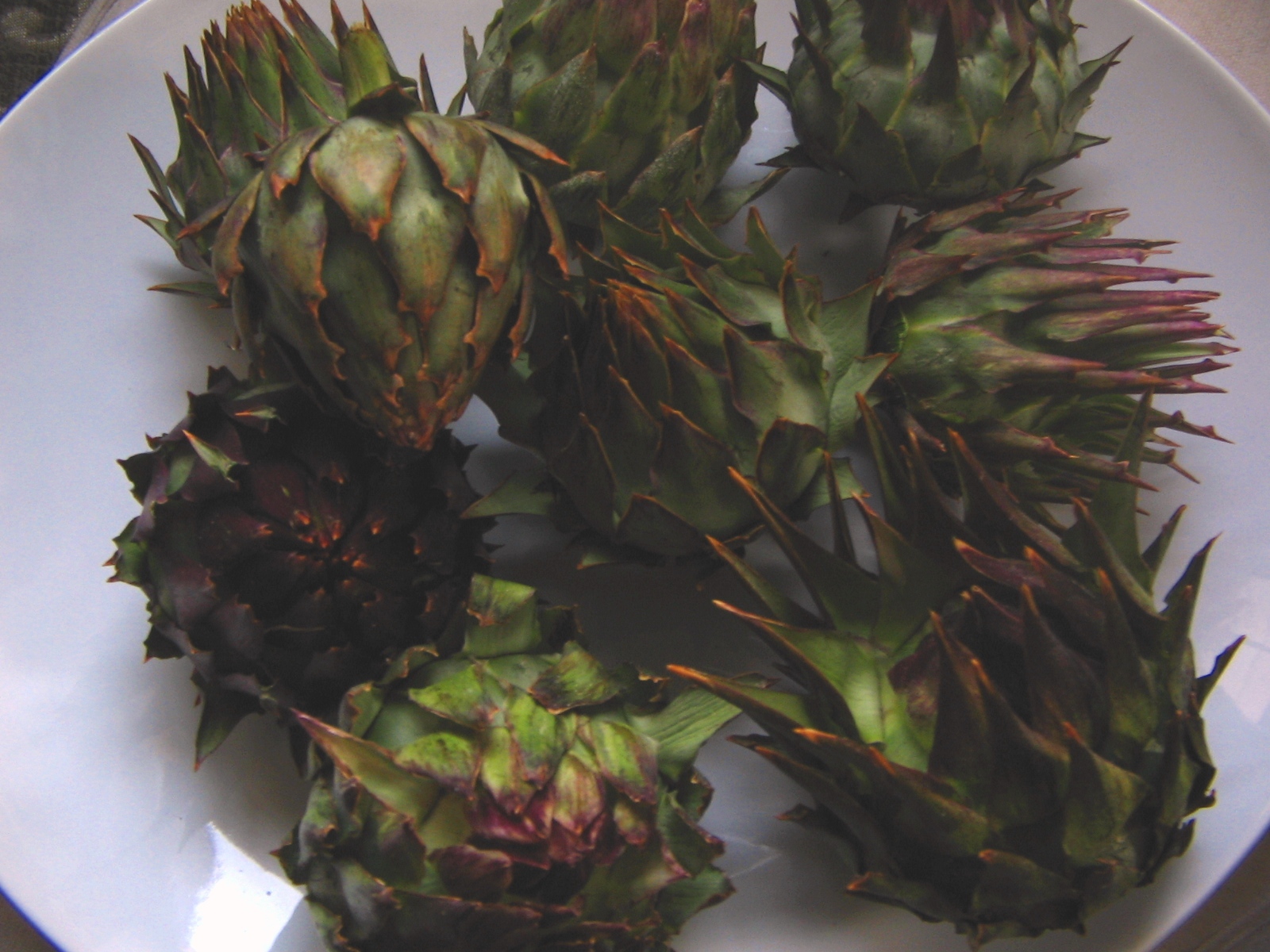
What to grow – mustard, cress, basil, coriander and salads are easy to grow from seed and a good way of getting greens into your sandwiches.
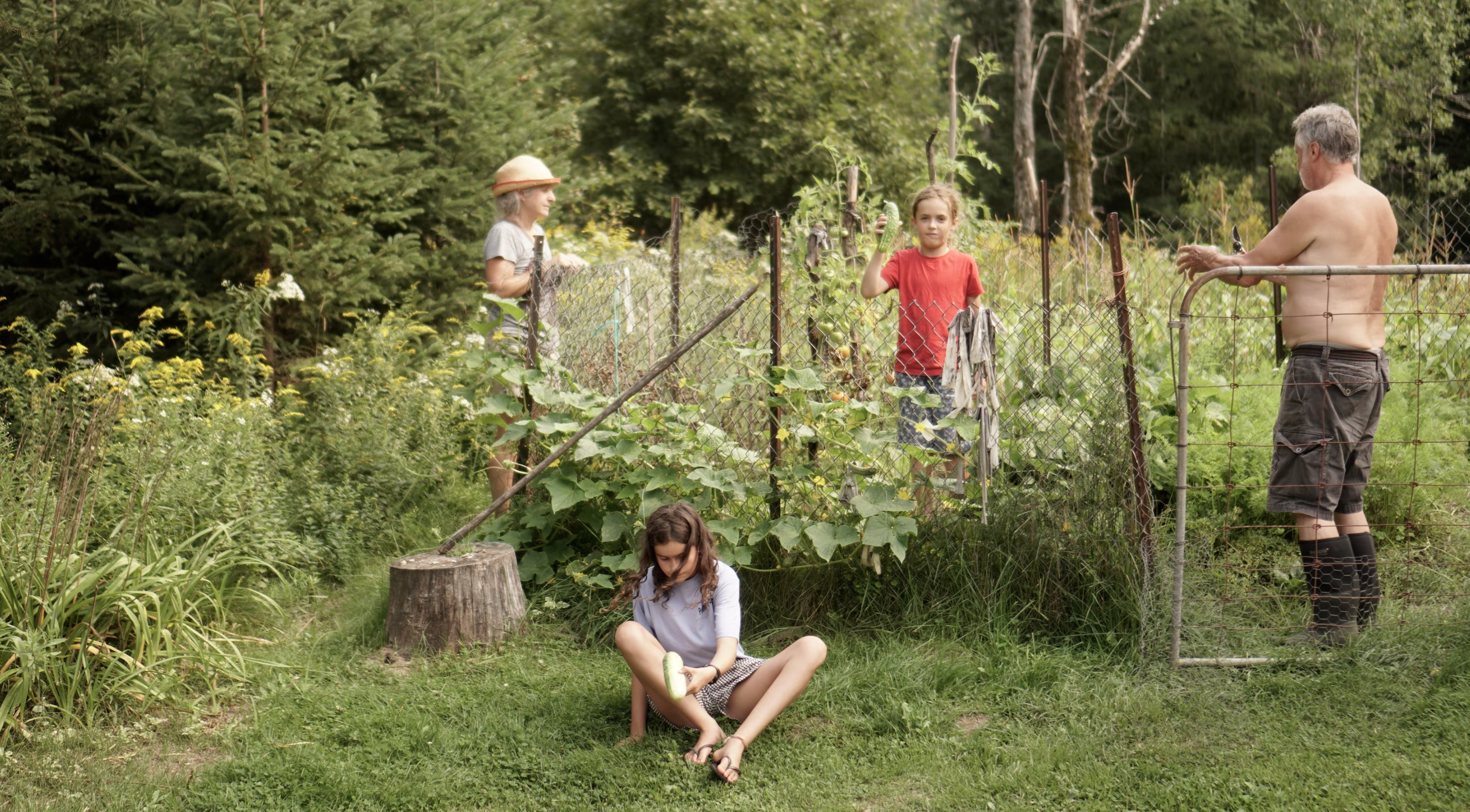
As an eco-Muslim I do have access to a large plot of land in which I grow corn, seasonal vegetables and fruit trees. If you’re lucky enough to have a garden, dedicate a part of it to herbs. Create a haven of peace and get low-cost fruit and vegetables by sharing an allotment with like-minded people.
9. Reduce, Reuse, Recycle and Reject
Traditionally implemented as the 3 R’s – Reduce, Reuse, Recycle, I include Reject as an action to take when your food is sourced unethically.
Reduce waste by reusing containers and freeze left over foods for another day. This works best for soups, strudels, kebabs and homebaked breads.
Recycle: ask your council for a green recycling bin, save each week’s food containers for a trip to your local recycling centre or let creativity flow by recycling packaging into pieces of art.
Reuse clean newspapers by keeping a few damp sheets wrapped around bunches of herbs; cut large plastic containers in half for home-made plant pots; feed your garden by throwing all uneaten uncooked food and peelings to create a compost.
Reject: avoid processed foods and synthetic additives – rejecting preservatives is all the more reason to go organic; and reject foods from regions of conflict.
10. Fast throughout the year
Although the Islamic month of fasting lasts 30 days, you can practice better control by following a few Ramadan tips:
Avoid complex carbohydrates such as chips, cookies, cakes and white bread.
Stay more hydrated by drinking plenty of water, especially in the weeks towards Ramadan and check where your water is sourced from.
Limit your caffeine intake or cut it out altogether. Fizzy drinks need to be reduced to as their caffeine content makes your body lose water.
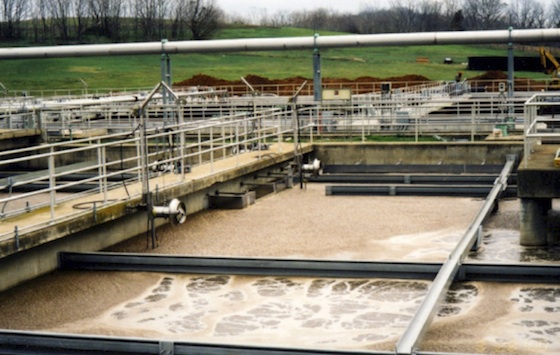
Two serial water technology entrepreneurs from Israel, Eytan Levy and Ronen Shechter, who also founded Israel’s AqWise, have come up with another way to put bacteria in wastewater to work for us. Their electrogenic bioreactor generates electricity directly during the process of treating wastewater.

 There are good reasons not to eat apricots and hazelnuts from Turkey (after Chernobyl). Japan’s reactor is much worse. Brace for future horrors says expert Dr. Helen Caldicott.



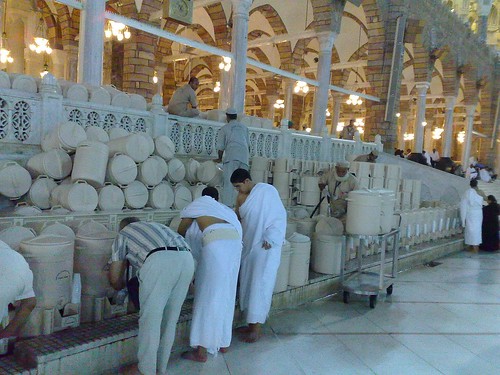 Holy water: the Zam Zam well in Makkah will be bottled and distributed in 42 outlets



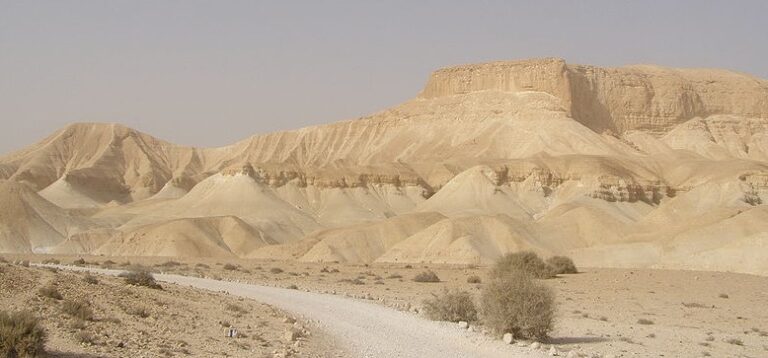
 Jet fuel spurts into pristine nature zone in Israel. Who will pay for this unthinkable mistake?