It's sea turtles which may in the end save islands in the Seychelles. They may also better help us understand climate change. Like rings on a tree, scientists have found a way to read sea turtle shells and how they are impacted by climate change tells a story.
For centuries, the Sámi shaman drum was one of the most powerful sacred objects in northern Europe, and one of the most feared by church and state. If ISIS looks bad to us today for its religious fundamentalism, Christians were just as fervent.
In a real emergency, romance takes a back seat to physics, panic, and how fast 150 people can squeeze through a narrow tube. The Federal Aviation Administration says every aircraft must be evacuated within 90 seconds. That’s the gold standard. But new research suggests that in the real world, especially as we age, that number might be more aspirational than achievable.
Research from the Wildlife Conservation Society (WCS) and the University of Queensland, published in Ocean & Coastal Management, found that nearly three out of four marine protected areas (MPAs) worldwide are exposed to sewage pollution.
It's sea turtles which may in the end save islands in the Seychelles. They may also better help us understand climate change. Like rings on a tree, scientists have found a way to read sea turtle shells and how they are impacted by climate change tells a story.
For centuries, the Sámi shaman drum was one of the most powerful sacred objects in northern Europe, and one of the most feared by church and state. If ISIS looks bad to us today for its religious fundamentalism, Christians were just as fervent.
In a real emergency, romance takes a back seat to physics, panic, and how fast 150 people can squeeze through a narrow tube. The Federal Aviation Administration says every aircraft must be evacuated within 90 seconds. That’s the gold standard. But new research suggests that in the real world, especially as we age, that number might be more aspirational than achievable.
Research from the Wildlife Conservation Society (WCS) and the University of Queensland, published in Ocean & Coastal Management, found that nearly three out of four marine protected areas (MPAs) worldwide are exposed to sewage pollution.
It's sea turtles which may in the end save islands in the Seychelles. They may also better help us understand climate change. Like rings on a tree, scientists have found a way to read sea turtle shells and how they are impacted by climate change tells a story.
For centuries, the Sámi shaman drum was one of the most powerful sacred objects in northern Europe, and one of the most feared by church and state. If ISIS looks bad to us today for its religious fundamentalism, Christians were just as fervent.
In a real emergency, romance takes a back seat to physics, panic, and how fast 150 people can squeeze through a narrow tube. The Federal Aviation Administration says every aircraft must be evacuated within 90 seconds. That’s the gold standard. But new research suggests that in the real world, especially as we age, that number might be more aspirational than achievable.
Research from the Wildlife Conservation Society (WCS) and the University of Queensland, published in Ocean & Coastal Management, found that nearly three out of four marine protected areas (MPAs) worldwide are exposed to sewage pollution.
It's sea turtles which may in the end save islands in the Seychelles. They may also better help us understand climate change. Like rings on a tree, scientists have found a way to read sea turtle shells and how they are impacted by climate change tells a story.
For centuries, the Sámi shaman drum was one of the most powerful sacred objects in northern Europe, and one of the most feared by church and state. If ISIS looks bad to us today for its religious fundamentalism, Christians were just as fervent.
In a real emergency, romance takes a back seat to physics, panic, and how fast 150 people can squeeze through a narrow tube. The Federal Aviation Administration says every aircraft must be evacuated within 90 seconds. That’s the gold standard. But new research suggests that in the real world, especially as we age, that number might be more aspirational than achievable.
Research from the Wildlife Conservation Society (WCS) and the University of Queensland, published in Ocean & Coastal Management, found that nearly three out of four marine protected areas (MPAs) worldwide are exposed to sewage pollution.
It's sea turtles which may in the end save islands in the Seychelles. They may also better help us understand climate change. Like rings on a tree, scientists have found a way to read sea turtle shells and how they are impacted by climate change tells a story.
For centuries, the Sámi shaman drum was one of the most powerful sacred objects in northern Europe, and one of the most feared by church and state. If ISIS looks bad to us today for its religious fundamentalism, Christians were just as fervent.
In a real emergency, romance takes a back seat to physics, panic, and how fast 150 people can squeeze through a narrow tube. The Federal Aviation Administration says every aircraft must be evacuated within 90 seconds. That’s the gold standard. But new research suggests that in the real world, especially as we age, that number might be more aspirational than achievable.
Research from the Wildlife Conservation Society (WCS) and the University of Queensland, published in Ocean & Coastal Management, found that nearly three out of four marine protected areas (MPAs) worldwide are exposed to sewage pollution.
It's sea turtles which may in the end save islands in the Seychelles. They may also better help us understand climate change. Like rings on a tree, scientists have found a way to read sea turtle shells and how they are impacted by climate change tells a story.
For centuries, the Sámi shaman drum was one of the most powerful sacred objects in northern Europe, and one of the most feared by church and state. If ISIS looks bad to us today for its religious fundamentalism, Christians were just as fervent.
In a real emergency, romance takes a back seat to physics, panic, and how fast 150 people can squeeze through a narrow tube. The Federal Aviation Administration says every aircraft must be evacuated within 90 seconds. That’s the gold standard. But new research suggests that in the real world, especially as we age, that number might be more aspirational than achievable.
Research from the Wildlife Conservation Society (WCS) and the University of Queensland, published in Ocean & Coastal Management, found that nearly three out of four marine protected areas (MPAs) worldwide are exposed to sewage pollution.
It's sea turtles which may in the end save islands in the Seychelles. They may also better help us understand climate change. Like rings on a tree, scientists have found a way to read sea turtle shells and how they are impacted by climate change tells a story.
For centuries, the Sámi shaman drum was one of the most powerful sacred objects in northern Europe, and one of the most feared by church and state. If ISIS looks bad to us today for its religious fundamentalism, Christians were just as fervent.
In a real emergency, romance takes a back seat to physics, panic, and how fast 150 people can squeeze through a narrow tube. The Federal Aviation Administration says every aircraft must be evacuated within 90 seconds. That’s the gold standard. But new research suggests that in the real world, especially as we age, that number might be more aspirational than achievable.
Research from the Wildlife Conservation Society (WCS) and the University of Queensland, published in Ocean & Coastal Management, found that nearly three out of four marine protected areas (MPAs) worldwide are exposed to sewage pollution.
It's sea turtles which may in the end save islands in the Seychelles. They may also better help us understand climate change. Like rings on a tree, scientists have found a way to read sea turtle shells and how they are impacted by climate change tells a story.
For centuries, the Sámi shaman drum was one of the most powerful sacred objects in northern Europe, and one of the most feared by church and state. If ISIS looks bad to us today for its religious fundamentalism, Christians were just as fervent.
In a real emergency, romance takes a back seat to physics, panic, and how fast 150 people can squeeze through a narrow tube. The Federal Aviation Administration says every aircraft must be evacuated within 90 seconds. That’s the gold standard. But new research suggests that in the real world, especially as we age, that number might be more aspirational than achievable.
Research from the Wildlife Conservation Society (WCS) and the University of Queensland, published in Ocean & Coastal Management, found that nearly three out of four marine protected areas (MPAs) worldwide are exposed to sewage pollution.
We know plastic is almost inescapable, but here are 6 excellent reasons to just say no!
It’s no secret. We hate plastic. We wish plastic had never been born, though we don’t really blame Alexander Parkes for inventing the stuff. How could he have known that a series of polymers bonded together would produce one of the most durable but harmful products to ever enter our food stream, our water ways, and our deserts?
In case you’re not convinced that plastic is the bane of life, check out our coverage of UAE camels that are killed by plastic, or the turtle that pooped plastic for a month. Emotions aside, we also realize that PET bottles and shopping bags are hard to resist because let’s face it, plastic is everywhere. So we wanted to shoot over a list of excellent reasons to just say no. We know it won’t be easy, but because you’ll have to come up with creative alternatives, you’ll thrive from being inventive, you’ll save the planet, and you are likely to end up with a bit of extra money in your pocket!
Qatar is currently in the process of issuing new guidelines which mean that all new mosques built in the country will be more environmentally friendly
From its humble beginnings during the time of the Prophet Muhammed (PBUH) to modern incarnations, such as those futuristic designs envisaged for the green mosque of Cambridge, the Eco-Mosque has come a long way. Now, the Qatari government is assessing its building policies so that every new mosque built in the country will be based on environmentally friendly models which help save water and energy.
Turtles were considered evil in ancient Egypt. Locals apparently still haven’t forgot.
Human desire for the rare and exotic repast knows no boundaries. And while most Middle Easterners are happy eating domesticated animals such as the cow, and chicken, there are no limits on what they are willing to eat, and offer for dinner. Just recently a rare, and endangered 550 pound sea turtle estimated to be about 90 years old was saved from being an Egyptian dinner.
The lucky turtle, according to the Washington Post (via AP, 2022 link is down) the lucky reptile was picked up in a market in Alexandria, where its “owner” was offering to slaughter it. Inspectors got wind of the potential sale and handed the turtle over to the Institute of Oceanography and Fisheries.
I met a famous Israeli cancer researcher who told me he ate lion. We all know about the problem with shark finning for shark fin soup in the United Arab Emirates. And if you follow Green Prophet you’ll notice that the region has some destructive passion for keeping wild animals at home – like dolphins in swimming pools. While I am more of a vegawarian than a full-out vegetarian, I do believe that the less of the animal kingdom we eat, the better able we are to protect the habitat that threatens them.
According to a study done by Mohamed A. Nada, team Manager of the “Save the Sea Turtle” Project in Alexandria 10 years ago, it was found in part 1 of this study that the main consumers of sea turtle products were the fishing community and the uneducated individuals living around the fishmarket. In his report: “They are considered to be the native Alexandrians; an ethnic society with their own language, accent, traditions, diet and personality, very keen to preserve their cultural identity, discouraging villagers coming from the nearby countryside to work, socialise and marry amongst them.
“They have, however, been unable to protect their culture from new immigrants. Sea turtle meat and blood consumption has decreased slowly, however it still occurs.”
The study included both loggerhead and green turtles and describes how the turtles are kept on their backs, alive, without food even for more than a week until they are sold.
Turtles speared by kings – known as “evil”
Turtles were not revered in ancient Egypt and this could explain the interest in eating them. According to Wikipedia, “As an aquatic animal, the turtle was associated with the Underworld. The turtle was associated with Set and so with the enemies of Ra who tried to stop the solar barque as it traveled through the underworld.
“The turtle was associated with night, and so came to symbolize darkness and evil. Since the XIXth Dynasty, and particularly in the Late and Greco-Roman periods, turtles were known to have been ritually speared by kings and nobles as evil creatures.
In modern times, from a legal point of view, Egypt is a signatory to four International Conventions that include the protection of marine turtles.
“African Convention on the Conservation of Nature and Natural Resources” (Algeria, 1968).
“Convention on the Conservation of Migratory Species” (Bonn, 1979).
“Convention on International Trade in Endangered Species of Wild Fauna and Flora” (CITES) (Washington, 1973)
“Convention for the Protection of the Mediterranean Sea Against Pollution and its Protocols” (Barcelona, 1976)
I came across two massive, stinking and dead sea turtles on the Mediterranean Coast last year. I still wonder how they died, and why they died as a couple.
If you are a victim of global flooding, how do you want to float out?
If there’s going to be a global flood of epic proportions, we may as well approach it with imagination and style. That’s the thinking behind this crazy Water Capsule designed by Jay Stoughstenger. With global temperatures gradually increasing, there has been a corresponding increase in natural disasters and other global calamities that are often downright depressing. Perhaps weary of all this negative speak and eager to envision a soft transition to harder times, the Kuwait-based designer offers a more glamorous way to think about natural disasters, a way that encourages more a dream-like state than desperation or panic. And did we mention that these dreams are also “green?”
Providing teaching material to unite Holy Land faiths.
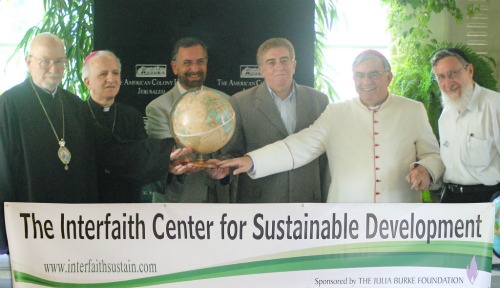
They’re doing in person and specifically in Israel what Green Prophet has been doing for the last four years: showing a faith based and cultural context in environmental action. Launched last year, meet the Jerusalem-based Interfaith Center working on issues like climate change.
Shema Yisrael is a statement of faith that many Jews say at bedtime, during daily prayers and in times of need. “Hear, O Israel: the Lord is our God, the Lord is one” is the first line, emphasizing the monotheistic nature of Judaism.
For Rabbi Yonatan Neril, a 30-year-old married father of one, the second line in the prayer –“Blessed is the name of God’s kingdom forever” — provides hope for the planet. Seeing environmental degradation as a spiritual problem, he has turned to leaders of the three monotheistic faiths to right our ecological wrongs.
Yonathan Neril, co-author of Eco Bible coming out November 16, 2020
Since last year, Neril has been building the Interfaith Center for Sustainable Development in Jerusalem. The six-person non-profit organization recently held the first interfaith meeting to formulate climate change policy, which impressively resulted in commitments of support from Israel’s Chief Rabbinate, the Palestinian Ministry of Religious Affairs (Waqf), the Palestinian Sharia Courts and the assembly of the Heads of Churches of Jerusalem.
“The second verse in Shema gives me hope and inspiration that there will be balance on this planet, that God’s glorious kingdom will be blessed forever,” says Neril, who was raised near Berkeley, California, and has lived in Israel for eight years.
“This is hope in the face of what scientists are saying about what will happen in this century,” he says.
Sponsored by the Julia Burke Foundation in California, his organization divides its actions into two spheres: one dedicated to fighting climate change, the other to providing ecological-theological seminars and college-credit courses to show how faith intersects with environmental values.
Interfaith Center for Sustainable Development members have already given about 25 “green theology” seminars. The courses are available online and are also offered to eco-tourists in Israel or locals looking for spiritual environmentalism tools. For now, the courses are focused on Jewish sources, but the center is working to include resources for Islamic and Christian audiences as well.
Quelling the effects of climate change
The Interfaith Eco Forum held at Jerusalem’s American Colony Hotel in July drew about 40 people, including representatives from all three monotheistic faiths. Neril pointed out poignant reasons for bringing faith into the equation.
“The widespread human degradation of the natural world indicates that our way of life is out of balance,” he says. “This is where religions come in — to be a force for positive change in the world. And there is no better place to begin than with religious leaders here in the Holy Land.”
Religion can be a force for positive change, says Rabbi Yonatan Neril.
He sees the multi-faith paradigm in Israel as an advantage rather than as grounds for more conflict. “People of many faiths draw inspiration from their respective traditions to live sustainably, and these efforts cross-pollinate each other and encourage coexistence on our shared planet and in this land,” Neril says.
The forum attracted worldwide media attention and featured talks by Dr. Michael Kagan, the initiator of the Holy Land Climate Change Declaration endorsed in April by the Council of Religious Institutions of the Holy Land; Bishop William Shomali of the Latin Patriarchate of Jerusalem; Haj Salah Zuheika, deputy minister of the Palestinian Authority’s Ministry of Religious Affairs; and Rabbi David Rosen, the American Jewish Committee’s international director of inter-religious affairs.
Speaking for and to the Muslim people in the Holy Land, Zuheika spoke about the roots of environmental awareness in the Koran, pointing out today’s special challenges in the region.
“The earth is like our home, and those who live in the same home should know how to live together,” Shomali declared at the forum. “The main religions should study ecological issues together because we have a common destiny. We need to put all of our energies together to solve the environmental crisis, which is ethical, moral and spiritual.”
Don’t freeze them! Use fresh herbs parsley and coriander packed into a Middle East omelet.
In my native Canada, green herbs like parsley and dill are an afterthought; a sprig garnishes a dish, some chopped herbs are sprinkled on a soup. But here in the Middle East herbs take center stage. Parsley and coriander (or cilantro as it’s often called) are special favorites. And I love using them in a quick local version of the omelet, made with fresh organic, free-range eggs. Or eggs raised at home if you farm for eggs, like Karin does in Jaffa.
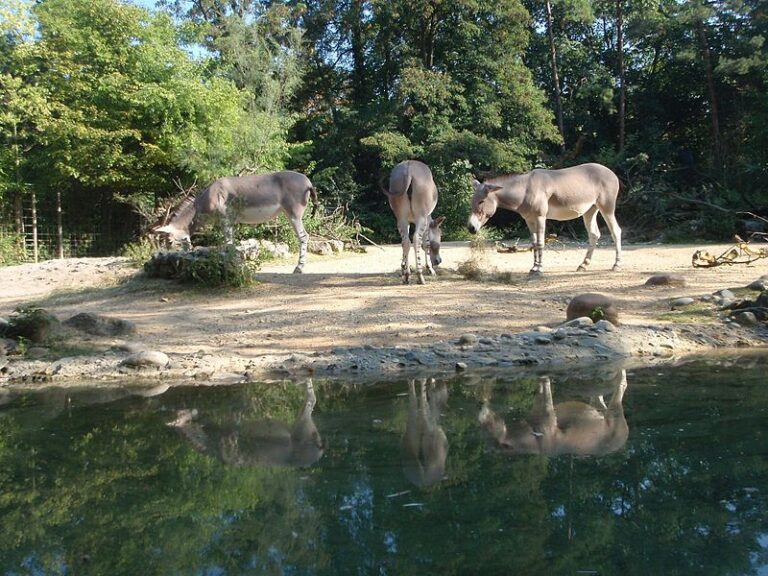
African wild asses in a Basel Switzerland zoo. Perhaps the only hope for their survival of this animal which once roamed North Africa.
Wild animals in North Africa and which are/were also found in the Middle East are threatened: there is the Arabian Oryx,a species of leopards and even baby crocodiles. One particular hoofed mammal, the African Wild Ass (Equus asinus), which zoologists say is the ancestor of the domestic donkey, is now considered to be critically endangered and down to less than 600 of its kind in the wild, although a few hundred now live in captivity.
Researchers at Tel Aviv University have just developed the next generation of superconductors, that have the potential to revolutionize energy transfer, carrying about 40 times more electricity than today’s copper wire, in a move that changes the financials of electricity costs completely.
According to Eureka Alert, Dr. Boaz Almog and Mishael Azoulay working under Professor Guy Deutscher at the Raymond and Beverly Sackler School of Physics and Astronomy at Tel Aviv University have developed a new kind of superconducting wire for use in high-powered cables, made not using copper, but using fibers made of single crystals of sapphire.
Iran saw more protests and demonstrations this weekend as green activists call for the protection of the UNESCO-listed salt lake Orumieh
Undeterred by the repressive reaction of the Iranian government- who beat up and violently dispersed environmental protestors a week ago– campaigners gathered again in their thousands this Saturday to call for the protection of the shrinking salt lake Orumieh. Located in north-west Iran, the lake is a UNESCO biosphere reserve and is believed to be one of the largest salt lakes in the world. However, its survival is under threat due to government mismanagement and drought which has led to the halving of its surface area – some experts fear that it could dry out completely in the next few years if nothing changes and efforts to conserve the lake don’t materalise.
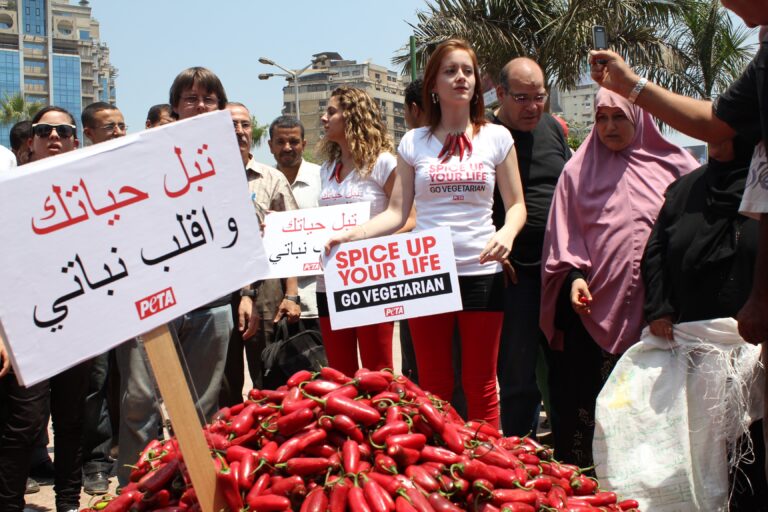
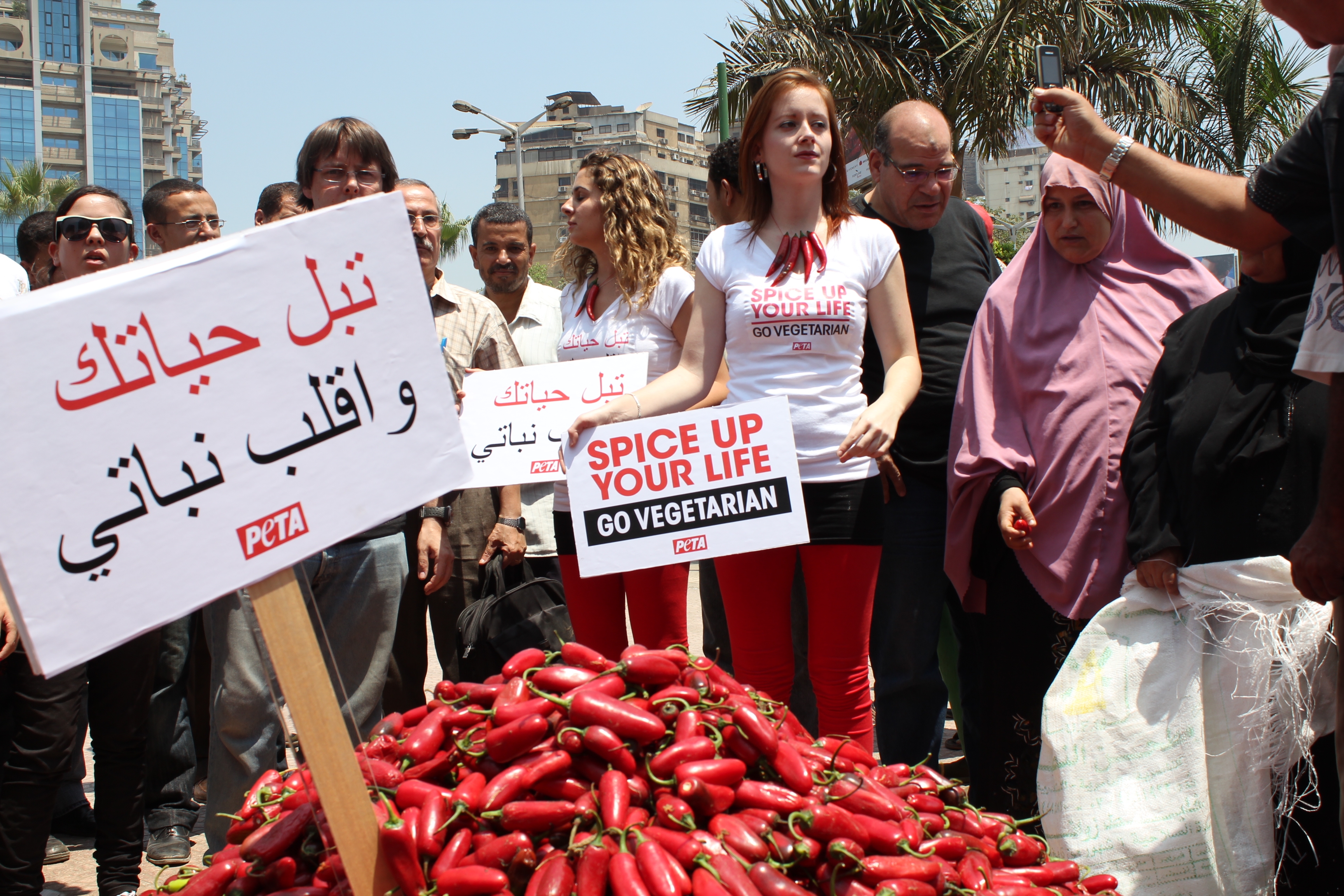
Ashley Fruno of ‘People for the Ethical Treatment of Animals’ (PETA) speaks to Green Prophet about the difficulties of promoting animal rights in the Middle East
When Ashley Fruno was seven she found a vein in her chicken nugget whilst eating at McDonald’s. Up until that point, she had no idea that the food on her plate was in any way related to the animals raised in her neighbour’s farm which had fascinated her so much. She began to cut out meat from her diet and became a vegetarian by the age of 13, later on when she learnt more about the diary and egg industries she became a vegan. “It was an easy choice for me to get involved with PETA,” Fruno tells me, “I knew from an early age that animal rights would be a big part of my life.”
Since then, Fruno has worked to promote PETA in the Middle East and was even arrested in Jordan for organizing a ‘lettuce lady’ protest. “We were there to promote vegetarianism, not hurt anyone or break the law but they made us feel like criminals,” she says. Although PETA doesn’t have a Middle East affiliate they work with local groups in the region and have held protests and demonstrations in the region- most recently in Cairo, Dubai, Beirut, Damascus, and Amman. In the following Q&A, I quized Fruno on everything from the role religion plays in their campaigns in the Middle East, how the internet is changing people’s attitudes to why PETA activists were attacked by a mob of KFC workers in Cairo.
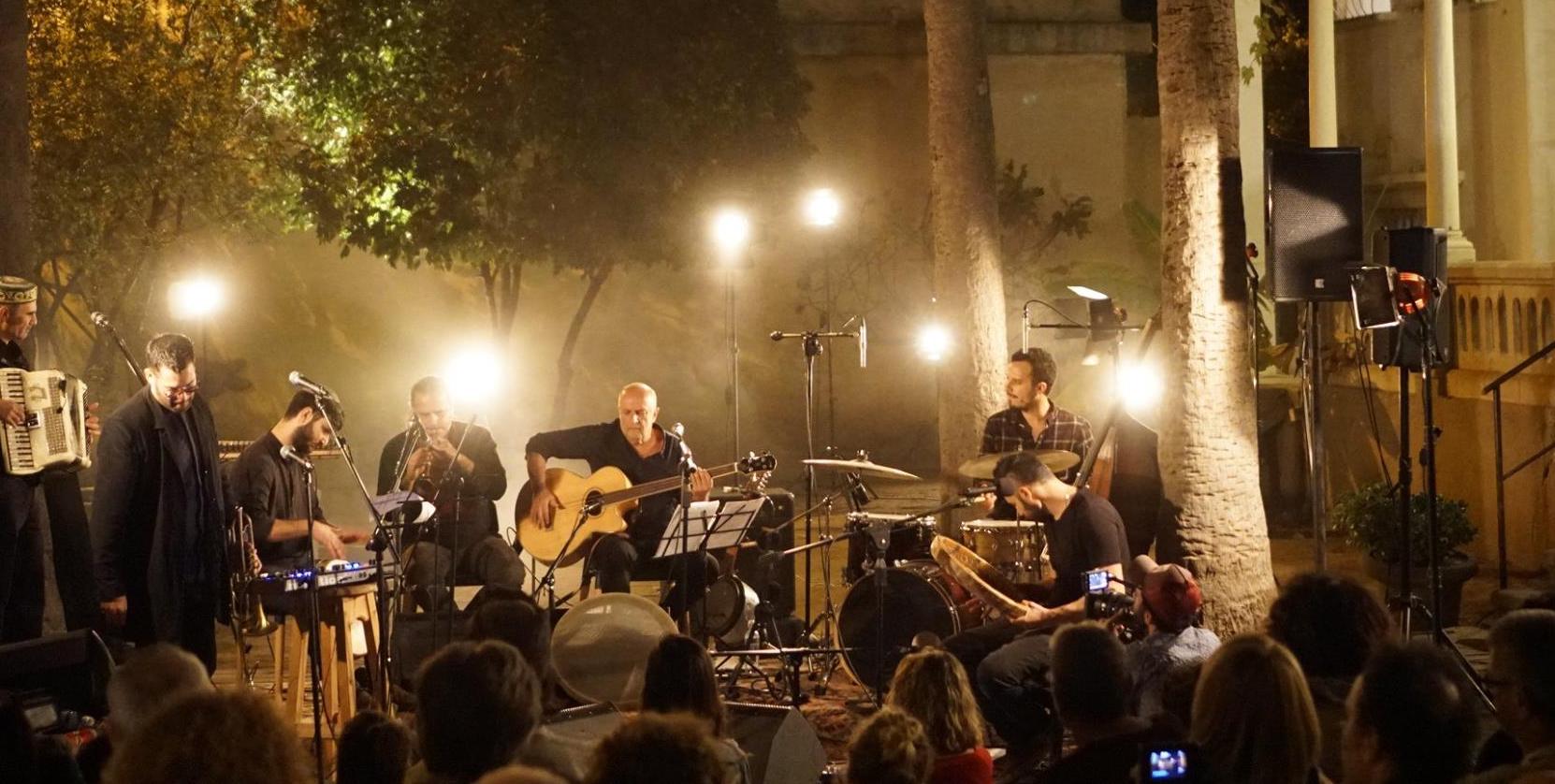
Yisrael Borochov and his band the East West Ensemble featured at the Jaffa TED event
Green Prophet is happy to support TEDx events organized in the Middle East. While the event today in Jaffa, TEDxJaffa Desire to know The Other is not specifically environment focused, many of the attendees – who are just as important as speakers – come from the clean tech background and have a desire to know more about environmental issues.
Here is more on why I got involved in TEDxJaffa: It’s really easy to sit at your kitchen table in Brooklyn, Toronto, Vancouver, or Berkley and shoot off comments about the Middle East conflict. It’s harder when you live in it. I do. The Middle East is my home. I live in Israel. I live in Jaffa, Israel — a city next to Tel Aviv populated by Muslims, Christians and Jews. Some of us are atheists, some traditional and others defiantly religious. I chose to live here and it’s a crazy place. It’s not crazy because people here care about their religion, enough to fight over it or talk about it incessantly. It’s crazy because of its improbability and its diversity.
In Jaffa, some Muslims call themselves Palestinians. Some Christians call themselves Israeli Palestinian Christian Arabs. The Jews are just Israelis of course, unless they come from Arab countries and they are Sephardic or those from Europe say they are Ashkenazi. You can find escaped donkeys galloping down the streets at midnight. You can find the best European chocolate cake beside a working man’s morning hummous joint.
Missing a lot of environmental awareness, Jaffa has a rich culture and it has its charm. Its own rhythm is marked by the five calls to prayer, with the one at sunset telling my baby daughter (who is Jewish) it’s time to go to sleep. It’s got a roughness, and sharp corners, and just when you think it’s too hard to handle, you’ll catch a new smell reminding you of some other time from our collective memory when civilization began, somewhere around here.
But more than people know, Jaffa — the city of the Bible where Jonah disembarks from before getting swallowed by the whale and spat out on shore near Nineveh — is a lens through which the world can understand cultural diversity, and cultural freedom in Israel. Politics aside, please.
Today at the East West House the TEDxJaffa event will be held under the theme the Desire to Know the Other. There is a strong line-up of people from Jaffa, like my musician husband Yisrael Borochov, but also people from Israel and the Palestinian Authority who will tell their personal and professional stories on working to know the other. One speaker survived a terror attack and was afraid to look in the mirror to see how much of her face was left; one speaker will be a successful Palestinian policeman turned businessman; and if you log on to our simulcast today (or see the videos later) you’ll meet Haya Samir, an Israeli Muslim whose family came to Israel as political refugees from Egypt. Raised as a Jew, she found out as a young woman that she was in fact a Muslim.
Haya is an Israeli diva. And we are so glad to know her. Today she will sing songs of the pioneering days in Israel – Debka Fantasia – before 1948 when young Jews met Bedouin and Arab shepherds. These pioneers longed for a culture that combined, not defined, the Middle East with European values. I think this is what the people in the Arab uprisings are coming to terms with.
Would you like to get off your chair and dance to a little music with us LIVE? Maybe meet someone whose views might change your worldview about the Middle East conflict?
The simulcast starts at at 9 am EST time today Wednesday if you are in New York City. Log on at the TEDxJaffa site to see it. Officially in Israel the event starts at 3.
Alli Meets Aladdin
The idea for TEDx in Jaffa started with my friend Alli Magidsohn, who is producing and curating the event. The fellow Jaffinian, who is from LA, was inspired to fulfill this dream after an encounter with a man (a genie?) in Sinai named Aladdin.
Her words: “We felt lucky to have the opportunity to meet and form a new friendship in an overall context that might have otherwise limited us as enemies and spoke about the area’s conflicts, spirituality, Love, and many other things together. His perspectives broadened my mind and this encounter made me realize that as an American Jew living in Israel, even opposite an Muslim Egyptian man, there is still so much more that we have in common than there is that separates us.
“Other encounters in Sinai, Israel and Palestine led to further ‘broadening’, deeper respect and more curiosity, and TEDxJaffa is the manifestation of this process of personal expansion. ‘The Desire to know The Other’, for me – not necessarily for the event’s speakers – isn’t about explicit things like politics or peace or coexistence, it’s really about that desire to look from the inside, outwards, and to try to take in, understand, or somehow be enriched by exposing oneself to another person’s experience.
Log in folks at 9 am if you are New York or Toronto. All other cities: the event’s at 3 PM + 7 hours EST. Link from here.
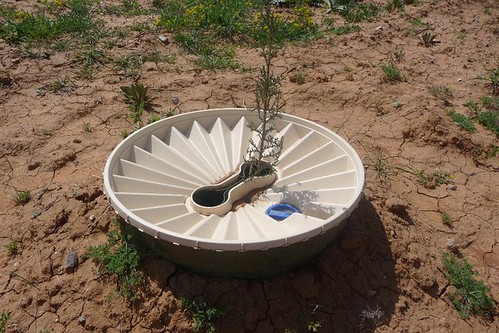
No need for irrigation, the Groasis Waterboxx yields plant growth in deserts and on rocks
Have you ever wanted to grow trees without actually planting them? The Groasis Waterboxx is a Jordanian invention that will do just that. Launched in June 2011, the Groasis nurtures a sapling’s growth without the hands-on fuss of shovelling soil and topping up water. With hopes to see it distributed throughout famine struck East Africa, the Groasis Waterboxx could be one solution to natural food shortages.
Breast feeding moms have lower blood pressure and behave more aggressively compared to women who are bottle-feeding their children, suggesting that breast-feeding dampens the body’s typical stress response to fear, new research suggests.
Women who breast-feed are far more likely to demonstrate a “mama bear” effect — aggressively protecting their infants and themselves — than women who bottle-feed their babies or non-mothers, suggests a new study in the September issue of Psychological Science. The small-scale study conducted in the US investigated something known as ‘lactation aggression’ or ‘maternal defense’ in mammals. Previously, we’ve documented benefits of breastfeeding, religious attitudes towards the practice, as well as tips to breastfeed in public in the Middle East.
Zam Zam holy water in Mecca is contaminated with arsenic, but researchers in the US have discovered a ridiculously simple technology that can render contaminated water safe to drink.
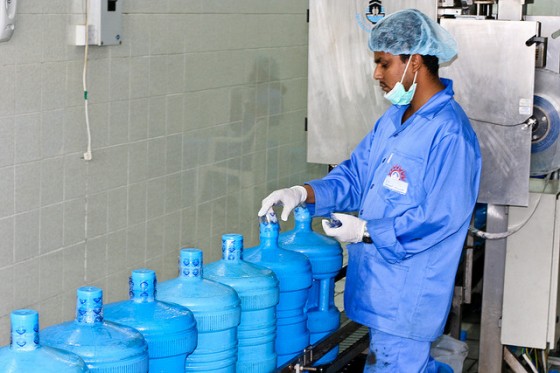
Millions of people in the developing world are frequently hapless victims of arsenic poisoning. This is not because they have angry spouses, but because arsenic is an odorless, colorless, and tasteless compound derived from soil and rock deposits, as well as agricultural and industrial sources, that enters the water stream undetected. Even Zam Zam holy water in Mecca is contaminated. Rather than attempt to overhaul the entire drinking water system of these millions of people, Tsanagurayi Tongesayi Ph.D from Monmouth University presented a low-cost, ridiculously simple solution at a recent American Chemical Society meeting in Colorado that uses plastic (our nemesis) to remove arsenic from contaminated water.


 We know plastic is almost inescapable, but here are 6 excellent reasons to just say no!
 Qatar is currently in the process of issuing new guidelines which mean that all new mosques built in the country will be more environmentally friendly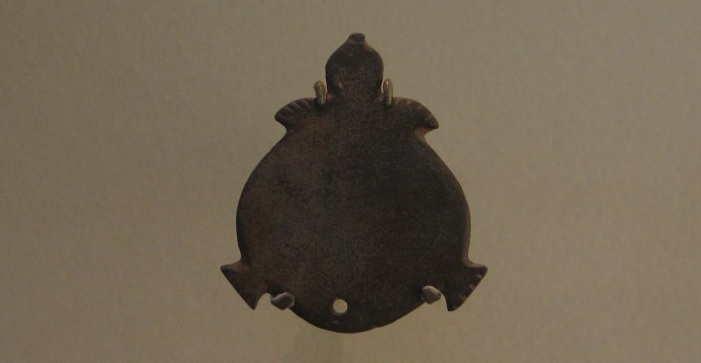



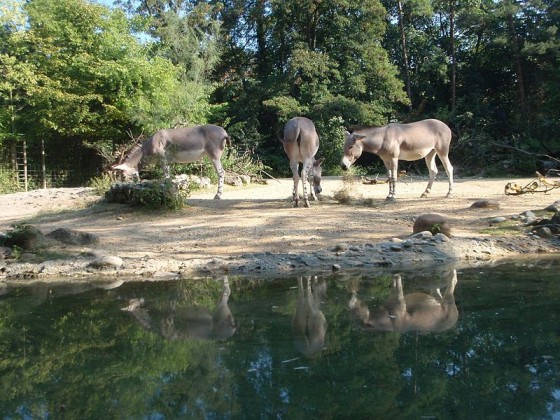 African wild asses in a Basel Switzerland zoo. Perhaps the only hope for their survival of this animal which once roamed North Africa.
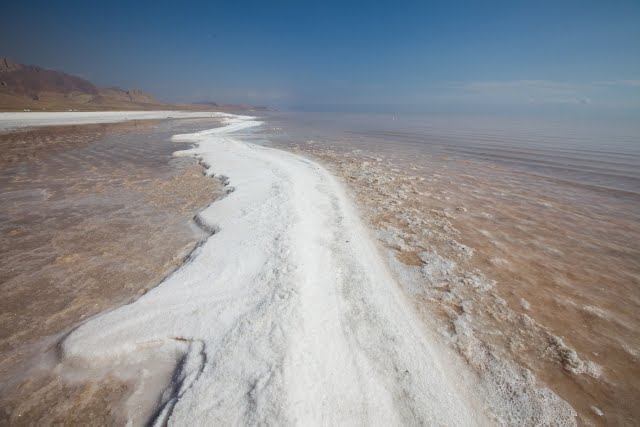
 Iran saw more protests and demonstrations this weekend as green activists call for the protection of the UNESCO-listed salt lake Orumieh