The New Zealand Merino Company, now rebranded as Zentera, has quietly removed the phrase “world’s leading ethical wool brand” from its website, a notable change that comes after a disturbing investigation by PETA Asia-Pacific into the company’s ZQ-certified wool supply chain, PETA reports to Green Prophet.
Somehow vegetables with short seasons excite the imagination and appetite more sharply than produce that’s available all year around. Good Middle Eastern cooks have many recipes for delicate fava beans, and this turmeric-fragrant soup is one.
The New Zealand Merino Company, now rebranded as Zentera, has quietly removed the phrase “world’s leading ethical wool brand” from its website, a notable change that comes after a disturbing investigation by PETA Asia-Pacific into the company’s ZQ-certified wool supply chain, PETA reports to Green Prophet.
Somehow vegetables with short seasons excite the imagination and appetite more sharply than produce that’s available all year around. Good Middle Eastern cooks have many recipes for delicate fava beans, and this turmeric-fragrant soup is one.
The New Zealand Merino Company, now rebranded as Zentera, has quietly removed the phrase “world’s leading ethical wool brand” from its website, a notable change that comes after a disturbing investigation by PETA Asia-Pacific into the company’s ZQ-certified wool supply chain, PETA reports to Green Prophet.
Somehow vegetables with short seasons excite the imagination and appetite more sharply than produce that’s available all year around. Good Middle Eastern cooks have many recipes for delicate fava beans, and this turmeric-fragrant soup is one.
The New Zealand Merino Company, now rebranded as Zentera, has quietly removed the phrase “world’s leading ethical wool brand” from its website, a notable change that comes after a disturbing investigation by PETA Asia-Pacific into the company’s ZQ-certified wool supply chain, PETA reports to Green Prophet.
Somehow vegetables with short seasons excite the imagination and appetite more sharply than produce that’s available all year around. Good Middle Eastern cooks have many recipes for delicate fava beans, and this turmeric-fragrant soup is one.
The New Zealand Merino Company, now rebranded as Zentera, has quietly removed the phrase “world’s leading ethical wool brand” from its website, a notable change that comes after a disturbing investigation by PETA Asia-Pacific into the company’s ZQ-certified wool supply chain, PETA reports to Green Prophet.
Somehow vegetables with short seasons excite the imagination and appetite more sharply than produce that’s available all year around. Good Middle Eastern cooks have many recipes for delicate fava beans, and this turmeric-fragrant soup is one.
The New Zealand Merino Company, now rebranded as Zentera, has quietly removed the phrase “world’s leading ethical wool brand” from its website, a notable change that comes after a disturbing investigation by PETA Asia-Pacific into the company’s ZQ-certified wool supply chain, PETA reports to Green Prophet.
Somehow vegetables with short seasons excite the imagination and appetite more sharply than produce that’s available all year around. Good Middle Eastern cooks have many recipes for delicate fava beans, and this turmeric-fragrant soup is one.
The New Zealand Merino Company, now rebranded as Zentera, has quietly removed the phrase “world’s leading ethical wool brand” from its website, a notable change that comes after a disturbing investigation by PETA Asia-Pacific into the company’s ZQ-certified wool supply chain, PETA reports to Green Prophet.
Somehow vegetables with short seasons excite the imagination and appetite more sharply than produce that’s available all year around. Good Middle Eastern cooks have many recipes for delicate fava beans, and this turmeric-fragrant soup is one.
The New Zealand Merino Company, now rebranded as Zentera, has quietly removed the phrase “world’s leading ethical wool brand” from its website, a notable change that comes after a disturbing investigation by PETA Asia-Pacific into the company’s ZQ-certified wool supply chain, PETA reports to Green Prophet.
Somehow vegetables with short seasons excite the imagination and appetite more sharply than produce that’s available all year around. Good Middle Eastern cooks have many recipes for delicate fava beans, and this turmeric-fragrant soup is one.
Beep beep! This solar powered taxi intends to tour the globe on zero gas and a full tank of sunshine.
Swiss inventor Louis Palmer‘s solar powered taxi will be rolling into Israel next week, after having traveled to over 40 countries and through 60,000 kilometers already. Without a single drop of standard fuel. Powered by the sun, this revolutionary taxi will teach Israelis (and the world) that solar powered cars are a viable option for our future. The country is already awaiting the widespread launch of Better Place’s more sustainable electric cars, but in the meantime, Palmer is showing us that the Middle East’s strong solar rays can be used for transportation as well.
British Muslims are breaking the terrorist stereotype in a new eco-awareness campaign. Trees4Life, a British grassroots organisation has branched out as far as Palestine and Indonesia, to facilitate positive solutions to environmental problems in the form of tree-planting programs.
In the faithful hopes of trying to make us aware of our environmental obligations, Trees4Life believes planting a tree is the first small step in being a green Muslim. “We are just trying to open the door in thinking ‘green’,” says founder Naweeda Ahmad.
Green Prophet writer Zaufishan Iqbal asked the Trees4Life team how British Muslims can help the Middle East and whether planting trees is really the way to go about it.
Green Prophet launches the Green Prophet Eco Hero 11 Award for 2011. Who are your eco-heros for the Middle East and North Africa region?
With so much green, inspiring energy in the Middle East North Africa region, we decided to give local green prophets a little pat on the back. At the end of the year, Green Prophet will announce its first list of environmental activists from the Middle East and North Africa region. Top winners will win a small personal cash prize of $200, $100 and $50. All winners will be profiled on Green Prophet, giving credit and credence to their work. Do you know someone who is fighting to save sharks from fin soup, someone fighting for dead seas or lakes, or who is creating new water technologies that could change the water-parched region? If so, let us know about them! Read on for how you can nominate your eco-hero.
Our recent post about Israeli argan oil caused a few ripples over the Internet. While we now know that the old-fashioned “goat” treatment of the fruit is no longer used in Morocco except as a tourist attraction, we’ve also learned much about the success of growing the tree itself in Israel.
We interviewed Professor Elaine Solowey of the Arava Institute for Environmental Studies, responsible for most of of the argan tree’s propagation in Israel. Prof. Solowey has worked with argan trees since 1985. She worked in the National School of Agriculture, Meknes, Morocco, on a 7-year project aimed at increasing fruit yield. In more recent years, she has been developing argan propagation at the Arava Institute.
Upcycled, easily recycled and sturdy cardboard is the base material for Nokka’s furniture.
Cardboard is one of those miracle materials that has recently been rediscovered and used widely by sustainable designers. It is easy to come by, easy to upcycle, and easy to recycle – and no less importantly, it is surprisingly strong and durable. Cardboard has been used to create furniture for adults, cardboard dollhouses and cradles for kids, and even mounted cardboard deer heads. Now Noah Naveh, a young designer from Moshav Beit Itzhak in Israel, has started making customized cardboard items (such as the New York Times inspired stools above) through her new company, Nokka.
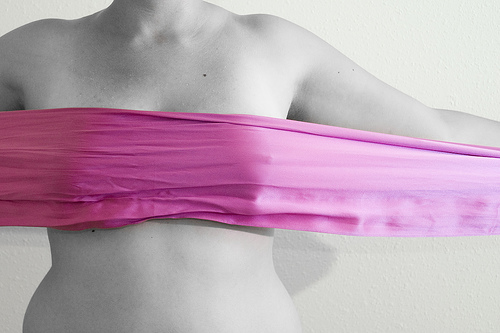
Breast cancer is the boogey man lurking underneath our breastbones, and organizations committed to eradicating the disease are the super heroines wearing pink capes, except when they are selling something that can cause cancer.
That Susan G. Komen’s fragrance ‘Promise Me’ may be laced with cancer-causing ingredients is a blessing in disguise. The world needs a smoking gun to wake up consumers to the toxins we are lathering in as we pursue dangerous beauty. An ecosexual revolution will gain the necessary traction when enough people recognize the inherent value of greening their personal and intimate lives, one vibrator, lipstick, bubble bath, massage oil, sanitary hygiene, condom, lubricant and bottle of perfume at a time. (Just to be clear, that’s a truncated list of ways everyone reading this can be kinder to their somatic and erotic selves; being an ecosexual is actually fairly easy, green and consummately pleasurable.)
Israel’s Ministry of Agriculture denies that a crazy eye-popping disease is killing a substantial population of fish in the Sea of Galilee.
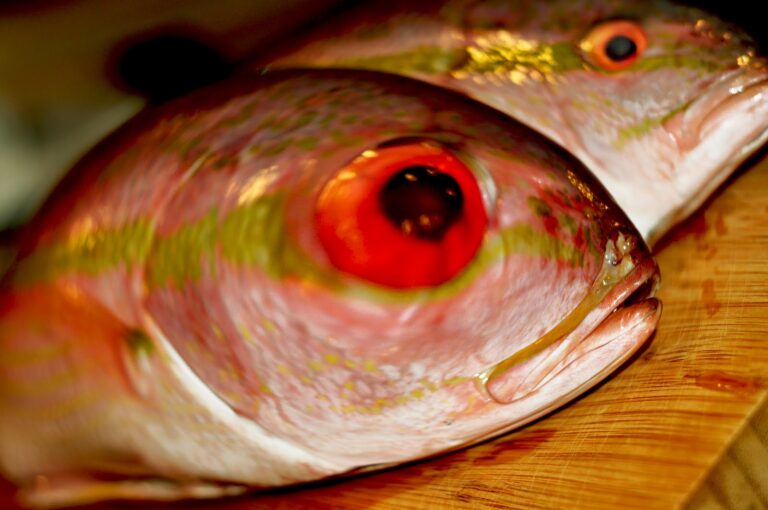
A bizarre disease is killing off a host of fish in the Sea of Galilee, including the St. Peter’s fish considered sacred because of its relevance to the biblical bread and fishes story. After a fish contract the disease, one of its eyes pops out, leaving behind a gorged-out hollow, and then the other. Soon the fish turns black and begins to starve, and finally red spots appear on its body and it dies. While this is very strange, the most bizarre twist to this story is that the Ministry of Agriculture denies that this has been going on for the past 10 years!
Desalination’s negative environmental risks can outweigh the benefits, argues our environmental lawyer blogger Josh.
Israel will quadruple its output of desalinated water by 2050, according to a report released by the country’s Water Authority Council. The government will also encourage construction of new desalination facilities on manmade islands. These measures will ensure a continuous stream of desalted water without developing coastal lands in the tiny country.
Water experts have sung desalination’s praises far and wide lately. It provides a reliable, secure water supply. It reduces our reliance on natural waterways. And not least importantly it has become cheaper as desalting companies develop more cost-effective technology.
Desalination’s critics have, in equal measure, leveled their own concerns at the industry. The process requires exorbitant amounts of energy, they say, is too expensive, and poses potential health risks.
But these concerns only tell a partial story of desalination’s environmental impacts. It affects the marine environment in an important way: through seawater intakes. Decision makers often ignore or downplay this impact. When desalination facilities suck in huge amounts of water, scores of fish and even marine mammals become stuck to the grates. Scientists call this phenomenon “impingement”.
Ethiopia and other African countries upstream have plans to divert Nile River water. What does this mean for Egypt?
Leaking water pipes, evaporation and a rapidly growing population may be significant concerns for those trying to manage and plan water supplies in Egypt, but compounding such problems – and forcing Egyptians to rethink how they use water – is the threat posed by downstream countries which also want to take more water from the Nile, say observers. “Egyptians have to adapt to less water every day,” said Rida Al Damak, a water expert from Cairo University.
Egypt has a population of about 85 million, and receives an annual Nile water share of 55.5 billion cubic metres, according to experts. Around 85 percent of that water is used in agriculture, but a lot simply leaks away.
According to a 2007 research paper by Fathi Farag, an independent water expert, Egypt loses two billion cubic metres of water to evaporation, and three billion cubic metres to grass growing on the banks of the Nile and on river islands.
Around 40 percent of the remaining water – used domestically and in industry (2.3 billion cubic metres) – is lost to leaking pipes and drains, while 2.5 billion cubic metres are used to generate electricity, the paper says.
“If you calculate all this amount of lost water, you will discover that Egyptians are left with a fraction of what their country receives every year from the Nile,” Farag told IRIN. “This can also show why we should start to worry.”
For farmers like Hamdy Abuleinin, who was able to irrigate his 2.1 hectares of rice only after an argument over water with neighbours in Sharqia near Cairo, this year has proved difficult. “Finding water for irrigation is becoming a daily worry for farmers here,” he told IRIN.
International threat
A 1959 water-sharing agreement between Egypt and Sudan gives Egypt 55.5 billion cubic metres of Nile water, but according to Maghawri Shehata, an adviser to the irrigation and water resources minister, population pressure means the country is already facing a shortfall of 10-15 billion cubic metres annually, and “plans by upstream countries to redistribute the water will be very harmful to Egypt”.
According to the Nile Basin Initiative countries that share the Nile River basin have demanded the revision of colonial-era agreements that allot the bulk of the river’s water to Egypt and Sudan and allow Cairo to veto upstream projects.
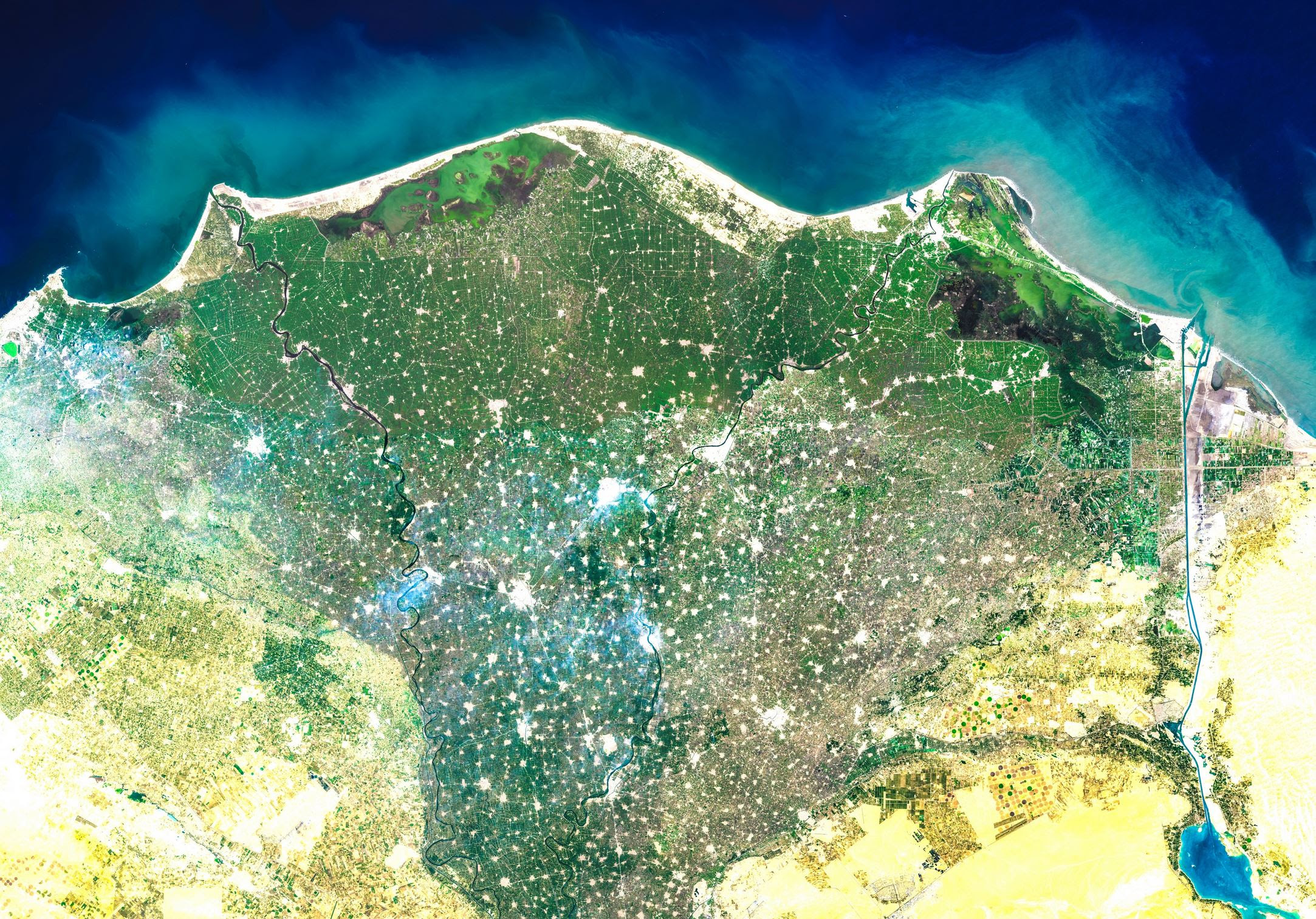
The Nile Delta, home to 18 million people
Egypt does not recognize a recent agreement signed by Burundi, Ethiopia, Kenya, Rwanda, Tanzania and Uganda, that seeks to allow irrigation and hydroelectric projects to go ahead without Cairo’s consent. Ethiopia, for instance, is planning a series of dams along the Nile to generate electricity.
In March, Ethiopia announced the construction of the Renaissance Dam, which aims to be the largest hydroelectric plant in Africa. Experts like Mehari Beyene, writing for the International Rivers network, however, say the dam, which is being constructed near the Sudanese border, has raised concerns about its environmental and human impacts.
Haytham Awad, an irrigation engineering professor from Alexandria University, said Ethiopia’s plan to construct dams along the Nile would reduce Egypt’s current share by five billion cubic metres annually, but he thought this might be manageable if Egypt could cooperate with Ethiopia and buy some of the electricity generated.
Protests over water shortages in Egypt are nothing new especially in July and August, the hottest summer months. On 11 October a 16-year-old farmer was killed in a dispute over water in the southern governorate of Aswan.
Farmers like Abuleinin worry about the future for his seven children. “Fights over water sometimes become physical as water becomes scarcer and these fights might entail loss of life. But the alternative for us is to starve.”
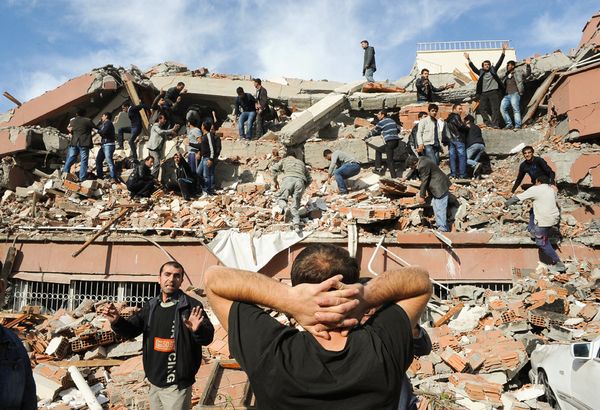
The earthquake struck approximately 20 kilometers north of the city of Van, pictured above. Turkey’s seismology institute estimated the final death toll would reach 1,000.
A 7.2-magnitude earthquake slammed Turkey‘s eastern province of Van on Sunday. Two days afterward, 366 deaths have been reported, 1,301 injured persons are being treated, and more than 2,000 buildings have collapsed.
Although the temblor didn’t shake the Black Sea region of Sinop, which was some 800 kilometers northwest of the epicenter, it may have stalled plans to build a nuclear power plant (NPP) there. The Korean nuclear industry now expects the Sinop NPP to be canceled, news agency dongA reports.
This week’s announcement by energy experts during a World Economic Forum event that regional governments need to shift to clean, renewable energy resources should, however, go some way to rectifying the situation.
Israeli leaders have started hosting a preparatory meeting for the 2012 Earth Summit (Rio + 20), the UN Conference for Sustainable Development, to be held in Rio de Janeiro, Brazil. The preparatory meeting is now taking place today through to October 27 in the Maccabia Village in Ramat Gan.

 Jordan looks into the advantages of nuclear and we debunk the ‘green’ arguments for going nuclear
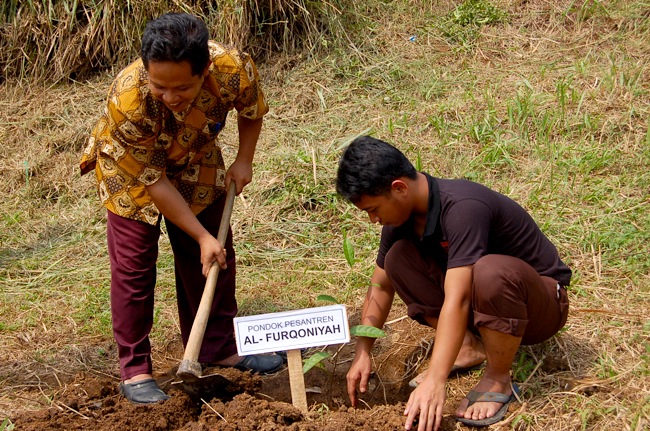


 Nah, nobody does that goat thing anymore…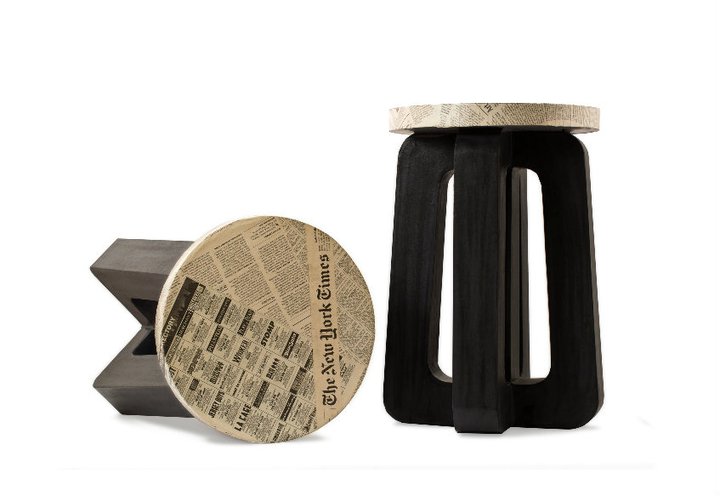



 Desalination’s negative environmental risks can outweigh the benefits, argues our environmental lawyer blogger Josh.