Home Blog Page 484

Book Review: Capitalizing on Nature- Ecosystems as Natural Assets

0

“Nature has provided ecosystems and their benefits to us for free… perhaps because this capital has been provided freely to us, we humans have tended to view it as limitless, abundant, and thus perhaps always available for our use, exploitation, and conversion.”  (p.3)

The modern economy’s obsession with competitive consumption and endless exploitation of natural resources is at the root of the environmental mess we find ourselves in. It has forced us to digger deeper for oil, experiment with all sorts of ecologically dubious methods to secure cheap energy, cut down trees to make way for industrial-scale food production, ruin mangroves for shrimp farms and spew out pollution which has now been shown to cause extreme weather.

However, in his latest book, ‘Capitalizing on Nature- Ecosystems as Natural Assets’, Edward Barbier argues that the economy can also be part of the solution. If we are able to conceive of natural ecosystems and the various services and benefits they provide us with as a form of wealth, they could be protected. The benefit of exploiting natural assets would then be weighed up against the benefits of converting them into other forms of wealth, and hopefully, this would lead to better ecological decisions.

Saudi Acts as Oil Cheerleader at COP 17 Circus

1

Saudi, OPEC, COP 17, Durban, greenhouse gas emissions, Kyoto, carbon emissions, climate changeSaudi is pulling out the pom poms to protect OPEC oil-producing nations from losing money as climate change negotiations start at the COP 17 circus in Durban.

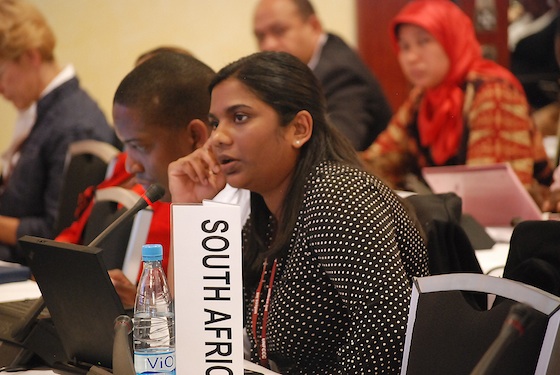
It’s that time of year again, when delegations suit up for the circus that has come to typify the United Nations Climate Change Conferences. Rich, polluting countries unwilling to sacrifice their high-flying lifestyles are threatening to abandon the Kyoto Protocol, which in part jeopardizes the Clean Development Mechanism (CDM) that helps MENA countries advance renewable energy projects such as Morocco’s 500 MW solar plant expected to break ground next year.

At present there are 388.92 parts per million of CO2 in our atmosphere. The safe level is 350 ppm. The object of these expensive, carbon intensive meetings is to reach some kind of international agreement that requires everyone to reduce their carbon emissions, but they almost always fail because of self interest. For a perfect example of this, look at Saudi Arabia: despite showing the highest GDP growth in 8 years, one of the world’s most extravagant nations is protecting itself against new policies that might put their oil-wealth at risk.

Aquate Group’s Floating Cover Could Save Israel’s Water

0

mekorot aquate

Israel’s desert climate makes water a rare treasure, but even as the country takes extreme measures to keep fresh water flowing to its citizens, the simple process of evaporation is making the battle even harder. Some estimate that 20% of Israel’s fresh water is lost to evaporation.

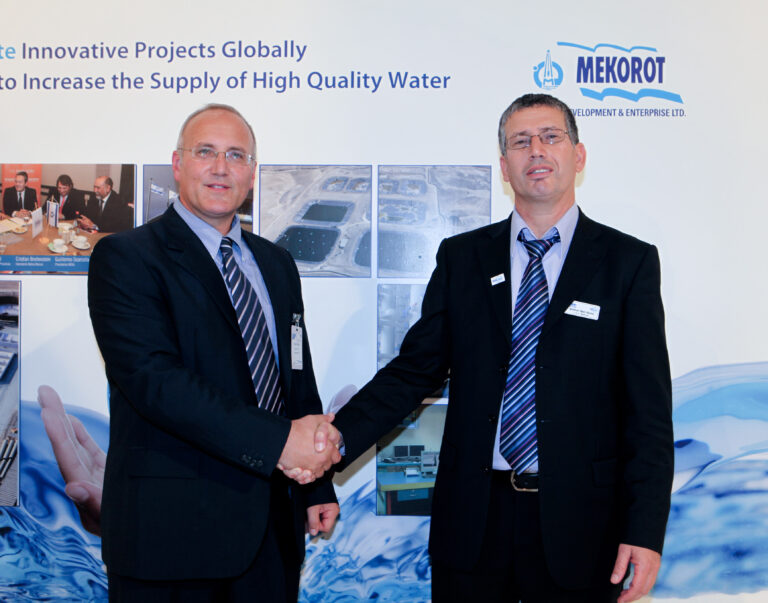
But two Israeli companies may be on the road to changing that all around. At Watec Israel, an international conference and exhibition on water technologies, renewable energy and environmental control, hosted from November 15-17 this year in Tel Aviv, Israeli national water company Mekorot agreed to a 20-year lease of a 100,000 square meter reservoir to Israel-based Aquate Group. Aquate specializes in floating reservoir covers that prevent a significant amount of the water from evaporating while providing a platform for renewable energy generation.

Possible End of Kyoto at Durban Threatens MENA Renewable Energy

1

COP 17 Kyoto-Durban-Clean-Development-MechanismCDM funding for renewable energy in emerging nations is endangered in Durban, South Africa

With the increasingly likely non-renewal of the Kyoto Accord after 2012 at this week’s international climate talks at the seventeenth Conference of the Parties (COP17) to the UN Convention on Climate Change in Durban, South Africa, renewable energy project funding throughout the developing world is threatened, impacting renewables in the emerging economies in the MENA region.

“It is possible that the CDM could be held to ransom,” Henry Derwent, the head of the International Emissions Trading Association told Climate Spectator in Australia.

A Quick Look at Egypt’s Environmental Agenda Ahead of Elections

0

Egypt, elections, environmental agenda, green parties, corruption, water conservation, pollution, sustainable agriculture, clean energy, alternative energyBefore now, the environment has been glaringly absent from Egypt’s political agenda, but our friends over at Almasry Alyoum have compiled a fantastic list of would-be parliamentarians who seek to change that.

Until now, the environment has never been on Egypt’s political agenda, but today’s parliamentary elections – albeit fraught with undue complexity and fears of corruption – could usher in a new era of nature representation. Almasry Alyoum environmental journalist Hoda Baraka (whose images of Siwa inspired the antidote to bigger, better, more) has sent us an excellent roundup of the different parties and individuals with a green platform who will seek election to Egypt’s parliament today. Hit the jump for a quick look at what kinds of issues are on the table and the people who are raising them.

Lamps Made With 50% Sawdust, Some Plastic Bags, and Some Ingenuity

0

sawdust lamps recycled upcycled plastic bagMade from sawdust and plastic bags alone, these adhesive-free lamps take leftover materials and make them shine again.

Plastic bags are an (unfortunately) abundant material that have been used in many ways by designers, but sawdust – though abundant as well – has not been used as frequently by sustainable Middle Eastern designers.  One other designer, Yoav Avinoam, has made furniture out of sawdust but his designs required a great deal of resin (perhaps not the most eco-friendly material).

Kulla Industrial Design – a team of two designers based in Israel – has found new and more environmentally friendly ways to use this waste material.  Combining sawdust with plastic bags and baking them together in molds, Kulla creates table lamps, pendant lamps and stools in their 50% Sawdust line.

Coin-Covered Car in Dubai “Recycles” Nearly $6,000

1

 This flashy car gives a whole new meaning to recycling! Image via Virendra Saklani/Gulf News

Reflecting the Emirati obsession with flashy cars, a Pakistani man has painstakingly coated a Chevrolet Camaro with thousands of “recycled” coins worth nearly $6,000. A longtime resident of the United Arab Emirates, Tarek Javaid has put 3,000 hours into the project since October last year, using 33,000 coins and 22 pounds of glue, according to Gulf News.

Javaid told the paper that he wants to donate the car to the UAE as part of the country’s 40th National Day celebration. Starting Tuesday, Dubai residents can catch a glimpse of this shiny mobile made up of  Dh1, 50 fils, 25 fils, 10 fils, 5 fils and 1 fils coins at Al Ghandi Auto on Shaikh Zayed Road. Far less obnoxious than the solid gold Mercedes, this costly Camaro will eventually become a museum relic.

Visit Gulf News for more information about the coin-covered car, which is revving up for Guinness World Records recognition.

Birth control pills make women feel unsexy

0

reproductive health, reproductive rights, women, sex, sexuality, birth control pill, contraception, hormones, pregnancy, pregnancy preventionThe birth control pill is one of the most popular forms of birth control in the world, but a new study finds that it can greatly diminish the sexual experience.

Pregnancy prevention, reproductive rights and health go hand in hand, with activists touting the importance of the birth control pill to advancing women’s sovereignty over their own bodies despite also deleterious consequences of those hormones making it into our water.  In our previous post on more eco-friendly ways to prevent pregnancy, we discussed some of the pros and cons of hormones and the alternatives. What was left unsaid, and often assumed by many, is that today’s birth control pills are vastly different from those used generations ago. Specifically, modern options have lower levels of hormones, and this could translate to fewer waste products finding its way into our water streams.

This may or may not be the case, however, a new study from Indiana University examined another assumption about those lower hormone levels, and found they interfere with a woman’s ability to enjoy her body to the fullest.

Specifically, many of the same problems related to women’s pleasure remain, despite formula and delivery changes to the birth control pill. What’s doubling vexing is that studies on a male pill are intent on pleasure first by making sure they don’t interfere with a man’s ability to maintain an erection.

From Sciencedaily.com:

An Indiana University study that examined how newer forms of hormonal contraception affect things such as arousal, lubrication and orgasm, found that they could still hamper important aspects of sexuality despite the family planning benefits and convenience.

“Contraception in general is a wonderful way for women to plan their families,” said lead researcher Nicole Smith, project coordinator at IU’s Center for Sexual Health Promotion. “It’s something women are often on for as many as 30 years or more; it plays a huge part in their life. If they’re experiencing these negative effects, they might stop using contraception correctly or altogether. They need to know that there are options, such as lubricants or other sexual enhancement products that may help to alleviate some of the negative effects they are experiencing.

“Women should also be counseled on the many highly effective forms of birth control currently available; switching to another method might work better for them,” she said.

The study involved 1,101 sexually active women split almost evenly between those using a hormonal form of contraception such as the pill, patch, ring or shot, and those women using a non-hormonal form, such as a condom, diaphragm, cervical cap or withdrawal.

The study, based on data collected by the Kinsey Institute’s Women’s Well-being study, which used an online questionnaire, found that the women reported similar levels of sexual satisfaction, which included things such as intimacy and romance, but the women using hormonal contraception experienced less arousal, fewer orgasms, difficulties with lubrication, decreased pleasure and less frequent sex.

“A great effort has been made to make condoms more pleasurable for men,” Smith said. “But you don’t hear about this same effort going toward reducing the negative impact of contraception on women’s sexual functioning. It’s just not part of the discussion.”

What’s the relevance to sustainability in the Middle East? In addition to opening up the dialogue about women’s reproductive well-being, studies like this support efforts to make love better, more organically, to fully unleash the numerous health benefits: improved mood, increased immune and cardio functions, brain growth, etc.

After all, chemistry without chemicals is an essential part of ecosex.

Read More Reproductive Health News:

GM Foods Shrinking Sexual Health in a Womb Near You

Ecosexy Condom Company “Love Begins With L” Empowering Female Health

Can a Male Birth Control Pill Save the Environment?

Saudi to Maintain Energy Hegemony with Postage Stamp-Sized Solar Cells

1

solar, cleantech, photovoltaic, saudi, canada, carbon emissions, greenhouse gas emissions, fossil fuels,Saudi Arabia is so confident that this postage stamp-sized will change the solar industry, they’ve invested $10 million into the project. Photograph by: Tim Fraser, Postmedia News

Saudi Arabia has no intention of falling out of power when its oil runs out, which is why the kingdom has backed a potentially “game-changing” solar cell project in Canada. Already the Gulf country has diversified its energy portfolio by building solar energy projects such as the 500-kilowatt plant located on Farasan Island – a sure sign that its leaders are preparing for peak-oil, which is expected to affect the world population as soon as next year.

But if we have any chance of off-setting the worst effects of climate change and saving our species from extinction, solar technology has to outstrip the cost and convenience of fossil fuels and nuclear. Canada Research Chair in nanotechnology Ted Sargent has persuaded Saudi that his postage stamp-sized solar cells have significant potential. The kingdom is so convinced, in fact, they have given him $10 million to perfect this tiny technology, which is painted with quantum dots.

Eid Ul Adha Divers Clean 80 Kilos of Undersea Trash

3

eid ul adha, red sea, trash clean up by divers

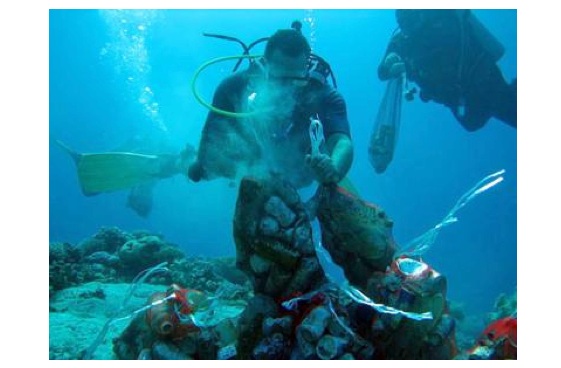
What’s an Aqaba trip over Eid Ul Adha without some snorkeling at the coral beds off Tala Bay of the Red Sea?  It’s your chance to star in your own National Geographic special.  Get knocked out by the natural beauty, then repulsed by the manmade trash.

Jordan Green Building Council Announces Creative Design Contest

0

jordan green leed buildingJoin a design contest and network with Jordan’s LEED-minded professionals.

Sometimes a simple link with like-minded souls can jump-start connection to fascinating places. As an American architect with a strong environmental bent, recently relocated from Dublin to Amman, it’s taking some time to find my professional sea-legs in Jordan. Idle Google-ing, fueled by cups of Arabic coffee, brought me to the doorstep of a place that feels like home: the Jordan Green Building Council – the JGBC. A tale as cheesy as labneh, but it’s true.

Bahrain’s Green Bar Offers Naturally Extravagant Fragrances

4

"natural cosmetics bahrain"Green Bar makes local, natural beauty products in an industry pumped with chemicals and toxic preservatives.

It’s tough enough being a woman without having to worry about nasty preservatives in cosmetics, or the loads of other bad things pumped into beauty products.  The natural world is filled with plants and flowers that have been used for centuries as beauty elixirs, and it is only a matter of reviving these methods and bringing them back to popularity.  One of these revivalists is the young Bahraini entrepreneur Reem Al-Khalifa, who founded Green Bar – an online shop for beauty products based on local floral oils and other natural ingredients.

“Time tested in different cultures, precious oils have been around before Queen Cleopatra,” Green Bar claims, “they only needed to be rebottled with some creativity, keeping all their simplicity.  It’s a primitive, effective, and naturally extravagant beauty ritual.”

After the Fire: Israel’s Carmel Forest Doesn’t Need Our Help

0

israel fire regrowthA year after the fire in Israel, Joshua finds new life at the ravaged Carmel Forest.

Israel experienced the largest wildfire in the country’s history nearly a year ago. The blaze broke out near Isifiya, in the Carmel region, on December 2, 2010.  Spreading over large swaths of land overnight, the fire quickly consumed 5,000 hectares before emergency crews extinguished it. Firefighters were able to gain the upper hand only after four days.  A large amount of fuel on the forest floor – dry material accumulated from a hot summer – hastened its progression.

It was a tragedy on both a geographic and human scale.  Fourty-four people perished. When the smoke cleared, a shocked country was left grieving and devastated.  After the funerals and memorials, Israelis considered their options.

The natural reaction for many was to begin replanting.

Crocodiles and Ostriches Outlawed For Skin and Meat in Israel

6

ostrich steaksOstrich steaks on the “hoof”? Not at Israel’s Yotvata Hai Bar wildlife refuge
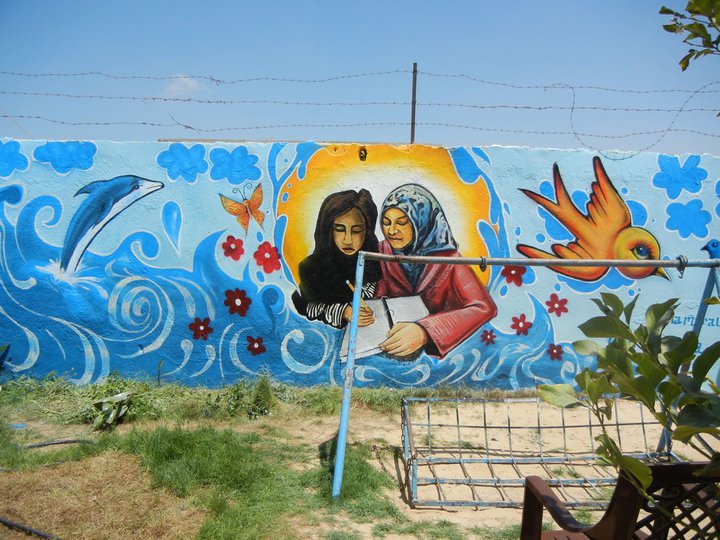
Is it right to raise what should be wild animals for use as leather goods or exotic food menu items in offbeat theme restaurants? These issues came to the forefront recently in Israel’s Haaretz newspaper: private “farms” are raising African crocodiles for making leather handbags and shoes, and ostriches for steaks for offbeat theme restaurants. Although both animals are now considered as being extinct in Israel (both were once indigenous to this country) their being raised on private farms will come to an end in 2012 when the country’s Nature and Parks Authority will cancel regulations that allow the raising of these animals for commercial purposes.

The Stunning Water Murals of Gaza (PHOTOS)

1

Water murals in the Gaza Strip explore the daily struggle with water shortage and water contamination

The Gaza Strip is known to indulge in political murals but water murals are definitely a new thing. Over the summer months, US activists along with local artists, teachers and school children got together to paint 8 murals exploring the water struggles of the Gaza Strip. Murals were painted on the walls of elementary schools and near water desalination units in areas such as Beit Hanoun, Rafah and Bureij Camp.