“In the midst of uncertain time, renewable energy remains consistent and steadfast in its expansion,” said Francesco La Camera, IRENA’s Director-General. “A more decentralised energy system, with a growing share of renewables and more market players, is structurally more resilient.”
Health insurance is a regulated financial product. Insurers operate under binding contracts, overseen by state insurance commissioners, that legally obligate them to pay claims meeting policy terms. Policyholders who believe a covered claim was wrongfully denied have legal recourse through state regulatory channels.
The New Zealand Merino Company, now rebranded as Zentera, has quietly removed the phrase “world’s leading ethical wool brand” from its website, a notable change that comes after a disturbing investigation by PETA Asia-Pacific into the company’s ZQ-certified wool supply chain, PETA reports to Green Prophet.
Somehow vegetables with short seasons excite the imagination and appetite more sharply than produce that’s available all year around. Good Middle Eastern cooks have many recipes for delicate fava beans, and this turmeric-fragrant soup is one.
“In the midst of uncertain time, renewable energy remains consistent and steadfast in its expansion,” said Francesco La Camera, IRENA’s Director-General. “A more decentralised energy system, with a growing share of renewables and more market players, is structurally more resilient.”
Health insurance is a regulated financial product. Insurers operate under binding contracts, overseen by state insurance commissioners, that legally obligate them to pay claims meeting policy terms. Policyholders who believe a covered claim was wrongfully denied have legal recourse through state regulatory channels.
The New Zealand Merino Company, now rebranded as Zentera, has quietly removed the phrase “world’s leading ethical wool brand” from its website, a notable change that comes after a disturbing investigation by PETA Asia-Pacific into the company’s ZQ-certified wool supply chain, PETA reports to Green Prophet.
Somehow vegetables with short seasons excite the imagination and appetite more sharply than produce that’s available all year around. Good Middle Eastern cooks have many recipes for delicate fava beans, and this turmeric-fragrant soup is one.
“In the midst of uncertain time, renewable energy remains consistent and steadfast in its expansion,” said Francesco La Camera, IRENA’s Director-General. “A more decentralised energy system, with a growing share of renewables and more market players, is structurally more resilient.”
Health insurance is a regulated financial product. Insurers operate under binding contracts, overseen by state insurance commissioners, that legally obligate them to pay claims meeting policy terms. Policyholders who believe a covered claim was wrongfully denied have legal recourse through state regulatory channels.
The New Zealand Merino Company, now rebranded as Zentera, has quietly removed the phrase “world’s leading ethical wool brand” from its website, a notable change that comes after a disturbing investigation by PETA Asia-Pacific into the company’s ZQ-certified wool supply chain, PETA reports to Green Prophet.
Somehow vegetables with short seasons excite the imagination and appetite more sharply than produce that’s available all year around. Good Middle Eastern cooks have many recipes for delicate fava beans, and this turmeric-fragrant soup is one.
“In the midst of uncertain time, renewable energy remains consistent and steadfast in its expansion,” said Francesco La Camera, IRENA’s Director-General. “A more decentralised energy system, with a growing share of renewables and more market players, is structurally more resilient.”
Health insurance is a regulated financial product. Insurers operate under binding contracts, overseen by state insurance commissioners, that legally obligate them to pay claims meeting policy terms. Policyholders who believe a covered claim was wrongfully denied have legal recourse through state regulatory channels.
The New Zealand Merino Company, now rebranded as Zentera, has quietly removed the phrase “world’s leading ethical wool brand” from its website, a notable change that comes after a disturbing investigation by PETA Asia-Pacific into the company’s ZQ-certified wool supply chain, PETA reports to Green Prophet.
Somehow vegetables with short seasons excite the imagination and appetite more sharply than produce that’s available all year around. Good Middle Eastern cooks have many recipes for delicate fava beans, and this turmeric-fragrant soup is one.
“In the midst of uncertain time, renewable energy remains consistent and steadfast in its expansion,” said Francesco La Camera, IRENA’s Director-General. “A more decentralised energy system, with a growing share of renewables and more market players, is structurally more resilient.”
Health insurance is a regulated financial product. Insurers operate under binding contracts, overseen by state insurance commissioners, that legally obligate them to pay claims meeting policy terms. Policyholders who believe a covered claim was wrongfully denied have legal recourse through state regulatory channels.
The New Zealand Merino Company, now rebranded as Zentera, has quietly removed the phrase “world’s leading ethical wool brand” from its website, a notable change that comes after a disturbing investigation by PETA Asia-Pacific into the company’s ZQ-certified wool supply chain, PETA reports to Green Prophet.
Somehow vegetables with short seasons excite the imagination and appetite more sharply than produce that’s available all year around. Good Middle Eastern cooks have many recipes for delicate fava beans, and this turmeric-fragrant soup is one.
“In the midst of uncertain time, renewable energy remains consistent and steadfast in its expansion,” said Francesco La Camera, IRENA’s Director-General. “A more decentralised energy system, with a growing share of renewables and more market players, is structurally more resilient.”
Health insurance is a regulated financial product. Insurers operate under binding contracts, overseen by state insurance commissioners, that legally obligate them to pay claims meeting policy terms. Policyholders who believe a covered claim was wrongfully denied have legal recourse through state regulatory channels.
The New Zealand Merino Company, now rebranded as Zentera, has quietly removed the phrase “world’s leading ethical wool brand” from its website, a notable change that comes after a disturbing investigation by PETA Asia-Pacific into the company’s ZQ-certified wool supply chain, PETA reports to Green Prophet.
Somehow vegetables with short seasons excite the imagination and appetite more sharply than produce that’s available all year around. Good Middle Eastern cooks have many recipes for delicate fava beans, and this turmeric-fragrant soup is one.
“In the midst of uncertain time, renewable energy remains consistent and steadfast in its expansion,” said Francesco La Camera, IRENA’s Director-General. “A more decentralised energy system, with a growing share of renewables and more market players, is structurally more resilient.”
Health insurance is a regulated financial product. Insurers operate under binding contracts, overseen by state insurance commissioners, that legally obligate them to pay claims meeting policy terms. Policyholders who believe a covered claim was wrongfully denied have legal recourse through state regulatory channels.
The New Zealand Merino Company, now rebranded as Zentera, has quietly removed the phrase “world’s leading ethical wool brand” from its website, a notable change that comes after a disturbing investigation by PETA Asia-Pacific into the company’s ZQ-certified wool supply chain, PETA reports to Green Prophet.
Somehow vegetables with short seasons excite the imagination and appetite more sharply than produce that’s available all year around. Good Middle Eastern cooks have many recipes for delicate fava beans, and this turmeric-fragrant soup is one.
“In the midst of uncertain time, renewable energy remains consistent and steadfast in its expansion,” said Francesco La Camera, IRENA’s Director-General. “A more decentralised energy system, with a growing share of renewables and more market players, is structurally more resilient.”
Health insurance is a regulated financial product. Insurers operate under binding contracts, overseen by state insurance commissioners, that legally obligate them to pay claims meeting policy terms. Policyholders who believe a covered claim was wrongfully denied have legal recourse through state regulatory channels.
The New Zealand Merino Company, now rebranded as Zentera, has quietly removed the phrase “world’s leading ethical wool brand” from its website, a notable change that comes after a disturbing investigation by PETA Asia-Pacific into the company’s ZQ-certified wool supply chain, PETA reports to Green Prophet.
Somehow vegetables with short seasons excite the imagination and appetite more sharply than produce that’s available all year around. Good Middle Eastern cooks have many recipes for delicate fava beans, and this turmeric-fragrant soup is one.
Medicinal plants have wide range of uses for mankind. Like clay jugs can clean water, plants can also be used to purify water in areas where sanitation is poor. Researchers from Kerela, India have found in a scientific study that certain local plant extracts “have the wonderful capacity to purify water and our environment due to the presence of various useful biochemical contents.”
An attempt was made to check the potential of selected medicinal plants to purify water. by researchers in Kerela, India.
Water pollution is a major environmental issue in India. The largest source of water pollution in India is untreated sewage. Other sources of pollution include agricultural runoff and unregulated small-scale industry.
The present study published in the Journal of Chemical Health Risks the researchers looked at the physical, chemical and bacteriological properties of water samples treated with coriander, moringa, azadirachta (neem) and ocimum (holy basil or tulsi), and compare it with properties of well water.
Plant extracts were prepared using the leaves of selected plants and were treated with polluted water. Their physical and chemical properites presence of e.coli bacteria and others were studied after treatment and compared with that of pure water which was taken as control.
SOCAR, an Azerbaijani state owned energy company continues to acquire stakes in strategic assets in foreign countries in line with its strategy to expand production footprint. It has bought a 10% stake in Israel’s natural gas fields in the Mediterranean Sea called Tamar.
Lebanon too could be energy independent if it were to stop the Hezbollah and develop peaceful energy pursuits. Lebanon’s Exclusive Economic Zone is a part of the Levant Basin: according to the USGS estimates, Lebanon could hold 850 bcm of offshore natural gas reserves and 660 million barrels of oil.
The US oil and energy giant Chevron already operates and holds a 25% stake in the Tamar gas field in the Med Sea. Other partners in the Israeli gas reservoir include Isramco, Tamar Investment 2, Tamar Petroleum, and Dor Gas.
Tamar
Since Israel first found natural gas fields off its Mediterranean coast more than a decade ago, and since the country has emerged as a gas exporter. The natural gas operations have put the country on a path to energy independence in a region with few natural resources.
Israel has been exporting gas from the Tamar field to its neighbor Jordan since 2017.
This is not the first attempt by SOCAR to enter the Israeli natural gas market but this is SOCAR’s first major investment in the Mediterranean Sea. The oil firm’s vision moving forward it so continue seeking strategic assets around the world to expand its energy portfolio.
In 2023, SOCAR joined a consortium including British multinational oil and gas firm BP and NewMed Energy to bid for licenses to explore and discover offshore natural gas fields in areas adjacent to Israel’s Leviathan field, one of the world’s largest deep-water gas discoveries.
Within the new framework, on January 31, 2025, an agreement was signed with Union Energy for the acquisition of 10% effective ownership in the Tamar field, located offshore of Israel, one of the largest and most strategically important gas fields in the Mediterranean basin.
“With this step, SOCAR has begun implementing investment in upstream projects in the Mediterranean region. The agreement was signed subject to certain conditions being met, including customary regulatory and other approvals,” announced the Azerbaijani government.
SOCAR will continue its efforts to acquire stakes in strategic assets in foreign countries in the future. It is a major source of income for the authoritarian regime in Azerbaijan.
In today’s world, sustainability isn’t just a buzzword—it’s a necessity. But living an eco-conscious lifestyle isn’t just good for the planet; it can also be great for your wallet. Many people assume that going green means spending more, but in reality, a well-planned green budget can lead to significant savings over time. Whether it’s reducing energy bills, cutting down on waste, or making mindful purchases, green budgeting is a win-win strategy for both your finances and the environment.
Understanding Green Budgeting
Green budgeting is the practice of aligning your financial decisions with environmentally friendly choices. It’s about being mindful of where your money goes and how your lifestyle impacts the planet. Instead of viewing sustainability as an added expense, think of it as a strategic way to save money while making ethical choices.
The Power of Small Changes
You don’t have to overhaul your life overnight to start benefiting from a green budget. Small, consistent changes add up over time. Let’s explore some areas where sustainability and saving money go hand in hand.
1. Energy Efficiency: Lower Bills, Higher Savings
One of the easiest ways to cut costs while living sustainably is by reducing energy consumption. Simple steps like switching to LED bulbs, unplugging electronics when not in use, and using energy-efficient appliances can lower electricity bills.
Example: I once replaced all the incandescent bulbs in my home with LED lights. The upfront cost was slightly higher, but within a few months, my energy bill dropped noticeably. Over time, I saved hundreds of dollars while consuming less power.
2. Sustainable Transportation: Save on Gas and Maintenance
Cycling with the jacaranda trees
Owning and maintaining a car is expensive. Gas prices fluctuate, and maintenance costs can add up quickly. By opting for public transportation, carpooling, biking, or even walking when possible, you can save a substantial amount.
Example: My friend, Sarah, decided to ditch her car in favor of a bicycle for her daily commute. Not only did she save on gas and maintenance, but she also improved her health and reduced her carbon footprint.
3. Mindful Grocery Shopping: Reduce Waste, Save Money
Grow your own food and learn to compost
Food waste is a huge issue, both environmentally and financially. By planning meals, buying in bulk, and choosing locally sourced foods, you can cut down on waste and save money.
Tip: Try meal prepping for the week. It helps you stick to a grocery list, avoids impulse buys, and minimizes food waste.
Example: I once calculated how much I was spending on food waste each month, and it shocked me. By being more intentional about meal planning and storing food properly, I managed to save at least $100 a month, which immediately was redirected into a secure savings account.
4. Thrift Shopping and Minimalism: Quality Over Quantity
Fast fashion and impulse buying are not only costly but also harmful to the environment. Choosing second-hand clothing, repairing items instead of replacing them, and embracing minimalism can lead to long-term financial benefits.
Example: A few years ago, I started shopping at thrift stores instead of buying new clothes every season. I found high-quality brands for a fraction of the price, and my wardrobe became more unique and sustainable.
5. DIY and Reuse: Get Creative and Save
Vintage finds will make your office look like a million bucks.
Instead of purchasing new household items or constantly buying disposable products, try DIY solutions and reusable alternatives. From homemade cleaning supplies to repurposing old furniture, there are countless ways to save money and reduce waste.
Example: Instead of buying paper towels, I invested in reusable cloth wipes. Over time, this small change saved me hundreds of dollars and significantly reduced my household waste.
Long-Term Green Investments That Pay Off
While some eco-friendly changes require an initial investment, they often lead to long-term savings.
Solar Panels: While costly upfront, they can drastically reduce (or even eliminate) electricity bills.
Smart Home Technology: Programmable thermostats and energy-efficient appliances pay for themselves over time.
Electric Vehicles (EVs): Although pricier than gas-powered cars, they save money on fuel and maintenance in the long run.
Final Thoughts: Green Living = Smart Financial Planning
Green budgeting is not about making sacrifices; it’s about making smarter choices. When you align your spending with sustainability, you naturally cut down on waste, save money, and contribute to a healthier planet. The key is to start small and build from there—every little effort counts.
By embracing an eco-conscious lifestyle, you’re not just helping the environment; you’re also securing a financially sustainable future. So why not start today? Your wallet—and the planet—will thank you.
Positive charges distributed in the air are concentrated near the conventional air-termination, so positive polarity lightning of the same polarity avoids the positive charges and possibly strike the side of the wind blade that is relatively negatively charged. Credit: Korea Electrotechnology Research Institute(KERI)
Wind turbines need to be built high to be effective but this makes them a magnet for lightning which can be disastrous –– and nothing a modern lightning rod has been able to solve. While some damaged wind turbines can be upcycled into glorious tiny homes (yes, we’d be happy to review a sample!), investors in turbine projects expect a return on investment.
A turbine can be struck by lightning and turned into a tiny home
Lightning strike on an unprotected wind turbine blade can raise its temperature to as high as 54,000° F (30,000° C), and result in an explosive expansion of the air within the blade. This expansion can cause delamination, damage to the blade surface, melted glue, and cracking on blade.
A team from Korea has developed the world’s first technology to prevent damage caused by “positive lightning,” which frequently occurs in offshore wind farms during winter.
Just as voltage has positive and negative poles, lightning also has positive and negative polarities. When clouds carry a positive charge and the ground carries a negative charge, positive polarity lightning strikes, while the opposite case results in negative polarity lightning.
About 90% of the lightning strikes that occur are negative polarity lightning, while positive polarity lightning occurs with a relatively low probability. However, positive polarity lightning has a much higher current intensity, increasing the likelihood of causing major accidents.
Additionally, positive polarity lightning primarily occurs in winter when the altitude of clouds is lower.
With the recent increase in demand for renewable energy, the construction of wind turbines has also been on the rise. In particular, in South Korea, there is a growing trend of large wind turbines specialized for low wind speed environments being moved offshore. However, offshore wind farms are highly vulnerable to lightning strikes from thunderclouds because the turbines are tall and there are few other structures around.
Damage to the blades (rotors) caused by such lightning strikes can lead to the shutdown of wind turbines, resulting in significant losses, including repair costs.
The negative polarity (-) lightning strikes the conventional air-termination (lightning rod), but the positive polarity (+) lightning, which occurs more frequently in winter, avoids it and strikes the relatively negatively charged side of the wind turbine blade. Credit: Korea Electrotechnology Research Institute(KERI)
KERI’s achievement is the development of a new edge receptor to protect wind turbine blades from positive lightning.
Currently, wind turbine blades are equipped with an air-termination system, a type of lightning rod that attracts lightning strikes to minimize damage. However, this system has low protection efficiency against positive lightning. Positive polarity lightning has a highly irregular pattern and a much higher current, requiring more advanced technology for effective protection.
Researcher Woo Jeong-min’s team conducted in-depth research on various polarities and conditions, and thoroughly analyzed the effects of the blade’s rotation angle and material. As a result the team found that, unlike negative polarity lightning, positive polarity lightning strikes the side edges of the blade, bypassing the air-termination at the tip and causing damage.
This happens because the positive charge in the air accumulates near the air-termination, and the positive polarity lightning, having the same charge, avoids it and strikes the middle part of the blade, which carries a negative charge.
The research team created a scaled-down model to thoroughly analyze the blades affected in these specific lightning vulnerability areas, and repeatedly conducted artificial lightning experiments using high-resolution cameras to accumulate data. They also used precision measurement systems and simulation technologies to replicate various blade rotation angles and environmental conditions during the experiments.
Through this, the research team was able to design a new edge receptor that optimally positions the air-termination along the side edges of the blade. They confirmed that this method can control the charge distribution of positive polarity lightning, minimizing the damage.
KERI analyzed wind turbine blades through artificial lightning experiments in the high voltage test facility. Credit: Korea Electrotechnology Research Institute(KERI)Comparison between conventional air-termination for lightning damage prevention (left) and KERI’s newly designed air-termination with an edge receptor (blue) to prevent positive lightning damage (right). Credit: Korea Electrotechnology Research Institute (KERI)
“With our technology, we will greatly contribute to improving the stability and efficiency of wind turbines, promoting the expansion of renewable energy, and ultimately have a positive impact on reducing electricity bills for consumers,” says Jeong-min
The results of this study are published in Results in Engineering.
Waldorf schools are an alternative school system compatible with protecting the earth. This is my son’s Shemesh class in eurythmia. Photo by Karin Kloosterman.
Tel Aviv has broken a school that it should have celebrated and protected.
I was sure I’d homeschool my daughter. We lived in Jaffa and I spent time volunteering at a school teaching English at a school there. We lived near schools. They were not places I’d want my kid to ever go: shouting, violence, phones, an aggressive atmosphere, like the streets of Tel Aviv in traffic on a hot summer day. By chance one day out for a walk with my toddler I came across what looked like heaven, a city garden in Jaffa with trees and a pile of kids playing on them. I stepped up to the gate and by chance met the principal, Orna Shem-Tov. She’d created a private Waldorf School in Tel Aviv-Jaffa called Aviv along with high-tech and arts and fashion parents from around the city. They had a dream about a new way of educating kids that is focused on heart not heuristics.
These kids make paper in pre-school. Parents jump in and teach arts and crafts. Karin Kloosterman
Anthroposophic schools, also known as Waldorf or Steiner schools are a school system created by Rudolph Steiner in 1919 Germany, one which puts the creative and spiritual growth of a child over the speed of learning math and to read. It’s the school where Silicon Valley startup founders in California put their kids –– counter-intuitively away from phones, away from technology. It’s where Steve Jobs sent his kids.
Waldorf kids use chalkboards and pencil crayons instead of learning how to code. They jump rope every morning, each getting a turn to hold the rope. They knit socks, they felt, they use saws and hammers and learn carpentry and how to use sewing machines. They draw fractals, plant gardens, build with clay. They are taught soft skills of imaginative play, craft and trades, and cooperation and respect.
We joined Aviv when my daughter was 2, and my son at the same age, 12 years ago, effectively helping to build the community up to its goal of grade 8, as is the format in the Waldorf way. Many of us didn’t buy cars or family holidays or rent a bigger apartment so we could pay for the school fees.
The cost was high but we saw no alternative and paid for this private school. The walls were shabby, the budgets were strained but the parents and the teachers covered for what was lacking: we donated furniture, pitched in an painted, sewed curtains, built accessibility ramps, and planted trees. We adopted refugee children to attend along with our kids. Our agenda was integrating everyone who believed in this gentle way.
Boys from the Shemesh class, Reut. Karin Kloosterman
My kids were quiet, satisfied and played their way to grade 1. They started at age 7, instead of 6 to mature just a little more. When the missiles rained on Israel over the years from Gaza, the kids would sing their way to bomb shelters. Us parents didn’t listen to the news in front of the kids. They were protected from adrenaline spikes and the violence and chaos of conflict and terror attacks. We tried our best during Covid to find a hybrid way to teach our kids without screens.
I had developed a community of friends and so did my kids. We enjoyed shared, simple birthday parties without clowns and plastic, and an overload of sugar. Our kids ate healthy food at school and we went on community hikes and dinners together. We built school plays and festivals together. We agreed to keep phones out of the school, and that video games like Fortnite were not for us. At one point we schooled about 400 children each year.
We agreed that together we could protect our kids and help them flourish.
The arts and crafts teacher NoaA class chalkboard
Covid came and devastated our pre-schools, one of the ways we funded the upper grades. Many parents stopped paying fees in the upper grades they couldn’t afford, and the building we were renting in Mikve Israel wanted to double our rent.
An enterprising parent started working with the city to find a way to help. Like veganism, Israel has the highest number per capita of Waldorf-educated children in the world. This time, the city of Tel Aviv didn’t kick us away, as Ron Huldai did 10 years ago –– not wanting yet another stream of school in the city. This time they embraced us –– as did the head of Tel Aviv’s education department Shirly Carmon who promised us a way for our school to survive and even thrive in the city now embracing alternative schools.
We would have to accept some things about the city plan, including splitting from our age 14 year cycle of Grade 1 to 8, and start a middle school from grades 6 to 9. But the promise would be finally a high-school, and resources that rich cities like Tel Aviv can give schools.
I learned the hard way not to trust the government. Many parents in my school were terrified and did not want to join the public system. I urged them to think differently. We were promised unity in one location in Jaffa, that our classes could stay together as a community, and that we’d have autonomy over our day.
Mud building at school
What’s happened is Ron Huldai integrated kids who jump rope and knit with the hardest scrabble community in Jaffa at a school called Ironi Zayn which is barely reaching one-third enrolment capacity. This school sees us as a “tract” in their school and does not share the Waldorf spirit. The joke is on us.
Ron Huldai, the mayor of Tel Aviv who touts Tel Aviv as being a green city, also sued our school a decade ago in the Supreme Court to shut us down. This is after we won a city court ruling in Tel Aviv that we should be recognized as a city school and support from the city about a decade ago. Our school’s parents and grandparents paid the million shekel lawsuit.
Despite there being a number of large school buildings available in Jaffa right now that could have contained our entire community, the city split our grades 7 and 8 and patched them into what would be a future high-school inside a failing, violent school in Jaffa.
Learning how an old printing press works
The “integration” of children so different from ours has become a point of contention and where our school is breaking. While the city managed to embrace our Grade 1 to 6 model they are failing in the higher grades.
My son’s Grade 6 class of 30 beautiful children will split in half, with half the kids going to private schools or a specialty arts or science school in Tel Aviv. Some will stay believing in the dream and that in a few years we might finally get what we want. Others don’t want to experiment on their kids and are trying to move over to the city of Givatayim, which has the best two schools in the country: Zomer, a Waldorf School successful high-school and Thelma Yellin, the best art school in Israel. Tel Aviv, startup city central, has ruined a thriving middle school community that held so much promise.
The city promised us that by 2025 all our classes would move from the run-down building on Pachad Itzhak in Jaffa where there is no gym and facilities and that we’d be together as one community Grades 1 through 9 in the same environment side by side. We recruited our families, friends and loved ones to join our school –– and now? They promised we’d have our own management, could manage our day –– when in reality they stuck our kids besides troubled special needs children that curses them. Our frame is now locked into a normative school with the regular times to run between classes.
The parents put on a play for a class birthday party
It’s not all terrible, says one parent who had no choice but to send her kid there because his friends are there and she doesn’t believe in the other options as better, “but it’s not a Waldorf School”. Mothers have told me told me about violent incidents against girls in words and in actions and generally the violent environment the kids need to walk through in the halls every day.
Ron Huldai and Shiri Carmon, who has now completed her mission in education by bringing in more “numbers” has left the building and has gone to politics. She and Huldai hoodwinked families and the most beautiful community in Jaffa. While there is enthusiasm and a growing interest in Tel Aviv’s Waldorf and the beautiful school that we built in the lower grades, when you look to middle school, from grades 7 and 8, the city has sold us out.
We don’t know if my son will move to Grade 7 at the school we now call Reut at Ironi Zayn. I know he can survive anywhere because that’s what I have taught him. Many parents I have known for 10 years, parents of my son’s best friends who live in Jaffa, say that they cannot continue at such a violent atmosphere so if we stay my son will lose his most gentlest of friends. The city’s education department, now headed by Dana Levin, lied to us. They did not protect our gentle, and precious Waldorf way of life. Teachers are suffering burnout running from one location to the next and kids are leaving to other schools.
I reached out for a comment from the Tel Aviv Municipality from the new head of education Dana Levin, Ron Huldai, Deputy Mayor Assaf Zamir. My requests were ignored. My previous requests for covering “positive” news stories about Tel Aviv were responded to by their spokesperson.
Water-poor Jordan is home to numerous organizations dedicated to environmental conservation and sustainability. Here are ten prominent eco-organizations making significant contributions. Jordanians are extremely positive and friendly people. It’s worth a visit.
Royal Society for the Conservation of Nature (RSCN): Established in 1966, RSCN is an independent national organization committed to protecting Jordan’s natural resources. It manages several nature reserves and spearheads efforts in wildlife conservation and environmental education.
EcoPeace Middle East: This unique organization brings together Jordanian, Palestinian, and Israeli environmentalists to promote sustainable development and peace in the region. Their initiatives focus on water conservation, ecological rehabilitation, and fostering cross-border cooperation.
Jordan Environmental Union (JEU): Serving as a national advocacy front, JEU comprises nine of Jordan’s most active environmental NGOs. Their collective efforts cover various environmental sectors, promoting stewardship and conservation across the country.
Jordan Green Building Council (JGBC): Dedicated to promoting sustainable building practices, JGBC works to raise awareness and implement green building standards in Jordan’s construction industry.
Jordanian Friends of the Environment (JOFOE): This organization focuses on environmental education and awareness campaigns, encouraging community involvement in conservation efforts.
Energy Conservation and Environment Sustainability Society (ECESS): ECESS advocates for energy efficiency and the adoption of sustainable practices to reduce environmental impact.
Jordanian Society for Desertification Control and Badia Development (JSDCBD): Committed to combating desertification, this society implements projects aimed at land rehabilitation and sustainable development in arid regions.
Climate Action Network (CAN) Jordan: CAN Jordan works to address climate change by fostering partnerships among local communities, businesses, and government bodies, aiming to transition towards a sustainable society.
Jordanian Royal Ecological Diving Society (JREDS): Focusing on marine conservation, JREDS conducts activities related to the protection of marine ecosystems, particularly in the Gulf of Aqaba.
Edama Association: Edama is a business association that seeks innovative solutions in energy, water, and environment sectors, promoting sustainable development in Jordan.
Amman, Jordan’s bustling capital, is not just a city of ancient ruins and vibrant souks—it’s also home to a growing number of eco-friendly parks and green spaces. These areas offer a refreshing escape from urban life while promoting sustainability and environmental awareness. Here are ten eco-conscious parks and spaces you should explore in Amman:
Al Hussein Public Parks – A sprawling space with beautifully landscaped gardens, cultural exhibits, and recreational areas. It’s designed to promote environmental awareness through its natural features and sustainable landscaping.
King Hussein Park – Known for its wide-open green spaces, walking paths, and eco-friendly design, this park is perfect for families and nature lovers looking to unwind in an urban setting.
Sharhabil Bin Hassneh EcoPark – Located just outside Amman, this eco-park is a haven for biodiversity. It offers hiking trails, bird-watching spots, and environmental education programs focused on sustainability and conservation.
Jordan EcoPark – Nestled in the Jordan Valley, this park is a model for eco-tourism. Visitors can explore its diverse wildlife, scenic trails, and learn about local conservation efforts.
Wild Jordan Center – More than just a park, this eco-tourism hub in downtown Amman promotes sustainable living through eco-friendly workshops, organic products, and breathtaking views of the city.
The Hashemite Plaza – While known for its Roman ruins, the plaza also features green spaces that blend historical charm with sustainable urban design, creating a balance between culture and nature.
Prince Hashem Bird Garden – A peaceful sanctuary for bird lovers, this garden offers a safe habitat for local and migratory birds while educating visitors about avian conservation efforts.
Japanese Park – A serene space inspired by Japanese garden aesthetics, promoting harmony with nature and mindfulness through minimalist landscaping and eco-friendly principles.
King Abdullah Park – A favorite among locals, this park offers ample green space, shaded walking paths, and recreational facilities designed with environmental sustainability in mind.
Zahran Park – A community-focused park known for its lush greenery and commitment to maintaining a clean, eco-friendly environment for residents and visitors alike.
These parks showcase Amman’s dedication to blending green spaces with sustainable living, offering both locals and tourists a chance to connect with nature while supporting eco-friendly initiatives.
Electric bikes and scooters has transformed the way pedestrians can zoom around a city and town with ease – especially during the last mile of public transport. City and town life can be a whirlwind of bustling streets, crowded public transportation, and fast-paced changes.
For seniors, navigating this dynamic environment can pose unique challenges, particularly when it comes to maintaining independence and mobility. This is where e-mobility solutions, especially electric tricycles, step in as a game-changer. Mooncool sent us an electric bike to review and we are waiting for our off-grid “pilot” Raven to have enough winter battery and snowmelt for her review.
The Mooncool bike comes 80% assembled in a big box, ready to roll. Easy for older people to put together.
Meanwhile:
Why E-Mobility Matters for Seniors
Mobility isn’t just about getting from point A to point B; it’s about preserving autonomy, staying socially connected, and maintaining mental and physical health. Just like new moms enjoy using the baby stroller for carrying small purchases made at the mall or market, an e-bike can help older people maintain mobility and allow them to do their every day shopping and errands. As people age, traditional modes of transportation may become less accessible. Buses are hard to alight, and can be slow and overwhelming. Driving can be stressful or unsafe due to declining reflexes or vision issues. Some people choose to not keep a car in the town or city for its restrictive cost and upkeep on insurance and repairs.
Enter electric tricycles—a perfect blend of stability, ease, and efficiency. With three wheels, these bikes offer the balance seniors need, eliminating the fear of tipping over. Plus, the electric assist reduces the physical strain, making it easier to travel longer distances without exhaustion. E-bikes are getting their moment in the sun for wheeling kids around the city. Seniors want their turn.
The Advantages of Electric Tricycles
Enhanced Stability and Safety: The three-wheel design offers a solid foundation, reducing the risk of falls. This is where company’s like Mooncool safety design for elder people truly shines, providing extra features tailored to senior needs, like anti-slip pedals, low step-through frames, and ergonomic seating. The grandkids like to jump on the back!
Affordable Transportation: Owning a car comes with hefty expenses—fuel, insurance, maintenance. Electric tricycles, on the other hand, are a one-time investment with minimal upkeep costs. They’re an affordable solution for seniors looking to maintain mobility without breaking the bank.
Eco-Friendly Choice: E-trikes produce zero emissions, making them a green alternative to cars. Seniors who care about leaving a positive environmental legacy will appreciate this eco-conscious option.
Health Benefits: While the electric assist helps on tough terrains, riders can still engage in light physical activity, promoting cardiovascular health, joint mobility, and mental well-being.
Mooncool Safety Design: Built with Seniors in Mind
When it comes to senior mobility, safety isn’t negotiable. Mooncool safety design for elder people prioritizes features that address common concerns:
Low Center of Gravity: Reduces the risk of tipping over, even on uneven surfaces.
Comfortable Seating: Ergonomic seats with back support reduce strain during longer rides.
Visibility Features: Built-in lights and reflectors improve visibility in low-light conditions.
These thoughtful design elements help seniors feel confident and secure, encouraging more frequent use and greater independence.
Affordable Freedom in the City
For seniors, the cost of mobility options can be a barrier. But electric tricycles are an affordable alternative that offers long-term value. They eliminate the recurring costs associated with cars and provide the freedom to explore the city without relying on public transport or family assistance.
Moreover, many cities are expanding bike lanes and e-mobility infrastructure, making it safer and more convenient than ever to use electric tricycles. Seniors can run errands, visit friends, and enjoy outdoor spaces, all while maintaining control over their schedule.
These open, hand-held breads are really in a class of their own. You bite into a light, flexible crust that holds a spicy lamb filling. It’s so good. Take another bite or two. Before you know it, you’re already reaching for another one.
It’s an easy enough recipe, but it does require time and some exotic ingredients: tahini, pomegranate molasses, and sumac powder. All are available at Mediterranean grocery stores or online, and it’s worth buying and getting to know them. Tahini, or sesame seed paste, is a familiar condiment in Middle Eastern cuisine. (Discover 8 ways to eat tahini) Pomegranate molasses is a syrup of pomegranate juice that lends a slight sweet/sour taste to food. (Try our Almond Torte with Pomegranate Molasses.) I like to add a small amount of it to salad dressings. In meaty dishes such as this, it balances the earthiness of tahini and the bright flavors of the ground spices. Sumac imparts a sourish taste, like lemon, and an attractive red color.
When I first started eating these non-Western foods in Israel, I was startled by the presence of cinnamon in lamb dishes. But I soon realized how right it tastes. It sets off the slight gaminess of the meat and brings all the elements together.
Lahmacun, or lahmajoun are fun to eat folded over and out of hand, as a snack or finger food. If you prefer to make bigger pastries, they also make a satisfying meal.
Serve with a good mixed salad.
How to make Turkish flatbread with meat
How lucky that making this incredibly flavourful Turkish classic at home is so simple.
For the dough
2 1/2 cup all-purpose flour
1/2 tablespoon salt
1 1/2 teaspoon active dry yeast
1/2 teaspoon baking powder
1 tablespoon sugar
1 large egg
1/2 cup sunflower or olive oil
1/2 cup water
2 tablespoons olive oil for brushing dough circles
For the topping
10 ounces ground lamb
1 large onion
2 medium tomatoes
2 tablespoons tahini (the raw paste, not prepared, ready-to-eat tahini)
1 1/2 teaspoon salt
1/2 teaspoon ground cinnamon
1 teaspoon ground allspice
2 tablespoons parsley (finely chopped)
1 tablespoon fresh lemon juice
1 tablespoon pomegranate molasses
1 tablespoon ground sumac
4 tablespoons tablespoons pine nuts (reserved)
A pinch cayenne pepper (or more to taste)
Make the dough.
In a large bowl, blend the flour, salt, yeast, baking powder and sugar.
In a small bowl, beat the egg and add the oil. Mix.
Push a space open in the center of the flour. Pour the egg mixture into the space. Start adding the water, stirring.
Mix to obtain a light dough. Knead a few minutes. The dough will be greasy; that’s fine.
Cover the bowl with plastic. (Or you can recycle a clean grocery bag.) Set in a warm place to rise 1 hour.
Make the topping. Chop the onion finely in the food processor, or by hand.
Chop the tomatoes finely; no need to peel them. This is best done by hand.
Keep the pine nuts separate. Mix onion, tomatoes, and the remaining filling ingredients in a bowl. Use a wooden spoon to mix everything extremely well, or knead the mixture by hand until all the ingredients are integrated.
Preheat the oven to 375° F (180° C).
Line two baking trays with baking parchment.
Divide the dough either into 8 or 16 equal pieces. It won’t have doubled in size. Roll out the pieces into circles 1/16” thick (2 mm.). Brush each circle with olive oil on top and bottom. Set the dough circles to rise, 15 minutes.
Top the dough circles with the lamb mixture. If baking large lachmajoun, use 2 tablespoons each. If baking snack-sized ones, use 1 tablespoon. Spread the topping out to the edges of the dough. Sprinkle some pine nuts over each lachmajoun.
Allow to rise another 15 minutes.
Bake 15 minutes. The dough should be baked through but still flexible, and the lamb cooked through but not dry.
Serve warm.
You may need to adjust the flour quantity to obtain a dough that’s light, but not ropey nor stiff. You won’t need to flour your work surface, as the dough won’t stick.
Lahmajoun pastries re-heat beautifully, so they’re a good make-ahead choice for party fare or as one of those foods you freeze for lazy weekends. Take them straight out of the refrigerator or freezer and pop them into the oven preheated to 350° F (175° C). Heat refrigerated pastries 10 minutes; heat frozen lahmajoun 15 minutes.
Saudi Arabia Railways (SAR) and the Italian hospitality company Arsenale have officially unveiled the final designs for the ‘Dream of the Desert’, the first five-star luxury train in the Middle East.
This milestone follows the 2024 agreement between SAR and Arsenale to bring this groundbreaking project to life.
Designed by architect and interior designer Aline Asmar d’Amman and her studio, Culture in Architecture, the train’s interiors draw inspiration from desert landscapes and traditional Saudi architecture. The design features exquisite craftsmanship, earthy tones, luxurious textiles, and intricate details, evoking iconic landmarks such as Hegra and Hail.
The train comprises 14 carriages, including 34 luxurious suites, offering a one-of-a-kind experience for travelers. Departing from Riyadh, it will traverse the Northern Railway network, allowing passengers to explore Saudi Arabia’s rich heritage and stunning natural sites.
Onboard, guests will enjoy specially curated cultural programs developed in collaboration with the Ministry of Culture, transforming the journey into an immersive celebration of Saudi traditions.
Set to launch by late 2026, Dream of the Desert is not just a luxury train—it symbolizes Saudi Arabia’s bold vision for the future of tourism.
Seres Therapeutics started its first FDA-approved product, a drug called Vowst made of bacterial spores derived from donated feces at $17,500 a course in 2016.
The study, published Jan. 25 in Nature Communications, is part of a phase 2 clinical trial led by clinicians at Fred Hutch Cancer Center. The study builds on earlier research of the role of the gut microbiome in helping patients recover after stem cell transplantation.
“The gut microbiome is an organ in itself, and it is connected to the immune system,” said lead author Armin Rashidi, MD, PhD, a medical oncologist at Fred Hutch. “Since the process of stem cell transplantation damages the gut microbiome, we want to see if FMT will help restore microbial diversity and promote the beneficial bacterial species that support a healthy immune system.”
Vowst by Seres
The study included 20 patients who underwent allogeneic stem cell transplantations for various blood disorders including blood cancers. They then received FMT via oral capsules taken three times a day for seven days. The capsules contained a purified community of microbes derived from stool samples from three healthy donors.
Fecal microbiota transplant (FMT), also known as a stool transplant, is the process of transferring fecal bacteria and other microbes from a healthy individual into another individual. During a normal vaginal birth, mothers pass stool samples to their children providing them gut immunity in the early days of life.
The capsules were manufactured by the University of Minnesota Microbiota Therapeutics Program in accordance with the FDA-approved investigational protocols and strict pharmaceutical standards.
One fecal donor had the most powerful poop in the study.
“Although the capsules were originally developed for treatment of recurrent Clostridioides difficile infection, they are now being investigated for a multitude of different indications,” said Alexander Khoruts, MD, coauthor of the paper and a gastroenterologist at the University of Minnesota Medical School. “Unlike treatment of C. difficile, most indications require optimized formulations of gut microbes.
“The Fred Hutch trial illustrates this next phase in the development of donor-derived microbial therapeutics.”
Key Findings:
Donor Differences Matter: The trial analyzed three different FMT donors and found notable differences in how well each one established itself in the recipient. Donor 3 emerged as the most effective, achieving a 67% microbiota engraftment rate. This means of all the microbes after FMT whose origin could be determined with certainty, 67% came from the donor and the remaining were from the patient. This “winning” donor was characterized by high levels of Bifidobacterium adolescentis, a beneficial microbe.
Microbiota Diversity Influences Success: Consistent with prior research, the study found that lower pre-FMT microbiota diversity in patients was associated with better donor microbiota engraftment. This suggests that less diverse pre-FMT gut environments may make it easier for transplanted microbes to establish themselves.
FMT is Safe: FMT was shown to be safe even in highly immunocompromised patients. The transfer of millions of live microbes to the patient did not cause any infections, likely because they were “healthy” microbes from a healthy donor. Engraftment reached 100% for some microbial species known to support overall gut health and protect against graft-versus-host disease.
“Our study shows that when done following proper regulation in a clinical trial, FMT is safe,” Rashidi said. “There had been concerns of giving live microbes to people who are immunocompromised, but this study and our 2023 study before it show no major toxicity, which should be reassuring to patients and their families.”
“The hope of using FMT with people receiving stem cell transplants is that FMT will help prevent acute GVHD without adding more immunosuppression, improve quality of life, and decrease mortality after transplant,” Rashidi said. “Our findings published in Nature Communications give another evidence-based example of how the gut microbiome can be used to improve human health.”
Other clinical trials investigating fecal transplants focus on treatments for autism, colitis, inflammatory bowel disease, and irritable bowel syndrome.
In 2023, the U.S. FDA approved oral FMT to treat an infectious form of diarrhea.
Get paid to poop?
Get paid to poop
GoodNature company collects poop from healthy people, which is then used to create therapies and medical treatments for patients with stomach-related infections. They pay them to poop.
Jennie Starr is the Marketing and Communication Director for GoodNature, which is owned by Seres Therapeutics. “It all has to be done here, and that’s intentional,” said Starr. “We see you in person, so we have control over the materials you provide.”
Prospective donors can see if they’re eligible by filling out an online questionnaire at goodnatureprogram.com. They must then pass a phone interview and have a few stool samples taken to see if they qualify. Approved donors can then decide how many times they want to stop by every week to make a deposit, earning between $25 and $75 per visit.
CBD can have a positive effect on the love hormone. New research says it holds back the urge for alcohol.
CBD, a component from medical cannabis, may hold promise as a tool to help people reduce problem drinking, according to a new study published in Alcohol: Clinical and Experimental Research.
Cannabidiol, commonly known as CBD, modifies the activity of the parasympathetic nervous system and reduces physical signs of anxiety and self-reported craving for alcohol in people with alcohol use disorder. No adverse side effects, such as drowsiness or cognitive issues, were observed during the short-term regimen.
The authors of the study recommend more research to determine whether CBD could be an effective treatment to help people recover from alcohol use disorder.
CBD is non-psychotropic chemical found naturally in cannabis. It can be isolated from other molecules such as THC so that you don’t experience the high when you use it. CBD can be found in drinks, vitamins and even coffee products in the US.
The latest study sought to examine whether CBD could modify craving and dysregulated responses to alcohol cues in people with alcohol use disorder. CBD is a natural component of the cannabis plant that does not produce psychoactive effects.
Australian researchers administered 800 milligrams of CBD per day or a placebo for three days to adults with alcohol use disorder. Participants’ craving and mood were assessed periodically using questionnaires, and physiologic responses were measured using electrodes on the skin, including while the participants were in the presence of alcohol, and audio and visual cues related to drinking.
CBD was found on several measures to have beneficial effects on anxiety and craving, compared to placebo. Participants who had been administered CBD showed elevated high-frequency heart rate variability, indicating increased activity in the parasympathetic nervous system, which helps the body relax during times of stress and may reduce the feeling of needing a drink.
Participants in the CBD sessions also reported reductions in anxiety from baseline to exposure to alcohol cues, while the placebo group reported increases in anxiety. During exposure to alcohol cues, activity in the parasympathetic nervous system did lessen somewhat, but after the alcohol cue task, the CBD group reported reduced craving for alcohol, whereas the placebo group did not.
The study also found that participants tolerated CBD well; no significant side effects were reported. There were no significant differences between the CBD and placebo groups on any measures of cognitive functioning, including visual attention, processing speed, and basic motor function. Participants did not report significantly higher sedation following CBD administration compared to placebo.
Previous research has found that heavy drinking is associated with heightened levels of anxiety and stress and contributes to relapse. Animal studies have found CBD to have neuroprotective effects and reduce anxiety and craving. The current study’s findings that CBD may reduce symptoms of anxiety and craving without negatively affecting executive function or alertness signify that it may have therapeutic potential for people with alcohol use disorder. The study’s generalizability is limited by its small sample size, particularly of male participants, but it provides guidance for larger and longer human therapeutic efficacy studies.
Israeli American physician Alan Shackelford was the first to treat children, using CBD. He helped legalize cannabis as medicine in Colorado where he practices.
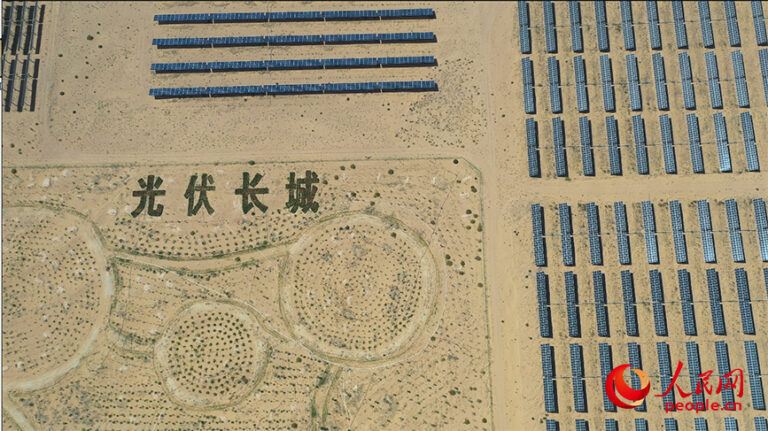
Deep in the Kubuqi desert in north China’s Inner Mongolia Autonomous Region, rows of blue solar panels glisten under the winter sun, converting sunlight into electricity that flows into thousands of households. Sandy and mostly devoid of life, the Kubuqi Desert in Inner Mongolia once had a reputation for being a “sea of death.”
Now, according to NASA tracking solar power developments in China, China’s dune fields have become a sea of solar energy, transformed by a surge of newly installed solar panels. The construction is part of China’s multiyear plan to build a “solar great wall” designed to generate enough energy to power Beijing. China is now the world’s biggest producer of solar power.
The project, expected to be finished in 2030, will be 400 kilometers (250 miles) long, 5 kilometers (3 miles) wide, and achieve a maximum generating capacity of 100 gigawatts. So far, Chinese officials say they have installed about 5.4 gigawatts. The US Geological Survey which is part of the Department of The Interior captured photos from 2017 to 2024 to show how quickly the plant has expanded.
China wall of Sun, via NASA
The Kubuqi’s sunny weather, flat terrain, and proximity to industrial centers make it a desirable location for solar power generation. Panels are being installed in a long, narrow band of dunes just south of the Yellow River between the cities of Baotou and Bayannur. NASA’s OLI (Operational Land Imager) and OLI-2 on Landsat 8 and 9 captured this pair of images showing the expanding footprint of solar farms between December 2017 (left) and December 2024 (right).
The solar farm that resembles a galloping horse—Junma Solar Power Station—was completed in 2019, setting a Guinness world record for the largest image made of solar panels.
It generates approximately 2 billion kilowatt-hours of electricity each year, enough to meet the yearly electricity needs of 300,000 to 400,000 people.
Junma means “fine horse” in Mandarin.
In addition to generating power, planners hope that the installation will have other benefits. They think it may help curb desertification by preventing the movement of dunes and slowing winds. Also, the elevated panels create shade that slows evaporation and may make it easier to grow pasture grasses and other crops beneath them. Analysis of Landsat data indicates that solar projects have contributed to the greening of deserts in other parts of China in recent years.
Since 2024 China leads the world in solar energy production
As of June 2024, China led the world in operating solar farm capacity with 386,875 megawatts, representing about 51 percent of the global total, according to Global Energy Monitor’s Global Solar Power Tracker.
The United States ranks second with 79,364 megawatts (11 percent), followed by India with 53,114 megawatts (7 percent).
The solar great wall in China
China’s solar growth has been particularly rapid during the past decade. Between 2017 and 2023, the country’s operational solar capacity surged by an average of 39,994 megawatts per year. The solar capacity of the United States expanded by an average of 8,137 megawatts over the same period.
Beneath the panels, different types of shrubs stand tall despite their dormant yellowed leaves, shielding the land from wind and sand.
“By the end of 2023, this one-gigawatt solar power project was successfully connected to the grid, transforming over 30,000 mu (about 2,000 hectares) of desert into a sea of solar blue, with thriving vegetation flourishing beneath the panels,” said Na Guiting, who is responsible for the solar great wall project.
The project Na is working on is the first phase of the Kubuqi Desert Ordos Central-Northern New Energy Base.
As one of China’s first large-scale renewable energy bases with a capacity exceeding 10 gigawatts, the base is set to develop eight gigawatts of solar power, four gigawatts of wind power, and four gigawatts of supporting coal power.
The electricity generated will be transmitted to the Beijing-Tianjin-Hebei region through an integrated system combining solar, wind, coal, and energy storage, with 230,000 mu dedicated to photovoltaic sand control.
Once the project is completed, it will deliver approximately 40 billion kilowatt-hours of electricity annually to the Beijing-Tianjin-Hebei region, with over 50 percent coming from clean energy sources, according to Na.
It is equivalent to saving about 6 million tonnes of standard coal and reducing carbon dioxide emissions by around 16 million tonnes each year, Na added.
The solar great wall
The Kubuqi project exemplifies China’s broader effort to integrate renewable energy with ecological restoration. In the arid expanses of northern China, advanced technology is reshaping the battle against desertification, turning it into a narrative of resilience and renewal.
“I never would have imagined that as a farmer, I could find work in the sand dunes,” said Qin Zhaoping, a resident of Hengliang Township in Gansu’s Gulang County. His job involves adjusting the sprinkler irrigation systems beneath photovoltaic panels and tending to the thriving sand plants.
According to official data, 53 percent of China’s treatable desertified land has been restored, leading to a net reduction of approximately 4.33 million hectares of degraded land.
In November 2024, a three-gigawatt solar power station in Otog Front Banner of Ordos, built by CHN Energy Investment Group, was connected to the grid. It is currently the largest single-capacity solar power base built on a coal mining subsidence zone in China.
The power station is expected to generate 5.7 billion kilowatt-hours of electricity annually, sufficient to meet the yearly energy needs of two million families.
An environmentally-friendly preparation of plant material from pine could serve as a substitute for petroleum-based chemicals in polyurethane foams. The innovation could lead to more environmentally friendly versions of foams used ubiquitously in products such as kitchen sponges, foam cushions, coatings, adhesives, packaging and insulation.
The global market for polyurethane totaled more than $75 billion in 2022.
“It’s quite novel in terms of the material we generate and the process we have,” said Xiao Zhang from Washington State University. “Our extracted lignin offers a new class of renewable building blocks for the development of bio-based value-added products.”
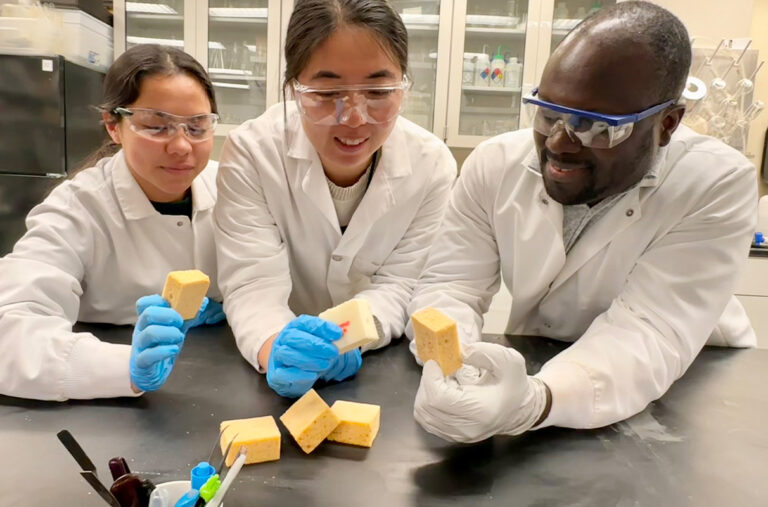
This wood-based foam works better than plastic foams. It’s also friendlier to the environment. Amir Ameli/Washington State University.
Petroleum-based plastic materials are an increasing waste problem. They take centuries to break down, but they are expensive and difficult to recycle, most often producing an inferior second-generation product. Because it costs more to recycle than to generate new plastic, the plastics recycling rate has consistently stayed below 20%, said Zhang.
The research team used an environmentally-friendly preparation of lignin as a substitute for 20% of the fossil fuel-based chemicals in the foam. The bio-based foam was as strong and flexible as typical polyurethane foam. They report on their work in the journal, ACS Sustainable Chemistry and Engineering.
“It’s basically a no-win situation if you’re using petroleum-based plastics,” he said. “The ultimate solution is to replace them with naturally derived materials.”
Lignin is the second most abundant renewable carbon source, making up about 30% of the non-fossil fuel-based carbon on Earth, second to cellulose. It is the main component in wood. It is also notoriously difficult to extract from plants. The material is usually separated during papermaking and biorefining, but these processes often contaminate and significantly alter its chemical and physical properties, decreasing its value.
So most lignin is either burned to produce fuel and electricity or used in low-value products, such as for cement additives or as a binder in animal feed.
This boat on the Seychelles is full of plastic that washed up on shore. The world needs plastics alternatives.
In their work, the researchers used a mild, environmentally friendly solvent to separate a high-quality lignin from pine. Compared to other lignin formulations, their formulation was homogenous with good thermal stability — similar to native lignin. The structural homogeneity is important in being able to produce high-value products.
When they tested their formulation, their product was stable and performed as well mechanically as the conventional foams.
“This work demonstrates that our prepared lignin formulation has a great potential for generating flexible, bio-based polyurethane foams,” said Zhang.
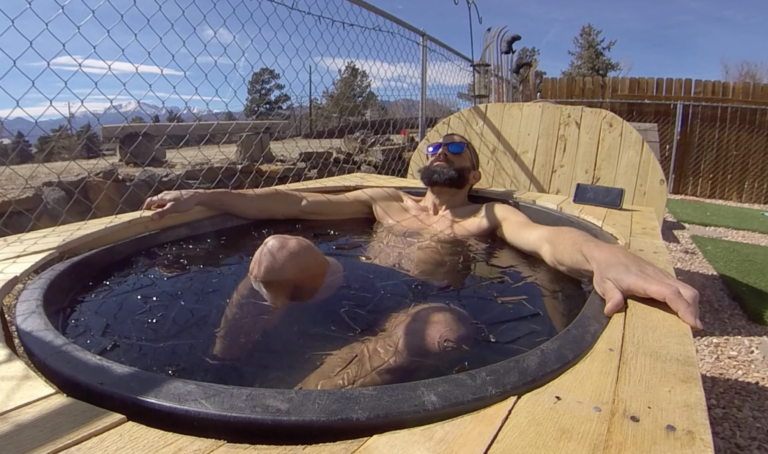
A homemade cold water plunge bath. Cold weather needed
Our Finnish friends did it before anyone we know and when we were in university we enjoyed a hot tub and then a jump in the snow. But cold water plunges, as our writer Brian does every year in the New Year is a growing trend that has emerged out of the Wim Hoth method.
Want to go for a plunge and don’t live near an ice cold river, lake or sea? The easiest way to make an ice bath is to fill water in an old standalone freezer and if you live in a cold climate just leave it outside. Or buy some blocks of ice for $5 a bag and make a cold plunge out of your bath.
If you live in nature, you can carve a path into the lake or pond in the winter and secured by a rope and a spotter plunge to your heart’s desire. But if you are regular city cold water plunger and live in a warm climate and want the ability to cold plunge at your leisure there are a growing number of products on the market. Mark my words, you will find something in Costco by this summer.
One of the new products is created by a US company called Ice Barrel which makes the Ice Barrel 500. With the name from the 80s this cold water chiller is an upright, spacious, chiller-ready cold therapy tool made to fit nearly every body type and space.
Wyatt Ewing, Founder & CEO of Ice Barrel says: “While we continue to educate consumers on the physical and mental health benefits of cold therapy, we are dedicated to creating innovative products that are effortless to use while providing maximum personal benefit, holistic well-being, and optimal human performance.”
But then again it’s still a sort of luxury item, all plastic, and retailing for $1500.
Key Features include:
Fully Insulated: Whether you’re using ice or a chiller, the thick polyurethane foam insulation throughout the barrel and lid helps keep your water at your desired temperature longer, especially in warm climates. Comes chiller-ready without modification, with a fully insulated and UV-resistant lid, a UV and water-resistant cover, and hardware (drain spout, plugs, bulkheads, and seals).
With an integrated seat and generous interior space, the Ice Barrel 500 allows you to enjoy a comfortable, upright seated position to easily plunge up to your neck and shoulders for maximum full-body benefit.
Keep it on your roof? Easy To Drain and Clean: Can hold 356 liters (94 gallons) of water and 104 lbs. when empty. Requiring very little maintenance, it is recommended to change the water every four weeks or as preferred using a water stabilizer to keep the water clean. Ice Barrel’s maintenance kit includes everything needed to keep your Ice Barrel 500 clean and functional.
Some people report that cold water plunging helps with pain relief, low moods and improves their immune system. While your city lifestyle might prevent you from getting in nature, we can guarantee you a better experience cold water plunging in nature.
There are plenty of tutorials online on how to make a cold plunge bath cheaper than $1500:
The Plunge is a read-made cold bath you can install on your porch.
The Plunge is a bougie bath perfect for LA and Florida