Adults who are 21 or older can carry up to 30 grams. This amount applies to personal use within Pittsburgh’s limits. Carrying more could lead to confiscation or legal action. Staying under the limit avoids problems during any public stop.
In the study, the scientists didn’t just test one plant compound at a time. They tested two traditional Chinese medicine compounds together — luteolin (from flowers like honeysuckle and chrysanthemum) and astragaloside IV (from astragalus root, Huang Qi). These plants have been combined in Chinese herbal formulas for centuries to help the body recover from injury and inflammation.
A new collaboration between luxury brand Coach and textile reuse pioneer Bank & Vogue attempts to stitch those two worlds together: high fashion and the global textile waste stream.
Stepping up to democratize the moon is an EU-funded company, Deep Space Energy, which has just raised more than $1 million USD as a seed fund to help it create energy generators on the moon.
Adults who are 21 or older can carry up to 30 grams. This amount applies to personal use within Pittsburgh’s limits. Carrying more could lead to confiscation or legal action. Staying under the limit avoids problems during any public stop.
In the study, the scientists didn’t just test one plant compound at a time. They tested two traditional Chinese medicine compounds together — luteolin (from flowers like honeysuckle and chrysanthemum) and astragaloside IV (from astragalus root, Huang Qi). These plants have been combined in Chinese herbal formulas for centuries to help the body recover from injury and inflammation.
A new collaboration between luxury brand Coach and textile reuse pioneer Bank & Vogue attempts to stitch those two worlds together: high fashion and the global textile waste stream.
Stepping up to democratize the moon is an EU-funded company, Deep Space Energy, which has just raised more than $1 million USD as a seed fund to help it create energy generators on the moon.
Adults who are 21 or older can carry up to 30 grams. This amount applies to personal use within Pittsburgh’s limits. Carrying more could lead to confiscation or legal action. Staying under the limit avoids problems during any public stop.
In the study, the scientists didn’t just test one plant compound at a time. They tested two traditional Chinese medicine compounds together — luteolin (from flowers like honeysuckle and chrysanthemum) and astragaloside IV (from astragalus root, Huang Qi). These plants have been combined in Chinese herbal formulas for centuries to help the body recover from injury and inflammation.
A new collaboration between luxury brand Coach and textile reuse pioneer Bank & Vogue attempts to stitch those two worlds together: high fashion and the global textile waste stream.
Stepping up to democratize the moon is an EU-funded company, Deep Space Energy, which has just raised more than $1 million USD as a seed fund to help it create energy generators on the moon.
Adults who are 21 or older can carry up to 30 grams. This amount applies to personal use within Pittsburgh’s limits. Carrying more could lead to confiscation or legal action. Staying under the limit avoids problems during any public stop.
In the study, the scientists didn’t just test one plant compound at a time. They tested two traditional Chinese medicine compounds together — luteolin (from flowers like honeysuckle and chrysanthemum) and astragaloside IV (from astragalus root, Huang Qi). These plants have been combined in Chinese herbal formulas for centuries to help the body recover from injury and inflammation.
A new collaboration between luxury brand Coach and textile reuse pioneer Bank & Vogue attempts to stitch those two worlds together: high fashion and the global textile waste stream.
Stepping up to democratize the moon is an EU-funded company, Deep Space Energy, which has just raised more than $1 million USD as a seed fund to help it create energy generators on the moon.
Adults who are 21 or older can carry up to 30 grams. This amount applies to personal use within Pittsburgh’s limits. Carrying more could lead to confiscation or legal action. Staying under the limit avoids problems during any public stop.
In the study, the scientists didn’t just test one plant compound at a time. They tested two traditional Chinese medicine compounds together — luteolin (from flowers like honeysuckle and chrysanthemum) and astragaloside IV (from astragalus root, Huang Qi). These plants have been combined in Chinese herbal formulas for centuries to help the body recover from injury and inflammation.
A new collaboration between luxury brand Coach and textile reuse pioneer Bank & Vogue attempts to stitch those two worlds together: high fashion and the global textile waste stream.
Stepping up to democratize the moon is an EU-funded company, Deep Space Energy, which has just raised more than $1 million USD as a seed fund to help it create energy generators on the moon.
Adults who are 21 or older can carry up to 30 grams. This amount applies to personal use within Pittsburgh’s limits. Carrying more could lead to confiscation or legal action. Staying under the limit avoids problems during any public stop.
In the study, the scientists didn’t just test one plant compound at a time. They tested two traditional Chinese medicine compounds together — luteolin (from flowers like honeysuckle and chrysanthemum) and astragaloside IV (from astragalus root, Huang Qi). These plants have been combined in Chinese herbal formulas for centuries to help the body recover from injury and inflammation.
A new collaboration between luxury brand Coach and textile reuse pioneer Bank & Vogue attempts to stitch those two worlds together: high fashion and the global textile waste stream.
Stepping up to democratize the moon is an EU-funded company, Deep Space Energy, which has just raised more than $1 million USD as a seed fund to help it create energy generators on the moon.
Adults who are 21 or older can carry up to 30 grams. This amount applies to personal use within Pittsburgh’s limits. Carrying more could lead to confiscation or legal action. Staying under the limit avoids problems during any public stop.
In the study, the scientists didn’t just test one plant compound at a time. They tested two traditional Chinese medicine compounds together — luteolin (from flowers like honeysuckle and chrysanthemum) and astragaloside IV (from astragalus root, Huang Qi). These plants have been combined in Chinese herbal formulas for centuries to help the body recover from injury and inflammation.
A new collaboration between luxury brand Coach and textile reuse pioneer Bank & Vogue attempts to stitch those two worlds together: high fashion and the global textile waste stream.
Stepping up to democratize the moon is an EU-funded company, Deep Space Energy, which has just raised more than $1 million USD as a seed fund to help it create energy generators on the moon.
Adults who are 21 or older can carry up to 30 grams. This amount applies to personal use within Pittsburgh’s limits. Carrying more could lead to confiscation or legal action. Staying under the limit avoids problems during any public stop.
In the study, the scientists didn’t just test one plant compound at a time. They tested two traditional Chinese medicine compounds together — luteolin (from flowers like honeysuckle and chrysanthemum) and astragaloside IV (from astragalus root, Huang Qi). These plants have been combined in Chinese herbal formulas for centuries to help the body recover from injury and inflammation.
A new collaboration between luxury brand Coach and textile reuse pioneer Bank & Vogue attempts to stitch those two worlds together: high fashion and the global textile waste stream.
Stepping up to democratize the moon is an EU-funded company, Deep Space Energy, which has just raised more than $1 million USD as a seed fund to help it create energy generators on the moon.
The Kingdom of Saudi Arabia is not particularly known for its commitment to conservation of the environment. Instead, being the world’s largest producer of petroleum products it faces a number of related dilemmas. From oil spills to decline in sensitive marine habitats, to plain old oil pollution, the kingdom has its feet firmly grounded as the evil demigod of eco-disaster.
Then there’s the omnipresent oil guzzling monstrous four-wheelers, it seems no one wants to ride a small(ish) car. Fuel is so cheap I will buy the most gigantic vehicle out there as my ride of choice and feel like I own the world! I really wish someone, someday, writes a book about the relationship between the size of an automobile and a person’s self-worth!
That said there are now obvious changes in the way companies in Saudi Arabia are viewing environmental challenges with more and more local companies putting conservation on their agenda. It is an uphill task and the level of consumer awareness is still at an elementary level but the role of these companies deserves applause. Below, I give a list of entities that are supporting this rather infantile green movement:
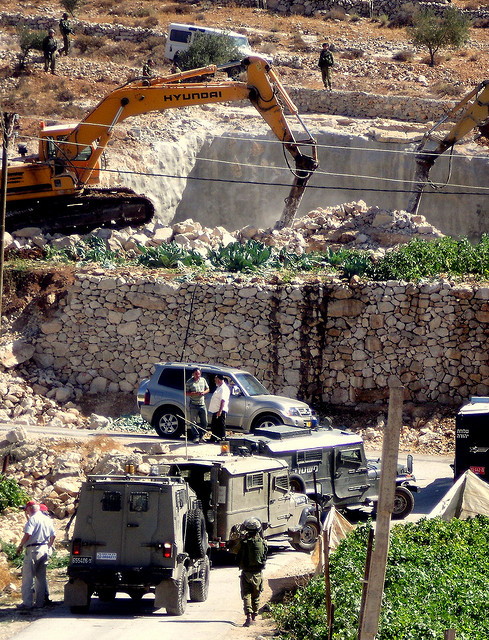
Back in November we reported on a solar plant in Hebron that was threatened with demolition orders issued by the Israeli administration. However, diplomatic pressure from the Spanish government which paid for the project helped save the solar panels from destruction. It now appears that a further 6 solar and wind turbine projects in the West Bank, this time funded by the German government, face similar demolition orders.
Visual clues about you are just the tip of the information iceberg. Your shopping habits can be made malleable by others through data mining.
New York Times writer Charles Duigg wrote how Target predicted a teen’s pregnancy before her own father knew. He described a man demanding to speak to a superstore manager: “My daughter got this in the mail!” he said. “She’s in high school, and you’re sending her coupons for baby clothes and cribs? Are you trying to encourage her to get pregnant?”
The mailer, addressed to the girl, promoted maternity and baby gear. The clueless manager apologized, and when he later phoned the man to repeat his apology, the conversation turned surreal. “I had a talk with my daughter”, he said, “It turns out there’s been some activities in my house I haven’t been completely aware of. She’s due in August.”
Be careful at the intersection of data collection and human behavior.When we shop using plastic or customer “rewards” cards, retailers collect our purchase details for deeper analysis to promote more buying. Here’s what you should be aware of:
Are you up for a bit of quiet activism? Take our plastic bag challenge
This is a call to arms, and to hands: my challenge to you when you shop this week, this month or this year. Tell the clerk you’ll pass on that bag, instead tuck your purchases into your pockets or purse. Bring your own sack and use it. You bolder folks, ask the managers if they’d switch to biodegradable or sell reusable bags. Will you join Green Prophet in this micro-cause?
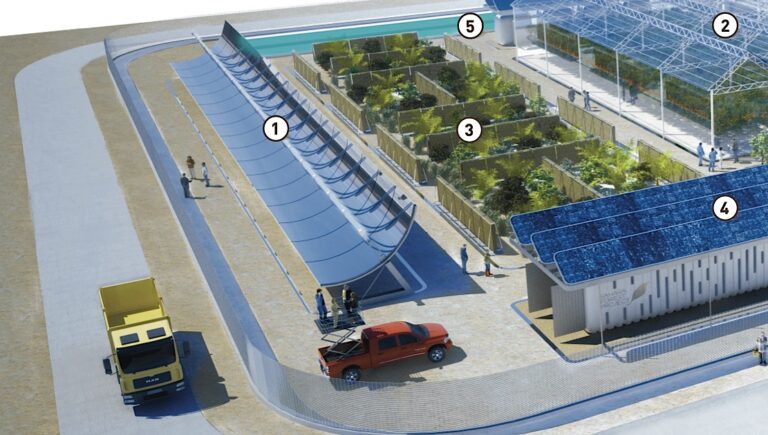
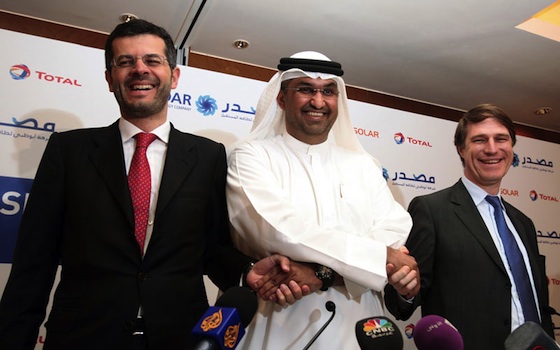
Two fertilizer companies are funding R&D of cutting edge agricultural and energy innovations at a new pilot plant in Qatar.
The Sahara Forest Project was borne out of a dire necessity to ensure the long term survival of residents living in the Middle East’s desert regions. 60 People from 12 countries have contributed research to the project that aims to turn inhospitable deserts into flourishing food and power producing habitats that harness new climate-specific innovations. Jordan was the first country to come on board, and yesterday, SFP announced a new collaboration with Yara International and QAFCO that will result in a one hectare pilot plant in Doha, Qatar.
A retired Saudi teacher has built a now-coveted guesthouse using discarded materials from nearby construction sites.
Hadram Bin Shalan was the object of neighborly scorn when he announced plans to build a guesthouse out of recycled materials in southwestern Saudi Arabia. Seven years later and the former science teacher earns a healthy sum each time he rents out the building, which is made from iron, bricks, tiles, and wood taken from nearby construction sites, for weddings and other events. He told Al Arabiya News, who interviewed Bin Shalan at the Abha property gifted to him by the government, that the guest house will bring him income now that he is retired.
Country data reveals that Syria, Lebanon and Iraq are potentially the only virtual water exporting countries in the Middle East. Get in the know about blue, green and grey water footprints.
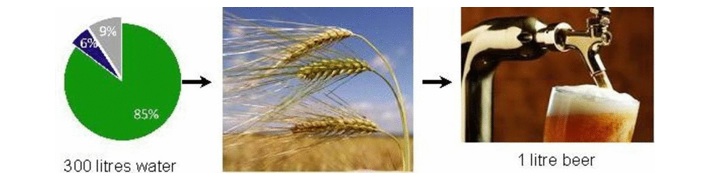
Following the previous article on measuring your Ecological Footprint, here we will focus on the Water Footprint. Let’s start with understanding the Virtual Water and Virtual Water trade: The virtual-water concept was established by J.A. Allen in 1998 to address water scarcity in the Middle East. Virtual water is a measure of the volume of water needed (and polluted) in order to produce a good in a specific country.
For example, the virtual-water content of wheat is 1,300 liters/Kg, while the virtual-water content of beef is 15,500 liters/Kg, to put this into perspective – one Kg of beef is the equivalent of letting the tap run for 1107 minutes (19.5 hours!) if there is 14 liters of water running from an average tap every minute.
The virtual water trade, refers to the idea that when goods and services are exchanged, so is what has been used to produce the good. When a country imports one ton of beef it is also importing water that has been used to produce the beef. By “choosing” not to produce one ton of beef domestically but importing it, the country is saving 15,500,000 liters of domestic water. On the other hand the exporting country has exported 15,500,000 liters of domestic water which will no longer be available for other purposes. Measuring the net virtual water flow for a country, especially for water scarce countries, is crucial to understand how to better achieve water sustainability. Here’s how it’s done:
For example:
“The Middle East imports 13,805 cubic meters of water per year, and exports 642 cubic meters of virtual water. Over all the Middle East is a net importer of virtual water 13,163 (cubic meters per year) (between 1995-1999).”
Country data reveals that Syria, Lebanon and Iraq are potentially the only virtual water exporting countries in the Middle East, while all other countries- especially Israel and Jordan – are more conscientious of their policy choices and have decided to reduce or even abandon exports of water intensive crops by importing those goods.
This however also means that the Middle East is largely externalizing their water footprint, so this impacts the use and pollution of water in other countries.
Global Water saving:
How does Syria, a net exporter of virtual-water, impact the local citizens and ecosystem? How does Israel a net importer of virtual water impact on the citizens and ecosystems of other countries? As we face water shortages in the coming decades, these questions will become more and more relevant and political.
Economists might have an answer to the above questions, they would tell you that international trade is an opportunity for global water saving. International trade can save freshwater globally if a water-intensive commodity is traded from an area where it is produced with high water productivity (small water footprint and water abundant country) to an area with lower water productivity (large water footprint and water scarce country).
In theory this sounds great – it can make a click – in practice this will not happen until the cost of virtual water use is integrated into the price of that product. For example, a product that requires a large amount of virtual water and is being produced in a water scarce country should have a higher price than a product that is being produced with less virtual water in a country that is water abundant. Only then, could we start to see the “global water saving effects”.
National water footprint:
The national water footprint is defined as the total amount of fresh water that is used to produce the goods and services consumed by the inhabitants of the nation. Part of this water footprint may lie outside the territory of the nation and this is captured by the net virtual water balance, ie whether it is a net importer /exporter of virtual water.
To get an overview of the per capita water footprint for each nation click here.
*For more detailed explanation on National water accounting framework. Source: Hoekstra et al. (2011).
A blue, green and grey water footprint:
Traditional water use accounting uses the rate of water withdrawal to gauge “water sustainability,” however this per se does not really indicate the impact water use is having on a hydrological system. Hydrological systems are becoming an increasingly important aspect to consider because global warming is expected to have adverse impacts on regional hydrological systems.
Therefore the sustainability of the total water footprint in a geographic area is best accomplished by evaluating the impacts consumption and production patterns have on different “types” of water within a hydrological system. The water footprint splits up into three elements:
The blue water footprint refers to the volume of surface water (rivers, lakes etc.) and ground water consumed during production processes (i.e. evaporated or incorporated into the product – that does not return to the catchment from which it was withdrawn).
The green water footprint refers to the volume of rainwater consumed while the grey water footprint refers to the volume of freshwater that is required to assimilate the load of pollutants ( the volume of water that is required to maintain an agreed water quality standard).
So, for example, the global average production of beef has a 93% green, 4% blue, 3% grey water footprint, this gives you an idea of how beef production impacts on the hydrological cycle – most of the water comes from fresh water sources but the amount of water needed to assimilate the load of pollutants is not as great compared to wheat which has a grey water footprint of 11% of its total water footprint.
Your water footprint :
The idea is not necessarily to stop consuming certain products, although that would be preferable, but to understand what your actions entail. Often there are many hidden environmental costs in the things we do that affect people and places that are on the other side of the world. That is globalization for you. Hopefully in the future we will have products that are labeled with the amount of green, blue and grey water footprint so that, as consumers, we can make more conscientious decisions.
In the meantime you can get conscientious by downloading and using this great app.
This year’s MENASOL on the 16th and 17th of May in Abu Dhabi, offers something even more special!
MENASOL is the annual meet-up of solar opinion leaders, experts and financing personnel that has grown by leaps and bounds each year with the burgeoning growth of MENA region (Middle East & North Africa) solar and Desertec. The speakers list for MENASOL 2012 is a virtual who’s who of the critical mass of movers and shakers in clean solar energy for the 21st century.
Unlike the typical large unstructured expo, this unusual annual get together offers the solar industry the chance to meet and do business with potential connections directly, under one roof over 2 days in a solar market now developing rapidly in the MENA region.
On May 16th and 17th, Masdar, CSP Today and PV Insider are offering delegates the unique opportunity to visit both the Masdar City’s 10MW PV Plant, and Masdar’s first 100 MW solar project: Shams 1, which is ten times larger.
Few vegetables are so well-loved in the Middle East as cucumbers. This spicy cucumber pickle is delicious as an appetizer or to top your next falafel.
“Cool as a cucumber” still applies when the cukes are pickled. Even when spiced and brined, cucumbers add a welcome, refreshingly piquant note to meals featuring fish, meat, and anything fried. And pickled foods, being fermented, are really good for gut health.
We don’t do much home canning in the Middle East, but housewives still put up jars of pickles to set out on the table alongside olives and other salty/spicy foods, to whet the appetite before dinner. This recipe makes pickled cucumbers that are almost irresistible.
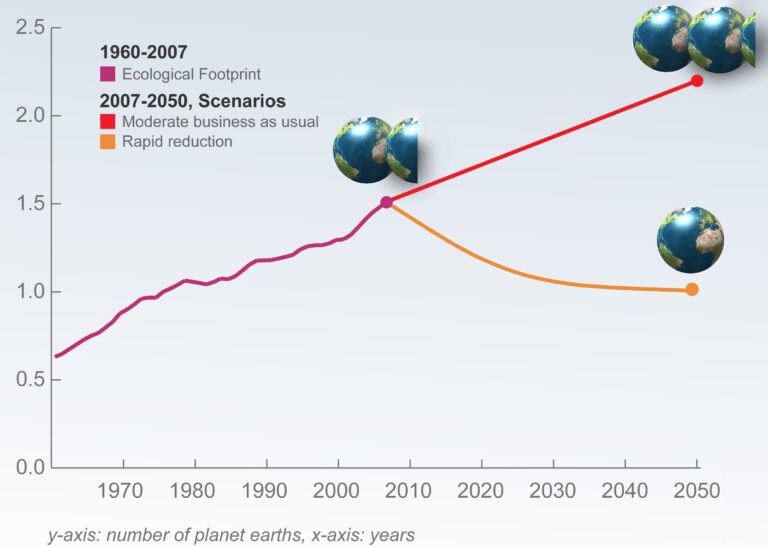
When looking for country-specific environmental indicators, it is often difficult to find a single indicator that holistically summarizes the environmental situation in a tractable and visual manner. This is the first part of two articles (the second one on your water footprint is here). Two interactive environmental info graphics will be explored to help you better understand what is happening in our green planet, what you can do to change your habits for a greener future and which environmental issues need special attention. Let’s start with your ecological footprint and biocapacity.
Every year thousands of Europeans head to Morocco for a cheap trip; hopefully more will travel the eco-friendly way.
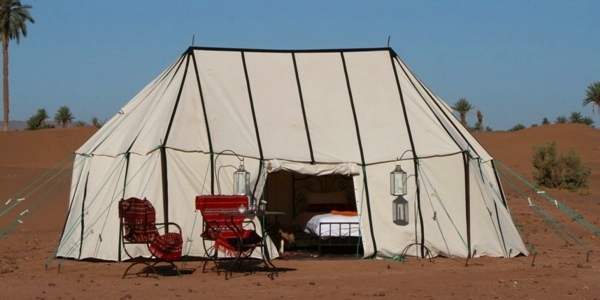
British tour operator Specialist Morocco recently announced that they are opening up their ecologically-friendly tented camp in Morocco’s Southern Draa Valley for another season. And though we are particularly sensitive to greenwashing after witnessing first hand the high price the North African country pays when hordes of mostly European visitors looking for a cheap trip skip across the Mediterranean for a short jaunt, this 4-star camp seems to genuinely prioritize both the local community and the natural environment on which they rely.
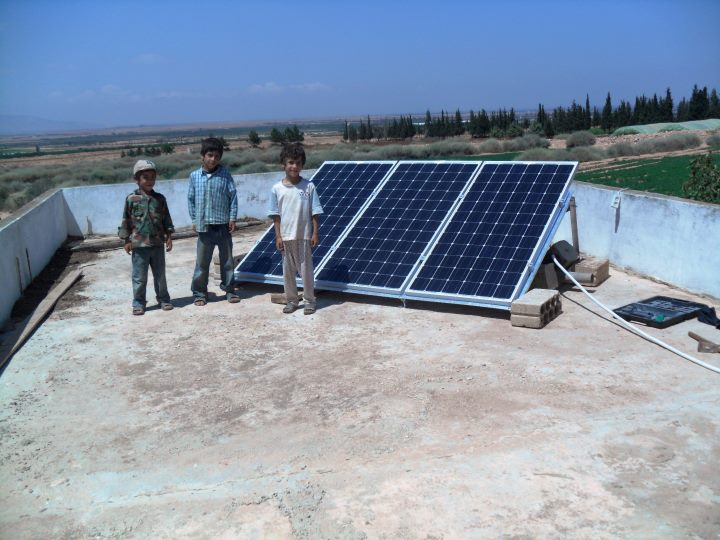
A solar-powered goat farm in Lebanon now enjoys clean energy around the clock while the rest of the country sits in darkness for up to 18 hours a day.
Hasan Istaytiyyah was lucky to have six hours of state-run energy a day before he decided to install a solar photovoltaic system and ditch his dirty generator. Now he tells Daily Star that he has energy all the time, and finally feels connected with the rest of the world through internet access and satellite TV despite his remote location in the Bekaa Valley near the border of Syria.
Istaytiyyah’s story is a familiar one. Although Lebanon has strong northerly winds and piles of sunshine, the country’s leadership has failed to incorporate renewable energy to help meet the 2,400 MW daily demand. With a 900MW shortfall, many residents – particularly in rural areas – are without power for up to 18 hours a day.
Streets become highways, trees make way for the mall in a new plan for Taksim Square in Istanbul.
Today, Istanbul’s Taksim Square is a bustling hub of activity, with majestic Gezi Park providing some natural solace — even when the trees are brown in winter, as in the above photo. But a new plan would eliminate most of the greenery in this photo and cut off Taksim from the rest of the city. That’s the argument of the Taksim Platform, a group of concerned citizens, urban planners, lawyers, and academics who have so far collected more than 13,500 signatures against the project. See what the new square would look like after the jump.
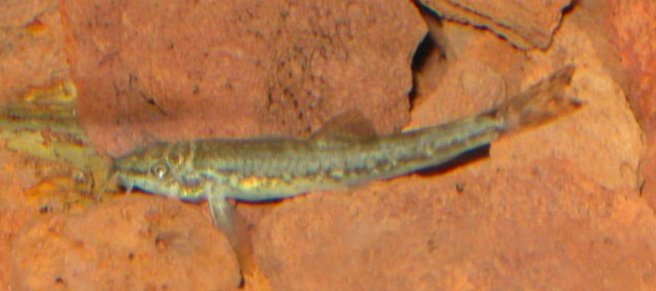
Israeli ecologists are creating habitat to save the severely endangered fish Nemacheilus dori, which measures only two inches.
The fate of a tiny endangered fish in Israel`s northern region may rest on whether ecologists can create additional aquatic habitat. The Nature and Parks Authority is working to save the fish, a hillstream loach, in Israel’s northern wetlands. The species, Nemacheilus dori, is endemic to Israel. It is found only in one 0.7-hectare wetland nature reserve, located in the north of Israel, at Ein Malkoach.
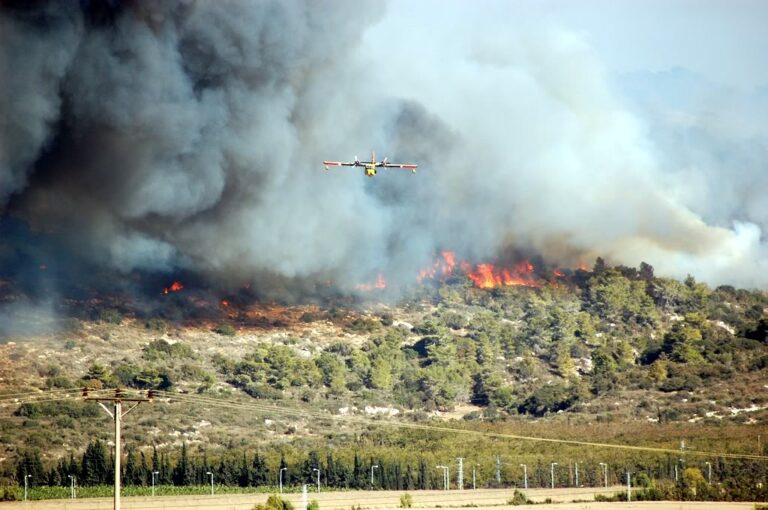
Turkish firefighting airplane moments after releasing chemicals on 2010 Carmel wildfire: Photo by Skyscraper City
Fourteen months after Israel’s worst environmental wildfires destroyed more than 7,500 acres of Carmel mountain forests and claimed 42 lives, a report issued by the office of Israel’s State Comptroller is directing the blame for not dealing quickly and properly enough to contain these fires at two government cabinet ministers. The two cabinet ministers, Finance Minister Yuval Steinitz and Interior Minister Eli Yishai, have been blamed for the major responsibility, according to a recent article in Haaretz. The two ministers are being asked in a report by the State Comptroller, Micha Lindenstrauss, to be removed from their present ministerial portfolios and assigned other portfolios.













 Turkish firefighting airplane moments after releasing chemicals on 2010 Carmel wildfire: Photo by Skyscraper City