Tony Cho is a regenerative developer and community builder focused on designing cities as living ecosystems that support human connection and ecological balance. A key figure in Miami’s urban transformation, he helped shape the Wynwood Arts District and founded the Magic City Innovation District. Influenced by an unconventional upbringing that included time in an ashram, Cho brings a spiritual lens to real estate, blending culture, community, and capital into what he calls regenerative placemaking.
Unlike solar power on Earth, which is limited by night cycles, weather, and seasons, the Moon offers something close to uninterrupted exposure to the Sun. By placing solar infrastructure in orbit or along the lunar surface, engineers could generate continuous clean energy at a scale that may exceed global electricity demand, the Japanese scientists say.
What the Star Home demonstrates is something bigger: that health can be built into infrastructure. Instead of relying only on healthcare systems, communities can reduce disease at the source—through smarter design.
Tony Cho is a regenerative developer and community builder focused on designing cities as living ecosystems that support human connection and ecological balance. A key figure in Miami’s urban transformation, he helped shape the Wynwood Arts District and founded the Magic City Innovation District. Influenced by an unconventional upbringing that included time in an ashram, Cho brings a spiritual lens to real estate, blending culture, community, and capital into what he calls regenerative placemaking.
Unlike solar power on Earth, which is limited by night cycles, weather, and seasons, the Moon offers something close to uninterrupted exposure to the Sun. By placing solar infrastructure in orbit or along the lunar surface, engineers could generate continuous clean energy at a scale that may exceed global electricity demand, the Japanese scientists say.
What the Star Home demonstrates is something bigger: that health can be built into infrastructure. Instead of relying only on healthcare systems, communities can reduce disease at the source—through smarter design.
Tony Cho is a regenerative developer and community builder focused on designing cities as living ecosystems that support human connection and ecological balance. A key figure in Miami’s urban transformation, he helped shape the Wynwood Arts District and founded the Magic City Innovation District. Influenced by an unconventional upbringing that included time in an ashram, Cho brings a spiritual lens to real estate, blending culture, community, and capital into what he calls regenerative placemaking.
Unlike solar power on Earth, which is limited by night cycles, weather, and seasons, the Moon offers something close to uninterrupted exposure to the Sun. By placing solar infrastructure in orbit or along the lunar surface, engineers could generate continuous clean energy at a scale that may exceed global electricity demand, the Japanese scientists say.
What the Star Home demonstrates is something bigger: that health can be built into infrastructure. Instead of relying only on healthcare systems, communities can reduce disease at the source—through smarter design.
Tony Cho is a regenerative developer and community builder focused on designing cities as living ecosystems that support human connection and ecological balance. A key figure in Miami’s urban transformation, he helped shape the Wynwood Arts District and founded the Magic City Innovation District. Influenced by an unconventional upbringing that included time in an ashram, Cho brings a spiritual lens to real estate, blending culture, community, and capital into what he calls regenerative placemaking.
Unlike solar power on Earth, which is limited by night cycles, weather, and seasons, the Moon offers something close to uninterrupted exposure to the Sun. By placing solar infrastructure in orbit or along the lunar surface, engineers could generate continuous clean energy at a scale that may exceed global electricity demand, the Japanese scientists say.
What the Star Home demonstrates is something bigger: that health can be built into infrastructure. Instead of relying only on healthcare systems, communities can reduce disease at the source—through smarter design.
Tony Cho is a regenerative developer and community builder focused on designing cities as living ecosystems that support human connection and ecological balance. A key figure in Miami’s urban transformation, he helped shape the Wynwood Arts District and founded the Magic City Innovation District. Influenced by an unconventional upbringing that included time in an ashram, Cho brings a spiritual lens to real estate, blending culture, community, and capital into what he calls regenerative placemaking.
Unlike solar power on Earth, which is limited by night cycles, weather, and seasons, the Moon offers something close to uninterrupted exposure to the Sun. By placing solar infrastructure in orbit or along the lunar surface, engineers could generate continuous clean energy at a scale that may exceed global electricity demand, the Japanese scientists say.
What the Star Home demonstrates is something bigger: that health can be built into infrastructure. Instead of relying only on healthcare systems, communities can reduce disease at the source—through smarter design.
Tony Cho is a regenerative developer and community builder focused on designing cities as living ecosystems that support human connection and ecological balance. A key figure in Miami’s urban transformation, he helped shape the Wynwood Arts District and founded the Magic City Innovation District. Influenced by an unconventional upbringing that included time in an ashram, Cho brings a spiritual lens to real estate, blending culture, community, and capital into what he calls regenerative placemaking.
Unlike solar power on Earth, which is limited by night cycles, weather, and seasons, the Moon offers something close to uninterrupted exposure to the Sun. By placing solar infrastructure in orbit or along the lunar surface, engineers could generate continuous clean energy at a scale that may exceed global electricity demand, the Japanese scientists say.
What the Star Home demonstrates is something bigger: that health can be built into infrastructure. Instead of relying only on healthcare systems, communities can reduce disease at the source—through smarter design.
Tony Cho is a regenerative developer and community builder focused on designing cities as living ecosystems that support human connection and ecological balance. A key figure in Miami’s urban transformation, he helped shape the Wynwood Arts District and founded the Magic City Innovation District. Influenced by an unconventional upbringing that included time in an ashram, Cho brings a spiritual lens to real estate, blending culture, community, and capital into what he calls regenerative placemaking.
Unlike solar power on Earth, which is limited by night cycles, weather, and seasons, the Moon offers something close to uninterrupted exposure to the Sun. By placing solar infrastructure in orbit or along the lunar surface, engineers could generate continuous clean energy at a scale that may exceed global electricity demand, the Japanese scientists say.
What the Star Home demonstrates is something bigger: that health can be built into infrastructure. Instead of relying only on healthcare systems, communities can reduce disease at the source—through smarter design.
Tony Cho is a regenerative developer and community builder focused on designing cities as living ecosystems that support human connection and ecological balance. A key figure in Miami’s urban transformation, he helped shape the Wynwood Arts District and founded the Magic City Innovation District. Influenced by an unconventional upbringing that included time in an ashram, Cho brings a spiritual lens to real estate, blending culture, community, and capital into what he calls regenerative placemaking.
Unlike solar power on Earth, which is limited by night cycles, weather, and seasons, the Moon offers something close to uninterrupted exposure to the Sun. By placing solar infrastructure in orbit or along the lunar surface, engineers could generate continuous clean energy at a scale that may exceed global electricity demand, the Japanese scientists say.
What the Star Home demonstrates is something bigger: that health can be built into infrastructure. Instead of relying only on healthcare systems, communities can reduce disease at the source—through smarter design.
“Can I talk to you?” a man named Hashim asked as I stooped to take photographs of government workers cleaning up last night’s party mess. Revelers marching through Tahrir Square, surrounding streets and the 6th of October Bridge cheered and set off giant firecrackers well into the early hours of the morning following the announcement that Mohamed Morsi is Egypt’s first democratically-elected president.
“He said to give him 100 days,” Hashim continued, referring to President Morsi’s promise that he will fix problems such as the poor quality of bread and burgeoning trash in just over three months. But without a constitution and with both budgetary and legislative power in the hands of Egypt’s Supreme Council of Armed Forces (SCAF), it is unclear whether he will have sufficient control of the country’s limited resources to make good on his promises.
Beirut overtakes Abu Dhabi and Dubai, becoming the most expensive city for expatriates in the Middle East region, after Tel Aviv
According to Mercer’s latest Cost of Living survey Tokyo has become the world’s most expensive city for expatriates, pushing Luanda, Angola to second place while Karachi, Pakistan is ranked as the world least expensive city. The survey covers 214 cities across continents in the world and measures the relative costs (using NYC as base) of the 200 most significant expenses for expatriates. Mercer’s cost of living survey “is the world’s most comprehensive and is designed to help multinational companies and governments determine compensation allowances for their expatriate employees.”
Interestingly most Middle Eastern cities have dropped in rankings, according to Nathalie Constantin-Métral, Principal at Mercer this is “mainly because price increases on goods and services have been more moderate here than in our benchmark city, New York. Slight decreases in expatriate accommodation costs were also observed in Abu Dhabi and Dubai.”
Nevertheless, this is not true for Beirut (at spot 67), where living expenses are now the highest after Tel Aviv for the region. Beirut has gone up eight places from last year, and has overtaken Abu Dhabi (76, down nine places from last year) and Dubai (94, falling 13 places). These rising living expenses in Beirut are not hurting expatriates only, but locals too that face costs and prices that are not in line with average wages.
This fall Egypt’s Bibliotheca Alexandria will celebrate the tenth anniversary of its opening. It is one of the region’s grandest and most beautiful libraries. Although it currently holds only one million books there is room for expansion. Bibliotheca Alexandria has shelf space for over eight million books. This library has become a public center of learning and activism. It recently hosted the Natural Sciences Earth and Sun Festival, with public programs about the environment and conversation. The facility’s library for the visually impaired offers monthly computer literacy classes and Braille reading courses.
Bahrain’s health authority has established four directives to regulate the sale and prescription of traditional, alternative medicines. This step was taken in response to concern about the credibility of some businesses. Now the National Health Regulatory Authority (NHRA) will establish guidelines for the sale, use, and advertising of alternative medicines, including services and practices such as ‘cupping,’ known as Hujama.
The NHRA will look to World Health Organization guidelines for guidance to create a list of approved specialties.
The Middle East is home to diverse traditions of alternative medical practices.
Sunni Muslims healing with music
For example the Adyghe people, a predominantly Sunni Muslim minority originally from the Northern Caucasus, has a time-honored tradition of musical treatments for healing.
“Adyghes considered that music could treat not only the body, but also the soul. It has a special influence on a person before the beginning of a battle, invoking bravery. In Abkhaz-Adyghe fairy tales there are scenes that the musician could heal wounds of the warriors through tunes, and then the warriors were ready to fight again. Even in the 20th century, people wishing to praise a good player on the harmonica said that he played so well that paralyzed people rose from their bed and began to dance.”
They believe that music penetrates the body and can thus heal a person from the inside. Folk songs are traditionally prescribed to soothe patients with burns or women experiencing difficult births.
Musical remedies were not a substitute for medical treatment but have generally been used the ease discomfort, much like a modern painkiller.
The Unrepresented Nations and Peoples Organization estimates that over 2 million Adyghes currently live in Turkey and over 150,000 in Jordan, Israel and Syria.
In recent years modern science has discovered the medicinal properties of common spices often used as herbal treatments, including thyme as a topical treatment for acne and cumin as a remedy for a range of ailments.
As in Bahrain, medical professionals in the United Arab Emirates are also perfecting the art of balancing traditional remedies with western medicine. The first western-style hospital in the UAE was a 12-bed facility opened in 1951 with British aid. Today modern hospitals are common place in big cities. But this has not eradicated local traditions. The UAE has recently seen a resurgence of demand for alternative treatments.
“Modern and traditional medicine are complementary to each other,” Dr. Carina Huwari told The National. “Balance them properly and don’t underestimate the body’s natural power to heal. It just needs a little bit of help.”
Image of woman doctor by Michael Jung, via Shutterstock. Image of Circassians in Israel via Andynapso, Wikimedia Commons
Art has a way of jarring our perspective. Here are 6 groundbreaking projects that are changing the way people in the Middle East relate to their environment.
Just today we read about an Egyptian artist who has spread her creative wings since Mubarak’s fall only to have them clipped again by increasing powerful Islamist groups. Despite such obstacles, or perhaps because of them, there are untold numbers of talented people pushing past the ruins of war and oppression in Egypt, Gaza, Iran, and elsewhere in the Middle East and North Africa in order to expose important environmental concerns. We have put together a list of six groundbreaking projects with an eco-concience that are slowly changing how people in our region relate to the natural world.
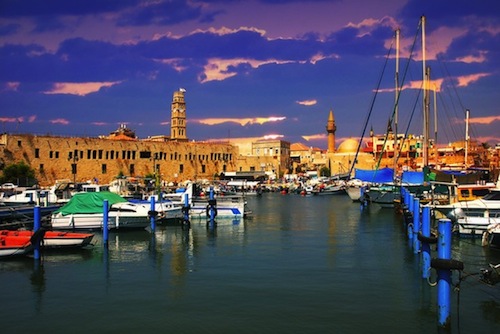
Ilan Suisa, a father of four from Akko (Acre), aspires to make his ancient hometown the environmental activism capital of Israel. According to news reports he has even changed his name to “Ilan Green-Suisa.”
Over time, Green-Suisa convinced the Akko municipality to place forty recycling bins throughout the city: “Akko won the first place in Israel for recycling,” he said.
With a band of over forty volunteers of diverse ages, ethnicities and religions, Green-Suisa has spearheaded multiple community art projects. One such project collected ceramic shards illegally disposed of by building companies into the port. The grassroots project used these shards to create a mosaic at a local school.
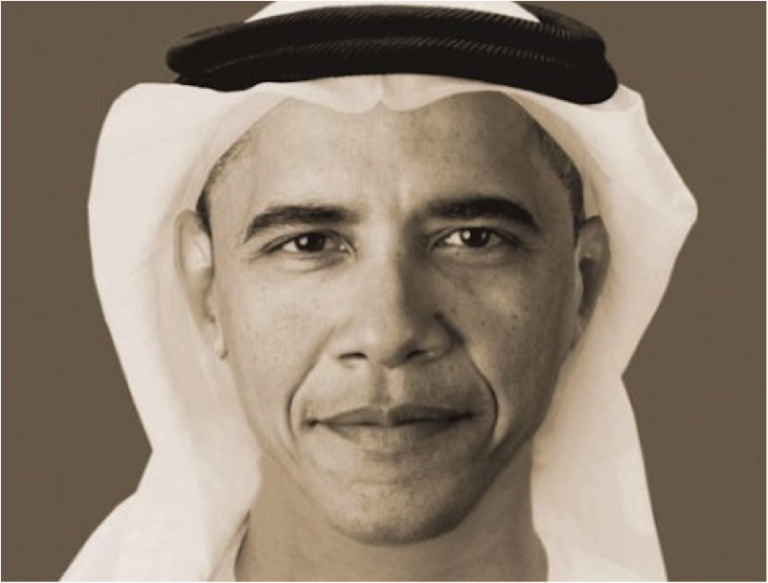
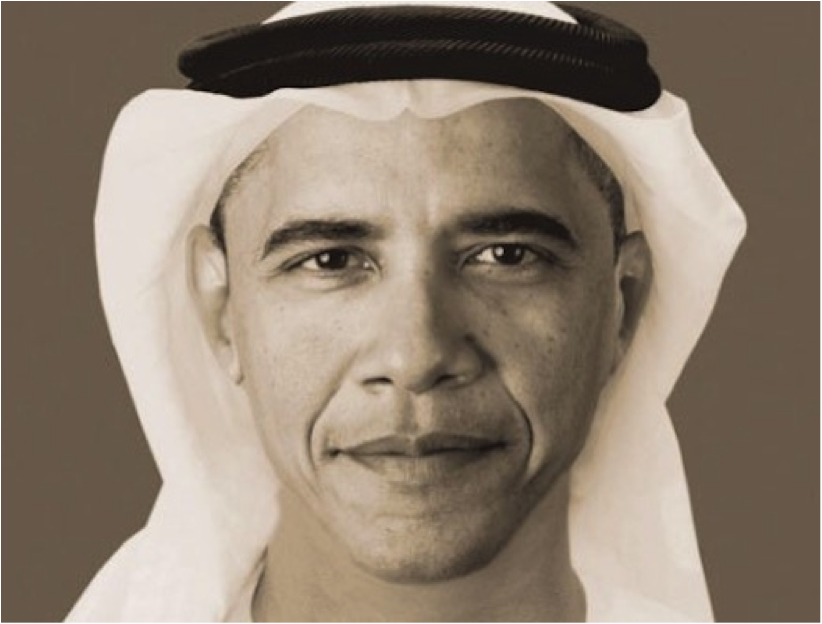
Mohammed Kanoo’s portraits aim to tease out our biases about the Middle East. Above is US President Barack Obama.
In his solo exhibition Fun with Fen (fen is Arabic for “art”) currently on display at Dubai’s Meem Gallery, the Bahraini artist Mohammed Kanoo depicts international celebrities dressed in traditional Arab costume. Kanoo’s digitally enhanced photographs are described as humorous commentary on pop culture, but the reactions they provoke may be a bit darker.
[brid video=”134808″ player=”7642″ title=”Mohamed Kanoo Meem Gallery”]
Take a peek at a few images from his gallery and gauge your own response.
Step back, LEED. Back off, BREEAM. Easy there, Estidama: Qatar’s developing a new building standard and it’s called GSAS.
Qatar’s revamped its QSAS green building rating system. Re-launched under a new name, the Global Sustainability Assessment System (GSAS) is muscling in as Middle East- North Africa’s green standard. Developed by the Gulf Organization for Research and Development (GORD) in collaboration with the University of Pennsylvania’s T.C. Chan Center for Building Simulation and Energy Studies, the original QSAS melded criteria bespoke to Qatar with established green benchmarking systems, creating a performance-based scheme customized to the unique requirements of this rapidly developing Gulf state.
GSAS is self-positioned as the world’s most comprehensive sustainability rating system.
If you live in the west or the east, in an economically advanced country or a repressed one, getting a blood test is always a good way to know if you have been exposed to heavy metal toxins. If you live in a large city, you can ask your own doctor about the possibility in testing your blood, but there are also a number of companies that offer mail-in and online results. Try bloodtest.org. This particular company is based in the US, but you can always call them via Skype if you live in another country to see if their nurses can help you understand what tests you might need.
Weird science that this video clip of bus drifting from Saudi Arabia comes to my attention just as I hop off my office bus in Jordan.
My bus is a small one, seats maybe 24. It’s lightweight and nimble, one of hundreds cruising Jordan’s roads. Absent a reliable mass transit system, these little buses, which are provided by private schools and employers, serve a critical public service. And although I’m a sucker for public transportation, I do think about the risks. The route from Jabal Amman to the airport is a straight run on modern roadways, well maintained and with proper traffic signaling. That’s a good start.
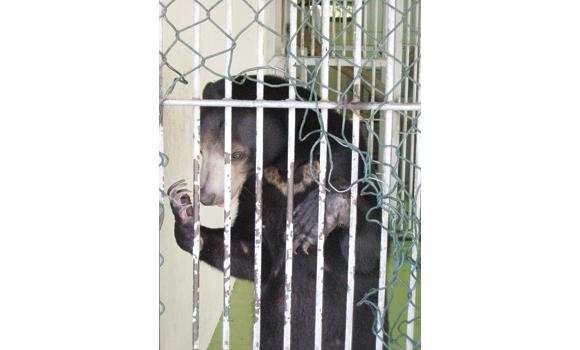
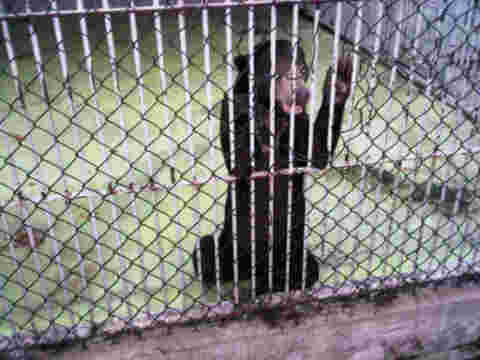
A black bear in Jeddah, Saudi Arabia has been trapped in a pet shop cage for the last five years. It is overheated, malnourished, and badly requires psychological attention.
It looks undernourished and often is pelted with food by children visiting the shop, a local reporter said.
Activists claim the bear bites and smacks himself and visitors, including school children, regularly pelt him with food.
Emma Johnson, a British nanny, brings daily treats of honey and grapes, according to Arab News, since management only provides bread and water.
Imported into Saudi Arabia five years ago in contravention of CITES regulations, the bear’s owner never came to collect according to Fayfa’s management. Not for sale, the animal is merely entertainment for visitors.
“We are working on the paperwork because many people complained about it and we are trying to send it back to its home country,” Manager Mohammed Wahbi told Arab News. “We tried taking care of the bear but it is a wild animal that breaks everything that we install for him. We offer him milk, bread and water every day.”
Contrary to this claim, reporters found the bear overheated, without water, and with nothing but pieces of bread to eat. It is difficult to say what kind of black bear it is. Some reports claim it is a Sun Bear while others suggest it is a Moon Bear, but images of the anxious and emaciated creature are very difficult to decipher.
In either event, the bear is indigenous to tropical climates in Southeast Asia and Northern India, rather than Saudi’s unforgiving desert, and its normal diet is said to consist of fruit and insects.
The Saudi Wildlife Authority claims it has not received any complaints about the pet shop, otherwise they would have investigated the matter to ensure the animals are kept in a healthy environment.
Petition to save the bear in Saudi Arabia
Saudi animal rights activist Abu Huraira has launched a petition to HRH Prince Bandar, Saudi Wildlife Commission and Fayfa, Saudi Arabia to release the bear into the care of Monkey World Rescue Center in the UK.
An abused bear in Saudi Arabia
“Your Highness Prince Bandar bin Saud Al Saud,” the letter begins. “Saudi Arabia has made advances in all directions, one of them is signing the international CITES agreement to protect endangered animals and prohibit their trade. The international image of Saudi Arabia as a humanitarian country has escalated, and Islamic values of animal welfare are being promoted.”
The letter goes on to say that because of Prince Al Saud’s progress in protecting wild animals, he should be aware of a black bear that was imported illegally and relies on the kindness of strangers for its survival.
” In fact, this is not an animal that is meant to be a house pet, and it can never become a personal pet – it is an exotic [creature] that should be in a zoo and preserved.”
Please sign the petition and pass it on. In 2024 when we look back at the petition it is not clear if the bear was saved.
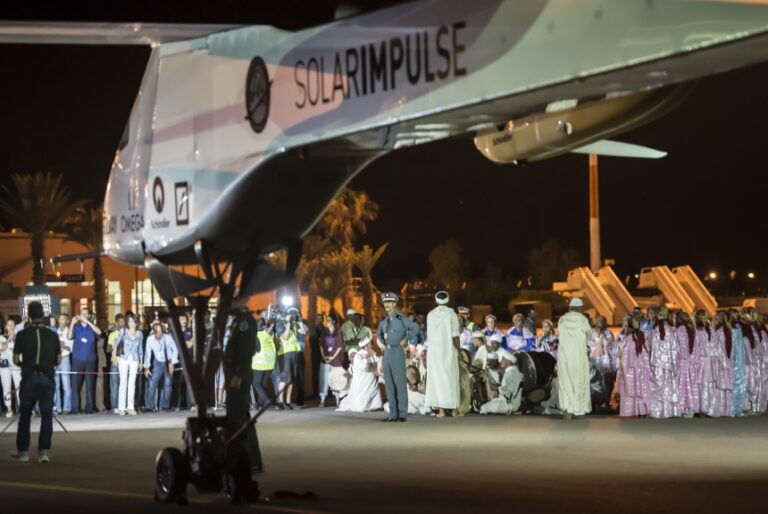
Pilot Andre Borschberg was forced to fly the Solar Impulse back to Rabat when turbulence made it impossible to cross the Atlas Mountains in southern Morocco on June 14, 2012. But yesterday’s second attempt was finally successful, and the team was welcomed in Ouarzazate by a jubilant crowd. The 683 km journey was completed in 17 hours and 20 minutes at an average altitude of 16, 405 feet.
Despite its long wing span, the world’s first sun-powered plane capable of flying day and night weighs the same as a family car, which prohibits it from entering areas that experience high winds and other climatic extremes. Borschberg told the Associated Press while flying near Casablanca that the Solar Impulse will never replace fuel-powered commercial planes, but instead is designed to showcase what is possible with solar energy.
On Tuesday thousands of Turkish women and activists sent government ministries a petition protesting the bill proposed by the conservative Justice and Development Party (AKP) that would ban abortions not taking place between the fourth and sixth week of pregnancy. Turkish law currently allows abortion until the tenth week.
With dwindling environmental resources and rampant poverty exacerbated by rapidly growing populations, family planning is a crucial environmental issue across the Middle East.
According to a recent report by The Jordan Times almost 25 percent of births in Jordan are unplanned because of a lack of available family planning resources.
What’s sweet, good for you, and comes in completely biodegradable packaging? Bananas, of course.
Don’t let June’s seasonal fruit distract you from picking up a bunch of firm yellow bananas when you’re out shopping. Bananas are in season too, and considering all the easy, no-cook ways to eat them, it’s a pity to pass them by.
Consider, too, what an incredible superfood the familiar banana is. Bananas are rich in potassium, a mineral essential to keep blood pressure stable and your heart beating peacefully. Potassium is an electrolyte, a mineral important for healthy heart function and balance of water in the body. People on diuretics are often advised to eat a banana a day to replace potassium.
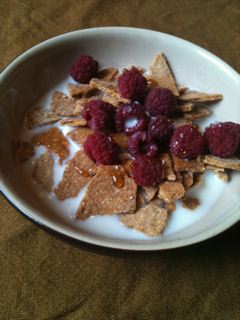
Banana’s high fiber content is another heart-health factor, especially combined with cereal fiber and foods high in magnesium. This wonder-fruit’s natural sweetness nourishes beneficial gut bacteria that help metabolize our food and boost calcium absorption. Think of home-made cornflakes with milk and a sliced banana. A breakfast like that helps make strong bones, moves digestion along, and keeps your heart fit. Not to mention that it’s quick to put together and tastes good.
Bananas are an antioxidant powerhouse with their high manganese, vitamin B6 and vitamin C content. A banana a day – together with an eco-conscious, well-rounded diet and exercise – can help keep the body fit to fight off stroke, cardiovascular disease, kidney failure, osteoporosis and macular degeneration. That’s a lot of nutrition in one sweet package.
Buy bananas green to ripen in your kitchen (in summer heat, this might take only a day or two). But don’t store them in the fridge, because they will never ripen again. Ripe bananas may be refrigerated, but make sure to take them out to reach room temperature again before serving.
Here are some ways to get those delicious, life-enhancing bananas into your life:
Blend up a morning smoothie with a banana, almond milk, and some honey or several pitted dates. For pizazz, drop two squares of fair-trade, 70% chocolate into the blender jar too.
Add sliced bananas, walnuts and honey to any cereal, hot or cold. Or pancakes. Or simple crepes.
Banana sandwiches aren’t only for kids. Make one on whole-wheat bread spread with cream cheese and sprinkle cinnamon over the bananas.
Try bananas halved horizontally and spread with a good nut butter for a snack.
An elegant, 1-minute dessert, good enough for company: a firm, ripe, peeled banana drizzled with date honey or maple syrup, with sliced almonds scattered over it.
Green bananas may be boiled in their skins or peeled, sliced and fried, Latin-American style. But they have less antioxidant properties than ripe ones.
More healthy and delicious foods from Green Prophet:

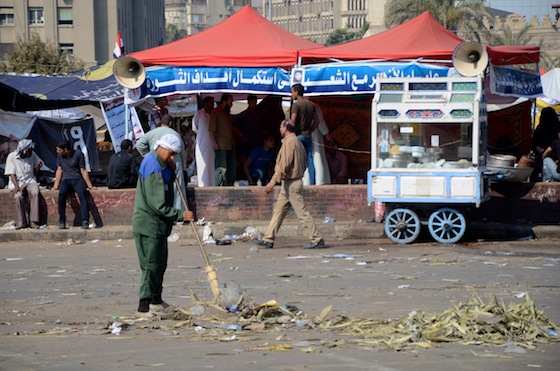
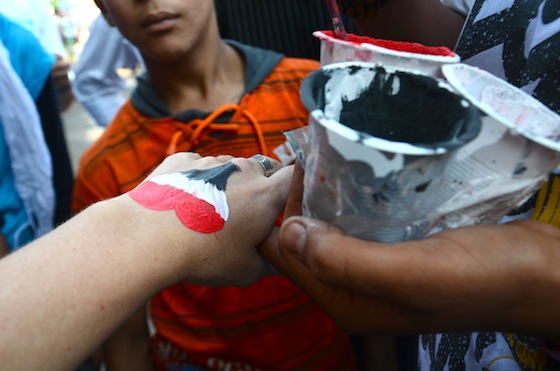 “Can I talk to you?” a man named Hashim asked as I stooped to take photographs of government workers cleaning up last night’s party mess. Revelers marching through Tahrir Square, surrounding streets and the 6th of October Bridge cheered and set off giant firecrackers well into the early hours of the morning following the announcement that Mohamed Morsi is Egypt’s first democratically-elected president.


 The Middle East is home to diverse traditions of alternative medical practices.