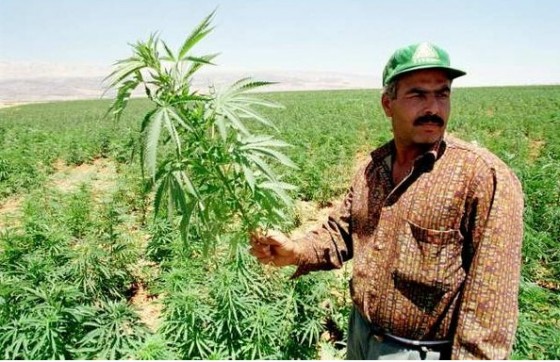
 Why grow apples in Lebanon when hashish and cannabis is hundreds of times more lucrative? An overview of Lebanon’s unsustainable drug business in the Bekaa Valley.
Escalating clashes between armed tribesmen trying to protect their cannabis fields and the Lebanese armed forces are pushing Lebanon to readdress the long-standing issue of cannabis cultivation in the Bekaa valley.
During the lawless years of Lebanon’s 1975 to 1990 Civil War, the fertile plain of the Bekaa Valley was carpeted with fields of green cannabis sativa plants, generating some $500 million USD annually. At its peak in 1988, Lebanon’s narcotic market was making an estimated $1.5 billion.
Back then, government-run eradication programs coupled with international development projects which incentivize farmers to profitably grow legal crops was supposed to bring Lebanon’s cannabis business down. But production continued, with several politicians known to be taking a cut of the profits. Furthermore several international projects failed to deliver plausible income generating alternatives. For example, the US generously donated Holstein cows to farm, however these cost more in upkeep than they provided in income. Unable to make a living, several projects were abandoned and farmers returned to their hash cultivation.
The 2006 war rendered government run eradication programs and as a result cannabis growing has been on the rise again. This year, however, the government turned its attention again to illegal crop farming and has been destroying hash fields and burning the plants.





 Need to put a good meal together but it’s too hot to cook? Here’s an easy menu for those hot-weather meals.



 An epidural could be the key to reducing PTSD in new mothers
 It gets so hot in Israel that