

 Desalination is an expensive and energy-intensive way of removing salt from water to make it potable – Israel hopes it will provide 75% of its drinkable water by 2013
Despite several problems with the use of desalination (such as high costs and energy usage) and calls from experts to consider other options first, the Middle East is embracing the water-creating technology at an alarming rate. As well as the expansion of desalination in the Gulf States, Israel recently announced that it would be building the country’s fifth desalination plant which – together with the four other plants – will supply 75% of the country’s drinking water by 2013.
The Israeli finance ministry has granted the license for the $423 million plant which will be built and operated by the national water carrier Mekorot. Following several years of drought, Mekorot Chairman Alex Wiznitzer told Ynet that the plants will allow Israel to restore its natural water resources. However Green Prophet reporter Lisa Damast has already explored the problems with a focus on desalination in Israel whilst ignoring water recycling and water conservation.
Desalination is no quick-fix, she explains, although if the campaign sponsored by the Israel Water Authority where viewers were told of the need to conserve water until desalination plants open in 2013 is anything to go by, many do seem to think it is. Water conservation is a much better and cheaper method to ensure that there is sufficient water, as is increasing the utilisation of grey-water as it’s estimated that 70% of all water used in Israeli homes is grey-water.
Indeed the poor water situation in the region (which is considered to be amongst the most water scarce in the world alongside Sub-Saharan Africa) is troubling and an answer is needed soon. Jordan has recently kick-started a campaign to monitor water theft in response to a water crisis in several parts of the Jordan Valley.
The authorities found nine violations and uncovered an illegal water pipe diverting the entire output of the Kafrein Dam Desalination Plant’s drinking water to several farms in the Jordan Valley. Clearly, a better solution is needed in terms of ensuring that the agricultural sector has the skills and techniques to conserve water and that citizens are convinced of the wisdom to conserve water – whether it’s abundant or not.
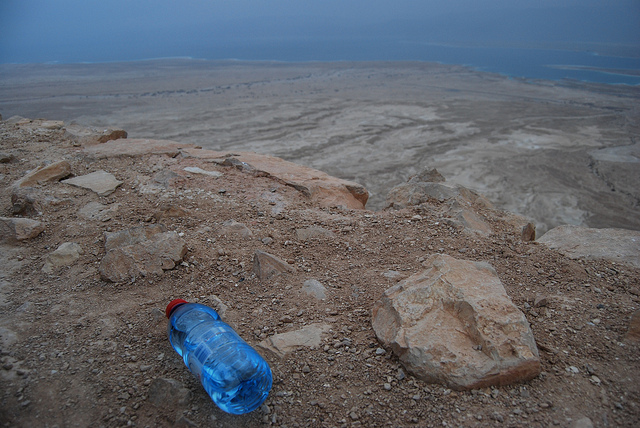
: Image via Borman818/Flickr.
:: Ynet News and Jordan Times
For more on Desalination see:
Yale Researcher: “Desalination Should Be A Last Resort”



Immediately following 1967 and since Israel built quite a number of surface catchment reservoirs in the 1967 territories -probably over a hundred by now. What has been clear from pre-67 Israeli publications and European school geography and religion class books, is that Israel draws waters from the coastal aquifer fed in part by water percolating through the Samarian Hills but the Arab agriculture on those hills draws from surface water and shallow wells before surplus water run-off the coastal plainor into the lower coastal aquifer. Further most of Israel’s water since the early 60’s is piped from Lake Kineret/Sea of Galilee and does not impinge on Arab supplies in Samaria. Either way also remember the Arab population of the ex-Jordanian West Bank has also tripled since 1967 and is not averse to pinching water from Israeli pipes bringing water from the coast to its hill villages and towns.
The projected increase in the world population to around 9Bn in 2050 will mainly occur in developing countries and regions already suffering prolonged dry spells and drought.
It is not going to get easier for anyone – anywhere in the world – the constant appeals for aid to combat dislocation and starvation will only get stronger.
I understand the need to conserve water, especially greywater and a lot more could be done in countries other than Israel but this time I think Israel has got it right. Water independence, at a price, is the right way to go, wars are fought over water, they always have been at a more basic survival level.
That said, we all need to improve agriculture and urban efficeincy incorporating greywater recycling into house and urban design. Sooner or later mother nature will impose her will and we will need to work together to secure the future for the next generations
From MARKETWATCH.COM
Here’s how Gilding and Randers describe these key sectors:
1. Forests: Cut deforestation and other logging by 50%.
2. Coal: Close 1,000 dirty coal power plants within 5 years.
3. Electricity: Ration electricity, and rapidly drive new efficiency.
4. Carbon Capture Storage: Retrofit 1,000 coal power plants with Carbon Capture Storage.
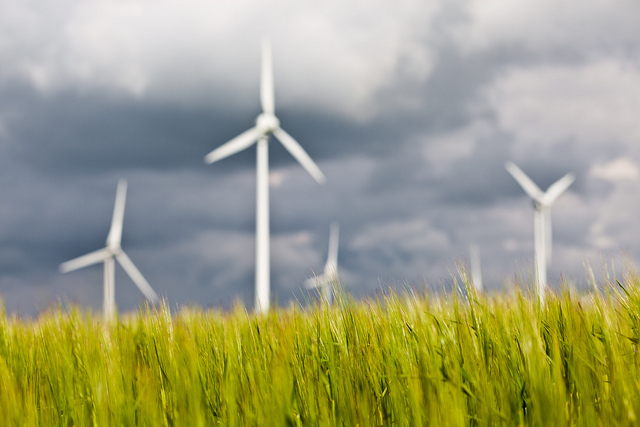
5. Wind/solar: Erect a wind turbine or solar plant in every town.
6. Deserts. Create huge wind and solar farms in suitable deserts.
7. Waste: Let no waste go to waste; recycle and reuse by-products.
8. Autos: Ration use of dirty cars to cut transport emissions by 50%.
9. Biofulels: Prepare for biofuels power stations using CCS technology.
10. Travel: Strand half of the world’s aircraft.
11. Methane: Capture or burn methane from agriculture and landfills.
12. Food: Move society away from diets of climate-unfriendly protein.
13. Farming: New methods reduce gas emissions, maximize soil carbon.
Thanks Arwa, thought provoking. How do you propose to integrate water conservation into the minds of all faith communities, how can you amplify the message such that it has relevance to the individual so they do something?
Israel is # 1 in the world in water theft. Palestinians’ underground water is exhausted by Israel, while Palestinians suffer from water scarcity and continuous cuts by Israel. Israelis consume four times as much as Palestinians in the occupied Palestinian territories.
Also blaming Israel on not recycling and conserving water enough does not make sense. They are #1 in the world in water recycling and conservation.
You can not conserve your way out of situation in middle east. There is not enough water period. I also read reports that in about 2020-2025 Israel is planing to get 100% of drinking water from desalination.