Opioid drugs including oxycodone, heroin and fentanyl have fueled an ever-worsening epidemic in the US. And after giant events in New Orleans they are popping up in the wastewater.
Neom, a bombastic collection of futuristic cities and resorts, has flopped as Saudi oil prices roll back reality. The Saudi plan of hosting the 2029 Asian games to be held at Trojena, a ski report in the desert, has been cancelled.
A large sperm whale has washed ashore on Zikim Beach in southern Israel, marking only the eighth documented case of its kind along the country’s Mediterranean coast since monitoring began.
Opioid drugs including oxycodone, heroin and fentanyl have fueled an ever-worsening epidemic in the US. And after giant events in New Orleans they are popping up in the wastewater.
Neom, a bombastic collection of futuristic cities and resorts, has flopped as Saudi oil prices roll back reality. The Saudi plan of hosting the 2029 Asian games to be held at Trojena, a ski report in the desert, has been cancelled.
A large sperm whale has washed ashore on Zikim Beach in southern Israel, marking only the eighth documented case of its kind along the country’s Mediterranean coast since monitoring began.
Opioid drugs including oxycodone, heroin and fentanyl have fueled an ever-worsening epidemic in the US. And after giant events in New Orleans they are popping up in the wastewater.
Neom, a bombastic collection of futuristic cities and resorts, has flopped as Saudi oil prices roll back reality. The Saudi plan of hosting the 2029 Asian games to be held at Trojena, a ski report in the desert, has been cancelled.
A large sperm whale has washed ashore on Zikim Beach in southern Israel, marking only the eighth documented case of its kind along the country’s Mediterranean coast since monitoring began.
Opioid drugs including oxycodone, heroin and fentanyl have fueled an ever-worsening epidemic in the US. And after giant events in New Orleans they are popping up in the wastewater.
Neom, a bombastic collection of futuristic cities and resorts, has flopped as Saudi oil prices roll back reality. The Saudi plan of hosting the 2029 Asian games to be held at Trojena, a ski report in the desert, has been cancelled.
A large sperm whale has washed ashore on Zikim Beach in southern Israel, marking only the eighth documented case of its kind along the country’s Mediterranean coast since monitoring began.
Opioid drugs including oxycodone, heroin and fentanyl have fueled an ever-worsening epidemic in the US. And after giant events in New Orleans they are popping up in the wastewater.
Neom, a bombastic collection of futuristic cities and resorts, has flopped as Saudi oil prices roll back reality. The Saudi plan of hosting the 2029 Asian games to be held at Trojena, a ski report in the desert, has been cancelled.
A large sperm whale has washed ashore on Zikim Beach in southern Israel, marking only the eighth documented case of its kind along the country’s Mediterranean coast since monitoring began.
Opioid drugs including oxycodone, heroin and fentanyl have fueled an ever-worsening epidemic in the US. And after giant events in New Orleans they are popping up in the wastewater.
Neom, a bombastic collection of futuristic cities and resorts, has flopped as Saudi oil prices roll back reality. The Saudi plan of hosting the 2029 Asian games to be held at Trojena, a ski report in the desert, has been cancelled.
A large sperm whale has washed ashore on Zikim Beach in southern Israel, marking only the eighth documented case of its kind along the country’s Mediterranean coast since monitoring began.
Opioid drugs including oxycodone, heroin and fentanyl have fueled an ever-worsening epidemic in the US. And after giant events in New Orleans they are popping up in the wastewater.
Neom, a bombastic collection of futuristic cities and resorts, has flopped as Saudi oil prices roll back reality. The Saudi plan of hosting the 2029 Asian games to be held at Trojena, a ski report in the desert, has been cancelled.
A large sperm whale has washed ashore on Zikim Beach in southern Israel, marking only the eighth documented case of its kind along the country’s Mediterranean coast since monitoring began.
Opioid drugs including oxycodone, heroin and fentanyl have fueled an ever-worsening epidemic in the US. And after giant events in New Orleans they are popping up in the wastewater.
Neom, a bombastic collection of futuristic cities and resorts, has flopped as Saudi oil prices roll back reality. The Saudi plan of hosting the 2029 Asian games to be held at Trojena, a ski report in the desert, has been cancelled.
A large sperm whale has washed ashore on Zikim Beach in southern Israel, marking only the eighth documented case of its kind along the country’s Mediterranean coast since monitoring began.
We used to think of Beirut as a brown, concrete city lacking color and green space, but the Dihzahyners are challenging such dreary labels by painting the city white, pink, purple, green, orange and every other color of the rainbow.
A collective of artists and designers armed with buckets of paint (non-toxic, we hope?) and a whole lot of love, the group calls their current urban intervention “Paint Up.” They’ll be painting murals and steps throughout the city until 3 November, 2012.
Not like Istanbul’s historic Grand Bazaar, the famous Emirati souk hosted by the Artisans of the Emirates, or ARTE, is a baby – only seven years old. But it has quickly grown from its humble beginnings of about 30 “artisans” or craft exhibitors from the United Arab Emirates in the network to over 3,000. ARTE “markets” are held at the public center of Dubai Festival City; ARTE “souks” are held in Times Square Center. These expositions are not everyday occurrences; usually once-per-month dates are advertised on ARTE’s homepage.
For example, the next souk event is scheduled for September 14, the next market event October 5, in their respective locations. Usually, about 200 merchants set up shop on an exhibition day.
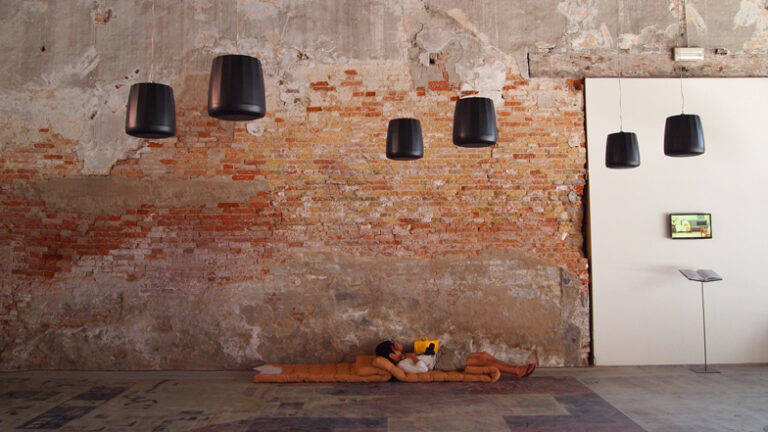
Kuwait is making its debut at the 13th Venice Biennale this year, and they’re doing so with some serious style. The pavilion features a cavernous industrial space interrupted with dangling speakers, orange cushions and abandoned master plans, and it was commissioned by the National Council for Culture, Arts and Letters (NCAA).
Unlike many of the exhibits on display as part of this year’s “Common Ground,” Kethra, curated by Zahra Ali Baba, takes a bold, multidisciplinary look at the social stagnation that has emerged since the nation first stumbled upon oil. This pavilion even received a special mention from Paolo Baratta – the Venice Biennale president.
Silver, gold, oil, stocks, bonds, real estate! I won’t pretend to know more than the investment experts, but many people lost a lot of money following their advice. Why have these experts overlooked a resource that is guaranteed to rise– even if only within the confines of a lost balloon? Yes I’m talking about helium! Helium (He) is the second lightest element with an atomic number 2. Unlike hydrogen, which destroyed the Hindenburg, helium adds non-flammable fun to birthday parties. It also cools superconducting magnets in MRI medical scanners, helps with the manufacture of microchips and makes everyone sound just like Donald Duck.
Defying the Iraqi central government, the Kurdistan Regional Government (KRG) has begun selling gas directly to Turkey. Crude oil sales will also begin soon.
Five tankers crossed the border from the KRG into Turkey in July, marking the first exchange of oil or gas between the two governments. The trade was just a harbinger of a bigger hydrocarbon trading relationship between them, according to a recent report in Reuters. For Turkey, the KRG represents a new source of oil and gas imports, to which Turkey has long been addicted. For the KRG, the opportunity to trade with Turkey is a way of flaunting its independence from Baghdad and demonstrating the value of its resources.
The cedar tree, Lebanon’s national symbol , has been for centuries overused by various civilizations. Reforestation might not bring them back from the brink.
The Cedar of Lebanon, Cedrus Libani, is an evergreen coniferous plant native to Lebanon, Syria and southern Turkey. Cedar forests once covered the entire Mount Lebanon chain but the cedar,an emblem of Lebanese patriotism, now represents only 2,000 hectares (0.4% of original estimated forest cover).
The history of Lebanon’s cedar tree decline is long. The superb quality of the cedar wood in terms of color, hardness, fragrance, resistance to insects humidity and temperature has made it one of the most sought after raw materials, resulting in mass deforestation. The sheer significance of the cedar of Lebanon to various civilizations and religions can be illustrated through its uses.
Bake a batch of honeyed cookies for the Jewish New Year.
Symbol of all things sweet and good, honey is part of many Rosh HaShanah recipes. Here at Green Prophet, we use only chemical-free honey.
Our popular honey cake (see below) is based on a traditional recipe, and so are these honey cookies. German immigrants brought the recipe to Israel in the nation’s early years, and now all ethnic groups regard them as standard Rosh Hashanah fare. Kids especially love these cookies, maybe because they fit into the hand comfortably and can be eaten on the run.
A recipe for honey cake is great for the Jewish New Year
Honey Cookies – The Recipe
24 cookies
Ingredients:
1 cup white sugar
1 cup shortening
1 cup honey
2 eggs
1 teaspoon vanilla extract
1 teaspoon baking soda
4 cups all-purpose flour
1 teaspoon ground ginger
Confectioner’s sugar to dust over cookies – about 1 -1/2 cup
Mix sugar, shortening and honey in a pan and cook over low heat till blended. Cool the mixture.
Mix eggs, vanilla, baking soda and ginger. Gradually add to cooled honey mixture.
Add flour to mixture, 1/2 cup at a time. Stir well between additions until you have a smooth dough.
Form teaspoon-sized balls and roll each one in confectioner’s sugar.
Drop onto cookie sheets about 2 inches apart.
Bake at 350° F – 180° C 12-15 minutes or until a golden brown.
This recipe calls for marinating lamb cubes overnight in pomegranate molasses, a sweet, thick reduction of pomegranate juice. We have a recipe for it here. Then it takes only 15 minutes to cook. Have ready rice, a variety of salads, hummous to spread on your challah, and one holiday meal is ready to set on the table.
Lamb Kebabs in Pomegranate Molasses
6 servings
Ingredients:
1/2 cup pomegranate syrup
1/3 cup olive oil
1 tablespoon lemon juice
1-1/2 teaspoons salt
1/2 teaspoon pepper
2 cloves garlic, chopped fine
2 bay leaves
1/2 teaspoon dried thyme
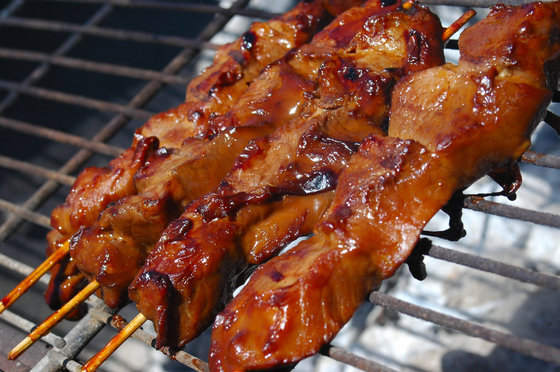
1 kg. – 2 lb. boneless lamb shoulder, cubed into pieces 1-1/2 inch large. Read our post on visiting a family ritual slaughter in Jaffa, Israel.
How to make lamb kebabs
Combine pomegranate molasses, olive oil, lemon juice, salt, pepper, garlic, bay leaves and thyme in a large container. Add the lamb, tossing it to coat with the marinade. Cover tightly and refrigerate overnight.
Remove lamb from marinade and reserve the marinade. Skewer the lamb.
Grill kebabs over medium heat, turning often and basting with reserved marinade until the meat is brown on the outside and medium-rare on the inside, about 10 to 15 minutes.
Enjoy!
Recipes to round out the menu starring lamb kebabs:
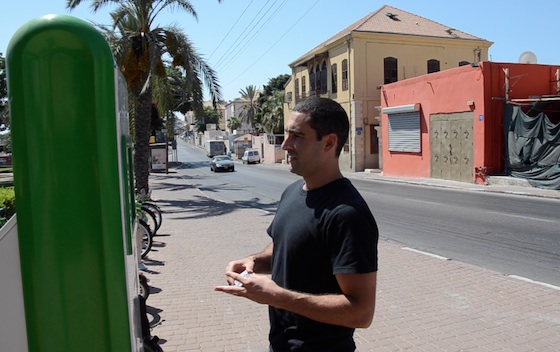
We didn’t have a camera with us at the time, so we invited Tel Aviv native Daniel to join us at the same station about two weeks later in order to put the system to the test again. His experience was much better than ours. Hit the jump to watch our small video clip of Daniel hiring a Tel-o-Fun bicycle and find out how his experience compared with ours.
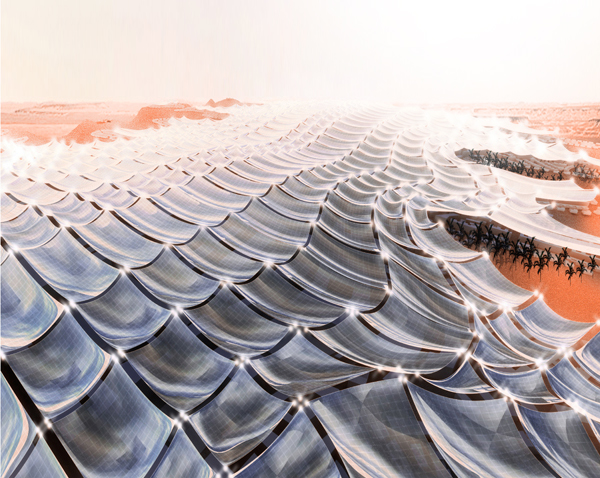
MIT student Otto Ng proposes to solar-power the Arabian peninsula with more than 10,000 square kilometers of Powerscape – a tensile solar-collecting canopy comprised of inflatable mirrors. The problem with solar power, says Ng in a TED presentation, is the great amount of space required to produce the same amount of energy as a conventional power plant.
So, unless we’re making beautiful power stations a la the Land Art Generator Initiative, we’re sapping up precious land with ugly, resource-intensive solar collectors du jour. Ng proposes instead to cover the desert with an energy-generating canopy that also provides shade and a comfortable microclimate.
We speak to Shahrzad Mohtadi about the devastated drought that crippled Syria’s food centre and shook Assad’s political stability
The link between climate change and political instability may still be ambiguous, but recent research is uncovering a connection between sustainable water and food policies and the survival of governments. Shahrzad Mohtadi found that whilst a prelonged drought in Syria may not have caused the political uprising, the Assad regime’s failure to deal with it effectively certainly did. “Assad promoted water intensive crops such as cotton, while not providing efficient methods of watering such crops. There were many such policies that created a scenario where the drought’s effects were even more devastating than they otherwise would have been,” say Mohtadi.
“So one can’t say climate change will create a domino effect of instability and migration whatsoever – but Syria’s case is a warning that developing nations… should create sustainable agricultural policies.” I spoke with Shahrzad Mohtadi to find out more about the devastating drought in Syria and what other Middle Eastern nations need to do to protect their dwindling water resources – and their political stability.
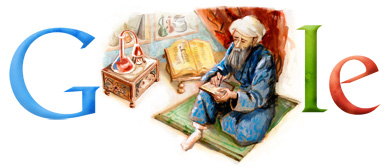
Google does it again: sliding big history lessons into my idle internet surfing.
This week in Jordan, the Google image was of Middle Eastern pharmacist, physician and alchemist, Muhammad ibn Zakariya al-Razi, the preeminent man of science of his time, and beyond. If Guinness doled out world records in Razi’s day, this 9th century Persian would best swimmer Michael Phelps in a stack of “firsts”: but Razi’s events were in the pool of medical research, clinical care and chemistry.
Razi dabbled in alchemy and discovered numerous compounds and chemicals, including kerosene. An early proponent of experimental medicine, he was one of science’s most prolific authors and arguably the most original of all the world’s physicians. The Encyclopedia of Islam said,”Razi remained up to the 17th century the indisputable authority of medicine.”
Educated in music, mathematics, philosophy, and metaphysics, Razi chose medicine as his day job. He differentiated smallpox from measles, and made distinctions between curable and incurable diseases.

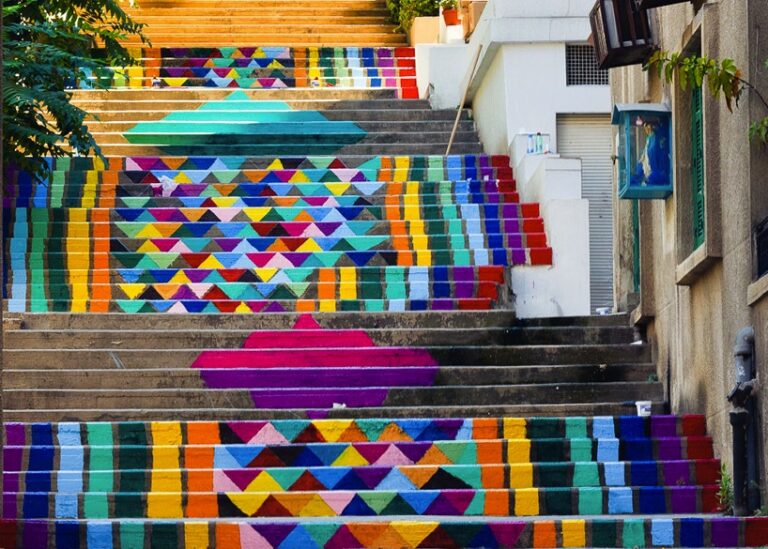
 We used to think of Beirut as a brown, concrete city lacking color and green space, but the Dihzahyners are challenging such dreary labels by painting the city white, pink, purple, green, orange and every other color of the rainbow.




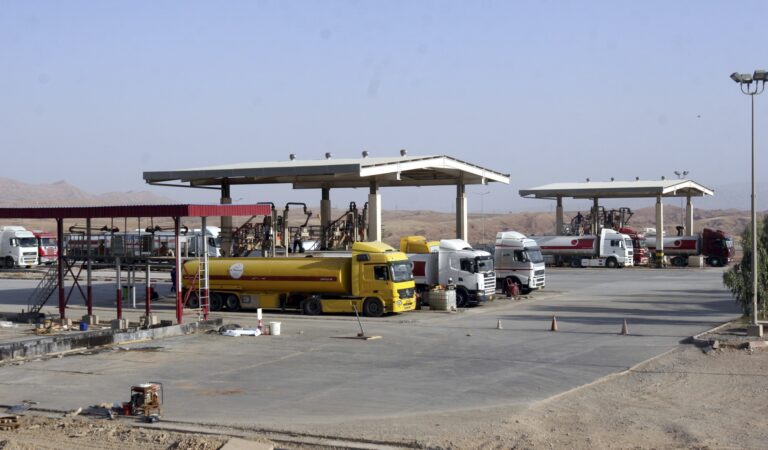
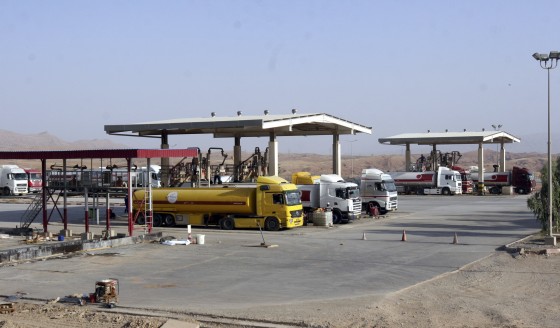 Defying the Iraqi central government, the Kurdistan Regional Government (KRG) has begun selling gas directly to Turkey. Crude oil sales will also begin soon.