Home Blog Page 394

Egyptian Mummy Gets a LEGO Heart at Cambridge Universtiy

0

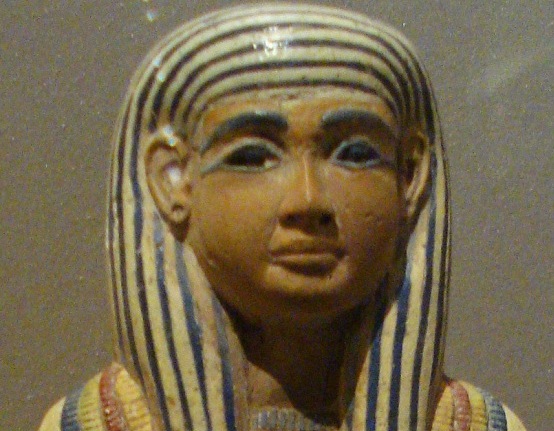
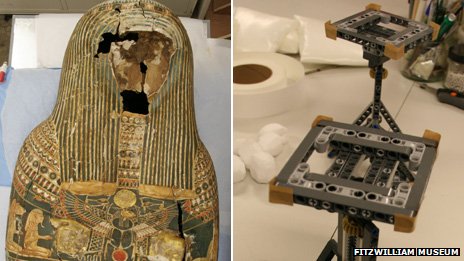
history, LEGO, ancient egypt, design, Cambridge University, mummy restorationAn engineering student used LEGO to help restore an ancient Egyptian mummy case at Cambridge University. The 10th Century BC Hor Mummy case excavated in 1896 from a Luxor temple had been languishing in a museum basement for the last fifty years.

Its face had been torn to pull out the mummy it previously encased, its chest sagged due to damp conditions and important parts of it were cracking and unstable. So conservators at the Fitzmillian museum called upon the university’s engineering department for help and 22 year old David Knowles rose to the cause. With LEGO.

Turkey’s Pamukkale: Step into a Mixed-Culture Soup PHOTOS

0

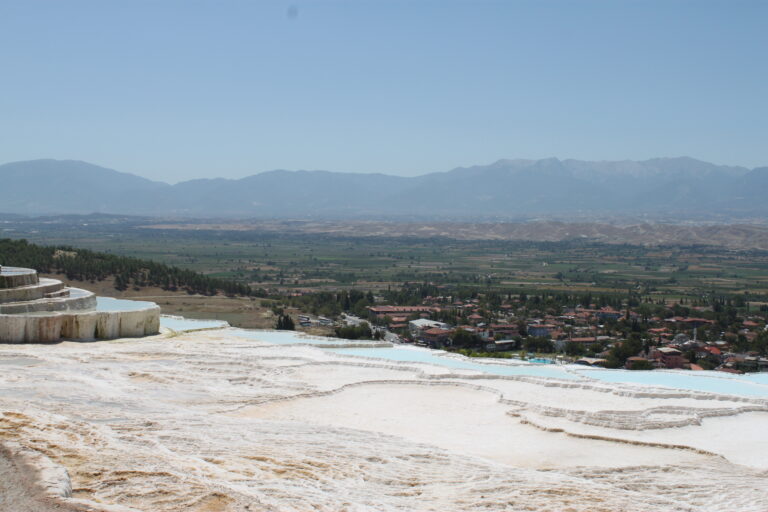
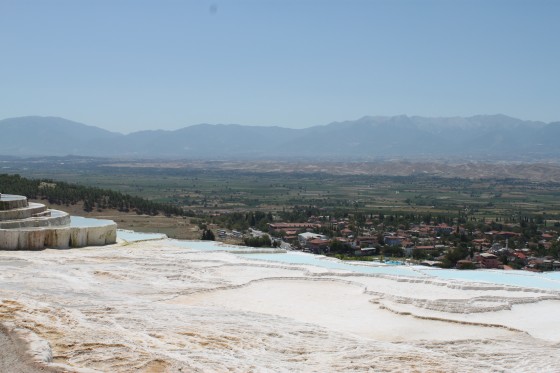
pamukkale turkeyPamukkale is the most sensual and surreal of Turkey’s eleven World Heritage sites.

Seventeen natural hot springs pour a continual stream of mineral water down the enormous travertine steps of Turkey’s Pamukkale. It’s a Dali painting come alive.  Rock formations melt like liquid stairs dropping from hilltop Hierapolis towards the surrounding skirt of farmland. It’s located in Turkey’s Inner Aegean region, in the River Menderes valley, near the town of Denizli.

Fats Help You Lose Weight, Claims Israeli Researcher

2

butter croissant fat weight hebrew university
There’s good news for butter lovers in the future.

Professor Oren Froy of the Agriculture, Food, and Environment department, Hebrew University, says that a high-fat diet may help weight loss. The trick is to include fats in regularly scheduled meals. We’ve written about different food theories here on Green Prophet, including a debate on if organic food is really healthier. Eating according to schedule, wrote Froy in an article published in the journal of the Federation of American Societies for Experimental Biology, helps the body  burn it up instead of packing it away in the tissues.

Considering how many obese Israelis and Americans and obese Gulf State citizens there already are, it’s great to hear of a way people can eat formerly prohibited foods, guilt-free.

Prof. Froy and his research team probed the current theory that obesity results when mammal’s metabolisms are disrupted by irregular eating, or when lots of  fats are eaten. It seems that they proved the first to be true, and the second questionable. Their conclusions are based on an 18-week study conducted on mice.

The researchers observed four groups of mice. The test group was given a high-fat diet and allowed to eat only at the same times and for the same lengths of time, every day. Of the control groups, one was allotted low-fat (presumably high-carb) foods, also on schedule. The second group received the same low-fat diet but was allowed to eat as much and as often as desired. The third control group ate a high-fat diet at will.

The mice eating plenty of fats on a schedule gained less weight than any of those in the control groups. Although allotted the same amount of daily calories, the mice eating a high-fat diet at will gained the most weight.  The scheduled high-fat eaters also metabolized their food more efficiently than any of the others; that is, they burned off fat in the intervals between feedings rather than storing it in their bodies.

Losing weight is less about cutting out fats, concludes Froy, than scheduling when to eat them.

This brings to mind the famous French Paradox of the  1990s, when many theories floated regarding the relatively low incidence of heart disease among the French, who traditionally enjoy conspicuous amounts of butter, cheese, and pork. Among the reasons found for this comfortable state of existence were the moderate amounts of red wine the French drink daily, consuming natural vegetable and animal fats while avoiding trans fats, smaller portions, low sugar consumption, taking time to savor food – and significantly, no noshing between meals. Apparently, like mice, humans burn up their food if they stick to breakfast, lunch and dinner and no snacks.

In the light of Prof. Froy’s theory, it seems that science is proving folk wisdom correct.

Now.

It’s exactly 7:00 a.m.

Breakfast! Pass the croissant and butter, please, and don’t forget the cream for my coffee.

More hopeful food ideas from Green Prophet:

Image of croissant with butter via Shutterstock.


ABC News Sued Over Pink Slime

0

pink slime abc news, ground beef
Beef Products Inc says that the ABC network is to blame for its economic woes.

What’s in a name? Beef Products Inc (BPI) is suing ABC News for $1.2 billion, claiming economic damage from  the network’s use of the words “pink slime” to describe the mass of connective tissue ground together, washed in ammonia, and dyed to look like ground beef. South-Dakota based BPI uses the stuff as a filler to stretch out ground beef.

Used to use. BPI has stopped production of its cheap filler at three major plants. Its main customers, big supermarket chains like Safeway and Supervalu, won’t buy ground beef containing it. A successful social media campaign got beef  with pink slime out of school lunches.  The McDonald’s, Burger King and Taco Bell food chains refuse to use it. Lashing out at any culprit, and protected by a state law that allows agricultural companies to sue when their products are criticized, BPI claims that ABC News’s coverage has set the public mind against their beef. Nobody’s buying it anymore.

3D Printing Lessons from Ancient Egyptian Ceramic Art

shawabi egypt art sculpture 3d printing

None of Egypt’s pyramids existed.  Khafre wouldn’t commission the Great Pyramid of Giza for another 1500 years.  But some time around 4000 BCE an Egyptian artist discovered the secret. This secret was the wonderful alchemy which transformed sand, ash, calcite lime, copper and fire into a lustrous blue-green gem worthy of the pharaohs.  Faience, also known as Egyptian paste, is the basis for the world’s first glazed ceramic.  The faience recipe improved and spread to Persia,  Turkey and througout the Indus valley.  Now researchers from the University of Western England believe faience may also be the key to better 3D printing.

Floating With Spencer Tunick to Save the Dead Sea

1

naked dead sea 2011
A personal account of celebrating the Naked Sea event anniversary last Thursday night.

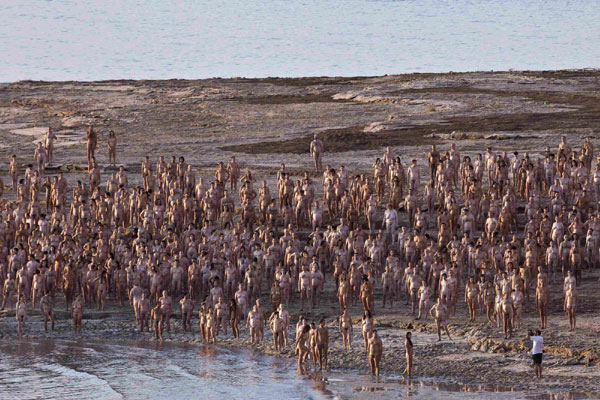
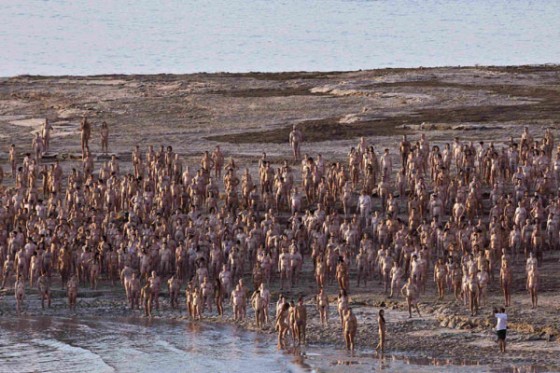
In September of last year year Spencer Tunick came down to the Dead Sea and brought along with him throngs of reporters, environmentalists and 1500 people loaded on buses from around Israel who bared all in the hot sun in the name of art, and brought attention to the plight of a world’s natural treasure, the Dead Sea. The event was exposed (no pun intended) to half a billion people globally and was what I and the masses see as the start of the movement. This year we returned with Tunick to float again.

Masdar Unveils Plan for a 100% Renewable Energy Micro-grid

Masdar, clean tech, renewable energy, Abu Dhabi, micro-gridThe Masdar Institute (MI) has teamed up with the Global Green Growth Institute (GGGI) headed by Denmark’s former Prime Minister, and the Research Institute for Industrial Science and Technology (RIST) from South Korea to develop a 100% renewable energy micro-grid in Abu Dhabi. MI initially proposed the micro-grid idea to GGGI, which is chaired by Lars Rasmussen, in October, 2011, and has since received a pledge of $1 million from GGGI and POSCO – one of the world’s leading steel manufacturers to see it to fruition.

Washit is a Shower and Washing Machine in One

Washit, Turkey, water conservation, green design, clean tech, eco-design

Four Turkish students collaborated to design Washit – a combined shower and washing machine that makes those 15 minute showers almost guiltless. Responding to the combined woes of water scarcity and excess water use in the bathroom, Ahmet Burak Aktas, Adem Onalan, Salih Berk Ilhan and Burak Soylemez created a shower box that collects, cleans, and recycles greywater, which is then used to either wash clothes or the next person to enter the box.

Festival in Cairo Promotes Recycling and Public Literacy

1

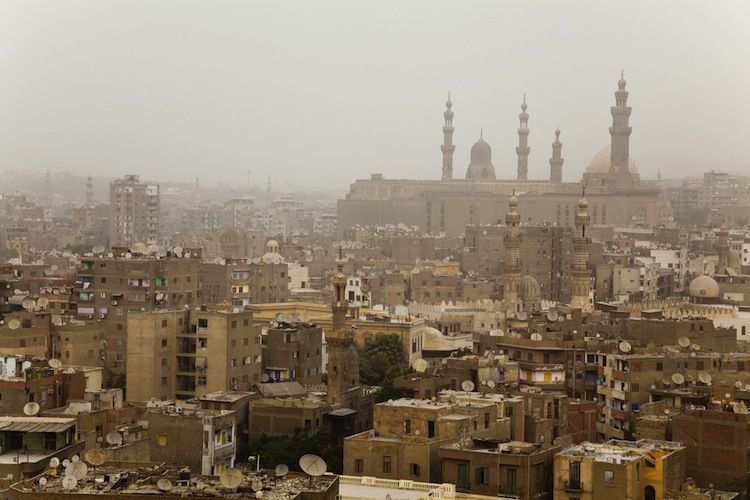
Egypt, Cairo, Recycling, Digital, Literacy, Youth, Education, Music, FestivalIn the beginning of September, Darb 1718, an art and culture organization in Cairo, hosted a festival to promote recycling in Egypt. It featured a musical performance by El Zabaleen (the Garbage Collectors), a local band famous for reusing old materials as instruments to play their music.

The Darb 1718 festival engaged many of the nation’s green NGOs and initiatives, including Green and Dayma. Their aim was to raise awareness about the dire need for more recycling. Egyptian academics and policy makers have recently raised the alarm about a waste management crisis in Egypt.

650 Handcrafted Oak Pieces Went Into This Fine Mashrabiya Table

1

mashrabiya, Carwan, mischer'traxier, green design, sustainable design, Lebanon, handcraftsMashrabiya screens are a common element in Middle Eastern architecture and yet few people outside the design world realize how much work goes into making them. In order to unveil the extraordinary care and patience that goes into each handcrafted screen, Beirut-based Carwan, the Middle East’s first popup art gallery, commissioned mischer’traxler to design the Mashrabiya Table.

Iran Blows Past Sanctions with Wind Energy

wind energy, solar energy, cleantech, Iran, oil, gas, sanctions, alternative energyDetermined to stay its unpopular nuclear course, Iran is now turning to wind power and other renewable energy sources to blow past sanctions. Last year Karin reported that the current regime plans to produce 5,000 MW of solar energy by 2015, and in May this year, President Mahmoud Ahmadinejad put aside an additional $620 million to grow the country’s nascent renewable energy program.

This commitment from on high is exactly the push that local alternative energy producers needed to explore their respective technologies, and they’re receiving some support from abroad, but challenges abound.

King Abdullah: Israel is Disrupting Jordan’s Nuclear Plans

1

nuclear-power-jordan-Does placing Israel in the same camp as the anti-nuclear movement in Jordan have negative implications for the success and popularity of the campaign?

Since 2009, when Jordan first announced its nuclear ambitions, the country has been through a parliamentary review of nuclear power, accusations of slander by the head of the Jordanian Atomic Energy Commission and dozens of  protests stating that the costs – both financial and environmental –  of nuclear power has not been sufficiently assessed. There is now a new plot twist in the Jordanian nuclear ambition saga. King Abdullah has accused Israel of disrupting Jordan’s nuclear programme. Speaking to Ynet News, he remarked: “When we started going down the road of nuclear energy for peaceful purposes, we approached some highly responsible countries to work with us. And pretty soon we realized that Israel was putting pressure on those countries to disrupt any cooperation with us.”

This statement is in my view hugely damaging to Jordan’s anti-nuclear movement. Firstly because support for nuclear power will no doubt be given a boost in retaliation to the news that Israel has been interfering. Secondly, because those trying to stop nuclear could now be seen as siding with a national enemy.

Waterless Dishwasher From Turkey Cleans up After Every Meal

4

water scarcity, dualWash, Turkey, waterless dishwasher, clean techTurkish designers who anticipate severe water shortages in the next few decades have designed the dualWash – a waterless dish washer that cleans single dishes after every single use. Mitigating huge stacks of dirty dishes and waste water resources, the dual dishwasher and cabinet uses carbon dioxide to rid dishes of crumbs and sauce and other things that insects and rodents love to eat.

Egyptian zoo is a nightmare for animals

41

Animal cruelty, Egypt, Zoos, wildlife conservation, animal activismElephants, lions, and wolves are by nature free, roaming creatures that form complex social relationships. In the wild we have hunted them to near extinction and we have tethered them to cages and private homes. But animals bred or purchased by any of Egypt’s seven national zoos are especially unlucky: every day, zookeepers mete out starvation, physical abuse, solitary confinement and other forms of cruelty. And nobody seems to care.

Animal rights activists have contacted the central zoo director (I refuse to capitalize this title), the Minister of Agriculture, other zoo officials, Egyptian embassies around the world and even President Moursi with photographic evidence of emaciated lions, hippos swimming through sewage and wolves sporting bloody, raw wounds, and no one, absolutely no one has stood up to say “but this is wrong!”

A quote attributed to Gandhi floats through the blogosphere.

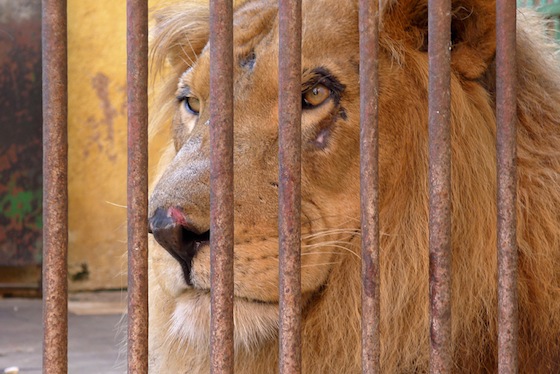
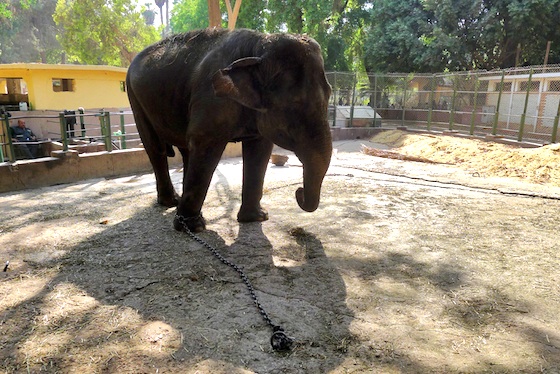
I don’t know if he really said this or if it even matters, but this string of words has great power to shame the people capable of ignoring the kind of vile cruelty depicted in these images by Khaled Elbarky.

“The greatness of a nation and its moral progress,” goes the quote, “can be judged by the way its animals are treated.”

By Gandhi’s compass, Egypt’s moral progress is in its infancy.
Animal cruelty, Egypt, Zoos, wildlife conservation, animal activismLast week we witnessed hysterical moral indignation in the Arab/Muslim world over an absurd, incendiary film made by a thug, with fatal consequences for several innocent men.

Further analysis has unveiled a host of complex and self-serving motives behind the scene and more is yet to come, but in the meantime this terrible theater highlights the MENA region’s extraordinary hypocrisy.

Egyptian mobs demand respect for Prophet Muhammad, who devoted his lifetime to compassion, dignity and honor, but back home it’s OK to sexually harass women and condemn wild beasts to a lifetime of starvation and torture?

Don’t get me wrong. Better than most westerners, I understand that pure Islam condemns animal cruelty – nay, all cruelty – and urges followers to be custodians of all living things.

Animal cruelty, Egypt, Zoos, wildlife conservation, animal activismBut the zookeepers who continue to breed and purchase more elephants and other animals only to leave them chained up for 22 hours a day, even though they lack the financial resources to ensure these animals have decent habitats and food, are not behaving like real Muslims.

And the people who avenge a foolish film with murder do not deserve the respect for which they ask. How dare we demand respect when we ourselves are so disrespectful to sentient beings – human and otherwise?

I’ve seen these zoos. I’ve watched lions and tigers (in the same cage at that) whipped into submission while the crowd stood idly by. Nobody froths at the mouth demanding justice for these creatures, which are made of the same stuff as you and me and by the same creator.

Animal cruelty, Egypt, Zoos, wildlife conservation, animal activismAlthough many of the Muslims I have met during my travels are among the most enlightened and generous people on the planet, I refuse to silence my criticism of cruelty and neglect because of sensitive religious issues. Animal cruelty is wrong – in every religion.

The continued neglect of Egypt’s zoo animals is an insult to my prophets – the powerful lion, the loyal elephant, the solitary wolf  –  and offends my religion, which is mother nature. Nor am I alone, because if you care about Allah, God, Buddha, Jesus, Moses, or any other holy man or woman, then by extension you care about all life.

Now, for the love of God, who is going to step up to the plate and hold these torturers to account?
Animal cruelty, Egypt, Zoos, wildlife conservation, animal activismThe information used in this Op Ed was sent to Green Prophet by animal advocate Eileen Crossman; photographer Khaled Elbarky sent the following information with his images:

  • The lion, whose name is Antar, lives at the Kafr El-Shaikh zoo, where a guard constantly pokes with a long iron rod in order to get him to perform for visitors. Note: We had to remove this image because Google deemed it too violent.
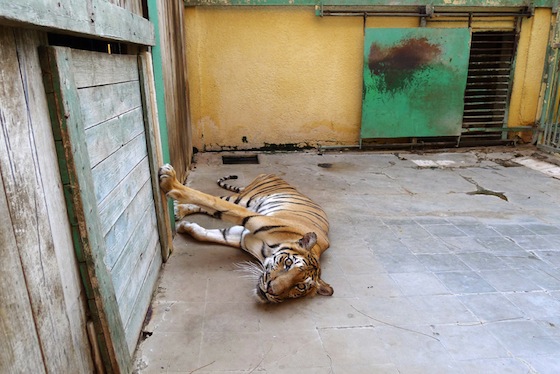
  • Sammar the tiger lives at the same zoo. She is over 25 years old and suffers from a variety of ailments, along with extraordinary pain. The zoo refuses to put her to sleep, which would be the humane thing to do.
  • The hippo lives with others at the Fayoum zoo, which lacks adequate resources to keep the water clean. As you can see, it is full of sewage that imperils the hippos’ health.
  • And the wolf? On the brink of starvation, a pack of wolves at Fayoum zoo are believed to fight each other for food – leading to terrible injuries that go untreated.
  • At 49, the female Asian elephant is kept on this short chain day after day, year after year at the Giza zoo.
  • Lastly, this solitary baboon at Tanta zoo has spent its entire life in a 1.5 meter square cage. He/she sleeps on a bed of refuse.

We’re sorry to be the bearer of such awful news, so to cheer you up a little bit, we’d like to introduce you to Jessica – the world’s sweetest hippo. A little tender loving and hippo kisses go a long way, but we don’t recommend that you do this at home.

You Don’t Need That Plastic Bag – A New Campaign in Jordan

0

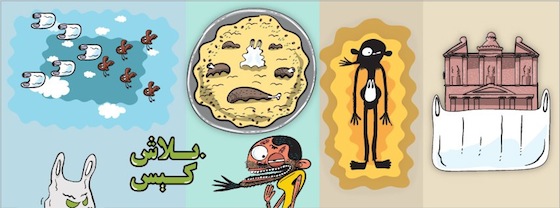
jordan-litter-campaign-balash-kees‘Balash Kees’ is a new campaign launched by UNESCO Amman to help reduce the use of plastic bags in Jordan

Walk around Jordan and you’ll realise pretty quickly that the country has a huge plastic bag and litter problem. Cheap black plastic bags are literally everywhere and they are a real eyesore. No more so then in important landmarks and tourist destinations where the country is supposed to be showcasing its best. In an effort to deal with this problem, the UNESCO office in Amman has joined forces with the Jordanian government to launch a media-savvy campaign to rid the country of the plastic bag.

The ‘Balash Kees’ Facebook page, which was launched today, already has over three hundred likes and the campaigners are asking people to stay in touch to learn how to tackle one of Jordan’s major environmental issues – plastic bags. According to the campaign material, a plastic bag is used on average for 12 minutes but stays in the environment for 1,000 years without degrading. The solution? Stay away from plastic bags. Balash Kees translates loosely as ‘no need for a bag’.