Maggie Baird, best known as the mother of Billie Eilish and Finneas O’Connell, is stepping into a much larger spotlight, this time as a climate storyteller.
Tillage is one of the clearest signals of how a farm treats its soil. Intensive plowing can degrade structure, release carbon, and increase erosion. Conservation practices—no-till, cover cropping, minimal disturbance—do the opposite. They build soil, retain water, and support biodiversity. But until now, measuring these practices at scale has been slow, expensive, and often self-reported.
Hydrophilis, Oliver Isler’s experimental rebreather suit, reimagines diving by reducing drag, eliminating bubbles, and bringing humans closer to the natural movement of marine life.
If you work as a roofer, landscaper, pool builder, or in construction, installing garden slabs or solar panels, building sheds, or working on outdoor home improvement projects, take note of new research that can help you protect your heart.
Maggie Baird, best known as the mother of Billie Eilish and Finneas O’Connell, is stepping into a much larger spotlight, this time as a climate storyteller.
Tillage is one of the clearest signals of how a farm treats its soil. Intensive plowing can degrade structure, release carbon, and increase erosion. Conservation practices—no-till, cover cropping, minimal disturbance—do the opposite. They build soil, retain water, and support biodiversity. But until now, measuring these practices at scale has been slow, expensive, and often self-reported.
Hydrophilis, Oliver Isler’s experimental rebreather suit, reimagines diving by reducing drag, eliminating bubbles, and bringing humans closer to the natural movement of marine life.
If you work as a roofer, landscaper, pool builder, or in construction, installing garden slabs or solar panels, building sheds, or working on outdoor home improvement projects, take note of new research that can help you protect your heart.
Maggie Baird, best known as the mother of Billie Eilish and Finneas O’Connell, is stepping into a much larger spotlight, this time as a climate storyteller.
Tillage is one of the clearest signals of how a farm treats its soil. Intensive plowing can degrade structure, release carbon, and increase erosion. Conservation practices—no-till, cover cropping, minimal disturbance—do the opposite. They build soil, retain water, and support biodiversity. But until now, measuring these practices at scale has been slow, expensive, and often self-reported.
Hydrophilis, Oliver Isler’s experimental rebreather suit, reimagines diving by reducing drag, eliminating bubbles, and bringing humans closer to the natural movement of marine life.
If you work as a roofer, landscaper, pool builder, or in construction, installing garden slabs or solar panels, building sheds, or working on outdoor home improvement projects, take note of new research that can help you protect your heart.
Maggie Baird, best known as the mother of Billie Eilish and Finneas O’Connell, is stepping into a much larger spotlight, this time as a climate storyteller.
Tillage is one of the clearest signals of how a farm treats its soil. Intensive plowing can degrade structure, release carbon, and increase erosion. Conservation practices—no-till, cover cropping, minimal disturbance—do the opposite. They build soil, retain water, and support biodiversity. But until now, measuring these practices at scale has been slow, expensive, and often self-reported.
Hydrophilis, Oliver Isler’s experimental rebreather suit, reimagines diving by reducing drag, eliminating bubbles, and bringing humans closer to the natural movement of marine life.
If you work as a roofer, landscaper, pool builder, or in construction, installing garden slabs or solar panels, building sheds, or working on outdoor home improvement projects, take note of new research that can help you protect your heart.
Maggie Baird, best known as the mother of Billie Eilish and Finneas O’Connell, is stepping into a much larger spotlight, this time as a climate storyteller.
Tillage is one of the clearest signals of how a farm treats its soil. Intensive plowing can degrade structure, release carbon, and increase erosion. Conservation practices—no-till, cover cropping, minimal disturbance—do the opposite. They build soil, retain water, and support biodiversity. But until now, measuring these practices at scale has been slow, expensive, and often self-reported.
Hydrophilis, Oliver Isler’s experimental rebreather suit, reimagines diving by reducing drag, eliminating bubbles, and bringing humans closer to the natural movement of marine life.
If you work as a roofer, landscaper, pool builder, or in construction, installing garden slabs or solar panels, building sheds, or working on outdoor home improvement projects, take note of new research that can help you protect your heart.
Maggie Baird, best known as the mother of Billie Eilish and Finneas O’Connell, is stepping into a much larger spotlight, this time as a climate storyteller.
Tillage is one of the clearest signals of how a farm treats its soil. Intensive plowing can degrade structure, release carbon, and increase erosion. Conservation practices—no-till, cover cropping, minimal disturbance—do the opposite. They build soil, retain water, and support biodiversity. But until now, measuring these practices at scale has been slow, expensive, and often self-reported.
Hydrophilis, Oliver Isler’s experimental rebreather suit, reimagines diving by reducing drag, eliminating bubbles, and bringing humans closer to the natural movement of marine life.
If you work as a roofer, landscaper, pool builder, or in construction, installing garden slabs or solar panels, building sheds, or working on outdoor home improvement projects, take note of new research that can help you protect your heart.
Maggie Baird, best known as the mother of Billie Eilish and Finneas O’Connell, is stepping into a much larger spotlight, this time as a climate storyteller.
Tillage is one of the clearest signals of how a farm treats its soil. Intensive plowing can degrade structure, release carbon, and increase erosion. Conservation practices—no-till, cover cropping, minimal disturbance—do the opposite. They build soil, retain water, and support biodiversity. But until now, measuring these practices at scale has been slow, expensive, and often self-reported.
Hydrophilis, Oliver Isler’s experimental rebreather suit, reimagines diving by reducing drag, eliminating bubbles, and bringing humans closer to the natural movement of marine life.
If you work as a roofer, landscaper, pool builder, or in construction, installing garden slabs or solar panels, building sheds, or working on outdoor home improvement projects, take note of new research that can help you protect your heart.
Maggie Baird, best known as the mother of Billie Eilish and Finneas O’Connell, is stepping into a much larger spotlight, this time as a climate storyteller.
Tillage is one of the clearest signals of how a farm treats its soil. Intensive plowing can degrade structure, release carbon, and increase erosion. Conservation practices—no-till, cover cropping, minimal disturbance—do the opposite. They build soil, retain water, and support biodiversity. But until now, measuring these practices at scale has been slow, expensive, and often self-reported.
Hydrophilis, Oliver Isler’s experimental rebreather suit, reimagines diving by reducing drag, eliminating bubbles, and bringing humans closer to the natural movement of marine life.
If you work as a roofer, landscaper, pool builder, or in construction, installing garden slabs or solar panels, building sheds, or working on outdoor home improvement projects, take note of new research that can help you protect your heart.
When you Twitter, Google, or just spend leisurely hours checking facebook updates, how does this affect the environment? And think about all that data from YouTube, cloud storage, and blogger’s sites. Where does it get stored and how much energy does it consume? Whoishostingthis provides a really handy infographic giving you the breakdown of the world’s largest data centers, where they are, what they store and what company’s are consuming the most resources. It’s a great cheat sheet if you are studying data and sustainability – and when you are trying to check your carbon footprint.
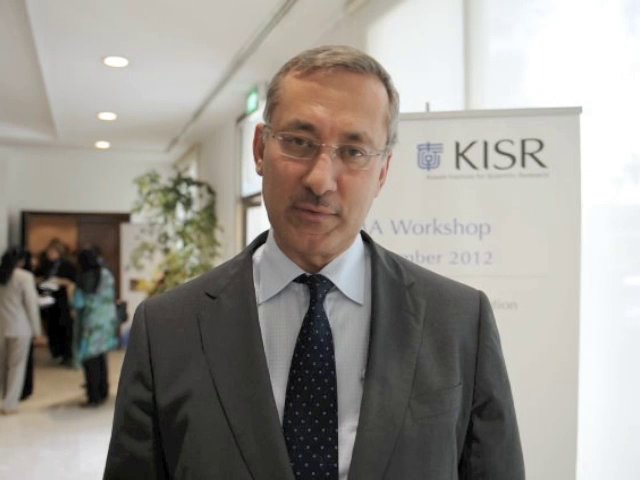
Want to find sunny Middle East solar opportunities? Think short term investments, and know that higher risks mean bigger rewards, says Belén Galled who talks about MENASOL 2013 CSP and PV solar opportunities in Dubai.
A two-day networking and conference in Dubai this May will give equal treatment to both concentrated solar power (CSP) and photovoltaic (PV) initiatives. This year MENASOL will be attended by a host of such luminaries as Waleed Salman, EVP, Strategy & New Business Development from the Dubai Electricity & Water Authority and Obaid Amrane, Board Member from the Moroccan Agency for Solar Energy. A delegation from K.A. CARE will also be attending.
We talked to CSP Today founder Belén Gallego about the state of solar in the region and what attendees can expect from the event being held from May 14 to 15 at the Hyatt Regency Dubai.
There is a great deal of interest in the Middle East North Africa region’s solar resources since there is so much of it, she said: “However, for the industry to be successful it is necessary that the solar projects adapt to our current short-term private financial processes, which is why developers need to think about the value proposition of their projects for the short as well as long term,” she tells us.
Hit the jump to read our Q & A with Gallego and find out how to register for the conference in time to receive a discounted price.
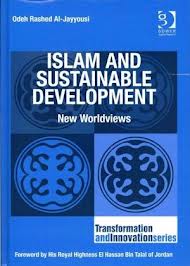
Odeh Al-Jayoussi creates a great guidebook on Islam and sustainable development, although it’s a little overambitious in its reach at times
Odeh Al-Jayoussi, the current vice president of Jordan’s Royal Scientific Society, has certainly had an interesting career. As well as working for the International Union for Conservation of Nature, he’s spent time at the City of Chicago’s Department of Planning and been a consultant for the United Nations, the EU and the World Bank.
All of these positions as well as his personal experiences have clearly informed his book Islam and Sustainable Development: New Worldviews which explores “a new paradigm of sustainability that is informed by Islamic worldviews and Islamic ecological ethics”. Indeed, the book includes lots of topics and stretches itself a little too broadly with chapters exploring Islamic banking systems, the role of the Muslim artist and the Islamic perspective on evolution. Still, a highly recommended read for those interested in sustainability and particularly those new to Islam’s contribution to the debate so far.
Wild marigold, sage and Palestine Oak? An international team sends researchers to Israel to forage medicinal plants native and special to this part of the Levant.
Even many decorative garden plants like aloe vera have valuable healing properties.
But the Bioxplore project, funded by the European Union to the tune of Euros 2 million, has a goal with these plants that reaches much farther than home remedies.
The plants’ active ingredients are isolated and tested in laboratories against pests like bacteria, fungi and worms. The ultimate aim is to develop new drugs, health supplements and cosmetics, exploiting the wild herbs’ medicinal properties. BioXplore hopes to develop local job opportunities and stimulate scientific, business and cultural exchanges between partner countries, based on these natural medicines and cosmetics.
The partners are are Israel’s Hadassah College, the Biodiversity and Environmental Research Center in the Palestinian Authority, the Leitat Technology Center in Spain and the Hellenic Regional Development Center in Greece. Rutgers University and North Carolina University are associates in the project as well.
Field researchers in Israel, Greece, and Spain have been actively gathering plant specimens since November 2011. In Israel, eighteen students from Hadassah College’s Biotechnology Department conduct regular hikes on plant-collecting trips. They have walked the ground from the northern Negev to the Judean Hills, the Hula Valley and Mount Hermon – and many points in between.
President of the Israeli Herbalists Association, Dr. Mina Faran, wryly says, “The researchers need strong legs.”
The plan is to collect between 700 to 800 samples of native Israeli species.
Dr. Faran makes a number of skin creams based on medicinal plants (and indeed, this writer learned to make several kinds of creams in courses Dr. Faran teaches). She gives an example of a cream for atopic dermatitis based on purslane. Other products on their way to development and marketing might treat other major illnesses.
Among antibacterial herbs under research are:
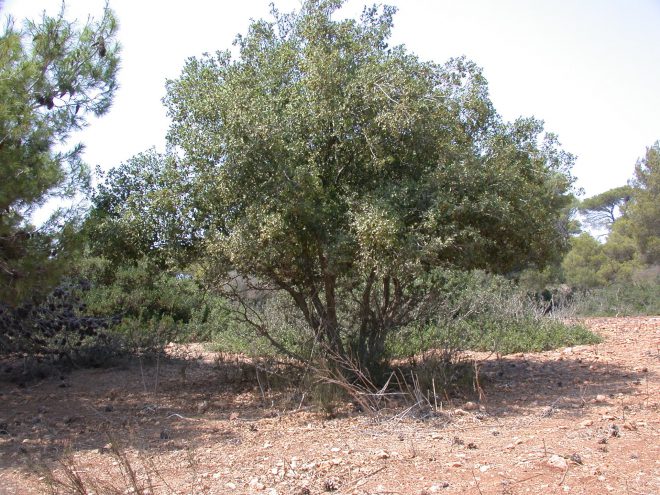
1. The Palestine Oak
2. The Terebinth. Pistacia terebinthus, known commonly as terebinth and turpentine tree, is a species of Pistacia, native to Iran, and the Mediterranean region from the western regions of Morocco, and Portugal to Greece, western and southeast Turkey.
3. The Mediterranean Stinkbush, toxic and medicinal.
4. Chamomile, which grows wild everywhere in the spring
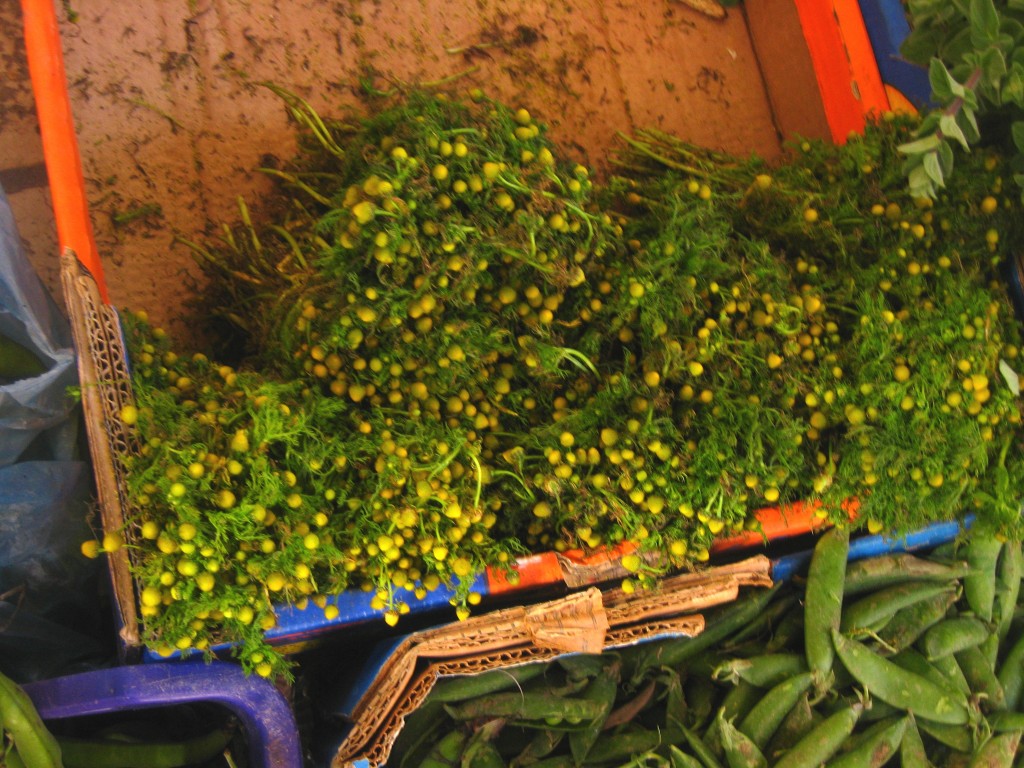
Wild chamomile in a crate
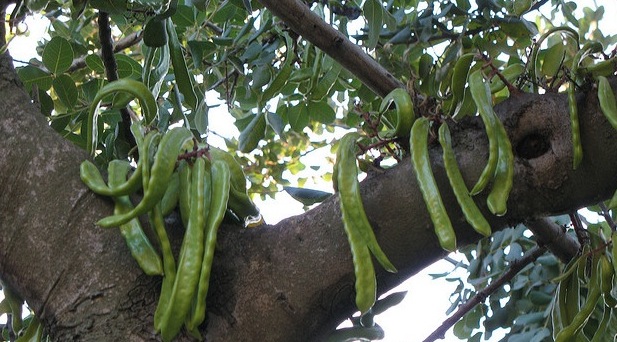
5. Carobs
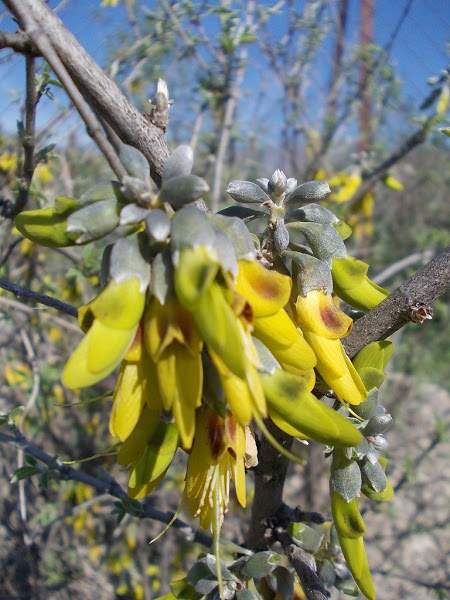
Carob beans on a tree. Unripe and still green.
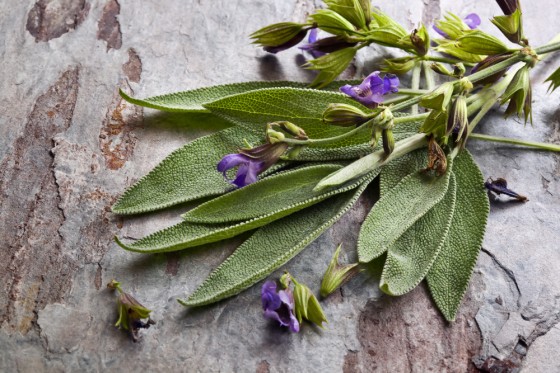
6. Sage
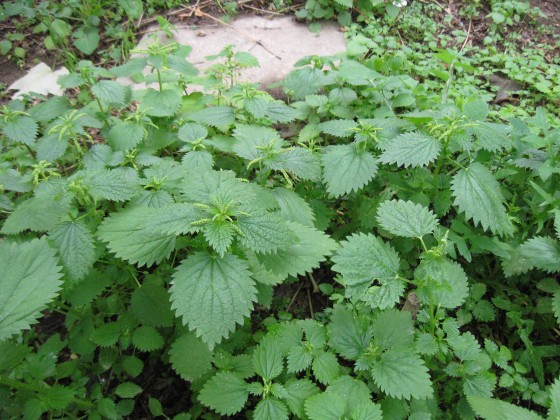
7. Nettles
Nettles in a backyard in Jaffa, Israel
8 Marigolds
All these plants have been known for centuries as wild edibles and medicine. Some destroy bacteria, others work against fungus, others are anti-inflammatory and soothing, and yet others boost the immune system. New plants are added often to BioXplore’s list.
It seems that Israel’s climate encourages medicinal plants to produce strong medicine: “The aridity of Israel’s climate allows the essential oils to develop inside the plants,” Faran explains.
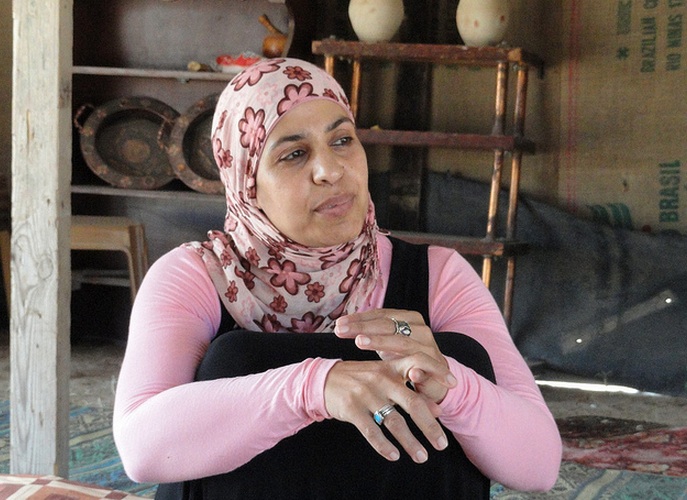
Miriam Aborkeek makes Bedouin beauty products and medicine the way her grandmother taught her. From local foraged weeds and plants.
The medicine in plants is based on the mysterious interaction of its own chemicals. Isolating a few of a plant’s properties may exploit some of its healing potential, but to draw out the best, the all of plants’ medicinal parts should be used. Hopefully, when it comes to manufacturing natural medicines, Bioxplore’s researchers will remember this.
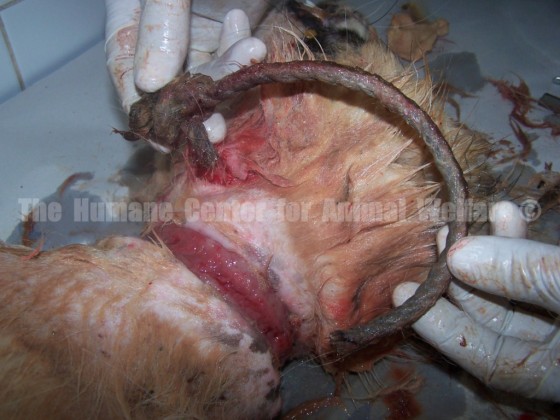
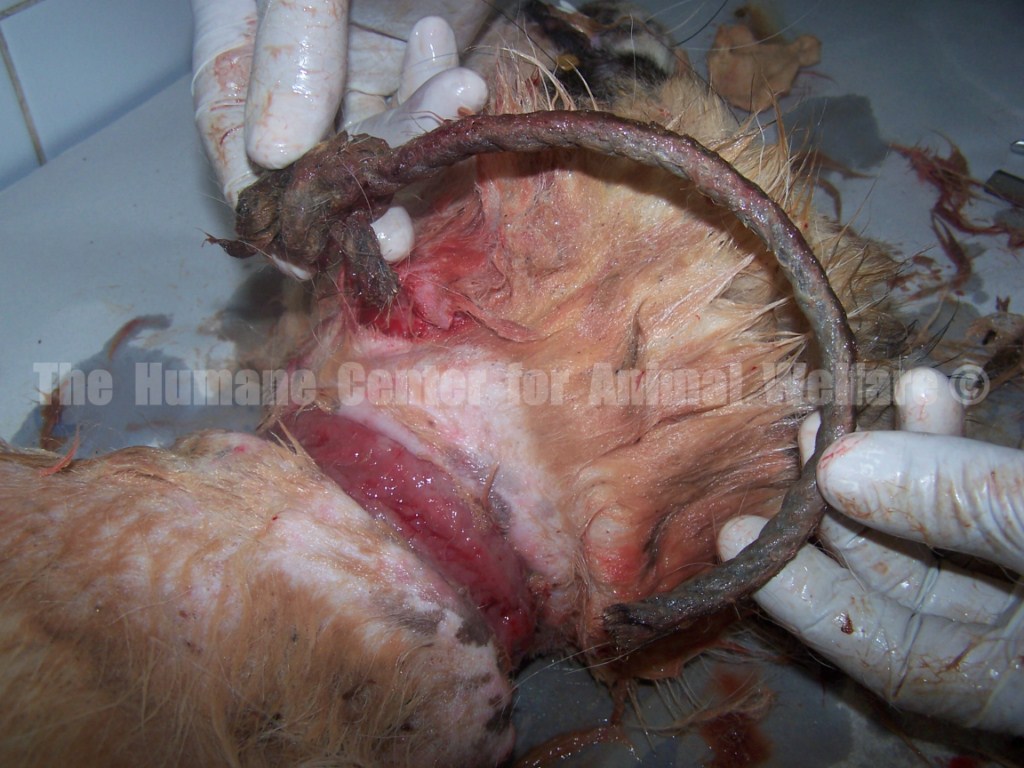
Animal lovers in Jordan are fighting a formidable battle to raise people’s awareness and respect towards strays and animals in general.
It’s not easy being an animal in Jordan. One of our pair of mini-dachshunds escaped to the street last November and was killed in a hit and run. Distraught, we called friends asking what Amman regulations were regarding burying an animal. We were told to drop Toby in the trash can, leave him in the street, toss him in an empty field, or set him on fire: I can only guess this heartless advice was well-intended. We buried Toby in our garden.
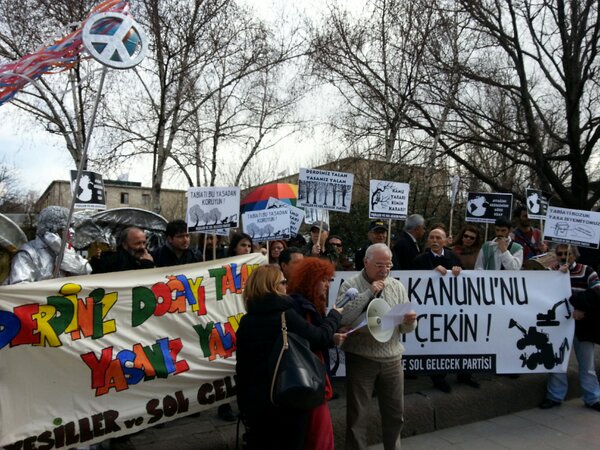
“Polluting nature is your problem, your law is a lie” and “Withdraw the Nature Law” read signs from protests last weekend in Ankara.
On Sunday, Turkey’s Green and Future Left parties organized small but loud protests in six cities around Turkey to oppose the country’s new Protection of Nature and Biological Diversity Law. The draft law, currently on the agenda of the Turkish Parliament, will allow formerly protected natural areas to be opened for construction, according to Turkish environmentalists, opposition politicians, and environmental engineers who have examined the bill.
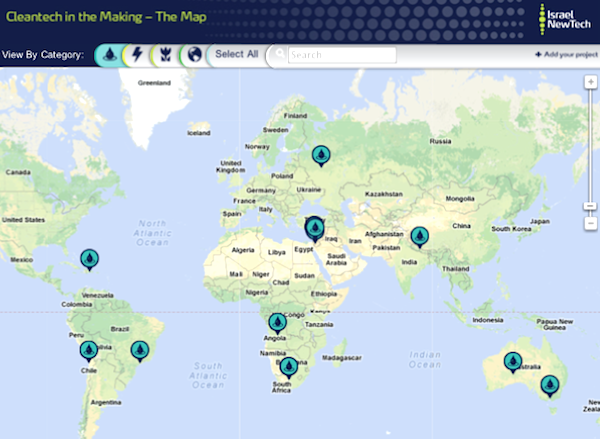
Israel NewTech has launched a interactive map of green Israeli innovations as part of a new Industry, Trade & Labor Ministry campaign that aims to showcase the country’s international influence in the clean tech and energy sectors.
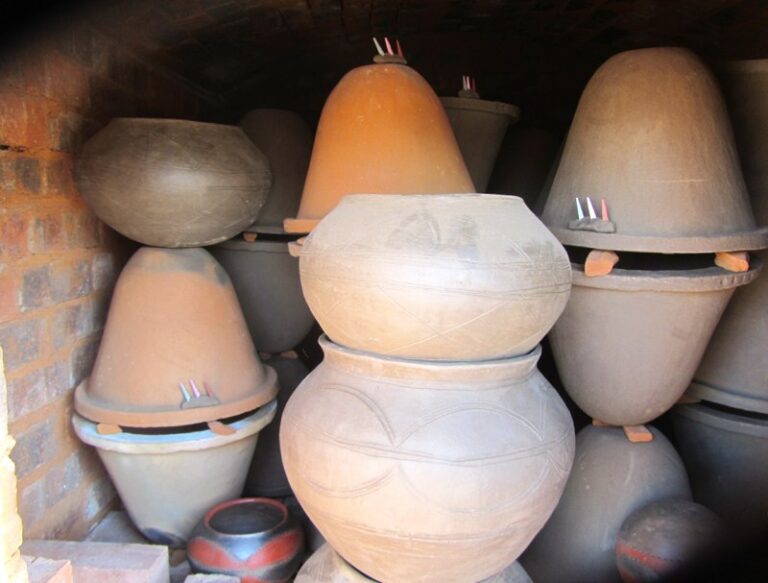
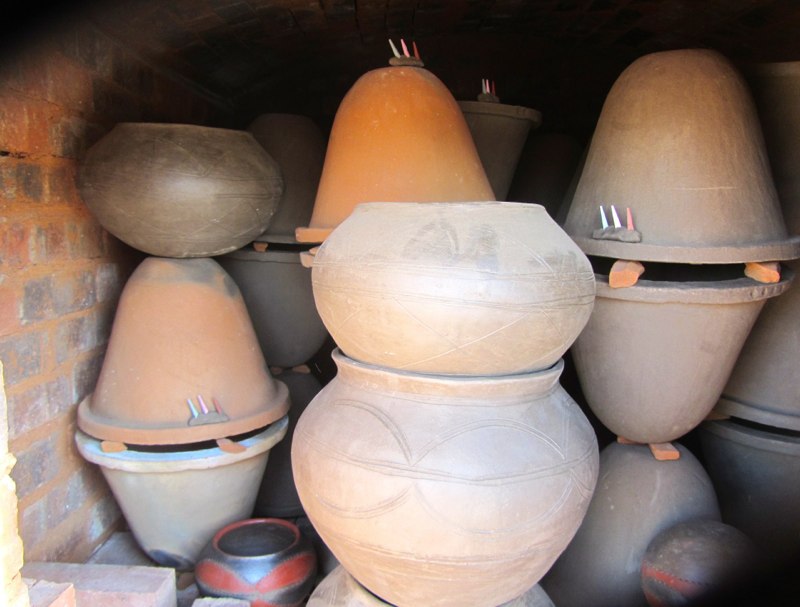
We love just about anything that is made with earth – a vast, renewable resource eclipsed by more modern materials. Not long ago we featured the Eliodomestico – a solar-powered water desalination pot that enamored readers around the globe for its ease of use and potential domestic application. Now we’ve stumbled across a new water treatment system called PureMadi. Developed by the University of Virginia (UVA) in tandem with traditional potters in South Africa, the water filtration bowl is made with clay, sawdust and water and coated with special nanoparticles that help remove contaminants from dirty water.
Researchers from UVA talked to village chiefs in Limpopo province before meeting with other locals and potters, who helped to develop a domestic solution to widespread water contamination.
In addition to being affordable, it was important that the water filtration device could be made at home in order to alleviate the need for costly imports, and to build upon indigenous knowledge and skills.
In 2011, local people were employed to build the necessary infrastructure for a local PureMadi manufacturing plant, which includes a kiln in which the clay bowls are fired.
But how do they work?
A mix of clay, sawdust and water is put into molds before it is fired in a large kiln. This heating process sloughs off the sawdust, which creates small perforations in the bowls that allow water, but not impurities, to pass through.
Once the bowls are cool, a coat of copper or silver nano-particles is applied to them, which is what removes invisible pathogens from contaminated water. The same team also developed a small tablet-shaped water purifier called MadiDrop.
A total of 10 PureMadi manufacturing points are planned in and around South Africa, where hundreds of thousands of people lack access to clean water.
Affordable and culturally relevant, the PureMadi is similar to clay pots traditionally used in Egypt and other parts of North Africa and the Middle East to store water.
However, the pots would not be effective as treatment devices without the nano-particle coating produced at a university lab in Charlottesville, Virginia.
Still, this could be a sustainable approach to providing clean water to people in our region who often go without – particularly now in refugee camps throughout Jordan and Lebanon; it is also an empowering job creation strategy.
At 7am on Tuesday, a frightful explosion rocked Luxor, where ancient Egyptian antiquities draw scores of tourists each year. The blast that engulfed a hot air balloon in mid air was heard and felt several kilometers away. One Egyptian and 18 foreign tourists are said to have died and the Civil Aviation Minister told Reuters that a committee is en route to the scene to investigate whether this accident that could have been prevented.
With everything else, this Hamat gader croc may have to put up with oil well drilling as well
The Golan Heights, that disputed piece of real estate that Israel captured from Syria in 1967 is returning to world attention due to the possibility that there are oil and natural gas reserves in its southern sector. Until now, energy ideas dealing with the Golan have mainly evolved around renewable energy projects like a 155 megawatt wind farm which Israel PM Benjamin Netanyahu once referred to as a “national project.” The “Heights” have also been considered a good location for solar energy projects. Proposed solar energy projects there even raised the question of whether wind turbines might be “taking a back seat to solar power” on the Golan.
Six-month-old Muhannad Al-Zaben is already a celebrity among Palestinians, the so-called “Freedom Ambassador”. He is the result of smuggled sperm his father Ammar transferred to his mother Dalal during a prison visit in 2006. Now a Palestinian fertility specialist says four other Palestinian women have become pregnant using similar secret methods, as security prisoners and their wives find a way to become parents while the father is still behind bars.
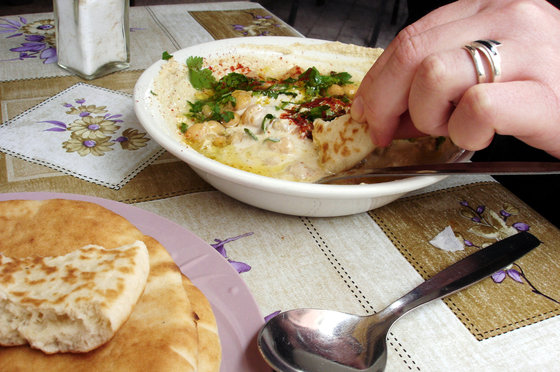
If you’ve got a jar of tahini going stale in the fridge, you’re missing out on all kinds of delicious flavor combinations that can make your meals special. As earthy as tahini is (or as we say in the Middle East, techinah) the semi-solid paste brightens up with lemon, garlic, herbs and spices. It’s great as a dip, but here are some new and surprising ways to eat tehini.
Halvah lovers know that tahini has a sweet face too. We recently enjoyed a light dessert created by chef Moshe Basson of Jerusalem, who squirted alternating threads of tahini and silan date honey onto a plate to form a pretty pattern and a delicious treat.
And if you’ve never baked our tehini cookies, well, you’re in for a delightful surprise.
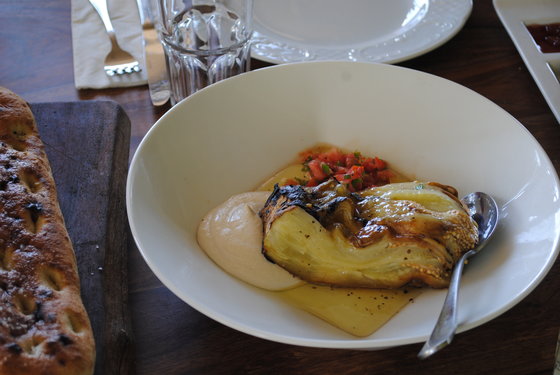
Tahini has a particular affinity for eggplant. Dining in the Middle East, you’ll enjoy salads like Baba Ganoush (recipe below). And a simple grilled eggplant drizzled with olive oil becomes a feast with a good dollop of tahini on the side. Chopped tomatoes and herbs round the dish out, and then all you need is good bread or a hot pita.
How to make tehini as a dip:
You’ll want to brighten your tahini with lemon juice, a little crushed garlic, salt, and if you like, a little cayenne. Thin it to your liking with water – but beware: when first adding water, it looks like it won’t incorporate. Then all of a sudden, your tahini paste has gone liquid. Add water slowly, stopping once you’re satisfied with the taste and texture.
Now that you have seasoned tahini, try drizzling it over these hot dishes, just before serving:
grilled fish
grilled kebabs, either meat or vegetable skewers
quinoa pilaf
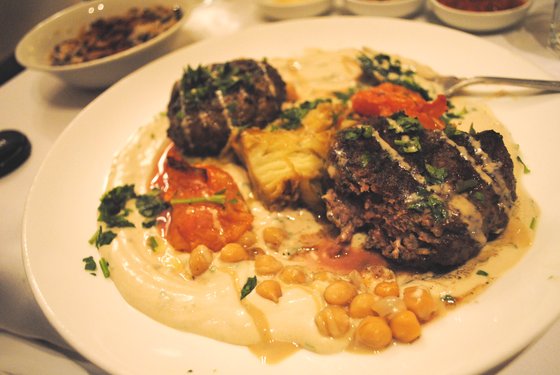
A typical Middle Eastern way of serving lamb kebabs is to surround them with humus and drizzle tahini over them.
Tahini seasoned as above makes a fine, simple dip for raw vegetable sticks.
Can you do anything with the floating layer of oil in a fresh jar of tahini? Sure. Skim it off and use instead of peanut oil in stir- fries. You don’t need much to add a subtle, nutty flavor to the dish.
Tahini substitutes for peanut butter in many recipes. Consider making your next smoothie creamy with a teaspoon or two of plain tahini.
Savory sweet, tahini adds a healthy dose of minerals, especially calcium, to your daily fare. It is rich, but sesame oil, unlike many other fats, has no cholesterol. So get that poor jar out of the fridge and put it to work for you.
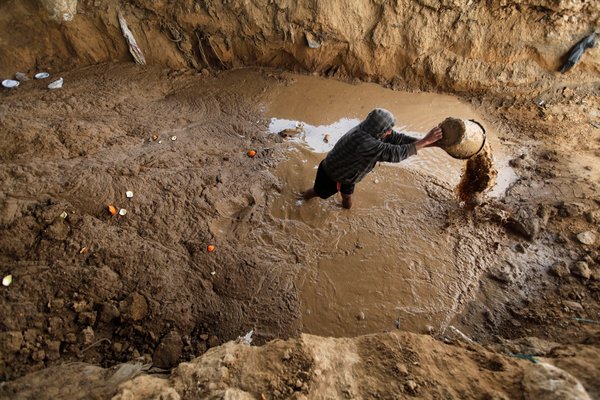
Besides the really terrible ew factor, the consequences for the environment are as equally yuck: the Egyptian army is looking to stall and stop Gazan smugglers from digging tunnels from the Gaza Strip to Egypt’s Sinai have found a new and dirty way to flush out smugglers: they are pouring raw sewage into the underground tunnels. Leaders in Gaza are trying to figure out how this tactic bodes for future relations with the Islamic leaders in Egypt.
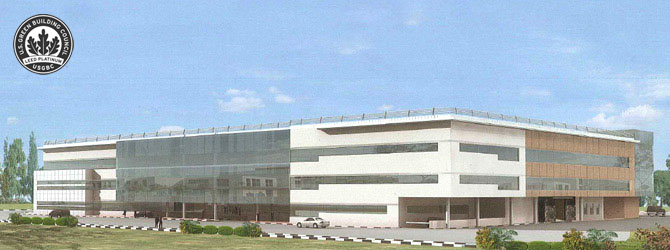
A Dubai neighborhood that is undergoing a dedicated urban densification plan, Al Quoz may have recently welcomed the first “largest LEED Platinum Government Building,” but it won’t be the last to claim this distinction.
“Sustainable Building” is the new 340, 000 square foot headquarters for a branch of the Dubai Electricity and Water Authority (Dewa) and reportedly the first in the United Arab Emirates to have achieved LEED Platinum, reports Khaleej Times.
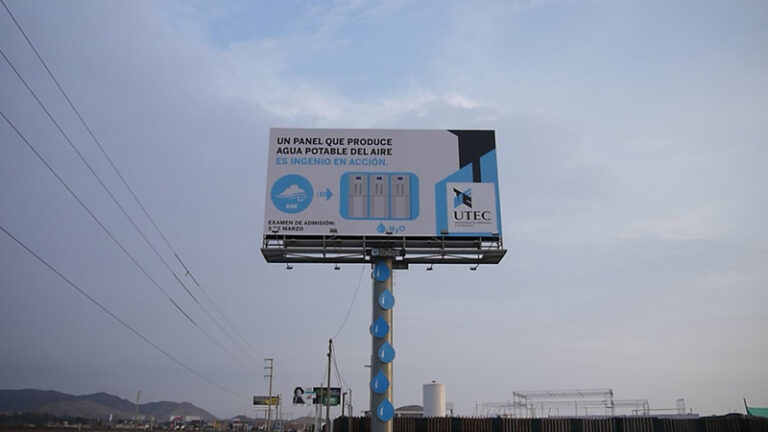
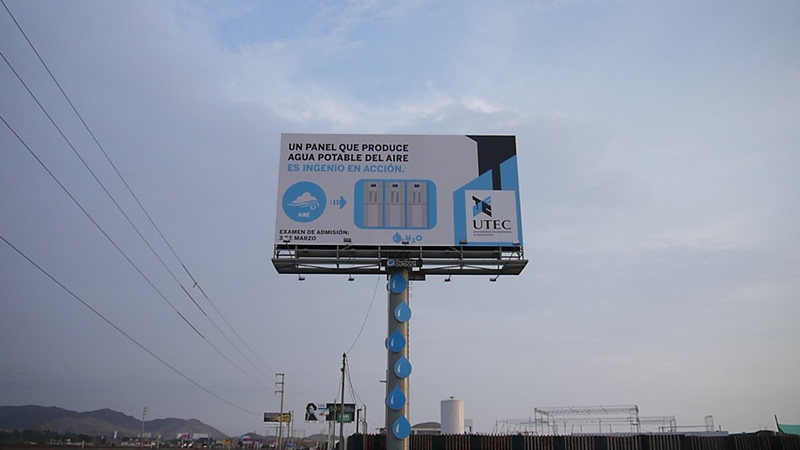
So when students from the University of Engineering & Technology (UTEC) sought a creative solution to water scarcity as part of a campaign called “Ingenuity in Action,” they found a way to turn these two lemons into clean drinking water with a billboard that sucks moisture from the air.