Home Blog Page 361

She’s Making Graffiti at the Most Dangerous Place on Earth (PHOTOS)

malina suliman afghani graffiti artist taliban photoMalina Suliman’s Fighting the Taliban with Paint and Graffiti

Sometimes graffiti can be seen from space. In Tunisia it graces the country’s tallest minaret. In Lebanon, they are making green graffiti for the city streets. And Egyptians have converted military barriers into trompe l’oeil streetscapes. Afghan artist Malina Suliman finds her inspiration in southern Kandahar, the birthplace of the Taliban and one of the most dangerous places in the world. She aims to change the cultural environment through sculpture and painting that depicts the challenges of her war-weary generation.

Born and raised in Kabul, Suliman moved to Pakistan in 2007 to study with Art Council Karachi. She returned to Kabul and its nascent art scene, joining local art association Berang.  The group works to promote the arts in her deeply conservative hometown.

Tajine of Sweet Potatoes and Prunes Recipe

1


sustainable sweet potato tajineA vegetarian slow-cooked casserole with a fine Middle Eastern blend of flavors.

Sustainable cooking means healthy food from local sources and  fair worker’s wages. Sustainable agriculture not only maintains, but also enriches the natural resources that our food supply depends on. Join Green Prophet as we tour the Middle East region offering the quintessential sustainable dishes each country has to offer. Today, visit Israel.

Multicultural Israel’s cuisine changes almost daily. It’s a tasty process of evolution as each of its dozens of ethnic streams contributes to the heady cooking pot. The early French and Italian influence over fine dining slowly gave way to flavors  that people know from home, and from North Africa in particular. Today, many chef’s restaurants feature traditional North African dishes like beef head meat with chickpeas or stuffed artichokes in piquant sauces that emigrated straight out of their grandmothers’ kitchens.

But not everything need be meat-based. The country has the largest number of vegans per capita in the world. With the abundance of produce available (and see our February seasonal produce post here), it’s only natural to concoct delicious things out of vegetables in season. Sweet potatoes and carrots are fat and hearty right now. Combined with the mild tartness of prunes, they make an excellent late-winter dish to serve with rice and a leafy salad. You may substitute smen preserved butter for ordinary butter if you wish.

Tajine of Sweet Potatoes and Prunes

Serves 4-6

Ingredients (try sourcing organic food when you can)

3 tablespoons olive oil plus 1 of butter

1″ slice of fresh ginger root, chopped fine or grated – or 1 teaspoon powdered ginger

1 small cinnamon stick or 1 teaspoon ground cinnamon

16 shallots (or 3 small red onions, peeled and quartered)

2-3 medium sweet potatoes, around 700 grams – 1- 1/2 lb. total

2 medium carrots

175 grams – slightly less than 1 cup pitted prunes

1 tablespoon dark honey or silan date syrup

2 cups hot vegetable stock or water

1 small bunch cilantro (coriander leaves), stems removed and leaves chopped

2 tablespoons fresh mint, chopped

Salt and black pepper to taste

Make Israeli vegan tajine

Peel the shallots and leave whole. Peel the sweet potatoes and carrots and chop into bite-sized pieces.

Heat the oil and butter, if using, in a tajine or heavy-bottomed pot. When the fat is hot, add the ginger and cinnamon. If using ground spices, stir to prevent burning and lower the heat.

Add the shallots. Allow them to color slightly, then add the sweet potatoes and carrots. Cook for a few minutes, stirring, until the vegetables start to soften.

Add the prunes and honey, stirring them in.

Add 1-1/2 cups of the hot stock, and bring all to a boil. Lower the heat so that the liquid barely simmers. Cover and cook for 1/2 hour, stirring once in a while. Moisten the vegetables from the reserved 1/2 cup of stock if necessary.

When all the vegetables are tender, add half the cilantro and mint. Season with salt and pepper to taste. Keep the pot uncovered and let the juices reduce to a syrup –  another 3-5 minutes’ cooking.

Before serving, scatter the remaining cilantro and mint over the top.

Serve right away, and enjoy!

More delicious and sustainable Middle Eastern foods on Green Prophet:

Photograph by Miriam Kresh.

Oldest Persian Leopard Roams Threatened Iranian Park

0

wildlife conservation, leopards, big cats, Iran, Persian leopard, threatened park, Bafq Protected Area, Yazd Province, An old Persian leopard has been captured on camera in Iran, but this is not the first time. The cat was first photographed by a camera trap in 2004, according to wildlife conservationists in the area, and has since been spotted by both game wardens and visitors on numerous occasions.

In 2007, the Conservation of Asiatic Cheetah Project (CACP), the Wildlife Conservation Society (WCS) and Panthera fitted the male Leopard with a GPS collar, which revealed that virtually all of the 88,500 hectare Bafq Protected Area is the leopard’s play area. Sadly, the territory is now in jeopardy as a planned road could traverse the heart of the park.

Istanbul Municipality Forces Neighborhood To Make Way For Planned Gentrification

0

tarlabasi

Until a recent urban renewal project that forced most residents out, the neighborhood of Tarlabaşı was home to a diverse array of Istanbul’s minority populations.

In the early 20th century, Tarlabaşı’s winding streets and colorful buildings were home to many of the city’s Greek residents. After violence against the Greek population their mass emigration from Turkey, Roma and Kurdish families moved in. But today, a municipal plan to turn the area into a wealthier, more mainstream neighborhood has forced out most families — and is making life miserable for the residents who refuse to leave, reports independent media agency Bianet.

Israel Uses CIA and FBI Technologies to Find Pesticides

0

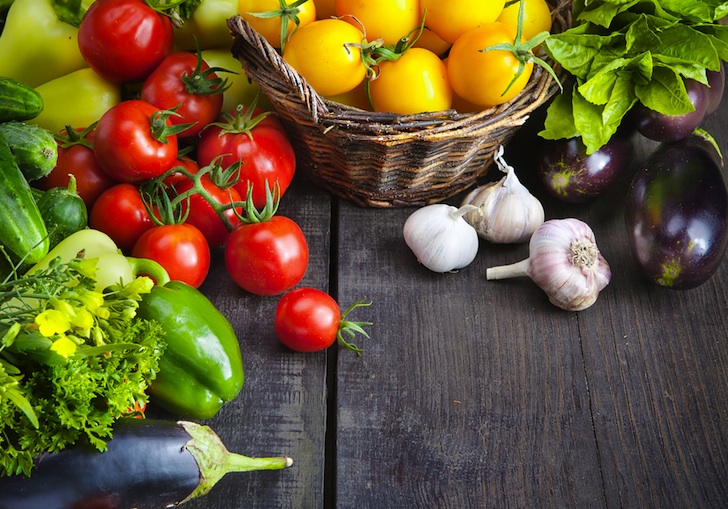
tomato and looking glass israel vegetablesFarmers and consumers face a new kind of chemical terror: pesticides. Since it is very difficult to detect the presence of toxic chemicals in various crops, an Israeli organization has deployed a failsafe method to root out the threat using the same kind of equipment used by America’s Central Intelligence Agency (CIA) and Federal Bureau of Investigation (FBI) to protect citizens against chemical warfare.

Small American Farmer Sends Monsanto Seed Patents to Supreme Court

7

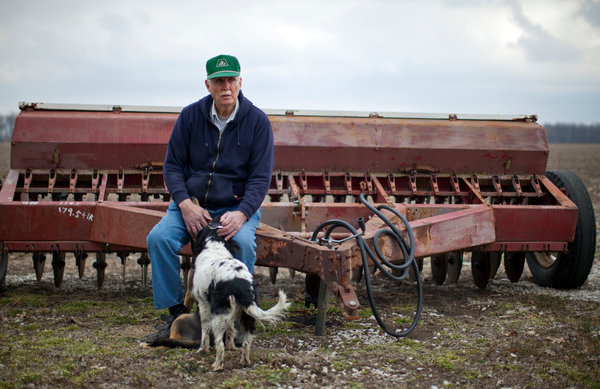
MONSANTO-Vernon Hugh BowmanVernon Hugh Bowman, farmer vs Monsanto, billion dollar seed and biotech company.

It sounds like something from a book about the perils of the future, a future that is strangely today reality: The seed-engineering company Monsanto genetically engineers seeds to have desirable traits that make them hearty or the plants resistant to the effects of herbicides like Roundup. But when farmers buy and use these seeds they must sign away rights to use the seeds of future generations. After all, Monsanto is investing in the biotechnology (the company reasons) and it needs to ensure future business for its investment.

Holding back the use of one’s self-made seeds sounds almost as bizarre as bottled air in the Lorax, or the bottling of water. But in the case of water, bottled O2 and seeds: these things do happen in our polluted world.

Environmentalists typically are against the practices of Monsanto, claiming that there are certain inalienable rights people and farmers have when they buy seeds. Some farmers in Egypt have resisted Monsanto’s GM maize, while a new company from Israel called Morflora claims to have a new way of washing seeds to avoid Monsanto’s ethical problems altogether. But farmers need to think about their future, and profits. They buy Monsanto seeds because in some markets it is the only way to stay relevant.

So far Monsanto has been a winner in cases against farmers it has taken to court who have gone against the company’s terms, recounts a recent story in the New York Times. Now an American farmer Vernon Hugh Bowman, from Indiana has gone against Monsanto by using soy seeds produced by his crop. The trick: he bought his own seeds back from a grain elevator which sells the seeds for animal food.

According to the Times article: “the 75-year-old farmer from southwestern Indiana will face off Tuesday against the world’s largest seed company, Monsanto, in a Supreme Court case that could have a huge impact on the future of genetically modified crops, and also affect other fields from medical research to software.”

Bowman pleads that he honored Monsanto’s agreement and didn’t use the seeds from his harvest and noted that the contract he signed didn’t make provisions for him buying the same seeds back from another party. He told the NYT that he didn’t want to pay Monsanto huge sums of money for their soy seeds because he planted his crop late in the season, after the wheat harvest, and that it was bound to fail.

He lost to a district court hearing in 2007, and had to pay Monsanto more than $80,000 for infringing on patents owned by the company.

But now Bowman who is planning to fight till the end says, “I was prepared to let them run over me, but I wasn’t getting out of the road.”

Once the beans are sold to the grain elevator, Bowman claims that Monsanto has no more rights to them. And this is what he is bringing with him to court.

He is being helped by lawyers working pro bono.

The question about patenting living organisms has long been considered immoral, but it is the only legal tool in place that can support and grow the biotechnology industry, proponents for the industry argue.

Sources say that any Supreme Court ruling on this new case could have monumental impacts on the biotechnology industry.

I have to note that the seeds in question are ones Monsanto produces to make crops tolerant to Roundup (a Monsanto product ), a strong herbicide that kills weeds but not the crop. Roundup has also been linked to birth defects and God knows what else. Were more farmers to return to permaculture methods of farming, ones that use organic-friendly and natural pesticides, and sometimes heirloom seeds, all this business of Monsanto would be irrelevant.

Yet when I say this people I know who argue for genetic engineering they say GMOs are the only choice for feeding a hungry world. What do you say?

Image of  Vernon Hugh Bowman via the NYT

Update 2013: United States Supreme Court patent decision in which the Court unanimously affirmed the decision of the Federal Circuit that the patent exhaustion doctrine does not permit a farmer to plant and grow saved, patented seeds without the patent owner’s permission. Vernon lost.

Recycling Plastic Bags and Bottles- a Few Easy Ways

4

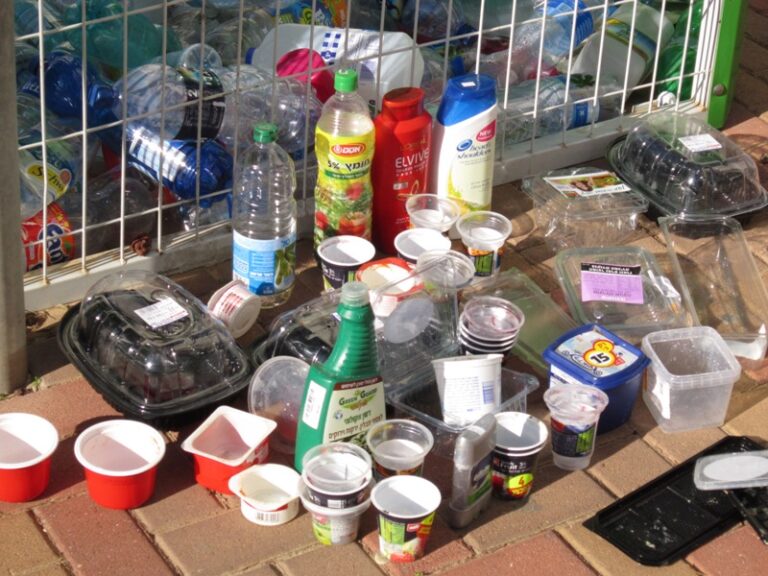
recyclable plastic cupsRecyclable plastics or wastes for the dump? The choice is ours.

Plastic items that usually get discarded and wind up being buried in landfills or washed out to sea are serious issues brought up during annual events like Earth Day. The seriousness of large amounts of plastic debris in the worlds seas and oceans have raised fears of giant plastic garbage patches in both the Atlantic and Pacific oceans, as well as in the Mediterranean Sea.

A Meteor, UFO or Starlings? Check Out This Super Nature Show in Israel

1

When I lived on a roof in Tel Aviv with my boyfriend Elad more than a decade ago, I would spend some evenings watching the Cypress trees sway and pray in the wind, and above them flocks of starlings painting the sky with their moves like tea leaves in a cup. Without a television it was the perfect form of entertainment. But unless you had your head angled straight up to the sky, you’d miss them.

Earlier this month a large flock of Starlings decided to give a show of a lifetime to a dozen or so families in the Negev Desert, Israel. Birds in the desert are easier to see: As the sun sets the birds in this 8-minute video start to get trickier and trickier with their coordinated air show, or aerial antics. According to Israel Forever this is the first time these Starlings have appeared in the desert for the last 20 years.

“The common starling, first sighted last year at Kibbutz Ein Gev on the eastern shore of the Kinneret, used to fly to Israel from Russia and Eastern Europe until about 20 years ago in mind-boggling flocks numbering some 15 million. But for unknown reasons, the population declined to about a tenth of its former size, and for that reason is no longer seen in Israel.

“But now that their numbers are climbing back, they can now be sighted again in Israel, particularly at dusk when the flocks begin their spectacular aerobatic display before retiring for the night,” the website reports.

Watch the video. It builds to a crescendo by minute 8. They say God is in the details. But obviously, also in the birds.

Olives Trees Have Kurdish Roots

3

Ancient olive treeA new research paper traces the roots of the wild olive to one location.

Olives, staple of Mediterranean cuisine, have dubious origins. Called the “tree of life” for the sustenance it provides and its myriad non-food uses (read our list of 10 weird and wonderful ways to use olive oil), the domesticated olive tree is central to Greek, Roman and early Christian mythology. Today, Spain is the world’s top producer, but where did it all begin? Wild olive trees (oleasters) have been harvested since 10,000 BC, and crop domestication was believed to have started in the Near East (ancient Palestine, now modern Jordan) about 6,000 years ago. Using genetics, fossil records and climate modeling, an international team of experts have determined that the olive tree’s roots lie in one place:

Egypt’s First Female Dive Master Speaks Out

1

red sea, diving, first female dive master, Egypt, Sinai Peninsula, muslim diver, Suezett al-FallalEgypt has certified the country’s first female dive master – a devout Muslim who refers to herself as a feminist. With coveted dive spots scattered all along the Red Sea, the ecologically-threatened Sinai Peninsula attracts scores of Egyptian and foreign visitors every year. But until now, not one Arab or Egyptian woman has taken their passion as far as Suezett al-Fallal.

Hamdy Anan has been leading diving trips for the last 17 years, and in all that time, he told Egypt Independent, there has not been a single female dive master. Anan helped to oversee al-Fallal’s three month certification course, a process that requires extraordinary commitment and physical stamina, but  there is more to the newly ordained dive master than meets the eye.

Moovit App Makes Public Transportation Easy and Fun

0

public transportation, clean tech, urban, app, mobile app, moovit, israelIsraelis are not only clean tech startup masters but also – increasingly – big fans of public transportation, which is why Moovit  makes such good sense. A dynamic new mobile app that tracks buses, planes, trains and other forms of transport in 30 cities across the globe, this user-generated platform makes getting from point A to point B a snap. It’s like the Waze of the public transportation world, and gives current bus and train schedules, while letting users notify each other if the air conditioning is on or if the bus is too crowded.

Could Ethiopia’s Geothermal Exploration Relax Dam Plans?

4

Ethiopia, geothermal, business, politics, renewable energy, Grand Renaissance Dam, clean tech, alternative energy, climate changeGiven that 85 percent of the country’s residents lack access to electricity, it is no surprise that Ethiopia has pursued an aggressive hydropower plan. But the Grand Renaissance Dam and similar projects are expected to create significant environmental and social disruptions,  problems that the former President Meles Zenawi both denied and defied.

But the Ethiopian Electric Power Corporation (EEPCO) recognizes the danger of relying too much on hydropower, which is an erratic and possibly endangered source of energy. While the country has the staggering potential to produce 45,000 megawatts of hydroelectricity, geothermal also offers promise – so much so that the World Bank has backed a plan to conduct preliminary exploration and drilling.

Stupid Cupid Learns Valentine’s Day Middle East Style

1

environmental impact of flowers, valentine's day, holidays, love in the middle east, arab lovers, valentine gifts,  flowers, water

The bard believed that a “rose by any other name would smell as sweet,” but labeling mid-February fun as a Valentine’s event is controversial in the Middle East.

What began as a quiet Western tradition, indulged by the leisure class, got a post-industrial kick-in-the-pants thanks to annual promotion from a growing news industry. Simply scrawl some treacly verse on colored paper or splurge on an affordable mass-produced card, and a low-cost Lovefest for the masses was born. This holiday with dubious origins (did you know there are over a dozen Saint Valentines?) has been a runaway commercial train ever since.

Turkish Conglomerate Plans Undersea Pipeline To Import Israeli Gas

1

leviathan_natural_gas_fieldThe Zorlu Group, one of Turkey’s biggest business conglomerates, has its eyes on another behemoth: Israel’s largest gas field, the Leviathan.

Under a new plan proposed by Zorlu, an undersea pipeline would deliver 8-10 billion cubic meters of natural gas each year from the Leviathan, 130 kilometers west of Haifa, to Turkey’s southern coast, reports Haaretz. The plan makes sense for Zorlu, one of Turkey’s biggest gas consumers, and for Leviathan’s partners, for whom this is the most profitable way to sell Levithan’s output. But will tense relations between the two countries allow the deal to proceed?

All Moroccan Synagogues to be Renovated, Says King Mohammed VI

0

Morocco, religion, Fez, Slat Alfassiyine synagogue, history, JudaismMorocco Prime Minister Abdelilah Benkirane, Mayor of Fez and Secretary General of  Istiqlal Party Hamid Chabat, and security official at the inauguration of a restored synagogue in Fez. AFP

Islamist Prime Minister Abdelilah Benkirane represented King Mohammed VI in an inauguration ceremony marking the completion of a 17th century synagogue restoration project in Fez yesterday.

In 2011, when a new constitution was adapted, the king said that Jewish places of worship throughout Morocco should be restored, even as the Arab spring roared across North Africa.The newly renovated Slat Alfassiyine synagogue in the heart of one of the world’s oldest medieval cities, the country’s cultural and spiritual nucleus, symbolizes how seriously he took that mandate.