
The UK Green Investment Bank and the United Arab Emirates Masdar have inked a new agreement that will see the UAE-based company work toward new investment opportunities in the United Kingdom, taking their expertise in renewable energy to Britain.
The UK Green Investment Bank and the United Arab Emirates Masdar have inked a new agreement that will see the UAE-based company work toward new investment opportunities in the United Kingdom, taking their expertise in renewable energy to Britain.

 A tiny collective of rural women at the southern tip of the Dead Sea in Safi is creating art that’s omni-sustainable. Since 1999, with catalytic infusions from a remarkable Canadian painter, this Jordanian sisterhood has been crafting unusual “eco” fabric items bespoke to their salty seaside village.


The food industry is anything but shaky around the world these days, from meat glue to horse meat in “beef” burgers. Who are we to trust? The latest scandal is fake olive found in Israel, including organic varieties. Watch out for it anywhere. We sum up where to buy, and what to avoid. Some are not safe for your consumption.
An Israeli watchdog TV show is good at uncovering scandals. They’ve found toxins in ceramic coated cookware, and slaughterhouse cruelty. Now, Kolbotek a consumer watchdog TV show found on Channel 10 began its 2013 season with a bang by revealing some unpleasant findings about olive oil being manufactured in Israel. Some of the olive oil being sold on the Israeli market is unfit for human consumption. We can assume the issue is more or less the same in other Middle East countries where testing standards are less developed. American sources have suggested that about 70 percent of virgin olive oil is a fake.
The program covered various types and grades of olive oil including that being marketed by companies that virgin and extra virgin olive oil, including organic varieties.
Kolbotek sent 15 olive oil samples for testing at a special laboratory, Kemi Service, that included 9 bottles of oil from one company EVO Israel Ltd.
EVO distributes its products to well known natural and whole foods stores in Israel. The company was reported to have imported more than 44 tons of olive oil from Spain, which is one of the world’s largest olive oil exporters.
September 2012, a company working with EVO and located in the northern Galilee town of Rosh Pina, Chosen Galil Industries, was found to have larges amounts of this oil that was not for human consumption after lab reports came in.
By this time, more than 20 tons of this oil had already been sold, according to Kolbotek.
 Kolbotek’s Rafi Ginat tells it like it is
Although in Hebrew, this link of the Kolbotek program is none-the-less revealing enough:
When asked what they thought about these events, Yigal Friedman, a food quality engineer for the Ministry of Defense said “I don’t have an answer to these allegations.”
Another official, Shai Chen Institute manager for the Health Ministry, replied: “I don’t know what to say.”
When Green Prophet tried to contact EVO’s offices in Tiberius, a recorded message from the Bezeq telephone company said that the number is no longer in service.
To indicate the scope of the laboratory findings, of 15 samples tested, 13 were found to have much higher levels of mono saturated fats and stearic acids than is acceptable, with an average level of 8 times the acceptable amount of mono saturated fats and 6 times the accepted level of stearic acid.
Print this sheet and take it with you to the supermarket:
[box style=”0″]
Some of Israel’s most well known stores including the Eden Teva Market whole foods chain, and the Rami Levi discount supermarket chain. Both were found to be selling EVO’s lab failed olive oil, under such brands as Gaya, Gaya Organic, Adama and Kedmah Hagalil.
Brands of olive oil that did pass laboratory inspection include “Zita” olive oil, distributed by the Wissotzky Tea Company, Etz HaZait (Shemen Industries Ltd), Sh Sol (a “house brand” from the Shufer Sol supermarket chain), Meshek Ahiya (in the West Bank); and Yad Mordechai, distributed by the Strauss Group.
What was perhaps the most disturbing findings were of “gephet” olive oil, made from olive residues and supposedly designated for use only for soap or cosmetics. In September, 2012, a large quantity of this oil, not suitable for human consumption, was found in EVO’s Chosen production company.
So much for ‘store bought’ olive oil. What was found to be offered by various local restaurants and coffee shops is no less disturbing.
Kolbotek’s investigators checked selected branches of chains such as Cafe Cafe, Cafe Greg and Aroma Cafe and Expresso Bar and found the following:
Cafe Cafe’s Beach branch in Herzlia Petuach served a mixture of what appeared to be canola and soya oil as olive oil.
Cafe Greg at the Tel Aviv Port , also what appeared to be a mixture of canola and soya oil. Their branch at the Rehovot Mall, however, serves real olive oil.
Aroma’s branch at the Hadera Gate Mall has what appears to be an inferior grade of non-virgin olive oil.
Another Aroma branch, in Netanya, also serves a lesser non-virgin type of olive oil.
[/box]
As a result of Kolbotek’s investigations, some changes have occurred. The Rami Levi chain discontinued to stock the Gaya olive oil brands distributed by EVO. The chain’s branches were given orders to remove these brands from their shelves.
This goes for the Adamah brand of oil as well. As for EVO, they have rejected Kolbotek’s findings and their lawyer rejected all accusations against them. The Israeli Health Ministry notes that although EVO oils failed lab tests, the ministry insists that not all findings are forbidden for health reasons.
A total recall request was not made by the ministry; but it did note that new testing would be required. A court case instigated by EVO was heard in the city of Nazareth; and the judge ruled that products distributed by EVO and Chosen Galil Industries Ltd are unfit for consumption.
A spot check at the Eden Teva store in Netanya confirmed that the brands like Gaya, Adama and Kidmat Hagalil distributed by EVO and Chosen Galil had been removed from stock.
“These brands were being sold at lower prices,” said the stock manager, who declined to be identified. He did not give Green Prophet an answer as to whether the store chain was aware of the type of olive oil that these companies had been distributing.
This latest watchdog report on olive oil follows on the heals of an earlier Kolbotek program involving alleged poisonous metals being found in ceramic cookware being produced by companies producing cookware brands such as Neoflam.
Neoflam, a Korean based company, later sued Kolbotek and the network which ran the program for allegedly giving false information regarding the toxic metals and other materials being used in the cookware they produce.  The results of which have not been reported.
Taking all of this into account the time-worn saying Cavaet Emptor (let the buyer beware) holds true in this case for sure.
Read more on food related issues uncovered by Kolbotek:
Israel’s Cruel Meat Industry Exposed by Watchdog TV Show
Ceramic Coated Cooking Pans May be Killing You With Color
Neoflam Ceramic Pans Are Allegedly Carcinogenic, Causing Panic in Israel
Image of testing oil from Shutterstock

 Ask yourself: if you lived in the deep desert, where the sand burns your soles at midday, would you run outside and play soccer? No sane person should. But Dick Sweeney has sent us thought-provoking images of soccer posts in extreme environments that reveal just how much Arabs love their football.

 When “Biggest Loser” coach Orly Hoffman Bar approached Toledo-Lifschitz Architecture & Design with an idea to convert a vacant space north of Tel Aviv into a sweet new gym, she offered two major constraints: time and money.

 A quiet little how-to book has been translated into Hebrew offering basic sex education to Israel’s Orthodox Jews.

 Whether or not a 100,000 square meter office complex could possibly come with even a net environmental benefit is debatable, but the fact that a design wrapped in green won an international competition for such a complex signals a potential shift in Turkey’s urban planning.
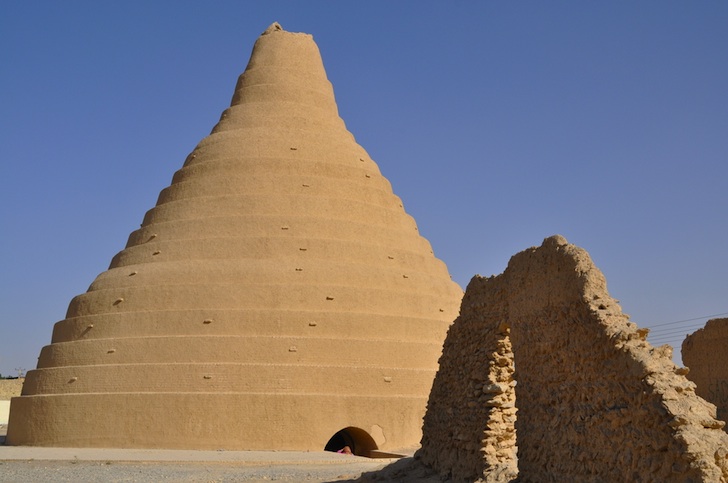
Refrigeration is perhaps one of the greatest inventions of modern man, but it has come at a price. Not only do they require a great deal of energy to stay cool, but they also rely on ozone-depleting chloro-fluorocarbons (CFCs), or freon, though some countries have phased these out.
As an increasing number of people walk away from the grid to build their homes and villages and seek more sustainable lifestyles, yet keeping food cool and having ice for summer beverages remains one of the most significant challenges. Of course there are root cellars but they can’t keep cooked food cool enough for a few days. For meat hunted in the fall, you have to cure it or find a freezer on the grid. For a potential solution, we look to the Iranians and their ancient domed ice houses.
 Used up until about 50 years ago, these ancient ice houses were typically constructed as domes with earth bricks. Others are walled and some contain underground chambers.
Built on the outskirts of desert areas where it’s almost impossible to get ice unless its trucked in from the far north, the ice houses were built with channels at the back.
In winter, these channels were then flooded with water, which was likely derived from the Iranians’ qanat irrigation system that funnelled runoff from mountains to areas at their base, according to Dr. Hemming Jorgensen, who has compiled the first extensive documentation of these structures.

Overnight the water would freeze and custodians of the ice house would wake up early the following day, before sunrise, and break up blocks of ice that they would then relocate to the ice houses.
They would do this for as many nights as necessary to ensure a sufficient supply of ice that would last through the summer.
Jorgensen has documented the existence of 129 such ice houses, which Amusing Planet says are much bigger than similar ice houses built in the United States.

However, remnants of only 104 remain, and Jorgensen expresses concern that the absence of concerted preservation projects could result in their destruction.
Already some of them have been transformed into informal trash dumps. According to Jorgensen, “The traditional Persian ice houses were built at villages on the perimeter of the large deserts on the Central Plateau. Their cone-shaped domes, up to 20 meters high, consisted of mud and mud bricks from the excavation of the deep ice pits protected by the domes.
“The ice houses served as reservoirs that stored blocks of ice in the winter for further use in the summer. The ice was either hauled in from nearby mountains or produced in open basins at the ice house site. Such local ice production plants were typically supplied with fresh water from qanats, the ingenious water supply tunnels, that brought water for human settlements and irrigation from the distant mountains.
“The ice houses, whose origin is believed to go back more than 2000 years, gradually became obsolete with the advent of electricity and the introduction of the refrigerators to the households. Because they were made of perishable materials, most of the ice houses have disappeared and the rest are facing a grim future,” he says.
Ancient Iranians were well attuned to their natural environment and engineered all kinds of coping mechanisms. In addition to well-insulated earth buildings, they pioneered wind catchers that circulated natural cooling during hot winter months.
And although so much of that knowledge has been lost, we are mindful of a small but definite trend to reincorporate ancient wisdom into contemporary developments.

Read more about the qanat water systems here.
Image of ice houses in Iran and Kashan ice house via Shutterstock
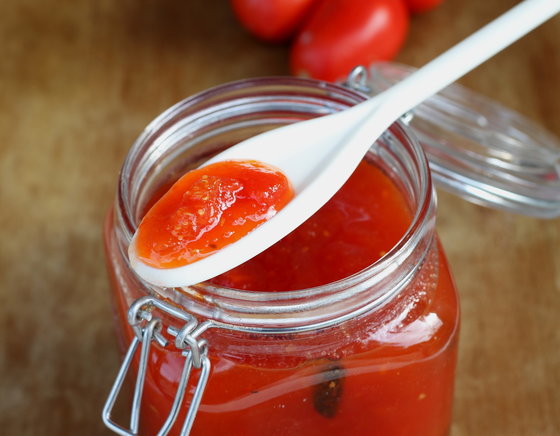
Summer’s arrival brings out all kinds of fruit to simmer up into jam – including tomatoes.
Tomatoes as jam? Yes, indeed, and delicious it is, too. I love to make up small batches of tomato jam when lots of different tomato varieties appear in the markets. In the full swing of summer’s harvest, when prices are at rock bottom and big, fat tomatoes are lusciously mature, it’s time for stirring pots of tomato sauce like the one featured in this recipe. But just now, it’s fun to pick and choose the loveliest of the different young tomato crops for this very Mediterranean jam.
The sweet tomatoey taste is surprising, but the palate becomes used to it immediately. You can really appreciate the native sweetness of the fruit when it’s cooked like this. And the jam makes a delicious topping to toast first spread with labneh or any soft white cheese. Serve this as a snack, with coffee.

 Energy storage company Enstorage Inc. connected a 50 kW Hydrogen Bromine flow battery to the grid at their test site in southern Israel. This began the world’s first large-scale deployment of this promising new energy grid technology.

Thinking about 98.6 degrees Fahrenheit: This is how Asaf Shaltiel, the CEO of SmarTap, came up with the idea for an electronic “smart” eco-showerhead that can talk with computers and smart home devices.

Over the millennia, the Mediterranean Sea has become much more than a transport hub for empires that control the region: It links nations, feeds countries, and its shores hold some of the world’s most expensive real estate and natural beauty.
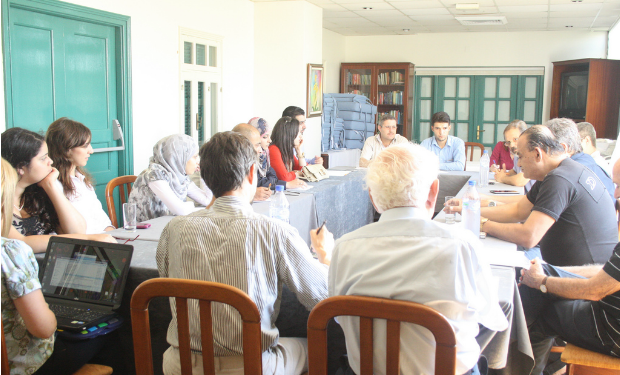
Why should a Palestinian man care if an Israeli woman is taking birth control pills? A new Israeli peace project focusing on shared water resources answers this question.

Have news to share? Renewable energy news, architectural, artificial intelligence, biotech, sustainable design ideas, eco-architecture, green travel?
Email us: [email protected]
Get important news delivered directly to your inbox and stay connected!
© 2007 to 2026 Green Prophet, All Rights Reserved