Home Blog Page 32

Meet Andreas Weil, the founder of Israel’s EcoOcean, protecting the seas for all

0
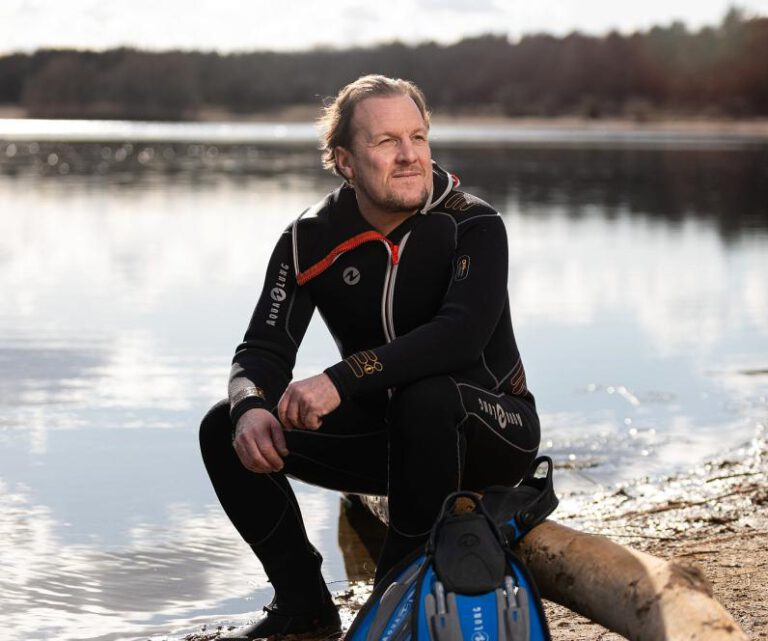
Andreas Weil, founder of Ecoocean, marine conservation, Israel, nature education, this is Andres in diving gear sitting on the shore of a lake
Andreas Weil, founder of Ecoocean

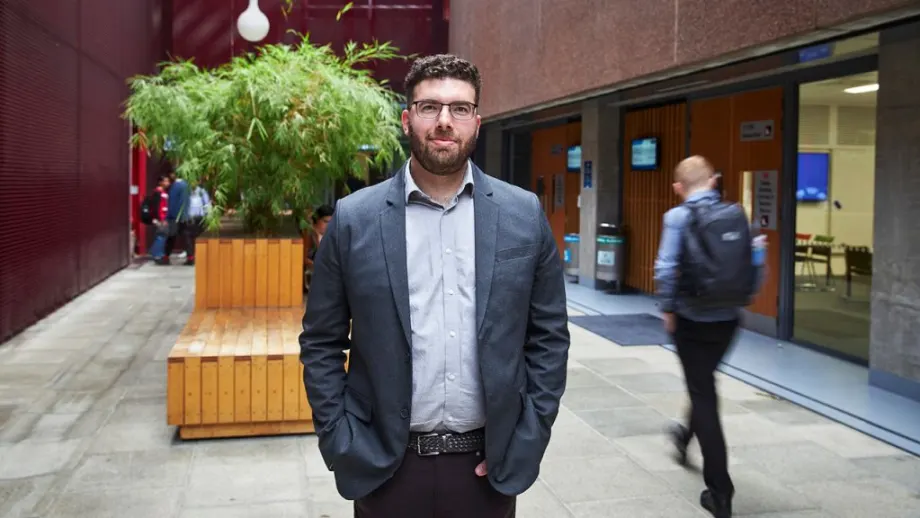
Meet Andreas Weil, founder of EcoOcean, Israel’s leading marine conservation organization which has reached hundreds of thousands and brought the concept of Blue Flag beaches to Israel.

Under the blue, sparkling surface of the Mediterranean Sea lies an aquatic world teeming with life, history, and untold stories. For Andreas Weil, founder of the marine protection NGO EcoOcean, this vast marine expanse is more than just a sea; it represents a lifelong passion and mission. Growing up in Sweden, Weil has always had a passion for the environment. Weil explained his reasons for coming to Israel as “I’m going to have fun and do good for the country.”

He began his time in Israel studying Environmental Studies at the Arava Institute for Environmental Studies. He began to discover his purpose and his reason for being.

When Weil settled in Israel, he noticed a stark contrast between his homeland of Sweden and his new home of Israel. While Sweden was one of the first countries to expand, promote, and participate in green initiatives and recycling, Israel was lagging. There was no awareness, education, or environmental culture in the country. This troubled Weil. He saw that Israelis viewed the environment and climate change as a secondary issue. They disregarded the environment.

What troubled him also was the state of the Mediterranean Sea and the beautiful beaches of Israel being covered in trash. One point of emphasis Weil found was that Israelis did not take responsibility for the garbage that was in their seas. So, he decided to put down the facts. His initial research focussed on where the trash was coming from. He found that 80% of the garbage in the oceans was not from Gaza, Jordan, or any other country, as many had thought. It was from Israel. When framed this way, the Israelis realized that if they were to stop putting trash in the ocean, they would be 80% cleaner. Weil envisioned a new Israel, one where everyone was educated on the environment and the dangers of climate change.

Building EcoOcean

EcoOcean was born out of this vision to research, gather facts, and educate everyone. Central to EcoOcean’s success is the Mediterranean Explorer, the only privately operated marine research vessel in the region. Today, the level of research has increased, not without thanks to the Mediterranean Explorer and Weil himself. Armed with his ship and equipment, Weil set sail to find facts to bring back to Israel. The goal of the boat is to investigate water quality, marine life, trash, and other issues within the Mediterranean. With the information they collect, EcoOcean is not only well equipped to inform the public but also the government.

Discoveries are a commonality on board. While most are focused on climate research, they also have made discoveries outside the realm. One recent discovery made by the ship and its team is a sea sponge that possesses properties that could lead to a cure for Alzheimer’s.

Education is at the core of EcoOcean’s strategy. Starting with 10,000 students and evolving 20 years later to over 20,000, Weil and EcoOcean’s mission is to provide education to all on the topic of the environment and the looming climate threat. Weil has accomplished this with the help of others, starting with only two workers and evolving into a team of 18 full-time staff members and 25 freelance teachers.
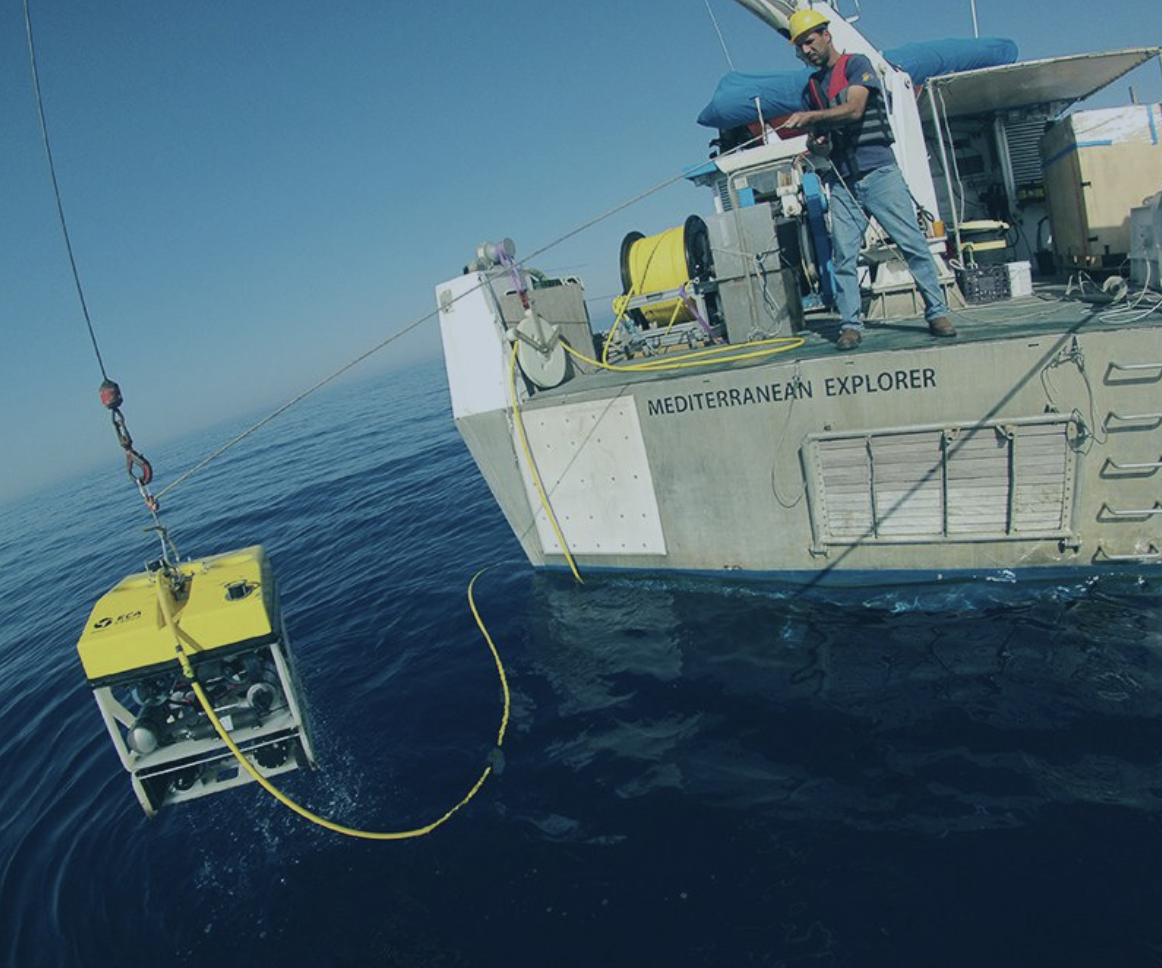
Mediterranean Explorer, sea research vessel, andreas weil, ecoocean, Israel, Michmoret, Seakura
EcoOcean’s Mediterranean Explorer in action

They have a learning center called Seakura, located in Mikhmoret. Their center is only the start of it. They send their team of teachers to schools across Israel to provide constant, sustained education to the youth. Teachings focus on sustainability, climate change, and environmental ethics. Additionally, EcoOcean and its educators offer hands-on experiences, such as beach cleanups, that forge a strong, authentic connection to the issue at hand. “You are responsible as a citizen not only to pay taxes,” Weil says. “You’re supposed to clean and take care of your gift.” Israel.

EcoOcean doesn’t stop at education. It also works closely with the Ministry of Environmental Protection, local municipalities, and other NGOs to influence Israel’s environmental policies. One notable example of cooperation between EcoOcean and the Ministry is their “Disposable Dishes-Not in my Sea!” campaign, which educated the public on using reusable utensils, cups, and other kitchenware on the beach. The result was a visible reduction in single-use plastics on Israel’s sparkling, sandy beaches. As mentioned earlier, the Mediterranean Explorer is used to collect research for submission to the Israeli government. The abundance of information provided allows Israeli officials to identify and address clear problems.

Read related: This is the only government-funded sea turtle hospital in the world 

Environmental Unity in a Divided Region
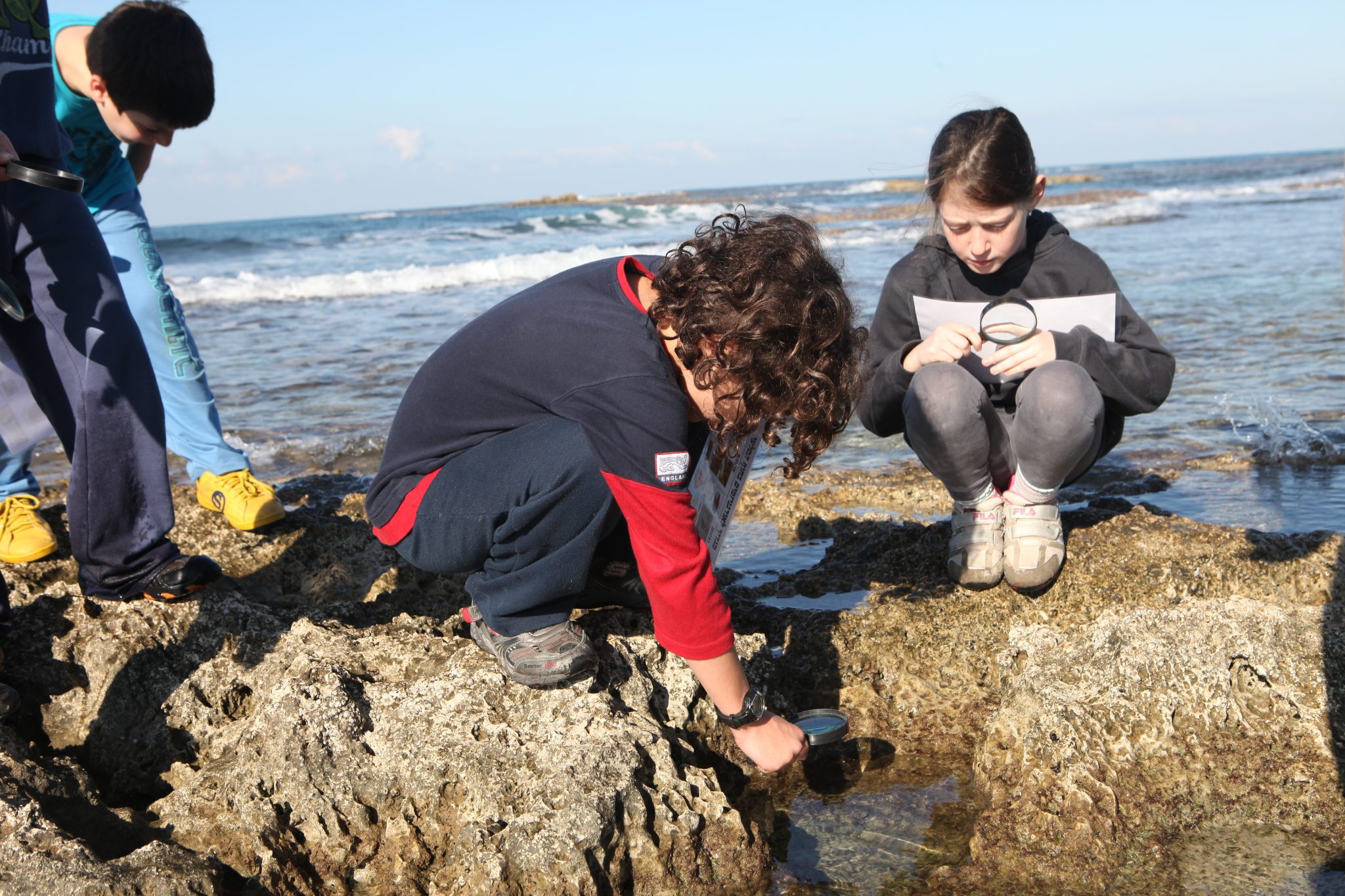
Ecoocean marine education, Michmoret, Israel, sea protection, reef habitat
EcoOcean teaches the next generation about marine conservation

Despite regional war and political tension, Weil sees marine conservation as a unifying force. EcoOcean and Weil are committed to providing the same level of education for all Israeli citizens. He says that “The environment does not have boundaries” and that, to have widespread change, the country needs “An Israel where people feel as one.” Nothing changes without cooperation.

You need a resilient population. He strongly believes in Tikkun Olam, the concept of repairing the world. Repairs can be done through education and information.

Looking ahead, Weil and EcoOcean’s ambitions are as expansive as the sea itself. He wants EcoOcean to one day reach 100,000 young people annually. Additionally, he aims to expand volunteer programs and enhance scientific contributions through blue ocean-based, tech, and climate research. Most of all, he wants all Israeli children to have access to marine education.

“If they approach us, we never want to say no,” he says. “We just need funding to say yes to everyone.”Weil’s vision extends far beyond Israel’s shores. “The environment and the threat of climate change can be the catalyst for Middle East peace,” he believes. “We are all part of the problem. We are all part of the solution. We can all fix it if we work together.”

Andreas Weil’s legacy is not about a single shoreline, beach, or sea. It is about a shift in attitude and consciousness. EcoOcean is a national leader in driving change, and its next goal is expansion to a broader area. “I want to go on a trip one day and hear everyone say, ‘I’d never throw trash in the ocean.'” This is when he believes he will have achieved his goals.

Until then, EcoOcean will continue to sail-chart a course for cleaner seas, educating citizens and working towards a future where the Mediterranean is a shared, thriving, and clean sea for all.

::EcoOcean 

Make safe herbal anti-acne products and masks

0

clay cosmetic face mask

The FDA is recalling certain acne medications for cancer link. Our herbalist takes her decades of experience and creates a guide to natural acne care.

Everyone wants smooth skin with a healthy glow. People are willing to pay plenty to achieve that, and many rely on anti-acne products to clear up those unattractive pimples and inflamed skin. As archeology has discovered, people  used cosmetic creams as far back as in ancient Rome.

Some products may bought over the counter, and some require a doctor’s prescription. But what we confidently regarded as safe allies in the fight against acne turn out not to be so safe after all. Benzoyl peroxide, an antibacterial agent found in some popular anti-acne products, may break down into carcinogenic benzine. Read Karin’s post on the FDA’s recall of anti-acne products.

Think of applying a lotion or cream containing benzoyl peroxide to your face every day. You can’t know if the gel you squeeze out of that tube is in the process of breaking down into benzine, but research suggests that it will.

So what we do to keep our skins free of acne?

Here we have to look at the origins of acne breakouts. Genetics, unfortunately, factor in. If your parents tend towards acne, it’s likely you will too. You’ll probably need to make some lifestyle changes.

Other factors causing acne may be hormonal flare-ups, stress, not enough sleep, not drinking enough plain water, and a diet rich in sugar and processed and fatty foods. Like French fries and industrially-produced hamburgers, and packaged snacks. Cigarette smoke, lots of coffee, and frequent alcoholic drinks also damage your skin.

To maintain healthy skin, we need not only to avoid junk food, but to consume foods and beverages rich in anti-oxidants. Find something that falls into the popular “super-food” category that’s appetizing, and consume it every day. Green tea, very anti-oxidant; drink it instead of Coke.  Fresh produce, either cooked or raw, and preferably home-made…the list is familiar, but no less valid for that. Tons of any ideas for healthy snacks circulate around the Net. Find some that appeal to you. Then eat them, instead of junk food.

If stress is causing your skin to break out, practice yoga. Seriously. The gentle exercise increases blood circulation, bringing that all-important oxygen to every part of you, and in addition, relaxes and makes you feel more alive.

Drink a lot of plain H2O. Water scours your organs and helps eliminate toxins.

Keep your skin clean with herbal infusions that soothe inflammation and exert anti-microbial power over the grime you’re exposed to over the day.

Some suggested herbs to calm acne:

  • Chamomile
  • Lavender
  • Green tea
  • Echinacea
  • Rosemary
  • Sage
  • Marigold

How to use the anti-acne herbs: Pour 1/2 cup boiling water over 1 tablespoon of herb, cover, and wait 10 minutes. Strain. Splash your face with the infusion; it feels good when it’s warm, but can be used cold. Pat your face dry with a clean towel; do not rinse the tea away.

Optionally, add a drop of tea tree essential oil – one drop only – to the herbal infusion. If using the essential oil, avoid getting the infusion in your eyes.

Raw honey has antimicrobial and anti-inflammatory properties. Use clean q-tips to pat drops of honey on bad acne. Do not put the used q-tip back in the honey; get a fresh one if needed. Leave the honey on the skin for 10 minutes, the gently rinse it off.

Change your pillow case nightly, optimally after having cleaned your face.

Always remove makeup before sleeping.

Safe and natural exfoliating products

Sugar has its cosmetic uses. To exfoliate and cleanse the skin, wet your face with water or herbal infusion. Drop about a tablespoon of white or brown sugar into the palm of your wet hand and gently rub your face with it. Don’t scrub yourself to death. Rinse the sugar off and pat your face dry.

Some get acne on their backs. An effective remedy is a long, wet loofah sponge well saturated with soap, rubbed across the back in the shower. A long-handled brush with soft bristles will do the same.

Miracle meds containing benzoyl peroxide aren’t what you’re looking for anymore. Try a weekly facial mask made by combining an infusion of plantain leaf, chickweed, and marigold flowers with cosmetic-grade white or green clay. Plantain draws infected matter out of skin tissue and soothes inflamed skin. So does chickweed. Marigold flowers have strong anti-bacterial properties.

ribwort plantain medicinal plants
The common plantain can be found on the side of the walkway

How to make a herbal mask against acne

Have ready a teapot or clean glass jar. Put 1 tablespoon each plantain, chickweed, and marigold flowers in it and pour a cup of boiling water over the herbs. (If using a glass jar, set it on a kitchen towel to avoid thermal shock, which might crack it.) Stir. Cover the infusion and wait 15 minutes. Strain it.

Dissolve about 3 tablespoons of cosmetic-grade clay with the herbal infusion enough to make a thin paste. Apply the paste to clean, moist skin. Put music on – read a book – drink green tea – hang out for 10-15 minutes. The mask will start to dry; that’s fine. Rinse it off with warm water or herbal infusion. Pat your face dry.

Make your own anti-acne face mask
Your own anti-acne face mask

If you can’t source fresh herbs, you can probably find them dried in health food stores. Or find them online. I suggest combining those plantain, chickweed and marigold, but any but any one of those noted above can be used to make a skin-healing infusion.

Chickweed is a weed, but it's also a medicine and food and it helps fight acne
Chickweed is a weed, but it’s also a medicine and food and it helps fight acne

Note: Chickweed is useful in drawing out pus from inflamed pimples or boils. I have also applied chickweed to styes in the eyes and to clean up pinkeye. A poultice of fresh chickweed is best: crush a handful of clean herb in your clean hands and apply the messy green stuff to the infected area. It will start to feel warm; even hot. At that point, remove the poultice and wash your hands.

However, dried chickweed also works, if infused into boiling water as described above. In that case, use only 1/2 cup water per tablespoon of dried herb. Dip sterile cotton into the strained infusion and apply it to the infection. Discard the cotton after a few minutes and wash your hands.

A cucumber and yoghurt mask against acne

For a skin-soothing facial mask that uses ordinary kitchen ingredients, blend a washed but unpeeled organic cucumber with 1/8 cup yogurt and 1 tablespoon raw honey. Spread the mask on and rinse off after 15 minutes. It won’t be as medicinal as the herb/clay mask, but it will reduce painful redness and leave the skin softer.

Editor’s note: store bought masks are expensive and contain preservatives to stop it from decomposing and going rotten. Like good food, a healthy face mask should be made with the freshest, local and most organic ingredients. Time to start grow

herbalisFor more on natural remedies see:

Za’atar is a natural anti-acne treatment
Some Tips to Consider Before Buying Beauty Products
5 Natural Ways to Keep Your Skin Beautiful
The ABCs of Middle East Spices Medicines, Part IV – Oregano to Rosemary


How mice hear with their whiskers and what this means for robotics

Mice can hear with their whiskers

I met this usual scientist from Russia who was sure that people can hear with their skin. Maybe he wasn’t so nuts after all? Scientists have no found a mechanism that help mice hear, and it’s in their whiskers. This might explain how blind voles can get around. And it may have applications in robotics.

“Whiskers are so delicate that no one had thought of checking whether they produce sounds that mice are able to hear,” says team leader Prof. Ilan Lampl of Weizmann’s Brain Sciences Department.

The study offers a unique glimpse into the complexity of natural perception, which commonly involves input from multiple senses, in this case touch and hearing. In fact humans too combine these two types of cues more often than one might think. Imagine, for example, your fingers delving into a crowded bag to search for a candy bar and the sudden, welcome rustle of the wrapper.

The mice whiskers can hear team
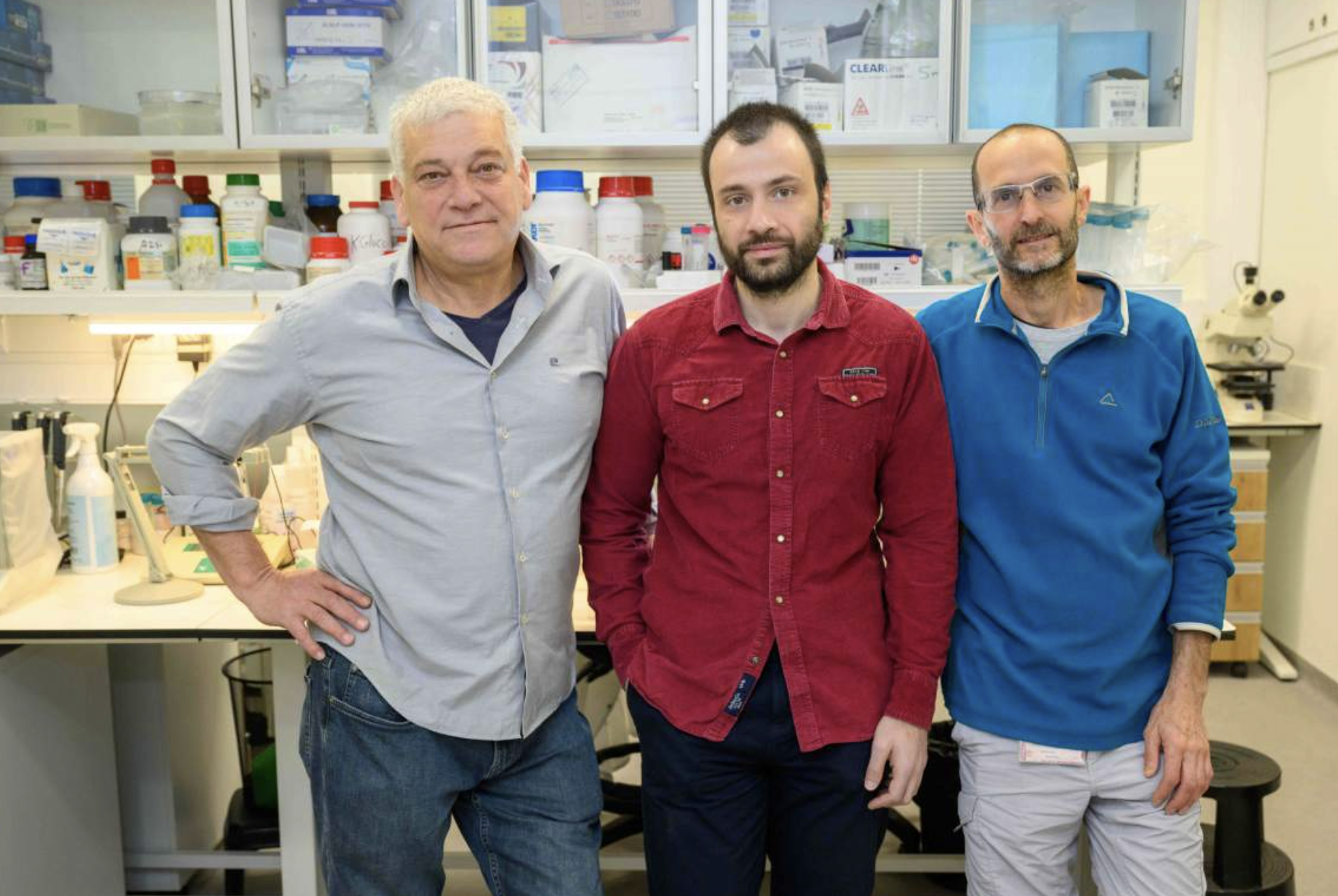
(l-r) Prof. Ilan Lampl, Dr. Athanasios Ntelezos and Dr. Yonatan Katz

In the new study, Lampl’s team – led by Dr. Ben Efron, then a PhD student, who worked with Drs. Athanasios Ntelezos and Yonatan Katz – started out by recording the sounds made by whiskers probing different surfaces, including dried Bougainvillea leaves and aluminum foil.

The researchers used sensitive microphones that can record ultrasonic frequencies, which are beyond the upper limit of the audible range for humans. The same kind of microphones that can hear when plants speak. They placed the microphones some 2 centimeters from the source of the sound, about the same distance as from the mouse’s ear to its whiskers.

Next, the scientists made entirely different recordings: They measured neural activity in the auditory cortex of mice that were brushing their whiskers against different objects. The recordings showed that the auditory networks of the mice responded to the whisker-generated sounds, no matter how subtle.

When the researchers interrupted the pathways that convey the sensation of touch from the whiskers to the brain, the auditory cortex still responded to these sounds, showing that mice could process them as a separate sensory input, independent of the sense of touch.

Yet the fact that the mouse auditory system responds to certain noises does not necessarily mean that mice use them for sensing and can recognize objects by means of these noises. To explore this issue, the researchers resorted to AI. They first trained a machine-learning model to identify objects based on neural activity recorded from the auditory cortex of mice.

The AI successfully identified the correct objects from neuronal activity alone, suggesting that the mice might be able to similarly interpret these cues. Next, the researchers trained another machine-learning model to identify objects on the basis of recorded sounds made by whiskers probing these objects.

The two models – the one trained on neural activity alone and the one trained on sound recordings – were equally successful, which suggests that the neural responses to the whisking were caused directly by the sounds rather than by other sensory information, such as that coming from smell or touch.

“Our results show that the brain’s whisking network, called the vibrissa system, operates in an integrative, multimodal manner when the animals actively explore their surroundings,” Lampl sums up. This multimodal function, he explains, might have developed in the course of evolution to help mice hunt for prey or avoid their own predators.

“Since whisking generates much weaker sounds than does walking, a mouse could rely on it when, for example, choosing whether to walk across a brittle, drier field of crops versus a fresher, quieter one, to avoid being detected by an owl. Whisking could also help a mouse figure out whether a stem is hollow or sufficiently juicy and worthy of a bite.”

By breaking down the boundaries between touch and hearing, the study doesn’t just reveal something new about mice, it opens up a plethora of research directions for future explorations of the brain’s sensory systems, particularly mechanisms by which the brain integrates different types of sensory input. The new findings might also lead to practical innovations in technology.

The possibilities are endless. If the brain can simultaneously process sensory information from different sources, the same principles might be used in prosthetics, sensory rehabilitation after brain trauma or perhaps even for enhancing perception in visually impaired individuals. For instance, learning exercises for the blind already exploit the distinct sounds produced by the white cane upon contact with a surface, and this approach could be developed further.

Another potential area for prospective innovation is robotics. Says Efron: “Integrating different types of sensory input is a major challenge in the design of robotic systems. The mouse brain’s whisking system might provide inspiration for technologies that would address this challenge by, for example, helping to create early-warning sensors to prevent collisions, particularly when visibility is limited because of smoke or other visual obstructions.”

A new advance for Tesla’s Optimus humanoid that is expected to come out this year?

Meala FoodTech and dsm-firmenich Launch Vertis PB Pea, A Plant-Based Meat Alternative

0
Vertis pea protein team

In a strategic move set to reshape the plant-based protein landscape, Meala FoodTech has partnered with dsm-firmenich to launch Vertis PB Pea, a biotechnology-derived, multifunctional pea protein texturizer designed to streamline ingredient lists and elevate the sensory quality of meat alternatives. Now available across Europe via dsm-firmenich, the product marks a significant milestone for food tech investors eyeing scalable, clean-label innovation.

Vertis PB Pea arrives as consumer demand for clean-label, high-performance food products reaches critical mass. Traditionally, plant-based meat formulations rely on a cocktail of binders—hydrocolloids, starches, gums—to simulate the bite and juiciness of real meat. Meala’s patented technology eliminates that complexity, consolidating emulsification, binding, and gelation functions into a single, allergen-free component made entirely from pea protein.

For food manufacturers, that means cleaner ingredient lists, simpler procurement, and better-performing products. For consumers, it means recognizable ingredients and improved nutritional value. Vertis PB Pea not only enhances water retention and texture under extreme temperatures, but also boosts protein content—allowing brands to market “high-protein” plant-based meats without artificial binders or additives.

These meatballs are made with Vertis pea protein

According to data from the EIT Food Consumer Observatory, 67% of European consumers say they are wary of unfamiliar ingredients in their food, while 56% actively avoid ultra-processed products. This shift in perception is putting pressure on food developers to reformulate without compromising taste, convenience, or shelf stability. Vertis PB Pea is positioned as a turnkey solution for this next-gen reformulation push.

“This is exactly where our product comes in,” said Tali Feldman Sivan, CBO and co-founder of Meala FoodTech. “It addresses both functionality and clean-label demands, while replicating the sensory profile and experience of conventional meat products.”

The partnership with dsm-firmenich is not just about distribution—it’s a vote of confidence. As both strategic investor and commercial partner, dsm-firmenich brings regulatory expertise, R&D infrastructure, and global market access to the table. For Meala, that means immediate scalability and validation at the highest levels of the food industry.

“We’re impressed by their innovation-driven approach and deep understanding of the food industry,” said Meala CEO and co-founder Hadar Ekhoiz Razmovich. “From the beginning, they believed in us not only as investors, but as true partners.”

Related: Impossible Foods and OSI Group

Beyond Mean plant based burger
Beyond Meat is a popular pea-protein based meat alternative

With manufacturing already underway in Europe, the Vertis PB Pea launch signals Meala’s readiness to scale internationally. The company plans to expand into North America and Asia over the next 18 months, as plant-based brands increasingly prioritize formulation efficiency and transparency.

Vertis PB Pea is part of dsm-firmenich’s broader Vertis plant protein portfolio and marks a pivotal evolution in ingredient design: from piecemeal solutions to holistic platforms that meet rising consumer and regulatory standards.

These hotdogs are made with Vertis pea protein

Founded in 2021 by Hadar Ekhoiz Razmovich, Dr. Tali Feldman Sivan, and CTO Liran Gruda, Meala FoodTech is a next-generation ingredients startup focused on clean-label innovation. Its mission is to create smarter, functional ingredients that empower food producers to make better-for-you products without compromising performance. Backed by The Kitchen FoodTech Hub, dsm-firmenich Ventures, Lasenor Emul SPA, EIT Food, and Milk & Honey Ventures, Meala is part of a growing wave of science-forward food tech companies redefining what’s possible in the alternative protein space.

Plant-Based Meat Alternatives
These companies use pea protein to replicate the texture and nutrition of meat:

Beyond Meat – One of the earliest major adopters of pea protein; it’s the primary protein source in their Beyond Burger, sausages, and other products.

Impossible Foods – While it originally used soy protein, some product lines and R&D efforts involve pea protein as a cleaner-label or allergen-free alternative.

Nestlé (via Garden Gourmet and Sweet Earth) – Their plant-based lines include products that incorporate pea protein for improved texture and protein content.

Unilever (via The Vegetarian Butcher) – Offers plant-based meat options using pea protein as a key functional ingredient.

Maple Leaf Foods (via Lightlife and Field Roast) – Uses pea protein in several reformulated products in response to clean-label trends.

Kellogg’s (via MorningStar Farms) – Transitioning some products toward pea-based formulations.

Climate, Not Just People, Is Driving Central Asia’s Desertification, Study Finds

0
Mongolian tents in a desert in Asia

In a sweeping analysis of drylands across Central Asia, scientists have found that natural environmental forces—particularly declining snow levels and rising temperatures—are more responsible for desertification than human activity. The study, published in the journal Catena, was led by Professor Tao Hui of the Xinjiang Institute of Ecology and Geography at the Chinese Academy of Sciences.

Using nearly 40 years of satellite data, meteorological records, and socio-economic indicators, the research team mapped how desertification has unfolded between 1982 and 2020. They applied a nonlinear Granger causality model to disentangle the impacts of climate change and human activity.

The findings are stark: “Natural factors accounted for nearly 70% of all newly desertified areas,” said Prof. Tao Hui. “In many dryland systems, snow water equivalent—the amount of water stored in snow—was the dominant ecological driver.”

Uzbekistan to get Central Asia’s first renewable energy facility with utility-scale battery storage
Uzbekistan to get Central Asia’s first renewable energy facility with utility-scale battery storage.

Overall, 14.81% of Central Asia’s drylands showed signs of desertification during the study period. While unsustainable agriculture and overgrazing continue to degrade grasslands and arable areas, it is the shifting climate—particularly warmer winters and reduced snowmelt—that is playing the lead role in this transformation. Forests, the study notes, were primarily affected by rising temperatures rather than human encroachment.

The study is misleading by “blaming” the effect on natural processes since climate change is largely assumed to be caused by human development.

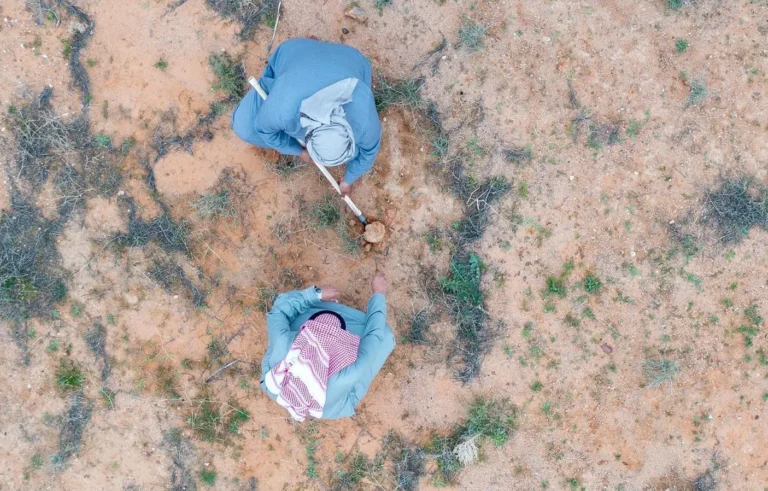
Saudi Arabia is home to desert truffles.
Truffle hunting in the deserts of Saudi Arabia

The revelation that climate is the leading culprit challenges the long-standing assumption that desertification is mainly a result of poor land use. It also complicates regional efforts to halt desert advance, which have typically focused on managing grazing and cultivation.

For countries in the Middle East, including Jordan—one of the most water-scarce nations in the world—the study serves as a climate cautionary tale. With less than 100 cubic meters of renewable water per person annually, Jordan is already facing extreme pressure on its agricultural systems. Sustainable innovations like volcanic soil enrichment may offer hope (as explored in recent efforts near Mafraq), but they must now be scaled in ways that anticipate a rapidly changing climate.

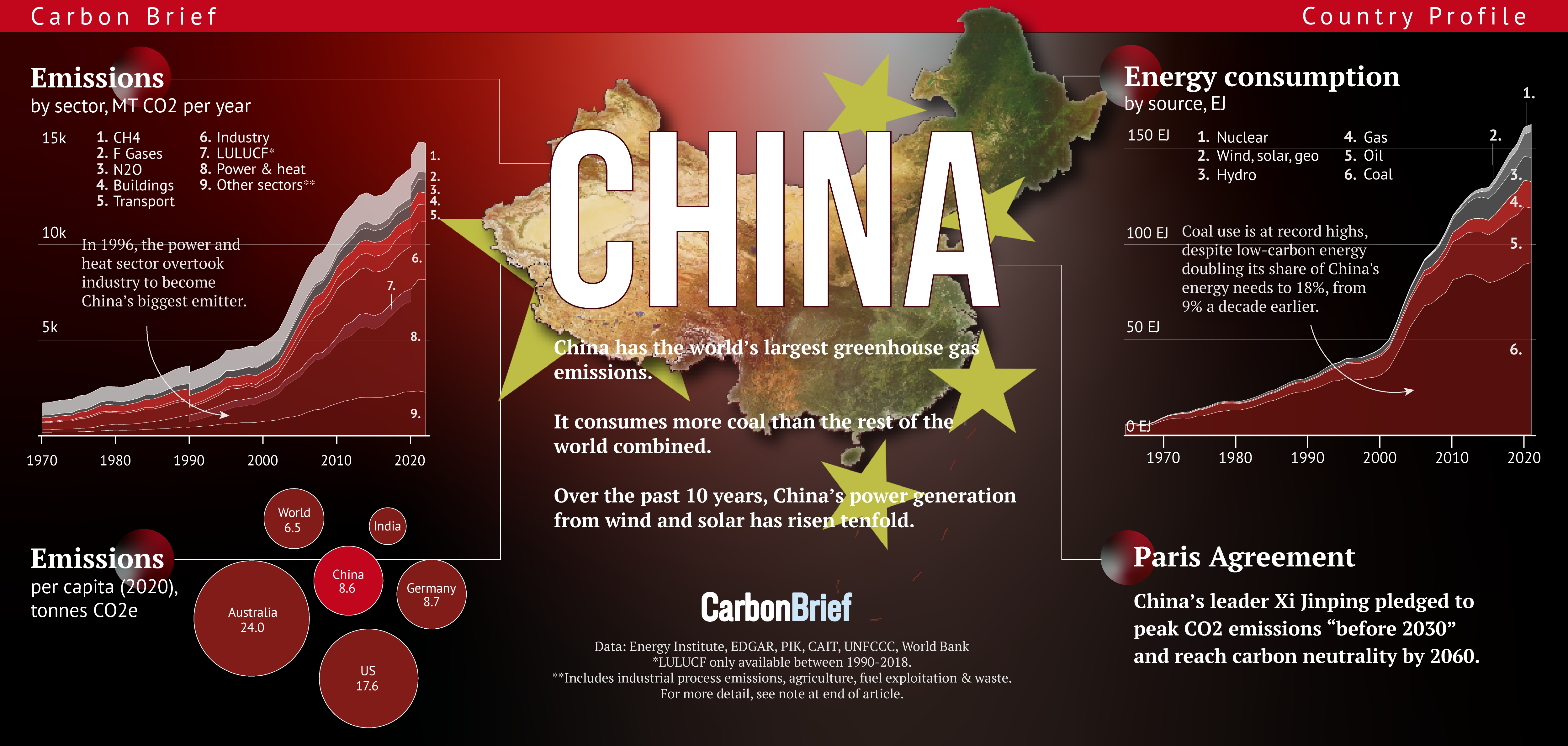
China carbon emissions
Breaking down China’s carbon emissions by Carbon Brief.

China, the factory of the world, is the world’s largest emitter of greenhouse gases, producing about 30% of global CO₂ emissions from fossil fuels and industry. By comparison, the United States emits roughly 13–14%, and the European Union around 8–9% of global emissions. Worth noting that the carbon emissions of China per capita is less than that of Americans and Europeans.

Jordan turns to ancient fire and mines volcanic soil to solve water crisis

0

Jordan soil volcanic rock

In the volcanic highlands of northern Jordan, north of Amman engineers are mining a natural resource not for energy, but for agriculture. The material: crushed volcanic rock, now also processed into a mineral-rich soil that may hold the key to reducing water and fertilizer demand in arid regions.

The project is led by Watad, a Jordanian company founded in 2019. The firm processes volcanic rocks such as zeolite, basalt, and pozzolana into what it calls “volcanic soil”—a porous, salt-resistant substrate that improves water retention and plant growth in dry climates.

“There’s zeolite, like the one we have in the mine here. There is zeolitic tuff in one of the other mines we have. There are basalt and pozzolana,” said Ibrahim al-Manaseer, a mine engineer at the site near Mafraq in an interview with Reuters. “All of them are volcanic rocks that formed thousands of years ago.”

Watad currently produces around one million tons of volcanic soil annually, and its CEO, Mohannad al-Manaseer, says the company could scale up rapidly. al-Manaseer said the goal is to replace conventional fertilizers and soil additives with a more durable and environmentally stable alternative.

Volcanic soil
Wated, volcanic soil

Early field reports suggest volcanic soil may reduce irrigation needs by up to 60% and cut fertilizer use by 80%. That could have significant implications for Jordan, which ranks as the second most water-scarce country in the world, with per capita water availability under 100 cubic meters per year, well below the UN’s threshold for extreme water stress.

When we visited Jordan we learned that hotels and homes get fresh water shipped to reservoirs weekly. Some people keep second hidden reservoirs to avoid running out.

Related: Jordan’s leading ecological organizations

While long-term studies are still needed to assess environmental and agronomic impacts across diverse ecosystems, the use of volcanic material in soil enhancement is not new. Zeolites, in particular, have been studied for decades due to their ion exchange and adsorption properties.

What’s novel is the scale—and the urgency. In a region where desertification, rising temperatures, and resource stress are converging, Jordan’s push to mine its volcanic past could represent a rare alignment of geology and necessity.

Jordan has been working with water cooperation with Israel and the Palestinian Authority over the last couple of decades through Friends of the Earth, Middle East – Ecopeace. They are working to broker small-scale local projects in education, but also are working on larger water for energy swaps. The October 7 terror attack changed the political outlook for Israel and Jordanian cooperation, two countries that have a signed peace treaty.

Time for water cooperation? 

The Wadi Araba Treaty established cooperation between Jordan and Israel on various matters, including water sharing. In November 2022, both Jordan and Israel signed a declaration of intent at the UN climate conference to rehabilitate and protect the Jordan River, aiming to reduce pollution and restore water flow.

A 2013 agreement involved developing a desalination plant in Aqaba, with potable water shared between Israel and Jordan, and increased water releases from Lake Tiberias to Jordan. But in November 2023, Jordan announced it would not sign a proposed water-for-energy deal with Israel, citing Israel’s actions in Gaza as the reason.

Jordan is currently advancing its own water security through the Aqaba–Amman Water Desalination and Conveyance Project, aiming to produce about 300 million cubic meters of clean drinking water annually. Jordan is landlocked except for a small strip of the Red Sea, where it is bordered by Israel and Saudi Arabia.

The Abraham Accords which is creating a peace treaty and regional cooperation between countries such as Saudi Arabia, and the United Arab Emirates, will likely lead to water cooperation for a very dry Jordan.

::Wated


The Ancient Art of Singing to Babies: A Global Tradition, Now Backed by Science

Sing for babies - it's good for them
Sing for babies – it’s good for them

In homes from rural Kenya to Tokyo high-rises, one universal thread connects us across culture, language, and belief: singing to babies. Now, a new study out of Yale University offers scientific validation to what parents and caregivers have known for generations—singing soothes babies, lifts their moods, and strengthens early emotional bonds.

Published in Child Development on May 28, the study reveals that even brief increases in musical engagement can lead to real health benefits for infants, particularly improved mood and emotional regulation. This is a timely reminder that amidst rising mental health concerns and parenting stress, some of the most powerful interventions are still the simplest—and the most ancient.

Singing in Waldorf Education: A Foundation for Emotional Intelligence

Boys from the Shemesh class, Reut
Boys  at a a Waldorf school

In Waldorf education, which draws on the philosophies of Rudolf Steiner, singing is not simply entertainment—it’s a way of being. From infancy through grade school, Waldorf teachers and caregivers incorporate song into daily rituals, transitions, and lessons. The belief is that young children absorb the world through rhythm and melody, and that music helps them harmonize internally with their environment.

In a Waldorf pre-school class, you might see a teacher lighting a candle while softly singing a greeting song. Later, a lullaby might guide children into rest, or a playful tune might invite them into circle time. Even math and language learning are introduced through song.

“Singing carries warmth, and warmth is what the young child most needs,” says Karin Kloosterman, the founder of Green Prophet. “When we sing to babies, we offer them an emotional map of the world.”

Singing to babies isn’t exclusive to Waldorf or Western education. It’s a cross-cultural instinct deeply embedded in human caregiving. In Uganda, mothers sing lullabies called ebinyinyinya to soothe infants at night. In Arctic Inuit communities, families use ayaya songs—short, improvised melodies whispered to babies during long winters. In India, lori lullabies are passed down through generations as sacred maternal rites.

Anthropologists have found that infant-directed music has recognizable patterns across all human cultures: slower tempo, higher pitch, and repetitive phrasing. “Music is one of our species’ earliest and most reliable ways of saying, You are safe. You are loved,” says Dr. Samuel Mehr, director of The Music Lab at Yale.

Samuel Mehr, the Music Lab at Yale

Even in cultures where literacy is limited, music serves as a primary vehicle for emotional and social development. And now, science is catching up.

The Yale Study: A Closer Look

In the Yale study, 110 parents of babies under four months were divided into two groups. One was encouraged to sing more often, supported with baby-friendly songbooks, karaoke videos, and weekly prompts. After just four weeks, the babies in this group were consistently rated as being in a better mood compared to those in the control group.

Notably, many parents naturally used singing as a tool for calming fussy infants, even though the study didn’t instruct them to do so. “They intuitively reached for music, because it worked,” says co-author Lidya Yurdum.

In a previous study by Samuel Mehr, collaborator, Manvir Singh, conducted a listener experiment with a Mentawai shaman in Sumatra. The participant is listening to an example of music from another society and rating how much he thinks it is "used to soothe a baby". Credit: Luke Glowacki
In a previous study by Samuel Mehr, collaborator, Manvir Singh, conducted a listener experiment with a Mentawai shaman in Sumatra. The participant is listening to an example of music from another society and rating how much he thinks it is “used to soothe a baby”. Credit: Luke Glowacki

While the parents’ own moods didn’t show marked improvement over the short timeframe, researchers believe long-term singing might also support caregivers, potentially offering relief from stress and even postpartum depression. The study has now expanded into a longer eight-month trial, titled “Together We Grow.”

In a modern world saturated with overstimulation—from screens to synthetic noise—this research reminds us of the profound power of simplicity. Singing is free. It requires no batteries, no subscriptions, and no formal training. And yet, its impact is potentially transformative.

In fact, studies suggest that when caregivers sing lullabies, they regulate not only their child’s emotions but also their own. Heartbeats slow. Breathing deepens. A kind of co-regulation unfolds, tuning parent and child to each other’s rhythms.

“It’s the original language of connection,” says Waldorf educator and parenting coach Eliza Gold. “Singing allows us to meet our children in a space that words can’t reach.”

Want to Start Singing to Your Baby?

Keep it simple: No need for perfect pitch. Babies love the sound of your voice.

Create routines: Use the same song for waking, naptime, or bathtime.

Include siblings: Singing together strengthens family bonds.

Draw from yoru own family traditions. Ask your grandmothers, or parents or aunts. Use Waldorf inspiration: Sing instead of speaking during transitions—e.g., “Time to wash your hands” becomes a gentle chant.

In a time when parents are bombarded with products and programs promising better baby development, it’s worth remembering that our voices—and our presence—are still the most powerful tools we have. The science now confirms it. And the world’s mothers, grandfathers, and early childhood teachers have always known it.

Benzene in Your Teen’s Acne Cream? What You Need to Know About the Hidden Carcinogen in Skincare Products

Are there toxins in your teen's acne medicine?
Are there toxins in your teen’s acne medicine?

In a disturbing discovery that should concern every skincare consumer, an independent laboratory has found dangerous levels of benzene—a well-known cancer-causing chemical—in common over-the-counter acne treatments. The FDA has since issued voluntary recalls of several top brands, including products from La Roche-Posay, Proactiv, and Walgreens. But for many experts, this action may have come too late.

Benzoyl peroxide (BPO), the active ingredient in many acne products, has long been favored by dermatologists for its ability to kill Cutibacterium acnes, the bacteria behind breakouts. But what most users—and even many doctors—didn’t know is that BPO can break down into benzene, especially when exposed to heat.

Related: microplastics in teeth aligners 

This risk was first flagged by Valisure, a Yale-affiliated independent lab in Connecticut. After testing 66 popular acne treatments, Valisure’s researchers discovered benzene levels as high as 35 parts per million (ppm)—dramatically exceeding the FDA’s temporary 2 ppm limit for unavoidable contamination in life-saving drugs. Acne cream doesn’t fall under that exemption.

“There shouldn’t be any carcinogens in any of our acne products,” says Dr. Christopher Bunick, a Yale professor of dermatology and independent consultant on the Valisure studies. “The recall is a victory for patient safety—but it’s also just the beginning.”

Benzene is a volatile compound found in gasoline, cigarette smoke, and industrial pollution. Its links to leukemia and other blood cancers are well documented. The idea that it’s showing up in personal care products is raising alarms across the dermatological and public health communities.

“This is not about one cream,” says Dr. Bunick. “It’s about cumulative exposure. Benzene is in your air, your shampoos, your sunscreens. The last thing people need is to be rubbing it into their skin daily.”

Related: make your own natural sunscreen 

After publishing their findings in Environmental Health Perspectives and The Journal of Investigative Dermatology, Valisure submitted a citizen petition to the FDA. A few months later, the FDA launched its own testing—and found enough supporting evidence to justify pulling several products from shelves.

While some critics have challenged Valisure’s high-heat testing methods, a follow-up study at room temperature confirmed that 1 in 3 acne products still exceeded the FDA’s benzene limits.

Yale’s Chemical and Biophysical Instrumentation Center also confirmed the results, adding further credibility to Valisure’s data. This isn’t Valisure’s first time ringing alarm bells. Since 2018, the lab has triggered recalls of popular medications like Zantac, valsartan, and metformin—all due to contamination with carcinogens. Increasingly, the group has turned its attention to cosmetics and personal care products, where benzene contamination is becoming a pattern.

The problem, researchers explain, is often in the supply chain—with contaminated raw materials or unstable chemical combinations. But with BPO, it’s not just external contamination: the chemical itself breaks down into benzene, especially when stored in warm conditions, like a bathroom shelf.

If you use a BPO-based acne treatment, don’t panic—but be cautious. Here’s what experts recommend:

Check for recalls: Visit the FDA website to see if your product has been flagged.

Store cool: Avoid keeping acne creams near heat sources or in hot bathrooms.

Use fresh: Stick to unexpired products and consider rotating in alternatives like salicylic acid or adapalene.

Consult your doctor: Discuss risks, especially if you’re using BPO daily or over long periods.

And remember: no amount of benzene is truly safe unless the product is medically essential and no safer alternative exists—which isn’t the case for acne treatment.

Acne
Toxic acne medicine begs for more natural, wholistic solutions

Both Dr. Bunick and University of Calgary dermatologist Dr. Fatemah Jafarian warn that this isn’t the last we’ll hear of benzene in skincare. Their latest pharmacovigilance study, using the FDA’s own adverse event reporting system, found links between BPO-containing products and reported cases of skin and breast cancer.

Though not conclusive, the findings suggest the urgent need for deeper epidemiological research and a complete safety review of BPO’s use in consumer products.

“The story is not closed,” says Bunick. “Understanding the health risk of benzene contamination is still needed—and it’s really important for us to be thinking forward about what to do next.”

In the meantime, those looking for acne relief may want to choose the path of least resistance—and least risk. We have asked our in-house herbalist Miriam Kresh to develop a natural alternative to help acne. While it might not be the golden solution everyone is hoping for, it might help some people avoid the pharma industry.


The Emirates wants to help Lebanon become a sustainable winner

Utilities focuses on three factors which together tell the story of Beirut’s decline. The first is the huge increase in use of solar panels to supplement the city’s scarce power supply; the second is the rooftop water tanks, which are topped up by private companies when mainline provisions are down; and the third is the metal structures which now encase ATMs and protect the facades of high-street banks. The liquidity crisis and devaluation of the Lebanese lira have led to state restrictions on bank opening hours and cash withdrawals; the result is an increase in armed robberies and hostage situations carried out not just by organised criminals, but by ordinary people needing to access their money.
There is no regular power in Lebanon. People have turned to solar power out of necessity, not vision.

The United Arab Emirates is leading the Arab world by all measures of sustainability in terms of at least concept, if not practice. But their tolerance and ability to learn and pivot is the making of a great nation. Hoping to help Lebanon out of the rubble of a terrorist group takeover by the Hezbollah, the UAE says it’s reaffirming its longstanding commitment to international cooperation and sustainable development, so it sent members from the Abu Dhabi Fund for Development (ADFD) on a high-level visit to Lebanon, aimed at strengthening economic ties and advancing strategic partnerships.

The UAE President, Mohamed bin Zayed Al Nahyan, met with President Joseph Aoun in a working visit to the UAE in May, the two leaders discussed ways to expand cooperation in economic, investment, and government sectors.

As part of this effort, the ADFD was tasked to send a delegation to Lebanon to assess potential joint projects, while the UAE’s Knowledge Exchange Office was tasked with visiting Beirut to share best practices on government performance and institutional excellence. Beirut can once again rise up and become the pearl of the Middle East if it lets go of terror and hate.

The Safadi Foundation in Tripoli, a structure that develops sustainable projects in Lebanon.

The three-day visit brought together senior UAE officials and Lebanese leadership to explore collaborative solutions that support Lebanon’s economic recovery and future growth. The delegation met with Aou where discussions centered around enhancing bilateral cooperation and supporting Lebanon’s economic development efforts. 

ADFD also visited the Banque de l’Habitat (Housing Bank) in Beirut to explore cooperation on offering concessional loans to support housing solutions and enable citizens to access affordable housing. Both parties agreed to continue coordination, including upcoming meetings in Abu Dhabi to discuss project implementation and follow-up on proposed initiatives.

“The Fund’s participation underscores the UAE’s commitment to supporting friendly nations, continuing its leading role in fostering international cooperation. ADFD’s partnership with Lebanon spans over five decades, during which we have helped implement strategic development projects across vital sectors such as infrastructure, education, energy, and healthcare, saud H.E. Mohamed Saif Al Suwaidi, Director General of ADFD. 

Poor Lebanese are fishing illegally, using dynamite
Fish from this Tripole market stall were analyzed to determine the ammonium content inside them in a Green Prophet investigation. The results revealed a very high concentration of ammonium. That means they were fished with dynamite, an ecologically destructive practice.

He added: “Our presence in Lebanon today reaffirms our deep commitment to supporting its government in tackling economic challenges and enhancing the quality of life for the Lebanese people. We aim to leverage our expertise and partnerships to help develop sustainable solutions that align with the country’s aspirations for recovery and reconstruction.”

During the Knowledge Exchange Forum, Lebanese Prime Minister Dr. Nawaf Salam praised ADFD’s instrumental role in supporting Lebanon’s development journey since the 1970s, describing the Fund as a trusted partner throughout various stages of national progress and an enabler of tangible improvements across key sectors.

Youth from 100 countries wrap up Climate Justice Camp, Demand Justice ahead of COP28 The recent Climate Justice Camp concluded, uniting 450 young leaders 450 young leaders from across the Global South. Joining us from the world’s most climate-impacted regions, participants shared their perspectives and realities, exchanged knowledge, and developed demands during more than 100 varied workshops.
COP29 in Lebanon

Site visits to the Port of Beirut, Beirut–Rafic Hariri International Airport, Beirut Governmental Hospital, and various public service institutions further underscored the delegation’s focus on identifying immediate priorities and potential areas of collaboration. Can Lebanon eradicate the Muslim Brotherhood and the Hezbollah ideology? Lebanon was founded as a Christian country, while Syria was intended for Islam. The future of the Middle East is at stake. Faith leaders from the Christian faith should be rising up to help the most important focal point for Middle East reform: Lebanon. 

Swiss village Blatten is flattened by freak glacial melt

0
The Swiss village of Blatten
The Swiss village of Blatten, via Wikipedia, before the glacial mudslide

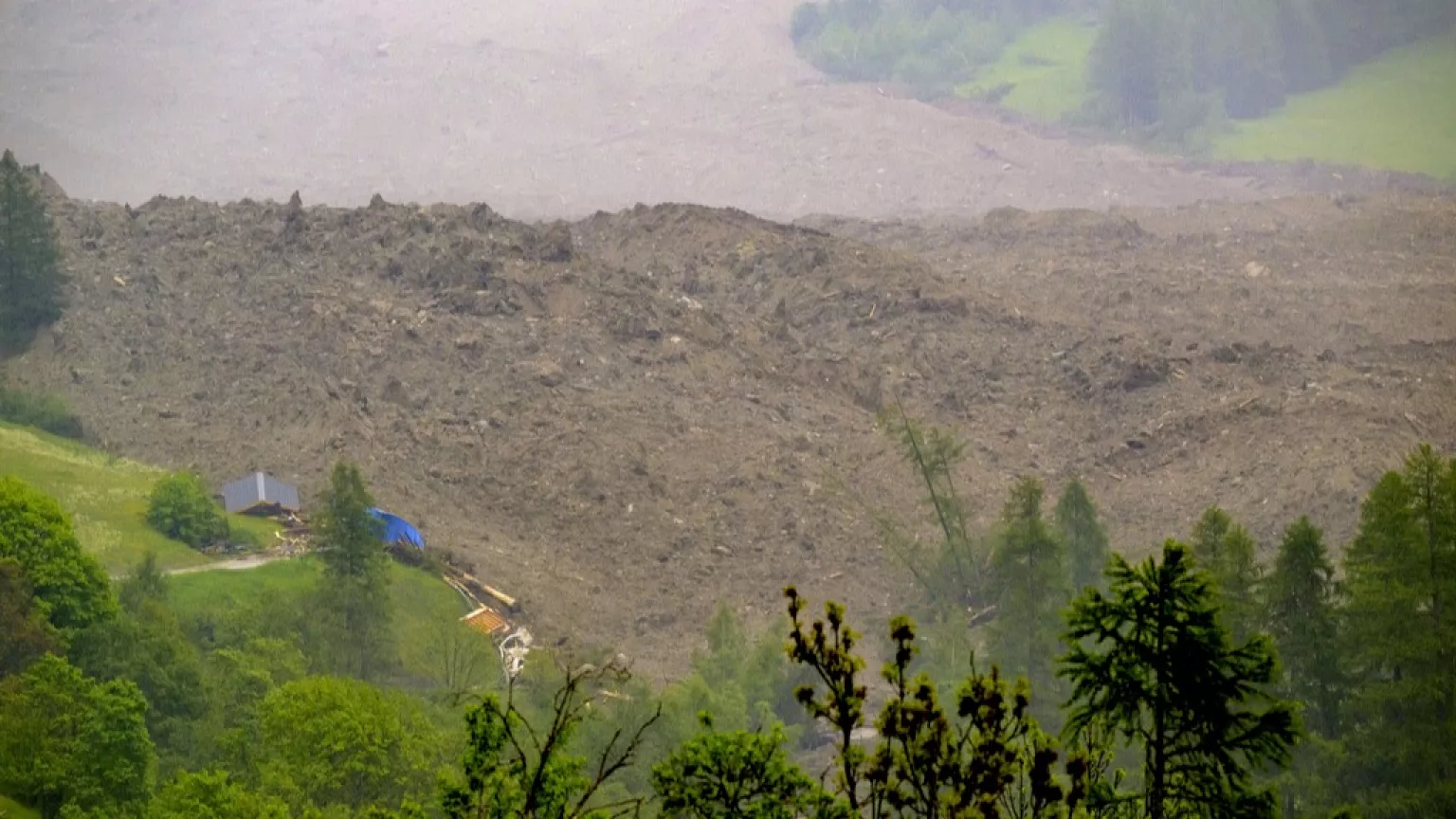
On May 28, 2025, the tranquil Alpine village of Blatten in Switzerland’s Lötschental Valley, about 75 miles west of Geneva, faced a catastrophic event. A massive section of the Birch Glacier, estimated at 1.5 million cubic meters, collapsed, unleashing a torrent of ice, mud, and rock that engulfed the village. Some 90% of the village was destroyed, and one man is missing. Climate change is to blame.

Blatten sheep grazing near the glacier in the summer.

Prior to the disaster, authorities had evacuated approximately 300 residents and livestock due to warnings about the glacier’s instability. Swiss Authorities here issued a warming, 6 days ago. You can count on the Swiss for being prepared. Despite these precautions, a 64-year-old man remains missing, and search operations involving drones with thermal imaging are ongoing hoping to find him.

Mudslide from Blatten, Switzerland

The landslide also buried the nearby Lonza River bed, raising concerns about potential flooding from dammed water flows. The Swiss army has been deployed to assist with rescue efforts and to monitor the evolving situation.

Having hiked the glaciers of the Italian area of the Swiss Alps, I recall the serene beauty and the sense of permanence these ice formations exuded. But I also sensed the danger when hiking on them. One wrong step could make me slide off a cliff. Passages are often intersected by glacial runoff. This tragic event in Blatten underscores the fragility of such landscapes in the face of climate change. The increasing frequency of glacier collapses is a stark reminder of the urgent need to address global warming.

Blatten before and after, captured by a village webcam

Switzerland, home to the most glaciers in Europe, has witnessed significant glacier volume losses—4% in 2023 and 6% in 2022. The collapse in Blatten is not an isolated incident but part of a broader pattern of glacial instability linked to rising global temperatures, Swiss glaciologists and scientists believe.

People go to Blatten bei Naters for its breathtaking views of the Aletsch Glacier, the largest in the Alps and a UNESCO World Heritage site. It’s a haven for hikers, skiers, and nature lovers, offering dramatic alpine scenery, tranquil trails, and access to the Belalp resort. The village also appeals to families and photographers drawn to its panoramic lookouts over the glacier.

Visitors could reach Blatten by taking a train to Brig or Naters, then a local bus or car up the winding mountain road. No doubt all tourism in the area should be avoided at this time.

They Call Her Madam Torti. She Might Be the Only One Who Can Save Seychelles Turtles

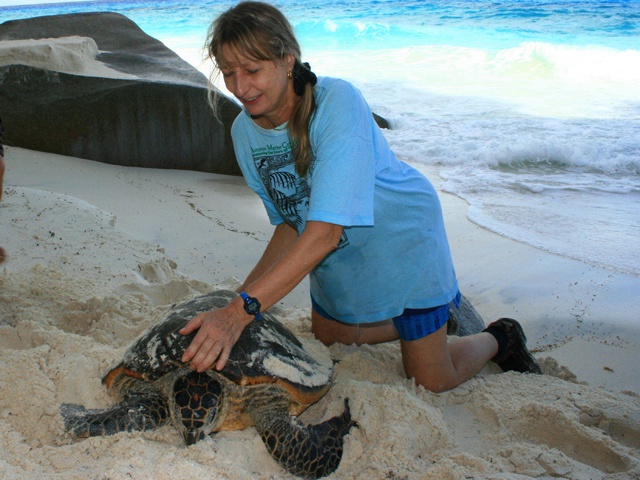
Jeanne Mortimer, the Dianne Fossey of sea turtles. She changed everything in the Seychelles.

Assomption Island is the back door to one of the last unspoiled corners of Seychelles, the Aldabra Atoll. The Seychelles is a nation of people that control 115 islands scattered across the Indian Ocean. With just over 100,000 people and a heroin crisis afflicting nearly 10% of its population, this small country faces vast and complex challenges. But perhaps none are more pressing—or more invisible to the wider world—than the fate of its sea turtles.

At the center of this story is Dr. Jeanne A Mortimer, an American-Seychellois biologist who has been studying sea turtles since 1973 and working in Seychelles since 1981. Known affectionately as “Madam Torti” among locals, Jeanne is not an activist. She’s not leading protests or lobbying parliament. She is, as always, knee-deep in research—methodically documenting, measuring, walking the beaches at dawn, and then later at night when the turtles nest, and publishing what she finds.

And what she finds is urgent.

Assomption Beach Too Valuable to Lose

The Aldabra coral atoll is one of the world’s largest and reported to have been first discovered in 916AD
Assomption Island, view from a plane.

Assomption lies just 20 miles from the Aldabra Atoll, a UNESCO World Heritage Site world-renowned for its giant tortoises, sea turtles, and pristine ecosystem. But while Aldabra has enjoyed global protection since 1968, Assomption, once over-mined for guano, remains largely overlooked. Development on Assomption will directly threaten Aldabra Atoll, considered to be an outpost of evolution.

According to Mortimer, Assomption once had the largest population of nesting green turtles in all of Seychelles. The island’s seven kilometers of mostly uninterrupted beach and deep offshore approach make it ideal for both turtle nesting and tourism. “It’s a perfect green turtle beach,” she explains, “better than Aldabra’s in many ways.”

That perfection now puts it at risk. Plans have emerged by a Qatari-based company Assets Group—cloaked in secrecy—for a luxury development of up to 37 private villas along the beach. Some like Syechelles presidential candidate Marco Francis, says the government has been bought off for $50 million. Assets Group agreed to an interview with Green Prophet but it’s been a month and they have not responded to our questions over allegations of terror financing and lack of environmental oversight.

Journalists have been there recently on Assomption, but they were not allowed to leave the tarmac or take photos. Building was clearly visible and construction crews are digging away, says a source to Green Prophet firsthand.

The scale and style of the project, suggest permanent disruption to this fragile ecosystem. No formal environmental survey has been conducted. No baseline turtle data has been published. And Mortimer, arguably the foremost authority on turtles in the region, has not been consulted.

Mortimer’s approach is neither alarmist nor oppositional. Her power lies in knowledge. After receiving her PhD under legendary sea turtle biologist Archie Carr at the University of Florida, she brought her expertise to Seychelles at the request of WWF and the local government. Her mandate: to study all turtle activity across the archipelago’s 155 islands.

See our talk with Jeanne Mortimer:

To reach remote islands like Cosmoledo, she traveled aboard supply ships like the Cinq Juin, slept on the floor of yacht galleys during high monsoons, getting soaked with water, and sometimes posed as a cook just to gain passage. Guests aboard the cabin caught on that she knew too much about Biology to be a standard cook.

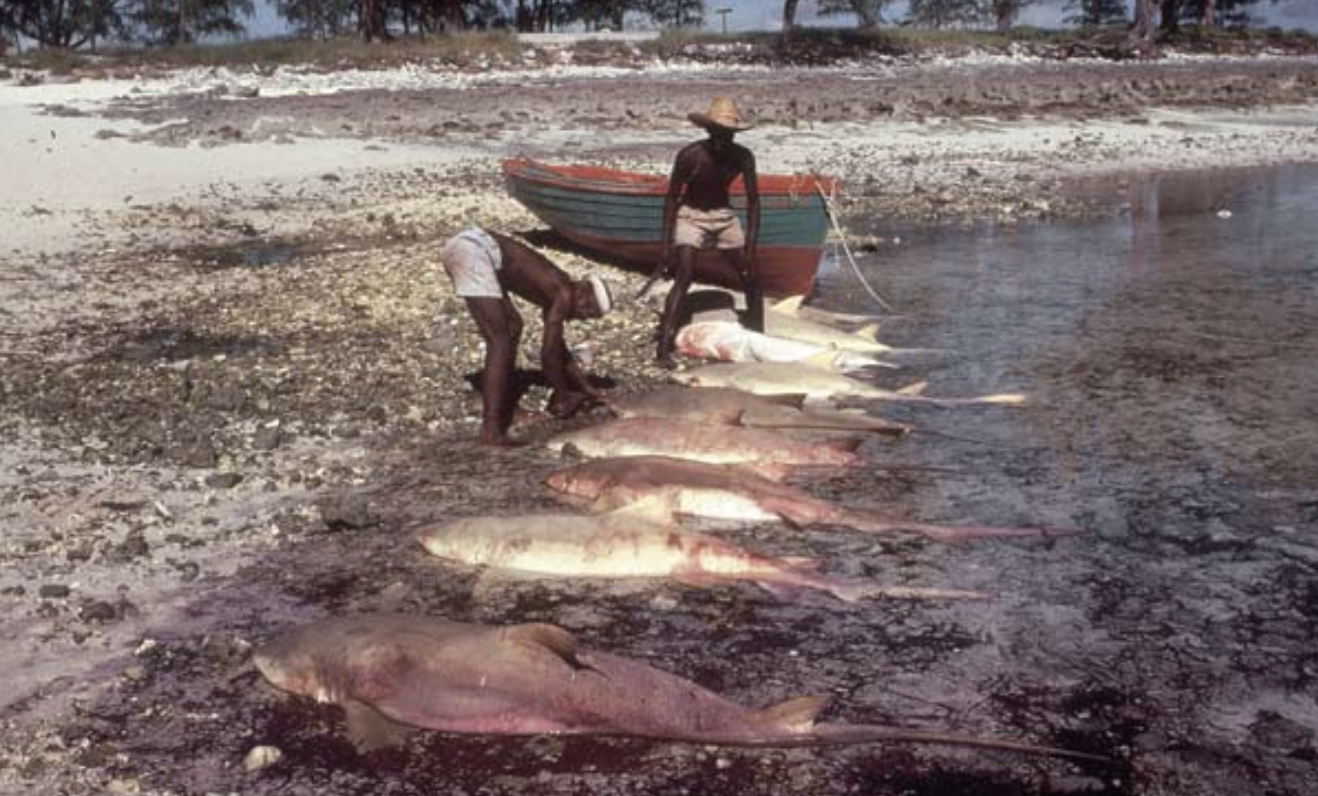
Once, she stayed five months on Cosmoledo atoll among a dozen Seychellois turtle hunters, documenting the precise dynamics of a community reliant on harvesting turtles, sharks, and fish. When camping at night she wore socks on her feet and keep her hair wrapped in cloth so island rats wouldn’t nibble on her toes or collect her hair for making nests. She even ate turtles because food choices, those days, were slim.

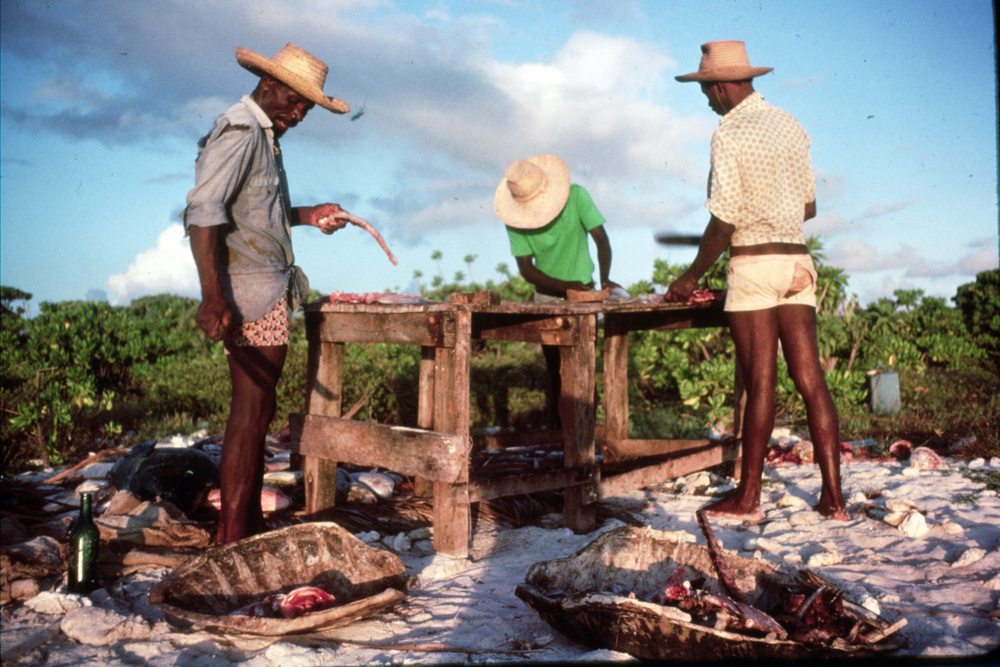
In the early 80s: Fishermen cleaning and salting their catch at Grand Ile at the end of the day. Salt and fish are stored in the empty turtle carapaces on the ground. Image via Jeanne Mortimer.

Her presence changed them. “When I first arrived, the men were worried I would interfere,” she later wrote. “But by living with them, working alongside them, they developed a new perspective.” She never asked them to stop; she simply watched, listened, and recorded. That data formed the foundation for Seychelles’ 1994 decision to ban turtle hunting entirely.

She laments those days even, because they had a culture around hunting sharks and fishing and turtles, citing a fondness for Mazarin as the fisherman of fishers. She didn’t judge as it was their income and way of life. There are even times when she helped salt the fish for fear it would spoil before reaching the market.

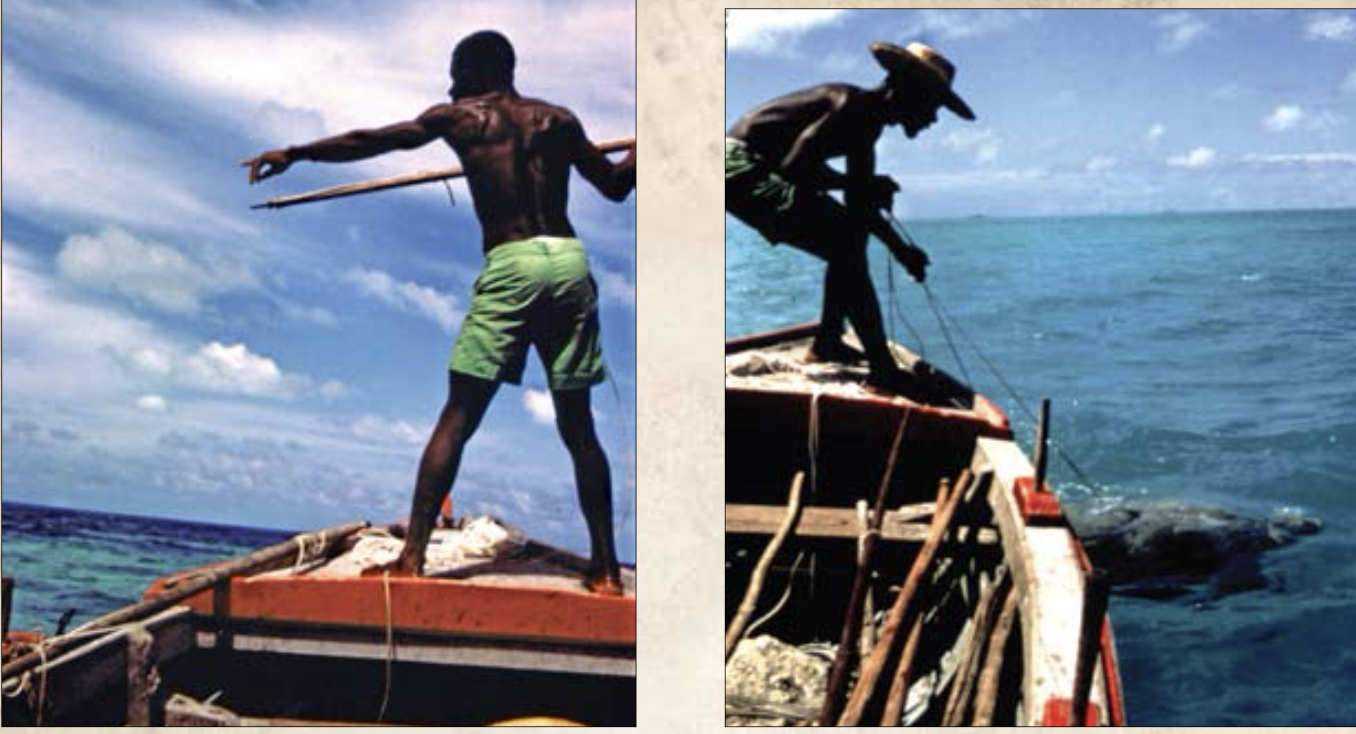
Turtles were harpooned from the small fishing boats. I sometimes went turtle hunting with themen. Photos show Mazarin ready to throw the harpoon, and then pulling the turtle up to the boat.
“Turtles were harpooned from the small fishing boats. I sometimes went turtle hunting with the
men. Photos show Mazarin ready to throw the harpoon, and then pulling the turtle up to the boat.”
Shark Fishing at Cosmoledo in 1982Above: Sometimes the men, especially Mazarin, went out in their small boats and fished for shark all night long. A single night’s catch might comprise as many as 10 large sharks.
“Shark Fishing at Cosmoledo in 1982. Sometimes the men, especially Mazarin, went out in their small boats and fished for shark all night long. A single night’s catch might comprise as many as 10 large sharks,” says Jeanne Mortimer. Image supplied by Mortimer.

Assomption: A Mirror of the Past

She says that what happened at Cosmoledo in the 1980s is relevant today on Assomption. The threat has shifted—from salted meat and tortoiseshell to artificial light and luxury development—but the stakes remain the same.
“Turtles are most vulnerable when they’re nesting,” Mortimer explains. “And we now know that females may take 30 to 35 years to reach sexual maturity. When they do, they return to the same beach again and again—sometimes for decades.”

These are the turtles that Assomption once hosted in abundance. And thanks to early signs of recovery, they are starting to return. If left undisturbed, Mortimer believes Assomption’s green turtle population could rival or exceed Aldabra’s.

But the Qatari villa development underway presents a new kind of threat. “The biggest issue is lighting,” she says. “Turtles won’t nest if there’s light on the beach. Hatchlings get disoriented. It’s one of the most studied impacts we know.”

And it’s not just turtles. Assomption hosts rare insect communities and bat populations, many of which could be wiped out by light pollution alone. Developers have reportedly promised a 1% footprint—but Mortimer warns that artificial light knows no boundaries. She also knows how devastating pesticides against bugs will harm the insects and the bats that feed off them. She once wanted to be an entomologist and knows how delicately all parts of island nature is connected.

In over five decades of work across more than 20 countries, Mortimer has seen conservation succeed. The many long-term monitoring programs she has coordinated in Seychelles—at places like Cousin, Aride, D’Arros and Aldabra—are now scientific goldmines. They prove that when science and policy align, recovery is not only possible, it is inevitable. Save Our Seas Foundation has been very helpful to her research, she says.

Jeanne Mortimer with a sea turtle

But Assomption is different. No formal turtle survey has ever been published for the island. No environmental management plan is in place. And development is already underway. Educating locals is one thing but now with international investment it’s a beast she has no experience in tackling and is letting environmental activists do the job.

It is, says Mortimer, “a very valid concern.”

She’s not fighting it. But she’s watching, documenting, and—when asked—offering solutions. “Turtle-friendly development is not a metaphor,” she explains. “It’s a science. Setback lines. Blackout curtains. No visible light from the beach. We know how to do this.”

The problem, as she puts it, is not science right now —it’s politics. “I don’t know why they haven’t asked me to help. But I would.”

Despite everything, Mortimer remains focused on what can still be saved. She invests where she can have impact. And she believes in young people—especially the children of those with power.

“If a Qatari child sees a turtle nesting and says, ‘Hey Mom, Dad, we should protect this,’ that might do more than any scientist,” she told me.

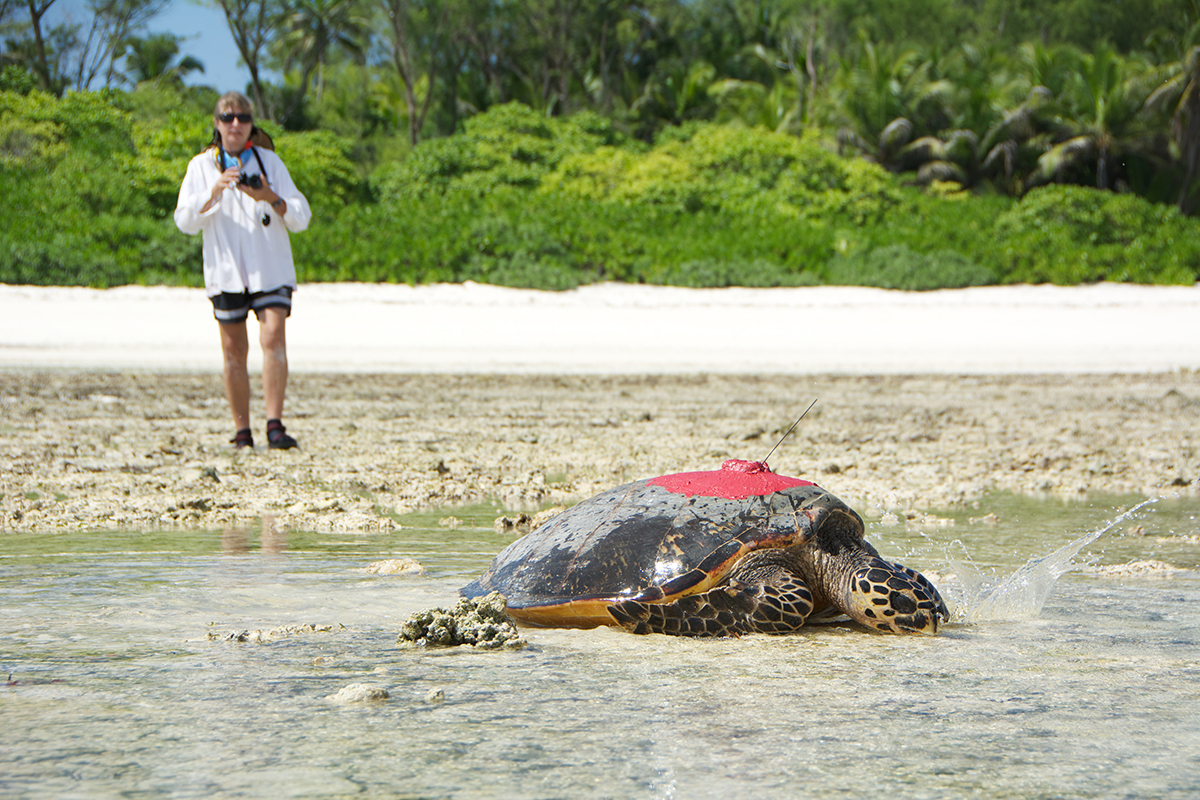
Legendary turtle expert Jeanne Mortimer watches a hawksbill turtle return to the ocean after laying her eggs on one of D’Arros Island’s beaches. Photo by Rainer von Brandis | © Save Our Seas Foundation

Her advice to the next generation isn’t to give up plastic straws. It’s to demand structural change. “The real responsibility lies with governments and corporations. Not individual guilt. We need investment in alternatives—seaweed-based plastics, smart design, policy change.”

Dr. Mortimer served as a mentor and inspiration to Dr. Yaniv Levy, now one of the Mediterranean’s leading sea turtle conservationists who lived on and near Aldabra Atoll for 2 years. He has built a sea turtle hospital, develops complex rehabilitation devices, and artificial flippers and runs a breeding program where he releases thousands of baby sea turtles back to the sea every year with the help of 600 volunteers. His latest research shows how animal feedstock bags tossed into the sea, contribute to sea turtle mortality.

Levy says that Mortimer’s encouragement and science-first approach inspired him when he met her on Aldabra and shaped his philosophy of protection through data and experience. She is the grandmother of sea turtle research, and leads the conversation globally in the annual sea turtle conference.

Meanwhile, Mortimer isn’t slowing down, but rather speeding up so the science gets published. She continues to write papers, to walk beaches, and to document what others might overlook. Assomption, for now, remains a question mark—a fragile bridge between two possible futures.

Karin Kloosterman is a former biologist and works as a science journalist and founder of Green Prophet. She interviewed Dr. Jeanne Mortimer for this story in Seychelles and is actively investigating the conservation status of Assomption Island.

To read more in our series see:

Seychelles Island under threat and linked to terror funds

Seychelles and the battle with royalty and rats – a talk with Adrian Skerrett

He lived on Aldabra Atoll and was inspired to protect sea turtles forever

They knew they shouldn’t be there: journalist Kevin Gepford writing a book on tortoises from Aldabra Atoll

Nirmal Jivan Sha on the history of conservation in the Seychelles

Seychelles Island sold to Qatar, leaving the conservationists out

Iraq’s Ancient Water Wisdom Faces a Modern Reckoning

0
qanat, qanat system, ancient water system, Persian qanat, Middle East irrigation, traditional irrigation, underground aqueduct, water channel, sustainable water management, desert irrigation, ancient engineering, qanat Iran, qanat Iraq, water conservation, historical water system, aquifer irrigation, traditional water technology, UNESCO qanat, old irrigation method, qanat architecture
An ancient Qanat system in Persia. Spread throughout the arid Middle East, these systems predated Roman aqueducts but the historical narrative isn’t told


As tensions over water intensify across Iraq and the wider Middle East, the 5th Baghdad International Water Conference has cast a timely spotlight on the country’s fragile water future—and its ancient hydrological past.

Held in the heart of Mesopotamia—where early civilizations once mastered the art of water management—the conference drew regional experts and leaders to Baghdad to confront a crisis that’s becoming more urgent by the year: water scarcity. With rivers running dry and modern agricultural systems straining under the pressure, Iraq finds itself at a crossroads between its hydraulic heritage and an increasingly parched present.

Aflaj, qanat UAE
The Aflaj Irrigation Systems of Oman are ancient water channels from 500 AD located in the regions of Dakhiliyah, Sharqiyah and Batinah. However, they represent a type of irrigation system as old as 5000 years in the region named as Qanat or Kariz as originally named in Persia.

The land between the Tigris and Euphrates was once a wellspring of invention. Thousands of years before modern irrigation, the Sumerians, Akkadians, Babylonians, and Assyrians carved canals, engineered flood basins, and developed qanat systems—ingenious underground channels that carried water from mountain springs to distant farms.

These systems weren’t just technical achievements; they were the lifeblood of cities, temples, and trade. Water determined everything—from the rise of empires to the poetry etched into clay tablets.

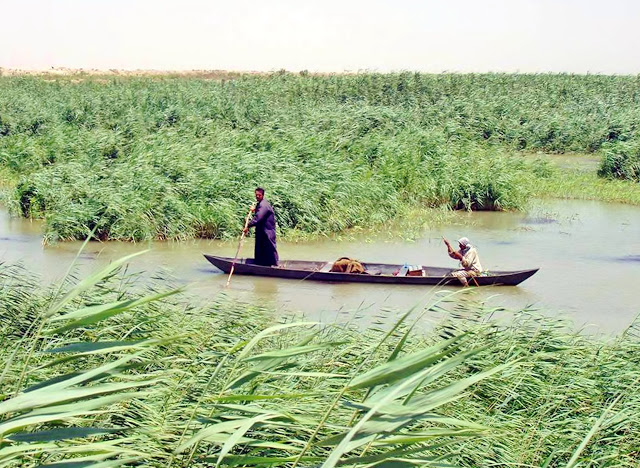
Iraq marsh people know how to live with water

But today, the once-mighty rivers that sustained those ancient cultures are shrinking. Dams upstream, salinization, climate shocks, and mismanagement have left Iraq’s water infrastructure overburdened and outdated. Agriculture now consumes over 90% of Iraq’s water, yet crop yields are falling. Some estimates suggest that without reform, wheat and barley yields could drop by half by 2050.

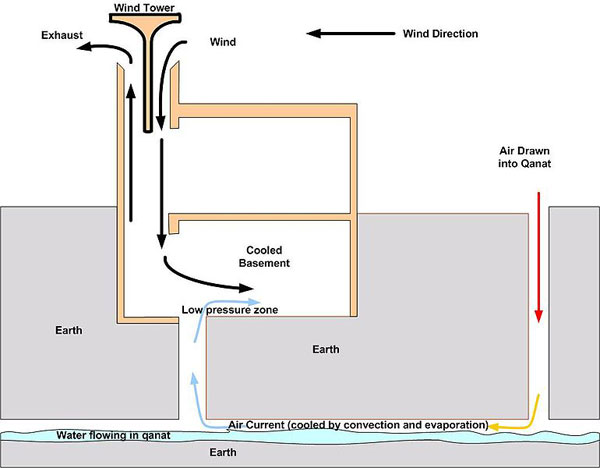
How a qanat works

qanat, qanat system, ancient water system, Persian qanat, Middle East irrigation, traditional irrigation, underground aqueduct, water channel, sustainable water management, desert irrigation, ancient engineering, qanat Iran, qanat Iraq, water conservation, historical water system, aquifer irrigation, traditional water technology, UNESCO qanat, old irrigation method, qanat architecture

These aren’t just numbers. Iraq’s rural communities—many of whom still rely on traditional farming—are already being uprooted by water shortages. Marshlands, once teeming with biodiversity and cultural life, are evaporating. The disappearance of water from ancestral lands threatens to sever ties to history, religion, and identity.

This has ignited conflict—not just between nations sharing river systems, but within Iraq itself. Disputes over water rights are rising, and in some areas, violence has already erupted. A younger generation, particularly women and smallholder farmers, are being left with few options: adapt or leave.

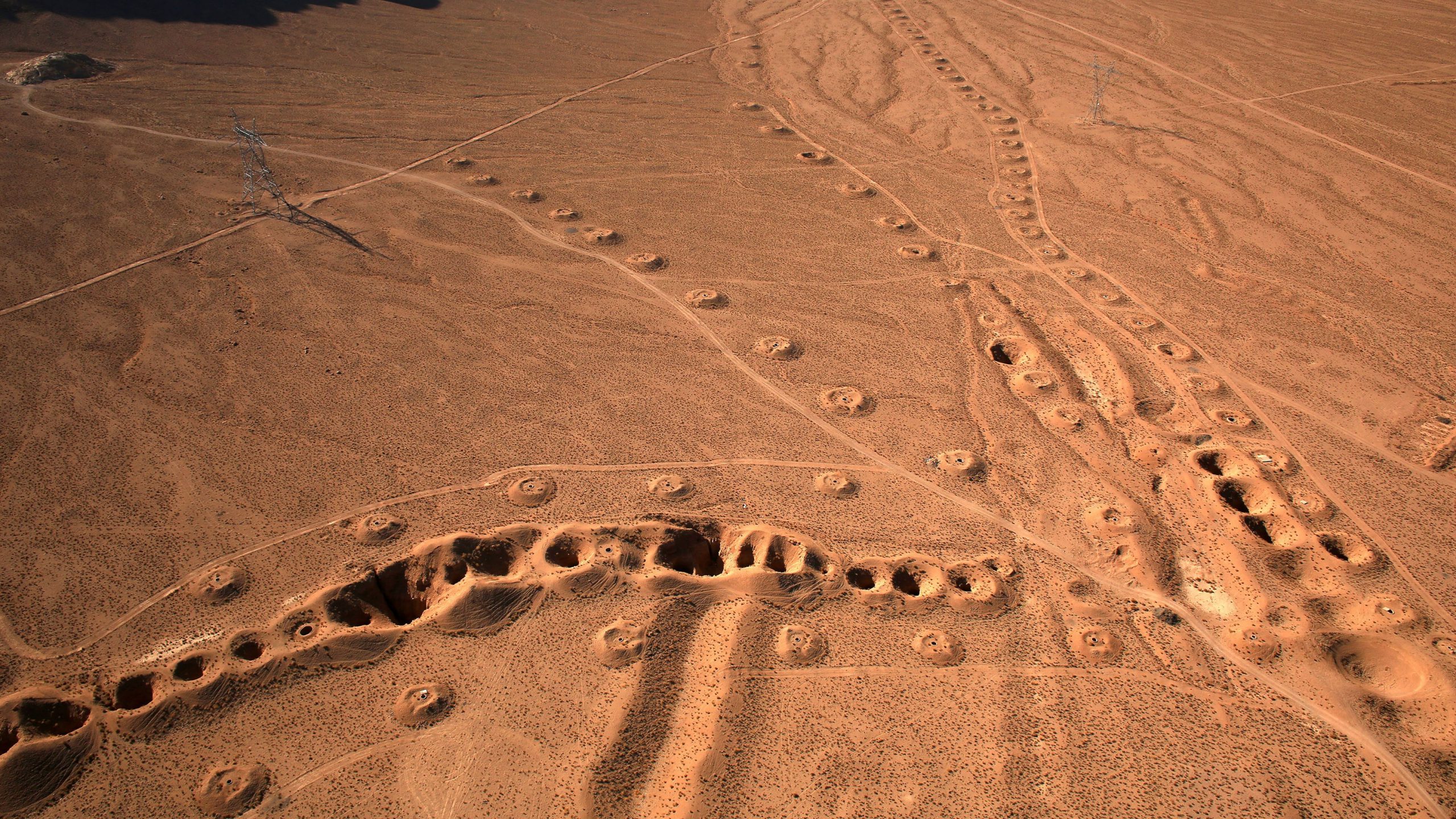
Qanat in Iran persia aerial photo of water irrigation system
The Persian Qanat: Aerial View, Jupar

Despite the severity of the situation, Iraq isn’t without solutions. The country is rediscovering the value of its past while cautiously embracing modern technologies. Sometimes, like in Afghanistan the outcome can be dubious. Opium farmers now use solar powered water pumps to cultivate poppies.

opium solar panels Afghanistan
Solar panels are a boon for the planet but they are now fueling bumper crops of poppies for the opium trade. Via the NY Times.

Remote sensing tools, such as those used in the WaPOR programme, are helping farmers monitor water use and optimize irrigation. Solar-powered systems, being piloted in neighboring Egypt and Tunisia, offer hope for regions where diesel pumps are no longer viable. Community-led water user associations—reminiscent of ancient collective water governance structures—are being revived to restore trust and accountability.

Why Scientists Don’t Make Predictions: The Funding Politics of Aging Research

0
Dr. Aubrey de Grey
Dr. Aubrey de Grey: people can live for 1000 years.

In the prestigious halls of biogerontology—where scientists untangle the mysteries of human aging—a curious silence persists when it comes to discussing timeframes. Ask most aging researchers when we might defeat aging, and they’ll quickly pivot to discussing incremental progress or the complexity of their work. This isn’t mere scientific caution; it’s a carefully calculated strategy shaped by the brutal realities of research funding.

“I actually wrote a paper on this called “The duty of biogerontologists to discuss time frames publicly”, and I wrote it in 2004,” says Dr. Aubrey de Grey, founder and Chief Science Officer of LEV Foundation. “So it’s been a real problem.”

While remarkable progress continues in labs worldwide, the culture of avoiding predictions has created what de Grey considers a dangerous disconnect between scientific potential and public awareness. This strategic silence might be protecting individual careers, but at what cost to humanity’s battle against its oldest enemy?

The Politics of Prediction in Scientific Funding

The term “Longevity Escape Velocity” (LEV) has become the linchpin of a growing scientific and philosophical debate. (CREDIT: Bryan Johnson)

The reluctance to make predictions isn’t unique to aging research, but it’s particularly pronounced in this field. At a 2010 NIH meeting, the consensus among senior researchers crystallized around a simple concept: “principled researchers cannot stoop to discussing time frames, because research is intrinsically so unpredictable.” [Woah, where did you find this?]

When de Grey first proposed that biogerontologists have a duty to discuss timeframes publicly, the reaction from leading scientists was “thoroughly lukewarm.” In academic culture, making concrete predictions is viewed as a career-limiting move.

The reason? Self-preservation within a hyper-competitive funding landscape.

“The reason they don’t is because they think that it will endanger their funding,” de Grey states bluntly. Unlike de Grey, who has navigated primarily through philanthropic channels, most aging researchers “get their funding from the government through a process of peer review, where other scientists are forced to make choices between their colleagues’ grant applications and they never have anything like enough money to divvy up.”

This creates a brutally efficient system where scientists are “constantly looking for reasons to say no” to their colleagues’ grant applications. One reliable justification for rejection is claiming a researcher made irresponsible public statements.

“A great ass-covering way to say no is to say, ‘Well, this person said something irresponsible on television,'” de Grey explains. “Whether or not the thing they said on television actually was irresponsible, if it could be characterized as irresponsible, like over-promising and under-delivering or getting the public’s hopes up or whatever, then that’s good enough.”

The Reputation Risk That Silences Scientists

Dr. Aubrey de Grey
Dr. Aubrey de Grey

Many researchers claim that their real reason for silence is that “over-selling and under-delivering” is irresponsible. They’ve witnessed the swift and merciless backlash that comes when a researcher becomes too optimistic in public.

A cautionary tale emerged recently involving Harvard scientist David Sinclair, who faced “a barrage of rebukes from fellow longevity researchers” after making headlines with claims about “age reversal” in animal studies. The professional consequences were severe—Sinclair ultimately stepped down from a prominent research leadership position.

This public execution sends a clear message to other scientists: make bold claims at your peril.

But predictions are not the same as claims. Historical disappointments—like the “War on Cancer” in the 1970s failing to deliver promised cures—have not made funding bodies hypersensitive to ambitious timelines: the budget of the National Cancer Institute has never once been cut year-on-year. But this has failed to reassure a research community that has mastered the art of promising incremental progress while carefully avoiding any specific commitments about when breakthroughs might occur.

The Vicious Cycle of Funding and Progress

De Grey points out that this caution creates a destructive catch-22: without articulating timeframes, researchers struggle to convey urgency to policymakers and funders. While scientists only “dangle the carrot” of curing aging but “without mentioning time frames,” public and political enthusiasm will remain weak.

“Political will to support biogerontology research depends utterly on… perception of how likely it is that this research will succeed,” de Grey notes. If that perceived likelihood is zero, “funding will be zero.” This creates a self-fulfilling prophecy where insufficient resources slow progress, confirming the pessimistic outlook.

The stakes could hardly be higher. As de Grey explains, “Every day that I bring forward the defeat of aging, it’s 30 World Trade Centers. It’s 110,000 people, and it’s very easy to get out of bed for that.”

Yet the funding pitch often stumbles at the moment of truth:

“If you come to somebody and you say, ‘Hello, I’d like some money, please,’ and they say, ‘What are you going to use it on?’ And you say, ‘I’m going to do this research,'” de Grey explains, “And they’re going to say, ‘Yeah, and what will that achieve?’ And you say, ‘Oh, it’s going to achieve this greater understanding and greater progress, and keeping people healthy for a long time.’ And then the person says, ‘Right, how soon is that going to happen?'”

The critical moment comes next: “And if you say, ‘Oh, I have no idea, it’s research,’ and you run away very fast from the idea of actually putting a number on how soon you think you’re probably (not even certainly!) going to make this all [happen], then they will say, ‘Fuck off.’ They will basically say, ‘You’re just trying to swindle me. You know perfectly well this research is basically going to be futile and you just enjoy doing it, and you want my money.’ And so they won’t write you a check.”

The Hidden Costs of Conservatism

De Grey argues that the “no predictions” norm actively harms biomedical progress and, by extension, public health. In his view, scientists’ reluctance to discuss timelines puts “self-interest (reputation protection) over humanity’s collective interest in medical progress,” which he considers “reprehensible.”

The field faces a delicate balancing act. On one hand, credibility with funders and the public requires honest assessment. On the other hand, excessive conservatism can hamper progress by failing to attract sufficient investment.

As one observer noted regarding de Grey’s approach, “People don’t donate to Aubrey de Grey because they want the work they fund to be timid.” His bold messaging attracts donors who want revolutionary progress, whereas traditional grant agencies prefer more measured claims.

Finding a Path Forward in the Funding Maze

De Grey calls for scientists to “say what they actually think” about timelines, arguing that transparency could accelerate progress. The key challenge is navigating what he describes as the strategic dilemma between “money now versus reputation later.”

Whether individual scientists choose caution or boldness in their predictions, de Grey’s central argument remains powerful: aging research’s impact on human welfare is too significant to let funding politics dictate its pace.

He contends that predictions, even probabilistic ones, demonstrate belief and credibility: “If you do put a number on it, even though the number has to be probabilistic, you have to say there’s a 50% chance that I’ll reach this amount of progress in this amount of time if you give me this amount of money, then you’re showing self-belief. You’re making a prediction… if you don’t make a prediction at all, you have no credibility at all.”

In this high-stakes game of scientific funding, the reluctance to make timeline predictions may be protecting individual careers, but it’s also potentially slowing the most important medical revolution in human history. As millions continue to suffer and die from age-related diseases, de Grey’s challenge to the scientific establishment becomes more urgent. The politics of prediction in aging research isn’t just an academic debate—it’s a matter of life and death on an unprecedented scale.


7 Startups Redefining Sustainable Consumer Products in 2025

0
Jak shoes make as slow fashion from Portugal out of apple waste and leather
Jaks shoes make as slow fashion from Portugal out of apple waste and leather

In 2025, sustainability is no longer a luxury or a greenwashed afterthought—it’s a business imperative. Consumers around the world are making purchasing decisions based not just on price or style, but on how products are made, what they’re made of, and what happens after they’re used. Enter a wave of bold startups building circular, ethical, and regenerative models for everyday items—from sneakers and smartphones to menstrual pads and incense sticks.

Here are seven standout startups proving that sustainability and innovation go hand in hand.

1. Akyn (UK) – Redefining Ethical Fashion: Founded by British designer Amy Powney, Akyn is more than a clothing label—it’s a quiet rebellion against fast fashion. Built on the principles of transparency, timelessness, and traceability, Akyn uses organic cotton, regenerative wool, and natural dyes. Every piece is designed to last beyond seasons, with full supply chain traceability back to the farm. As the UK rethinks fashion’s carbon footprint, Akyn leads with substance and style.

Akyn

2. Rothy’s (USA) – Turning Bottles Into Ballet Flats: Based in San Francisco, Rothy’s is famous for transforming recycled plastic bottles into sleek, washable shoes and accessories. With 3D knitting technology that minimizes waste, Rothy’s has repurposed more than 179 million bottles and over 20,000 used shoes to date. Their latest push in 2025? Fully circular retail stores, where worn-out Rothy’s can be dropped off and reincarnated into new designs.

Rothys

3. Fairphone is flipping the script on electronics with a modular smartphone that’s easy to repair, upgrade, and recycle. The Dutch startup sources fair-trade gold, conflict-free tin and tungsten, and recycled plastics. In a world awash in e-waste, Fairphone is leading the “right to repair” movement—and showing big tech how ethical hardware can still turn a profit.

Fairphone

4. LastObject (Denmark) – Saying Goodbye to Single-Use: Copenhagen-based LastObject produces reusable alternatives to everyday personal care items—cotton swabs, tissues, and even makeup pads. Their signature product, LastSwab, replaces 1,000 disposable Q-tips. The brand’s minimalist design and bold messaging have resonated with a new generation of climate-conscious consumers. It’s not just zero waste—it’s zero nonsense.

Last Objects

5. Bamboo India – A Green Toothbrush Revolution. Plastic toothbrushes are one of the most common items found in landfills. And the microplastics get into our bodies when we brush. Pune-based Bamboo India is changing that with biodegradable bamboo toothbrushes, earbuds, and eco-gift items. What started as a small social initiative has become a household name across India, with a rapidly expanding global presence. Their mission: eliminate single-use plastic from your morning routine.

Bamboo India

6. Nirmalaya (India) – From Temple Waste to Sacred Scents. Every day, Indian temples generate tons of floral waste. Nirmalaya saw an opportunity in the problem—transforming discarded flowers into incense sticks, essential oils, and organic colors. Based in Delhi, the startup combines tradition with innovation, tackling waste while preserving the spiritual significance of its raw materials. It’s an elegant fusion of circular design and cultural reverence.

Nirmalaya
Nirmalaya

7. Eco Femme (India) – Menstrual Health Meets Social Impact: In Tamil Nadu, Eco Femme is producing washable, organic cotton menstrual pads and distributing them through education-focused programs across rural India. This women-led social enterprise is helping reduce the mountains of plastic waste created by disposable pads—while empowering women and girls with dignity and information. Their pads have reached thousands, but their model is reaching minds.

Eco Femme

These startups aren’t just selling products—they’re selling a new way to live. Each is proof that consumer goods can be high-quality, beautiful, and regenerative at the same time. From fashion and tech to wellness and waste, they’re building a future where sustainability isn’t a niche—it’s the norm. Now all of these are global products. Take an idea from this list and make it local.


Ayahuasca in 2025: Where the Sacred Vine Still Grows

0
Image of Shaman, via Derek Dodds

Once whispered about in underground circles and jungle clearings, the psychedelic brew known as ayahuasca is now a global phenomenon—and in 2025, its reach shows no sign of slowing. From Silicon Valley executives to trauma survivors, the call of the vine continues to draw seekers from all corners of the world. But the practice, steeped in centuries of Amazonian tradition, is facing new pressures as demand grows and legality shifts across borders.

The spiritual and medicinal use of ayahuasca originates with Indigenous peoples of the Amazon basin, particularly in Peru, Brazil, Colombia, and Ecuador. In places like Iquitos and Tarapoto, ayahuasca ceremonies are still held in malokas (circular huts), guided by shamans who sing icaros—healing songs meant to direct the energies of the ceremony.

Nihue Rao shamans
Nihue Rao shamans

Retreat centers such as Temple of the Way of Light and Nihue Rao continue to host international guests seeking healing, insight, or deep spiritual transformation. These centers often blend tradition with modern therapy models, including pre- and post-ceremony integration sessions.

Rising Centers: Costa Rica and Portugal

Ayahuasca tea being prepared. Wikipedia

Outside of the Amazon, Costa Rica has emerged as a popular and well-regarded destination for ayahuasca work. Retreat centers like Rythmia Life Advancement Center offer week-long experiences that combine plant medicine with yoga, breathwork, and Western-style psychological support.

Portugal, too, is becoming a hub, largely due to its relaxed drug laws and growing psychedelic community. Though not legal per se, ceremonies often operate in a gray area with minimal interference from authorities.

In the United States, ayahuasca remains federally illegal due to its DMT content—a Schedule I substance. However, several religious organizations, such as the Santo Daime Church and União do Vegetal (UDV), have received legal exemptions to use ayahuasca in sacramental ceremonies.

Beyond these groups, underground ceremonies have proliferated, particularly in cities like Los Angeles, San Francisco, and New York, where local decriminalization movements have deprioritized the enforcement of psychedelic drug laws. These events are often invite-only and framed as “healing circles” rather than religious rites. It is also believed to be quite popular in Israel as well, where you can find a healing ceremony –– much needed in this intense time of conflict.

Who’s Drinking Ayahuasca in 2025?

The profile of the typical ayahuasca participant has shifted. While still attracting spiritual seekers and New Age devotees, today’s ceremonies are increasingly attended by:

  • Tech and creative professionals seeking clarity, focus, or emotional breakthroughs.

  • Military veterans looking to address trauma and PTSD.

  • Therapists and healers incorporating the experience into their own personal development.

  • Women and mothers exploring ceremony as part of rites of passage or ancestral healing.

Ayahuasca is also becoming a tool for psychedelic integration therapists, many of whom now have firsthand experience with the medicine as part of their training or personal exploration. While the effects can feel transformative, it is important to do the real work on yourself after the experience.

But with popularity comes complexity. Indigenous leaders and activists have raised concerns about cultural appropriation, overharvesting of ayahuasca vines, and the commercialization of sacred traditions. Some Amazonian communities are pushing back, creating frameworks for reciprocity and ethical sourcing.

Organizations like The Indigenous Medicine Conservation Fund are advocating for fair compensation, intellectual property protection, and cultural sovereignty for the original stewards of the medicine.

Is It Safe?

Ayahuasca is not a party drug. The brew often leads to intense physical purging (vomiting, shaking, crying) and emotional processing. While many report life-changing insights, others have experienced psychological distress, especially when ceremonies are held without proper guidance or integration support.

In rare cases, ayahuasca can be dangerous—especially for people with certain psychiatric conditions or those taking antidepressants or SSRIs. That’s why screening and aftercare are now standard practice at reputable retreat centers. This should be said about cannabis, which is now banned in Florida. Canada is allowing all cannabis to be legal for recreation use, making it accessible to very young teens.