
 A Facebook campaign called “She Wants a Bicycle Now” led by Syrian college students is getting young people on bikes in impressive numbers.
Syrian conflict and broken roads opens new business channels for cycling

Morocco’s Berbers take on Africa’s richest silver mine – and the king

Africa’s largest silver mine has been operating in the Atlas mountains since 1969, but the Berber people living in the surrounding villages remain among the most poverty-stricken people in Morocco. Now Movement on the Road ’96 are living in an “occupation” camp to protest a silver mine’s water use and pollution.
Beirut bike messengers deliver groceries and parcels by cycling


I did the best part of my growing up in Toronto, a cold and somewhat bike-crazed city. It’s there where I met a champion bike courier from Berlin and had my first long-distance love affair when he moved back to Germany. Joern, god bless his heart, used to deliver love letters by international courier!
An electric bike getaway “car” used by Israeli bomber


In an attempt to settle a business dispute, an Acre-based man from Israel placed a bomb on his enemy’s car and fled the scene using an electric bike.
SodaStream stock rises as Scarlett Johansson’s banned ad sizzles (video)

Israel’s do-it-yourself (and environmentally friendly) soft drink maker SodaStream may go down in the record books as having created the most provocative Super Bowl commercial that never aired on TV, but it’s having a hell of an afterlife on YouTube, racking up over 11 million views since its Monday release.
Camel domestication research challenges Bible’s origins
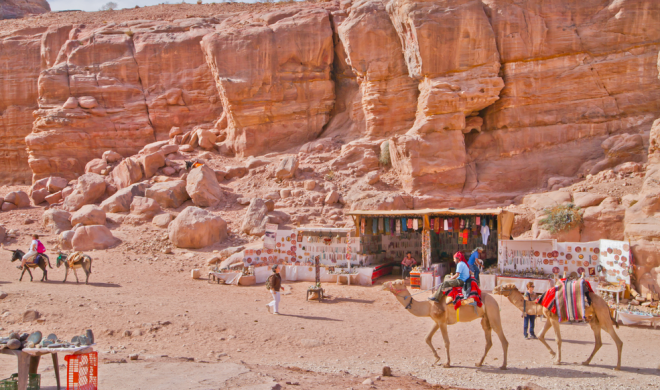
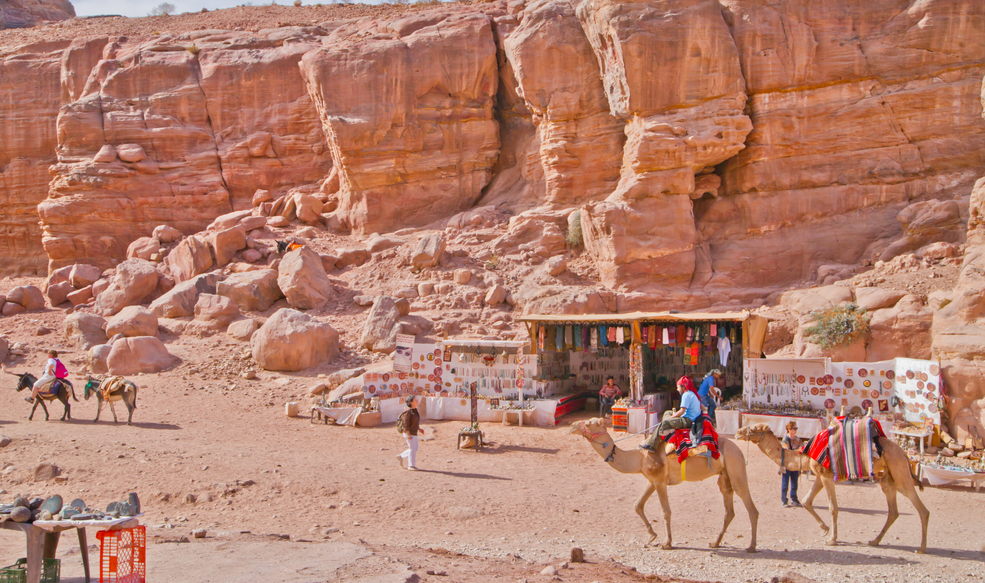
Camel milk and camel burgers are attracting attention in the west, but these desert dwellers have been long-loved in the Middle East. Camels are the horses of the Middle East. Their domestication helped people in the region travel, build and communicate. But when did camels come to the Holy Land?
$9 billion in 2,000 MW solar investment streams into Morocco

 The bone-dry plains of the Western Sahara may be no place to plant a garden, but their extreme solar irradiance values render them ideal for solar farming. Morocco has persuaded foreign investors to underwrite a $9 billion solar power project.
Hybrid solar electric oven SunFocus cooks with or without the sun

Solar ovens are great, and we’ve seen a lot of them. But they are limited since they only work when it’s actually sunny. Sun BD Group has bridged that shortfall with a new hybrid solar electric oven that can whip up a great meal at any time of day and under any conditions.
When the sun is shining, the SunFocus uses that energy to cook up to 12 pounds of just about any food imaginable – cakes, bread, meat (if you must), more or less anything that you can cook in a conventional oven.
But thanks to its hybrid technology, it doesn’t lose functionality when a cloud slips in front of the sun, when its overcast, or after sunset.

Even though the SunFocus can be used as a grid-connected item, it still boasts high energy efficiency thanks to its low 465 wattage, which means that it uses about 75 percent less energy than the oven in most homes, according to the company.
Other great features include portability, which is especially important if the oven is to be used out in the field, and at just 30 pounds, it is lightweight enough for just about anyone to carry.
The three reflective panels are made from high grade aluminum and because they are double pane they retain heat for longer, increasing the oven’s overall energy efficiency.
Reaching up to 300 degrees Fahrenheit, the oven has a built in thermostat that switches off the electricity when it isn’t needed, and it is easily converted to DC power with an inverter.

Sun BED Group has spent two years perfecting and testing their hybrid solar ovens, which not only performed well in the center of the Pentagon in 2011, but engineers from Chevron (yup!) have tested them in the field as well.
The results have been good, although the company is currently running a Kickstarter campaign to raise funds to have their product certified by both EU and USA electrical certification bodies and it is unfortunately unlikely to meet its goal to raise $40,000. Update: it did not meet its goal and raised only about $2000 USD.

Said to be the first hybrid solar oven built in the United States, the SunFocus will eventually hit the foreign market as well, provided that the company is able to raise the necessary funds. Which we think they will.
And if they do, despite the oven’s relative high price of $489, we expect to see a fairly significant uptake by wealthier families in the Middle East region, where the sun shines bright almost all year long.
Spicy Iraqi prune cake recipe

I’ve been cooking nonstop out of Nawal Nasrallah’s majestic cookbook, Delights From The Garden of Eden. And my family loves it, because every recipe yields a delicious dish. Like this one.



Raw honey from Yemen’s sidr and sumar trees
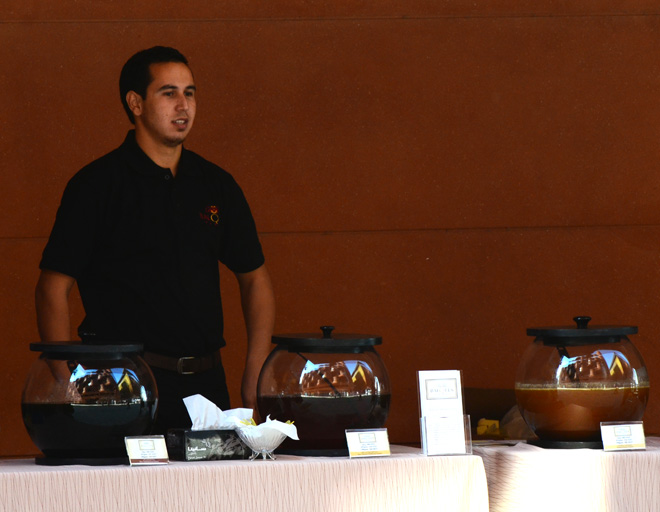

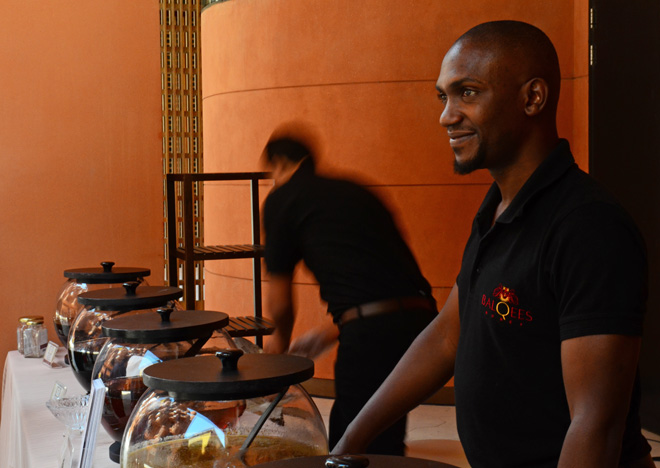
Terrorists and Houthi pirates probably come to mind long before honey when people think of Yemen, but the raw Yemeni honey Balqees had for sale at the recent Masdar Festival in Dubai we visited was far and away the yummiest honey I ever put in my mouth.
Read below to learn more about 8 varieties of Balqees company sells and what makes them so special.
1. Yemeni Sidr Do’ani from the Sidr tree is “Allah’s honey”
The Sidr tree, also known as Christ’s Thorn or the Jujube tree, has featured prominently in the Middle East region – the Pharaohs even used its wood to build some of their historically brilliant structures; it is also ubiquitous in Southern Yemen, particularly in Wadi Do’an. According to Balqees, thousands of semi-nomadic beekeepers gather twice a year to collect Sidr honey from the mountains in this remote desert region
2. Yemini Sidr Usaimi
Cooler than Wadi Do’ani, Usaimat is located in northern Yemen, where the resilient Sidr tree also grows en masse. But because the soil and climate are different, this honey with the same medicinal properties has a slightly different flavor.

3. Yemeni Sumar Honey
As you might have guessed, this honey is named after the Sumar tree in the Hadramout region. Said to be one of Balqees’ more popular varieties, Sumar honey is said to have more of a caramel tone without being excessively sweet.
4. Yemeni Sidr Wasabi
It isn’t green and it isn’t spicy, but Sidr Wasabi honey from the Wasab region between the north and south of Yemen has a very rich toffee and butterfly flavor that distinguishes it from Baqees’ other honey types. This is thanks to the area’s unique soil and climate. The Sidr tree goes wild here.
5. Yemeni Wildflower Honey
Wildflowers grow in one of the remaining areas in Yemen that is not polluted – also in the Hadramout region, which means honey harvested in this region takes its unique flavor not only from the flowers combined with the climate. This may be one of the most delicate and sweet smelling of the company’s offerings.
6. Yemeni Herbal Honey Fusion
This fusion is comprised of royal jelly, propolis, ginseng and ginger with a Sumar honey base. Balqees claims this mix has “amazing healing properties and strengthens the immune system” and delivers a “powerhouse of energy, vitamins and minerals.”
7. Raw Honey, Cinnamon and Sesame Seed Fusion
Commonly used as an alternative treatment in both oriental and Ayurvedic medicine, both honey and cinnamon are known to have a plethora of healing properties. Combined, they are potent. Raw Yemini honey is combined with Organic Ceylon cinnamon from Sri Lanka and a few sesame seeds to deliver a sweet spread with a nutty flavor.
8. Raw Honey and Royal Jelly Fusion
Balqees enriches Raw Yemeni Honey with Royal Jelly, which is left unprocessed in order to retain all of its organic attributes. This appears to be the company’s most nutritiously potent fusion. “It is an instant energy building food containing remarkable amounts of vitamins, proteins, lipids, glucides, enzymes, mineral substances, amino acids, antibacterial and antibiotic components,” the company states in their brochure. It is also said to help cell regeneration and preserve youth.
(Not featured here is a Saffron honey mix that Balqees had for sale at the Masdar City Festival. The saffron comes from Iran and gives the raw honey such a gentle but distinctive flavor – so subtle, so delicious.)
(Related: Baloyolu – Turkey’s first honey tasting tour)
Founded by Riath Hamed, who has spent a lifetime cultivating his sweet tooth and who traces his roots to and spent a year in Yemen, Balqees works with local apiaries and small scale beekeepers – ensuring not only superior quality, but also a sustainable development.
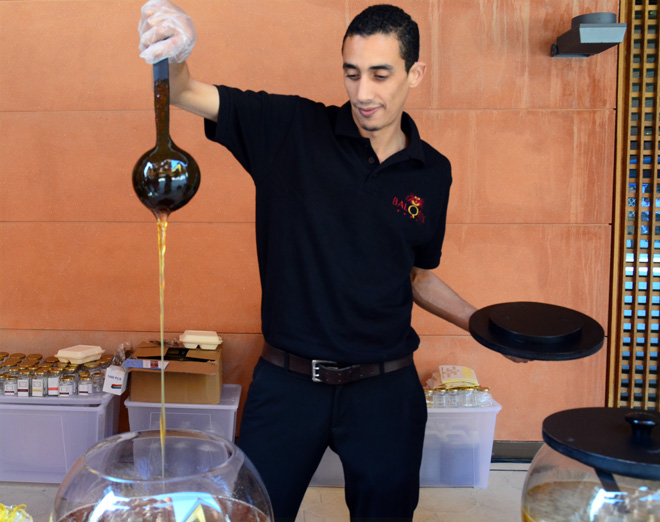
“What experience taught me is that to guarantee the quality of my honey, I needed to have my own apiaries. I went into business with a Yemeni honey producer, who is renowned in the industry and made an exclusive deal with him and his farms. That way I know I am going to get the very best,” Hamed said.
“I’ve spent a lot of time in Yemen with the beekeepers, tasting the honey and learning from beekeepers who have been in the industry for generations. They helped me to understand the nuances of the honey, the regional variations, how to know when the honey has been adulterated or when it is absolutely pure.”

Some images via Tafline Laylin for Green Prophet
Forams up close reveal jewels at the beach
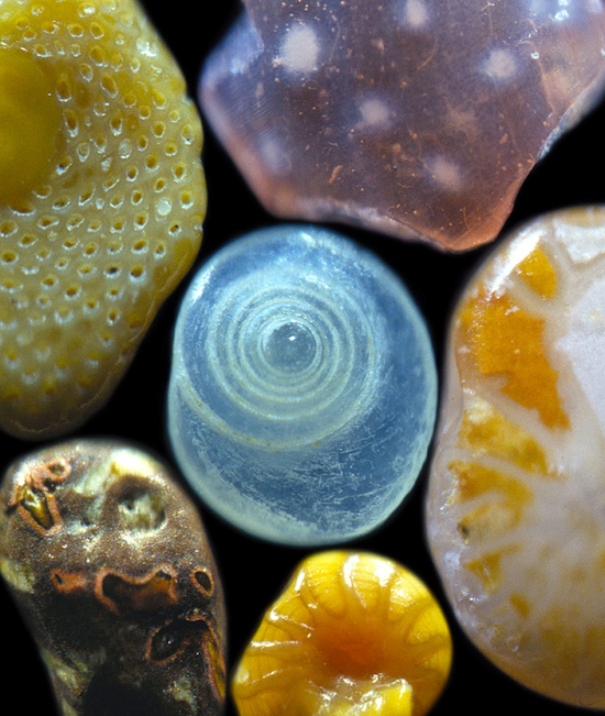
Drop some sand under a high-definition, three-dimensional light microscope and you’ll never look at a beach the same way again. Magnified 250 times, the tiny grains are shockingly gorgeous! Brilliantly colored or crystal-clear, the origins of each speck emerges; spiral shell fragments, petrified corals, gem-like minerals or crumbs of volcanic rock.
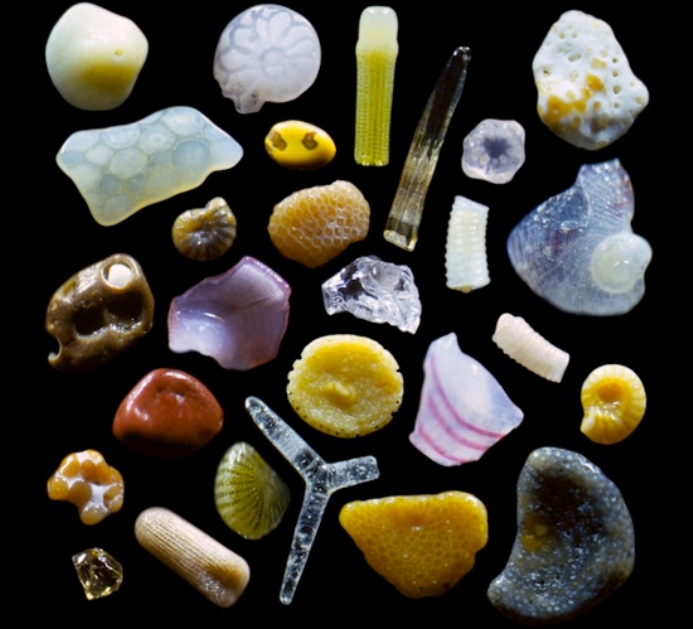
Photographer and scientist Gary Greenberg has devoted his life to revealing the secret beauty of nature. “My real passion in life is to explore the intersection between art and science”, he says in a TedX talk.
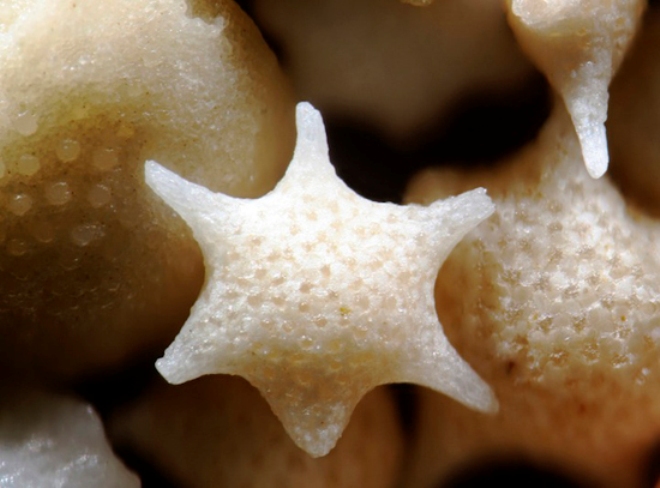
Creating the images is a painstakingly lengthy process, first photographing the grains from several angles then combining them into a single composition using computer software.
“It is incredible to think when you are walking on the beach you are standing on these tiny treasures,” says Greenberg.
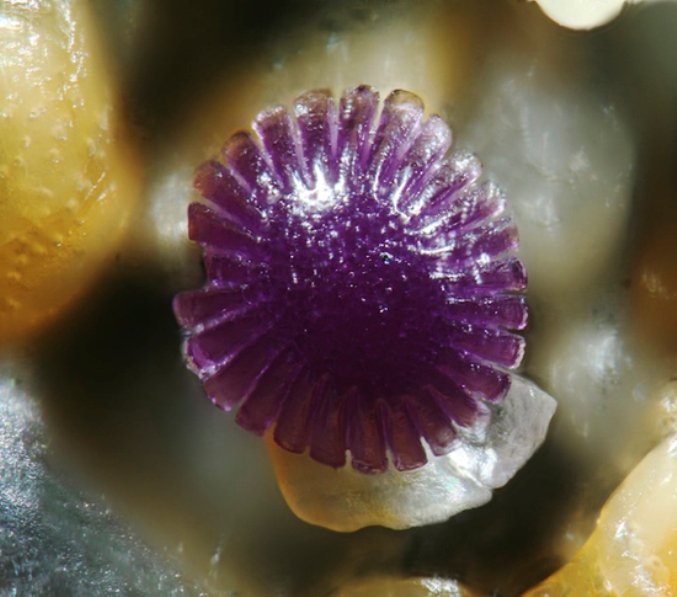
Greenberg began his career as photographer and filmmaker, then went on to earn a doctorate in biomedical research. He’s also an inventor of specialized microscopes, for which he was issued eighteen US patents. And on top of it all, he’s authored a book called A Grain of Sand Nature’s Secret Wonder, which features these images and many more.
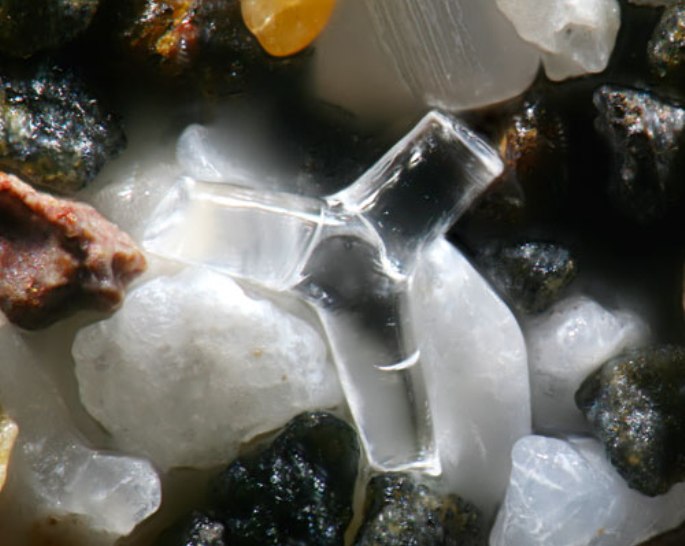
“Each grain of sand represents a moment captured in time. It is somewhere on its path from its creation to erosion and recycling back into the earth. When we walk along the beach we are strolling atop millions of years of biological and geological history,” he says on his website.
 You can order prints of Greenberg’s astounding images on his website (link here).
Too much eye candy? Need a factual takeaway? People who collect sand as a hobby are known as arenophiles. Those who study foraminifera, also called forams are heros. They can help researchers figure out if a desalination plant is releasing heavy metals.
Enforcing Jordan’s Smoking Ban: Is the Kingdom Blowing Smoke?

 Five years following its ban on smoking in restaurants and other public spaces, the Hashemite Kingdom of Jordan will start enforcing the rules. By year end, government will also revoke licenses which allow an estimated 6,000 coffee shops to serve sheesha (the Middle Eastern water pipe used for tobacco smokes).
Empowered Qatari girls win first GCC hybrid electric car competition

An all-women team of Qatari students won the first GCC hybrid electric vehicle competition held in Abu Dhabi over the weekend. Showing some serious girl power, Gernas 114 from Qatar University beat 10 other teams to become the 2014 TAQA GCC Hybrid-Electric Challenge champions.
Beit Ha-Ahava: CA architect builds a house wrapped in love
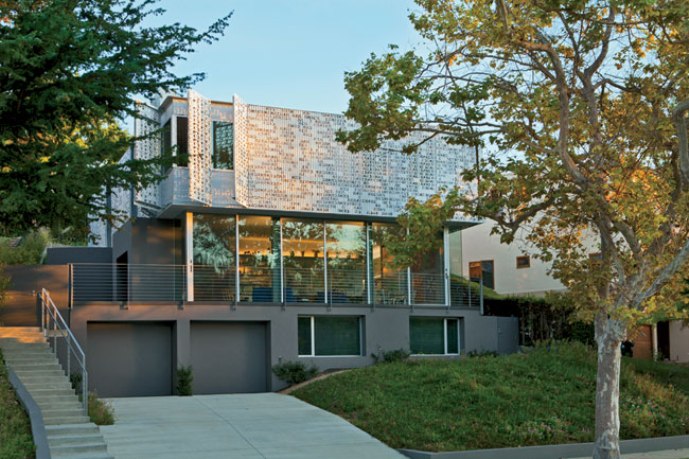
 Bob Hale, of Rios Clementi Hale Studios, wrapped his house in LA’s Cheviot Hills neighborhood in a perforated-metal screen like the Arabian screens the mashrabiya, which provide shade and privacy. But Hale’s home is punched with “ahava” – the Hebrew word for love.