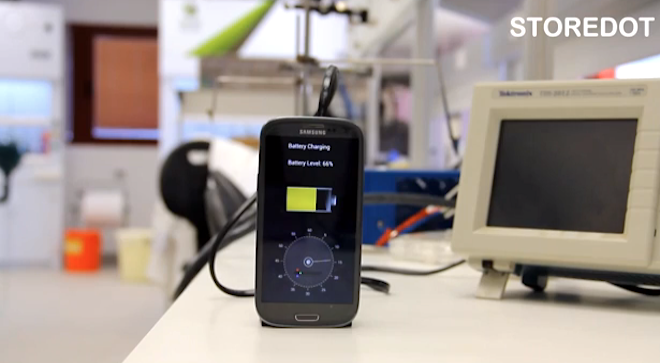
StoreDot is the latest Israeli startup to wow the world with a groundbreaking new charger that takes a cell phone battery from 27 percent to 100 percent in 30 seconds flat.
StoreDot is the latest Israeli startup to wow the world with a groundbreaking new charger that takes a cell phone battery from 27 percent to 100 percent in 30 seconds flat.

On a recent trip to Ethiopia, Italian designer Arturo Vittori discovered how collecting water is both dangerous and time-consuming – especially for women and children. He thinks these water-trapping WarkaWater Towers will help.

 A fall from a stepladder can kill you, so what’s your chance of surviving a topple from a high-rise building? Earlier this month, a 9-year-old Syrian girl fell to her death from the eighth floor of her family’s Abu Dhabi apartment. In Sharjah last week a 4-year-old boy died after falling from a window. What’s going to make this terrible tragedy stop?
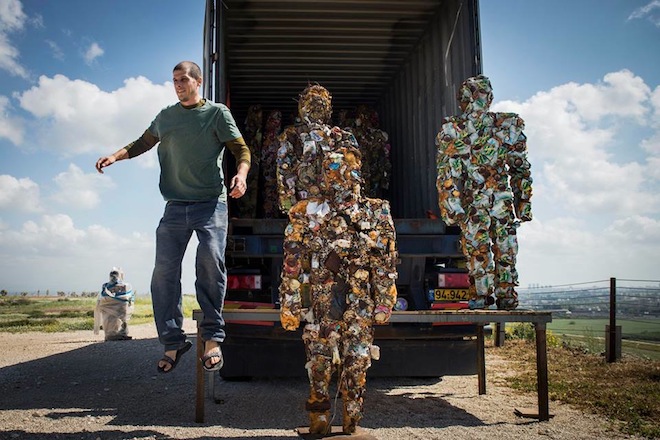
German artist HA Schult has spent the last 18 years traveling around the world with his own army of ‘trash people.’ Like a modern version of China’s terra-cotta warriors, the exhibit recently landed in Israel.
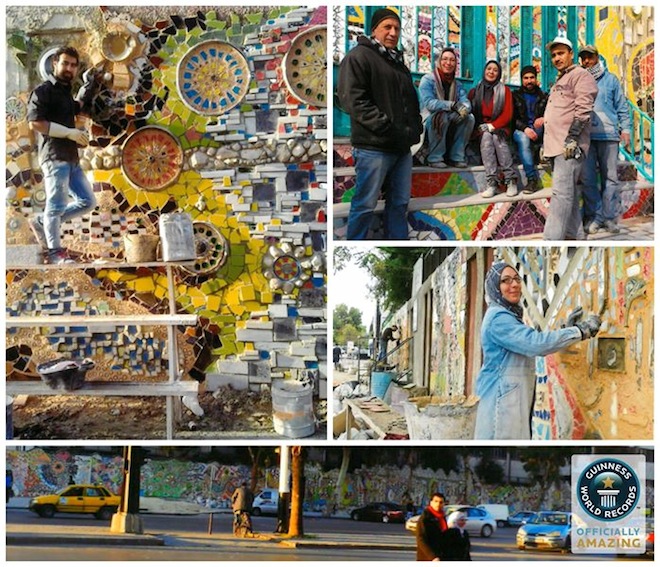
Anyone who hasn’t been to Syria in the last few years can’t possibly grasp the full extent of the horrors Syrians have endured, but we do know it has been unspeakably hard. To take the edge off, a handful of artists in Damascus built what the Guinness Book of Records recently confirmed is the world’s largest mural made with trash.


Those jars and honey bears full of golden liquid are mostly not honey at all. It’s just syrup that tastes something like the real thing. Commercial processed honey has been heated to high temperatures, which destroys the wealth of nutrients it had when fresh out of the hive. It’s often diluted with water and high-fructose corn syrup to make it more manageable – and to stretch the product out. Its valuable pollen is taken out by forcing it through tiny filters. The result: a liquid that’s pretty to look at but is pretty much dead.
Did you know you can set up your own beehive in your garden? Karin showed us how here. That’s a surefire way to get real honey, almost on tap.
Pollen is the part of the honey which can be traced back to its country of origin. If honey suppliers have an interest in hiding the product’s source, they make sure no pollen remains in it. China, whose merchants seem to have no value for human health and safety, flooded USA markets with cheap, processed honey, putting American beekeepers in jeopardy. It’s honey whose valuable friendly bacteria, vitamins and enzymes have been cooked out in processing. Even worse for the consumer, it’s sometimes contaminated with animal antibiotics.
The Federal Trade Commission in the US slapped a high importation tax on Chinese honey in 2001 but the manufacturers found a way to keep selling fake honey to Americans. They remove the pollen – which is the element that proves country of origin in lab tests. The process also cooks out all nutritional value.Then they ship the denatured honey to countries not subject to the American tax, changing the documentation and packaging to make it pass for not Chinese.
This fake honey is still bought by big supermarket chains to re-package and put on their shelves with the label “Pure Honey” on it.
That’s the US. Where else is fake honey sold? I’d say that most commercial honeys anywhere, especially ones packaged with supermarket logos on the labels, are processed junk. Even here in the land of milk and honey (in Israel), I walk right past industrial brands. They’re good enough to flavor honey cake or honey cookies, but for real honey with nutritious and medicinal value, I head out to the health food store or visit the apiary in the next town.
An advantage to buying from apiaries (see my visit to a local apiary and how I got swarmed here) is that they carry varieties unavailable in supermarkets. Near where I live, there’s an apiary that offers some 15 varieties, including honey from onion flowers. That one, and eucalyptus honey, are popular with Russian immigrants, who appreciate its highly antiviral, antibacterial properties.
Try this honey purity test.
What’s so great about honey as medicine?
Due to its antioxidant properties, raw honey can heal wounds, even minor burns (in a pinch). While a bad burn or wound should be treated by a qualified practitioner, it’s useful to know that a dab of honey will dry up a pimple overnight or can be applied for soothing and healing to the sort of burns you can get on your arms when taking a hot tray out of the oven. Honey has been used in home-made cough remedies for centuries. Science is now proving what folk medicine has always known: raw honey boosts immunities.
Our cookbook author friend Nawal Nasralla gave us another tip for telling real honey: “Let a drop fall on sandy ground,” she advises. “If it does not spread but stays like a ball, it is genuine.”
Oddly, a Druze grandfather I spoke to uses the same basic method to test olive oil. Taking a drop between thumb and forefinger, he makes sure it doesn’t ooze and drop away but stays firm and sticky between his fingers. It seems that the real thing not only has character, but body too.
Sweet and Healing, Here’s More Honey:
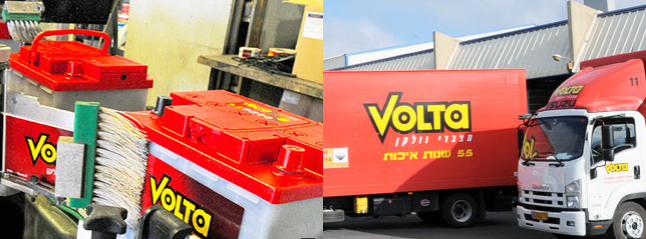
A panel of judges at the NanoIsrael 2014 conference voted Volta’s carbon nanotube (CNT) battery as Nano product of the year. Read more for an explanation of what this means and why nanotechnology may soon be a household word.
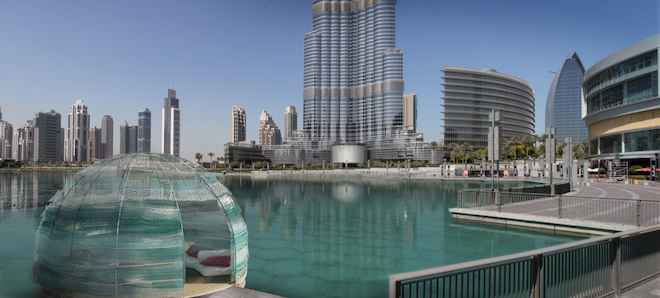
Majlis are the boardrooms of the Arab world. A traditional ‘place of sitting’ often adorned with cushions on the floor, they are used to receive guests and exchange ideas. In the past, nomadic desert dwellers used special tents. Intercon takes a modern approach to this special meeting room with floating Majlis that are moved daily.

Check out this parody of the “first kiss” video – a YouTube hit in Saudi Arabia, now viraling across the Middle East collecting a laundry list of heated commentary. Lighten up people! Check out the video below.
Unless you were in a coma last month, you definitely saw that viral “first kiss” video, where 20 good-looking strangers where partnered off and asked to kiss for the first time.
The original has been watched more than 71 million times. The Saudi version, made by online Saudi entertainment channel UTURNent, is approaching 700,000 hits. It shows men performing the Bedouin tradition of rubbing noses, a tribal greeting that expresses friendship, respect and pride between Arab men. Although it’s still used throughout the Gulf, the young guys in this video don’t seem too practiced in the gesture.
They start by making small talk, then move into the technical requirements. Some seemed reluctant, others jumped right in. The film starts out awkward, and ends up, well – also awkward – but hilariously endearing, too. See more on the making of the video and some of the controversy it’s kicked up, below in a BBC segment:
In the original, the camera captured how a first kiss can go from awkward to awesome in a matter of seconds. Filmed by director Tatia Pilieva, the short was an advertisement for indie clothing label Wren, but it’s stark black and white imagery and curious premise were quickly replicated in copycat spoofs.
Related: the origins of the first kiss
Comedy can bring rapid cohesion between different cultures. The internet allows free sharing of spoofy productions. Instead of grumping in comment boxes, don’t you think we ought to hug (and kiss?) everything that shows that everyone loves a laugh?

 Are beards hipster? A coveted symbol of male virility? Might explain the “growing” trend of beard transplants. And if that pun doesn’t make you bristle, the name of the medical group that tracks transplants surely will.
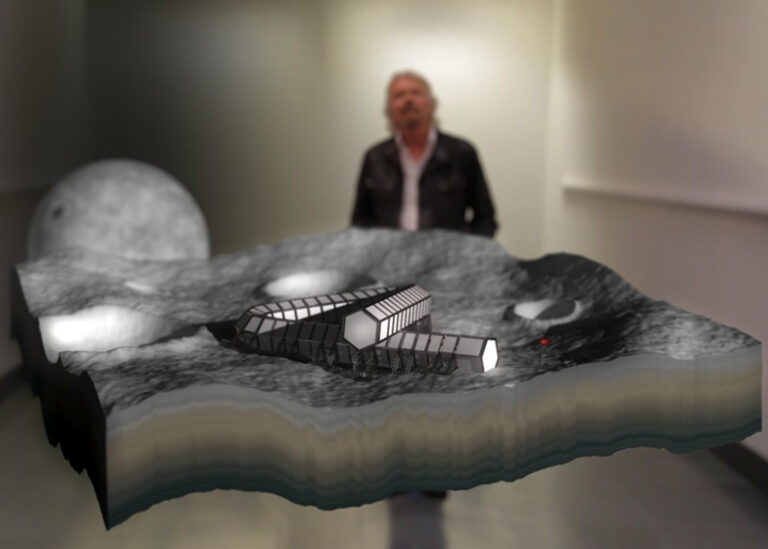
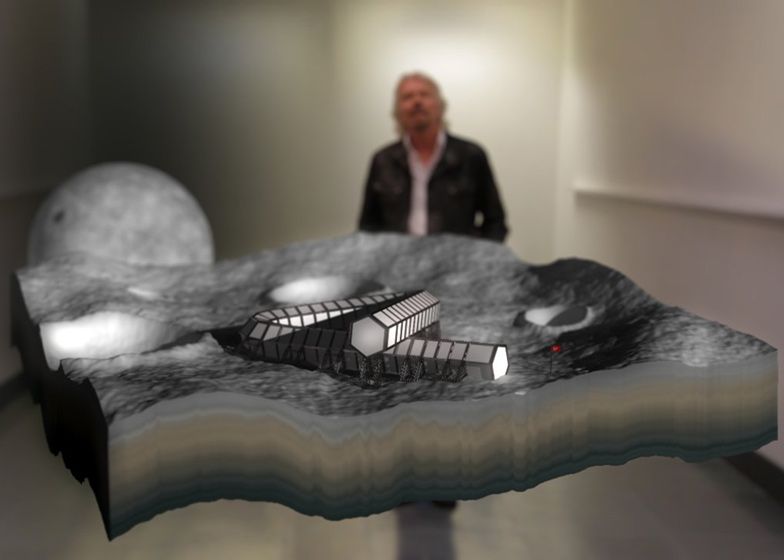 Virgin Group founder, Sir Richard Branson yesterday unveiled new architectural designs from his subsidiary Virgin Buildings, including a plane-shaped building for London and a moon hotel that looks like a robotic caterpillar.
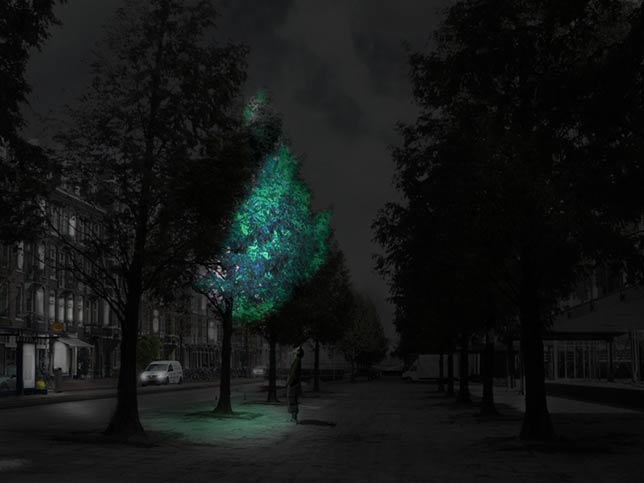
Could the built environment take cues from Mother Nature? When Dutch designer Daan Roosegaarde puzzled this, a light popped on in his head, a light created by genetically modified plant life! He imagined a self-illuminating streetscape (image above).
He told Dezeen, “I mean, come on, it will be incredibly fascinating to have these energy-neutral but at the same time incredibly poetic landscapes.”
“In the last year I really became fond of biomimicry,” he said. Biomimicry is the imitation of natural systems to solve complex design issues. Consider Velcro, which was inspired when an engineer was removing burrs from his dog’s fur; and Olympic swimsuits that replicate the water-slicing qualities of shark skin; and new adhesives patterned after the clinging ability of gecko feet.
Roosegaarde was specifically fascinated by how animals like fireflies and deep sea creatures generate light.
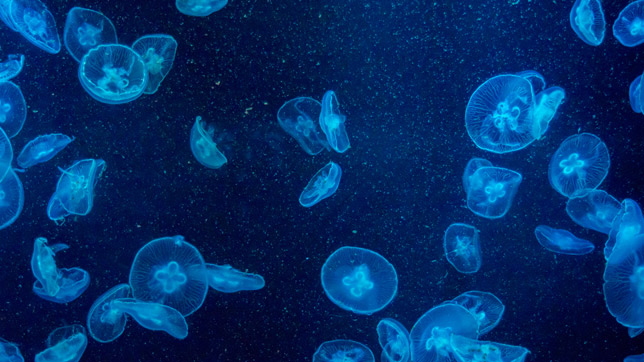 “When a jellyfish is deep underwater it creates its own light,” he said, “It does not have a battery or a solar panel or an energy bill. It does it completely autonomously. What can we learn from that?” (Jellyfish use a biological compound called luciferin to emit light.)
His research led him to the State University of New York and Alexander Krichevsky, whose technology firm Bioglow auctioned off genetically modified glow-in-the-dark plants earlier this year.
Bioglow splices DNA from luminescent marine bacteria to the chloroplast genome of a common houseplant, so the stem and leaves emit a faint light similar to that produced by jellyfish.
They’ve teamed up with a goal to create glow-in-the-dark trees. Actually more like twinkling topiary – the final product will be created from a collection of luminescent plants grouped into a tree-like shape.
 Conceptually cool, but who’s looking at health and safety?
The European Union strictly regulates the use of genetically modified (GM) plants, and Roosegaarde is prohibited from using this material in his Netherlands studio; he had to travel to the US to receive his Bioglow plant.
American policy on GM substances are more lax, but building codes are not. Planning permission typically requires an environmental assessment for projects that have a public impact. Shouldn’t the same be required when proposing to turn the trees into street lighting?
Roosegaarde is also working solo on another project called Glowing Nature which does not use GM material, but instead cultivates trees with light-emitting properties similar to those in bioluminescent mushrooms.
He proposes to apply a micro-thin coat of “biological paint” to allow trees to glow in the dark. The solar coating recharges during sunlight hours and can glow for up to eight hours at night. Material trials start later this year.
Sort of head-shaking, that one.
Phosphorescent paints have been around for ages, commercially available, and commonly used to mark emergency escape paths or paint constellations on your bedroom ceiling. They are so popular that WikiHow even offers a tutorial on how to make your own at home (link here).
So what’s Glowing Nature bringing to the table?
These flash-in-the-dark concepts need robust environmental vetting before they can be taken seriously.
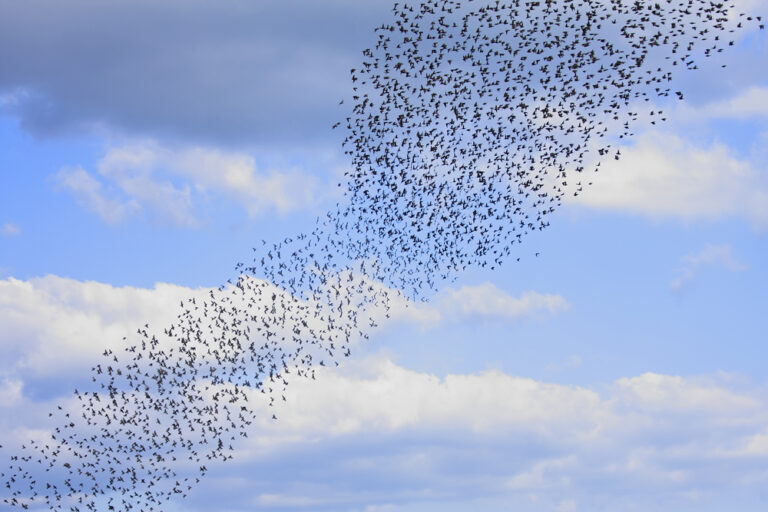
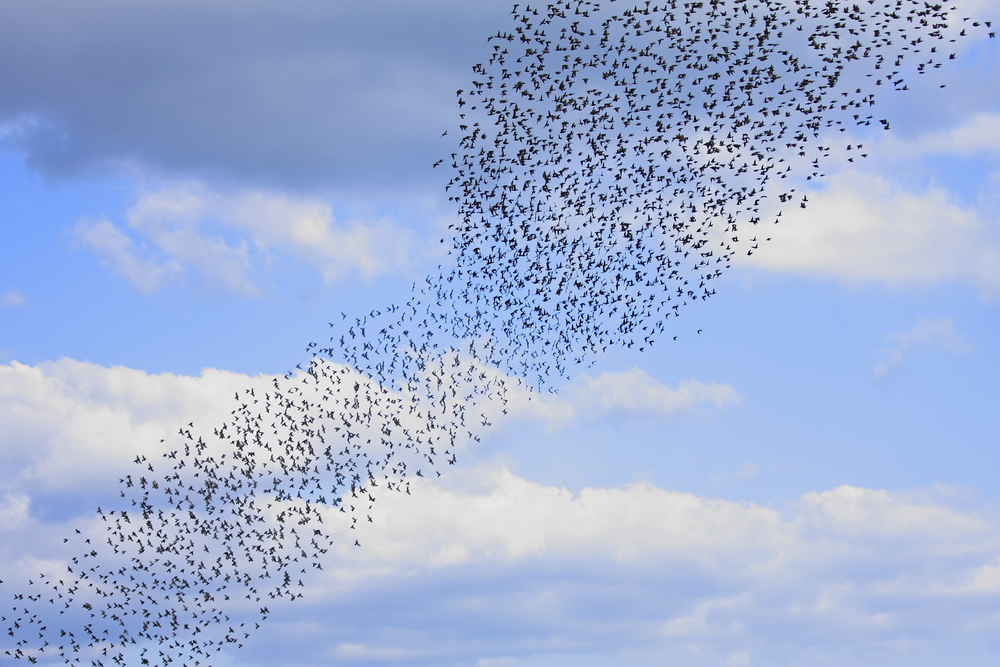 A new one-day contest has attracted birding experts from around the world to southern Israel where they compete to record the highest number of species migrating through the Great Rift Valley along the Africa Eurasia Flyway.
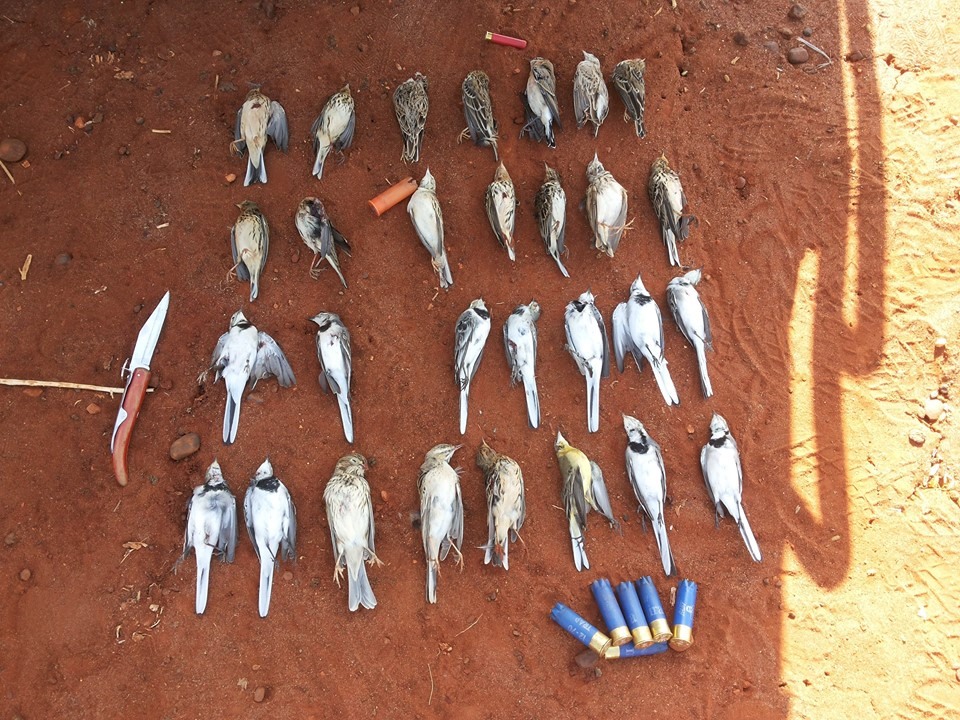
Called Champions of the Flyway, the competition also raised money to combat illegal hunting in countries along the migratory route, which kills millions of birds annually.
“Millions of birds are hunted each year along the route. Countries like Egypt, Malta, Lebanon, Syria, Cyprus, and Georgia are shutting their eyes to unrestrained hunting of birds that arrive on migration,” Dan Alon, director of the Israel Ornithological Center said: “Hunters do not distinguish among birds and are catching everything in sight, from small songbirds to raptors, storks, pelicans, and everything else.”
Twenty-two teams participated in Tuesday’s competition, including 14 international groups from nine different countries – full teams from Israel, the United States, England, and Georgia, as well as mixed nationality teams and one Israeli- Palestinian group. The event was sponsored by the Society for the Protection of Nature in Israel (SPNI), BirdLife International, and the Israel Ornithological Center.
For 24 hours, the bird watching teams searched an area extending from Eilat in the south to Arava junction and Nitzana in the northeast and northwest, identifying and documenting all birds spotted.
Events like these are increasing in popularity. Best known is the World Series of Birding, which celebrated its 30th anniversary last May in America. SPNI birder Jonathan Meyrav, host of the Israeli contest, had led his team to place 14th of 52 groups in last year’s World Series of Birding.
Southern Israel is considered one of the world’s most spectacular paths of migration. Hundreds of millions of birds fly past, stopping in the area from a few days to weeks. But millions of birds also fall prey to hunting.
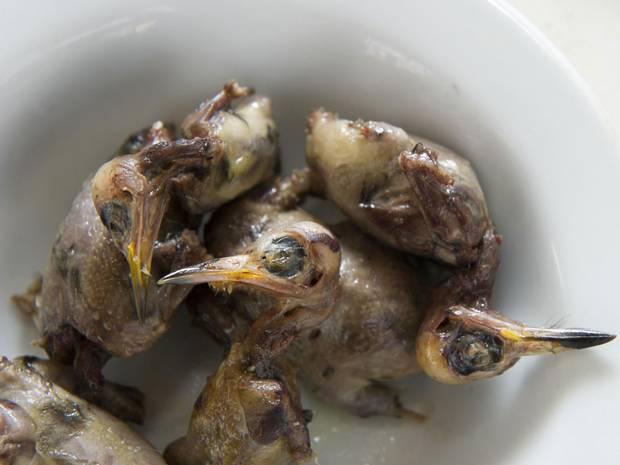
It’s not easy being a bird. If you manage to not be eaten as part of a fetish dish, you could be cooked by solar farms, shredded by wind turbines, or be hunted to improve an Egyptian’s libido. There’s also the risk smash-up against the world’s increasingly sky-scraping towers.
Race rules required teams to log species onto official race checklists; each species must be seen or heard by at least three team members. In addition, teams could add up to five “write-in” species not on the checklist if they provide photographic or video evidence of the sightings.
The winning team – which has yet to be announced as of this posting – will be awarded the title “Champions of the Flyway”.
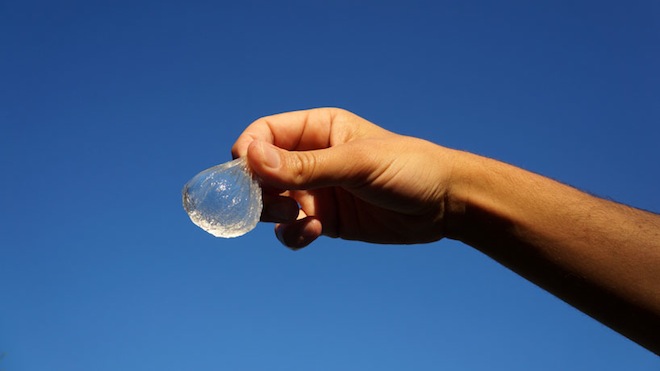
Plastic. No word assaults our sensibilities more. Plastic in the bellies of baby birds; plastic strangling marine animals; plastic leaching chemicals into our water supply. Plastic everywhere. But with Ooho, an edible water ‘bottle’ that just about anyone can make, we could get a handle on the plastic mess – at least a little one.
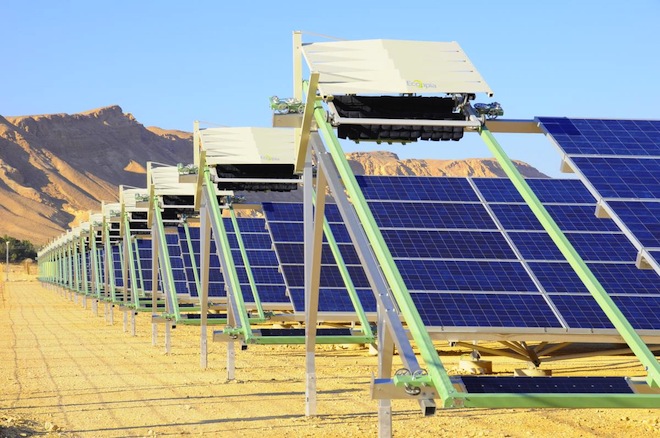
Solar parks in the desert face two major challenges: a lot of dust on the photovoltaic panels and not enough water to clean them. Dust can cause up to a 40% decrease in efficiency of the panels. So there is huge interest to avert this problem. Normally teams of humans come in with squeegees to clean the panels by hand.
Located in Israel’s Negev desert, Ketura Sun solar park scoured the planet for a solution to their dust problem, which they found in an army of Ecoppia’s water-free robots. Ecoppia is an Israeli company that is competing in the market of automated solar panel cleaners for PV panels.
Turns out solar panel cleaning robots are a big deal and they are part of a market on their own.
Karcher
Aegeus Technologies
Karlhans Lehmann
Bitimec Wash-Bots
Cleantecs GmbH
RST Cleantech Solutions
August Mink
Alion Energy
BladeRanger
Boson Robotics
Beijing Sifang Derui Technology
Innovpower
Shandong Haowo Electric
BP Metalmeccanica
Ecoppia is a relatively new Israeli company that has hit the ground running in 2013 with their E4 Ecoppia cleaning robots that remove up to 99 percent of the dust on Ketura’s panels using soft microfiber elements and an airflow cleaning system. The robots work by night, are powered by solar energy, and can last three days of cloud coverage on a single charge.
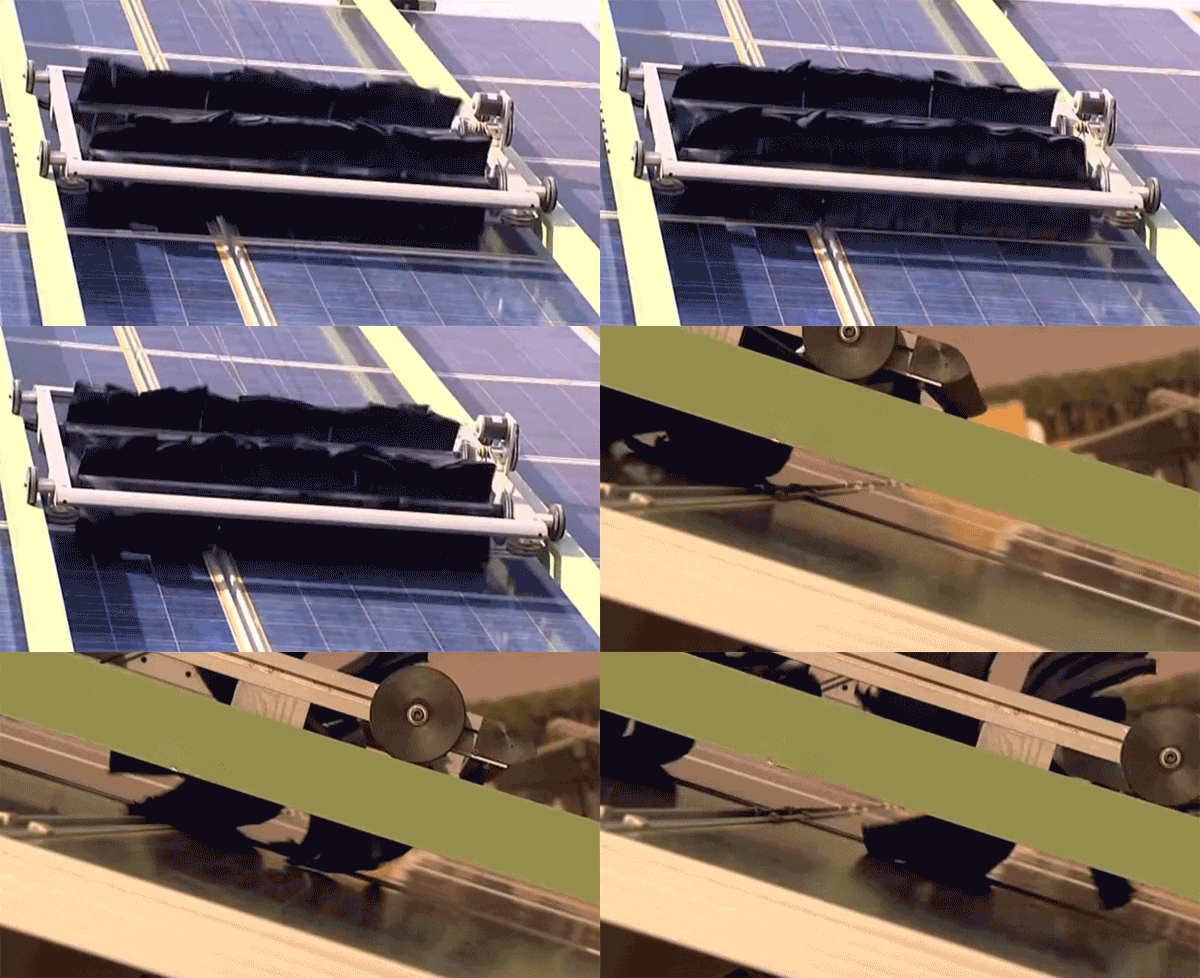
Before they brought Ecoppia’s robots on board, the solar park, which is a joint Arava Power and Siemens AG venture that delivers 9 million kilowatt hours of renewable energy every year, would only clean their panels about nine times a year. And the process was arduous, costly, and potentially unsafe.
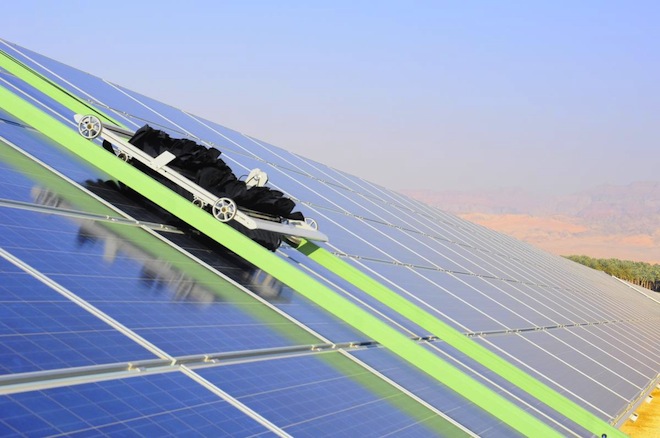
It would take up to five days to clean the panels manually and it was hard work that often put cleaners and panels at risk. But if they didn’t clean the panels, their ability to absorb the sun’s energy was reduced by about 35 percent. Over time, that amounts to a significant loss.
Completely self-sufficient, nearly one hundred E4 robots clean the plant’s panels every day after sunset. Using a sophisticated winch system, they clean 54 square feet in 30 seconds, and Ketura is thrilled with their performance to date.
“Ecoppia has changed the way we run the Ketura Sun field,” says Yanir Aloush, VP Operations at Arava Power.
“Less guesswork about when to clean, less downtime since there’s no need for on-site cleaning crews, less external personnel on the ground – we are very excited by the potential upgrade Ecoppia’s solution offers us.”
:: Ecoppia

Have news to share? Renewable energy news, architectural, artificial intelligence, biotech, sustainable design ideas, eco-architecture, green travel?
Email us: [email protected]
Get important news delivered directly to your inbox and stay connected!
© 2007 to 2026 Green Prophet, All Rights Reserved