
 A United Arab Emirates-based firm has just concluded what it says is the region’s first water and energy audit of a large-scale housing facility for over 1,000 guest workers. Facilities management company Farnek assessed performance of their staff accommodation center in Al Quoz, Dubai, identifying opportunities to slash annual utility bills by 20 per cent (an estimated $82,000). They aim to incite other UAE facilities to similarly self-audit for immediate environmental – and economic – benefits.
Slash your UAE utility bill by 20% – copycats welcome!

Hilarious Arab American (and dancing mom) explains why paste is NOT hummous (VIDEO)

Arabs eat hummous with religious fervour. And it’s true: mamma usually does best. As this Arab American in this video points out, if it comes in a plastic container, it is not hummous. Not the kind you want to eat any way.
[youtube]https://www.youtube.com/watch?v=cLGUFaizAHs[/youtube]
For a great laugh watch the video above. And for a great hummous recipe you can do at home, click here for Green Prophet’s killer hummous recipe – not that paste!
Also did you know that you can spell hummous and number of ways? The creamy chickpea spread, full of protein is made is with tehina, lemon and oil. It’s also spelled hummus, humus, humous- you name it.
Israeli oil spill catastrophe seeps into desert sands and rivers (PHOTOS)
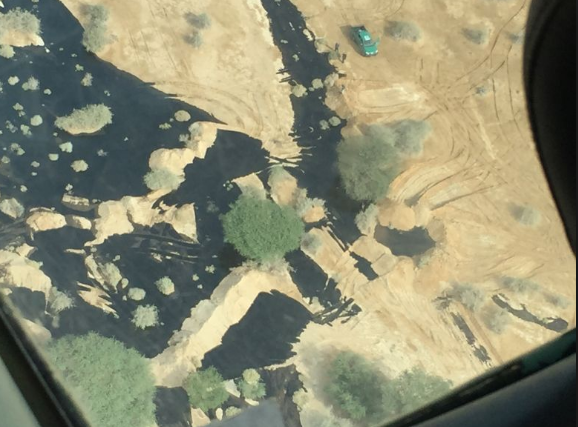
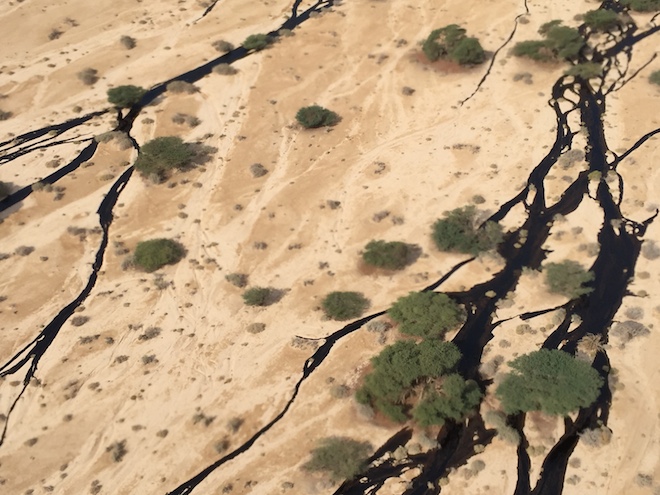
Israel’s worst environmental accident, possibly worse than the devastating Carmel fires of 2010, happened yesterday morning. An estimated 600,000 gallons of crude oil (3 million liters) is causing severe damage to the southern port city area of Eilat, endangering also those close to the Eilat border, media outlets confirm.
The damage was caused by a pipeline burst while workers were upgrading the pipeline. The oil spill reached as far as the Evrona nature reserve. Some 80 people from both Israel and Jordan have been taken to the hospital, showing us once again that environmental problems have no borders.
Cleaning up the oil spill and the delicate ecosystem could take months, possibly even years.
Israeli officials say the pipeline burst during maintenance on the line 15 miles from the port city of Eilat at a new section of the pipeline.
The pipeline was breached during maintenance at a spot some 20km from Eilat on Wednesday evening. The oil spill leak has been stopped, but it has caused damage, even leaking into streams and rivers nearby.
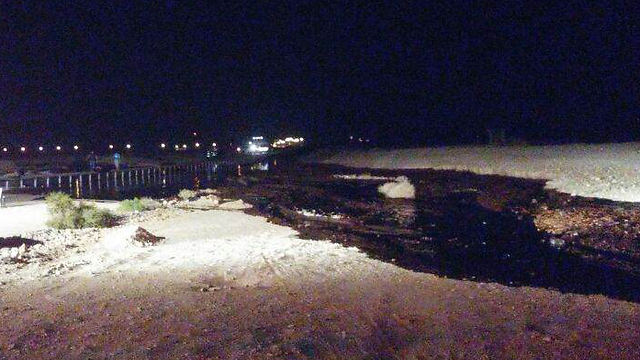
Now is the time for winter rains in Israel, meaning that the oil spill could get much worse if the bulk isn’t cleaned up before another downpour.

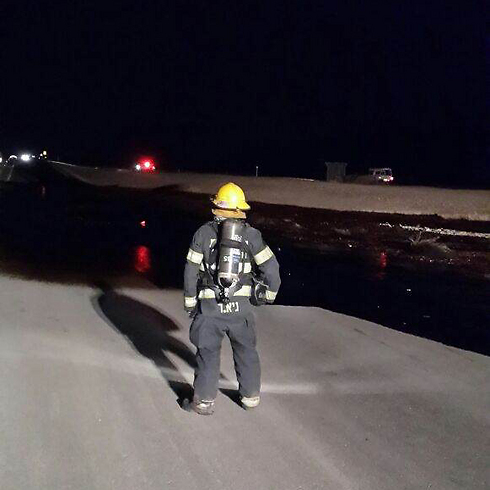
The Evrona nature reserve is an important part of the Jordan Rift Valley, the natural corridor that runs from the Sea of Galilee in the north, down to the Red Sea. The corridor also extends up into other countries in the region.
Millions of wild birds pass through this corridor twice a year from Africa to Europe and then back again.
The pipeline was built back in the 1960s in better diplomatic times to bring Iranian oil from the Persian Gulf to Europe. After the Islamic Revolution it has been used primarily to transport oil within Israel.
#2 image via Haaretz; top image Israel Environment Ministry; photos 3, 4 and 5 Israel Police
Saudi Arabian women are planting a million mangroves


Rewilding Saudi Arabia? Not so long ago, forests of majestic mangrove trees fringed the eastern shores of Saudi Arabia. Official stats now estimate that only 10% of the forest remains. Decades of landfill operations in support of growing urbanization destroyed the rest. Now a group of female environmental activists are battling to protect what remains.
Mangrove trees (also called shura, qurm and Ibn Sina) are evergreens that thrive in saline tidal areas along the tropical and subtropical coastlines. They range from one to five meters in height, and anchor to tidal ground with an elaborate system of exposed root structures which provide essential habitat for many marine species. including shrimp. They also provides a welcome environment for marine organisms to reproduce, particularly the Caridea. These species represent an important part of the coastal ecosystem, supplying and important feedstock for birds and fish.

Mangrove trees provide other benefits. They increase levels of oxygen and cut levels of carbon dioxide in the atmosphere, helping to reduce global warming. The trees absorb some of the chemical contaminants in their micro-environment, including oil pollution. Further, they increase green spaces, especially in the desert regions, and absorb high energy wave action and storm surge.
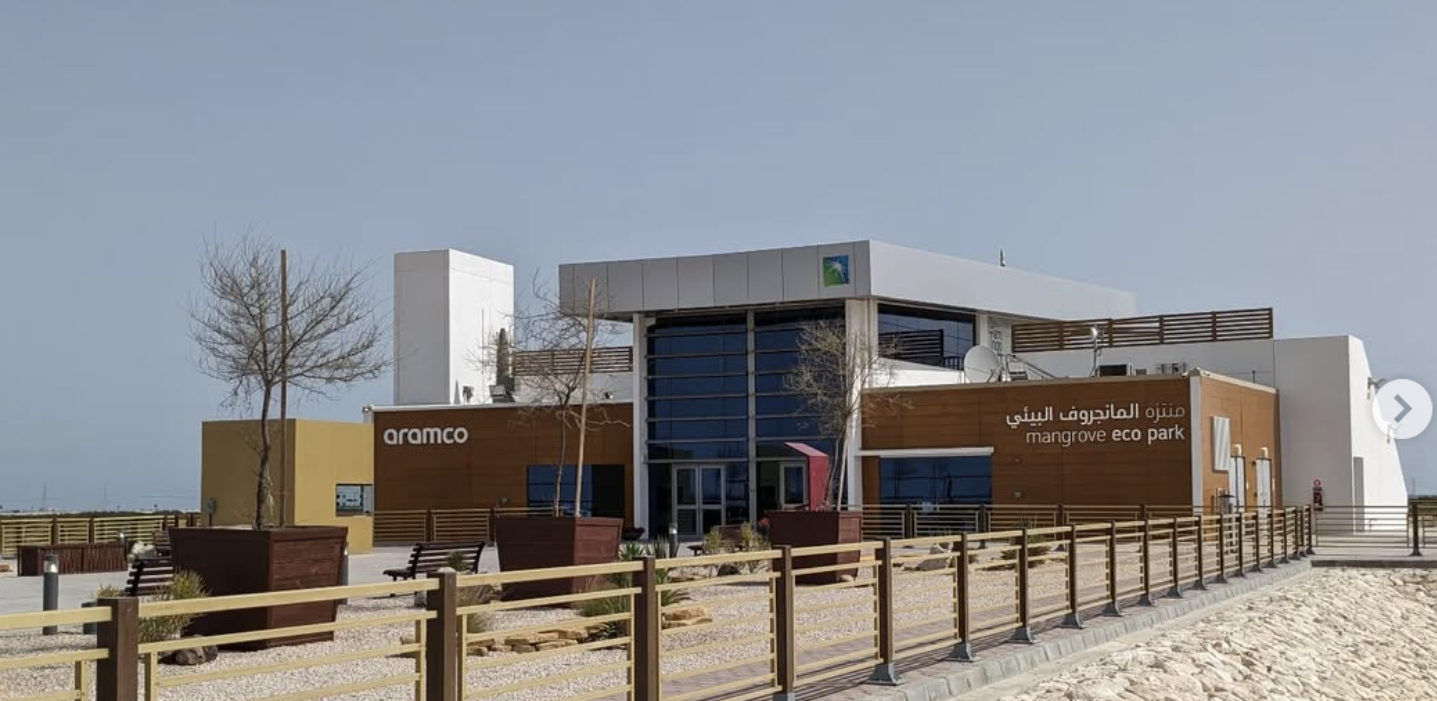
Women activists, spearheaded by Najwa Mohammed Bukhari, have been underpinning the cause to “save the mangroves” on the coast of al-Qatif governorate. She and the female members of Supporters of the Environment and Volunteers Association, consider mangrove protection key in the wider mission to protect Saudi’s waterfront. They’ve teamed up with the al-Ataa Charity Association for Women, working to meet their common goals.
Dalal al-Awami, head of al-Ataa’s health and environment team, told Al-Hayat,“We are making strenuous efforts to protect the environment through our communication with supporters. We got in touch with the Saif Association at Saudi Aramco and they agreed to cooperate.”

Just five women took part in the first campaign, but she stressed that “there has been an unexpected change” in the second and third campaigns. There are now over a hundred female volunteers spanning all ages and backgrounds.
“Everyone is working toward the same goal. Parents (have) encouraged their sons and daughters to join in this work with the aim of instilling in them the importance of volunteering, a concept generally absent from society, particularly in the fields of agriculture and environment,” Awami added, “By raising awareness we elevate the level of culture among people of the region. This might be done by organizing lectures, distributing leaflets and through social networking sites. This is how we manage to attract hundreds of volunteers and receive positive feedback.”
In the two years since the campaign launch, the women have made an enormous impact. Volunteers have attracted political support, which has led to a reduction in practices harmful to the forests. Their actions prompted Saudi Aramco, the world’s biggest oil producer, to announced a plan to plant 1.2 million mangrove trees on the coast of the kingdom over the next four years.
In Saudi, it looks like behind every thriving mangrove, there’s a strong woman.
Gaza Parkour for putting positive change in the air
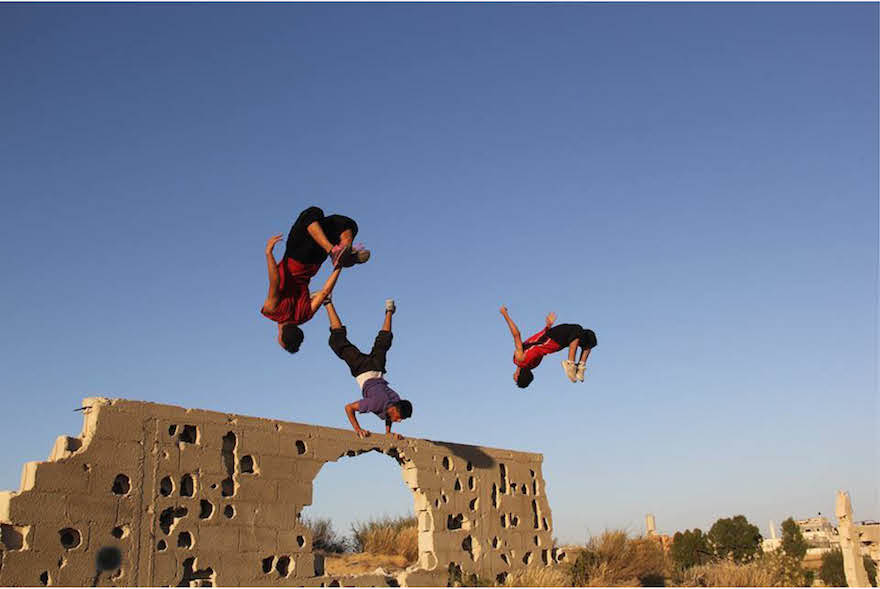

Stroll around the ruins of Gaza on a late afternoon and you may catch sight of airborne young men, jumping off mountains of rubble and rolling from rooftops. Their extraordinarily athletic running and climbing, swinging and vaulting makes for an urban ballet. This is parkour and free running and this is the best crew in the Arab world.
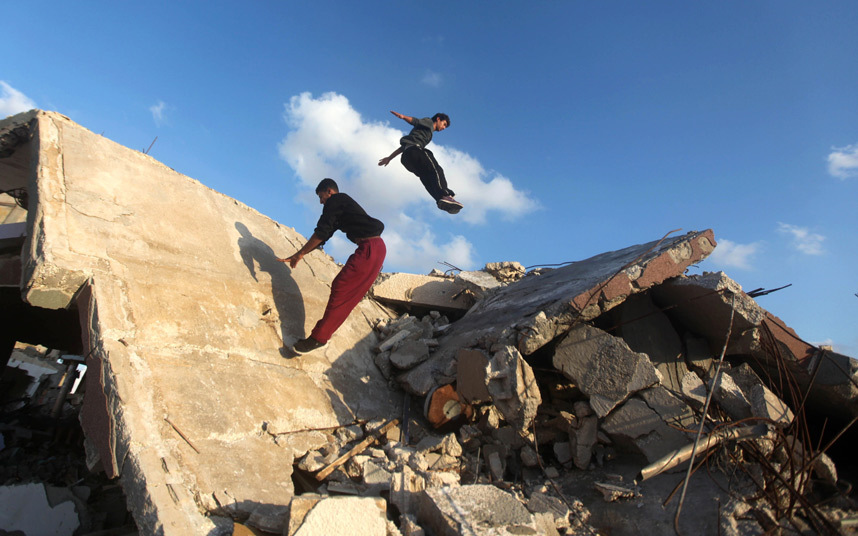
The sport of parkour developed in the late 1980s from military obstacle course training wherein practitioners aim to get from point A to point B in the most efficient way possible using only their bodies and surrounding infrastructure for propulsion. Sometimes practiced solo, but more often with others – as much for ensuring safety as for inspiring innovation in new moves. Find out more at parkour for beginners.
Free running involves fluid and unrestricted movement through space, based on the act of running. It’s considered a simpler and more inclusive form of parkour.
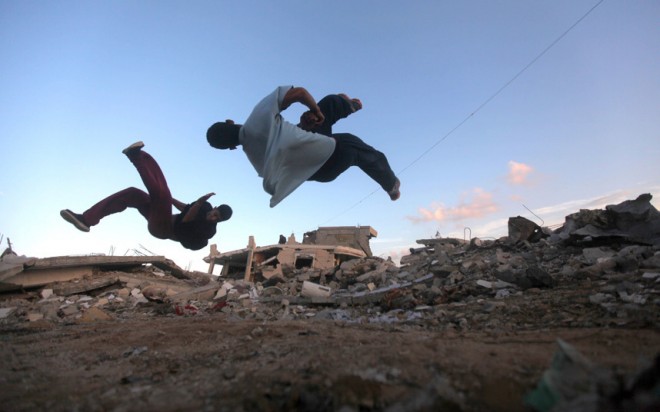
In 2005, after Israeli forces withdrew from Gaza, two men created Palestine’s very first parkour crew in the southern city of Khan Younis. The aerial antics of Mohamed Algakhbeer and Abdallah Enshasy quickly attracted new followers and the team steadily grew. Today there are 18 official members in PK Gaza ranging from age 17 to 25; parkour demands young, agile bodies.
Update: 2023 a video of fails shows the beautiful streets of Gaza before the war started by Hamas
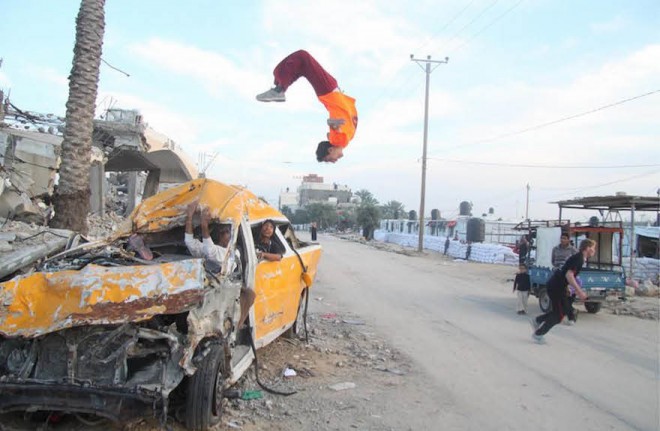
The athletes use parkour as a positive expression of joy and independence in a war-devastated place. Their interaction with their ruined surrounding results in an incongruous beauty. It usually takes place in urban settings, but these guys work it on the beach and in construction sites.
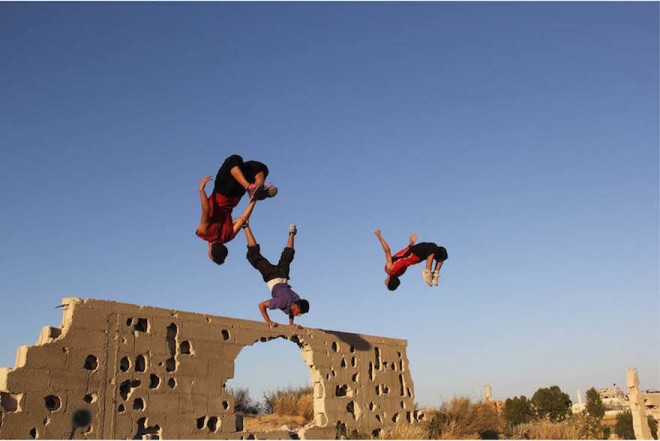
Parkour has also got practical application, providing young men with a rigorous physical workout in neighborhoods where there are no ball fields, soccer pitches, or gymnasiums. Says blogger Moa Dickmark, “They might not have much, but what they do have is the choice to not let anyone take their dreams and goals away. By practicing parkour on a daily basis and doing shows for various audiences, they spread power in a way that no outside organization or person could ever do.”
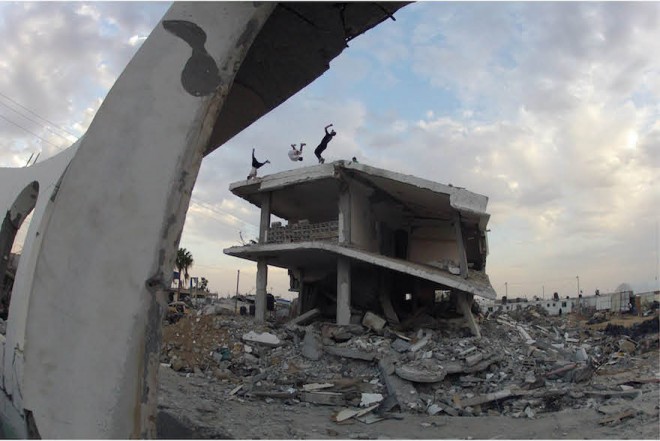
The group is seeking a dedicated place to safely practice where they can also teach others about the sport and its underlying philosophy.
Parkour is becoming a recognized sport with events involving established teams from around the world. Currently, PK Gaza stages events in Gaza City and smaller communities. They would like an opportunity to leave Gaza to perform with international athletes, learn, and demonstrate what is happening with the sport in their slice of the world. Until they can leave, the world can come to them through the magic of YouTube.
PK Gaza is showing the world that parkour builds more than strong bodies; it brings positive attention to war-ravaged youth and is an accessible agent for change.
Images from Moa Dickmark taken by Yasser Fathi Quidh and Vycheclav Guz
Lebanese Quince Jam, A Sweet Winter Recipe

Have you met the quince? You might have come across it in a market and passed it by. It’s yellow, but not yielding like an apple. It looks like a bumpy pear. Raw, it’s inedible. What do you do with it?
The simple answer is: cook it. Quinces under heat become sweet and tender, with a divinely fruity aroma. They cook alongside other ingredients in tajines like this vegetable-based one, but the best-loved way to eat them is as jam. This recipe has all of three ingredients.
You just need an interval when you’ll be at home doing other things – time does most of the work for you.
Quince Jam Recipe
2 pounds of quinces
2 cups of sugar
3 tablespoons fresh lemon juice
A dash of cinnamon
Peel the quince with a vegetable peeler and put in a large bowl and str to the sugar into the fruit and let sit for about 4 hours.
Cook over low heat about 20 minutes, until the jam thickens. Remove any white foam as it rises.
When thick and jammy-like, take off the heat and stir lemon juice in.
Store in sterilized jars or in clean, dry jars in the refrigerator.
Serve on toast, with cheese on the side. A delicious breakfast or snack. A prefect treat for kids while you read them the much-loved Edward Lear poem the Owl and the Pussycat:
The Owl and the Pussy-cat went to sea
In a beautiful pea-green boat,
They took some honey, and plenty of money,
Wrapped up in a five-pound note.
The Owl looked up to the stars above,
And sang to a small guitar,
“O lovely Pussy! O Pussy, my love,
What a beautiful Pussy you are,
You are,
You are!
What a beautiful Pussy you are!”
Pussy said to the Owl, “You elegant fowl!
How charmingly sweet you sing!
O let us be married! too long we have tarried:
But what shall we do for a ring?”
They sailed away, for a year and a day,
To the land where the Bong-Tree grows
And there in a wood a Piggy-wig stood
With a ring at the end of his nose,
His nose,
His nose,
With a ring at the end of his nose.
“Dear Pig, are you willing to sell for one shilling
Your ring?” Said the Piggy, “I will.”
So they took it away, and were married next day
By the Turkey who lives on the hill.
They dined on mince, and slices of quince,
Which they ate with a runcible spoon;
And hand in hand, on the edge of the sand,
They danced by the light of the moon,
The moon,
The moon,
They danced by the light of the moon.
More fresh fruit jams here on Green Prophet:
Morocco heats up with 16 new solar energy plants worth 25 gigawatts

You might meet snake charmers in the square of Marrakech and also storytellers who tell a good tale. But there is one thing always true about Morocco: the sun always shines.
Foreign firms are eager to bank on Morocco’s attractive feed-in tariffs and catch some healthy profits from our sun.
Solar energy companies like Martifer Solar (www.martifersolar.com) from Portugal already has business in the United Arab Emirates. It’s common for European companies to go to European banks for financing then establish themselves in the Middle East and MENA region. This seems to be the only way forward to advance solar energy in the Middle East, always rife with conflict and instability.
The recent break up of the solar power consortium Desertec has been a huge disappointment to the renewable energy community. The idea was to create a pan-European North African, even Middle East energy grid with solar energy collected in the MENA region which could then be shipped via cables to Europe.
Despite the Desertec collapse (too many industrial cooks spoiled the broth), Europeans are still seeing green opportunities in the MENA region.
The Swiss company Sola Terra has recently announced its plan to set up no less than 16 photovoltaic (PV) plants in the super sunny area of southern Morocco.
The sites, totalling 25 megawatts of energy will be in the areas of Ourzazate, Ain Bni Mathar, Foum Al Oued, Boujdour, and Sebkat Tah. More locations will be announced soon.
Sola Terra has a thing for the Middle East and already operates in similarly shiny places like Bahrain, the United Arab Emirates, Saudi Arabia, Jordan, Oman, Turkey, and Morocco.
“The sun, unlike oil energy, is not part of the economic culture of the Middle East, but that will change,” said an insistent David Heimhofer, Terra Sola’s president.
Israeli recycling video goes viral on YouTube
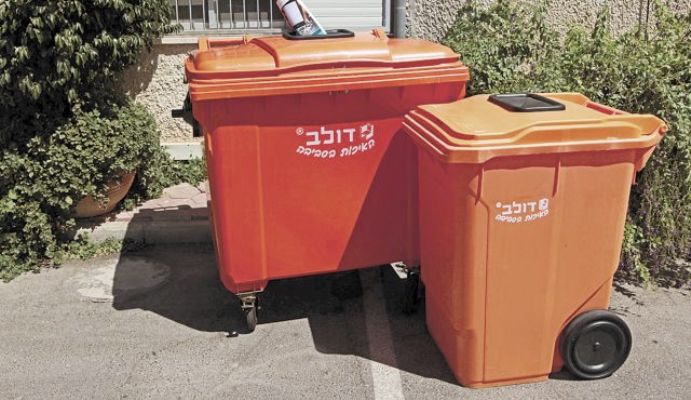
A new video highlighting the importance of recycling is going viral on YouTube, garnering nearly 900,000 views in its first week online. The short clip (under two minutes) features young Israelis combining extreme sport with garbage collection. You’ll be scratching your head trying to figure out how they do it!
A pair of gymnasts propels cans into an orange recycling bin with perfect synchronicity. A tennis serve Roger Federer would be proud of whacks a bottle into another. Folks toss milk cartons off a rooftop and bridge for more perfect drops into a cheery recycling can.
[youtube]http://youtu.be/R552n3w8-B4[/youtube]
See a skateboarder jump-kick a bottle into another bin; and a half court shot sends a detergent bottle though a basketball net into its final resting place. The high-energy antics instantly make recycling cool.
The Tamir recycling corporation launched the online campaign to raise public awareness about recycling. The company collects packaging waste from all of Israel; last year they produced a clever animated video to encourage children to recycle. Previously, they had launched a “superhero” television campaign to increase public awareness about recycling packaging waste.
[youtube]http://youtu.be/fR5laRDgNko[/youtube]
Israel has had a Packaging Law in effect since January 2011 that requires manufacturers and importers to take fiscal responsibility for all the packaging materials they bring into the market. Orange bins placed on streets by local authorities around the country enable private citizens to properly dispose of various types of packaging waste.
According to a statistic released last summer by the Israel Union for Environmental Defense and Migal, a Galilee research institute, over 300,000 Israeli households now separate dry and wet waste, representing a 400 percent increase in two years.
Tamir’s message is clear: no matter how you choose to deposit your waste, recycling is the future. Now if only Israel’s neighbors would pick up on that message.
Save energy, stress and greenhouse gas by backing up


You know you should have done it. The DropBox folder is there, the extra hard drive is on the shelf. Hey, your partner even set up a wifi link to help you back up your files from any room in the house, without cords. But you have fallen into the trap of laziness. You are human, like me. You do not back up because it is a pain in the a**.
Think about the time wasted, resources purged, stress endured and relationships that have almost ended thanks to not having a back up plan. I am talking about backing up your photos, files, code. We’re all guilty – so what is it that stops us from being so unresourceful in a time when we recycle our bottles, count our calories and go out of our way to conserve food miles. Can there be another way?
You might have seen our lovable post on 15 ways to upcycle your old PC into something super useful. Well this might be the case for your old laptop already. We seriously hope your motherboard won’t be turning into a fish tank with all your family photos still on it.
Avoid a meltdown and back up, people. We buy insurance to avoid a natural disaster. We use sunscreen to prevent cancer. Save yourself heartache and back-up your files now.
If the above options aren’t on the table there are a number of simple online back-up solutions that can be your back up angel that has your back. Backup freeware is the name of the game from companies like EaseUS that offers a backup windows 7 option and other options for Windows which automatically sets up and performs a back-up on schedule as commanded.
I am going to knock on wood while I am saying this because as a Mac user I don’t have to worry about hard to back-up operating systems. The amazing Time Machine does it for me – granted I have enough free disk space.
When I used a PC years and years ago I was always confused on how to back-up the system, and always did it in parts. What a waste of time. Time is money, money is energy, energy is greenhouse gases that could be better saved relaxing on a beach somewhere.
Save the planet: back up your files!
Image of computer files on fire from Shutterstock
I’ve trained Muslim clergy on how to be green. This is what I’ve learned
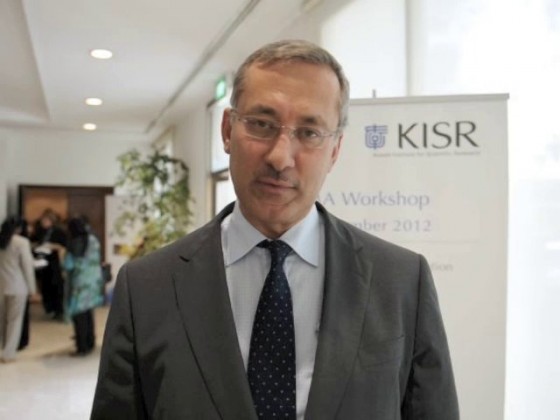

I had an opportunity to conduct a series of green workshops for Imams, or Muslim clergy throughout Jordan. The workshop was funded by Germany’s Friedrich-Ebert-Stiftung based in Jordan.
Here are my thoughts from the workshops which focused on sustainability and energy conservation issues.
In many instances we blame the “other” for not understanding our discipline or worldview while at the same time, it is fair to say that we need to understand the others’ reference frame and body of knowledge. This applies to various disciplines including the debate between economists and biologists on valuing nature or scientists and religious scholars or the average people on “what constitutes truth, happiness, right and good life”.
I do argue that the notion of Tawhid (or oneness or unity) in Islam is critical for bridging the gap between disciplines and cultures.
The key messages I delivered can be synthesized as follows:
• Unlocking the potential for humans is crucial to harvest the “good” fruits through “good” discourse (Kalima Tayyebah). The sustainable flow of dialogue between cultures and within community is attained through empowering and listening to the voices of local people and Imams.
• Articulating a simple discourse about Islam as “a mercy for humankind”, caring for women, environment, and social justice and equity is imperative in an era of global mass media of manipulation of minds.
• Muslims have a duty to effectively and clearly communicate the unifying power of Islam as a common word (Kalima Sawaa) so as to achieve common human goals and address global commons, from saving human lives to protecting the environment and human health.
• Women play leadership role in sustainability as they have the empathy, reason, and responsibility to ensure healthy and resilient families and societies.
• Social justice is a cornerstone in Islam as manifested in Zakah and Waqf. It is illuminating to know that the first Waqf (trust fund) was for water to secure water supply for the needy. Poor education and poverty is the right habitat for extremism.
• Education and enlightenment is a process and a self-discovery and it takes a journey of immersion of other cultures and new disciplines to appreciate and celebrate diversity. Muslim nations need to invest in holistic and enlightened education to avoid this tragic state of “Islam as a threat” rather than a remedy and mercy for humanity. Since we know better, we need to do better.
RELATED: Read book review on Islam and Sustainability
I do believe that the environment crisis is a failure of the trusteeship and guardianship. A change in worldviews and respect of others (regardless of their gender, ethnicity, color, or religion) are necessary if humans are to meet their test of guardianship.
Ultimately the path to God-consciousness is thus a path along which one lives one’s life in a state of increasing awareness of this oneness, understanding better ones place in the wider creation, and fulfilling ones role as a witness and guardian of the earth.
The Qur’an says: “There is not a thing but celebrates His praise, but you understand not how they declare His glory” (Qur’an 17:44)’.
What is needed is a new discourse of Islam that embodies the notion of Ihsan which means the inner beauty which necessarily emanates outward, transforming every human activity into an art and every art into the remembrance of God. In essence, the inner beauty of the heart is manifested and reflected in outer the beauty to evolve new consciousness and respect of all communities of life (Ummam).
The term maslaha (public interest) is an instrument of ijtihad (innovation).
One aspect of maslaha is to consider the policy that will better off the community at large away from private or self interest. Also, Islamic teachings emphasize the concept of living lightly on earth (zohd), conservation and limit of waste and extravagance (israf). Also, Islam encourages humans to reflect on the bounties of God.
Green lifestyle and local development implies conservation as a way of life and supports small-scale local development models. The newly built Green Mosque in UAE and the several transformed mosques in Jordan reflect conservation of resources including water, food and energy regardless of its apparent abundance. Energy and water conservation is both a rational and ethical imperatives. The current economic model is addicted on fossil oil which is the root cause of climate change challenge.
To produce any commodity, we need natural resources and energy. Energy is essential for manufacturing, processing raw materials, and for shipping final products across the globe. It is the use of energy during these processes that is most pertinent to a discussion on climate change. The different types of fossil energy (coal, oil, and gas) or renewable energy (wind, solar, hydrogen and hydro-power or nuclear or bio-fuels) determine the future of climate and the health of the planet which is based on our policy options, development objectives, and social choices.
Within Islamic worldview, small-scale and people-centered development is encouraged to minimize ecological footprints which are too high due to global trade. This means that production should be more according to need not for maximization of profit and creating demands for luxury goods. The key message is that even if the threats of climate change do not exist, it is imperative for Muslims to embody and follow Islamic principles as act as a median community (ummah wassat) to save the planet and human wellbeing as part of the global commons.
“Mischief (fassad) has appeared on land and sea because of the deeds that the hands of men have earned, that (God) may give them a taste of some of their deeds: in order that they may turn back (from evil) (Qur’an 30:41).
At the core of the current ecological crisis, lies the destruction of the ethical and spiritual vision of nature at the hands of the modern world and in the name of growth and development.
This guest post is by Prof. Odeh Al-Jayyousi. He is the author of the book “Islam and Sustainability” and an independent energy consultant) who conducted several workshops and trainings with local Imams from different communities in Jordan on islam and sustainability thanks to support from FES-Jordan.
The objective of the workshops was to enable Imams to have a better understanding on the value of applying green solutions in water, energy, landscape and buildings so as to communicate effectively and influence attitudes and practices in resource management. The project was a success and will continue ext year on a national level and a regional level.
How your DNA has evolved with parasites

Parasites need to adapt to continue living off their hosts. Almost every type of organism on earth faces parasitism, including us humans. Ecologists have assumed that the parasite has influenced the DNA evolution of its host, and some new science from Israel explores how this relationship works at the gene level.
In the course of evolution, hosts evolve immune response to parasites through genetic change while parasites evolve to overcome host defenses.
In particular, genes of the Major Histocompatibility Complex (MHC), which exist in all vertebrates (that’s us with interior skeletons) are extremely important for an effective immune response because they encode for proteins that recognize foreign parasites such as viruses, bacteria or parasitic worms.
One goal of ‘immunogenetics’, which is the field that explores the relationship between the immune system and genetics, is to understand the evolution of MHC under parasite-mediated selection.
PhD student Shai Pilosof and his colleagues have bridged the disciplines of ‘immunogenetics’ and ‘network ecology’ for the first time. The study just published in Nature Communications demonstrates that the evolution of genes involved in immune response to parasites in one species depends on the whole web of host-parasite interactions in the system.
Until now, the relationship between MHC evolution and parasitism has been explored mainly in systems of one parasite species in populations of a single host species.
In nature, however, a particular parasite can infect many host species and a host species can be co-infected with many parasite species. This complexity in interactions is crucial because it creates indirect pathways by which infection of one host with a parasite depends on the infection status of other hosts. The best way to depict such complexity is by drawing a network of interactions.
Such networks are extensively studied in the field of ‘network ecology’, which aims to understand the ecological and evolutionary processes underlying the structure of networks of species. Importantly, it is unclear how network structure affects MHC diversity, which in turn is one of the main drivers of host-parasites
interactions.
In the recent study, Pilosof and his colleagues explored this question using data on a community of 14 rodent hosts, their parasitic worms and their alleles of a MHC gene (allele is a molecular variants of a gene), collected in Southeast Asia. A comparison between the structure of a host-parasite network and that of a host-MHC allele network revealed that the structures are highly associated such that hosts infected with similar parasitic worms also harbored similar MHC alleles.
A deeper analysis also discovered groups of MHC alleles and parasites that are more strongly linked to each other (within a group) than with alleles/parasites from other groups in the system. The structure of these groups depended on the structure of the host-parasite network, suggesting MHC-parasite co-evolution at the host community level, rather than at the level of a single species.
The study by Shai Pilosof and his colleagues shows that indirect effects between hosts and parasites affect MHC genetic diversity in more than one species, thereby scaling-up MHC theory from the population level to the community level.
The study also has some applied implications because human-driven environmental changes can alter the interactions between hosts and parasites.
For example, rodents and their associated parasites can invade disturbed areas, possibly creating new interactions between local rodents and invading parasites. Such perturbations to the host–parasite network may have consequences for the evolution of MHC through indirect cascading effects.
Because rodents are carriers of zoonotic parasites (transferred from animals to humans), changes to network structure may have implications for risk of zoonotic diseases. This is where diseases jump between species – diseases like Ebola, avian flu and swine flu as some examples. It is also believed that HIV originated in a primate in Africa so this research has interesting implications for researchers studying disease evolution obviously.
Hat’s off to Israel’s LifeBeam for wearable tech

 Research and development focused on the aerospace industry has spawned dozens of designs useful in everyday life. Now LifeBeam, an Israeli company that designs high-end gadgets worn by jet pilots and astronauts, has designed a “smart” cycling helmet fitted with sensors that can track your heart rate, gait, and associated calorie burn. Not a cyclist? Then check out their smart baseball cap (picture below).

Years ago, tech wizards at the Ames Research Center created a coating to protect satellites and space equipment from getting damaged by space debris; this morphed into scratch-resistant eyeglass lenses. NASA geeks developed a padding embedded with viscoelastic bubbles to better cushion astronauts during blast off. Now this same technology is inside your pricey running shoes.
(Brace yourself for a shock – NASA did NOT invent Tang orange breakfast drink. General Foods introduced it in 1957, years before astronauts took it to space.)
[youtube]http://youtu.be/LQwOVoaxy6I[/youtube]
LifeBeam’s first test subjects were pilots, astronauts, and special forces. They developed wearable bio-sensing technology that could endure extreme activities and space travel. Now they bring that same technology to Earth to let you measure your own performance with the same lightweight, precision gear.
The company invests heavily in research and development to continually push the leading edge of human performance measurement. They are a privately owned developer and manufacturer based in Israel with operation centers in the US and China.
Designers dream up adventurous devices for every part of your body
Designers of wearable devices are getting more adventurous; dreaming up new gear for different body parts using tiny computer chips designed specifically for use in hats, vests, watches, and belts. LifeBeam says to fit such gadgets inside a hat, it had to develop different technology from that used in most wrist-worn devices. Instead of the EKG electrocardiography used in most banded devices, it relies on LED sensors that measure how quickly blood flows through the veins
These sensors collect site-specific data (from the wearer or his micro-environment) and relay this information wirelessly to Android, iOS or Windows devices via Bluetooth. Results are displayed on-screen, or users can also connect to Bluetooth-enabled treadmills, exercise bikes or GPS trackers.
You can order a LifeBeam helmet or hat (specify black or white) direct from Life-Beam.com, each costs $99.
Green Prophet has brought you examples of wearable tech which range from artistic exploration (Lauren Bowker’s clothes that change color based on environmental micro-conditions, as example) to garments that reach for immediate practically (car-sensing jackets for cyclists, or self-activated head protection).
Similar to 3D printing, this burgeoning field is rapidly maturing. Watch this space for more news.
Israeli water technologies migrate to China’s new water city
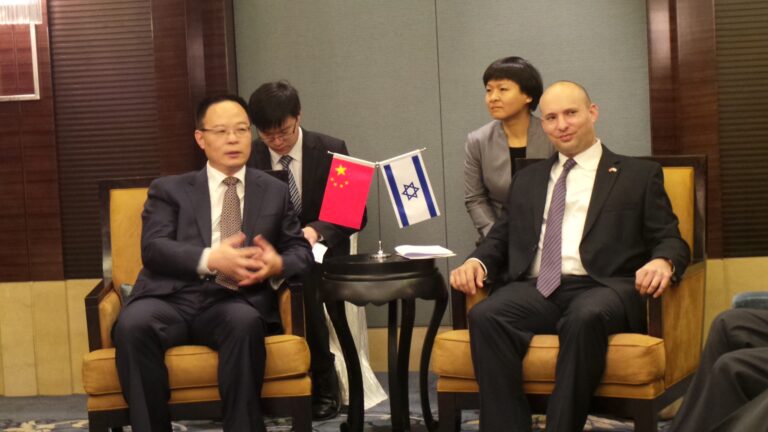

Israeli Minister of Economy Naftali Bennett (above right) launched the flagship “Water City” project in China this week, announcing that the city of Shouguang in the Shandong province would be the focus of Israel’s water-related activities in the country. Israel is considered a leading industry player in water technologies, delivering solutions from agtech to desalination at a reasonable cost, with proven results.
The recent announcement of this Water City was made in the presence of Chinese municipal officials during Minister Bennett’s current visit to China with 15 Israeli companies looking to do business in China.
The minister’s visit is the high point of an ongoing process led by the Israeli Ministry of Economy through its trade attachés in China. The attachés are working with Chinese authorities to advance Israeli companies and incorporate Israeli technology in the country’s massive water system.
Some companies like Israel’s IDE, a water desalination company, are already planted in China’s growing economy.
The Chinese water system faces many challenges including rapid population growth and widespread contamination of the country’s water resources.

Beijing is said to be “thirsty” for Israeli solutions.
Israeli water technologies will be implemented in the “Water City” project in Shougang for commercial use, which will showcase solutions offered by Israeli companies in real-world conditions in an effort to persuade Chinese authorities to adopt these solutions in other Chinese cities.
The city of Shougang was chosen following a stringent selection process by representatives of the Israeli Ministry of Economy and their Chinese counterparts.
As part of the project, the city will enjoy technologies offered by Israeli firms in the fields of desalination, sewage management, irrigation, reuse of water for agricultural, water supply and more.
This is a first-of-its-kind enterprise supported by the joint Israel-China Mission entrusted with advancing bilateral economic ties.
“Israel and China are natural partners for technological and business cooperation,” said Minister Bennett during the inauguration of Shougang as ‘Water City.’ “We have extensive experience in management of water resources and the ‘Water City’ project will help open the Chinese market to Israeli water companies, as well as advancing bilateral relations.”
The minister’s tour will continue until Thursday, during which the delegation will visit Beijing, Shanghai and Nanjing. In Nanjing, seminars and business meetings will take place between representatives of the Israeli companies and a wide range of government and non-government representatives in the country’s water-management sector.
Minister Bennett will hold further meetings with senior Chinese government officials from the Ministry of Commerce in the People’s Republic of China (MOFCOM), as well as senior executives from the Chinese business sector, including Robin Li, CEO of Internet trade giant Baidu, and with the Chairman of trade giant Suning, with an eye towards helping Israeli companies forge partnerships with these companies and towards bringing the Chinese concerns to Israel to open investment arms and R&D centers.
The minister is also expected to launch the China-Israel Business Center in Shanghai and, at the end of his visit, to inaugurate the Israeli exhibition farm in the south China province of Fujian.
This agricultural demonstration center is a commercial farm established and supported by the Israeli Ministry of Economy, housing several Israeli companies which showcase their expertise and knowhow in the hopes of drawing clients from China and across Asia.
According to the Foreign Trade Administration at the Israeli Ministry of Economy, Israel’s trade with China stood at $10.8 billion in 2013. Trade with China is expected to rise by 15% in 2014.
NASA visualizes unfortunate truths about our atmosphere


NASA’s newly released video of the earth has a strange hypnotic beauty that resembles the shifting sands of the desert or the psychedelic swirling colors of soap bubbles. But this video reveals an otherwise invisible threat caused by the short-term release of millions of years of carbon dioxide into our atmosphere.
Ritz-Carlton green campaign takes root in Riyadh
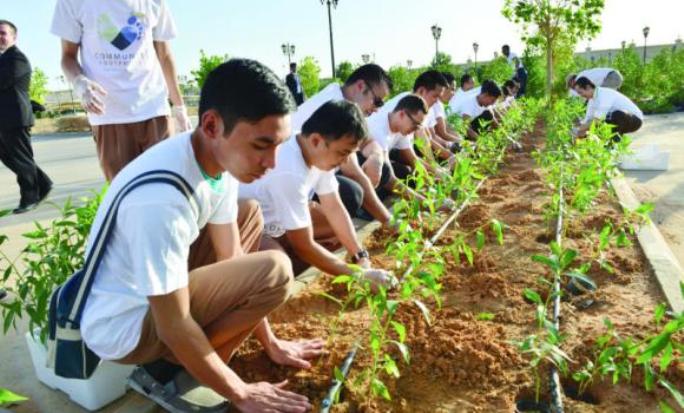
A hundred employees from The Ritz-Carlton in Riyadh planted over 300 trees in the hotel’s surroundings as part of a new environmental campaign called Green Earth, Clean Earth. The project is part of a global initiative called Clean up the World with a dual purpose to preserve the natural environment and give back to the local community. Swanky hotels aren’t just about nice soap.