Home Blog Page 261

First Earth Architecture festival in Iran would make Nader Khalili proud

0

earth architecture, earth bag construction, green building, eco building, architecture, nader khalili, hassan fathy, sustainable architecture

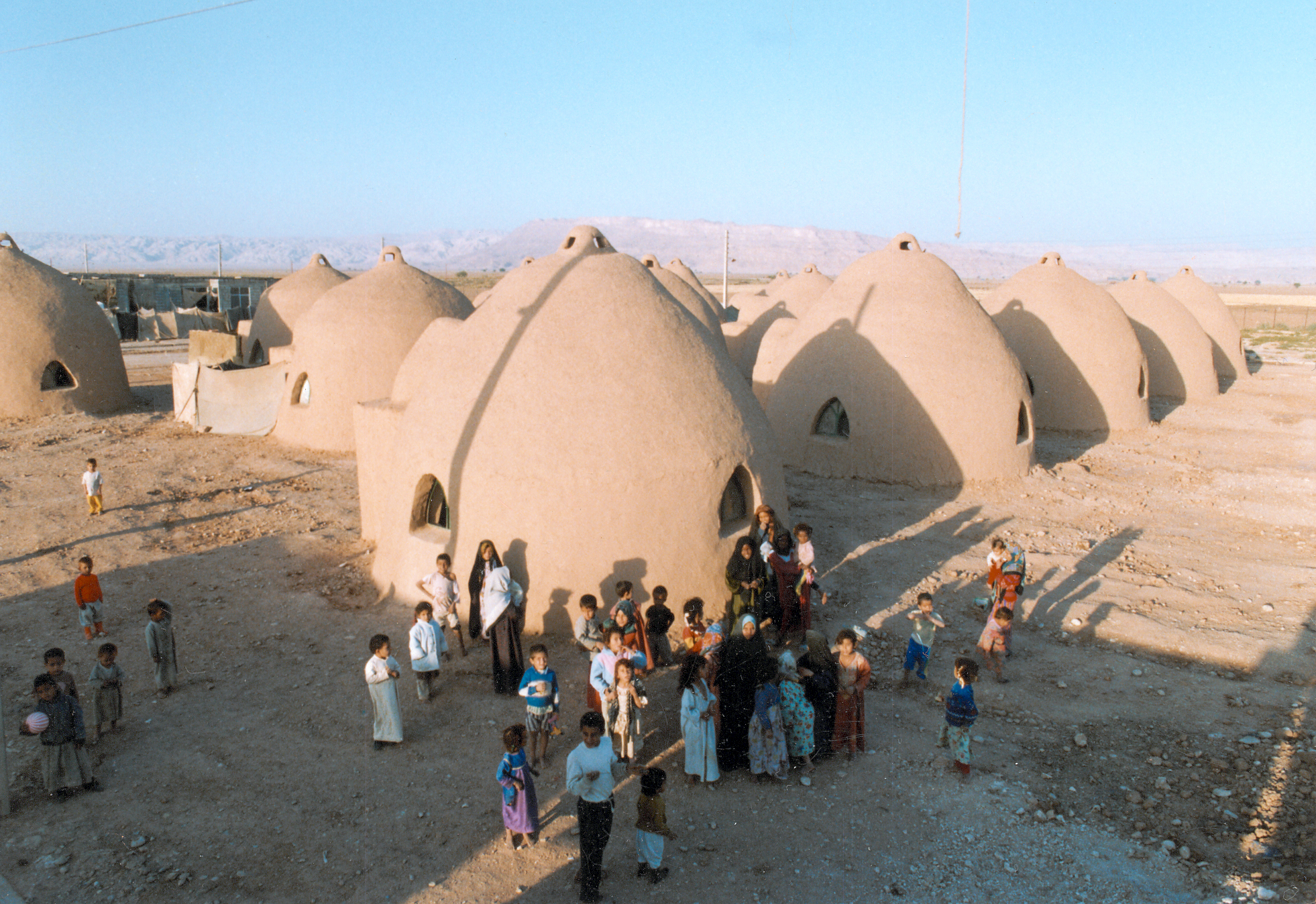
Iranian architect Nader Khalili, founder of the California Earth and Architecture Institute and proponent of the- dare we say- revolutionary SuperAdobe building technique, would be proud.

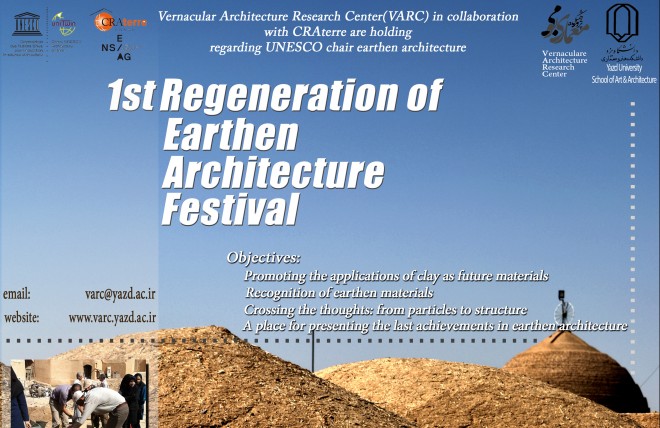
In the coming week from the 11th to the 14th of March 2015, l’Iran will inaugurate the first edition of “Regeneration of earthen architecture festival”  which aims to promote earth as the building medium of the future.

First earthen architecture festival in Iran

The event, organized by the Vernacular Architecture Research Center (VARC), and will take place in Yazd.

naderportrait2402This is a positive step forwards towards the recognition and practical application of Iranian sustainable building knowledge still locked inside vernacular architecture.

Nader spent much of his life pushing for the modern application of ancient building techniques in Iran, but in the end his dream came true in the US and not in his own country (it is true what they say about dreams come true in America).

Today we may start to see changes, like the modern integration on earthen wind catchers -bagdirs- to substitute air conditioning in Iran.

Shale gas “fracking” in the Sahara is worse for water

4

Shale gas fracking North Western Sahara aquifer

Shale gas exploitation in the Sahara is not the same as shale gas exploitation in the US. There are added complications, namely the dependence of fracking activities on a trans-boundary hydraulic system (the North Western Sahara Aquifer System), in a water stressed region, that depends primarily on that very system for its own water needs.

As shown by the recent waves of protests that spread from the southern region of Algeria to the rest of the country as the government announced the beginning of shale gas extraction, a very new threat is set to destabilize the Saharan region.

With the discovery of significant shale gas reserves in the region, and at a time when fracking has been banned in France and it has become increasingly controversial in the UK; multinationals are pushing to exploit reserves in the Saharan region. But the real implications surrounding shale gas extraction applied to the Saharan context have been highly overlooked by domestic governments, worse still there is limited transparency surrounding these activities.

As the “imported” technique of shale gas extraction, fracking, has started to play out in the Sahara; Why should this not only be of national concern but also of regional and global concern?

Aside from the known environmental and social concerns with shale gas extraction, fracking in the Saharan region has a central added complication: the geopolitics of water.

Mohamed Balghouthi, cofounder of the Economic and Scientific Intelligence Unit of Tunisia (GIEST), was one of the first Tunisian figures in 2011 to denounce how shale gas extraction in Tunisia is primarily question of water and therefore food sovereignty . The link between shale gas and sovereignty is also a central issue for rest of North Africa. Here is why.

Understanding the scale of water consumption for shale gas extraction

According to the Stockholm International Water Institute the total water requirement for a fracking well during its entire lifetime (20-40 years) can be anywhere between 24,000 m³ (24 million liters)  and 500,000 m³ (500 million liters).

If Shell in Kairouan, Tunisia, sticks to its plan of drilling 740 wells it will consume between 17.76 million m³ (17.76 billion liters) to 370 million m³ (370 billion liters) of water in 50 years.

This is roughly equivalent to the water consumption of the current Tunisian population for the next 100 years (see below for calculations). In other words, Shells fracking project in Tunisia is drinking 100 years’ worth of water for the entire Tunisian population.

Tunisia is already a water stressed country with per capita renewable water availability of 486 m³—well below the average of 1200 m³/capita for the Middle East and North Africa Region (MENA) region. This is also true for Algeria and Libya.

Water has no frontiers:

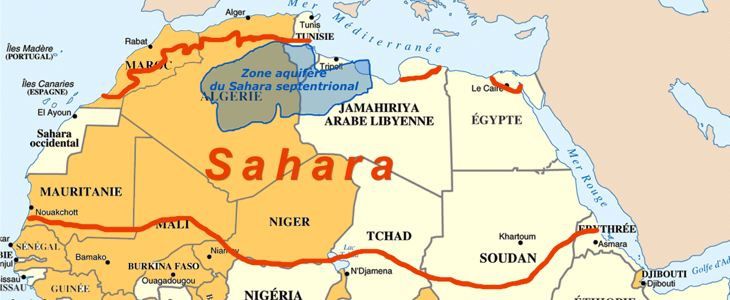
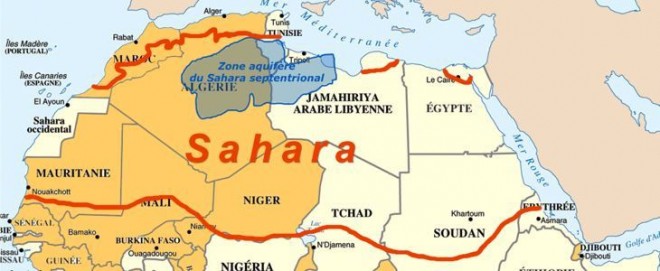
Shale gas extraction in the Saharan region will require companies to tap into the North-Western Sahara Aquifer System (NWSAS) for water. This water is needed to release gas from the fractures (for more information on fracking see here). The NWSAS extends over a surface twice as large as France and straddles three countries; Tunisia, Algeria and Libya. With more than 30 000 Km³ of water, accumulated over the past million years, this subterranean aquifer and has enabled the urban and agricultural development of the semi-arid regions of these countries for the past 30 years. But this water is currently over-exploited; the Sahara and Sahel Observatory and the Institute of Research for Development have recently calculated that the average annual rain water recharge meets only 40% of the water quantities withdrawn from the aquifer.

Given the considerable amount of water required for fracking, the current water stressed and water precarious condition of the Saharan region and the fact that three countries by and large depend on the same hydraulic system; it doesn’t take much to put two and two together to see that fracking in the Saharan region will cause significant civil strife in the region.

Naturally with water comes the question of food sovereignty, already a hot topic in the region. Data from the 2014 Near East and North Africa Food and Agriculture Statistics Yearbook shows that in 2010, all of the five North African countries imported 60 %  or more of their cereals from abroad. Tunisia imports 60% of its cereal needs, 70% in Algeria and 90% in Libya. The reasons for the loss of food sovereignty in the region are numerous: mis-management of nation-wide agricultural development, the adoption of neoliberal economic policies pressurized by international politics, and water management. Yet the onset of shale gas fracturing activities exposes the region to additional threats to food sovereignty, because water is being directed towards energy production (which is largely exported) rather than domestic consumption and agriculture.

Shale gas extraction in the Sahara is a particular threat for farming realities in the oasis. When unemployment increases in the region, or in the face of civil unrest or war, it has been shown that people tend to return to their farmlands to create a livelihood for themselves. In the semi-arid regions closest to the Saharan desert, aside from tourism and high impact industries like mining, date plantations are an important source of income. Palm date plantations depend entirely on groundwater and appropriate irrigation systems – the foggaras–  a product of centuries of human ingenuity. Other forms of agricultural practices in Tunisia, Algeria and Libya depend between 60% and 90% on water from the NWSAS for its irrigation. Once the primary source of water available to the Saharian populations in these three countries is polluted or runs dry, the livelihoods of an estimated 40 million people will be directly threatened. As we have already witnessed with the Arab spring, dissatisfaction is likely to be translated in contagious social unrest, spreading across the region.

This is why people are protesting extensively throughout Algeria.  The current “imported” practices of Shale gas extraction in the Sahara is touching the resource that is most dear to the region, water.

Water Calculations:

Average water consumption per well = 24,000 m3 (24 million liters) – 500,000 m3 (500 million liters)

Number of wells Shell plans to drill in Kairouan = 740

TOT water consumption for Shell’s operation in Kairouan (Tunisia) between 17.76 billion liters (24 million liters water x 740 wells) and 370 billion liter (500 million x 740 )


Average water consumption per capita in Tunisia = 296 m3

Tunisian current population = roughly 10 million

TOT annual water consumption in Tunisia = 2.96 billion liters

 

Jordan’s 6,000 mosques to be sun-powered

0

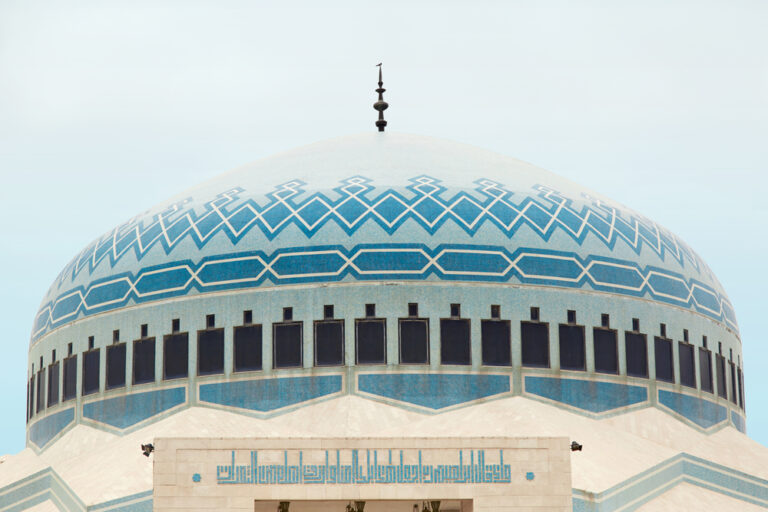
king abdullah blue mosqueJordan’s Ministry of Energy and Mineral Resources announced a new initiative that will convert all 6,000 of the kingdom’s mosques to solar generated power beginning this year. It’s part of a five-year program to decrease the nation’s reliance on crude oil while diversifying its energy portfolio to include more renewable energy sources, such as wind and solar power.


Mosques are major electricity consumers as five prayer times throughout the day keep their doors open predawn to well after sundown. They require artificial lighting and often feature mechanically heated and cooled air to keep worshipers comfortable. The Jordanian government spends over US$70 million annually to run and maintain its existing inventory and construct a yearly average of 150 new mosques too.

“Mosques use large amounts of electricity and the project will help to significantly reduce their electricity bills as around 300 days in the year are sunny,” Ahmad Abu Saa, a spokesman for Jordan’s energy ministry, told The Jordan Times.

Samer Zawaydeh, a Jordan-based freelance engineering consultant, told PV Magazine, “The Renewable Energy and Efficiency Law 13 (REEL 13), issued 2012, allows any electricity consumer to cover 100% of their electricity needs by installing net-metering solar PV systems.”

Payback on investment is roughly 30 to 36 months in Jordan, depending on system components.

Reducing the amount spent on electricity would free up funds for other social programs and enable mosques to generate revenue through a net metering program which allows solar energy producers to sell excess energy they produce back to the government.

The project is financed by grants and zakat contributions (zakat is one of the five pillars of Islam that requires the faithful to give to charity). Donate zakat to an Islamic charity like this one. In Jordan, the new projects will start with tenders to retrofit 120 mosques with PV systems, then expand across the nation.

Jordan imports more than 95 percent of its energy needs, spending as much as 16 percent on energy, or more than 40 percent of the nation’s budget. The country aims to secure 10 percent of its energy needs from renewable sources by 2020 and expects 1,800 megawatts to be linked to its national power grid by 2018.  To that end, a 117 megawatt wind farm is under construction in Tafila, a public-private partnership that includes Abu Dhabi’s Masdar as one of its investors.

Last year, Al-Wifaq mosque became Jordan’s first clean-energy place of worship when it installed 10 kWp solar PV system on its rooftop.  One of the mosque’s neighbors paid for the work.

Jordan’s decision to remove the kingdom’s mosques off grid could be an answer to environmentalists’ prayers.

Image of King Abdullah Blue Mosque in Amman from Shutterstock

3D-printing with living organisms – snack of tomorrow?

3D printed food

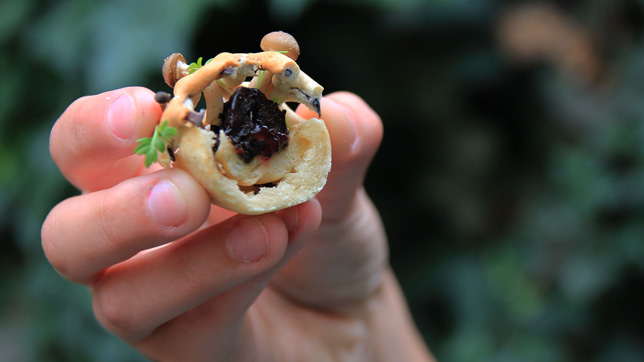
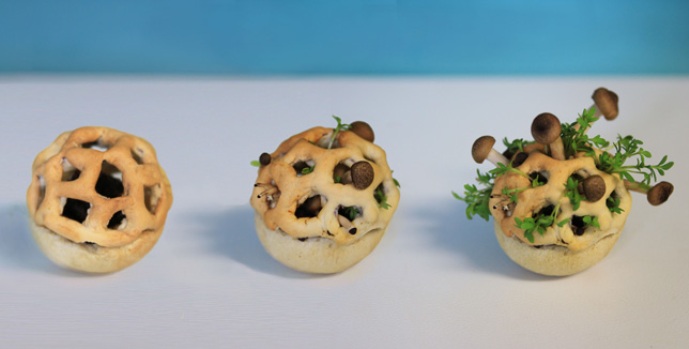
Food designer Chloé Rutzerveld has developed a concept for 3D-printed snacks that sprout plants and mushrooms from edible soil housed within a pastry or pasta shell.  She envisions a day when your local grocer could print you out a takeaway boxful, and about 4 days later they’ll grow into lunch.  In the burgeoning field of futuristic food, these sure beat candy coffee cups.

Her Edible Growth project came about as a form of critical design.  Rutzerveld wanted to create lab-produced food that was healthy, natural, and tasty. By combining aspects of  nature, science, technology and design, she believes we can create fully natural, healthy, delicious food that is also maximally sustainable.

Edible-Growth-by-Chloe-Rutzerveld_

“By 3D printing food you can make the production chain very short, the transport will be less, there is less land needed,” says Rutzerveld. Her process makes smart use of natural fermentation and photosynthesis, which lower embedded energy requirements, food miles, associated carbon emissions, and food waste. Consumers will become more involved and conscious about the food they eat

Edible-Growth-by-Rutzerveld_dezeenA specific 3D file ‘recipe’ deposits multiple layers of seeds, spores and an edible agar center (a gelatinous substance that acts as a sprouting agent) inside a pastry or pasta structure (also 3D printed).  Within five days, plants and fungi mature and yeast ferment the agar into liquid. Similar to cheeses, the product scent and taste intensify over time, and its appearance changes. Depending on the preferred intensity, the consumer decides when to harvest and enjoy the nutrient-rich ‘edible’.

Most supermarket food products are far removed from the farm or ranch. They are highly processed, with origins in laboratory settings. Edible growth is an example of a future food product that bridges authentic practices of growing and breeding food with new technologies, allowing food to stay nearer to its natural state.

Chloe-Rutzerveld

 The aim of the project, which Rutzerveld developed last year in collaboration with the Eindhoven University of Technology and research organisation TNO, was to investigate ways that 3D printing could be used in the food industry.

“A lot of people think industrialized production methods are unnatural or unhealthy,” Rutzerveld says. “I want to show that it doesn’t have to be the case. You can really see that it’s natural. It’s actually really healthy and sustainable also at the same time.” Her project is more fully explained in a video she made, see below:

[youtube]http://youtu.be/-TgZ5axri80[/youtube]

Until now, most labs have only succeeded in printing sugar sculptures, chocolate and other unhealthy sweets – not basic foods.  There are developments in lab-made meats, but not involving 3D technology. Rutzerveld’s project is still in development, and she admits that commercial viability is a long way off.  “It will take at least another eight to ten years before this can be on the market,” she concedes.

Microwaves have their critics.  Looks like ovens may one day be obsolete too.

Images from Chloé Rutzerveld’s website (link here)

Middle East’s first rainforest coming to Dubai

1

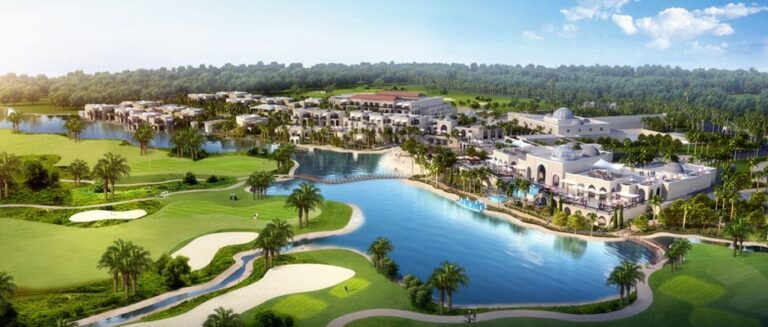
dubai rainforestDubai developers reach a new zenith in outrageous investment with just-announced plans to build a tropical rainforest on the desert outskirts of the city.  The forest will exist within a climate-controlled dome as a key feature of a new luxury housing development. But the real news within this news is that local environmentalists are complaining, finally.


Tel Aviv is “Fertile Ground” for modern art and Bauhaus architecture

2

Ido Shemi - עידו שמיLooking for a novel way to celebrate Purim in Tel Aviv next weekend? Wander over to 26 Gordon Street for a pop-up art show wrapped inside architecture that’s worth a visit on its own. Radical renovations are planned for a 1930’s building that will transform the Bauhaus beauty into the city’s first “green” retrofit of a protected structure. Before construction begins, the building will host a contemporary art and fashion exhibit using the same name as the architectural project, “Fertile Ground”.

Let’s bounce! on tires upcycled into rubber-soled shoes

2

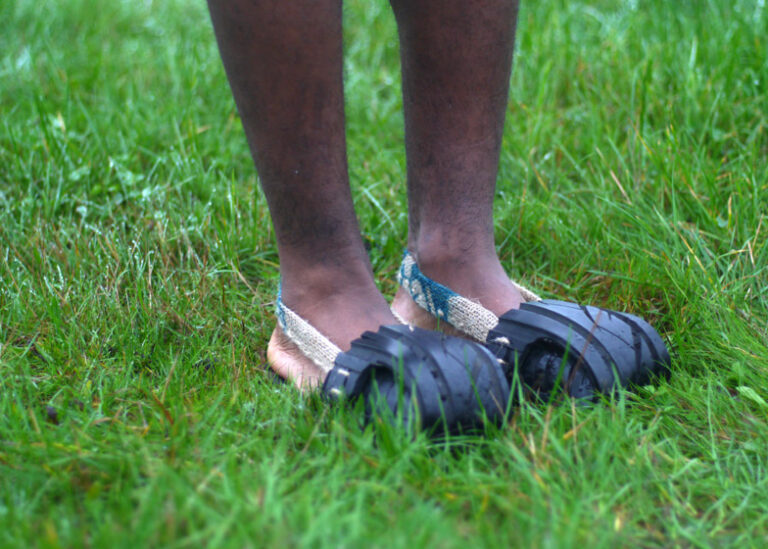
 Soled-tire-footwear-by-Jena-Kitley-Alani-Fadzil-and-Lauren-JosephThe tire industry is one of the largest users of virgin rubber, blending it with sulfur and heating the mix to create ‘vulcanized rubber’.  It’s a highly durable material that is notoriously difficult to recycle. Design schools, small rural start-ups, and major clothing manufacturers are all working to develop ecologically sound disposal options for spent tires. Some of our favorites turn old products that moved vehicles into new ones that move people – tires that become shoes.
Israel and Jordan sign deal to save the Dead Sea

0

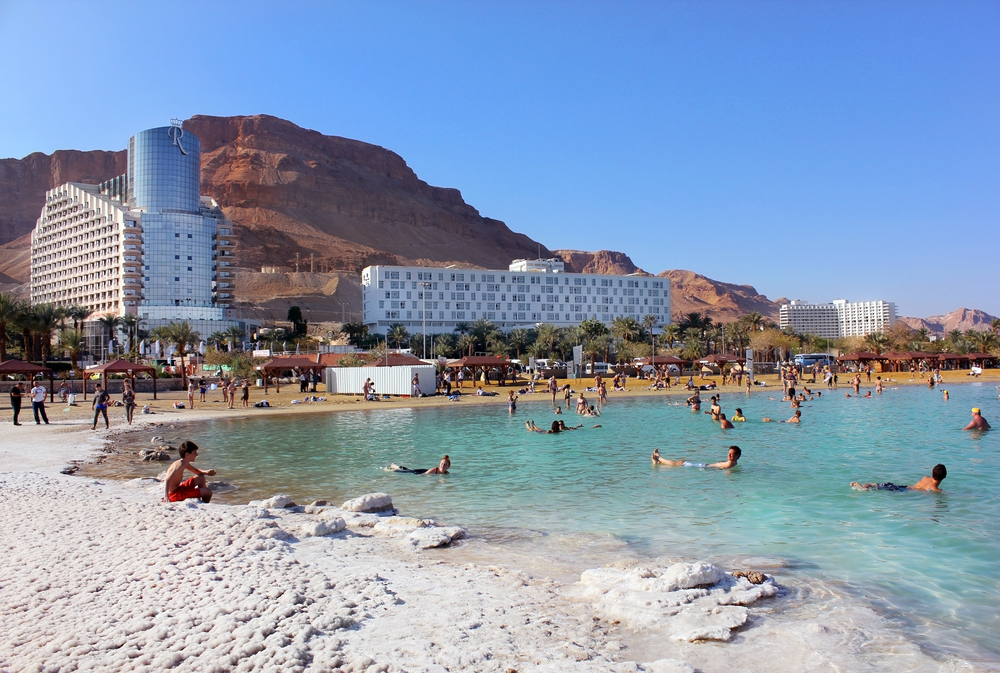
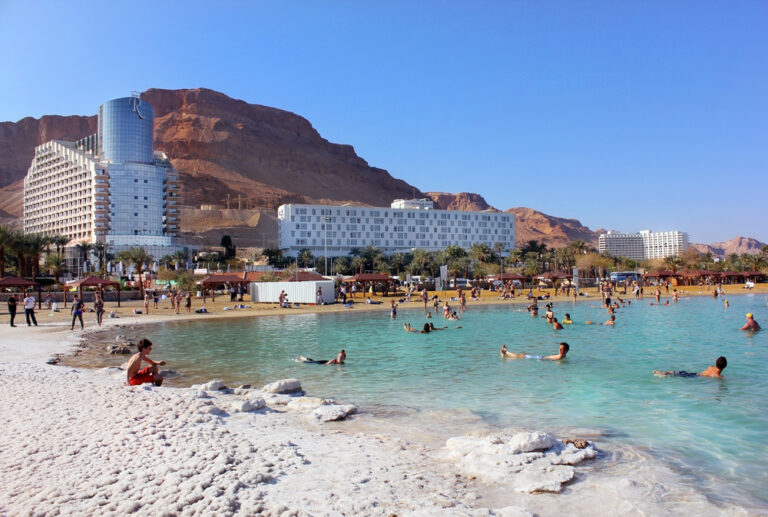
People floating in the Dead SeaIsrael and Jordan have signed a historic deal to press ahead with a plan to save the Dead Sea.

The ‘Red-Dead’ project will build a plant near the Jordanian tourist resort of Aqaba that will desalinate water to be shared by Israelis and Palestinians. The brine left over from the desalination process will be channeled from the Red Sea to the Dead Sea by a 112 mile (180 km) pipeline.

The agreement was signed In Jordan by  the Israeli National Infrastructure, Energy, and Water Minister Silvan Shalom and Jordan’s, Water and Irrigation Minister Hazim el-Naser.

Nasser said that if the agreement is implemented correctly it would secure 30 million cubic metres (mcm) of freshwater for Palestine to cover its water deficit.

The plan is also crucial to providing a source of fresh water to Jordan, which faces a severe shortage of water, and to rescuing the shrinking Dead Sea. In return for its share of the desalinated water, Israel will double its sales of fresh water to Jordan from the Sea of Galilee.

Shalom said the project would provide water for farmers in southern Israel and drinking water for the north of the country.

“This is the most important and significant agreement since the peace treaty was signed with Jordan,” Shalom said, referring to a peace agreement between Israel and Jordan in 1994.

Eventually the Red-Dead project envisages transferring up to 2 billion cubic metres of water from the Red Sea to the Dead Sea annually.

The agreement is the result of a memorandum of understanding signed by Israeli, Jordanian and Palestinian officials in December 2013. It is being sponsored by the World Bank.

The project will cost around $900 million. It will take nearly three years to complete.

100% edible coffee cups; tasty, eco-friendly, and straight to your hips

 KFC edible coffee cupWho says you can’t have your cup and eat it too? The maker of those chicken-like products sworn to be “finger-lickin’ good” is testing a range of  100% edible containers for takeaway coffee. Fast food giant KFC will be testing its new coffee cups in Britain this summer. Called “Scoff-ee” (a wordplay meaning “to eat quickly”), the cups are a hybrid cookie/candy, a sure bet to trend big in the Middle East, where coffee is king and fast food consumption, colossal.
Solar Impulse 2 mission control center to launch Abu Dhabi flight in March

0

solar impulse 2 set to take off from Abu Dhabi in March 2015

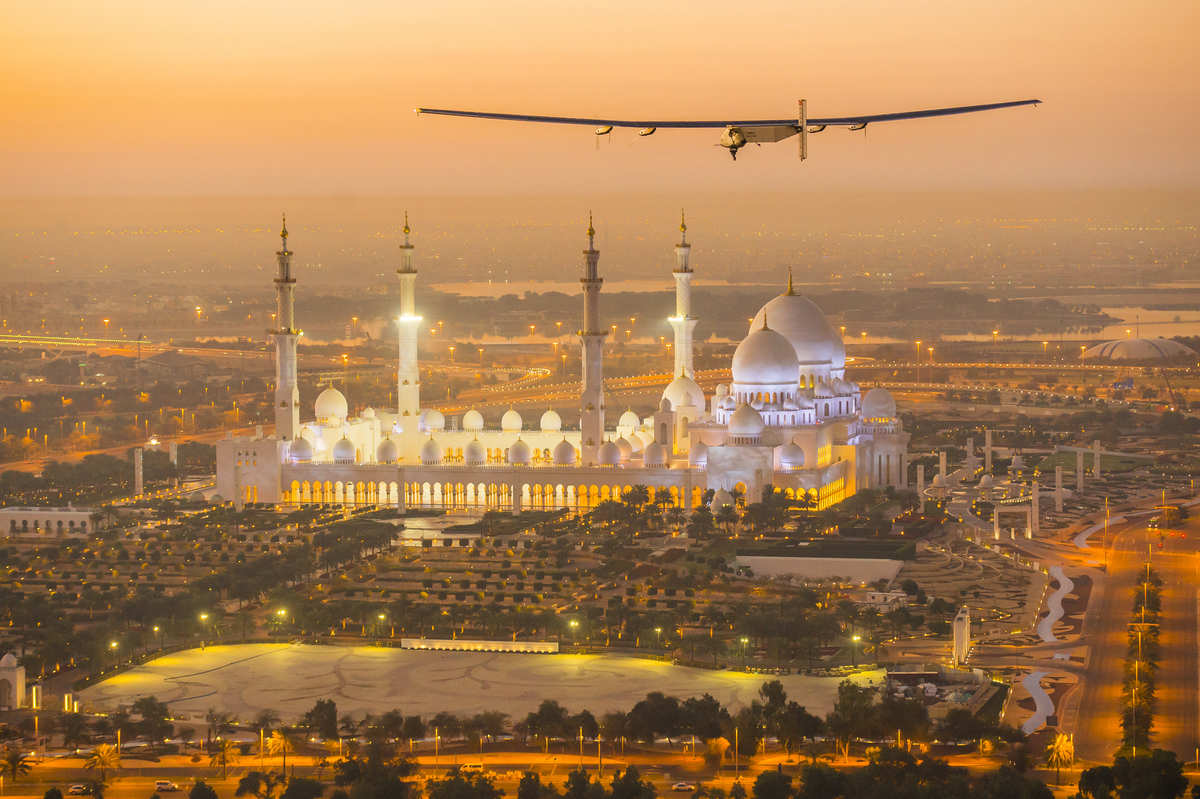
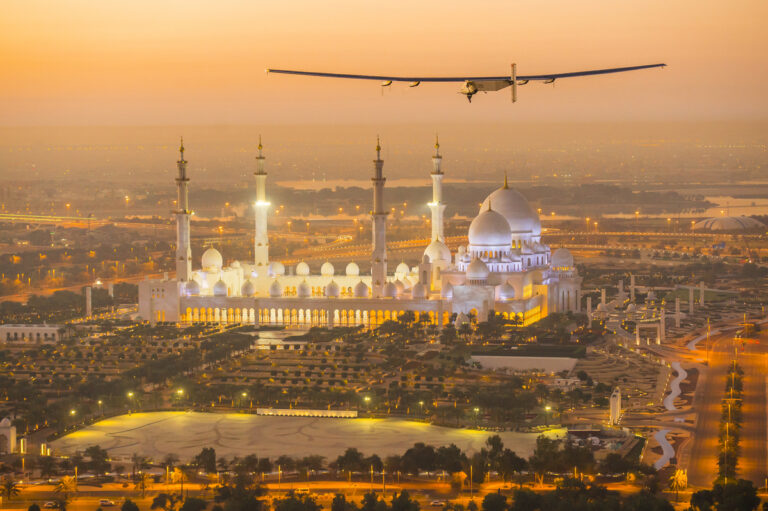
Mission Control for the Solar Impulse 2 is open for business, ready to guide the solar plane’s first flight around the world.  Located in Monaco, the Mission Control Center (MCC) serves as project nerve-center, where a team of analysts and engineers will collect satellite-transmitted flight information to calculate and adjust the plane’s flight path.  The plane will take off from Abu Dhabi in early March. See it soar over the Sheikh Zayed Grand Mosque in our lead image.

Jordan’s special refugees: giving back to others

0

refugee craft projectsCollateral Repair Project (CRP) is a scrappy nonprofit in Amman, Jordan that brings critical help to people commonly referred to as “collateral damage” – urban refugees, victims of war and conflict, and those on the lowest rung of the local economic ladder. Read on to learn how a group of Amman’s most marginalized women are giving back to an issue affecting women around the world.

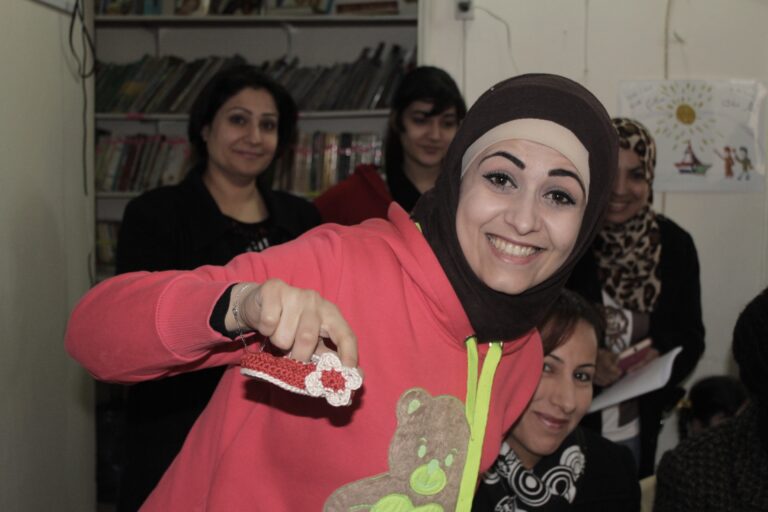
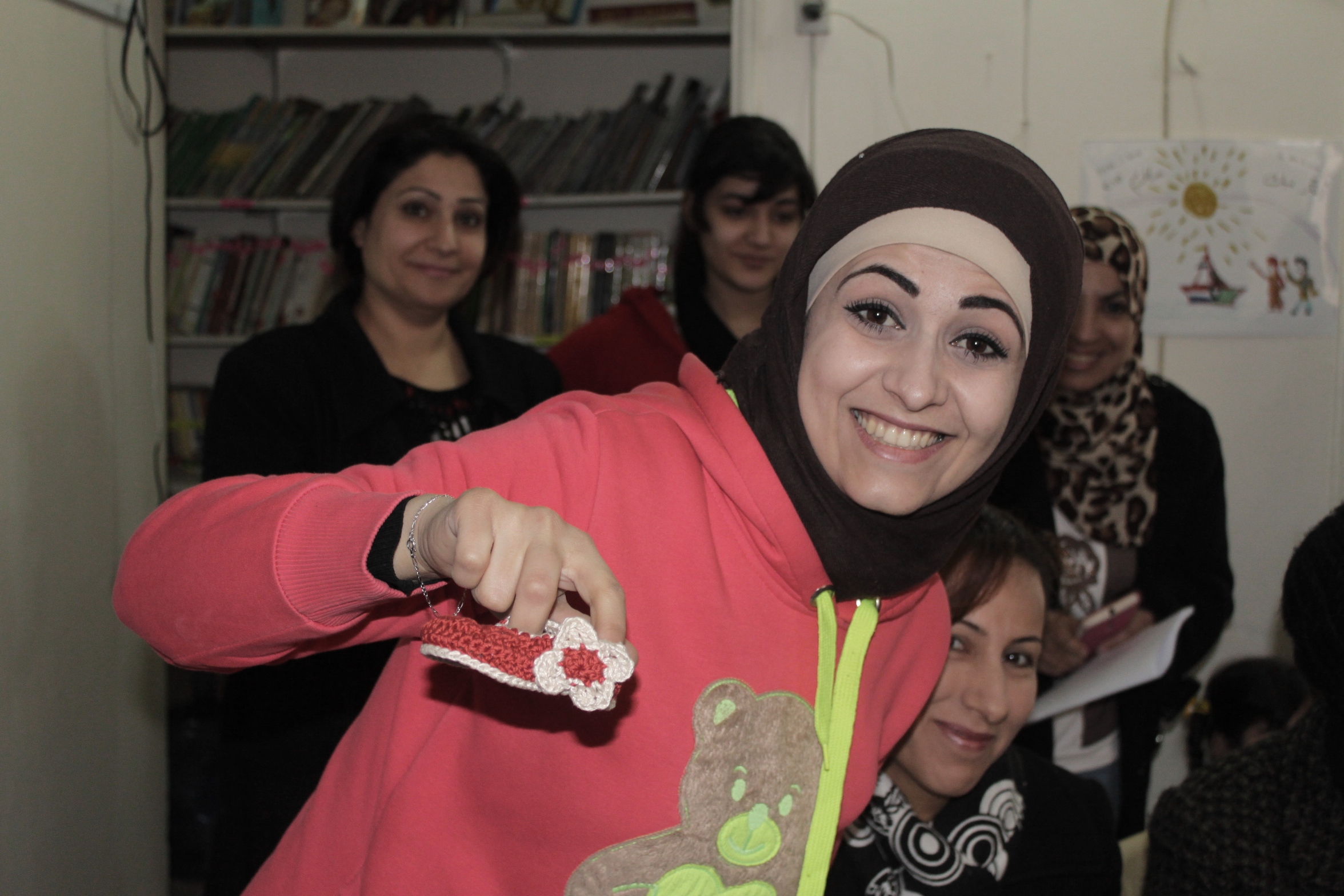
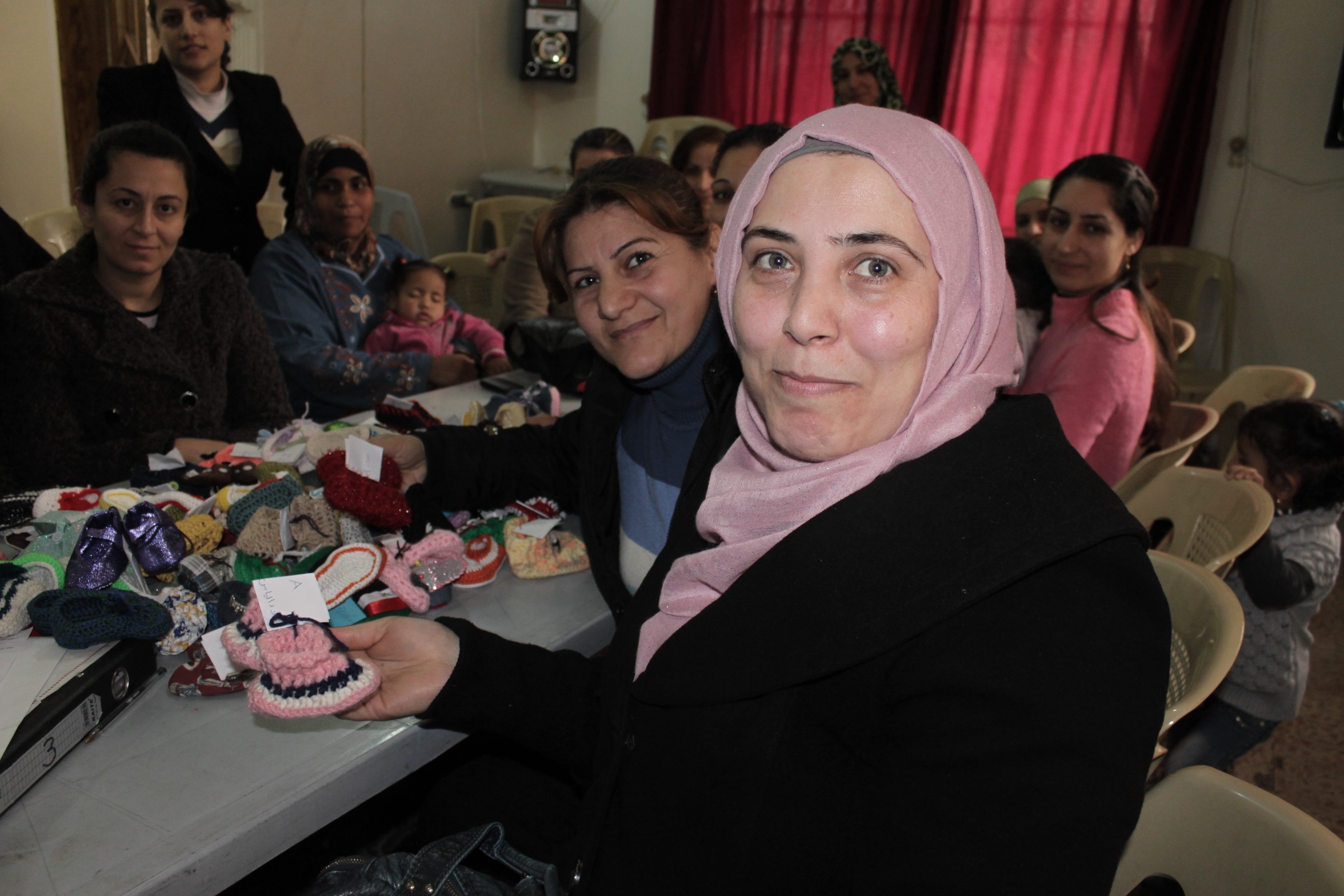
Gendap bootie project Amman JordanAlong with the amazing Shaza (that’s her mugging it up in the lead image), I help run CRP’s Hope Workshop, a craft cooperative composed of about two dozen women who meet weekly to learn new skills using mostly donated materials.  It’s a raucous few hours swapping stories that thread through women’s groups everywhere.

We talk about our kids, joke about our weight, complain when we drop a stitch, and help each other master new techniques. They test me with their English, I try my faulty Arabic.  The Iraqis say I sound Syrian, and the Syrians say I sound Egyptian. Shaza’s translating makes it all work.

women's craft cooperativeThe group has a more serious mission.  It serves as safe haven to relax and create. We are always on the lookout for new projects to work on (often using recycled, re-purposed and donated materials) which we can sell to buy supplies for more challenging projects. This is where an astonishing opportunity from Texas comes in.

refugee craft cooperative

Enter Beverly Hill, founder and president of Gendap, the Dallas-based Gendercide Awareness Project, which focuses on what she calls the global epidemic of female murder. Says Hill, “Gendercide proceeds from the belief that female life is disposable. Gendercide devastates the hopes of women everywhere. It is unworthy of us as human beings. It is time to end this silent slaughter.”

 Collateral-Repair-Hope-WorkshopThe United Nations Population Fund, which tracks this problem, has estimated that 117 million women are “missing” in the world due to due to sex-selective abortion, female infanticide, female child neglect, unnecessary maternal death, and (for older women and widows) unequal access to food and shelter.

Gendap is raising awareness to the issue through a variety of activities, including an ambitious art installation to show the sheer scale of gendercide.

The installation features a long corridor lined with 11,700 pairs of baby booties, each pair representing 10,000 missing women. When it opens in 2015, the show will urge support for education, paid labor and women’s health care to bring about change.

Hill discovered CRP’s Hope Workshop on the Dining for Women website. She told me, “It’s hard to find women’s sewing and knitting coops in developing countries, as they often don’t come up in web searches. I found that foundations such as Dining for Women or the larger Global Fund for Women have sometimes given grants to such groups, so I scan their sites looking for coops in particular countries or regions that are not yet represented in our art exhibit. I found a number of coops this way.”

The video below offers a fly-through simulation of the ambitious exhibit.

[youtube]http://youtu.be/w4s7nrX8ISI[/youtube]

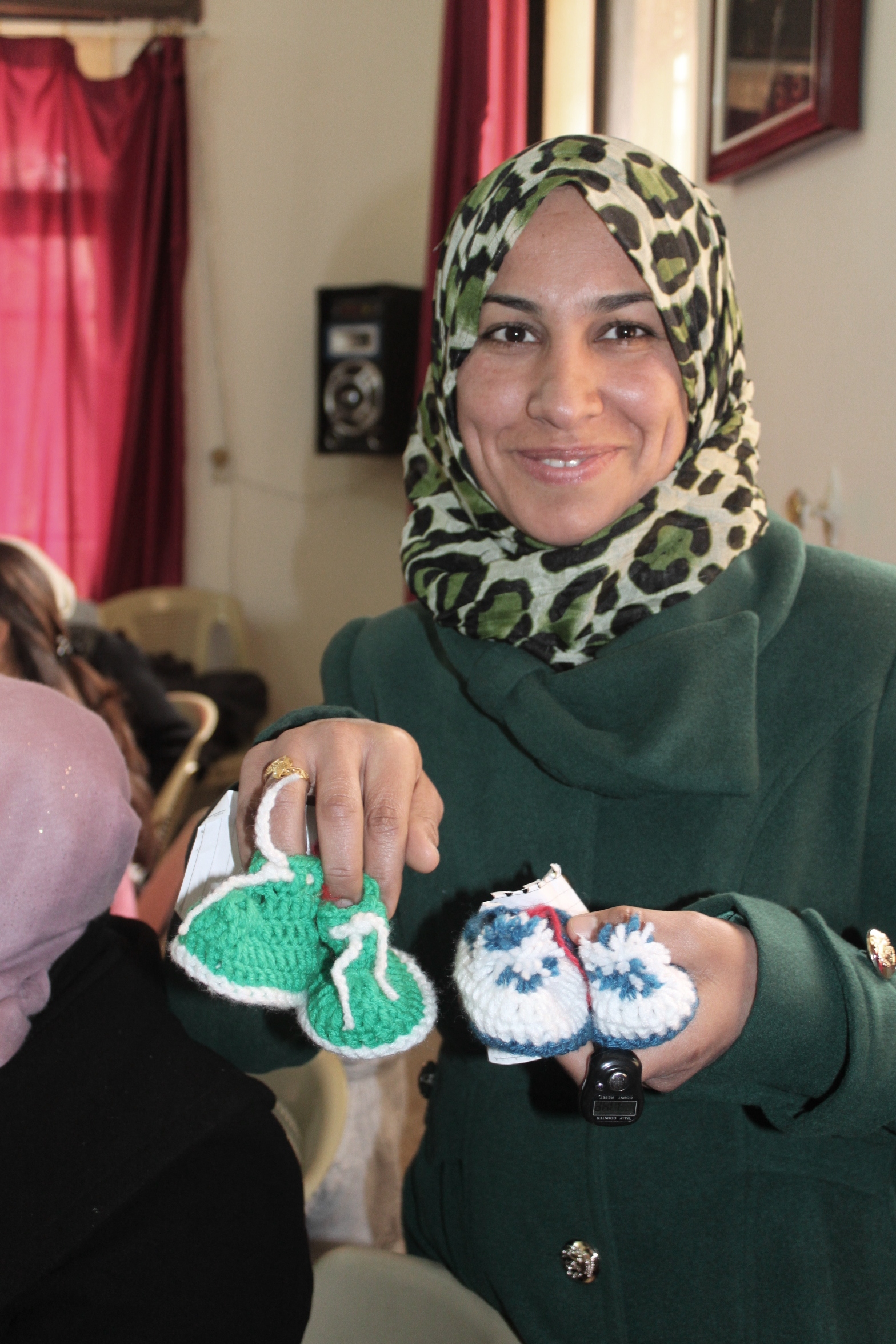
She emailed CRP director Amanda Lane to introduce the project (Gendap pays $3USD per pair to cover material costs and shipping to Texas) and invite Hope Workshop to make 200 pairs of booties. The women tucked in. Some shoes were delicately hand sewn, others knit from traditional yarn, and more crocheted from shredded plastic bags. Upcycled plastic food packaging was cut into soles. About 25 per cent of the booties are red, black, green and white – the shared colors of the Iraqi, Syrian and Jordanian national flags.

The women of Hope Workshop bear deep wounds of war, displacement, and immeasurable personal loss. They could easily retreat into a belief that the world has forgotten them. Instead, they chose to give freely to a project that insists women not be forgotten.

Founded in 2006 with a mission to support Iraqi refugees entering Jordan, CRP now runs an emergency help program that provides food and household items to the most destitute refugees from Iraq, Syria, as well as Jordanian poor – all of whom lack other assistance. CRP’s Community and Family Resource Center offers many activities and learning opportunities that allow refugees to begin to rebuild a sense of community in the Hashemi al Shamali neighborhood they now call home. Support CRP via their website (link here).

The Gendercide Awareness Project presents basic facts about gendercide, its consequences for society, and practical measures to end it. Support them via their website (link here).

Or chose to get involved with Dining for Women (link here), a giving circle headquartered in Greenville, South Carolina which raises monthly for international charities that support women and girls facing extreme challenges in developing countries.

Each will turn a small private donation into powerful positive change.


Huge eco-friendly luxury living project coming to Cairo

18

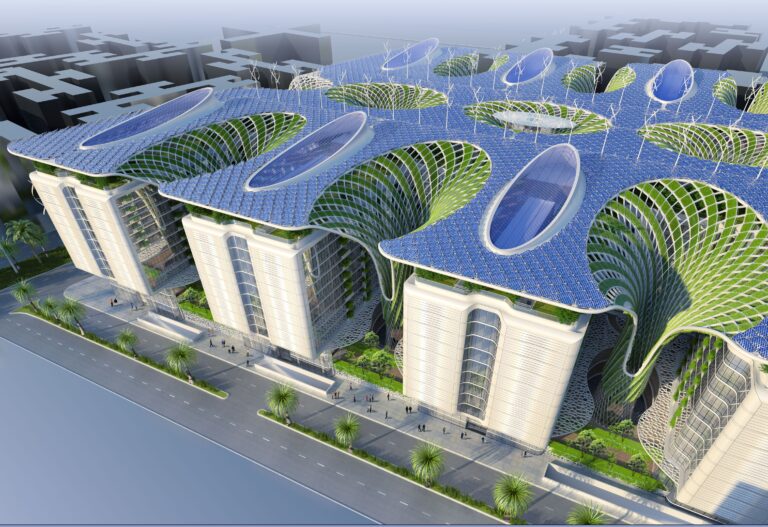
Interior of the Gate CairoLuxury usually comes at a high price, not only financially but environmentally too. But plans for a new building in the heart of Cairo hope to change this high cost to the environment, combining luxury living with eco-friendly technology.

Real estate company, Abraj Misr, has just announced plans to invest 4.5 billion Egyptian pounds (US$589.7 million) in the multi-purpose development known as The Gate. It will consist of residential, commercial and retail spaces, a shopping mall and even a 5 star hotel.

The design by renowned architecture company Vincent Callebaut Architectures (VCA) incorporates green features with high-end services such as luxurious limousines, gymnasiums, a pet care facility and a beauty center to attract potential residents.

The architecture firm’s idea was to metamorphose the city into a vertical, green, dense and hyper-connected ecosystem and “to raise awareness of green sustainable architecture to fight against global warming in order to maintain an eco-friendly earth for our next generation.”

Solar energy, living walls, wind turbines and even roof food gardens will give this luxury development an eco-friendly helping hand to do this.

The Gate is designed around a central boulevard, which is the heart of the complex. The apartments are housed in rectangular buildings attached to this central street. At both ends, there are facades inspired by fish gills that will act as sunshades.

The project is intended to balance the efficient distribution of 1000 apartments and a contemporary and sustainable identity. The smart building will ensure a 50 percent energy saving and a significant reduction in carbon footprint.

It is eco-designed according to bioclimatic rules (solar cycle, prevailing wind directions, endemic plant species etc), and by incorporating renewable energies (wind turbines, thermal solar energy, photovoltaic solar energy, geothermal energy, biomass etc).

Green architectural features punctuate the large building to combine an eco-friendly vision with community-based needs, without sacrificing aestheticism.

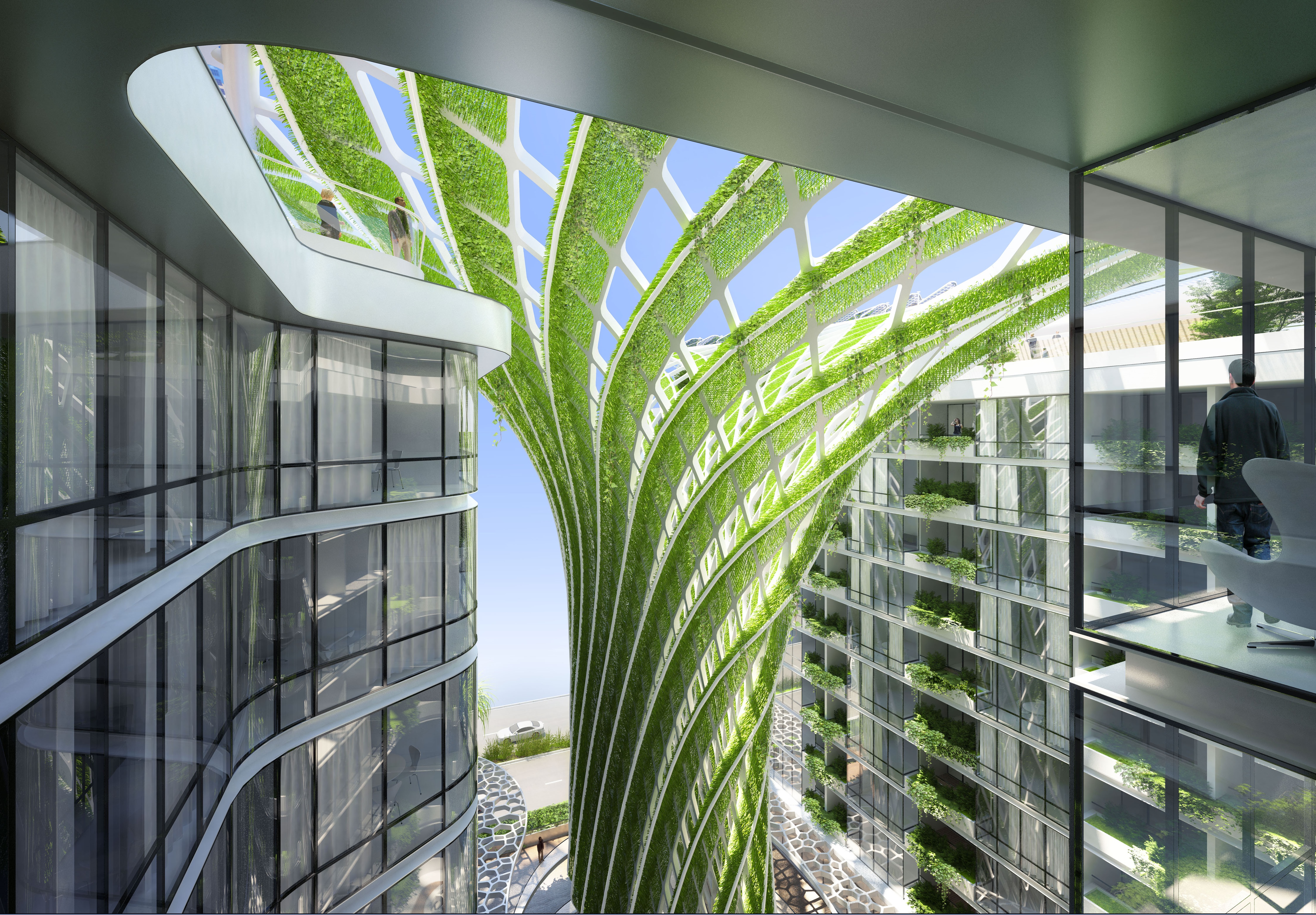
Megatrees as windcatchers

Nine ‘megatrees’ will act as windcatchers. Windcatchers have a long history in the country, used in architecture in Ancient Egypt. They are known in Arabic as “Malqaf” and work by redirecting airflow to provide a natural cooling system. They will naturally ventilate the basement spaces and refresh the patios and boulevard.

Mega Tree structure of the Gate building

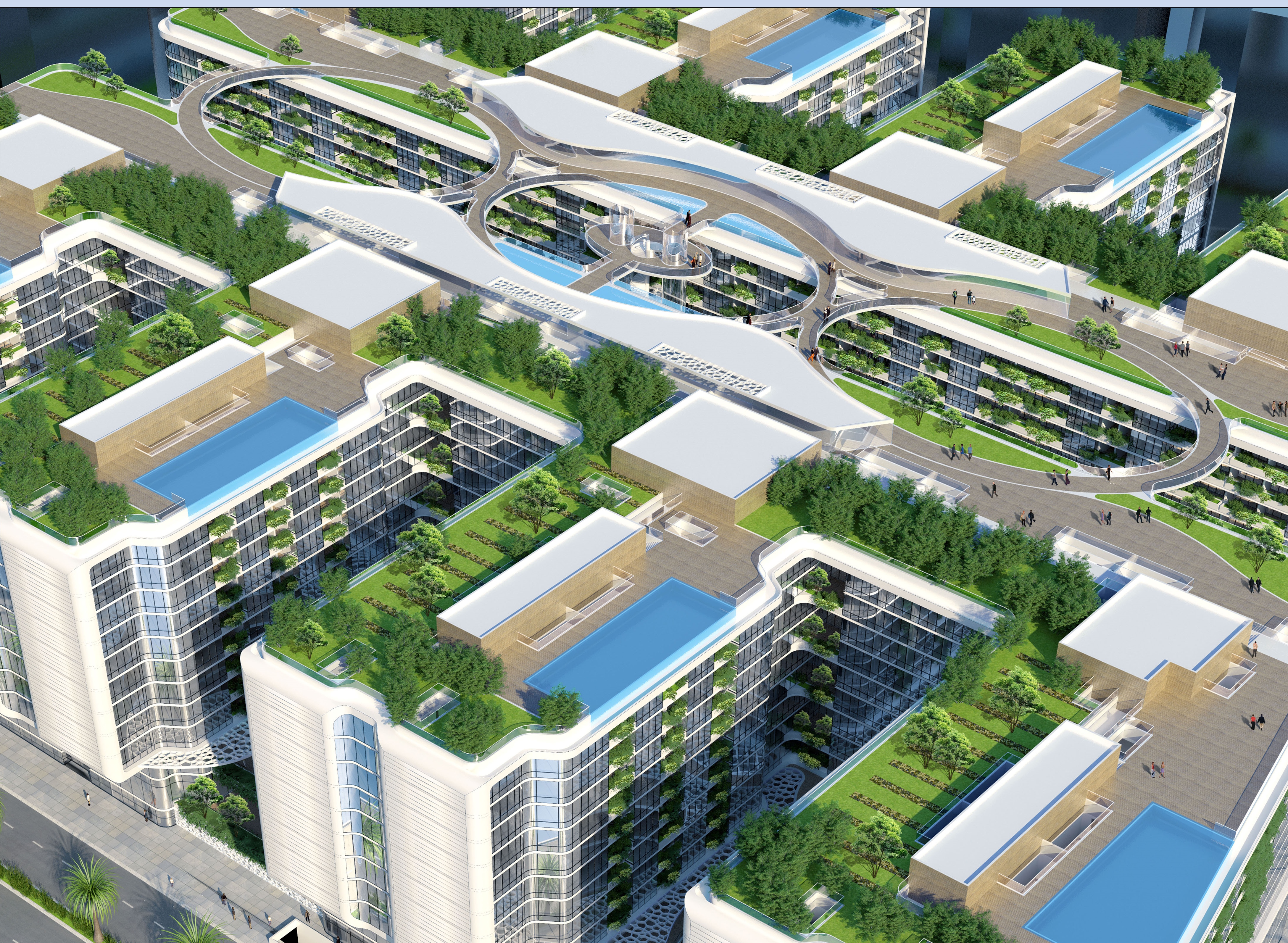
A garden in the sky

The development hopes to not only be beneficial for the environment, but for residents too. A community garden will provide a social and sustainable space for the building’s occupants. The project proposes to use the roof space as a ‘garden in the sky’ with playgrounds, sports area, food gardens, infinity swimming pools and orchards. The green roof is also a measure to compensate for the high density of the construction and will be an insulation coat above the residences to reduce the urban warming.

Aerial view of the building

Solar photovoltaic cells

The building will use state-of-the-art solar cell technology to generate power. Instead of using conventional solar cells that use visible and infrared light, these innovative new solar cells also use ultraviolet radiation. The solar roof will be covered by walkable solar panels that will shadows above the patios and the boulevard to generate a big part of the electricity necessary for the building.

Green living walls

Living walls have become popular recently, allowing for greenery even when space is lacking. They will allow for the overall reduction in building temperature of The Gate. Heat build-up in cities is largely due to solar radiation being absorbed by roads and buildings that is then stored in the building material. The designers hope that the walls may also be used as a method for water reuse by purifying polluted water and absorbing the dissolved nutrients.

The building will also contain ‘smart homes’ with multi-sensors able to control the different zones, rooms, temperature and ventilation. Solar water heating systems will deliver hot water to all of the bathrooms and kitchens for most of the year. Water is collected in glass-metal tubes on the roof that are exposed to the sunlight and help to warm the water.

Construction of The Gate is due to start in April and be completed in 2018.

Images courtesy of Vincent Callebaut Archictectures.

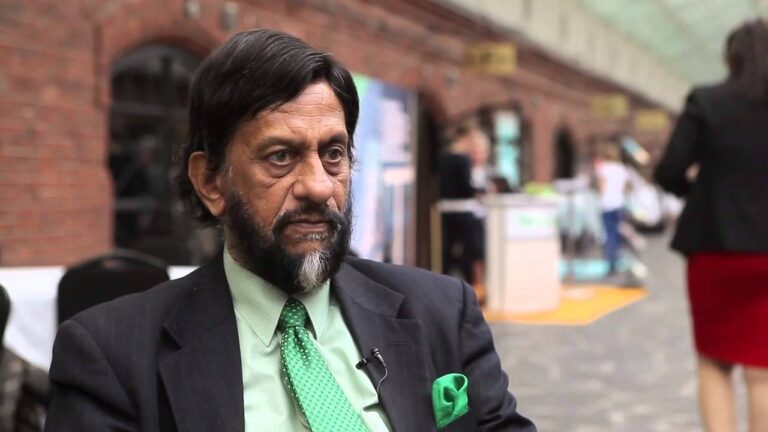
UN Climate Panel Chief Rajendra Pachauri resigns over sex scandal

1

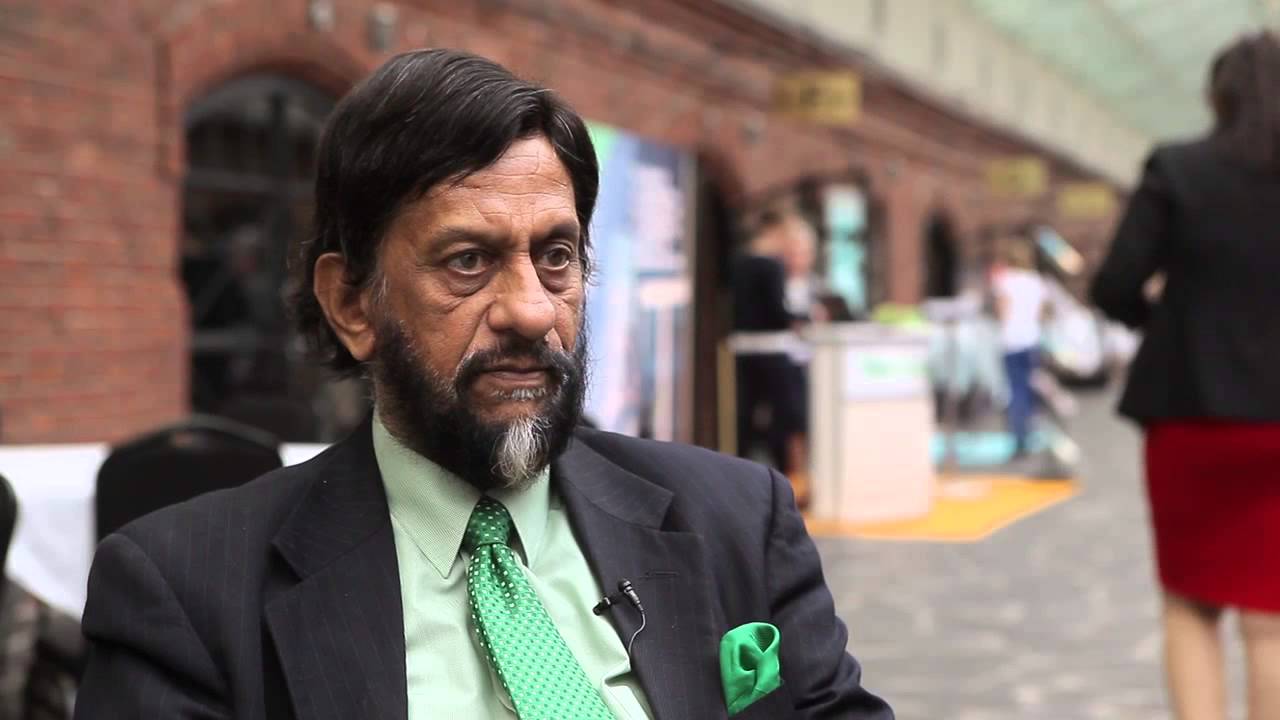
 IPCC-chief-resigns-over-sex-scandalRajendra Pachauri, director of think-tank The Energy and Resources Institute (TERI) and chairman of the Intergovernmental Panel on Climate Change (IPCC), has resigned as chief of the United Nations (UN) panel of climate scientists today after allegations of sexual harassment, which he has denied. He was to lead 2015 Climate Change Conference (COP21), the high-stakes global warming summit  to be held in Paris in December, making this news especially “hot”.

Green Globe Certifies Dubai’s Wild Wadi Waterpark (UPDATE)

0

wild-wadi-carousel-dubaiYou read that right.  An outdoor water park in shadow of the Burj Al Arab*, featuring a heated/cooled wave pool, multiple water slides and two artificial surfing machines, has just been recognized for sustainable performance by one of the world’s most respected green certification programs for organizations within the travel and tourism industry. Following a recent sustainability audit, Wild Wadi is the first waterpark to be Green Globe certified.

Israeli solar power plant to generate electricity day and night

3

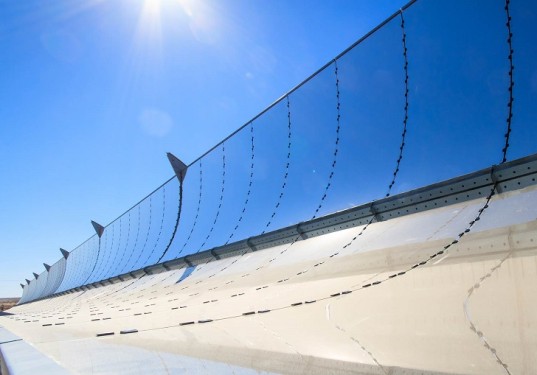
Solar energy plant DImona IsraelSolar energy is a pretty hot topic right now. It’s cheaper, cleaner and more sustainable than traditional energy sources.

But the problem has remained of how to use solar energy without any sun – when it gets dark! An Israeli company thinks it might have found the answer.

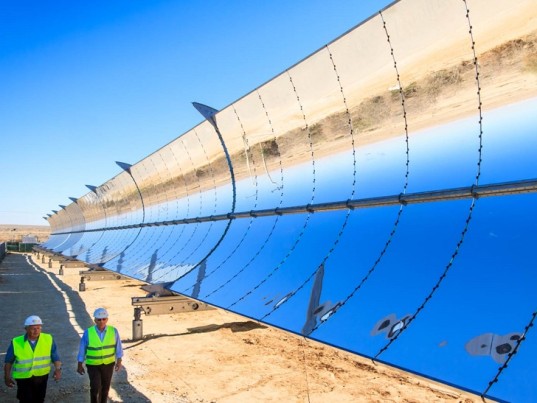
Brenmiller Energy, an alternative energy company, has announced that it will build a 10-megawatt solar field in the town of Dimona in southern Israel. The facility will be able to generate electricity for around 20 hours a day – so even when the sun has gone down!

The project is the first of its kind and will be based on an innovative storage technology that the company has developed, combining existing solar thermal energy with an underground system that stores heat to use at night.

The technology comprises of a of a solar field and an energy center. The system allows the heat from the solar field to be stored and then releases it as steam directly into a turbine inlet.

This one-way process, means that the energy center can act as a “buffer” between the solar field and the power block, and dispatch the power of the sun’s heat when it is needed.

Solar energy plant Dimona Israel

The facility will be backed up by biomass to produce power during the four hours of the day that solar energy can’t be utilized.

“Solar power stations integrating storage and backed up by biomass are the best solution for producing electricity in Israel,” Brenmiller Energy CEO Avi Brenmiller said.

“Biomass alone cannot meet electricity demand but combining it with solar energy and storage represents the cheapest and cleanest alternative.”

Brenmiller Energy expects that the project will be completed in early 2017.