A coworking space within walking distance can cut commuting time and give you a reliable place to work, but distance alone does not make it useful. Test the internet, noise, privacy, desk setup, environmental claims and real cost before committing to a membership.
Yazan Al Homsi looks at two very different bets — Aduro Clean Technologies and Rocket Doctor — to show what investors should watch as small-cap companies attempt to move from promising technology to commercial scale.
Breast reconstruction can be an important part of recovery, but persistent pain, infection, changes in breast shape or mesh movement deserve medical attention. Here are the warning signs patients should know after breast mesh surgery.
As ABA practices grow, so can their administrative footprint. Smarter billing and documentation systems can reduce duplicated work, wasted staff time and inefficiencies while supporting sustainable growth.
Meta description:
The Houthis have turned Yemen’s Red Sea coast into part of a global geopolitical crisis. But behind the missiles, shipping disruptions and Suez Canal headlines is Mocha — the ancient Yemeni port that gave the world its name for coffee.
A coworking space within walking distance can cut commuting time and give you a reliable place to work, but distance alone does not make it useful. Test the internet, noise, privacy, desk setup, environmental claims and real cost before committing to a membership.
Yazan Al Homsi looks at two very different bets — Aduro Clean Technologies and Rocket Doctor — to show what investors should watch as small-cap companies attempt to move from promising technology to commercial scale.
Breast reconstruction can be an important part of recovery, but persistent pain, infection, changes in breast shape or mesh movement deserve medical attention. Here are the warning signs patients should know after breast mesh surgery.
As ABA practices grow, so can their administrative footprint. Smarter billing and documentation systems can reduce duplicated work, wasted staff time and inefficiencies while supporting sustainable growth.
Meta description:
The Houthis have turned Yemen’s Red Sea coast into part of a global geopolitical crisis. But behind the missiles, shipping disruptions and Suez Canal headlines is Mocha — the ancient Yemeni port that gave the world its name for coffee.
A coworking space within walking distance can cut commuting time and give you a reliable place to work, but distance alone does not make it useful. Test the internet, noise, privacy, desk setup, environmental claims and real cost before committing to a membership.
Yazan Al Homsi looks at two very different bets — Aduro Clean Technologies and Rocket Doctor — to show what investors should watch as small-cap companies attempt to move from promising technology to commercial scale.
Breast reconstruction can be an important part of recovery, but persistent pain, infection, changes in breast shape or mesh movement deserve medical attention. Here are the warning signs patients should know after breast mesh surgery.
As ABA practices grow, so can their administrative footprint. Smarter billing and documentation systems can reduce duplicated work, wasted staff time and inefficiencies while supporting sustainable growth.
Meta description:
The Houthis have turned Yemen’s Red Sea coast into part of a global geopolitical crisis. But behind the missiles, shipping disruptions and Suez Canal headlines is Mocha — the ancient Yemeni port that gave the world its name for coffee.
A coworking space within walking distance can cut commuting time and give you a reliable place to work, but distance alone does not make it useful. Test the internet, noise, privacy, desk setup, environmental claims and real cost before committing to a membership.
Yazan Al Homsi looks at two very different bets — Aduro Clean Technologies and Rocket Doctor — to show what investors should watch as small-cap companies attempt to move from promising technology to commercial scale.
Breast reconstruction can be an important part of recovery, but persistent pain, infection, changes in breast shape or mesh movement deserve medical attention. Here are the warning signs patients should know after breast mesh surgery.
As ABA practices grow, so can their administrative footprint. Smarter billing and documentation systems can reduce duplicated work, wasted staff time and inefficiencies while supporting sustainable growth.
Meta description:
The Houthis have turned Yemen’s Red Sea coast into part of a global geopolitical crisis. But behind the missiles, shipping disruptions and Suez Canal headlines is Mocha — the ancient Yemeni port that gave the world its name for coffee.
A coworking space within walking distance can cut commuting time and give you a reliable place to work, but distance alone does not make it useful. Test the internet, noise, privacy, desk setup, environmental claims and real cost before committing to a membership.
Yazan Al Homsi looks at two very different bets — Aduro Clean Technologies and Rocket Doctor — to show what investors should watch as small-cap companies attempt to move from promising technology to commercial scale.
Breast reconstruction can be an important part of recovery, but persistent pain, infection, changes in breast shape or mesh movement deserve medical attention. Here are the warning signs patients should know after breast mesh surgery.
As ABA practices grow, so can their administrative footprint. Smarter billing and documentation systems can reduce duplicated work, wasted staff time and inefficiencies while supporting sustainable growth.
Meta description:
The Houthis have turned Yemen’s Red Sea coast into part of a global geopolitical crisis. But behind the missiles, shipping disruptions and Suez Canal headlines is Mocha — the ancient Yemeni port that gave the world its name for coffee.
A coworking space within walking distance can cut commuting time and give you a reliable place to work, but distance alone does not make it useful. Test the internet, noise, privacy, desk setup, environmental claims and real cost before committing to a membership.
Yazan Al Homsi looks at two very different bets — Aduro Clean Technologies and Rocket Doctor — to show what investors should watch as small-cap companies attempt to move from promising technology to commercial scale.
Breast reconstruction can be an important part of recovery, but persistent pain, infection, changes in breast shape or mesh movement deserve medical attention. Here are the warning signs patients should know after breast mesh surgery.
As ABA practices grow, so can their administrative footprint. Smarter billing and documentation systems can reduce duplicated work, wasted staff time and inefficiencies while supporting sustainable growth.
Meta description:
The Houthis have turned Yemen’s Red Sea coast into part of a global geopolitical crisis. But behind the missiles, shipping disruptions and Suez Canal headlines is Mocha — the ancient Yemeni port that gave the world its name for coffee.
A coworking space within walking distance can cut commuting time and give you a reliable place to work, but distance alone does not make it useful. Test the internet, noise, privacy, desk setup, environmental claims and real cost before committing to a membership.
Yazan Al Homsi looks at two very different bets — Aduro Clean Technologies and Rocket Doctor — to show what investors should watch as small-cap companies attempt to move from promising technology to commercial scale.
Breast reconstruction can be an important part of recovery, but persistent pain, infection, changes in breast shape or mesh movement deserve medical attention. Here are the warning signs patients should know after breast mesh surgery.
As ABA practices grow, so can their administrative footprint. Smarter billing and documentation systems can reduce duplicated work, wasted staff time and inefficiencies while supporting sustainable growth.
Meta description:
The Houthis have turned Yemen’s Red Sea coast into part of a global geopolitical crisis. But behind the missiles, shipping disruptions and Suez Canal headlines is Mocha — the ancient Yemeni port that gave the world its name for coffee.
A coworking space within walking distance can cut commuting time and give you a reliable place to work, but distance alone does not make it useful. Test the internet, noise, privacy, desk setup, environmental claims and real cost before committing to a membership.
Yazan Al Homsi looks at two very different bets — Aduro Clean Technologies and Rocket Doctor — to show what investors should watch as small-cap companies attempt to move from promising technology to commercial scale.
Breast reconstruction can be an important part of recovery, but persistent pain, infection, changes in breast shape or mesh movement deserve medical attention. Here are the warning signs patients should know after breast mesh surgery.
As ABA practices grow, so can their administrative footprint. Smarter billing and documentation systems can reduce duplicated work, wasted staff time and inefficiencies while supporting sustainable growth.
Meta description:
The Houthis have turned Yemen’s Red Sea coast into part of a global geopolitical crisis. But behind the missiles, shipping disruptions and Suez Canal headlines is Mocha — the ancient Yemeni port that gave the world its name for coffee.
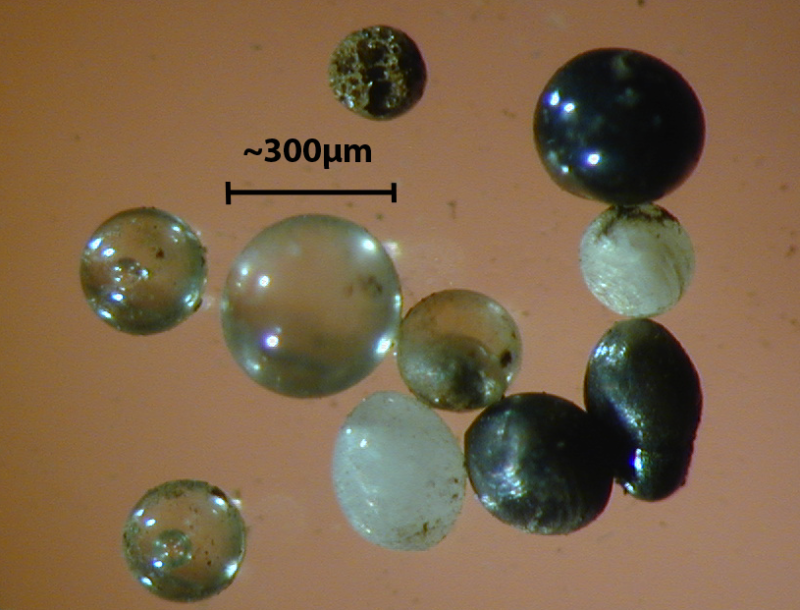
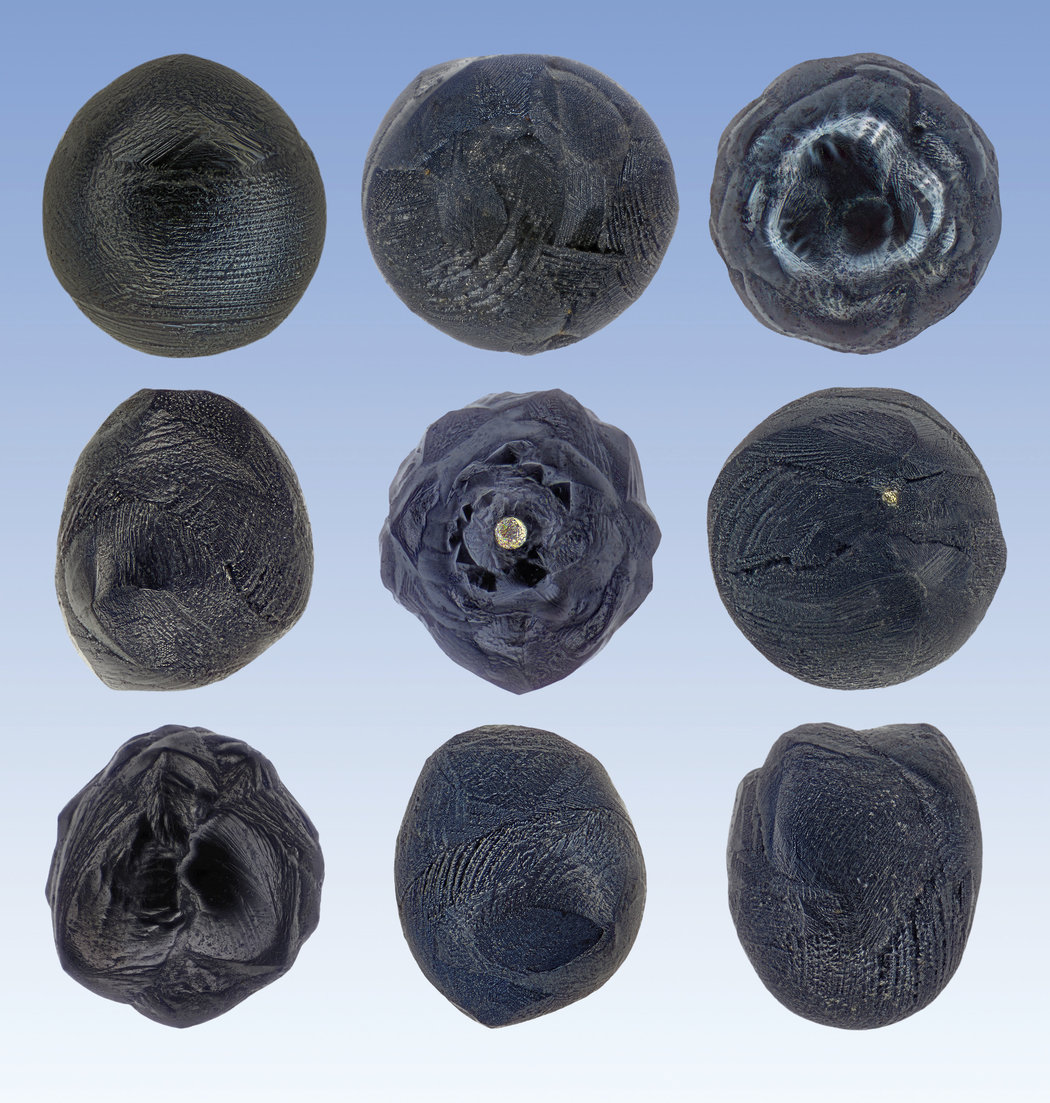
Long considered a legend, an amateur geologist and meteorite hunter has determined and shown the astronomy community that we are all stardust, and that it can be found everywhere. In an illuminating book to be released this summer, Jon Larsen proves that micrometeorites are around us in cities, in the desert and everywhere we go. Below, we provide a short guide on how to do it.
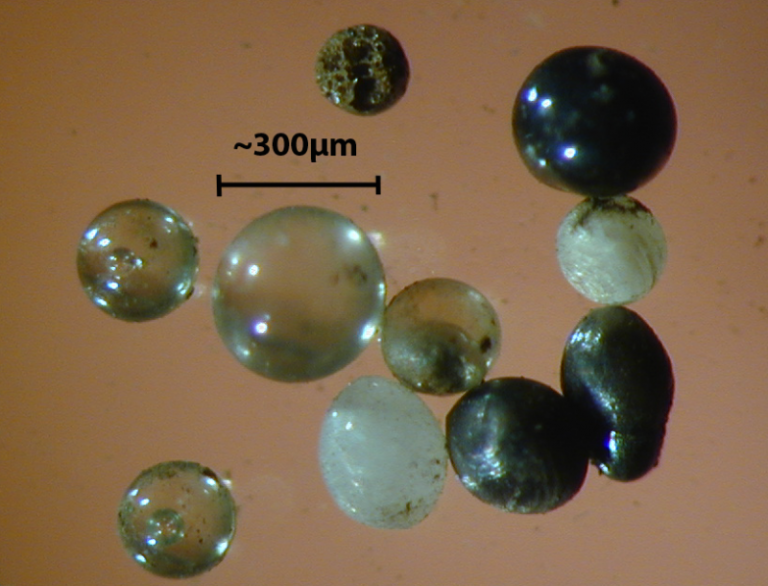
Micrometeorites are about as thick as the width of your hair but the trained eye, using a microscope, can determine what’s stardust from sand.
These tiny meteors, known as micrometeorites, are raining down on the planet continuously, but have been hard to find. Scientists today classify them according to chemical make-up rather than the way they look, leaving an opening for Larsen to do groundwork on physical appearances.Some of the bits are so small and light that the drift down to earth without melting. And they include remnants from the solar system’s birth.
Until recently the micrometeorites were mainly found in the Antarctic, far away deserts and other places far from people. About 60 years ago scientists tried looking for them around cities but gave up because human waste in all forms proved finding them difficult.
Until Larsen came along…
HOW TO FIND MICROMETEORITES
Via Wayne Schmidt: Leave some strong magnets in the rain gutter
When it rains collect them off the magnet. They are round and spherical.
You should have thousands on your roof after prolonged periods of drought, and then a sudden rain. See image below. There are 8 micrometeorites in there!
Intel’s massive buyout of Israel’s driverless car innovator and electronic sensor company Mobileye may finally give the driverless car concept the attention it so well deserves. Intel, whose computer chips and semiconductor technology is found in nearly every personal computer, appears now to be very serious about being involved in the driverless car concept.
So far, experiments using driverless car technologies have had mixed results, with test cars “struggling” when approaching bridges and when dealing with complex road work and environmental challenges.
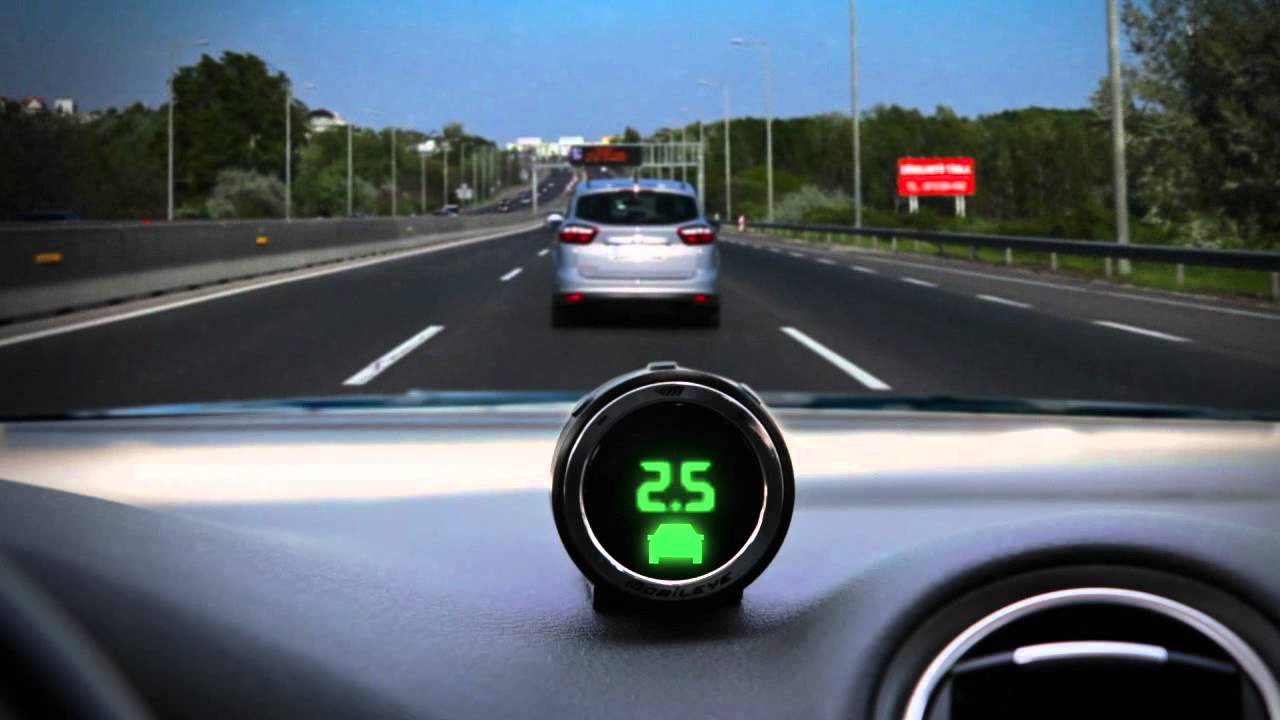
Mobileye, an advanced technologies company based in Israel, was founded in 1999 with the aim to develop what it refers to as ‘vision-safety technology’ to make cars and roads safer, reduce traffic congestion and save lives. Mobileye helped develop devices to enable cars to “sense” approaching obstacles like other vehicles, pedestrians; and even walls and other obstacles in parking lots.
This resulted in what is now known as Advanced Driver Assistance Systems (ADAS) that are now
commonplace in many new cars. These systems have been used for years in taxis in Israel.
As stated by Ziv Aviram, CEO and co-founder of Mobileye: “Drivers are responsible for 93 percent of road accidents. We have an epidemic of the modern world, and in some sense, we’ve become indifferent. There is a remedy that will save a million and a half lives and 50 million injuries a year, and therefore the autonomous car trend has caught on and can’t be stopped. It won’t be stopped.”
Tesla using Mobileye system before the crash
Once installed, Mobileye’s vision sensors literally view the road ahead and warns the driver in real-time of approaching road dangers.
So why would a computer chip giant like Intel want to invest so much money, $15.3 Billion, in a company like Mobileye? The answer: Intel wants to be a partner and major game player in the development of driverless cars. The future of this technology appears to be well worth such a large investment from Intel’s point of view. There is also much more at stake than only having cars with artificial intelligence sophisticated enough to drive themselves.
Mobileye’s advanced vision systems are already in use in many late model cars today. This will hopefully help reduce the number of road accidents on major streets and highways. These vision systems alone gave Mobileye a total revenue of more than $358 Million in 2016; a gain of over 47% over the previous year.
With Intel and Mobileye joining forces in such a big way, it shouldn’t long before the driverless car concept will be commonplace in large American, European and Asian cities; especially with taxi companies like Uber.
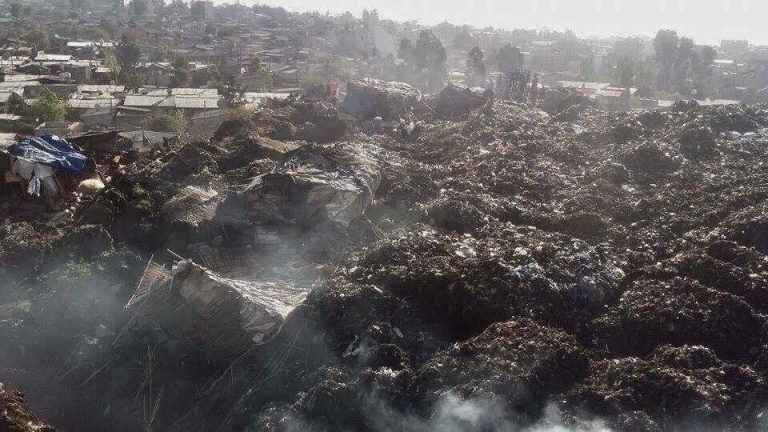
At least 60 people were killed by an avalanche of debris in an Ethiopian landfill on Saturday night. Mountains of trash at Koshee Garbage Landfill near Addis Ababa collapsed in a massive landslide, destroying the makeshift shanties that lined its slopes and killing scavengers who earn a living sorting trash for resale. One resident told the Associated Press that around 150 people were on site during the collapse. Dozens are still missing.
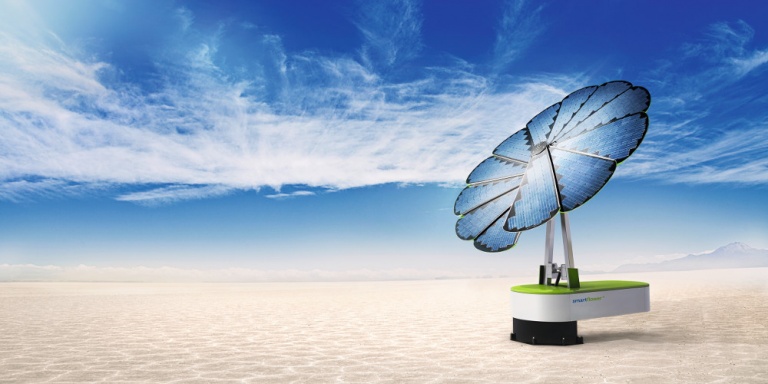
While many solar energy projects involve covering large open areas with solar array panels, smaller personal solar energy equipment mostly involves covering the roofs of private houses and other buildings with non-aesthetic solar panels to provide enough electric power. A new solar energy system, SmartFlower, not only solves the problem of aesthetics for private homes and businesses; it also provides a very practical flower shaped system that literally follows the sun to create solar power.
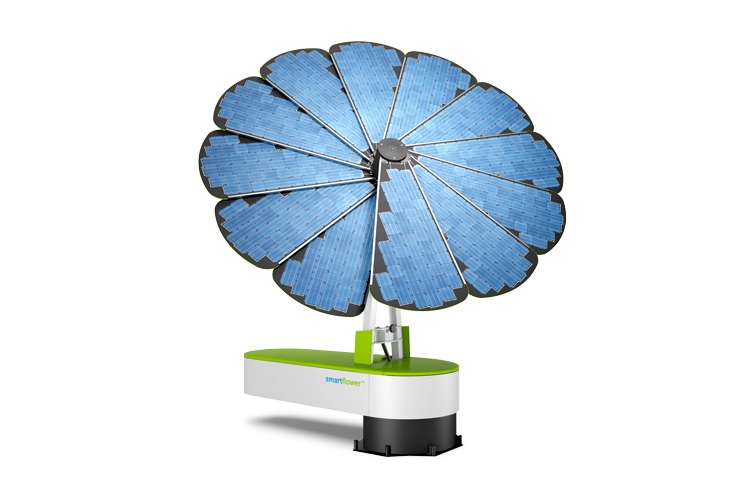
The device resembles a kind of mechanical sunflower that opens like a flower in the morning and rotates during to day to track and follow the sun to take advantage of the sun’s maximum energy potential. At night, or during bad weather, the device folds up like a flower.
SmartFlower’s compact size, ease of installation; and advanced energy creating capability in its unusual solar panels creates up to 40% more electrical energy than standard solar panels. This makes it an ideal energy solution for locations where there is a lack of space for using conventional solar panels. People owning electric EV cars can also use SmartFlower for recharging EV battery packs during daylight hours. A perfect use example is a shopping mall or office park where EV vehicles can be receiving power while their owners work or shop.
A household SmartFlower device has an electricity creating capacity of 4,000 to 6.200 KWh per year; more than enough for a family or small business’ electrical power needs. An advanced model, SmartFlower Plus (photo below), has special storage batteries to store energy for after daylight or emergency “off the grid” use.
SmartFlower is available in a variety colors, making it aesthetically pleasing to the eye. In the realm of solar energy technology, it’s definitely something new under the sun.
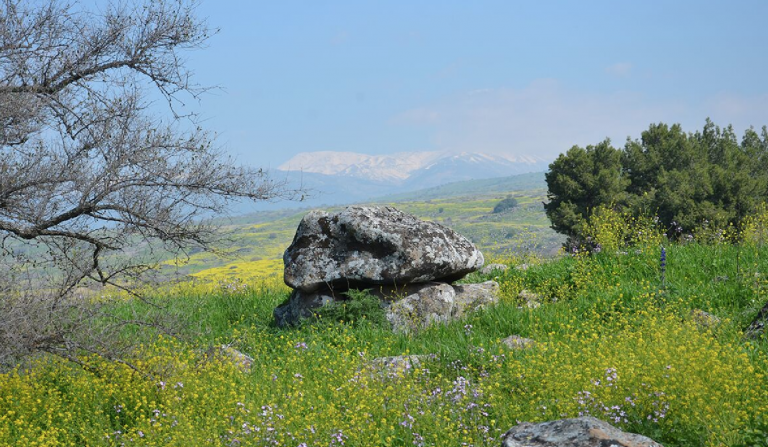
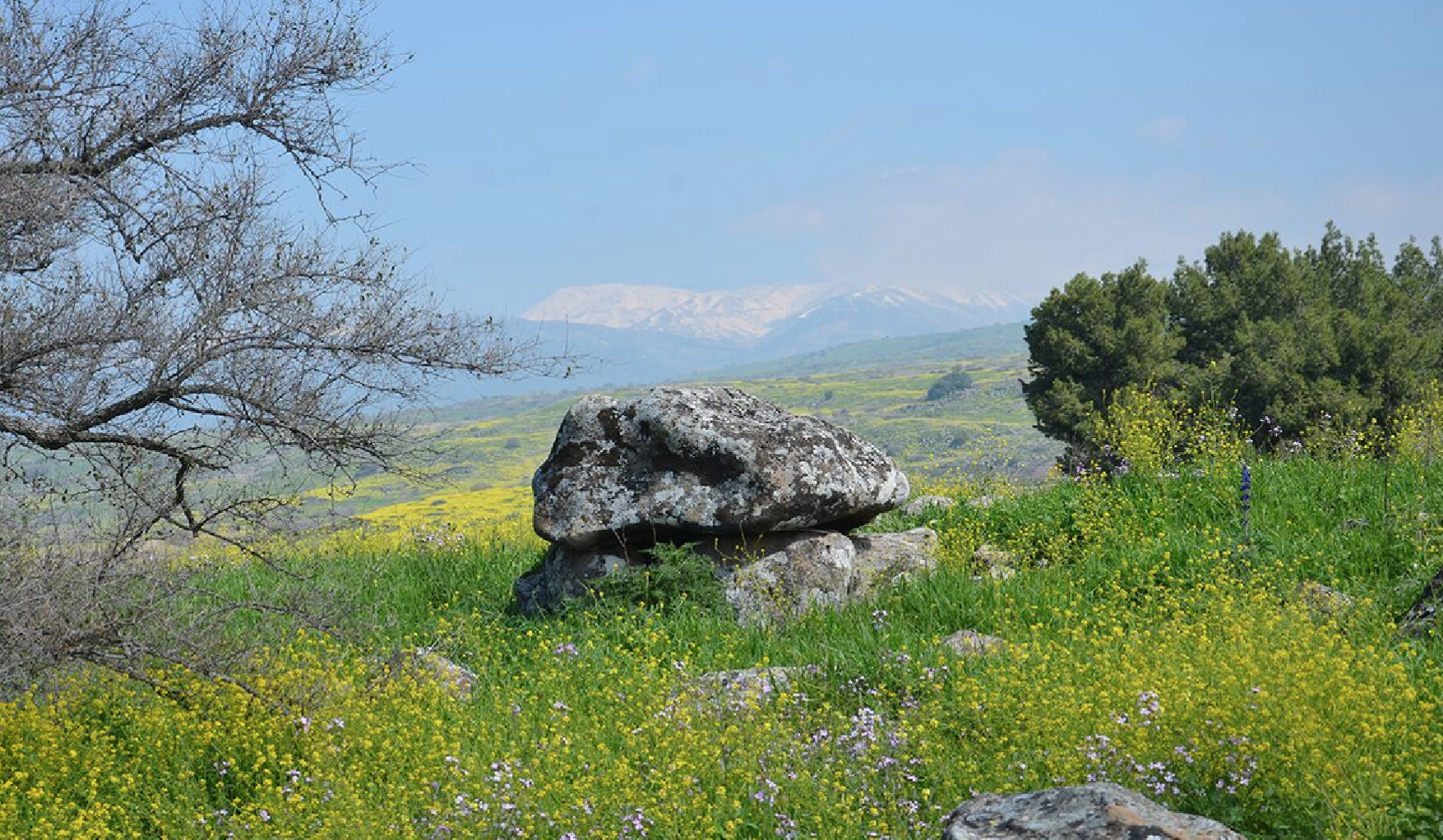
We’re so caught up in present politics that a new and mysterious message from ancient governments of the past, might be telling us something. A new underground Stonehenge-like arrangement of rocks has been found in Israel – the first for the Middle East. It is believed to be more than 4,000 years old. Older than the Bible. The large dolman or rock found above is decorated with ancient rock art.
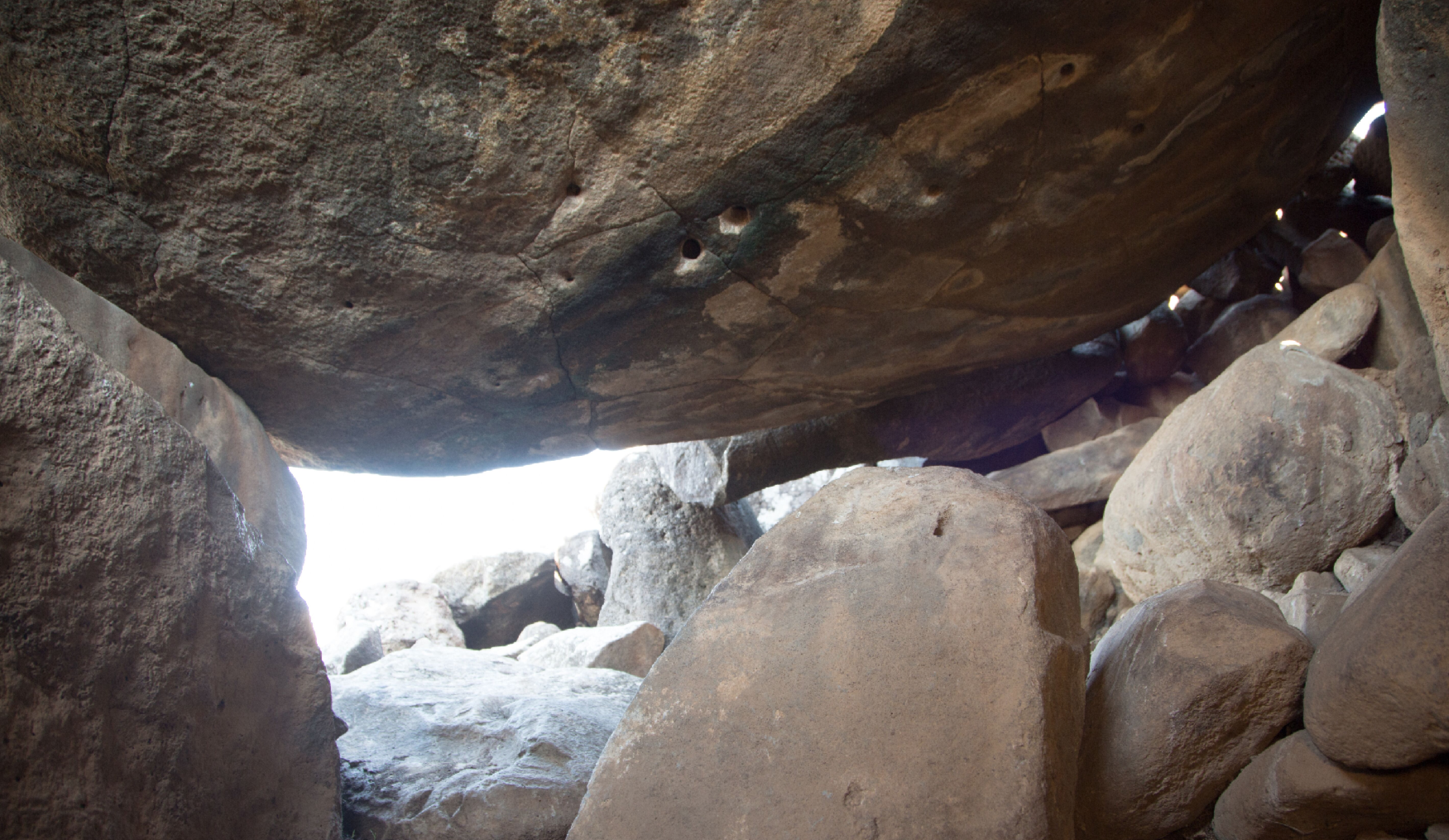
The large table-like stone structure was found as part of a field of dolmens, about 400 of them, adjacent to Kibbutz Shamir in the Upper Galilee. What makes this dolmen so unique is its huge dimensions, the structure surrounding it and most importantly the artistic decorations engraved in its ceiling.
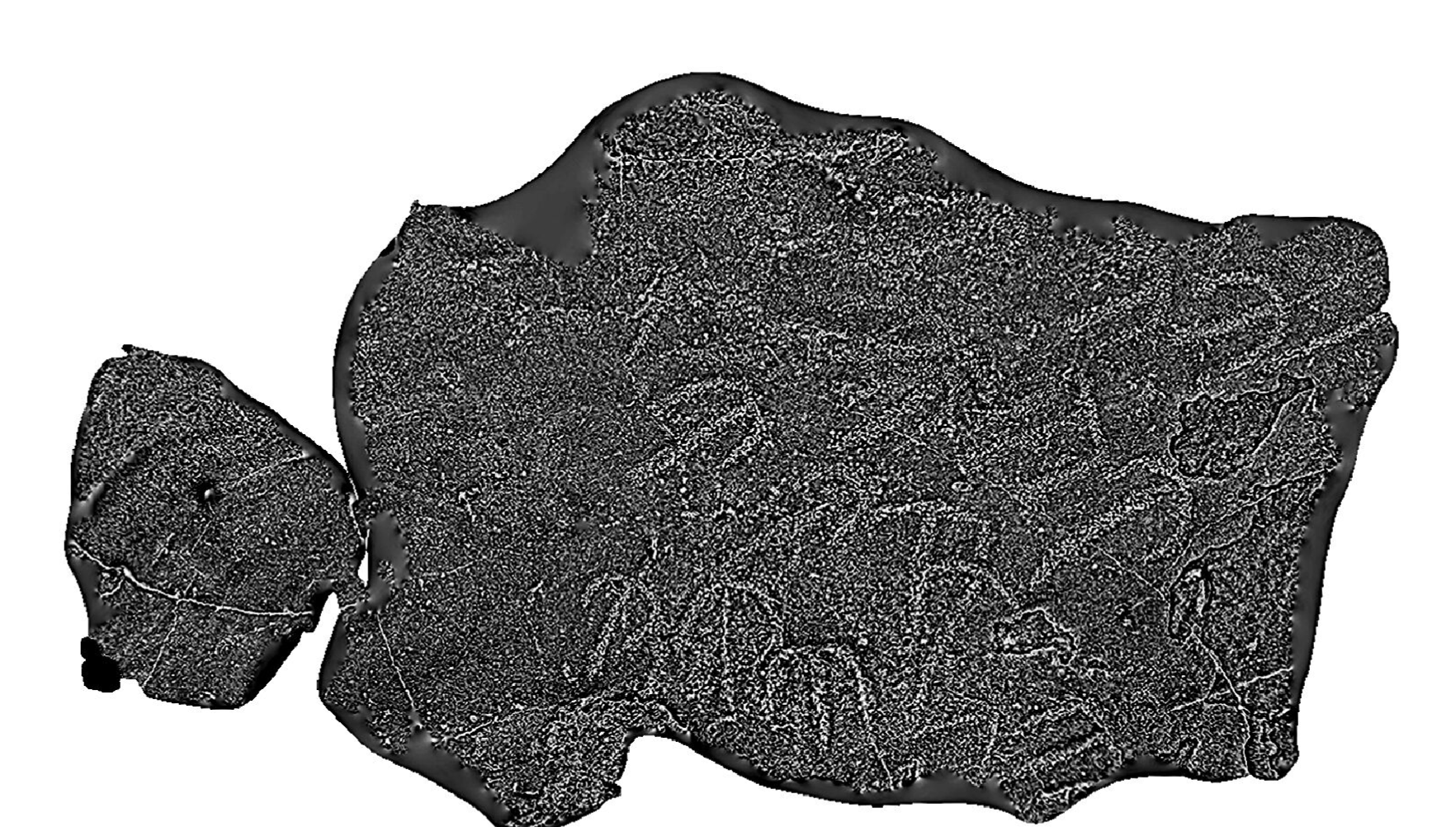
Uri Berger, an archaeologist with the Israel Antiquities Authority said the engraved shapes depict a straight line going to the center of an arc. About fifteen such engravings were documented on the ceiling of the dolmen, spread out in a kind of arc along the ceiling. No parallels exist for these shapes in the engraved rock drawings of the Middle East, and their significance remains a mystery, he reported.
The panel depicting the art was scanned in the field by the Computerized Archaeology Laboratory of the Hebrew University. By means of an innovative technique, a three-dimensional model of the engraving was produced. “The three-dimensional scan enabled us to identify engravings that otherwise could not be seen with the naked eye,” explained Professor Lior Grossman, the laboratory director.
The chamber inside the dolmen where the engravings were found on its ceiling is large, measuring 2 by 3 meters, and the stone covering it is massive, weighing an estimated fifty tons.
The rock might symbolize the existence of a significant and established governmental system in the region during the “Middle Ages” of the Bronze Age.
The absence of cities, large settlements and monumental buildings around it may attest to the collapse of the governmental and economic systems during a dark period in history. But the dolmens seem to tell a different story about the period – a story about a society that had a complex governmental and economic system that executed monumental engineering projects but did not leave behind any other archaeological evidence. Maybe they were environmentalists who didn’t want to leave behind a trace.
Archeologists believes this to be one of the great mysteries of the archeology of Israel. Maybe we will never know what it means.
If you’ve been following Green Prophet you’ll know that our founder Karin Kloosterman has been working on a super cool technology to help people like me and you take our food destiny into our own hands. That means the ability to grow super tasty, fresh and local food right from home. She’s built Eddy, a slick robot that packs in experts and also connects you to a community of people so you never have to grow alone.
Eddy is feature packed with software (and the hottest thing in tech called machine learning and artificial intelligence) that can guide you through success no matter where you live. And this story on Treehugger captures the essence of what Eddy can do for home growers anywhere.
Read the TreeHugger story here to see how we can change the things we care about. No more complaining on the internet about sugar in your organic bread. Bake your own. No more complaining about pesticides on your veggies and greens. Grow your own.
The Eddy team is super cool in that they’ve also founded an alliance to grow food in space. SpaceX founder Elon Musk has declared he will send people to Mars. What in the world will they eat? Eddy and the Mars Farm Odyssey believe they will build the solution, which is the farm of the future for earth, but also for us people who prefer to stay on earth.
If you want to sign up to follow their progress and be among the first to buy Eddy ($149, instead of $179), sign up via www.GrowWithEddy.com
You see a bear, moose or a turtle on the side of the road and hope that the car behind you doesn’t veer right and hit it. Car crashes caused by wild animals can be fatal, not only for the animals. But in a bid to save the animals from death by auto, a leading NGO in Israel has partnered with the popular Waze app to help drivers report roadkill, leading to better warning signs on the road. Thousands of wild animals are killed in Israel every year.
It’s getting worse as urban areas expand and highways cut through habitat.
While some people in America have turned roadkill into tonight’s dinner, it’s not common in Israel for people to eat non-kosher animals (the wild ones), and certainly not ones maimed or mangled on the road.
Using the data collected by the app, The Society for the Protection of Nature in Israel (SPNI) will create maps that will then help developers build safe passageways for animals when faced by highways that intersect their natural trails.
Types of animals killed by cars in Israel include gazelles, porcupines, badgers, turtles, hyenas, and otters.
In January alone this year, the Waze community of drivers logged 1,416 roadkill reports. Bad driving is notorious not only in Israel but in the entire Middle East where in some countries maiming, trapping and killing animals is a wild sport or frightening habit.
The news comes ahead of the UN’s World Wildlife Day, tomorrow. Love the idea and use Waze in your community? Be in touch with them to start the same.
Two of three people in the world don’t have internet access. That means 2 out of 3 people can’t Google whatever they imagine. They can’t connect to Facebook, they can’t use Instagram and then there are the basics like banking, education, healthcare. Imagine doing anything today without internet?
High altitude balloons invented by Google’s elite Alphabet group and named Project Loon will do just that. The company is building high altitude balloons that fly in the stratosphere to deliver Internet to all.
Project Loon balloons are designed and manufactured at scale to survive the conditions in the stratosphere, where winds can blow over 100 km/hr and the thin atmosphere offers little protection from UV radiation and dramatic temperature swings which can reach as low as -90°C.
Made from sheets of polyethylene, each tennis court sized balloon is built to last more than 100 days in the stratosphere before returning to the ground in a controlled descent.
https://www.youtube.com/watch?v=HOndhtfIXSY
Project Loon has taken the most essential components of a cell tower and redesigned them to be light enough and durable enough to be carried by a balloon 20 km up in the stratosphere. All the equipment is highly energy-efficient and is powered entirely by renewable energy – with solar panels powering daytime operations and charging a battery for use during the night.
Their custom-built Autolaunchers are designed to launch Loon balloons safely and reliably at scale. Huge side panels provide protection from the wind as the balloon is filled and lifted into launch position, and then the crane is pointed downwind to smoothly release the balloon up into the stratosphere. Each crane is capable of filling and launching a new balloon into the Loon network every 30 minutes.
The signals are like Wi-Fi boosters that pass the internet signals from one balloon to the next.
https://www.youtube.com/watch?v=gwkmOE8dkvw
In New Zealand they are working with Vodaphone to pilot the technology. Project updates suggest that progress is being made despite Google cutting back on the idea.
From TechCrunch: “When Google launched Project Loon a few years ago, the plan was to provide internet access to underserved areas with the help of a series of balloons that would constantly circumnavigate the earth. When one balloon moved out of range, another would move in behind it. Today, Google is still Google but it’s also Alphabet — and as Alphabet’s “Captain of Moonshots” at X Astro Teller explained today, the team recently found a way to keep the Loons in one spot for an extended time, and that will likely be how the company will operate its Loon-based internet service in the future.
“That means Project Loon will be able to work with significantly fewer balloons in flight at any given time. According to Teller, the team hit upon the algorithm that makes this work almost by accident.
“By early 2016, the team was seeing a few balloons behave in a slightly weird way: lingering in an area rather than sailing away,” he writes in today’s announcement. “In the weirdness, they saw opportunity. They asked themselves the once-impossible question: could our algorithms help the balloons to stay much closer to the location they were already in?””
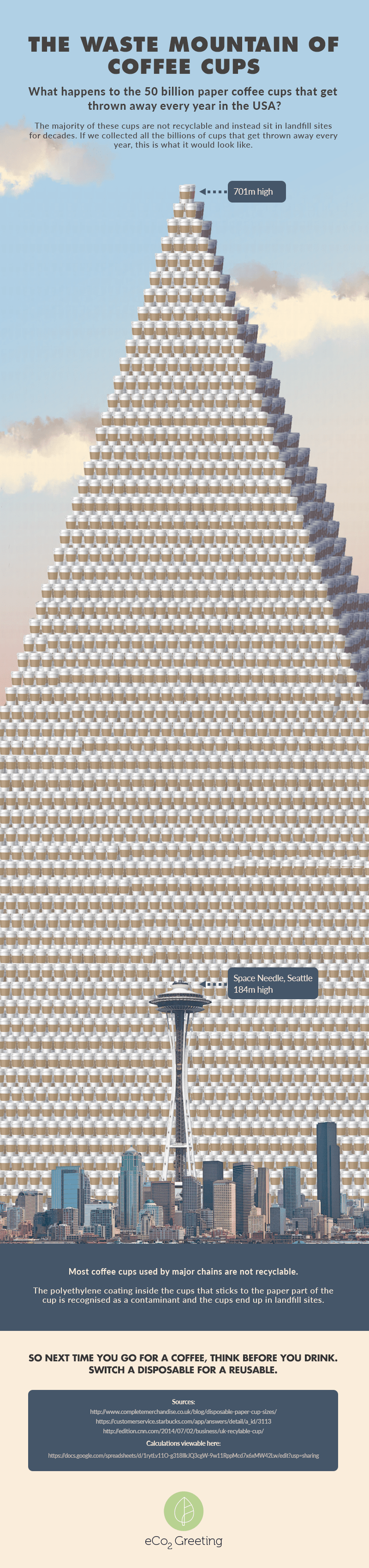
It’s so easy to be tempted to get that take-away cup when you are on the run. But every time you feel terrible about the plastics in our waterways, rivers, seas and bodies, this about this infographic below. Because the cost of styrofoam cups adds up! Our advice.
Take a cup sitting down or standing at the bar like the Italians do. You will have a more interesting life meeting strangers in real life!
Lithium ion batteries, used to power electric cars such as Tesla Motor’s high priced electric sports cars, as well as a host of other electric devices, have been talked and written about as possible solutions for providing alternative power sources for homes and small businesses. Electric cars powered by these batteries, or battery packs to be more correct, have yet to become commonplace on the roads. Israel’s Better Place electric car network experiment, for example, ended with less than 1,000 ZE cars actually being sold. It was a disaster for electric cars. But given the lack of sex appeal for the Renault cars, we can understand why. There is no status symbol in that ugly car. We feel sorry for the ones who bought them, now bereft and without battery switch stations as promised.
Incorporating a large network of lithium battery packs to provide back-up electricity to entire communities is for many an even more far-fetched idea than millions of electric cars plugged into household electrical current sockets. Tesla’s Elon Musk, however, has even more grand ideas for using the concept of electric car battery systems to provide power to large population centers, such as those as large as Los Angeles. LA is a city well known for electric power shortages, often resulting in electric power “brown outs” during high peak seasonal use. It’s also a city where you need a car to get around.
For a city the size of Los Angeles, providing enough back-up electrical power systems from lithium storage batteries may seem like an idea out of a science fiction story. Elon Musk, whose technological and scientific group of projects includes those for inter-planetary space travel, is now putting a lot of time and money into incorporating his electric car battery concepts into a much larger scale by literally grouping together hundreds of electric battery packs. They will provide as much as 80 mega-watts of emergency electricity power for up to 2,500 households for a day or 1,000 electric cars.
To understand how this idea will actually work, one has to understand how literally thousands of small lithium ion batteries are grouped together to form one battery pack powerful enough to run one electric sports car or sedan.
His company’s success in doing this has enabled Tesla cars to have cruising ranges of up to 300 KM or over 230 miles on a single charge. Musk’s new idea is to build large numbers of commercial “mega batteries” in a new Gigafactory he is building in Nevada.
The first Tesla battery power pack system will be installed in a California Edison power substation, located about 40 miles outside of Los Angeles. If this battery pilot project works satisfactorily, other such projects will be undertaken as well. Musk has a solution for providing power to charge these mega batteries, involving plans to construct solar energy power plants to provide non-polluting renewable energy that can be incorporated into municipal power grids.
Futuristic? Judging from what Musk and Tesla has been able to do so far (his Tesla Model S electric sports sedan sold better in the USA last year than all other high priced luxury cars) anything is possible.
In case you are wondering, Tinder is not a dating site. But if you are busy like me, often working at home, then dating may require you to be online. Today it is easier to meet in an online venue than to actually meet face to face (when we work in pajamas!) and there are plenty of good dating sites where you can meet like-minded people who care about the earth. To begin with, it is very important to understand how online dating works before starting to contact people, but more important than whom you meet, the where is critical. Be sure to make use of add-ons and online reviews to find safe and good dating sites.
Consider what sort of dating site you are looking for
Some sites are geared towards those who are just looking for a friend or for a shorter romance while others are set to match people for life. You need to consider if you are looking to get married or if you just want to meet interesting people. This will influence how you connect to a dating site. Since online dating has lost its stigma you need to be prepared for all types of people being out there and it is advisable to choose a dating portal that caters to your specific needs and expectations. There are Muslim-friendly (Muslima), Jewish-friendly (Jdate), Christian-friendly and even vegan-friendly options and websites.
Find your planet-loving vegan match
Online dating sites also recognize the unique needs of different age groups. For young adults in their 20s, there are specific platforms that offer tailored experiences and features to enhance their dating journey. According to Online For Love’s list of the best young adult dating sites for 20s, these platforms focus on connecting individuals within the same age range seeking companionship, casual dating, or potential long-term relationships. These sites typically provide user-friendly interfaces, vibrant communities, and innovative matching algorithms to ensure young adults can easily navigate and explore their dating options.
Use smart add-ons to stay clear of frauds
Let millions of other online users warn you against dangerous dating sites that you should never sign up for! Recent studies have confirmed what many of us have suspected a long time, a large percent of online daters lie about things; how old they are, marital status and even about having children. With Web of Trust you will stay clear of fraudulent sites that let these people roam their pages. This is a Firefox add-on that is easy to install and that gives you warnings and updates from millions of users. If a dating site is dangerous (or you are about to date a smoker or meat eater (we jest!), it will be filtered out to your advantage!
Read reviews by other online daters
Like Reddit does for technology, you should also have a look at what people say in reviews of online sites. In regular forums online you can read authentic opinions from people who actually tried the service. You can also post questions and see if there are people in the forum who can tell you a word or two about the dating site that you are considering. This can be done anonymously so you don’t have to reveal your plans to meet your partner online to anyone if you feel that this is a bit embarrassing.
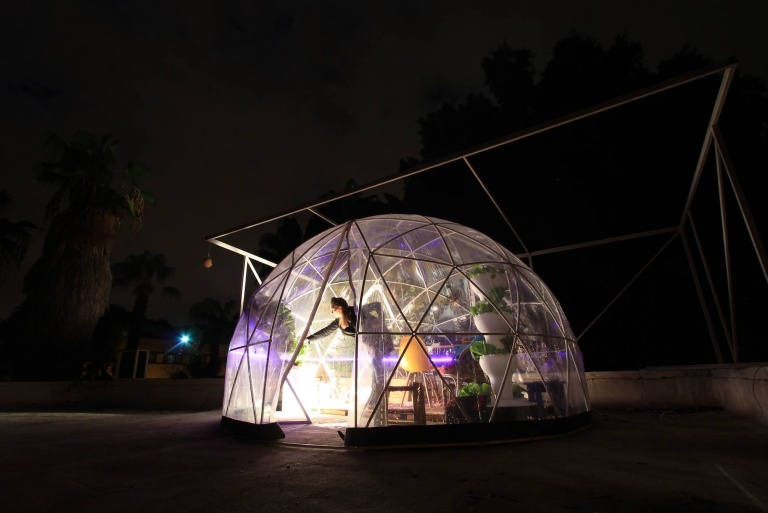
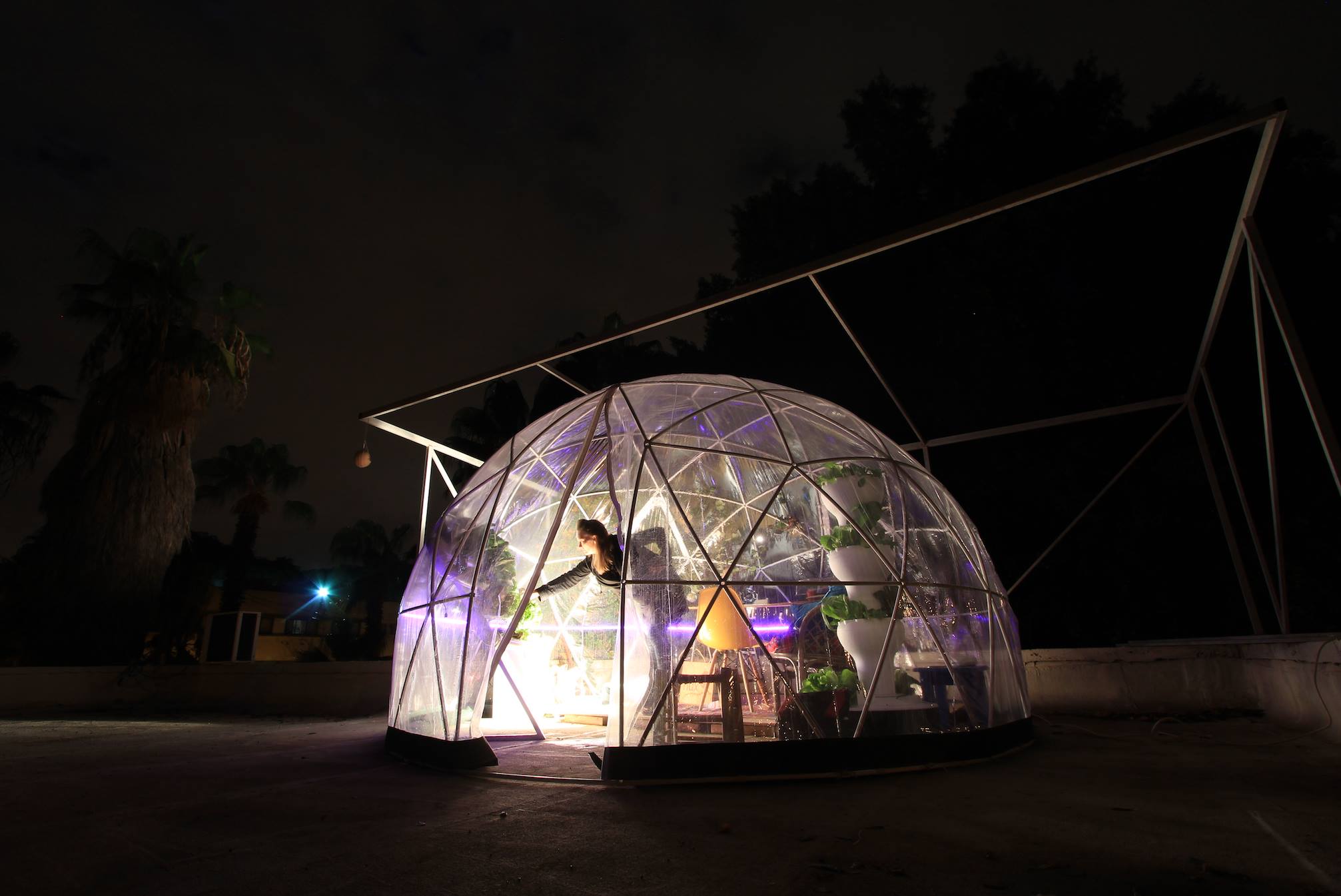
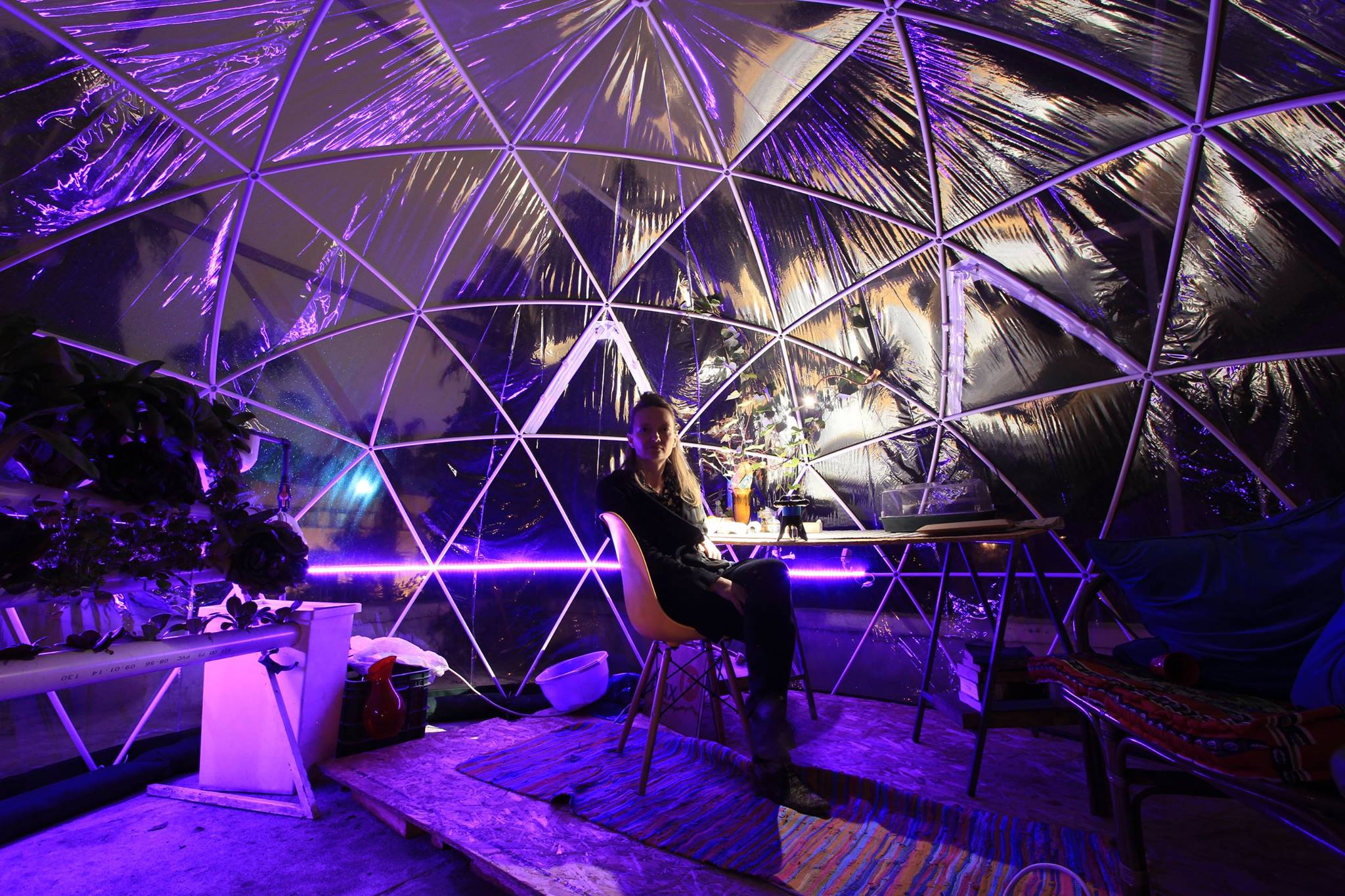
The Garden Igloo hydroponic biodome at night, in Tel Aviv
My house has loads of space, so finding a place to grow my indoor hydroponic garden would be no big deal. But when I saw an image of the Garden Igloo, a geodesic dome plastic tent, my heart jumped. This is it: the perfect modern conservatory for my roof.
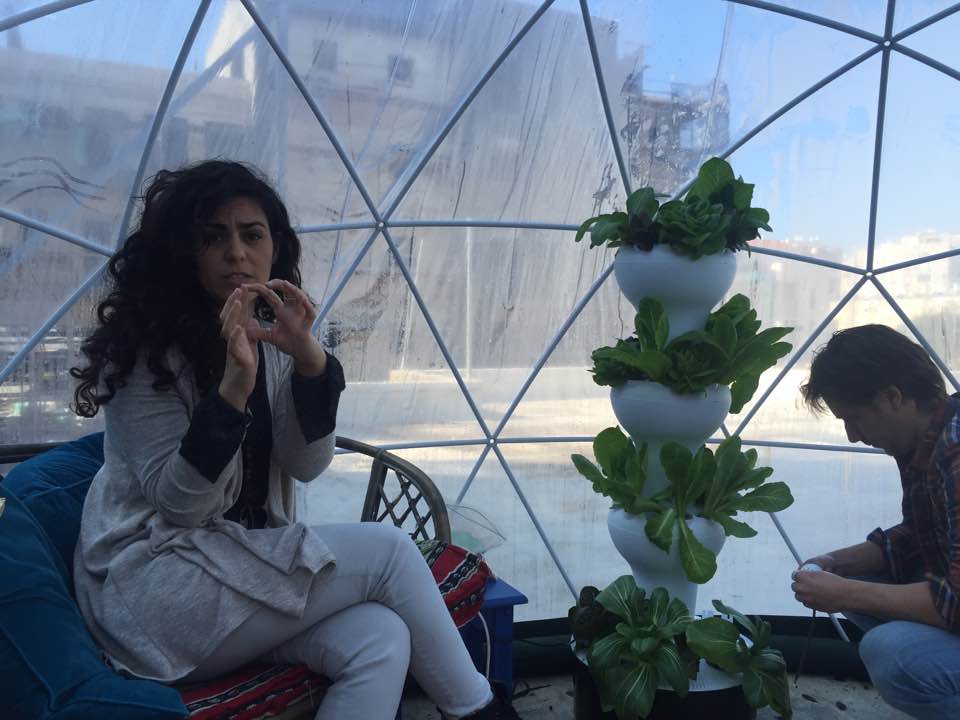
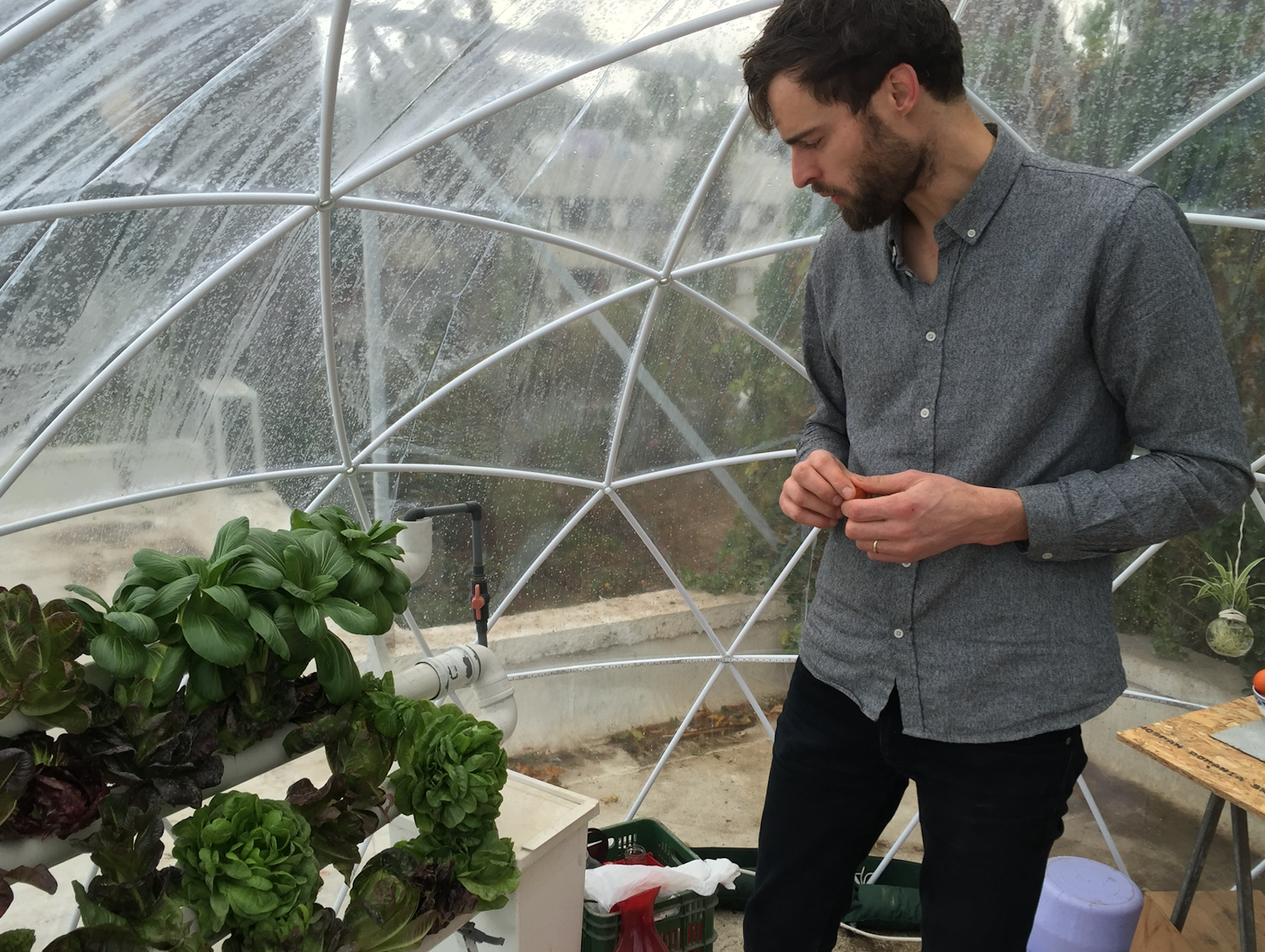
Thieme Hennis from Border Labs of Holland checking out my hydroponic rooftop garden.Hydroponics robot grow buddy Eddy.
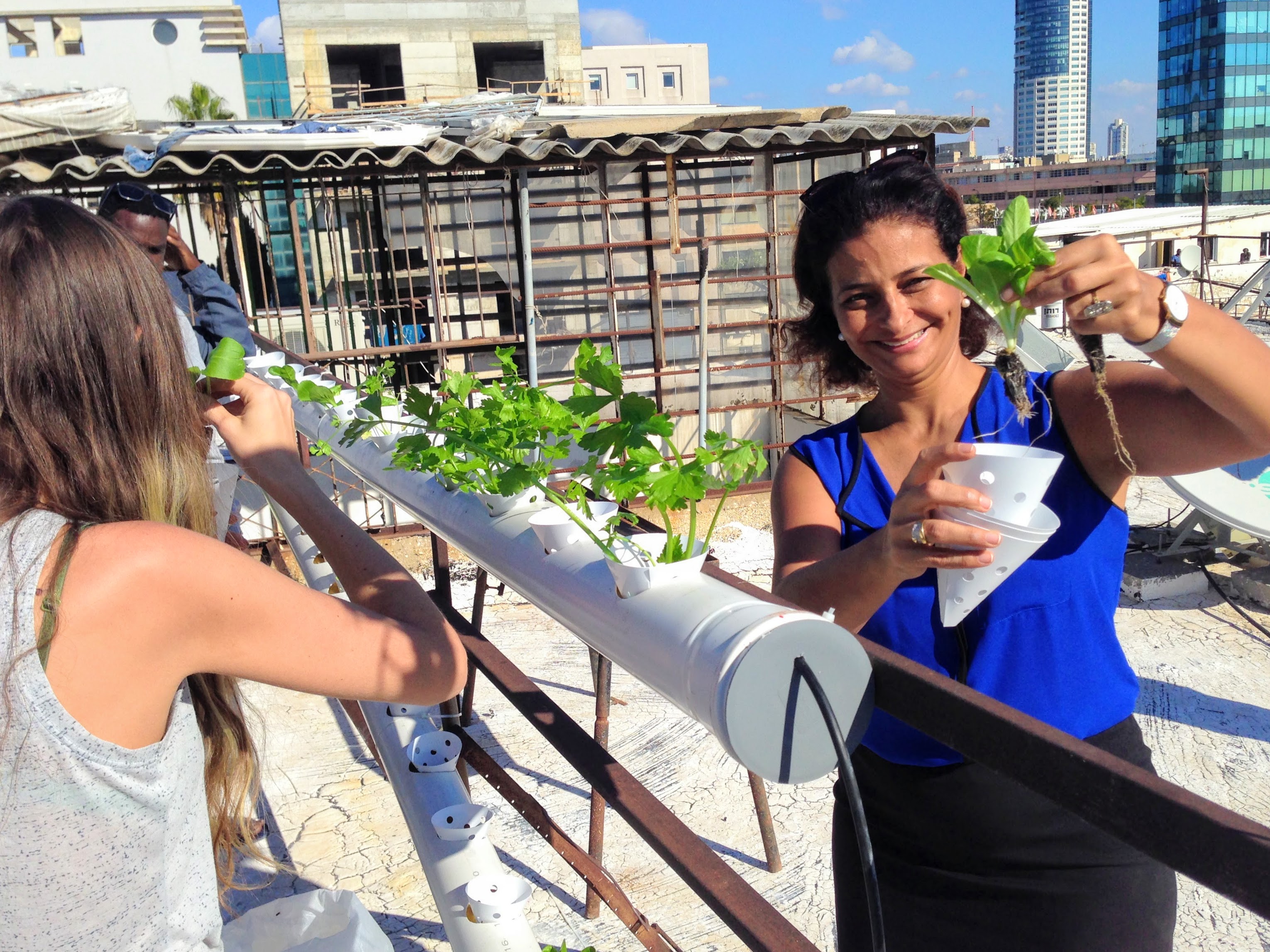
I’ve been working on building a technology called Eddy. It’s a grow robot that uses artificial intelligence to make hydroponics accessible to anyone. Hydroponics is growing plants without soil, on a treated medium based on water. It’s something super easy to do once you have some of the chemistry and science down pat. That’s what Eddy is going to help you with. Since I live in the Middle East, I have the luxury of being able to grow year-round outdoors, as long as I had a greenhouse. Greenhouses that I found online were clunky and expensive. They looked like garbage and they would not pass my husband’s aesthetics test. Any of the decent ones would cost me a fortune to buy or ship to Israel.
An admirer of Buckminster Fuller and all the proponents of round rooms –- Hassan Fathy and Nader Khalili who pioneered Super Adobe, I knew that I wanted my space to feel organic and comfortable. I investigated building my own Buckminster geodesic dome using bamboo poles and netting. After much investigation, people on the street told me that I would basically need a hippy to help set it up, “because only hippies understand the geometry and how to do it,” according to one sound guy who was helping us renovate our music hall.
When I saw the Garden Igloo online, I knew I had to have one: The Garden Igloo fits the bill and is a perfect greenhouse, creating a true greenhouse effect. Two small windows zip open to let you control temperature and humidity. A nice touch is that it doesn’t cost thousands and is in the price range for most Americans who own a home or who rent an apartment in an urban area like New York City.
Great for global nomads. Grows with you, wherever you roam. Nails not needed
If you live in an area that doesn’t get colder than -4F ( or -20C), you can use it year long. When summers get hot, consider the mosquito net option as shade to shield your plants from intense sun. Amazingly sturdy sandbags secure my Garden Igloo to my rooftop where winds from the Mediterranean Sea can be intense in winter. Perfect because I can’t nail a thing to my roof.
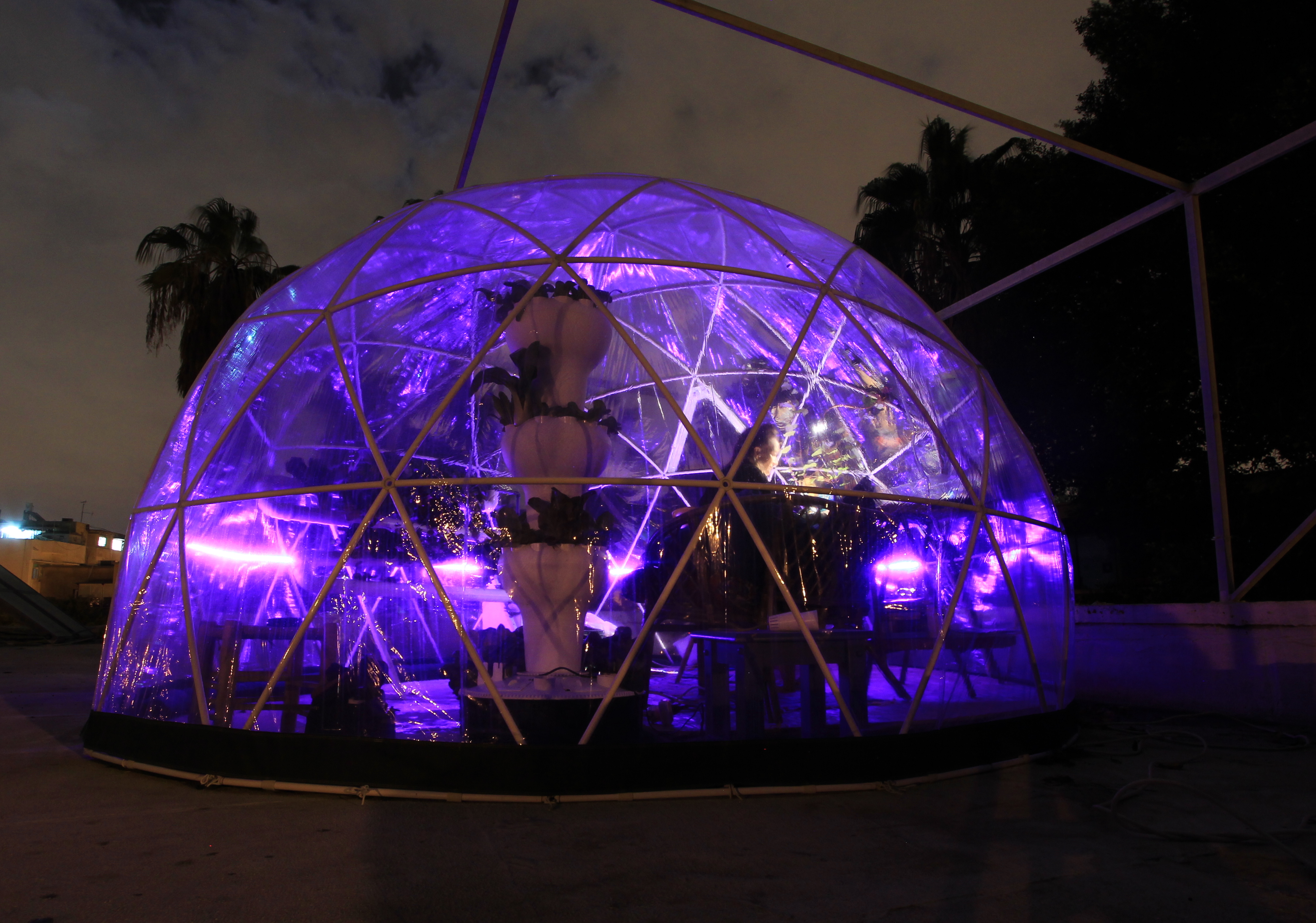
Once you have plants in your Garden Igloo (I have two hydroponic systems in mine), add some touches to make it feel like home. I added some LED lights for growing, as well as a desk, some stools and a chair, small wicker couch I found on the side of the road, some cushions, my favorite books and a reading lamp. I am going to bring up a kettle and my favorite coffee so it can be homier even still.
When people enter the Garden Igloo something feels good and right to them, like when you visit a straw-bale home for the first time. The round interior embraces you, and protects you while letting your outside environment in. You can be in a noisy city like I am, and still feel protected.
Great for hosting friends and study buddies.
The effects become more pronounced at night. With some basic lighting (not necessarily needed for growing, but for your comfort), you can create an awesome looking space that will impress your friends and dinner dates!
My Garden Igloo biodome at night.
Since I wanted to use mine primarily for growing plants (I am growing bok choy, lettuce, all kinds of herbs for tea and spice) I needed lots of space on the ground for my hydroponic systems. With the help of my father I flashed back to Grade 7 Geometry class and figured out the circumference of my dome on the ground and built and then hoisted a demi-platform up to the roof. The wooden platform, made from chipboard, was assembled in pieces inside the doe and gives an even and protected raised floor from the rain.
When set up, the Garden Igloo looks like a high-tech biodome from Mars. In fact, I am using it as such as we build out experiments for highly controlled food production suited to space travel, space stations and Mars (join me at Mars Farm), but in reality the structure itself is made from plastic poles and a strong PVC-like shower curtain material. No doubt there has been years of thought and engineering into the product, as the pieces fit together perfectly despite being of different lengths. The instructions are color-coded and harmonize to any language.
Note to all the girls and women and men out there who shy away from big box assembly: while it does take some wheels turning in your mind, the Garden Igloo is easily assembled by hand. I used no tools except a rubber hammer to help me secure some hard-to-push joints. I used a chair to reach higher spots later on as the tent expanded. The Garden Igloo was 100% assembled by me alone in about 6 hours, a project I enjoyed every single step of the way.
Suzi Maimon of iPonic inside the Garden Igloo in Tel Aviv. That’s her hydroponic system right.
I created the floor using a jigsaw. Pieces were assembled inside the tent, using old wooden 2×4 chunks for support. No nails or screws used, which for me would be a massive problem since assembly was done on a water-tight, white tarred roof.
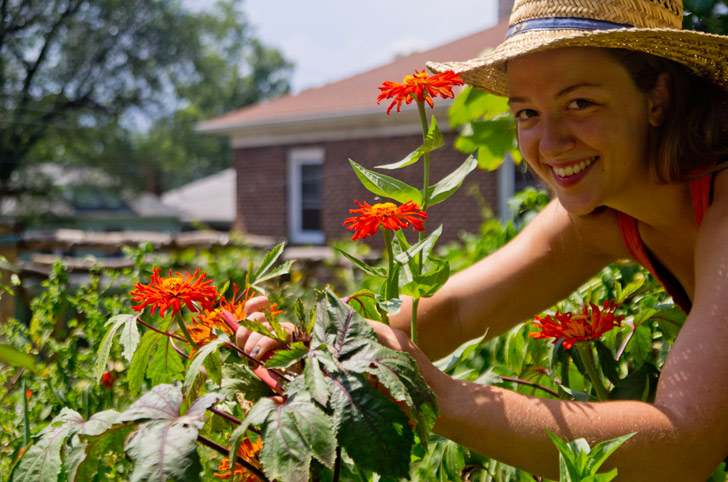
That’s me Karin Kloosterman inside the Garden Igloo. I call it my biodome.
Designed in Turkey
And the story has a Middle East twist… the Garden Igloo story began in a small studio in Istanbul. For two years, Cagla Isin Alemdar (pictured below) worked meticulously and experimented with different materials, colours and designs for the Garden Igloo. Her plan was to create a convertible greenhouse which could be used all year round and which also looked good. The geodesic dome for optimal temperature distribution is one result of this period of experimentation.
The other result is the extraordinary resilience of the materials and frame.
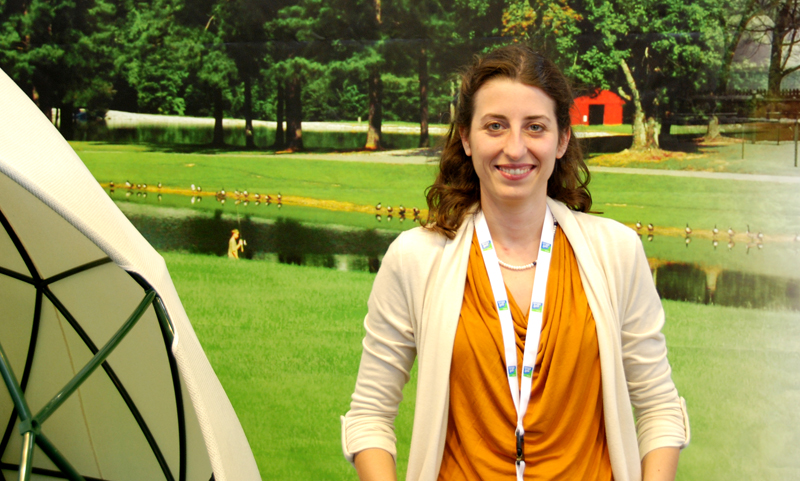
Garden Igloo designer Cagla Isin Alemdar
In the late summer of 2013, the Garden Igloo was unveiled at the garden trade fair Spoga-Gafa in Cologne in Germany. To the delight of the designer, it was immediately included in the ranges of several major distribu-
tors. Online shops in many European countries and the US are selling it. It has also been available since March 2013 via the company’s own website www.gardenigloo.com and it has its own sales company in Germany.
The initial studio in Istanbul is now too small, but Cagla Alemdar has made a conscious decision not to relocate production to a cheaper country. She has moved into a new building with larger rooms and now employs about 50 people in her factory. In her opinion, being involved with production is really important to continue to guarantee good quality.
And it shows.
For the retail price of about $900 (the product ships to your home in the US or Europe and beyond) everyone in suburbia and cities should be growing their food – and where laws permit in the US – cannabis this way. The dome is really perfect for hydroponics. And it is exactly what the industry has been missing with all the over-priced and extremely inefficient one-plant grow box appliances coming on the market for $3000 a pop. The Garden Igloo is an antidote to this way of thinking, helping us expand our food and medicine possibilities, and ultimately ourselves.
I love that it was first conceived in the region and that it was made for growing. It’s not hard to love the Garden Igloo.
Urban Farm School teaches you how to grow food in your city
As urban sprawl continues, we are seeing less and less green space. Farmland is sprouting with subdivisions, city parks are being crowded out, and ever-smaller residential lots feature more residence and less lot. People are becoming less and less familiar with the wonders of nature, and they are craving access to it.
Of course, from this necessity has come lots of creativity. Plants are remarkable things. They aren’t too picky about the particulars of their environment. As long as they have nutrients, water, light, and carbon dioxide, they are in pretty good shape.
It’s for this reason that even the most urban of dwellers can find a way to get a patch of Kentucky bluegrass or a strawberry vine (see our strawberry jam recipe here) to grow at their home. And they’re doing it in some interesting ways.
New Techniques
When you don’t have soil, how do you grow plants? This question would have once been considered ridiculous, but innovations in agriculture have made it a very legitimate query that has been answered in a number of ways.
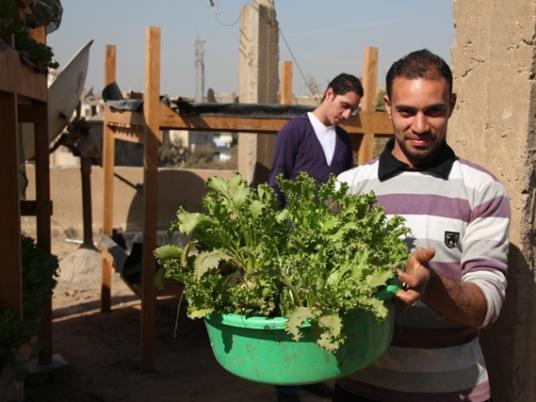
Many people are familiar with hydroponics, the process of growing plants in some type of non-soil based arrangement. Many farms now incorporate hydroponics as an efficient and effective means of growing transplants for vegetables and other crops. Others utilize a dual arrangement between fish production, in which the waste water from fish is used to fertilize the plants, which cleans the water to return to the fish.
Alternative Locations
When an aerial view of a development shows more roof than turf, it’s time for turf to fight back–along with trees, shrubs, and flowers, and even fruits and vegetables.
Properly managed, rooftop gardens can produce an ideal location for city dwellers to escape the concrete and asphalt and to socialize with friends and neighbors. Thanks to their altitude, they provide a view that in many ways beats a natural setting, and they can even provide food.
Apartment buildings, offices, hospitals, and countless other structures are now integrating rooftop gardens as a way to help give back to the environment what was lost with construction. Parking lots also feature more green space, with grass strips and some trees mixed in among the curbs and culverts.
Tweaking The Traditional
There was a time when people thought they had to have a large piece of ground to grow a garden. While it’s true that space-hungry crops like watermelons and corn require a lot of square footage, other food crops aren’t quite so demanding.
People with limited space or just limited mobility are growing tomatoes in buckets, strawberries in hanging flower pots, and cabbage in their landscaping as a way to make use of what Mother Nature offers. Others are finding ways to construct raised beds that use more traditional methods but utilize space more efficiently.
Even grass can be done the same way. Why not grow a little patch of it on your high-rise balcony? It could be the perfect place to rest your feet on a sunny day.
As the world has always done, it has adapted to changing conditions. There’s not as much open land as there once was, but that doesn’t mean plants and their natural beauty have been squeezed completely out of our lives. Creative techniques for growing plants will always show up to keep the world growing.
Heads up, lovers: just two days ‘til Valentine’s Day. It’s a soggy, frigid Sunday in NYC, and while my newspaper dries on a wheezing radiator, I turn to the internet to scan eco-friendly tchotchkes that will show my honey I’m a eco-minded but cash-lean romance machine. Ten minutes online and I’m quickly swimming in a sea of greenwash. My advice? Stick to K.I.S.S. – a holiday-perfect acronym; keep it simple, and sustainable. Avoid the hype, and scan my 8 suggestions for sharing some love while saving the planet, and cash.
This year say “I love you” the old-fashioned way. Perform an act of kindness, cook something that delights, or create a simple artefact that sparks a smile. It could be my view is colored by six house moves across three continents in eight years. Stuff has to be pretty important for me to acquire and keep, because schlepping it around the planet undermines my best efforts to be resource-responsible and carbon neutral. But it is alarming to see how marketing can make us deviate from our best-laid “live lean” plans. Renewable doesn’t mean sustainable, and recyclable doesn’t erase damages caused by manufacturing and shipping. And don’t forget, Valentine’s Day discount & offers.
See that cool handmade natural cork handbag? It comes all the way from Greece, racking up more air miles than we’ve earned as a couple. Who wants a purse that’s a constant reminder of big carbon feet? There’s a bracelet made from repurposed Nespresso capsules, caffeine pods made from highly recyclable aluminum. But the process to produce that element has significant environmental downside, and only a fraction of aluminum products actually make it to recycling. A neighbor knits coffee cup cozies, in vibrant pinks and reds and sells them to commuters outside a local cafe. But how can my latte be more warmly dressed than the homeless dude who is sitting on damp cardboard a few yards from her stall?
But I’m getting preachy, and this post is about one of the silliest holidays on First World Calendar, so – using arcane, but recyclable, references here – I’ll hop off my soap box and get down to brass tacks.
1. Heart egg sandwich – Start the day off with a dish that’s tasty to the eyes as it is to the tongue. Simple concept, pan-fry a tasted sandwhich, adding another food within a heart-shaped cut-out. They go with an egg, but you can fill it with cheese or go sweet with fruit or jam. See Reclaiming Provincial’s version here.
2. Secret pocket pillow – Super simple, useful, with a twist…you can pop in a tiny personalized message wnenever inspriation hits. Make this with stuff you aready have around your house. Use fabric from an old t-shirt, pillowcase, bath towel. Skip the sewing machine and pull out a needle and thread, YouTube tutorials abound on simple seaming. Get the full tutorial here from See Kate Sew.
3. Origami hearts – Like the secret message part but afraid of needles? So skip the sewing, and burn some calories learning a simple origami technique. Pencil in your poetry, and drop a batch of hearts in a pretty bowl for an instant love connection, or pop them in unusual places for surprise hits of sentimentality when least expected. Dream a Little Bigger shows you how to make the folds here.
4. Heart-shaped soap and salt dough cookie bunting – This is a winner if you want to involve kids. Using three common household ingredients, make a batch of DIY dough that quickly air dries, can be custom-decorated, and strung up on a pretty ribbon or yarn or cord to make festive buntings that could easily turn into an annual family tradition. See details at the Nurture Store site, here.
5. Heart quesadillas – While everyone’s embellishing their dried dough hearts, or penning their love notes inside origami folds, cook up something as cheesy as Valentine’s Day – quesadillas! – and either trim them into heart shapes after removing from the pan, or go the extra culinary mile and make them in an impressive basketweave style. The Mamas’s Grils show you how here.
6. Show the love salad – A perfect side to the toasted cheese sandwiches, use small heart shaped cookie cutters to shape up red peppers, thin slices of cheese, cucumbers, apples and melon. Or get a recipe from Jo and Sue, link here.
7. Heart shaped glycerin soap – Go old school with Martha Stewart, the doyenne of DYI, and make some pretty soaps. in under an hour. You’ll probably have to run out for ingredients, but once you start in, the process is straighforward and swift. Martha offers the recipe and an ancient video tutorial here, any clue who here guest soapmaker is? Click here
8. Romantic cocktails – In the end, I’m going with a batch of rosy-hued pomegranate martinis, in a nod to our time in the Middle East. This recipe from Mix That Drink is a winner. I’ll pre-mix a pitcher and serve them up in coffee mugs, which frees up hands for footrubs and shoulder massages, which will forever be top on the list of the greenest and most affordable gifts for your bae.
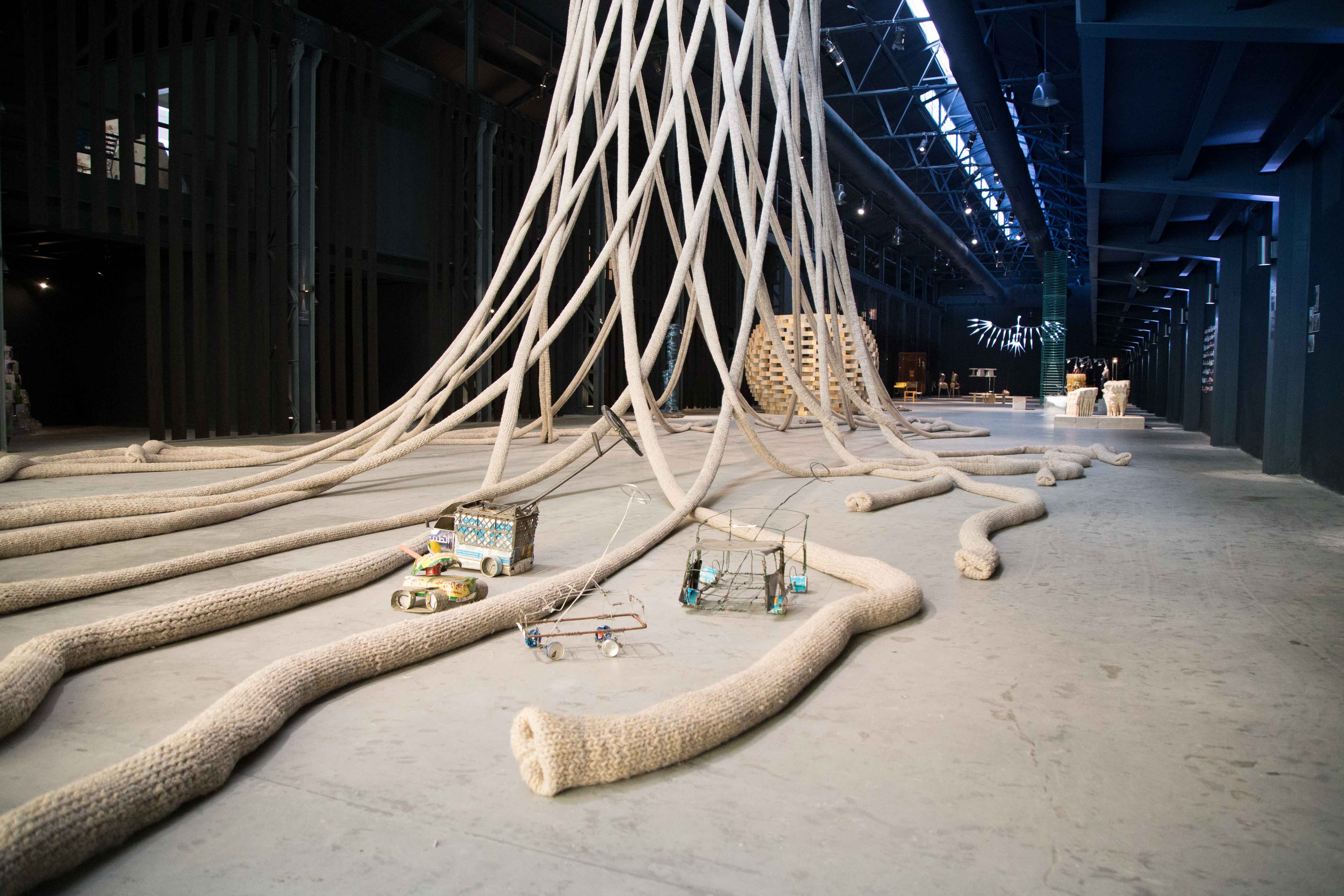
A major Jordanian artwork showcased at the 2016 Amman Design Week was recently repurposed to provide basic human shelter for people in need. This afterlife was intentionally designed into the piece, an artistic application of “cradle-to-cradle” practices. The project raises awareness about conscious design and the positive impact of handcrafts within local communities.







 Solving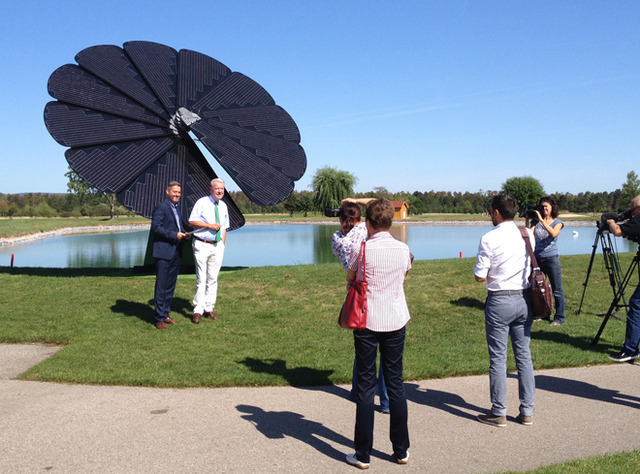









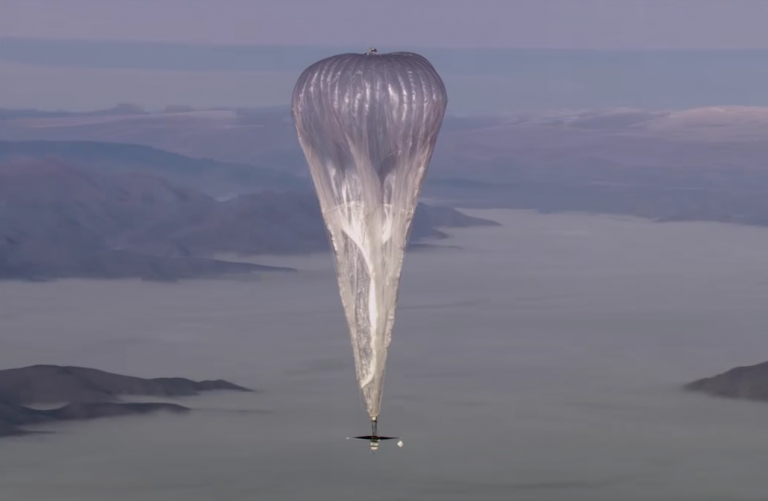


 Made from sheets of polyethylene, each tennis court sized balloon is built to last more than 100 days in the stratosphere before returning to the ground in a controlled descent.


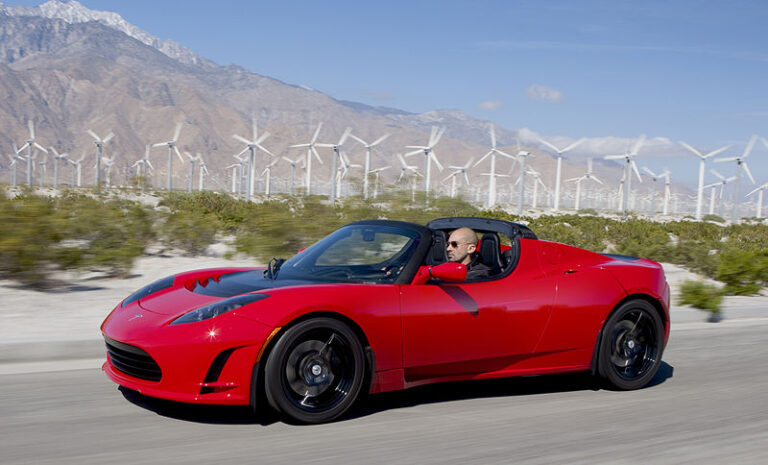
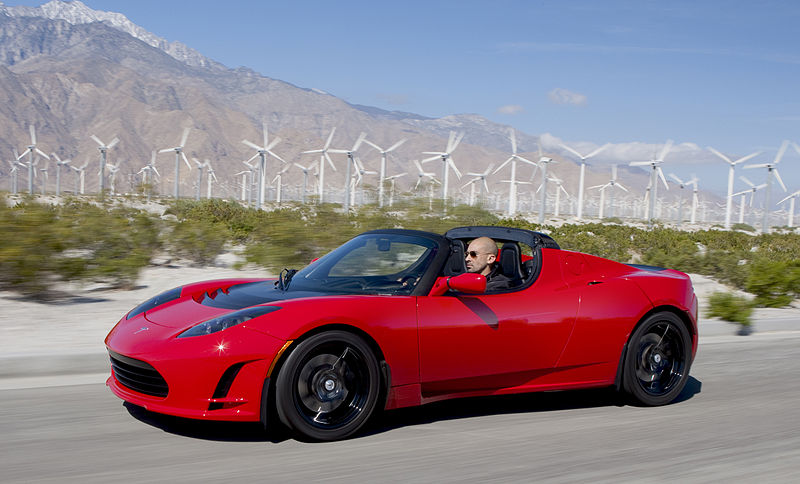

 For a city the size of Los Angeles, providing enough back-up electrical power systems from lithium storage batteries may seem like an idea out of a science fiction story. Elon Musk, whose technological and scientific group of projects includes those for inter-planetary space travel, is now putting a lot of time and money into incorporating his electric car battery concepts into a much larger scale by literally grouping together hundreds of electric battery packs. They will provide as much as 80 mega-watts of emergency electricity power for up to 2,500 households for a day or 1,000 electric cars.