
Home Blog Page 250

Martian technology on Earth in trillion-dollar opportunity

0

Martian-matt-damonLook to Techcrunch any day of the week and see how investment opportunities abound in Agtech. Then go see Matt Damon in The Martian to get a sense for the future of your food.

Combine trillion dollar opportunities with a market sprouting in the United States. It’s called “distributed agriculture” on Wall Street, or Controlled Environment Agriculture (CEA) by many of those in the business.

agrown-raftery

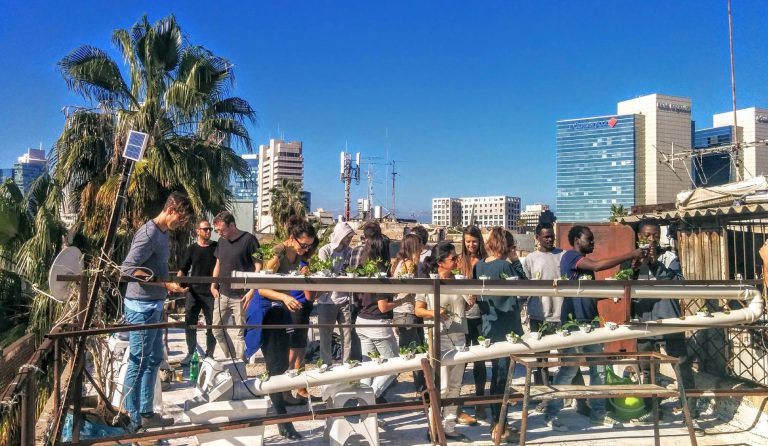
In simple terms distributed agriculture or CEA is about taking away our reliance on the land or weather by growing food in indoor or controlled greenhouses that optimize productivity, and minimize precious resources like water.

Related: flux gadget blooms your hydroponic garden

In some cases distributed agriculture is 90% more water efficient than soil based farming –– currently an exploitive endeavor even given progress in areas like precision agriculture. And of course, because it’s indoors you can grow any time of the year in any climate –– even during an Alaskan winter.

hydroponics-agrown-CEA-food

The practice of distributed agriculture, it is endeavored, could make the US food secure. The country is currently a net importer of its food and this worries some people in the US Department of Defense. Climate change, countries in conflict, and acts of terror could all upend the American way when food gets involved.

Distributed agriculture promises another way

Consider that growing food next to large urban centers where it’s eaten, using technologies like hydroponics, means more sustainable food, fresher food, and local jobs.

Growing America’s food locally using distributed agriculture is essentially a trillion-dollar opportunity, according to Nicholas Heymann of Wall Street’s William Blair & Company, a wealth management firm.

He says: “It will take a $1.75 trillion investment to enable the US to become largely self-sufficient for its fresh vegetable and fruit requirements, which would expand high-paying jobs and related support sectors throughout the country.”

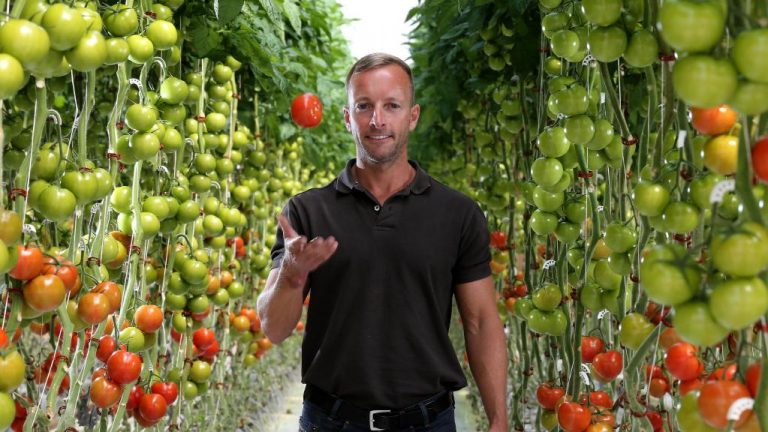
sue-raftery-agrownGrowing food indoors does seem like the sort of stuff for science fiction and Martians but Sue Raftery, founder of AGROWN, a company setting the stage to grow the industry in both private and public sectors, sees huge opportunities in locally grown food.

Her company AGROWN, of which she is the CEO, is positioning itself to be the zip code where new hydroponics technologies and breakthroughs start. How? The company is currently building out the first North American indoor agriculture research park in the quaint town of Brattleboro, Vermont, and is negotiating contracts to build food parks all over the United States.

October 21 to 23 she’s opening up her Rolodex and is hosting an investor summit in Ohio so investors can learn more about these opportunities.

There are currently only 7 large-scale commercial scale indoor agriculture growers in the United States, she says, and they are using technologies that rely on hydroponics. This is technology that grows food fast and efficiently on water with added nutrients.

AGROWN’s Agtech Investing Conference (link here) will be held at the Ohio Agriculture Research and Development Center in Wooster and it is limited to 35 investors.

Among her partners are NASA: According to Raftery, AGROWN has created a knowledge-filled two-day that would otherwise “take weeks or even months to learn on your own.”

Presenters include Priva, BV’s CEO Meiny Prins, Director of CEA at University of Arizona Dr. Gene Giacomelli, NASA scientist Dr. Jay Famiglietti, and USMC Ret Col. Mark Mykleby, who co-authored the Grand Strategy for United States Sustainability for the Joint Chiefs of Staff, where it was recognized that food security is national security.

agrown-aeroponics

Why America, and why only now?

“The US is one of the largest markets where CEA has yet to be widespread. Having relied so long on bountiful land and water, we did not need to consider it,” says Raftery.

But times have changed.

US Food Security as National Security

According to the Department of Defense in a sustainability report from the Joint Chiefs of Staff in 2013 in speaking to creating sustainability in the US, “we needed to look closely to food security,” says Raftery, a PhD Agriculture Economics and Rural Sociology from The Ohio State University.

“This report stressed that to create national sustainability it is important to consider food security. The food system with long food chains, much of which enters the country without close inspection, leaves consumers vulnerable to food that could be tainted along the way,” she tells Green Prophet.

“Likewise the ability to disrupt our long fresh food supply chains is an easy target by outside interest groups (like terrorists) and extreme climate events such as hurricanes, tornados, etc., which could result in lack of availability of fresh fruit and vegetables which is already limited to a 3 to 5 days supply at best for most of the nation.

“Fuel scarcity, water scarcity (like the California drought) all show the vulnerabilities that could be off-set by creating a nationally distributed agricultural network with shorter supply chains, less waste, and more nutritious foods available for the consumer clamoring for more local/regionally grown food,” says Raftery.

“It should be noted that even during the recent 2008 economic downturn that CEA growers found consistent, stable consumer base who appreciated the high-quality CEA grown product.”

How many indoor greenhouses could feed America? William Blair & Co predicts 4,400 40-acre CEA greenhouses to provide food security.

Technologies critical for these businesses to succeed? Access to fiber optic networks, integrated systems control such as water, fertilizer, humidity, CO2, and “monitoring that emulates the Dutch way,” says Raftery: “They use only what has been proven successful to grow inside the greenhouses.”

In parallel, Raftery is rolling out the AGROWN tech transfer center, The CEA Research & Training Center in Brattleboro, Vermont to provide access for industry trials for new and innovative technologies for the North American market. A first for the US, the Vermont center will roughly house 10 acres of food under glass.

“This center will focus on industry based applied research and skills based training — both of which are needed if we are to support the predicted growth for the industry in the US, as well as tech transfer as appropriate for the global markets,” says Raftery.

There are approximately 75,000 acres of commercial scale CEA globally at this time.

Sound interesting? Costcos and Walmarts of the world should be in Wooster, Ohio next week. As well as private equity investors interested in agtech, clean tech and renewable energy.

Register here to attend the AGROWN event

Wean yourself off plastic with clever Trolley Bags

1

reusable market bagsJordan’s plastic bags enjoy more freedom than most of its people. Bags fly free. They don’t need visas to cross borders, and they sidestep beach fees to get into the sea. Shops here hand out an endless stream of non-biodegradable sacks and there’s no penalty for dropping used ones, anywhere.  Until the government steps up to ban free issue of these environmental time-bombs, reusable market bags won’t see much play – unless ingenious alternatives like Trolley Bags catch on.

Quicargo puts empty trucks back in business

0

truck-traffic-tel-aviv-560x372Quicargo, the latest in startups making old inefficient worlds more sustainable, targets inefficiency in the global transportation industry. The software company reduces empty trucking runs and maximizes trucks’ loading space.

As a result, carriers will increase their overall profits for truckers and their companies or contractors and shippers will reduce their shipment costs.

At any given moment millions of trucks are traveling around the world, more than 50% of them are running empty or with unused space. Frequently these trucks are returning hundreds of kilometers completely empty. It is a huge waste of fuel, manpower, air pollution and road congestion.

Quicargo, like what Greenroads did to fuel efficiency for truckers, brings the digital age to the freight industry by connecting shippers and local carriers through an advanced technological platform. The application, accessed via a smartphone or on the Web, connects businesses seeking immediate transportation of their goods with nearby truck drivers who have extra loading space.

Related: put your truck on a road train

In most cases, truck drivers with anticipated route and unused loading space can offer shippers attractive prices and cut their shipment costs, while exploiting their unused loading space and turning it into a profitable return.

With the help of apps like Quicargo, GreenRoad, and professional freight funding companies (for example, TBS Freight Factoring), truckers are able to increase cashflow while also decreasing their environmental impact.

Avishai Trabelsi, the CEO and Co-Founder of Quicargo, found himself exposed to this problem about ten years ago as a dispatcher in his family’s transportation company, RT-Fresh. As the former CEO of his family business, Avishai realized empty runs is a worldwide problem with no immediate solution; seeing an opportunity in the transport market, Avishai resigned as CEO of RT-Fresh to form Quicargo Technologies Ltd, targeting the gap in a highly renowned and lucrative market.

According to the World Economic Forum, the total cost burden of unutilized loading space in Europe alone is approximately €160 billion: “By increasing the productivity in the trucking industry and reducing empty runs we can contribute to the global economy. Moreover, we can be part of the ‘green’ evolution, by filling up empty trucks, reducing air pollution and carbon emissions” claims Trabelsi.

Quicargo’s application provides an online marketplace for shippers and carriers to benefit from unutilized loading spaces. Shippers are able to post a shipping request, and carriers can bid on shipments in real time. Consequently, shippers will choose the most relevant bid according to the carrier’s price, location and rating.

The bidding system ensures high quality and a true market value. Throughout the process the shipper can track the cargo on their smartphone and upon arrival both sides will receive automatic invoices. To uphold high quality services participating carriers have to be experienced, insured and qualified by Quicargo’s quality standards (QCV).

After concluding a successful pilot in Israel, Quicargo aims to expand into the European market. The company’s team will seek strategic partners and plan to promote Quicargo in the upcoming October 2015 “Wolves Summit” in Warsaw and at the November 2015 “Web Summit” in Dublin.

Lexus built a cardboard car that actually drives!

0

cardboard carIn the early 1970s, architect Frank Gehry earned his first design awards for clever furniture made from corrugated cardboard, triggering an explosion of creative experimentation with this then-century-old material that had been mostly used for protective packaging. Now a five-person design team has created a full-size and fully functional car from recyclable cardboard. It’s electric motor will make sure that a problem with emissions is unlikely to arise.

Love Story: Jordanian newlyweds share their wedding with refugees

5

refugee weddingWhy blow your wedding bucks on one extravaganza when you can hold two for the same price? Jordanian newlyweds Mutaz Mango and Basma Omar opted to split their celebration, hosting a private party for family and friends and a second for Iraqi and Syrian refugee children living in the old Hashemi al Shemali neighborhood of East Amman. American evangelist David Wilkerson once said, “Love is not only something you feel, it is something you do.” Read how these two did it right.

UNHCR and Kickstarter could be the “A-Team” for refugee aid

2

UNHCR kickstarter

A special Kickstarter campaign invites you to aid the ballooning Middle Eastern refugee crisis, with all proceeds going directly to the United Nations High Commissioner for Refugees (UNHCR). The one-week fundraiser was launched on Tuesday in response to a question posed by President Barack Obama: could crowdfunding incite Americans to get more involved in refugee relief?  White House staffers raised the concept to Kickstarter CEO, Yancey Strickler, who told the Guardian, “I immediately said yes.”

The beauty of ecotourism in Israel

Hiking, Tunisia, travel, nature, MENA, eco-tourism, eco-lodge, biomimicry Most visitors to Israel concentrate on exploring the many biblical, cultural, and historical sites that abound Israel. And rightfully so! Israel has been the hub of Jewish, Christian, and Islamic history for centuries. These sites are fundamentally important as they inspire a connection with one’s faith as well as a deeper historical understanding.

gospel-trail-jesus-israel

But there is another aspect of Israel that is often overlooked by visitors. Israel’s natural beauty is a treasure in its own right and merits exploration.

In an effort to conserve Israel’s landscape while allowing visitors to enjoy it, ecotourism has developed throughout the country. Focusing on sustainable touring and conservation, this method of exploration has grown in popularity over recent years.

With a vast topographical variety encompassing everything from beaches and mountains to fertile fields and deserts, Israel is the ideal place to experience ecotourism. Ranging from walks and day hikes to week-long trips, there are options which allow almost anyone to enjoy the country’s unique flora and fauna.

People floating in the Dead Sea

From top to bottom, ecotourism is available throughout Israel. The most famous hiking trail in Israel (and by far the longest) is the Israel National Trail. At 600 miles, hiking the full trail takes between 30 and 60 days, so it is certainly not for the amateur hiker. The trail begins near the border of Lebanon in the North, makes its way to Lake Kineret in eastern Galilee and winds down toward Tel Aviv and Jerusalem before continuing through the Negev Desert and ending in Eilat. Camping grounds dot the trail so hikers can rest along the way.

"eilat underwater eco tourism"

The Galilee and Golan Heights regions in the north offer unparalleled bird watching opportunities during the migratory season. Bird watchers and nature enthusiasts “flock” to these areas to see the 500 million birds that travel to Israel for the winter. The rest of the year offers lush forests and rolling hills as well as rivers and springs. This is an ideal place to enjoy horseback riding or cycling, both environmentally friendly means of travel.

The Negev and Judean Deserts in the South of Israel, offer miles and miles of mostly unpopulated land that boasts stunning desert scenery and unique wildlife. Areas such as Masada, the Dead Sea and the Ramon Crater are a hiker’s paradise. It is best to avoid this stark and arid region during the oppressively hot summer months when heat exhaustion and dehydration are ever-present concerns.

desert daughter bedouin, bedoin miriam aborkeek israel

Every region of Israel hosts nature reserves that serve as excellent locations for ecotourism. The country has over 150 nature reserves, most of which are maintained by the National Nature and Parks Authority. These reserves are the ideal place to observe the indigenous flora and fauna of Israel.

wildflowers_Israel

Of course the primary focus when visiting Israel will always be to visit the important biblical and historical sites, but it would be a shame to ignore the country’s natural beauty. So why not plan a few extra days to experience Israel’s ecotourism on your next trip?

By Noam Matas. Noam is the General Manager of America Israel Tours. America Israel Tours offers customized and all-inclusive tour packages to Israel. Noam enjoys writing about Israel based on his personal experience and his knowledge of the tourism industry.

The war that forces a doomsday seed vault withdrawal

1

Entrance_to_Svalbard_Global_Seed_Vault_in_2008

The Svalbard Global seed bank was established in February 2008. It was designed to store seeds for hundreds or even thousands of years in the event of a global disaster. But now, only seven years later, the Syrian civil war made it necessary to withdraw seeds from this doomsday vault.

Svalbard Norway: It would have been easy to imagine the end of the world here surrounded by glaciers, polar bears and the long dark winters of the high arctic. But like Noah’s ark, the global seed bank was designed to preserve life.

Related: The Noah’s Ark Seed Bank for Coral Reefs

The blueprint for Noah’s Coral Ark

Specifically it was designed to preserve the seeds necessary for our food crops and our survival. The doomsday vault is located deep within an ice-covered mountain on Spitzbergen Island, far above the expected sea level rise in centuries of climate change and only 800 miles from the North Pole.

Even if the vault’s electrical power supply is interrupted,the vault won’t thaw for hundreds of years. The vault is designed to survive a missile attack or even a nuclear war. The preserved seeds will also protect us against the possibility that GMO crops damage the gene pool of the global food supply, or create an unsustainable plant monoculture.

The doomsday vault designers thought of nearly everything, With each year the seed bank grew more and more deposits from around the world until it reached nearly 865,000 varieties of seeds. Some of these seeds were from the International Center for Agricultural research in the Dry Areas (ICARDA) which was located in Aleppo, Syria.

The Syrian war forced ICARDA to move to Beirut, Lebanon. Some of the seeds were lost or destroyed before or during the move, so now, only seven years after the seeds were deposited, the first withdrawal is being made to replace the seeds destroyed in Syria’s civil war.

A spokesperson for the seedbank said that while withdrawing seeds from a doomsday vault appears to be very bad news, it actually shows that the vault works and is a valuable resource for our violent and troubled world.

WorldBeing wristband tracks personal carbon consumption

0

worldbeing wearable techWearable tech is hot, with new gizmos unveiled at every design expo and technology fair. Runway models are accessorized with functional fashion, even Victoria’s Secret has developed digital duds with their athletic bra that monitors heartbeat. Now London designer Benjamin Hubert and his studio Layer Design have teamed up with British environmental consultancy Carbon Trust to produce a wristband that tracks energy use. The tool – now in conceptual stage – can potentially to enable like-minded users to inspire a movement and transform the world.

Sukkat blessing for urbanites: All aboard the pedi-sukkah!

0

sukkah on wheels in NYC
Sukkot is upon us, the annual holiday when Jews are commanded to live inside a sukkah – a small hut-like structure that commemorates the shelters used by the ancients as they wandered the desert during Exodus. Not much of a challenge to build a small “booth” in a suburban backyard, but what if you’re in midtown Manhattan? Then flag down a bicycle bespoke for Sukkat blessings, designed by a free-wheeling Brooklyn yeshiva student. 

Verizon selects 12 Internet of Things startups that may change your world

0

powerful-answersVerizon (NYSE: VZ) is America’s #1 mobile provider and the company just announced finalists for their international Powerful Answers Award which will grant $1 million, $500,000 and $250,000 to the top 3 winning companies in the category Internet of Things (IoT).

To break things up Verizon has created 3 categories: the two other categories in this year’s prize includes Transportation and Emergency Response with same number of finalists and prize amounts (all the 36 companies can be found here).

I am the founder of one of the finalists in the IoT group with flux – a smart consumer device and software to help people anywhere grow tasty, local food on water, using hydroponics. We’ve just minted our first devices out of production so the timing couldn’t be better!

See below.

flux-easy-gardening

We’re like the Nest for hydroponics. Go to Home Depot for your pipes and pumps or to one of 3000 American hydroponic stores, put your flux device in the water, and pairing to our app, you are good to grow.

flux simplifies all the hard parts like pH and nutrients needed to go in, so you can grow the tastiest food. Instead of facing high rates of failure, we’re there rooting for you to succeed.

presentation-rooftop 2

We’ll be one of this year’s 12 Internet of Things finalist companies heading to San Francisco next week to pitch our product to Verizon.

Just getting to this spot is our prize and vindication that Fortune 100 companies see value for their business in supporting Impact and social good companies.

“The world is facing incredible challenges, but we believe that there are life-changing ideas out there that can provide answers,” said John Doherty, senior vice president of corporate development and Verizon Ventures. “Verizon wants to help find innovators who can leverage Verizon’s products and technology to help solve those problems and help turn their visions into reality.”

Growing local food using hydroponics can change realities for marginalized populations in the US, or refugees eking out a living in the Middle East. It works without soil, and isn’t dependent on climate meaning you can grow fresh food in the middle of Manhattan, in Alaska in winter, or feed refugees staying in makeshift housing with fresh food. Growing local can slow global warming, produce food with more vitamins, create jobs, and give people a deep sense of satisfaction.

I’ve met mothers in Harlem like Latonya (below) who’ve told me that their kids ate chocolate bars for breakfast. After having a hydroponic farm at school (thanks to NGOs like Harlem Grown), the kid and families started to eat fresh greens every day.

harlem-grown-urban-garden-new-york-3

Hydroponics is not our invention. NASA uses it to grow space lettuce. But it currently only works really well on a large, industrial scale.  Current barrier to entry for every day people isn’t cost. You can set something up with $100 from Home Depot. Growing food well at home this way –– it’s about know-how. There is a lot of chemistry to get right. This is the pain that flux solves.

Consider that food security is at the heart of the refugee crisis in the Middle East. Agriculture continues to be the backbone of livelihoods for the majority of people in conflict and post-conflict situations, says the United Nations Food and Agriculture Organization.

Why support local agriculture globally?

“Rural development and food security are central to the global response to the refugee crisis. War causes hunger and hunger too, kills and forces people from their homes,” said Graziano da Silva today. “Supporting agricultural based livelihoods can contribute to both helping people stay on their land when they feel safe to do so and to create the conditions for the return of refugees, migrants and displaced people,” added Graziano da Silva.

flux can help by offering a simple solution, with local partners, to get food in the hands of people in need fast.

But this story isn’t just about us. It’s about a small revolution and 11 other innovators and startups that have the power to change the world. Read below for more about the 12 Internet of Things companies that have world-impact potential. I’ve broken it up for those that like to focus on sectors: agtech, health and smart cities.

Verizon picks 12 companies with Powerful Answers in IoT

Agtech

FLUX_Visual A_NYC_Internal_[02] (1)

flux – Smart Agriculture (NY, NY – www.fluxiot.com) To assist consumers in growing food at home, especially those that live in cities, the company has developed a connected device that monitors the growth of vegetables in a hydroponic environment and determines the optimal growing recipe using a global, connected community of people growing food together. flux has also developed a fully-automated robotic system that can turn on lighting and add nutrients.

FarmLink – Smart Agriculture (Kansas City, MO – www.farmlink.com) To assist farmers in improving their crop yields, the company leverage data gathered from farms nationwide and around the world to provide actionable insights on what farmers should do with their specific farming environment. Their data is gathered using a fleet of 200 connected combines taking 150 square-foot snapshots every second.

FarmX – Smart Agriculature (Irvine, CA – www.farm-x.com/ )To assist farmers in improving their crop yields and lowering their water costs, the company combines low cost sensors and high altitude aerial imagery to collect real-time crop data. This data is then used to drive decisions on watering in specific locations.

smartbarn

Smart Barn – Smart Agriculture (Kettering, OH – www.smart-barn.net) To assist farmers with the operation of their farms and monitoring of livestock, the company has developed a series of wirelessly connected equipment to monitor and control the environment condition of their facilities.

chipsafer

Chipsafer – Smart Agriculture (Montevideo, Uruguay – http://ieetech.com/) To help farmers monitor their herds of animals such as cattle for higher yield, the company has developed a wearable device that monitors animals’ behavior remotely, autonomously, and in real-time. Using analytics, the farmer can determine if an animal is sick, injured, or lost, and subsequently take remedial action.

Health

aegle

Aegle Arc – Connected Health (Baltimore, MD) To help monitor the senior and elderly, the company has developed a wearable pendant device that is equipped with 4G LTE and sensors that monitor ECG, respiration rate, blood oxygen levels, and temperature. Additionally, the person’s location and movement is also monitored. Should sensor data indicate that the person being monitored is experiencing a medical condition or has moved outside of a predefined geo-fence, the appropriate individuals can be contacted.

aira

Aira.io – Connected Health (San Diego, CA – www.aira.io) To assist the blind with their daily lives, the company has developed a service that integrates smart glasses with the user’s smart phone such that a virtual personal assistant can help them with tasks using the assistant’s vision. Examples include navigating busy streets or reading a restaurant’s menu. The service integrates and pulls relevant information from various online sources to support the assistant in aiding the blind customer.

Owlet – Connected Health (Provo, UT – https://www.owletcare.com/)To assist parents with newborns, the company has developed a connected smart sock that can monitor a newborn’s vital signs, including heart rate, breathing quality, and skin temperature. In line with the trend for the quantified self, the Owlet sock helps parents understand whether their newborns are experiencing any issues.

vision

Smart Glasses – Connected Health (London, UK –
To assist the blind in their homes, the company has developed smart glasses that allow the user to be able to live comfortably within their own home. The user can connect to and operate other smart devices in their home using hand and head gestures. And the user can navigate their home, and potentially other public buildings (e.g. airports, train stations).

Wound Assessment and Remote Evaluation – Connected Health (Baltimore, MD -https://www.tissue-analytics.com/) To assist individuals who have a wound, the company has developed a smart phone app that allows the injured individual to send photos and video of the wound to a central network of doctors. Combined with a cloud-based analytics platform, the doctors are able to assess the wound remotely and provide recommendations for treatment.

Cities

CityTaps – Smart Cities (Ile de France – www.citytaps.org) To assist water utilities in collecting payment for water usage and consumers to pay for water, the company has developed a connected control metering device that connects to the water tap. This allows users to make micropayments for incremental usage of water and guarantees the utility will receive payment for the water used.

zizmos

Zizmos Technology – Smart Cities (Palo Alto, CA – www.zizmos.com) To assist cities detect earthquakes or other seismic activity in advance of actually occurring, the company uses inexpensive MEMS (Micro-Electro-Mechanical-Sensor) accelerometers attached to used or recycled smart phones that are connected to the Internet to create a low-cost seismic network that monitors earthquake hazards and provides real-time notifications of impending tremors to residents in high-risk areas for a fractional cost of the traditional seismic network.

UAE Drones for Good Competition Open!

0

medical_droneThe 2016 United Arab Emirates Drones for Good Competition is now open. The UAE Drones for Good Award is “dedicated to transforming the innovative technologies behind civilian drones into practical, realizable solutions for improving people’s lives today.”

Flying Spark food-tech asks, “Do you want flies with that?”

1

food protein from insectsA start-up business focused on finding new ways of using insect protein in food products is a finalist in this year’s MassChallenge, the Boston-based start-up competition and world’s largest accelerator program. Get over your squeamishness, because bug-based foods will soon infest our markets.

The “elevator pitch” for Israel-based The Flying Spark states their intent to manufacture protein powder based on insect larvae that can be added to a wide range of food products, replacing today’s protein powders – commonly made from whey, soy, or casein. Insects contain extremely high protein, fiber, micro-nutrients and mineral content. They’re also naturally low in fat, and cholesterol-free. The tipping point for this product’s potential is that insect protein will cost less to produce than any other source of animal protein.

People have purposely eaten insects for ages, and bug-based foods are now being explored on a commercial scale to address a ballooning world population with stressed natural resources. In 2013, the United Nations Food and Agriculture Organization released a report (link here) promoting insects as a basic ingredient in both animal feed and human food. It emphasized sustainability, noting that insects (unlike livestock) can be reared on vegetable and domestic waste as well as slaughterhouse byproducts.

The Flying Spark aims to produce protein powder from ground-up fruit fly larvae, not to create new foods, but instead to sell to manufacturers that already use traditional protein powders in their products, such as nutritional supplements for body builders.

“We think athletes are early adopters,” company founder Eran Gronich told the Boston Globe, “We have only one challenge — and that is the psychological barrier – although people eat shrimp and lobster and squid, [which] are like cockroaches crawling on the bottom of the ocean picking up the trash.”

The Flying Spark pitches their plan to panels of MassChallenge judges next week, and final judging takes place on October 14-15.

The independent, not-for-profit MassChallenge is the startup community’s largest and highest-value event, solely motivated to support and strengthen entrepreneurs – no strings attached. The competition awards cash grants totaling $1 million USD to the startups demonstrating the highest impact and highest potential.

Read more about the growing insect-based food business (link here), a sector supported by the Bill and Melinda Gates Foundation, World Wide Fund for Nature, and the United Nations Economic Commission for Africa. They all think it’s the most promising way forward to feed the planet.

Saving our food and planet requires bubbles

0

hydrobloom-bubbles

Somewhere in the middle of Ontario is a company hidden from view. Sitting on 5 acres of reforested farmland is Blue Planet Environmental. I guess you can call them innovative scientists, who are using patented aeration technology and what they call “nano-bubbles” or really, really small bubbles of air, to make big changes in industries connected to water.

The core of Blue Planet’s technology is a nano-bubbler. It can inject various gases (such as oxygen, ozone or carbon dioxide) into nano-sized bubbles (human hair is about 80,000 nanometers wide) for use in hydroponics systems, golf course and residential ponds, fish and shrimp farms, showerheads for a cleaner scrub down and exfoliation, above ground pools, and washing machines to remove soap residue from clothes.

Add a bubbler to a septic system to reduce maintenance and the size of the dispersal bed, and consumers can save money and be supportive of the environment around them.

blue-planet-dave-hydroponics-1

David Burns, a design engineer in socks, showed us that their technology can even make a mean chocolate milkshake –– producing an uncountable number of chocolate bubbles that increase the taste of his favourite drink. (That invention is currently just used in house – and is pictured above).

blue-planet-dave-hydroponics-3

And when they say in-house they mean literally in their house. The offices of Blue Planet are in a large two-story century home surrounded by woods; the house is complete with an indoor pool for testing new devices and prototypes.

blue-planet-dave-hydroponics-5

In the lower back of the house is a greenhouse where basil, cherry tomatoes, yellow cucumbers, and some of the hottest peppers on earth, using nano-bubblers, are being grown. I think Dave (in our pictures) called the peppers Scorpions.

blue-planet-dave-hydroponics-4

Blue Planet founder Richard Lonetto saw the potential in bubbles, and with Blue Planet’s engineers have been patenting and creating systems based on their core technology over the last 8 years.

Blue Planet clearly encourages creativity and inventions that can have a wide variety of uses on a global level. In New York City his company supports Blue Planet Consulting where Henry Gordon-Smith (see him below) advises schools, real estate owners and private people on how to set up hydroponic and urban farms.

henry-agritecture-blue-planet

The company also takes on custom turnkey builds; for example Sweet Unity, a fair trade coffee company that grows coffee in Tanzania had a complete system design and shipped by Blue Planet. The farm is owned by David Robinson, the son of baseball legend Jackie Robinson.

It all goes back to bubbles.

The Blue Planet group is also keen to talk about their BioBoost water remediation and maintenance solutions which are installed in a number of PGA golf courses in the United States. BioBoost uses a natural system to insure that ponds do not become stagnant while encouraging beneficial bacteria to grow and thrive in the ponds. Blue Planet estimates there are a hundreds of thousands of such ponds in the United States alone. The BioBoost system is submerged in a pond for maximum effect. The standard BioBoost system is about the size of a large aquarium, and maximizes the dispersion of bubbles throughout the pond on a continual basis.

Being at Blue Planet makes one want to linger longer too. We look into the fish tank and see nano-bubbles quietly keeping the fish tank crystal clear –– nano bubbles are everywhere.

blue-planet-dave-hydroponics-6

When asked, Dave admits that Richard does sing about tiny bubbles frequently. And yes, the Don Ho song has come up:

[youtube]https://www.youtube.com/watch?v=mlCiDEXuxxA[/youtube]

So if you haven’t been sold on Richard’s bubbles yet, why not give them a taste? His company is producing drinking water by combining spring water on the property with their technology. If that’s what it takes to be as creative as the people at Blue Planet –– then sign me up for a few bottles. Made from recycled materials, we hope.

Relive your childhood with adult-sized modular ‘lego’ bricks

1

modular lego building block

EverBlock is a modular system of full-scale plastic blocks that, like Lego, interconnect without fasteners or special tools.  But these playful widgets aren’t toys. They are a functional, full-scale building system that can be used to create furniture, walls and entire rooms. Green Prophet caught up with company founder and president Arnon Rosan to find out how more. his product responds to environmental issues in the Middle East.