Home Blog Page 200

Ancient wine exporting city “Elusa” unearthed in Israel

0

wine city elusa israel

The discovery of the name of an ancient city in archaeological investigations is a relatively rare occurrence. The name of the wine-exporting city of Elusa is well-known from historical sources, however this is the first archaeological evidence of the name from the site itself.

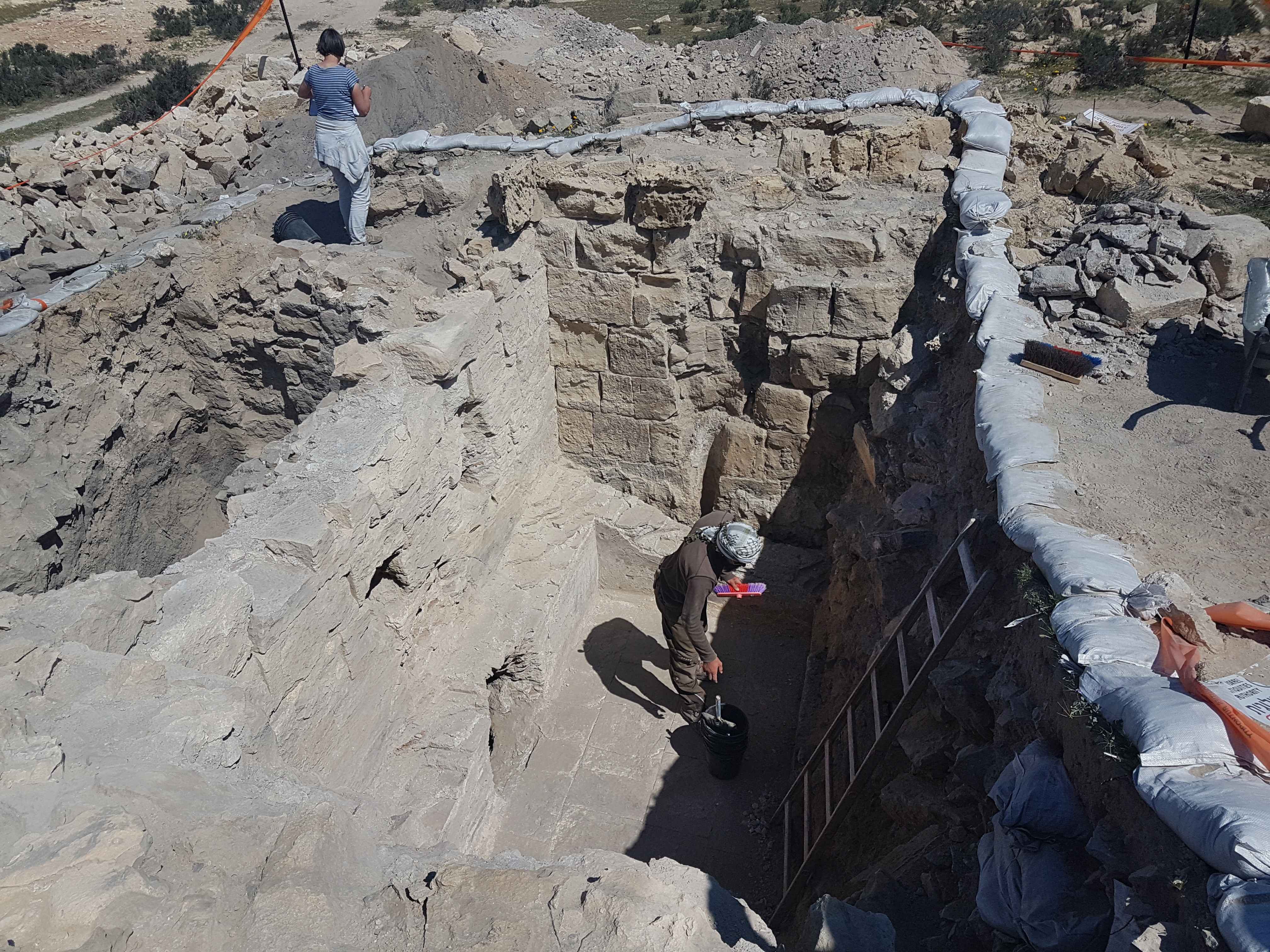
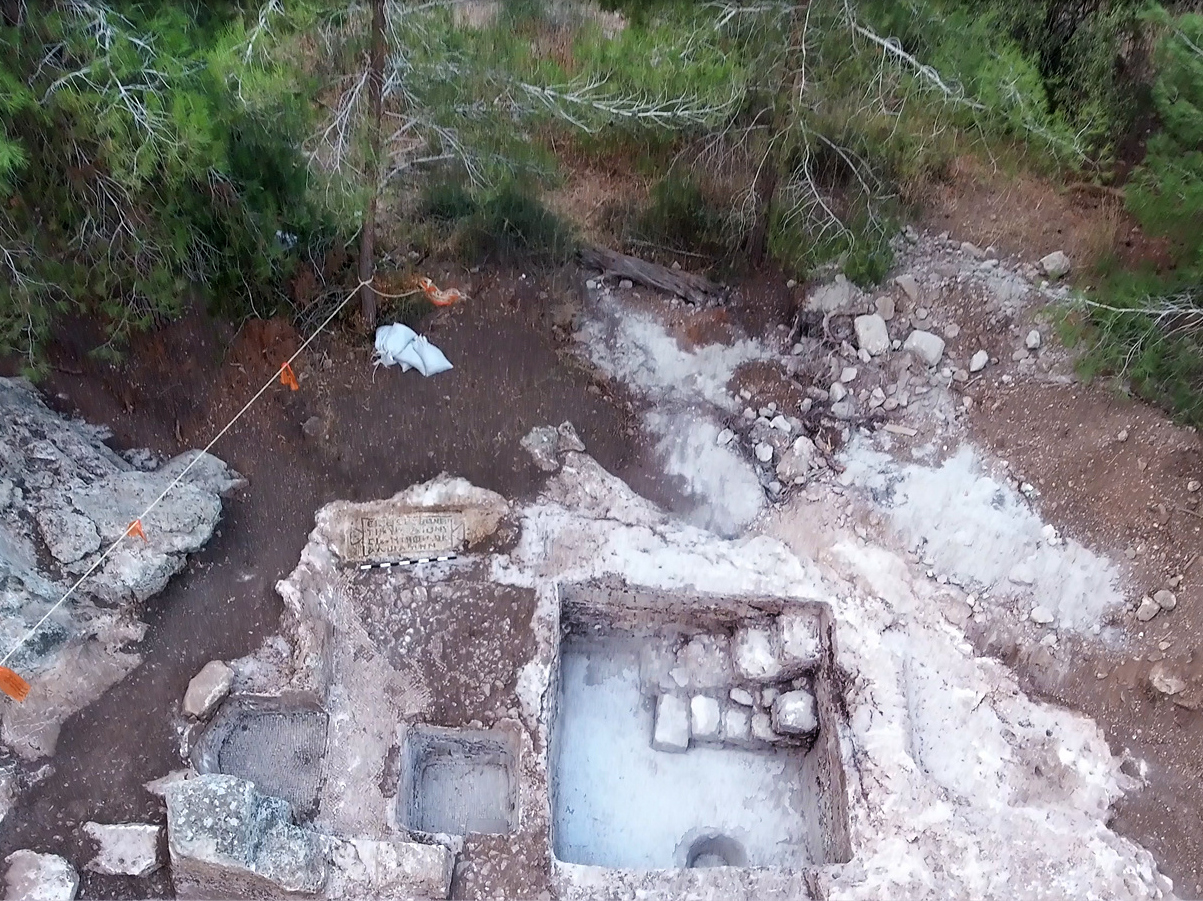
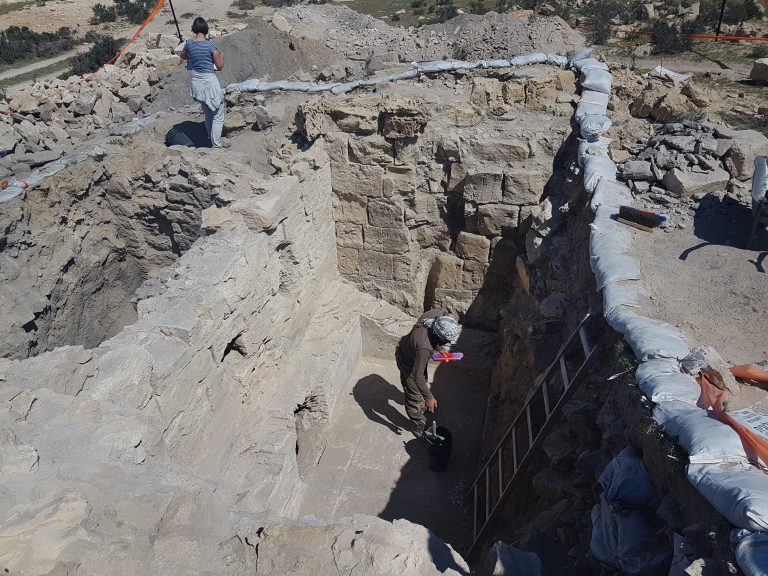
A 1700-year old stone bearing a Greek inscription referring to the name of the city of Elusa (Hebrew: Halutza) has been discovered in archaeological excavations in Halutza National Park in the Negev.

The excavations in the ancient city of Elusa are part of a project directed by Prof. Michael Heinzelmann on behalf of the University of Cologne in cooperation with Dr. Tali Erickson-Gini on behalf of the Israel Antiquities Authority. Students from the University of Cologne and the University of Bonn participated in three years of excavations, which are underwritten by the German-Israeli Foundation for Scientific Research and Development.

wine city elusa israel

The inscription is being studied by Prof. Leah Di Segni from the Hebrew University of Jerusalem. The discovery of an inscription with the name of the ancient city in the site itself is a rare occurrence.

The name of the city of Elusa appears in a number of historical documents and contexts, including the Madaba mosaic map, the Nessana papyri and other historical references. However, this is the first time that the name of the city has been discovered in the site itself. The inscription mentions several Caesars of the tetrarchy which allow to date it around 300 CE.

wine city elusa israel

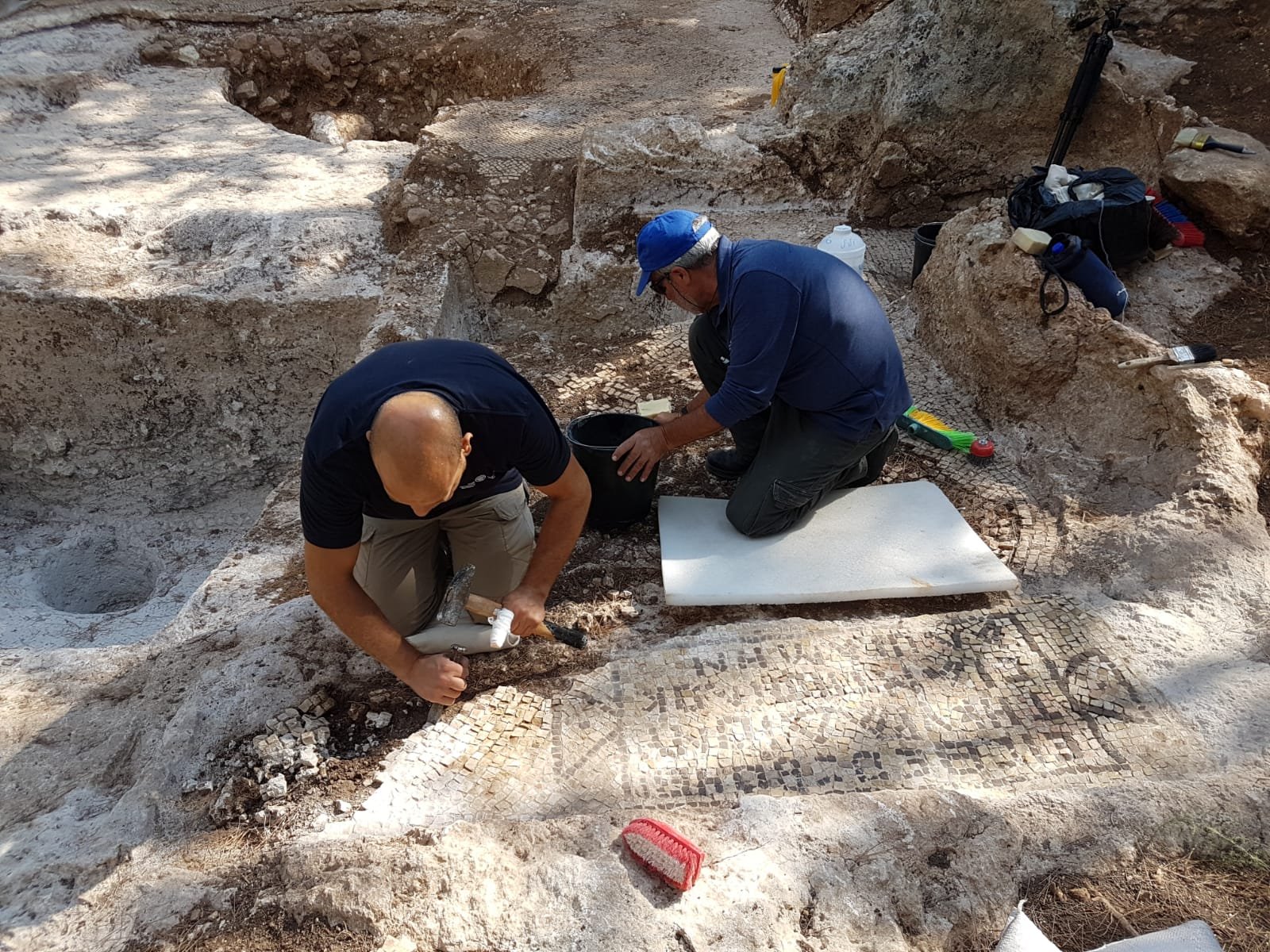
In addition, in the recent excavation season, a bathhouse and Byzantine church were uncovered. The 40 m long three-aisled church contained an eastward apse, whose vault was originally decorated with a glass mosaic. Its nave was decorated with marble.

The bathhouse is a large, urban complex of which were revealed part of the furnace and caldarium (hotroom). The well-preserved hypocaust underlying the caldarium heated the floor and walls by way of brick-built channels and ceramic pipes. Its originates in the Middle Roman period but was in use until the 6 th c. CE.

Elusa was founded towards the end of the 4 th century BCE as an important station along the Incense Road, the ancient road between Petra and Gaza. The city continued to develop, reaching its peak in the Byzantine period in the fourth to mid-sixth centuries CE. In that period, it was inhabited by tens of thousands of inhabitants and was the only city in the Negev.

wine city elusa israel

The three-year project, underwritten by the Germany-Israeli Foundation for Scientific Research and Development, included a combination of pedestrian surveys and technological methods such as geophysical surveys and remote imaging in order to map the ancient city and its surroundings.

During the project, researchers succeeded in reconstructing the plan of the city and identifying its streets which often were accompanied by porticoes and blocks of buildings, all of which display elements of both western and eastern planning and construction. The surveys have also revealed the presence of nine churches, a huge peristyle building, maybe a market building, and the existence of at least three pottery workshops.

The city covered in its heyday a surface of about 100 acres reaching a population of about 8000 inhabitants.

In the wake of the wide-ranging surveys carried out by the German expedition, excavations were carried out at key points in the site to reveal the development of the city. According to Dr. Tali Erickson-Gini, a project member on behalf of the Israel Antiquities Authority: “The export of high-quality wine from the Negev Highlands in the Byzantine period was responsible for economic prosperity that affected the entire region.

Elusa was also an important station on the route used by Christian pilgrims on their way to and from Santa Katarina in southern Sinai and as such was visited by many foreign travelers.

Archeologists unearth ancient winery in Israel

The site appears to have gone out of existence by the end of the seventh century CE, but its name was preserved locally in the Arabic name of its ruins: ‘el-Khalassa’. The site was used as a source of building stone for Ottoman Gaza and Beersheva until the British Mandate period and as a result few building remains can be seen on the surface today and much of the site is hidden
under the sand.”

The UN’s latest reports and numbers for World Water Day

0

world water day 2018

Access to water and sanitation is internationally recognized human right. Yet more than two billion people lack even the most basic of services. The latest United Nations World Water Development Report, Leaving No One Behind, explores the symptoms of exclusion and investigates ways to overcome inequalities. The report will be launched in Geneva, Switzerland, on 19 March during the 40th Session of the Human Rights Council, ahead of World Water Day (22 March).

In 2010, the United Nations General Assembly adopted a resolution recognizing “the right to safe and clean drinking water and sanitation as a human right” and in 2015 the human right to sanitation was explicitly recognized as a distinct right. These rights oblige States to work towards achieving universal access to water and sanitation for all, without discrimination, while prioritizing those most in need. Five years later, Sustainable Development Goal 6 of the 2030 Agenda for Sustainable Development aims to guarantee sustainable management of, and access to, water and sanitation for all by 2030.

Yet, despite significant progress over the past 15 years, this goal is unreachable for much of the world’s population. In 2015, three in ten people (2.1 billion) did not have access to safe drinking water and 4.5 billion people, or six in ten, had no safely managed sanitation facilities. The world is still off track in achieving this important goal.

“Access to water is a vital right for the dignity of every human being,” declared UNESCO Director-General Audrey Azoulay. “Yet, billions of people are still deprived of this right. The new edition of the UN World Water Development Report shows that collective determination to move forward and efforts to include those who have been left behind in the decision making process could make this right a reality.”

“The numbers speak for themselves. As the Report shows, if the degradation of the natural environment and the unsustainable pressure on global water resources continue at current rates, 45% of global Gross Domestic Product and 40% of global grain production will be at risk by 2050. Poor and marginalized populations will be disproportionately affected, further exacerbating already rising inequalities […] The 2019 Report provides evidence of the need to adapt approaches, in both policy and practice, to address the causes of exclusion and inequality,” said Gilbert F. Houngbo, Chair of UN-Water and President of the International Fund for Agricultural Development.

Wide disparities between the rich and the poor

These figures hide significant disparities. On a global scale, half of the people who drink water from unsafe sources live in Africa. In Sub-Saharan Africa, only 24% of the population have access to safe drinking water, and 28% have basic sanitation facilities that are not shared with other households.

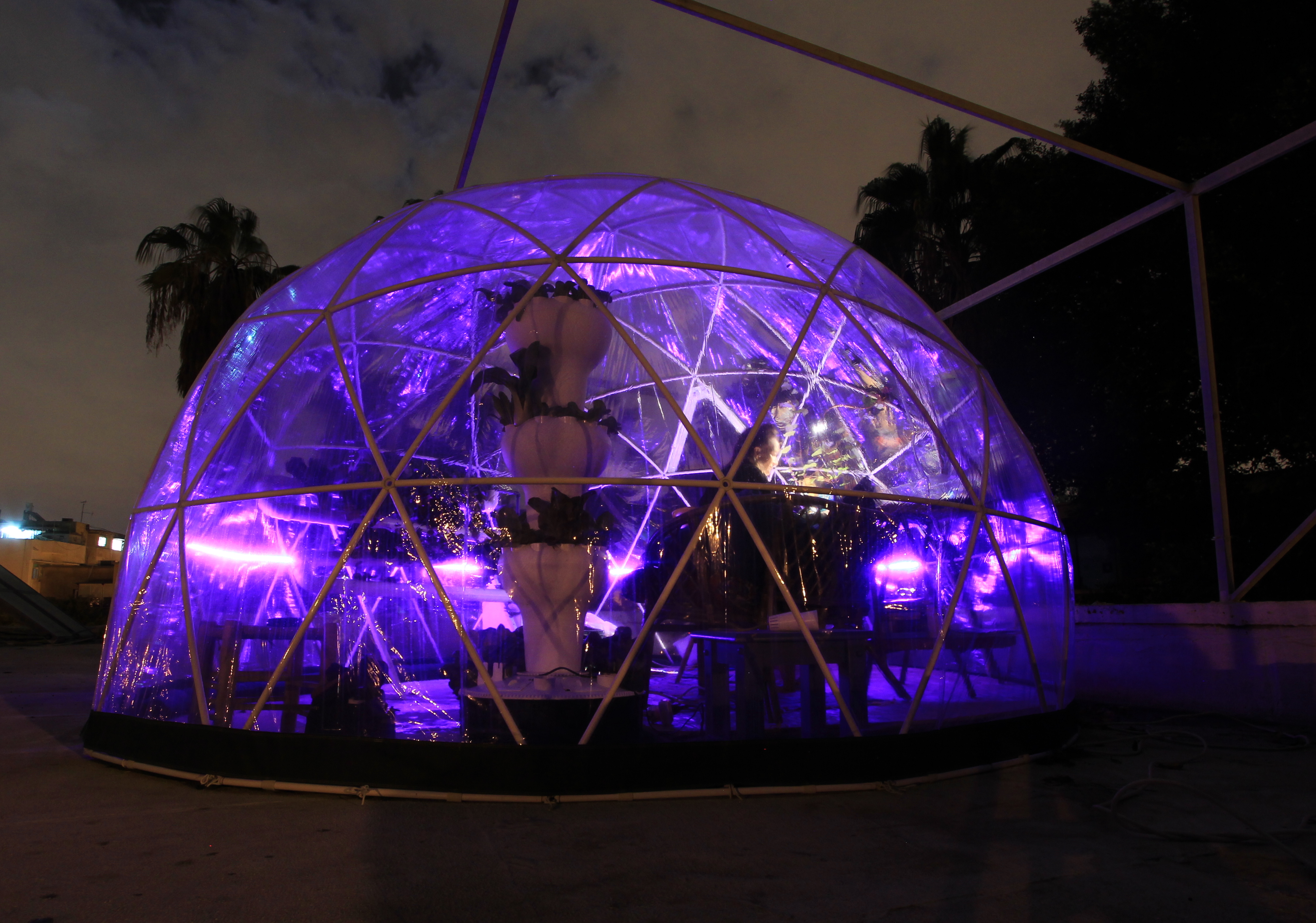
Israeli entrepreneurs build AI-based greenhouse tech flux to save water, and make water more available to everyone.

Significant discrepancies in access exist even within countries, notably between the rich and the poor. In urban areas, the disadvantaged housed in makeshift accommodations without running water often pay 10 to 20 times more than their neighbours in wealthier neighbourhoods for water of similar or lesser quality purchased from water vendors or tanker trucks.

The right to water, the report’s authors explain, cannot be separated from other human rights. In fact, those who are marginalized or discriminated against because of their gender, age, socio-economic status, or because of their ethnic, religious or linguistic identity, are also more likely to have limited access to proper water and sanitation.

Almost half of people drinking water from unprotected sources live in Sub- Saharan Africa, where the burden of collecting water lies mainly on women and girls, many of whom spend more than 30 minutes on each journey to fetch water. Without safe, accessible water and sanitation, these people are likely to face multiple challenges, including poor health and living conditions, malnutrition, and lack of opportunities for education and employment.


Refugees particularly vulnerable

Refugees and internally displaced people are often face severe barriers to the access of water supply and sanitation services and their numbers are higher than ever before. In 2017, conflicts and persecution forced 68.5 million people to flee their homes. Moreover, an annual average of 25.3 million people are forced to migrate because of natural disasters, twice as many as in the early 1970s – a number expected to raise further due to climate change.

Inclusive policies are needed to achieve Sustainable Development Goal 6. They are also needed to defuse conflicts between different water users. In a context of increasing demand (1% yearly increase since the 1980s), the Report observes a significant rise in water-related conflicts: 94 from 2000 to 2009, 263 from 2010 to 2018.

The Report demonstrates that investing in water supply and sanitation makes good economic sense. The return on investment is high in general and for the vulnerable and disadvantaged in particular, especially when broader benefits such as health and productivity are taken into account. The multiplier for the return on investment has been globally estimated at two for drinking water and 5.5 for sanitation.

Coordinated and published by UNESCO’s World Water Assessment Programme, the United Nations World Water Development Report is the result of a collaboration between the 32 United Nations entities and the 41 international partners who make up UN-Water. It is published every year on World Water Day.

Students around the globe will walk out of school Friday to protest for the planet

0

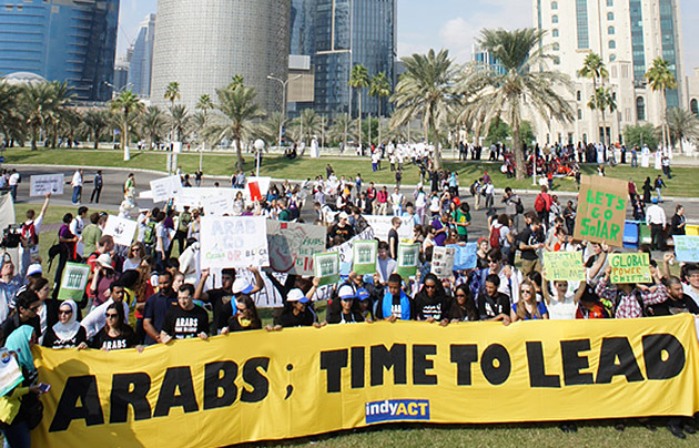
Arab role in climate change

Tomorrow, March 15, youth across the globe will leave their schools to strike to draw attention to climate change. The roots of these strikes trace back to Greta Thunberg, a 16-year-old from Sweden who sat outside the Swedish parliament almost every Friday since last August in the hope politicians would enact laws and policies to bring her country into line with the Paris climate agreement.  Concern over climate change is urgent and admirable, but question remains if it is possible to adopt habits and policies that also provide for sustained growth and prosperity while healing our planet?

greta thunberg global walkout protest

According to Mike Berners-Lee (the younger brother of Tim, founder of the www), “The challenges humanity faces today are inescapably global and linked together. It no longer works to look at environmental issues one at a time or to keep  science, economics, sociology, politics and psychology separate from one another.

“Indeed, to be sustainable and successful we must address issues relating to energy, global population and food supply, biodiversity, our use of plastics, recycling, antibiotics and their ubiquity in our food supply, in addition to climate change, global trade and economies.”

Berners-Lee offers ideas and strategies for address these issue in a new book, THERE IS NO PLANET B:  A Handbook for the Make or Break Years.  To speak with Berners-Lee and explore strategies for saving this planet without breaking global economies and sustaining growth, contact me at the info that follows.

“What is amazing and unique about this wonderful book is that it simultaneously addresses the practical every day questions troubling so many of us in these turbulent times while also clearing away the fog obscuring our paths into the future. And it does so in beautifully clear language. This truly is ‘The Handbook’ we all need to flourish on our small planet.”

Tel Aviv City promotes phone zombies with LED catastrophe

0

Hey fantastic idea: instead of creating a city environment that is more welcoming and friendly for people to actually talk to each other, the City of Tel Aviv has decided to pilot phone “zombie” LED lights, those glaring headache-inducing, pineal gland disrupting lights that make you crave you were in a forest somewhere. Smart phone addiction has even convinced the administrators that better to be safe than sorry.

Earlier this week, the Tel Aviv-Yafo Municipality installed the country’s first LED light strips at a pedestrian crossing in central Tel Aviv. Strips of LEDs connected to existing traffic lights have been installed at the pavement edge and change color at the same time as their eye-level counterparts. The floor lighting is designed to warn texting pedestrians, who walk without paying attention to their surroundings, because they are too focused on their smartphones, that they are about to cross the road.

The distracted Smartphone Zombies or “Smombies” are a worldwide phenomenon and similar devices and warning signs have been installed in Europe, Singapore and Australia over the past few years, according to a release sent out by the city.

The LED lights located on either side of the intersection of Ibn Gabirol and David Bloch Street, opposite the Tel Aviv-Yafo Municipality, are currently part of a trial and will be expanded throughout the city if deemed a success.

zombie lights tel aviv jaffa

We vote nay. We need more greenery, less commercialism, safer sidewalks from electric bikes. Less light pollution. A friend of mine said he lost his intuition last time he was in Tokyo. With the massive amount of LED lights there, I am not surprised. Take back our night and get rid of this hazard. Read here about how LED lights disrupt our melatonin.


Mummy limbs smugglers hide “loot” in speakers, foiled in Egypt

0

mummy foiling team smuggling egypt cairo in speaker

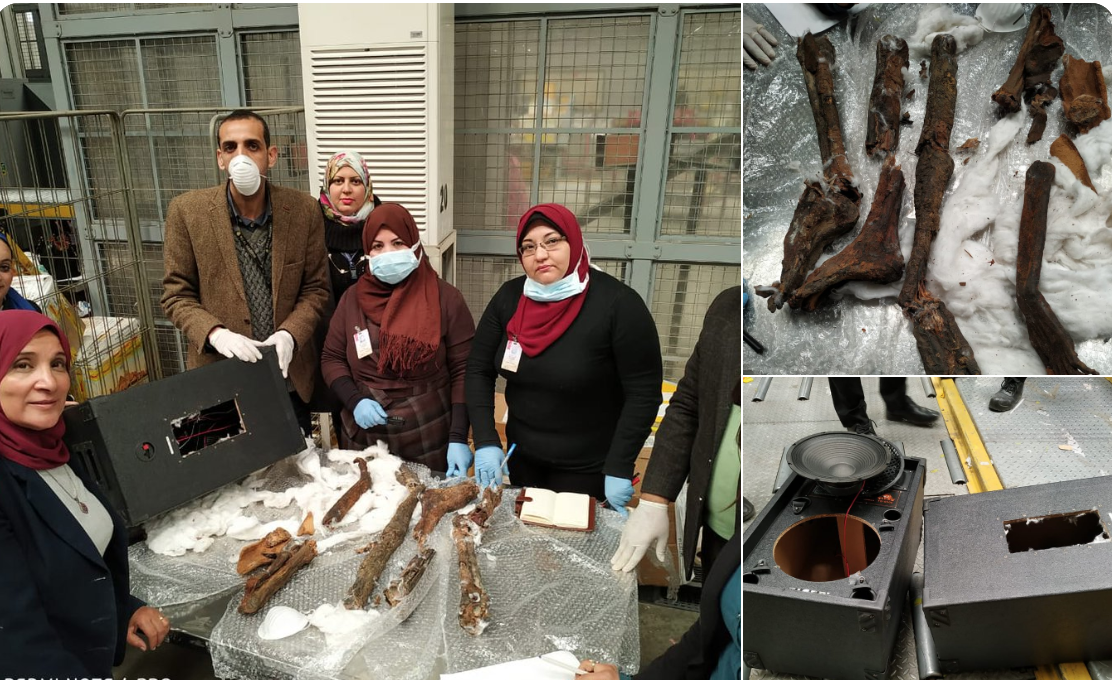
What would Tutankhamun say? Remember when mummies starting floating up in sewage? This story is even better. Security officials at the Cairo International Airport foiled a plot to smuggle ancient mummified limbs out of the country in a couple of loudspeakers. On a plane to Belgium, the X-ray technicians noticed something fishy and looked deep inside the speakers. Instead of wires and a woofer, they found body parts.

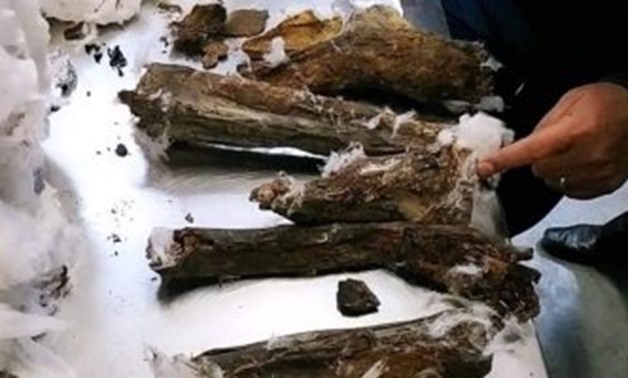
According to the country’s security officials the smugglers were attempting to smuggle out antiquities belonging to two different mummies: in total two sets of feet and lower legs; two sets of hands, two sets of forearms, an upper arm and an upper torso. The smuggler in the heist was not identified.

mummy foiling team smuggling egypt cairo in speaker mummy foiling team smuggling egypt cairo in speaker

The ancient mummified remains will be brought to the Egyptian Museum in Cairo where they will be inspected and preserved by a team of archaeologists. Grave robbing and archeology looting has only intensified since the 2011 revolution. When I travelled to Syria 20 years ago I was offered a number of archeological artifacts by a young man wanting to be my friend.

ISIS has systematically destroyed an unspeakable number of archeology and historical sites in the Middle East. Read our archeology news here.

Egypt alone has lost what it estimates to be $3 billion worth of illegal artifacts since the revolution time in 2011. Looting and stealing artifacts damages the local culture today and possibly irrevocably. Knowing our planet’s peoples’ history, helps us persevere in our future.

United Nations director proposes hydroponics to solve date palm oil problem

Date palm groves can be made more sustainable using permaculture and smarter irrigation solutions proposed by companies like flux www.fluxiot.com

The mention of palm oil is enough to make a serious environmentalist wince in shame of what this oil harvesting has been doing to local ecosystems. In a bid to make the industry more sustainable the United Nations Food and Agriculture (FAO) director José Graziano da Silva is calling on innovators, including hydroponics specialists, to find new ways to reduce the wasteful industry.

(Read this wonderful interview by Arwa on how to do it using permaculture)

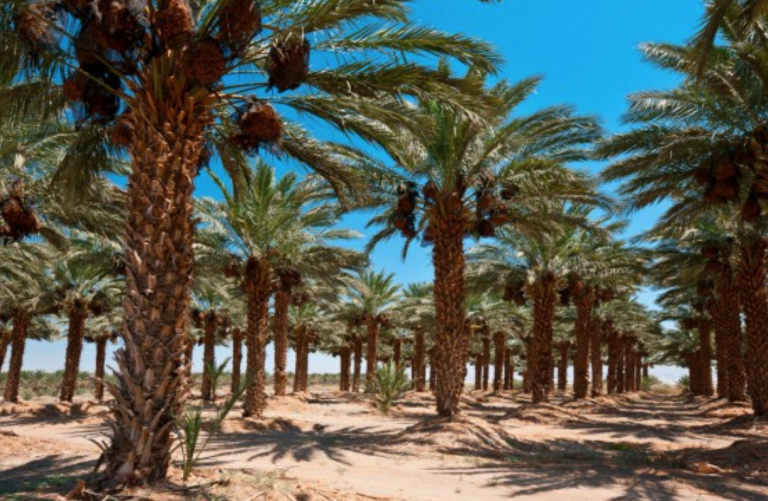
For centuries now date palm groves have been present in the hot deserts of MENA stretching from Morocco in the west to Yemen in the south. Indeed these man-made ecosystems have been vital centres of agricultural productivity in otherwise hostile and arid environments.

It is believed that the first date palms were cultivated in southern Mesopotamia in the 5th millennium BC and oasis agriculture developed on a wider scale during the Bronze Age. Researchers like Mark Bryant wants to re-introduce date palm gardens to the region – this time not just for agricultural purposes but in a bid to increase green and sustainable spaces.

The FAO could appreciate approaches like this. Hydroponics, for instance, would require too much infrastructure to work well and since date palms have hardly any roots it would be difficult to see how this suggestion would work in a cost-effective manner. Drip irrigation and permaculture though do sound like the sound way going forward.

“The impacts of climate change are making water increasingly scarce, provoking droughts that are more severe and prolonged, and also contributing to the outbreak and spread of pests and diseases, such as the Red Palm Weevil,” Graziano da Silva said at the 11th Session of the Khalifa International Award for Date Palm and Agricultural Innovation.

“We urgently need to build resilience and promote the adaptation of agricultural sectors through climate-smart practices that can also preserve natural resources and biodiversity,” he stressed, noting the importance of the date palm, which is deeply rooted in the economies, cultures and diets of the people of the Near East and North Africa region.

He referred to the diverse range of tools and knowledge that science and innovation have made available to produce “more and better with less resources”.

One solution included hydroponic systems that produce high-quality food with no soil and only 10 percent of the water normally used in traditional systems, and the use of drones to help track pests and diseases, as well as the use of nanotechnology for water desalinization.

“The challenge is to seize all the opportunities to apply and develop innovative solutions,” Graziano da Silva said. “For that, we need to put in place innovative policies, investments and partnerships bringing together the public and private sectors, and look to pursuing long-term commitment.”

Last November, FAO organized the first International Symposium on Agricultural Innovation for Family Farmers, where participants recognized the importance of family farmers for agricultural innovation.

Graziano da Silva emphasized the need to strengthen the capacity of farmers to innovate and acknowledged the invaluable role the Khalifa International Award for Date Palm and Agricultural Innovation is playing in the promotion of innovative agricultural practices, especially in water scarce regions.

From “feeding” to “nourishing” people with healthy and nutritious food

There is a need to foster innovation “across the whole food system,” and not just in the agricultural sectors.  “We need to reposition our food systems away from simply ‘feeding’ to ‘nourishing’ people with healthy and nutritious food,” Graziano da Silva said. “This change is fundamental to tackle not only hunger but also all forms of malnutrition, particularly obesity.”

Globally, more than 2 billion people are overweight, including 670 million who are obese (accounting for about 13 percent of the world’s adult population).

According to the World Health Organization (WHO), the proportion of obese adults in the Near East and North of Africa is of around 30 percent, reaching almost 40 percent in specific countries.

“The growing rate of obesity is happening at a huge socio-economic cost,” Graziano da Silva stressed. “Obesity is a risk factor for many non-communicable diseases such as stroke, diabetes and some types of cancer,” he added.

Estimates indicate that the global economic impact of obesity is about$2 trillion per year (2.8 percent of the global GDP). “This is equivalent to the global impacts of smoking or armed conflicts globally,” he warned.

The main reason behind the rise of obesity, he noted, is that current food systems have increased the availability and accessibility of highly processed food that is very caloric and energy-dense, high in fat, sugar and salt.

“This is particularly worrisome when countries have an excessive dependency on food imports, as is the case in the Near East and North Africa region,” Graziano da Silva said. He called for food trade regulations that address the imports of unhealthy food, and contribute to avoiding what he defined as the “globalization of obesity”.

The FAO Director-General said the upcoming Expo 2020 in Dubai, will provide a great opportunity for the international community to discuss innovative ideas and partnerships to tackle future challenges, including food insecurity and malnutrition.

8 High Energy-Consuming Appliances: Learn How to Save Energy

0

solar panels, solar energy jobs, installing, engineer sun, renewables

There is no limit to the usage of electricity at home. Usage of high energy rating appliances can save your bill, if it’s not possible to change the appliances then it’s time to find out which appliances are shooting your electricity bills. List down the appliances that are most hunger for power and plan how you could reduce its usage. Seeing your electricity bills you may wonder why you are getting higher bills, although you would have taken a few steps in consuming less energy.

Residential energy consumption is the third largest user of energy wherein nearly 65% of energy is used and 35% of energy is wasted. Cooling and heating appliances use 48% of energy, water heater uses 13% of energy, lighting, washer, and dryers use 12% of energy, Refrigerator, electric oven, the TV uses nearly 3-4 % of the energy. Turn off the appliances when not in use is the better solution to save energy.

Impacts of High Energy consuming appliances:

smelly fridge

Energy saving is vital for the environment, more than 50% of the emissions are from the higher utilization of electricity. The organization for economic co-operation and development warns that by 2050, the energy-related emissions will increase up to seventy percent which impacts the environment.

Following are the consequences that occur due to high energy consumption:

Carbon Footprints: Increase in the emissions levels of carbon dioxide and methane. Carbon footprints are the sum of all the emissions through various activities in a given time. The better way to avoid is to unplug the devices when not in use. Plugging laptop, charger washing machine, the microwave uses electricity which amounts to greenhouse gases.

Climate Change: According to the surveys, it is believed that more than 50% of the energy from natural gas and coal contributes to greenhouse gas emissions. There was a gradual increase in methane and carbon dioxide levels due to the careless utilization of electricity.

Scarcity in Energy Supply: There is an increase in supply and demand as there is an increase in consumers and this is a greater threat to the environment in the future. Generation of electricity through natural gas and coals will impact the environment and leads to deforestation.

High energy Cost: Overuse of energy leads to paying higher bills. This will risk the lifetime of the appliances and end up purchasing the new one.

Reasons for High Energy Consumption:

Paying electricity bills are quite challenging, there are lots of troubleshooting to check electrical usage has to be done which will determine the consumption of power. Following are the reasons for high energy consumptions:

  • Devices that are plugged continues to suck lots of energy hence unplug them when not in use
  • Lights and fans aren’t strategically used. Eliminate unnecessary lights when not in use.
  • Non Usage of energy efficient lights. LED lights consume less energy than traditional bulbs
  • Improper insulation of house: Whether usage of energy in summer or winter, if the house is not properly insulated there will be a loss of energy
  • Appliances which have old makes and models tend to suck more power and increase your electricity bills
  • Run washing machines, washer and dryers when they are completely full.
  • Extreme weather conditions consume lots of energy and lead to emissions. Keep the temperature inside the house consistent that is suitable.
  • Charging the devices more than the required time leads to unnecessary charging and consumes more power.
  • Turning on the air conditioners when windows are open consumes more energy and you end up paying more.

8 high energy consumption appliances, let’s learn how to save energy:

Cooling and heating systems:

During summer, implement natural ways to make your dwelling place cooler. Insulating the roof helps to maintain the temperature inside the house and saves energy bills. During winter ensure that chimneys are sealed with a damper, doors, and windows or properly sealed. Turn on the air conditioner earlier, such that it doesn’t consume more energy and start using the heater before the building turns really cold.

House appliances:

Unplug the appliances like TV, computer or laptop, refrigerator, washing machines, and microwave when not in use. Buy appliances with higher ratings, usually, the bigger appliances have a higher rating but higher the size energy consumption will also be more.

Fridge and Freezer:

Buy the fridge and freezer with minimum energy performance standards. A refrigerator that uses the hydrocarbon such as pentane or butane as a refrigerant for the insulation foam consumes less energy. Get the smallest size that fits your needs. The fridge which is smaller consumes less energy. Control the temperature of the refrigerator, ensure the fridge and freezer door are closed properly when not in use.

Washing Machine:

The front loader washing machine is energy efficient than the top loader as they use less water, detergent, and power. Most of the energy is consumed by the water heater that is connected to the washing clothes. Reducing water consumption by the washing machine saves energy.

Programmable Thermostat:

Don’t forget to turn off the thermostat before you leave your home. A programmable thermostat sucks your money. Get suggestions from the utility company or a hardware store person can help you out with the right appliance. Set sixty-eight degrees when you are home at and fifty-eight degrees when at night. Set the thermostat at fifty degrees when you aren’t at home, this saves lots of energy

Other electrical appliances:

Installations of downlights consumes lots of energy, compact fluorescent lightbulbs are food choice for lighting. Another effective way to save energy is to stop air leaks, shade your windows and doors. During winter it will keep heat in and during summer when not used it will keep the heat out. Installation of ceiling fans helps to get enough breeze and are environmentally friendly. Use the high material that is weather friendly and energy efficient. Get double or triple pane windows with low-E argon-filled glass and insulate it well.

Showerhead and sink aerator:

Your shower uses around 22 percent of the total water you use in your home (if your home is average). A large amount of warm water flowing through the showers or sink will add your energy bill. A low-flow showerhead restricts the water flow than the higher shower which uses more than 50 gallons of water.

Sustainable Energy:

Households emits more than 15 tonnes of greenhouse gases, 50% is from electricity generation which impacts the earth and contributes to global warming and climate change. Generation of electricity through renewable resources like water, sun, wind, and waste are environmentally friendly. But the green power might cost more than the electricity, one-time installation of green power will fetch you lifelong benefit. Use the natural lighting and ensure your house is well ventilated. Wind technology can provide nine percent of global electricity, The global warming emissions associated with renewable energy are minimal, it reduces the emissions by approximately eighty-one percent. Coal and natural gas associated with a health problem, like breathing problems, cancer, heart attacks, and premature death. All the negative impact of health come from emissions like air pollution and natural gas-fired plants.

Energy saving tips at home:

  • Use energy efficient appliances and generators like the like the Goal Zero 1250. (Look for the energy label “Grade 1” products which are the most energy efficient).
  • Replace incandescent lamps with more energy efficient lamps (e.g. Light
  • Emitting Diode (LED) lamps or compact fluorescent lamps (CFLs)).
  • Minimize hot water usage for bathing and cleaning purpose.
  • Maintain appliances regularly before or after use for optimal energy efficiency performance.
  • Use appliances with timer control or automatic power-off function. Don’t leave the appliances in standby mode for a long time.
  • Set and maintain an air-conditioned room temperature between 24 degrees and 26 degrees C in summer.
  • Use appliances of appropriate capacity and features best suited for home.

Energy saving tips at the office:

  • Set and maintain an air-conditioned room temperature between 24 degrees C and 26� in summer.
  • Switch off office equipment that is not in use.
  • Use appliances with timer control or automatically switch-off control
  • When leaving office, arrange for the last-man-out to check and switch off the power source to all air conditioning, lighting, and office equipment that are not in use. Avoid leaving appliances in standby mode for a long period.
  • Procure energy-efficient office equipment.
  • Carry out regular maintenance on office equipment for optimal energy
  • efficiency performance.

Energy Consumption Calculation:

Electrical energy consumption is calculated by multiplying the power draw of equipment by the number of hours of use, Energy consumption (kWh)= wattage*hours of use* 1kw/1000w.

Establish the energy baseline and calculate accordingly: An energy baseline serves as a reference point for evaluating future energy-saving efforts. A baseline period: Daily, Monthly, Annually Can be used for predictive purposes. The ongoing review of your facility’s energy consumption to determine if its energy performance is getting better or worse in comparison to yourself, other facilities in your portfolio, and/or your peers.

How to find the best energy deals?

There are various suppliers in the market, who provide online energy comparison that helps to determine your average electricity usage along with the cheapest energy deals.

While choosing the energy deals you should not only compare the cost but also consider the following factors:

The mode of payment: Prepaid and postpaid are the two options few suppliers provide for the consumers. Often prepaid tariffs are expensive than postpaid tariffs. You can either opt for credit payments or choose direct debit from your account for postpaid energy consumption tariffs.

Choosing the energy plan that is affordable: Energy supply can be categorized into three types the help to save the electricity bills:

Duel fuel: Few of the household prefer to have a dual supply of energy, either gas or electricity. It is better to choose one energy supplier that supplies both gas and electricity. Choosing the dual supplier has a lot of benefits, you tend to get more discounts on your annual bills. Though it’s not cheaper, the discount plays a major role.

Fixed and capper energy tariffs: These tariffs have the usage limit, which offers a set unit price for a certain period of time. Fixed tariffs won’t change, when there is a rise in prices or when there is a dip in prices. Sometimes, fixed rates can be more expensive than standard variable tariffs. Wanting to save energy millions of consumer has switched to capped or fixed tariffs, that controls the usage of energy.

Standing charges: They are charged flat on daily rates, it also covers schemes like green energy subsidies. Standing charges are applicable for daily household usage but if it is rarely used maybe 6 months in a year then its utter waste in choosing this tariff.

Opting green energy: Energy from renewable resources can be expensive but saves money for the future.

Electricity and gas supply from one provider

Duration of the contract

Exit fee when you vacate the place or transfer fees when you shift.

It only takes a few minutes to compare your electricity bills, the online comparison is free, fast and easy, you can get great deals from the multiple suppliers. You would get the best advice on switching or saving energy.

Switching to energy suppliers:

Switching to small suppliers are bound with the same set of rules, but they can supply energy cheaper than the large suppliers, but security is less as they tend to be in bankruptcy. Larger suppliers will have lots of customers and supply energy efficiently and they are a reliable supplier. Medium energy suppliers often charge nominally. Following are ways to switch energy suppliers online:

Step 1: Go to an online energy comparison website like Electricityrates.com. The website will contain all the information related to energy.

Step 2: Enter your zip code, as the gas and electricity rates vary as per the regions.

Step 3: Enter the current usage information, you need to enter the current tariff details and answer all the questions.

Step 4: Choose the right plan: Review your comparison bills and choose a better rate plan.

Bills depend on the supplier and how they cost on consuming the energy, there are a lot of jargons used in the bills which you may not be able to understand, but seeking online advice will clear your thoughts. Switching the supplier could make you save huge money. Fixed tariffs offer consumers greater discounts.

Energy performance assessment: You can track your energy performance by following the below steps:

  • Collect and track facility energy data
  • Benchmark your energy performance
  • Internal comparisons
  • Comparison against similar facilities
  • Identify areas of high-cost energy
  • Develop an energy baseline
  • Take necessary action

The lesser energy we use the lesser we pollute our environment. Use renewable resources like solar, water and wind energy, they produce less pollution. By understanding the current environmental issue, take steps to avoid usage of non-renewable energy. Renewable energy builds the community to accept nature and build resilience, it meets all the energy needs. Saving energy saves money and nature. Utilize the energy well and build an eco-friendly environment.

Should you consider investing in oil in 2019?

0
saudi arabian oil trading saudi aramco
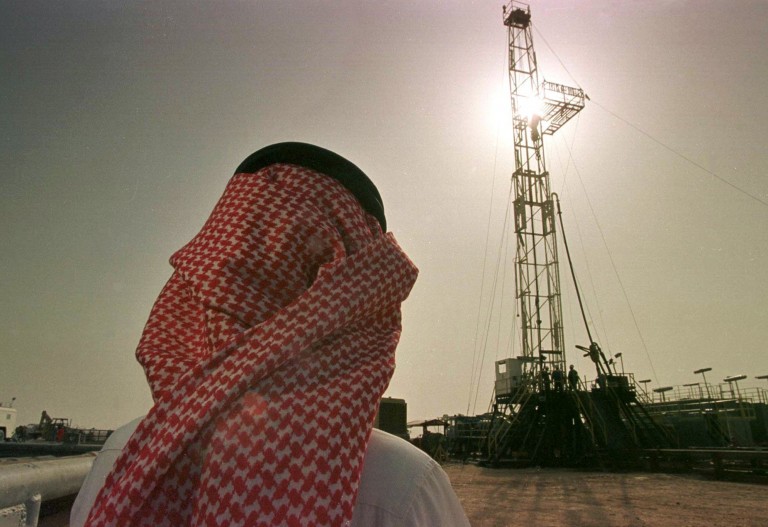
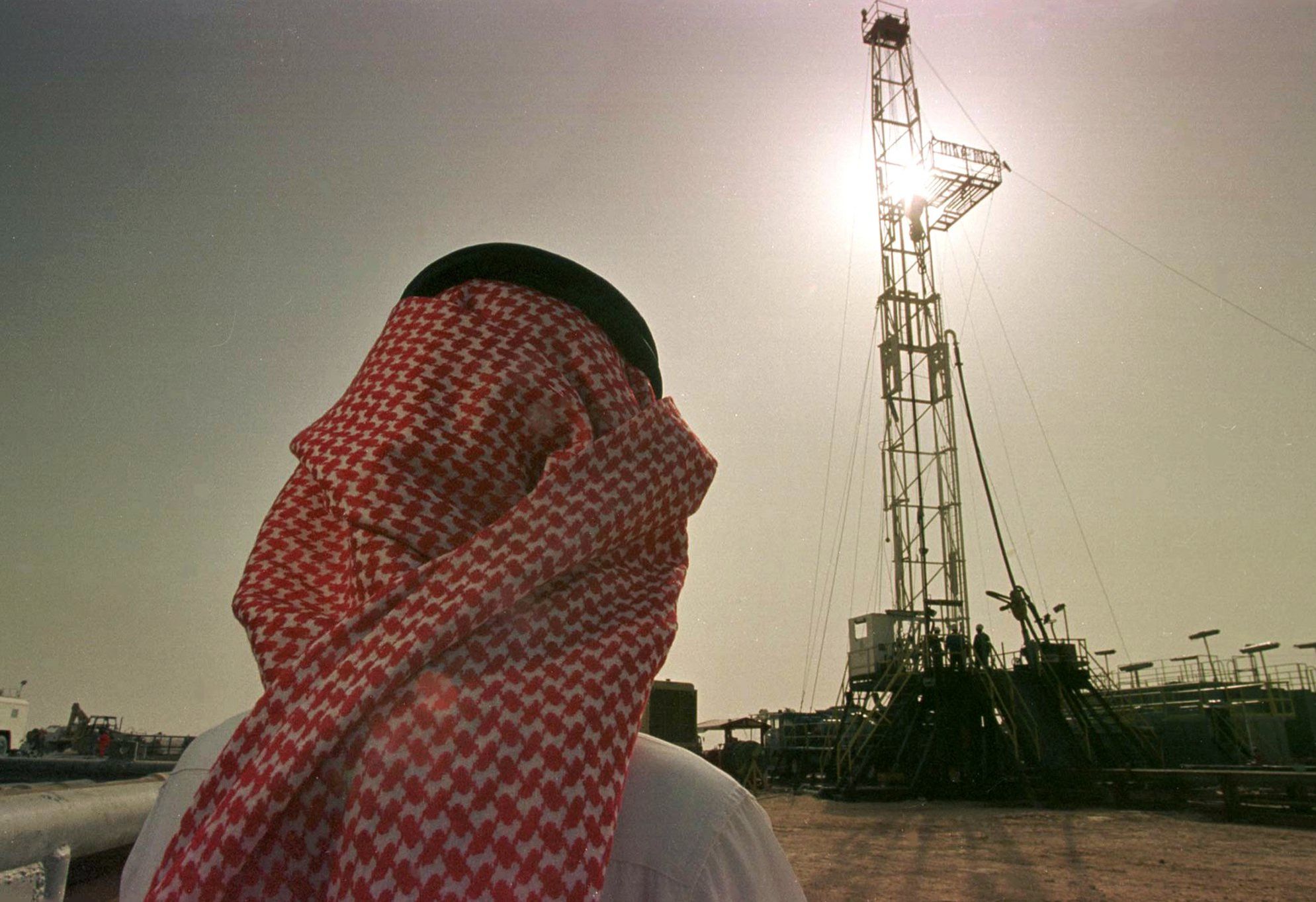
Khaled al Otaiby, an official of the Saudi oil company Aramco watches progress at a rig at the al-Howta oil field near Howta, Saudi Arabia, on Feb. 26, 1997. Energy is the big strand in a web of U.S.-Saudi economic ties that has grown in the six years since an American-led army rolled back Iraqi aggression in the Persian Gulf. (AP Photo/John Moore)

Whether you love the idea or not, ever since the first oil refinery opened in Baku in 1837, oil, or ‘black gold’ as it is known, has been one of the world’s most valuable and versatile commodities. Crude oil is used for the production of so many everyday essentials, from fuels like diesel and petrol to many types of plastic and even the production of clothing and furniture.

The price of oil increases in line with demand, therefore when demand for oil and petroleum based products is high the value may rise as consumption increases.

The United Arab Emirates announced in February this year that it is planning to pump further investment into petrochemical and refining projects in India. Sultan Ahmed Al Jaber, CEO of Abhu Dabi National Oil Co. and Minister of State for UAE is aiming to develop a strategic partnership between the two countries and is planning to store more crude oil in India’s reserves. Wall Street is predicting a recovery in oil prices this year too so how do investors capitalise on this market growth, while minimising exposure to risk? There are several routes to investing in oil.

  1. Buy oil

You could buy barrels of oil to store and sell on in future, however for the majority of investors this is not practical. Oil storage and handling is not easy, as it is toxic and highly flammable. Most people would not have the right facilities to store it and would have to pay somebody to do this for them, which could cancel out the return on investment.

  1. Futures Contracts investment

You can buy a futures contract in crude oil, meaning you don’t own the oil physically, but if you buy a contract and the price of oil increases in the future, you will make money, and if the value drops, you will lose out.

  1. Buy stocks in oil companies

You may consider purchasing stocks in oil production companies, or those that sell crude oil or transport it. Investors need to understand the markets though, as depending on which companies you invest in, some companies will rise in line with the price of oil, and others could actually fall. For example, refined oil products such as fuel depend on oil for production. If the price of oil increases, but the price of petrol doesn’t, this squeezes their profits, and drives their value down not up.

  1. Invest in ETFs (Exchange Trading Funds)

These funds enable you to invest in a particular commodity, such as oil, and some will expose investors to the rise and fall of oil’s value. Their performance can be tricky to predict, so it is important to understand how they operate, and be aware of potential losses. The United States Oil Fund is the most well-known Oil ETF, but there are many others so it’s important to do some homework before investing.

The IEA (Institute of Economic Affairs) predicts that global demand for oil will not peak until around 2040, as growing economies such as China and India increase their demand for crude oil. With this in mind, those who want to invest in oil might not want to leave it too long. The potential gains could be significant, and much like oil itself, the market can be volatile, so do your research thoroughly before investing.

Israel’s medical cannabis grower Cannbit wins Raphael Mechoulam as Chairman, may cannabis exports begin!

0

Raphael Mechoulam, TCH, medical cannabis, CBD

Israel is on the map for cannabis production. The country claims the world’s foremost researcher Raphael Mechoulam as its pioneer –– in the 60s he discovered and isolated THC and then CBD and other important medical cannabis molecules. There has been a race to get this world-renown expert onboard dozens if not hundreds of medical marijuana company’s boards. The winner has been Cannbit (CANNBIT-M – TASE), a medical cannabis producer in Israel. New to the scene, the publicly-traded company on the Tel Aviv Stock Exchange plans to produce and export medical grade cannabis from Israel now that laws permit export.

Mechoulam is a professor at the Institute for Drug Research at the Hebrew University of Jerusalem.

Cannbit based in Tel Aviv, has a business relationship with the Canadian cannabis company Namaste (traded on the TSX Venture Exchange, a stock exchange in Canada. It is headquartered in Calgary, Alberta and has offices in Toronto, Vancouver, and Montreal) which is listed on the Canadian exchange and which hopes to dual-list in Israel. Namaste (TSXV: N) has invested in Cannbit as a grower and supplier of raw material for its new ventures globally, among which include local ventures in Israel such as a chain of coffee, leisure, and explanatory centers in Israel. Recreational cannabis is legal across Canada, and the public perception indicates that Israel will be fully legal in the next 5 years.

Israeli cannabis entrepreneurs are on the forefront of new innovations in cannabis growing, pharmaceuticals, from areas like environmental pesticides, to genetics to artificial intelligence. Much of its success today is due o the fact that researchers, starting with Mechoulam were free to experiment on the molecule in a controlled setting, putting Israel at least a decade or more ahead of other countries such as Canada and the United States.

Namaste issued news in January that it was pleased to report a critical step in the export of medicinal cannabis from Israel. This is when the Israeli government approved the export of medical cannabis, a significant milestone for the Company and its Israeli partner, Cannbit, as a late-stage applicant, GMP-certified producer of medical cannabis.

Namaste owns 10% of Cannbit and has a collaboration and supply agreement to purchase medical cannabis.  For Namaste, the Company intends on facilitating the import of medical cannabis from the Israeli market to Canada and other jurisdictions, subject to regulatory approvals as required, and adding Cannbit’s cannabis to Cannmart’s product line later this year.

“This is an important milestone for our Israeli partners, Cannbit, and our Cannmart customers,” said Sean Dollinger, Co-Founder, President and CEO of Namaste Technologies. “Our goal is to import medical cannabis from the Israeli market and offer it to Canadian patients. Furthermore, this approval opens the door for Namaste to potentially import product into other key markets.”

See an interview with Cannbit CEO Yaron Razon:

https://www.youtube.com/watch?v=fD5KVffdA4k

“The government approval for the export of medicinal cannabis should have a material impact on our business and help us with global expansion,” said Yaron Razon, President and CEO of Cannbit. “We will be producing flower and cannabis oil in-house and anticipate that the first exports will be seen towards the end of the year, and look forward to supplying Cannmart and its global partners with high-quality medical-grade cannabis.”

Cannbit also recently announced that it will produce NIS 4.8 million worth of cannabis for Tikun Olam, one of Israel’s leading licensed producers of medical cannabis. Under the agreement, Cannbit will grow Tikun Olam’s two unique cannabis strains on the basis of the growing protocol developed by Tikun Olam.

Growth will be up until the wet plant is harvested, while Tikun Olam will be responsible for drying and processing it.

Cannbit is known in the cannabis world as a grower: it will use best in the field Israeli known-how and technology to produce the highest level of quality of medical grade cannabis on the market. This will go to treating a wide range of illnesses.

Cannbit intends to become Israel’s leading exporter for medical cannabis to legal jurisdictions around the globe. Cannbit’s facility is 4,000 square meters with an additional 10,000 square meters available for expansion and is locataed in Neot Hakikar, an area well known in the Israeli agricultural community with clear advantages in the cold seasons. The cultivation is carried out in a sophisticated greenhouse that be controlled and which provides ideal conditions for a variety of cannabis strains.

Cannbit’s management is comprised of a group of industry professionals in relevant disciplines.

4 Essential Factors to Consider When Buying a Business

0

Have you seen a green business that has attracted your attention? Something in energy, recycling, art? Are the sales promising? Well, before you make any bold step of buying it, you need to do some thorough and extensive research so that you don’t regret later when it is too late.

For you to evaluate any business that’s being sold, you have to be open minded and cautious enough to make the right decision. You have to check the financial statements, the overall economic stability in the industry, the asking price, etc.

  1. The Reasons for Sale

It’s good to be a bit skeptical when purchasing any property or investment. Are the financial statements good? Is the company battling any legal case? If the business is financially and legally okay, the next thing is to know the reasons for sale.

image-worker-gaza-deaf-restaurant

Generally, business owners will not sell their business even when the business is facing challenges; they will do anything in their power to make the business to stand on its feet again. You should carefully evaluate the reasons that the management gives for selling the business. If the answers aren’t satisfactory, then you better not proceed with your decision.

Remember, the business owners have gone through all odds just to make sure that the business becomes successful. So they wouldn’t sell the business unless there’s a big, compelling reason. You can as well ask the employees why the business is on sale to compare the responses. If the answers are contradicting, then it may as well mean that the business is not genuine and you shouldn’t go ahead with the transaction.

  1. The Customer Concentration

Most people only concentrate on the revenue figures when evaluating a business. However, this is not advisable because you need to determine where the revenues come from. You should know the type of customers of that particular business.

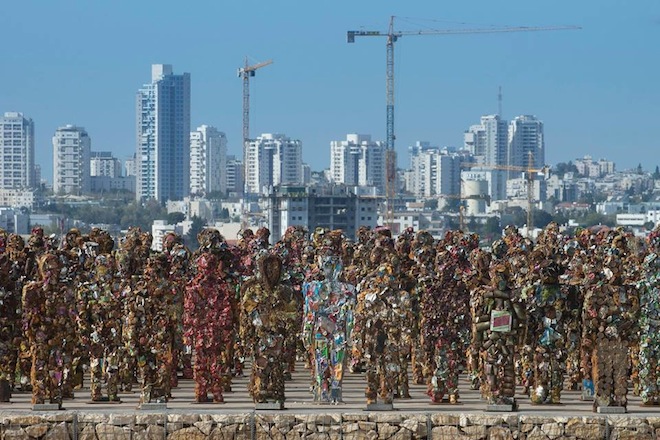
HA Schult, Trash People, recycled materials, junk culture, tel aviv, israel, hiriya, ariel sharon park, trash warriors, trash army

In most companies, a significant percentage of revenues comes from single strategic customers. Well, this might appear right but will the customers remain after the sale of the business. If the customers remain, that will be great for your business, but if they don’t, where will you get new customers? Will you be able to cover for the revenue that you lose? With this information at hand, you will be able to determine whether to continue with the purchase or not. This information will also act as a guide when you are negotiating for a better deal. AV video conferencing allows you have a chat with the customers easily.

  1. The Retention of Employees

You may have to talk to the management to determine the key workers in that company. If you want to restructure this company, then it is important that you retain some of the key workers. . These workers may include the chief accountant and the HR manager of the company.

You may also retain the salespeople to allow for the continuity with the customers. Ensure that you know the key employees and their roles in the company.

  1. The Government Regulations

All businesses must comply with a set of rules and regulations. So you should ensure that the business you are about to purchase adheres to these rules and regulations. A business that doesn’t comply with these regulations may attract huge fines.

You may also consider talking to the various legal stakeholders to determine if there might be changes in the future. Like before you buy in Real Estate, actually go and see the new condos in Toronto. More than once. Or the use of new energy options? If there are changes to your energy provider for instance, how will they affect the business? What does the changes means in terms of the success and survival of the business?

Ranked: The Most Eco Friendly Game Consoles

0

It may not be something that your average gamer ever considers, but video games consoles use an enormous amount of energy. With the future of the planet looking ever grimmer when it comes to excessive energy usage and climate change, it is important to consider how our gaming devices contribute to the planet’s dire state.

A key thing to remember is that the older a games console, the less energy efficient it tends to be. Newer machines have been developed after taking on board customers’ concerns about energy efficiency and the environmental impact of consoles.

Sony Playstation 4 Pro 1TB Console

This version of Sony’s mega-selling machine is the most energy efficient console currently on the market, according to Enervee, who rate it at 98 out of 100 when it comes to efficient power usage. If everyone who wanted to buy a games machine bought a console with this kind of energy rating, enough energy would be saved to power the city of Philadelphia for a year.

Xbox 1 1TB

According to Enervee, the second most energy efficient gaming console currently on the market is the Xbox 1, with one TB. This machine has a rating of 97 when it comes to its energy efficiency. The performance of this console is not compromised by it being able to user lower levels of energy than many of its rivals on the market.

It should also be remembered that playing online games on console web browsers can increase the amount of energy you are using by quite a considerable amount. This is something to bear in mind when choosing a console.

Sony Playstation 4 Slim Console

This is another console with a very high energy rating of 97, putting it amongst the most energy efficient gaming machines out there. This machine is often sold as part of a bundle with the game ‘Uncharted 4: A Thief’s End’.

Xbox 1 500GB

With an energy rating of 96, this version of Microsoft’s console is among the best machines on the market when it comes to be environmentally friendly.

Nintendo Wii

The Wii has been around since 2006, and offers reasonable energy efficiency when it comes to being eco friendly. Older models of the Xbox and Playstation consistently used more electricity than Nintendo’s Wii console, though that has changed in recent years. Although not as widely popular as the other machines, the Wii still occupies its own niche on the console market.

You also need to remember, of course, that the environmentally friendly credentials of a console don’t just rest on the energy it consumes. Consoles are manufactured from a range of materials, many of which are not biodegradable.

If you want to be more environmentally minded when it comes to choosing a gaming machine, buying a second-hand or reconditioned model helps to minimise the impact of people constantly buying new machines, many of which end up discarded without anything being recycled or reused.

Ancient Samaritan’s wealth uncovered in Jerusalem

Samaritan text ancient uncovered israel

We’ve all heard about the Good Samaritan. What about the Wealthy Samaritan? And did you know that two small groups of native Samaritans still live in Israel protecting their customs as they did in biblical times?

A 1,600 year old estate of a wealthy Samaritan covered in Central Israel at Zur Natan. The estate, discovered in a major Israel Antiquities Authority excavation ahead of new neighborhood construction initiated by the Israel Lands Authority, contains a rare inscription, adding to the evidence of once-extensive Samaritan settlement in the area.

Samaritan text ancient uncovered israel

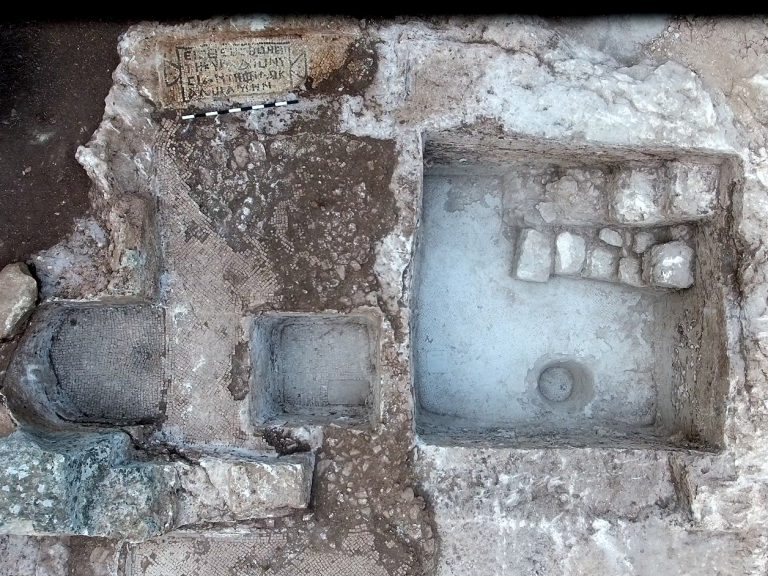
“Only God help the beautiful property of Master Adios, amen.” This is the 1,600- year-old inscription found in Israel Antiquities Authority excavations at Zur Natan on the southern Sharon Plain.  The inscription, in Greek, was deciphered and translated by Prof. Leah Di Segni of the Hebrew University of Jerusalem. It is dated to the early fifth century CE, the period during which Samaritan settlement reached the height of its power and
prosperity in the southern Sharon Plain.Samaritan text ancient uncovered israel

Samaritan text ancient uncovered israel

According to Dr. Hagit Torge, director of the excavations on behalf of the Israel Antiquities Authority: “The inscription was discovered in an impressive winepress that was apparently part of the agricultural estate of a wealthy individual called Adios. This is only the second such winepress discovered in Israel with a blessing
inscription associated with the Samaritans. The first was discovered a few years ago
in Apollonia near Herzliya.”

Samaritan text ancient uncovered israel

Near the winepress the archaeologists discovered stone quarries with rock-cut depressions used for cultivating grapevines, apparently part of Master Adios estate. “Master” was an honorific given to senior members of the community and attests to the high social standing of the owners of the estate,” says Torge.

“The location of the winepress is near the top of Tel Zur Natan, where remains of a Samaritan synagogue
were found with another inscription, and reveals Adios’s high status,” she adds.

The Zur Natan Samaritan synagogue was transformed into a church in the sixth century. A compound was discovered nearby in the past, featuring large rooms and spaces for producing wine, oil and flour. In one of these a Pompeian donkey mill was found, used to grind flour and incised with a seven-branch candelabrum.

The inscription in the winepress is additional testimony to once-extensive Samaritan settlement in the southern Sharon Plain during the Byzantine period. The Samaritans were originally brought to this country as part of Assyrian policy and first settled on and around Mount Gerizim. Over the years the population grew and expanded to the southern Sharon Plain among other places. They maintained their special customs and traditions, which resemble Jewish traditions in many aspects.

During the Byzantine period the Samaritans revolted against the government in an attempt to maintain their identity. After the revolts the community diminished in size and returned to the Mount Gerizim area. A Samaritan community still lives at Mount Gerizim, as well as in the city of Holon south of Tel Aviv.

Unplug your appliances

0

unplug-day

Reboot’s National Day of Unplugging, an annual call for a 24-hour tech break, was launched as the smartphone was just emerging into popular use. Now celebrating its 10th year on March 1-2, the National Day of Unplugging has been a leading voice for the unplugging movement and is needed more than ever. 

“Unplugging from your phone and computer for 24 hours isn’t easy,” said National Day of Unplugging co-creator Dan Rollman, a tech entrepreneur. “That kind of break is uncommon for us in today’s hyper-connected world. If you can do it though, it’s a wonderful way to recharge your spiritual batteries and be present with the world around you. It provides a healthy reminder of the benefits that come from taking an occasional respite from our devices.”

The launch of the National Day of Unplugging in 2010, was followed by the advent of digital detox retreats and a growing call from former tech executives for accountability by the companies they say have intentionally created a society of tech addiction. The annual celebration reaches hundreds of thousands of people every year, with the world’s most established brands, celebrities and media companies sharing the message and participating.

 Our phones are now with us everywhere – at dinner, in bed and in the bathroom. They are the third wheel and the third parent. The average smartphone user taps, swipes or clicks their phone 2,617 times a day, according to a study by Dscout, and the National Day of Unplugging offers an urgently needed escape from the relentless deluge of information emanating from the now ubiquitous and ever-present screens that dominate our daily lives.

 In 2011, just 35 percent of people owned a smartphone. Now about 77 percent do. And they use them constantly, according to a 2018 Pew Research Center study. The top 10 percent of users tap, swipe or click their phones 5,427 times a day. Dscout found, and most start doing that right when they wake up. Almost 70 percent of adults sleep with their phones by the bed. About 85 percent of smartphone users check their phones while talking with friends or family.

For one day, from sundown Friday, March 1, through sundown Saturday, March 2, the nonprofit Reboot is asking people to embrace the National Day of Unplugging to unplug for 24 hours and look up to remember what life was like before our digital devices went with us everywhere.

 The National Day of Unplugging recognizes the value and importance of technology in today’s world with the goal of encouraging people, especially digital natives who have grown up with ever-present technology, to be more mindful of their digital use. The day is not intended to be a one-off, but rather a starting point to encourage people of all ages to embrace a healthy lifestyle by regularly setting aside unplugged time.

 A growing number of the tech leaders who designed the device’s compulsive features have stepped forward in recent years to speak out against digital manipulation. Leaders like tech entrepreneur Roger McNamee and Tristan Harris, a former Google ethicist and founder of the Center for Humane Technology, are challenging the direction of technologies that are now overtaking our society. They are sounding the alarm on the data that is being collected from people and warning that the technology is having a negative psychological effect, especially on teenagers, and that many teens are suffering from digital addiction, cyberbullying and even slower brain development.

 People can participate in the National Day of Unplugging on their own or through partnerships that include The Second City in Chicago, collaborations with the Digital Wellness Collective and Let It Ripple, hundreds of schools around the country, and many more. On it’s website, at www.NationalDayofUnplugging.com, Reboot is offering ideas and a tool kit of tips to facilitate tech-free time. Additionally, individuals, families and friends are invited to participate in the “I/WE UNPLUG TO _____” campaign to publicly share what they like to do when not using technology.

With participation worldwide in 125 countries (including far-flung places such as the Bhutan, the Isle of Man, Mongolia, Andorra, and Kazakhstan), the NDU has resonated around the world with people of all backgrounds, from Catholic to Hindu, Buddhist, and Muslim. The message has been embraced by a range of celebrities including Richard Branson, Arianna Huffington, Jill Soloway, and Tiffany Shlain.

 About the National Day of Unplugging

The National Day of Unplugging has roots in the Jewish tradition of the Sabbath. This modern day of rest was developed in 2010 for people of all backgrounds as a way to bring balance to the increasingly fast-paced way of life and reclaim time to connect with family, friends and our communities.

How to Maximize Trade Platinum CFDs

0

Platinum is among the most expensive metals in the world. Like gold and silver, platinum is rare and falls into the category of precious metals. The Mayans once used platinum in jewellery. The shiny, silvery-white metal as resistant to corrosion as gold. Today Platinum is used extensively for jewellery. Its main use, however, is in catalytic converters for cars, trucks and buses. Critical metals are also necessary in renewable energy production. It is essential that we guard and protect what we have.

Platinum is a dense, malleable and ductile metal that forms the basis for the platinum family. The family is also known as the platinum group of metals and contains 6 metals that share similar physical and chemical features. These metals are palladium, osmium, iridium, rhodium, ruthenium, and platinum itself.

Well, platinum is even rare to find than gold. Annually, miners extract 1,700 tons of gold and only 130 tons of platinum. But despite the huge difference in quantity, the cost of extracting platinum is as twice that of gold.

Engaging in trade platinum requires careful consideration. Its high demand in industries and it’s relatively low supply makes it highly volatile. As such, platinum trading involves a vast degree of risk. The possibility of making huge profits is in tandem with the risks of getting huge losses.

The Platinum Market

Over 50 percent of platinum goes to the jewelry industry. That’s due to its high resistant features and inability to tarnish when exposed to harsh environmental conditions. It’s also used as an irreplaceable component in most catalytic converters of fuel engines. Other industries like medicine also use this metal albeit in low quantities.

Most of the platinum in the market is mined, with 80 percent coming from Africa. The other 20 percent comes from Russia and North America.

The platinum trading is global, as it’s traded in New York Mercantile Exchange, Chicago Board of Trade and Tokyo Commodity Exchange.

What Affects Its Price?

The special properties of platinum increase its demand across multiple industries. With high demand and low supply, the prices are likely to be high.

However, the demand for this metal on these industries can also decline. With this, the metal will be left exposed to drops in its prices. With this, the prices are likely to fluctuate from time to time.

Platinum CFD Trading

Platinum trading isn’t on the real physical metal, but for its CFD. That means, an investor doesn’t buy or sell the equipment but is able to benefit from its price fluctuations.

A contract for difference (CFD) is an agreement between a broker and a trader in order to maximize earnings from the price difference between start and close of trade.

CFDs saves investors the agony of paying for storage. In addition, it allows them to trade in either way. It doesn’t matter whether you’ve got a negative or positive view on price predictions, you can maximize on either downward or upward price movements.

Further, CFDs are commission free allowing brokers to earn a small profit from the spread.

Trading CFDs as compared to direct trading offers:

Flexibility

Platinum value can change within seconds or minutes. For instance, if you own a block of platinum when its value is $20,000 and suddenly a shift causes the value to drop to $15,000, you’ll have lost $5,000.

Since it’s a declining asset, other people aren’t interested in buying. But if you’re trading CFD, you can close your position at any time.

Peter Steel “Grampa Gnome” protector of Canada’s Living Water – in time and on time

0

raw water, living water, nipissing

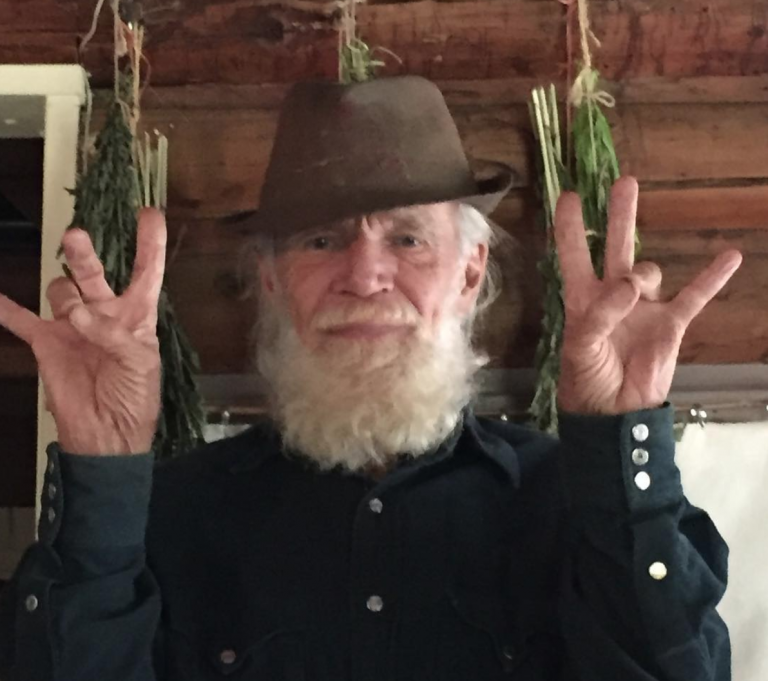
Peter Steel (April 1941 to Feb 22, 2019) aged 77 was one of the world’s foremost champions for Living or raw water. He died in his off-grid forest home this week. The solar-powered home is located deep inside a forest in Powassan, Nipissing –– an area of Canada remote enough to be very uncomfortable to most city people. Peter, who played the role as Grampa Gnome, would dress up like a gnome and throw fairy dust on every piece of art he created. But in reality he took on the most serious mission: spreading the importance of connecting to nature, upholding femininity, connection to one’s God, and to protecting the most divine gift us humans can enjoy: living water.

Living or “raw” water is a new craze in California startups are trying to commercialise on.

Peter had known for decades that raw water endowed a special quality to the awareness of people and place. He left the commercial world of business and sales in his 30s to live off grid and spread the importance of protecting and nurturing source water. People came from all over the world to meet Peter and drink the special water that emerged from the Canadian Shield in Nipissing.

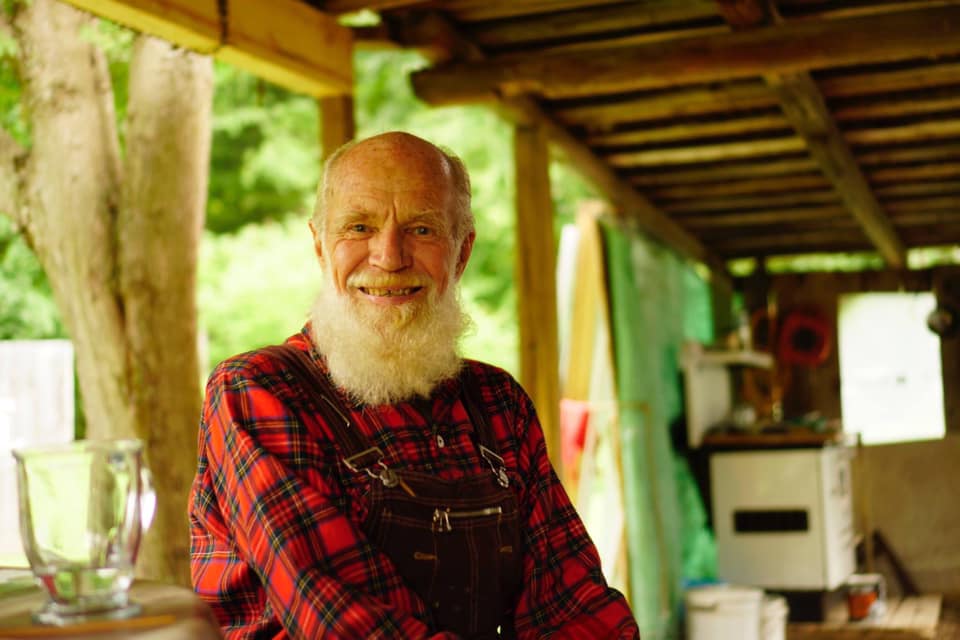
Peter had lived in and tended to Gnome-Land for over 40 years. This was his off-grid paradise he had created in Northern Ontario, which he shared with his life partner Jeanne Raven Cote pictured below.

Peter Steele, living water, nipissing, rawPhoto by Raven

Together they protected and embraced ancient source water billions of years old as it emerged through rocks of their 75-acre forest. They have a number of springs on their land and people from all over the world, including princes and princesses, have made pilgrimages to drink their water.

Living water, raw water, 4 degree water, or source water comes from artesian springs deep below ground. The Canadian Shield is one of the world’s largest geologic continental shields, centred on Hudson Bay and extending for 8 million square km over eastern, central, and northwestern Canada from the Great Lakes to the Canadian Arctic and into Greenland. It makes up about 50% of Canada’s land mass and was created about 2.5 billion years ago. Much of the rock exposed now in the Canadian shield used to be buried deep below the earth. It contains important minerals and elements and is believed to be protecting one of the last natural sources of “original” water from the earth’s early days of creation.

Peter saw living water as a source to enlightenment, that by drinking this water one could reach paths to inner knowing, healing and growth, and connection to other human beings and life forces on this planet.

I drank the water and became a believer. Being with Peter and in his forest made me feel the Sabbath any day of the week.

Photo by Raven

Some people believe that because source water has never before recycled through human pollution, it is extra healthy for you. Others hint that it may contain ancient bacteria or a special kind of “light” energy that can activate certain metabolic pathways in your stomach, body and mind.

I had heard rumors over the years about the “weirdos” who were living in the forest in Powassan surviving on the minimum. Soon, I would learn about source water through them. Two summers ago after deciding to spend a month in the wild at the old homestead my family owns in a very remote area of Nipissing, I finally had the courage to ask a local to introduce me to the couple. We gave Peter a call and he said to come right over.

I was met by a man in barefoot wearing red overall shorts, the sun smiling through his teeth. He greeted me as though our souls had been waiting for thousands of years to meet. And I think they were. Peter taught me about water in the Nipissing region, once home to a vast population of Anishinaabe First Nations people. Nipissing comes from the Anishinaabe word Nibii(n)sing, which means “at the little water”. He introduced me to some friends and his life partner Jeanne would quickly become my mentor.

Although he appeared to not need many followers, I was looking for a new guru and agreed to conspire with him over protecting source water and spent the next few weeks with him and Raven. Through the both of them I learned about how consciousness creation comes through what you feed both your body and mind. And that one’s environment very much influences the reality that you will create for yourself and others. While this seems like New Age practice 101, maybe even 100% bullshit, I never really felt such a spiritual connection to my homeland of Canada until I met Peter and his dear partner Raven, who is also part First Nations.

I decided I would make a movie about them and spent weeks taking footage almost every day. Through them I met a community of extraordinary people so different in every possible way.

As a first generation Canadian, I sort of always felt like a landed immigrant. Through Peter and his living water, imbibing it, connecting with the source and the land mass that houses it, I realized a sense of belonging inside and out to where I had come from and where I was going.

Peter Steele mushroom

While there are a great number of Living Water freshwater springs spitting out water all over the Nipissing region, with an excellent spring “free for the taking” source roadside in the village of Trout Creek (I’d been drinking that since I was 12), Peter always believed that his spring had a pureness of quality to it. Perhaps it was the location high on the hill or the stewards who had breathed importance and life into the water and land over the last decades.

I will never know probably in my lifetime if Living Water is scientifically better for you than any old spring water. But since meeting Peter and Raven I have come to feel that paradise can exist on earth if you choose to create it. And that the bounty that nature provides is enough to fill any human being with a sense of purpose. I managed to see Peter for the last time this past summer. My dad was sick. Soon we would find out he was dying, and Peter welcomed us in his home as he always did, even without phoning beforehand. He was more subdued than when I had known him the year earlier. And I had too much on my mind, and not enough time.

“You are in time and on time,” Peter would always say to me, over and over again like a mantra, always playing with words, with numbers, mystic realities and concepts borrowed from all world religions and histories, working to bend reality and perception but also to connect to every soul being that he met through something they were culturally tied to. It’s hard to fathom that he would not live forever.

In the last year Peter started playing around on Instagram where you can see some of his feminine nature, and devotion to living water “awareness” creation.

Peter for me was a mystical experience, a person who is simply divine and sent from God. He helped me find ways to see God in every person. Peter altered the course of my life. If you are lucky to have met him you will know what I mean. He could talk to you about flaws in science, God’s handiwork, and mainly about our universal need to connect to ourselves, to each other and the God inside us. The last time I spoke with Peter by phone I asked him what I should do, what we should do to save the world. He told me that we don’t need to save anything; just to get out in nature, drink Living Water and the rest will be clear.

If you share the same dream and would like to be notified about the upcoming Living Water movie on Peter and Raven, follow me or Raven on Instagram.