Home Blog Page 187

Luffa Sponges, Nature’s Bath Scrub

0
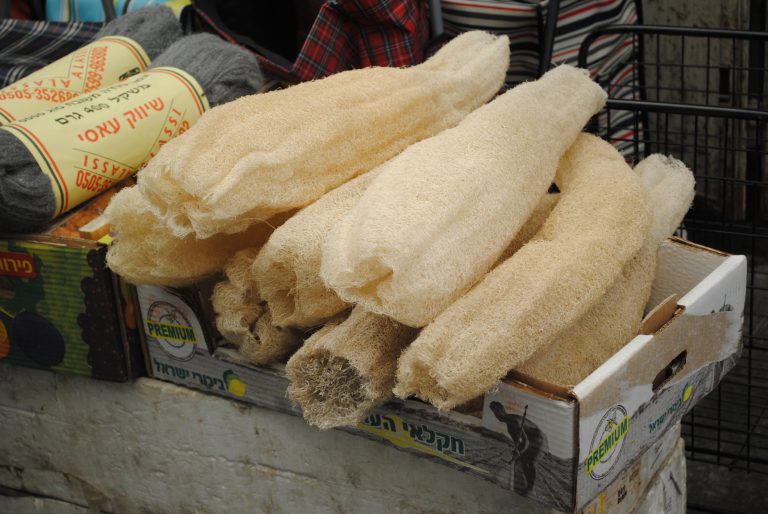
Liffa, luffa, louffa is a kind of gourd great for increasing blood flow, Middle East
Loofah grows like a gourd. Find them at corner stores in Middle East countries like Israel. For some people they don’t travel without them!

Loofah, luffa, loof sponge. However you call it, the scratchy, fibrous plant has been used to scrub the body – and the dishes – for centuries. Its appeal hasn’t diminished in all that time. Today loofah is considered the most sustainable, greenest scrubber you can find.

The scrubby feeling of a soapy loofah sponge massaging your limbs means that you’re stimulating blood circulation and exfoliating dead skin cells. You come out of the shower feeling super-clean and stimulated. While the loofah is too rough to use on the face or genitals, it’s great for controlling teenage acne on the back, as the fibrous sponge loosens oils and bacteria from the skin while the soap cleans up.

Here in the Middle East you can amble down to the local open-air market and choose a nice sturdy loofah from a bunch casually displayed in front of a shop.
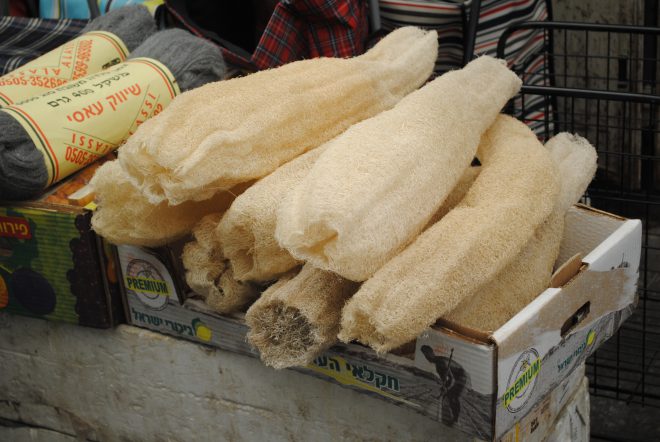
loofah-sponges-israel

Bring it home and either chop it up into convenient sizes, or leave it long if you prefer. Either way, the sponge needs to be soaked in warm, soapy water and rinsed before using it the first time, to free it of field and street dust.

Being a fibrous material with lots of openings, a loofah collects plenty of dirt. A damp environment like the shower stall will turn it into a bacteria breeding ground, so don’t leave it hanging from a string in the shower. Rinse it through and hang it up in a dry, airy place until the next time. You can also throw it in the washing machine every week, on the delicate cycle, but don’t put it in the dryer, as the heat will destroy it. 

In any case, dermatologists say that you don’t need to scrub yourself with a loofah every day: twice a week is plenty.

Keep in mind that like all organic matter, loofah sponges eventually gather bacteria and decompose. A loofah that’s gone moldy or smells musty should be thrown out or composted. But don’t wait to that to happen to replace it.  Start using a new one every 3-4 weeks. That goes for loofah pieces that you use for scrubbing dishes too. 

Did you know that loofah sponges are the skeletons of an edible gourd? Luffa is a species from a tropical and subtropical vine from the cucumber family. The luffa, also spelled loofah, usually refers to the fruit of the two species Luffa aegyptiaca and Luffa acutangula. The fruit of these species is also cultivated and eaten as a vegetable.

The fresh green gourd resembles a cucumber and is actually of the cucumber family. Loofah must be harvested while young and small if you want to eat it. It’s a popular vegetable around the globe, from South America to the Near and Far East. India has many curry recipes calling for fresh green loofah. In Japan, people grow it in building lots to create shady screens.

The scratchy beige object we know as loofah is the vegetable grown to maturity and left on the vine to dry. The fleshy part withers and falls off and the skeleton remains. Shake the seeds out and you’re good to go. 

If you have the right climate (hot summers, cool winters), you can grow loofah yourself. It’s easy to grow in well-drained, sandy loam. No seeds available locally? You can order luffa seeds online

Fashion brands that are leading the sustainable movement

0
reformation swimsuit
Ecologically spot-on and dead sexy. Reformation hit a sweet spot with customers and the environment by fashioning deadstock fabric into new clothes.

The topic of sustainability has become very popular in recent years. Despite the obvious effect of unsustainable fast fashion brands on the environment, people are also concerned about the human rights violations that happen in these factories. So now that the public has become more aware of the problems through documentaries like True Cost and River Blue, the problems with the fast fashion brands are now becoming more public. Throughout the last two or three years, a lot of sustainable fashion brands have gained popularity, offering their clients not only good quality clothes from ethical sources but also a much more transparent look into the production process starting from the factories and their workers, to the materials they use for goods. The industry will probably grow even bigger in the following years, considering that more and more new sustainable brands keep popping up almost every month.

We have recently witnessed a resurgence of male fashion, with people finally questioning why men’s fashion has to be so boring, an article by the Guardian talked about how men are taught to dress in dull fashion, and nowadays men are investing in their style. Fashion, in general, is one of the most widespread topics that has affected almost all realms of life. Everyone in some way engages with fashion and it is becoming more and more mainstream to consider fashion and its impact on our daily lives.  There is hardly an industry left where fashion isn’t prevalent: you’ve got blackjack games available at many operators that are specifically targeted towards fashion, we have movies made about the fashion industry and everywhere we see the ads for stylish stores. So Fashion whether we want to admit or not has a huge impact on our everyday lives.

When we think about sustainable brands in the context of today’s worldwide discussion on climate change it seems more than appropriate that these brands are just gaining attention. It’s about time the customers started to ask questions about where their clothes actually come from

The fashion brand that has taken over the fashion world as well as Instagram, is Reformation. The brand has registered its very own material that is sustainable-Tencel. The owner of the brand is Yael Aflalo. She has the first attempts at forming a clothing brand in 1999. She was quickly discouraged after she learned about fashion’s negative environmental impacts one of them being just how chemically charged the process of creating said clothes are. She abandoned the project in hopes of creating a brand that wouldn’t be so wasteful.

She succeeded in 2009 when Aflalo started Reformation, which has since built an impressive following not only because of its remarkable selection of clothing but because of its green footprint. All of the reformation’s clothes are made from sustainable materials, whether that be carefully selected fabric, repurposed vintage or produced deadstock. Alfaro manages her whole business within LA so it’s quick efficient and sustainable.

Next on our list is Everlane. An American sustainable brand that focuses on the timeless pieces, clothing shoes and bags alike and offers full transparency of their product making process. It is unique because of its transparent pricing policy. If you visit Everlane’s website you will see that they give you a starting price point, but then you can chose to pay extra to sustain their green production process. Everlane has headquarters in San Francisco, California, plus offices in New york. It was founded almost 10 years ago by Michael Preysman and Jesse Farmer as an online menswear retailer. By 2015 the company receiver $1.1 million in seed funding. The company started a referral invite list that gained 60,000 subscribers in 5 days, even though the company only had 1500 t-shirts in stock at that time. Now Everlane uses its platform to educate its customers and inform them of its supply chain, factories, and the price breakdown of each product. The company has now vowed that it will stop using virgin plastic by 2021. In 2018 Everlane started a new campaign called ReNew where they create outwear crafted from the materials that were created out of 3 million recycled plastic bottles.

And the last brand we’re going to discuss is Veja. Veja was founded in 2003 by Sebastien Kopp and Francois- Ghislain Morillion. The founder met with organic cotton farmers in North Brazil and wild rubber tappers in the Amazon to establish the production chain behind Veja. In 2006 Veja started using is vegetable tanned leather to produce it’s now world-famous sneakers. The Veja trainers are made of organic cotton, wild rubber, and vegetable-tanned leather and recycled plastic bottles. Veja has established itself as one of the few sustainable sneaker productions. The company started in Paris, France and has offices in London U.K as well

Organic Business Ideas that will Help You Earn More

0

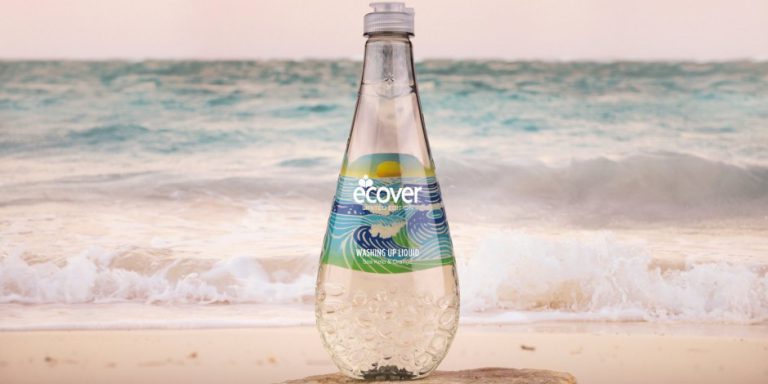
ecover bottle soap at the sea Before Ecover was my favorite ecological cleaning brand, it was just someone’s little idea to change the world one sink of dishes at a time. Now look at them!


Setting up a business is now more effortless, especially with the emergence of the internet paving the way for a digital world. Even traditional brick and mortar shops are also easier to put up these days because of the wide variety of information online that can guide those novice in the business world. If you are keen on setting up your own business, but don’t really have an idea on which venture will probably bring forth more revenue, here are some ideas that can get you started.

Be a green app developer

If you are considering setting up an organic business, but you are geared towards technological innovations such as web or mobile app development, then it is best to infuse these two sectors together. Try out being a green app developer and create a web or mobile app that will aid people on how to grow their own food. Make the app both educational and engaging for your target market. You have the option of charging a certain fee for the app you created or selling it to bigger companies. You can also make your app downloadable for free, and earn revenue through the ads of companies who want to be associated with your app.

Sell organic plants online

The online world truly revolutionized the retail industry, with more and more products now being available online. This goes true even for organic products such as dairy or poultry goods, as well as plant-based merchandise, including CBD merchandise at www.relaxation.co, along with other exclusive retail websites, offer organic products such as CBD oils and tinctures. With the popularity of several products nowadays from the likes of CBD, you will definitely be able to make a decent profit selling online, without the need to put up a physical brick and mortar shop. Apart from your own website, there are already several channels where you can sell products such as eCommerce or social media platforms.

Create an educational blog

Another profitable business is creating innovative and educational blogs that have a fair reach of audience. If you are like many others who refer to blogs in search for answers to various queries, then it may be a good idea to start your own educational blog about anything organic. If your blog appeals to more people, then you can gain revenue through advertisements and sponsorships from companies willing to explore a partnership with you, or looking into investing into your advocacy. Thereby, it will help if your blog gains a significant number of followers. Thus, it is important to create relevant content perhaps about organic farming, or a lifestyle transformation in going green.

Trying your luck in setting up a business venture may or may not prove to be successful. Nevertheless, with a failed business comes several learnings that can help you on your next business adventure. On the other hand, a successful one will definitely encourage you to grow your business more and serve a wider range of market. Consider one of the business ideas above, which are proven to rake in more profit and revenue, especially in the long run.

Get to Know the Variety of Deck Railings

0

Deck railings are highly visible, so you need to carefully consider the patterns, materials, and style. Railings on elevated decks are essential for safety purpose. Several railing designs are available that can transform your deck appearance. 

Common materials applied for deck balustrade

  • Wood – Offers classic look and style.
  • Steel – Can be chosen in a variety of forms including nickel and copper.
  • Aluminum – It is light-weight yet adds strength to the railing.
  • Stone – Stones can be used to create a solid design or used as posts to keep railing together.

Types of deck railings 

The cost of every deck railing will depend on the material chosen and the length needed. 

  • Chippendale

There are several lines, which meet in the center and create an X-shape with a series of small lines. It fits compatibly on horizontal rails. It gives an elaborate and beautiful look. Staining and painting is a little challenging as the design is intricate.

  • Rustic

Treated wood material with few spots and rough edges offers a rustic look. The material looks wild and natural. You can choose any kind of railing design. However, painting and staining can be hard as the design will be irregular.

  • Turned baluster

A cylindrical shape with a series of curves gives a traditional look. Each turned balustrade post can differ. Pair it with a large base at the bottom and top to support general railing design. This design does not work great with dark colors. 

  • Rod railing

Horizontal rod rails on an elevated deck offer a contemporary outdoor-style approach. The look is casual yet classy, and the lines are clean and consistent all across. 

  • Wrought iron

Wrought iron is not just limited to commercial settings but can be used in residential projects. It offers classy designs that add a warm look. You can get wrought iron designs painted in different colors. Wrought iron needs to be sealed and coated to avoid rusting. 

greenbo garden planter israel

  • Cable railings

Series of cables are organized horizontally and paired with metal posts. It is a slim yet beautiful option. The only drawback is excess pressure can potentially break the cables.

  • Glass panelsSharifi House, nextoffice, tehran, Iran, Iranian architecture, transformer house, rotating house, rotating rooms, daylighting, energy efficiency, modular design, iranian architects

Glass panels are designed from straight sheets with few slots supported with wood or steel materials. The deck gets a modern look. Glass offers transparency features and can be easily customized. Unfortunately, the surface is scratchable and you need to clean the surface often.

  • Rope

For a nautical look use carefully woven fibers and string it on a metal or wooden base. Ropes are available in different thickness level. Weather can wear ropes and they can come apart.

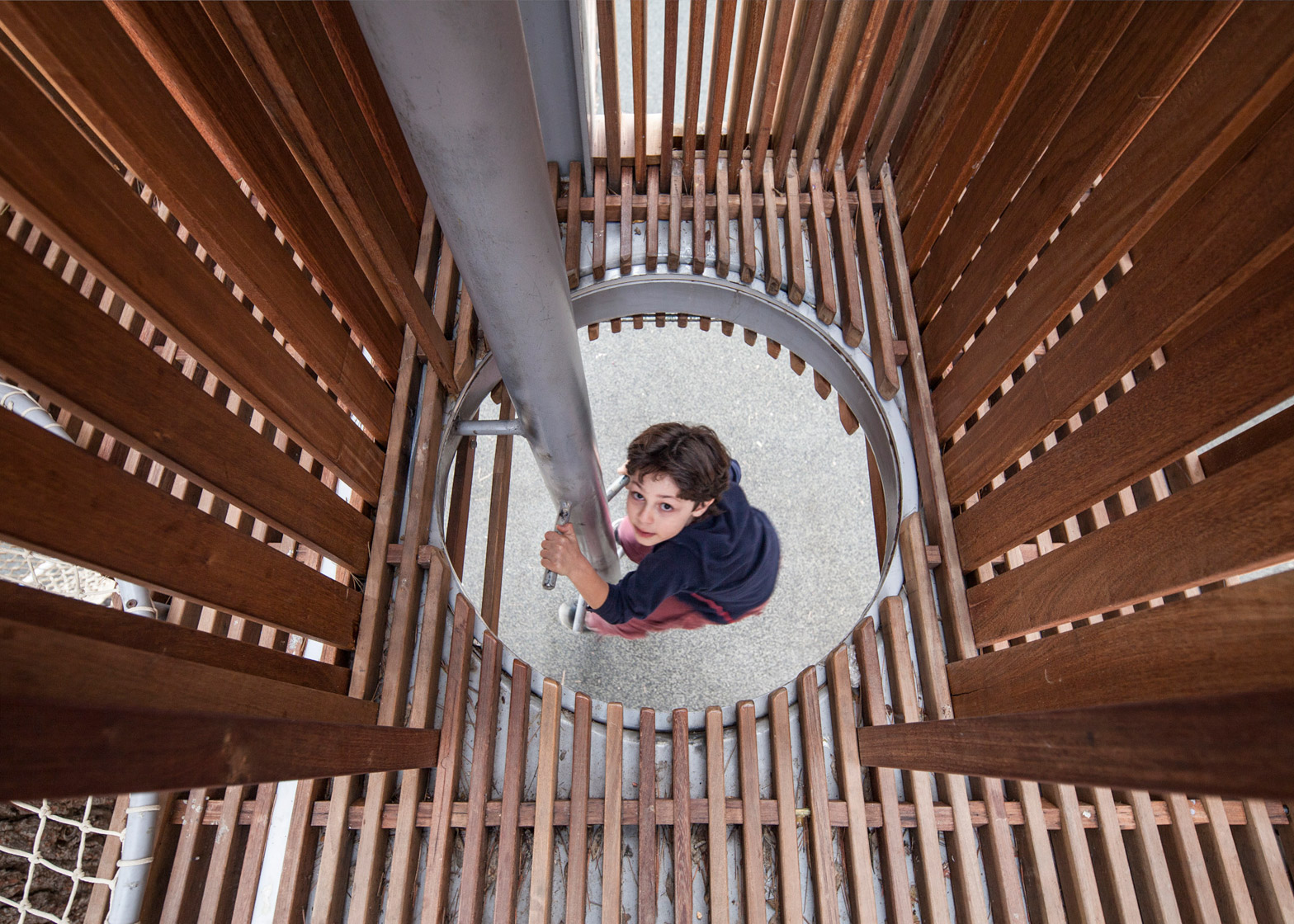
IMJ-tree-house-by-Ifat-Finkelman-and-Deborah-Warschawski

  • Sunburst 

Sunburst or fan is a remarkable and attractive style. The design is simple yet elaborate. You can have it wide or narrow. Cleaning the balustrade is a challenge. 

  • Curved railing

For a rounded deck, gently curved aluminum railing offers a great compliment. If the deck has wood-looks, then choose a rich brown curved aluminum railing to provide a contrast to the natural tan. Moreover, match the aluminum railing with white posts. 

Make sure to look for a quality railing that gives a relaxed and formal look. Even check how appealing the structure is!

The Best Ways for Eco-Traveling

0

The Best Ways for Eco-Traveling

Adult tricycles have never looked so sexy. Especially if you are peddling one for the environment. Parents use them to take their kids to school. Emissions counters use them for moving stuff safely and greenly around the city. Would you ride a trike?

Traveling has become a very trendy activity for several reasons. It lets the person broaden the horizon, see other cultures, and meet new people. Moreover, people of the 21st century are aiming for maximum awareness, that is why the new way of traveling appeared: eco-tourism. The fashion for everything “green” and “environmentally friendly” is slowly taking over the world. There are many approaches to defining eco-traveling. Usually, people consider eco-traveling as a responsible trip to natural areas, which helps to protect nature and improves the welfare of the local population.

When it comes to eco-traveling, there are several most popular and comfortable ways:

  • Bicycle or Adult Tricycle

One of the most popular ways of eco-tourism is bicycles. There are many kinds of them. The most comfortable by far is an adult tricycle. Traveling on a bicycle has many advantages. First of all, it is cheap. You do not need to buy any fuel as you would with a car. Moreover, you can enjoy the views and create great memories while traveling. It is also a great way of staying fit: you burn a lot of calories while riding a bicycle. As for an adult tricycle, it is a perfect option for those who do not keep comfortable on a regular bike. It is easier to balance on an adult tricycle. 

  • Hitch-Hiking

If you are traveling long distances, the bicycle is not always a suitable option. That is why we would recommend hitch-hiking instead of riding your own car. It is not entirely eco-friendly, but it is definitely the next best thing. Moreover, you will be able to save money on gas. People also often use hitch-hiking as a way of meeting new people and cultures. It’s safe in countries like Europe, but still, always keep your intuition open. 

  • Camping

If you enjoy long walks and uniting with nature, then camping is the perfect eco-traveling option for you. It does require some gear, but the equipment can last for years.

https://www.greenprophet.com/2014/10/tentsile-tent-for-trees/

People usually camp with their friends as a way of sharing an adventure and observing nature. It is also a great way of staying fit. You will have to walk for hours a day, and it will definitely be a great work-out. Nevertheless, we do recommend starting with easier routes if you are a beginner. 

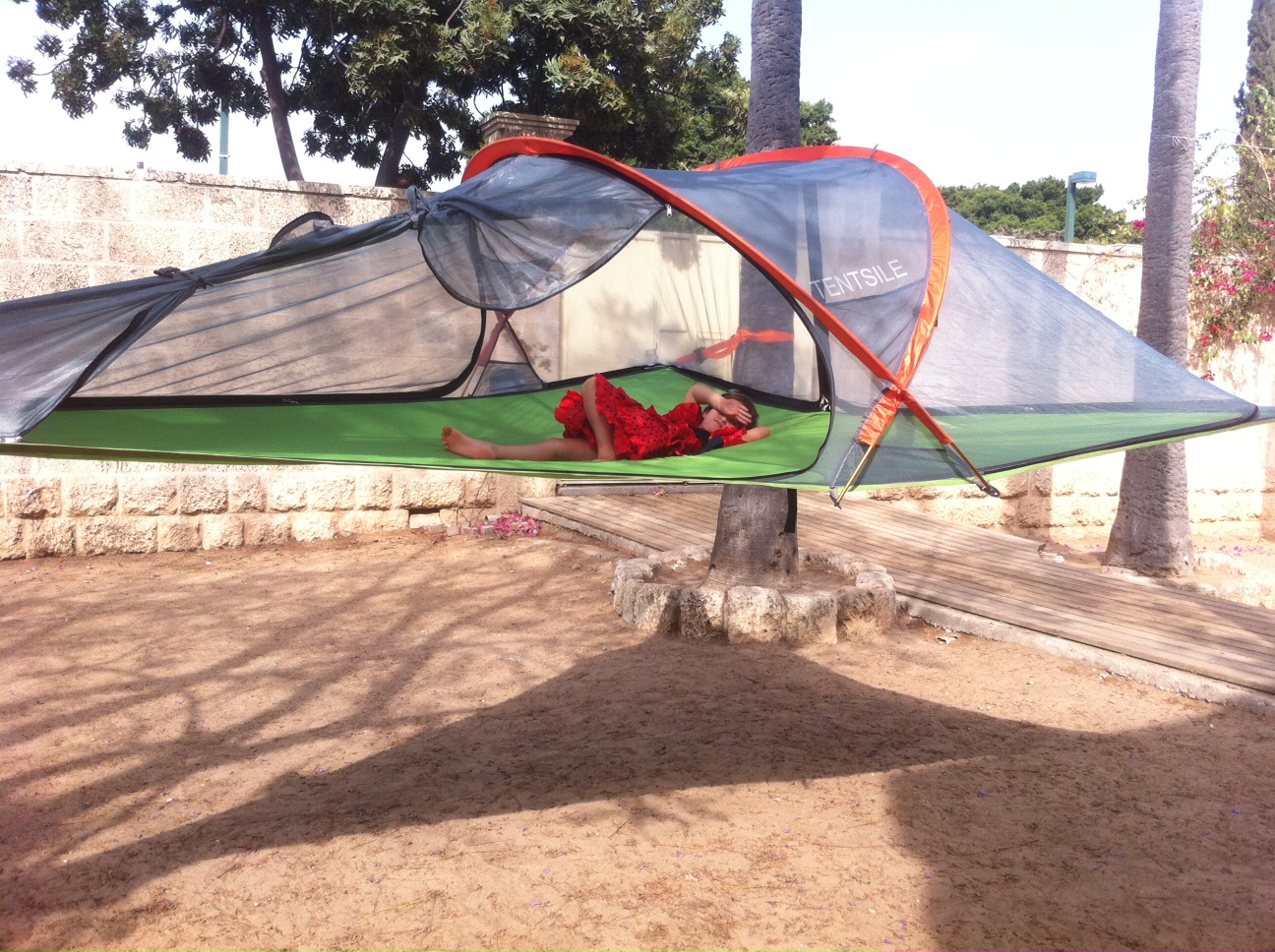
Tentsile is a hanging treehouse like tent
Camping in the city with Tentsile tents

Living in the 21st century makes people consider such things as ecology. We recommend always going for eco-traveling if possible. You will have incredible memories of the time shared with your friends and nature. 

Tips for giving the ultimate kind of charity

0
hydroponics jordan, USAID
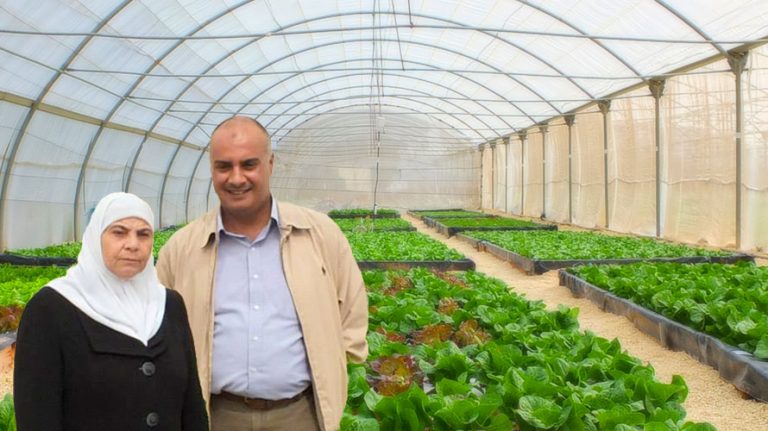
Hydroponics farming is a good solution for growing food in countries where water is scarce. A USAID program gives training to local farmers so they can grow their own food and livelihood. This couple is from Jordan. 

The holiday season of Christmas in North America and Europe is packed with spending and gift-giving, especially with emphasis from major consumer holidays like Black Friday and Cyber Monday. Although this time of year has a large focus on consumption, many people also use it as an opportunity to give their time and money to the charities that speak most to them. 

Jordan hydroponics supported by USAID

Giving Tuesday has become a powerful movement for this. It was created to harness the power of collective generosity. Each year, the international holiday falls on the Tuesday after Thanksgiving, Black Friday, and Cyber Monday. Impact businesses and organizations have benefited greatly from the increasing public awareness of the day. Last year, over four hundred million dollars were donated this way.

A common category of giving is hunger and poverty relief in developing countries.  There are hundreds of thousands of organizations focused on the issue in regions all around the world.

Although many charities are indeed making real, sustainable change for those they are serving – a lot of them are not. People have heard of organizations misusing public donations but one could argue that there is something even worse: an organization aiming to do good but unknowingly making circumstances worse for those they are trying to help. 

The problem happens when an organization or business creates a model for a problem that they do not fully understand. For example, if a school were to raise money to bring an impoverished community free bread, this seems like it will genuinely help the people served, but it actually adds to the perpetual state of poverty this community is in.

Hypothetically, a baker in that community was making and selling bread. But when the donated bread was distributed, no one saw a reason to purchase bread any longer. This put the baker out of business, suppressed the local economy, and contributed to the free-aid mentality of the larger community, making them unmotivated to start businesses and therefore contributing to the cycle of poverty.

10 refugee shelters we hate to love

“Poverty in developing countries is a complex issue and the public must do their due diligence by researching the charities they are giving to,” says John Leary, Peace Corps Veteran and Executive Director of international development nonprofit Trees for the Future. “Time and time again, our organization has entered communities where other nonprofits have offered a short-term, short-sighted solution, but provided nothing that will allow them to escape hunger and poverty for good.”

Trees for the Future is working to end hunger and poverty for smallholder farmers through revitalizing degraded lands. They are not giving the fish but the hook so farmers can learn how to take care of themselves. A video below about Trees for the Future and their work.

https://www.youtube.com/watch?v=OKvMIDrGE7Y

Tips for doing the right kind of good

On Giving Tuesday or whenever you are giving, go beyond looking up a charity’s place on nonprofit ranking sites. Take a deeper, more intentional look, read about the organization and make sure that they understand the core of the problem they are solving.

Read about the staff and confirm that the organization is run by experts on the subject matter. Ensure that one of the organization’s key principles is training and education. This shows that the beneficiaries are being informed, are encouraged to be entrepreneurs, and can eventually live independent of aid.

When you give, you feel good. When you contribute to a special cause, you feel a greater sense of contribution. When you take the time to research an organization and its work, you can have full confidence that you are part of the solution. 

Fisker gives Musk fans a better electric SUV lease deal

fisker vegan car ocean
Available in 2021 and to lease less than $40,000 USD, how can anyone (even vegans) resist this all electric option Ocean invented by Fisker.

Fisker, designer and manufacturer of eco-friendly electric vehicles (and the best gardening knives and non electric lawn mowers!) – has opened reservations for the world’s easy to lease electric luxury SUV, arriving in 2022.  It’s called the The Fisker Ocean all-electric luxury SUV.  Reservations are set at $250 (U.S.) per vehicle and are fully refundable and Fisker’s are expected to sell the car for less than $40,000 when it debuts in 2021, with all vegan leather interior.

Multiple industry firsts have arrived with the Fisker app, says the company, featuring an innovative customer experience – from a flexible lease program, maintenance and repair on demand, insurance purchase to easy finance options. Fisker’s mobile app platform will include mobility options like green ride-hailing, carpooling and vehicle sharing.

“Our mission is to become the No. 1 e-mobility service provider on Earth, featuring the world’s most desirable and sustainable vehicles while shaking up the old automotive industry model – from the way a customer attains a vehicle, chooses affordable insurance, services a vehicle to the overall mobility experience,” said Henrik Fisker, chairman and CEO of Fisker Inc. 

  • Fisker will also offer a “$0 drive off” option through a fully financed $2,999 down payment for credit approved customers. When a reservation is placed, exclusive new teaser images of the Fisker Ocean are revealed in advance of the vehicle’s public unveiling in January.
  • Experience centers and test drives: Customers will be able to see the vehicles and option packages at select Fisker experience centers in 2020 – as well as schedule test drives through their mobile app in 2021. 
  • Liberating flexibility: Drivers get to decide how long to keep their Fisker Ocean. As an industry first, a customer can return the vehicle in one month, eight months, 22 months or several years. No long-term contracts, with 30,000 miles per year included.
  • Affordable insurance: Even attaining quotes for vehicle insurance will be made easy and hassle-free via the Fisker mobile app. Insurance quotes for drivers attaining the Fisker Ocean are projected to be significantly lower than other vehicles on the road today due to a unique and proprietary low cost of service and maintenance model.
  • A radical new service and maintenance experience: Fisker customers will never have to take their vehicles to service on their own, as Fisker will pick up and return vehicles when maintenance is required, or service is requested – signaled by the onboard system or through the mobile app.

Or you can always count on Elon Musk for the Tesla

Ancient farm in Spain gets UN recognition

0
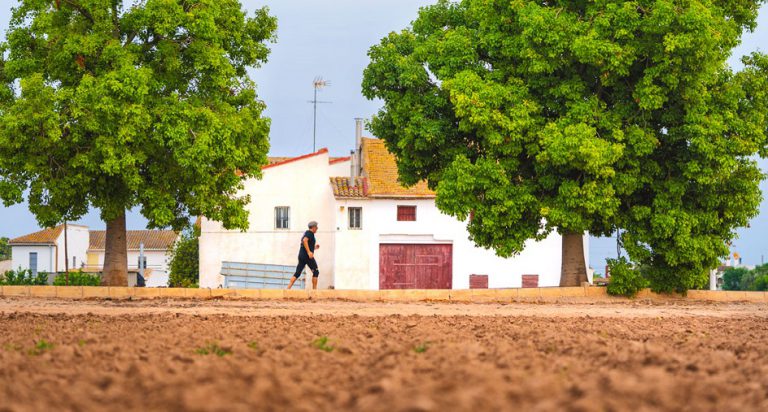
horta valencia spain
The UN recognizes the importance of ancient Spanish farming techniques. With climates similar to the Levant and influenced by North Africa, there is so much the Middle East can learn from Spain.

A 1,200-year-old farming and fishing site known as the “Horta” (garden) of Valencia has been recognized on the register of Globally Important Agricultural Heritage Systems (GIAHS), managed by the UN Food and Agriculture Organization (FAO).

Irrigated by the Turia river – thanks to a complex, gravity irrigation network designed in the 8th century and spreading over a dozen of municipalities around the city of Valencia – the site is home to Spain’s largest lake (Albufera).

horta valencia UN farm in spain

“The Horta of Valencia is invaluable. Half of the crops grown here are at risk of disappearing in the region. It provides for both farmers and fishers. Its citrus fruits have a Geographical Indication (GI) label due to their high quality and variety. The site is also home to a wide range of birds, fish and plants, many classified as rare, endemic or endangered,” said FAO’s Yoshihide Endo who coordinates the GIAHS programme.

The abundance of the Horta

The Horta is made up of 6,000 small agricultural holdings (up to one hectare each), and thousands of farmland plots. About 80 percent of the area is used to grow fruits and some 50 vegetable crops.

Around 4,000 hectares are used to grow vegetables, especially onions, artichokes, pumpkins and lettuce. Oranges, mandarins and tiger nuts are significant in the northern part of the site whilst 2,000 hectares of centuries-old local rice varieties are cultivated in the southern area, which extends into the Albufera Natural Park.

California builds first farm-to-table new home community

The 2,800-hectare park is home to Spain’s largest lake and one of the most important wetland areas on the Iberian Peninsula. It brings food and other benefits to both fishers and rice farmers.

With ample access to water and fertile soils, farmers are able to harvest up to three times per year.

Crop diversification, with a number of local varieties and the division of the land into small plots have been key to making the site resilient.

Farmers use sustainable agricultural techniques that preserve water and soil resources. The irrigation systems built by the Islamic communities who set up the first Andalusian ditches and hydraulic spaces have been carefully conserved over centuries and are functional to this day.

The water management system is unique as farmers are part of Water Users’ Associations (WUA) and refer to their own rules and regulations to solve any issues. There is also a Water Court (Tribunal de las Aguas) – the oldest institution of justice in Spain to solve disputes over water use. 

With its dunes, beaches, forest, lake and rice fields, the site is home to birds, fish, and over 800 species of plants, many classified as rare, endemic or endangered both in Europe and Spain.

The other GIAHS sites in Spain are: the salt producing Valle Salado of Añana, olive groves in Sénia, Tarragona, and raisins production in Axarquía, Málaga.

Invest in “climate nice” rice bonds

1

image rice vermicelli noodles

You might invest in coffee or gold. But if you invest in climate-nice rice production, the cornerstone of global food security you will be doing a better thing for this planet. 

New reports suggest climate change is worse than we thought (we’ve made Greta real mad). Other new reports say that Americans care more about the planet than economic growth. If so, let them eat rice. Invest in rice bonds! 

3 global reports on climate change we can’t ignore

Leveraging climate finance to scale climate-smart rice production is the cornerstone of global food security and urgently needed to avert civil unrest, a new report by Earth Security Group (ESG) has found.

Proposing three innovative finance solutions to support sustainable rice production in line with the Paris Agreement climate targets, Financing Sustainable Rice for a Secure Future is published today by ESG, with support of the UN Capital Development Fund (UNCDF), the Sustainable Rice Platform (SRP), the leading food and agribusiness company Phoenix, the World Business Council for Sustainable Development (WBCSD), and the Swiss Agency for Development and Cooperation (SDC).

“Sustainable rice has the potential to improve lives and livelihoods in many of the world’s poorest countries, where we work,” says Esther Pan Sloane, Head of Partnerships, Policy and Communication, UN Capital Development Fund (UNCDF).

New report: American consumers want ‘Save the Planet’ over growing economy

“ESG has shown their unparalleled ability to combine rigorous, well-researched insights with pragmatic action items, as well as the convening power to bring the right partners to the table to move from talking to doing. We are proud to be pioneering new financing vehicles that will help attract private sector capital to support SDG- and climate-positive investments, particularly for those countries most in need.”

A ‘rice bond’ to finance sustainable rice value chains taking advantage of 2020 being a key year for the growth of green bonds in the agriculture sector, as highlighted by the Climate Bonds Initiative.

A rice bond would enable a global rice processor, trader, or retailer to provide farmers with capital to transition to sustainable production, improve farming practices, increase yields and revenue, and become more resilient to climate risks.

Coming ahead of the 2019 United Nations Climate Change Conference (COP 25) in Madrid, ESG recommends leveraging international climate finance to attract private sector investment for climate-smart rice production.

I (holding hand on heart) pledge to support rice, in bonds! 

Country pledges that include rice in their Nationally Determined Contributions (NDCs) would be the first place to start. At present, forty-eight countries include in their NDCs the commitment to reduce greenhouse gas  emissions from rice paddies but have not yet outlined how they plan to incentivise the private sector to achieve these targets.

“The failure of global food systems due to climate change is one of the biggest security challenges we face,” says Alejandro Litovsky, CEO of Earth Security Group. 

“A radical overhaul of existing rice production systems is needed in Asia – the epicentre of global rice production and consumption – as well as Africa, which is now also increasingly depend on rice imports to ensure food security.

A rice overhaul

“Our report is a call to action for global impact investors to put ‘climate-smart’ rice farming practices at the centre of their impact investment strategies and for governments to use climate finance to attract private investment towards more resilient agriculture systems.”

Rice is vital to the food security of over half the world’s population (3.5 billion), with Asia accounting for 90% of global rice consumption. In lower-income countries such as Bangladesh, Cambodia and Vietnam, up to 70% of people’s dietary energy comes from rice. The commodity is the source of 10% of global anthropogenic methane emissions. In Southeast Asia – the world’s rice bowl – rice cultivation accounts for up to 25-33% of the region’s methane emissions, and between 10-20% of its overall greenhouse gas emissions.

Under a business-as-usual scenario, the Intergovernmental Panel on Climate Change (IPCC) anticipates that rice production will fall across the world. Asia will be particularly hard hit due to a convergence of land degradation, climate change, and water scarcity.

Larger rice-producing countries such as India and China, with extensive territories that cover a range of climatic zones, will have more space to shift rice cultivation to cooler areas that will become suitable for growing rice. However, smaller producers and importers in the tropical belt, such as countries in Southeast Asia and West Africa, lack such flexibility to adapt.

“Rice is critical to global food security; however, it has been largely overlooked as an investment opportunity,” says Wyn Ellis, Executive Director, Sustainable Rice Platform (SRP). SRP’s tools, metrics and guidance can help governments and supply chain actors drive adoption of proven climate-smart best practices.

“Through our partnership with Earth Security Group, we are developing innovative financial mechanisms that will catalyze wide-scale adoption among the world’s 144 million rice smallholders and achieve sector transformation contributing to the SDGs and climate targets.”

New chemo protocol zaps only liver cancer cells

0

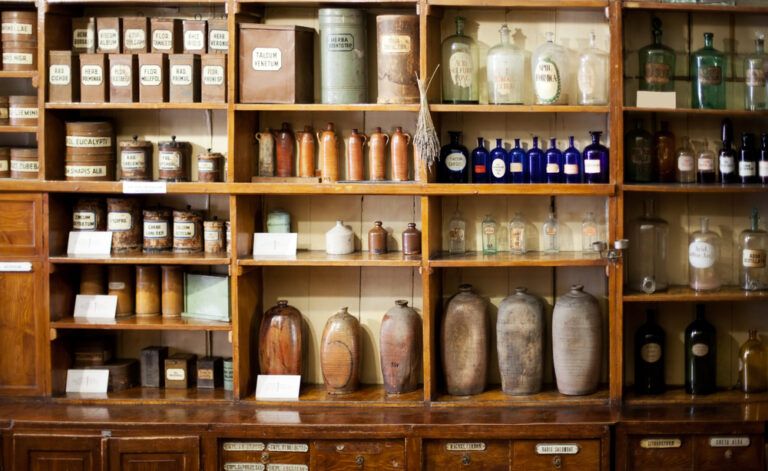
traditional medicine museum in Jaffa

A liver cancer diagnosis is a terrible one, because you can’t use chemo to treat it. There is not a lot of treatments to help you. My dad died from liver cancer a year ago. I am crossing my fingers that a new selective chemo drug may be on the way. 

It is a feeling that many who receive a cancer diagnosis can identify with: heartbreak and fear, followed by hopes that chemotherapy will save the day.  Unfortunately, for many patients, chemo’s painful side effects cause them to stop treatment prematurely. 

Related: Israelis look to the Rambam to heal cancer

Ancient Kabbalah Recipe New Vitamin to Fight Cancer?

Now, a research team headed by Professor Alexander Binshtok, head of the Pain Plasticity Research Group at the Hebrew University of Jerusalem’s Faculty of Medicine and Edmond & Lily Safra Center for Brain Sciences, has developed a method that delivers chemotherapy drugs directly to malignant cells and bypasses healthy ones.  This discovery could allow doctors to reduce chemo doses for patients, thereby reducing the unpleasant side-effects associated with the treatment, and improve treatment compliance and overall prognosis. 

“Most anti-cancer treatments are not sufficiently specific, meaning they attack healthy cells together with the malignant ones they’re trying to get rid of,” explained Binshtok.  “This leads to the many serious side-effects associated with chemotherapy.  Eliminating cancerous cells while leaving healthy ones alone is an important step towards reduce patients’ suffering.”

The new findings were published in a recent issue of Frontiers in Pharmacology.  The study focuses on the selective expression of the TRPV2 protein by cancer cells.  When activated, TRPV2 protein opens a canal inside cell membranes. 

Beating Breast Cancer with Tumeric, a Favorite Middle East Spice

Binshtok and his team studied liver cancer cells and were able to successfully insert a low dose of doxorubicin, a chemotherapeutic agent, through the canal and directly into cancer cells.  Not only did the new method target cancer cells without harming healthy ones.  In the future, the precision of this delivery method may allow doctors to prescribe lower chemo doses and to relieve patients from some of the harsher effects of chemo.

“It’s too early to make concrete predictions but we are hopeful this discovery will lead the way towards a new, more targeted delivery method for chemotherapy treatment, one that will drastically reduce patients’ pain,” Binshtok concluded.

Saffron Spice Fights Liver Cancer

The treatment is much needed because current treatments mostly only prolong life by a few months after the tumors have grown to a certain size and can no longer be ablated. This new research might help improve the outcomes of chemotherapy given directly into the liver (chemoembolization) to reduce tumors to a size that may make surgery possible.

3 global reports on climate change we can’t ignore

greta thunberg global walkout protest
Greta is not going to be happy.

Three stark reports on the rising carbon emissions and impacts on global temperatures have been released in the last week. The reports lay bare the horrific state of climate breakdown and its impacts across the globe whilst indicating the solutions are available to make possible meeting the goals set out under the Paris agreement. 

The Production Gap Report  released November 20th  shows that the world is on track to produce about 50% more fossil fuels in 2030 than would be consistent with limiting warming to 2°C and 120% more than would be consistent with limiting warming to 1.5°C.

World Meteorological Report  released 25th November  shows the concentration of climate-heating greenhouse gases has hit a record high with no sign of a slowdown, let alone a decline, despite all the commitments under the Paris agreement on climate change. 

 The Emissions Gap Report released November 26th  shows that with current country pledges, the world is heading for a 3.2°C temperature rise with G20 nations account for 78 per cent of all emissions.

 “This is no longer a warning, we are now experiencing the impacts of climate breakdown on a daily basis, from the wildfires in The Congo, California and Australia to the devastating floods in Europe,” says May Boeve, Chief Executive of 350.org said

These 3 reports are scientifically peer reviewed and robustly researched,  the science is screaming. To world leaders we say: it is time to stop the expansion of the fossil fuel industry immediately. Not a single new mine can be dug, not another pipeline built, not one more well dropped into the ocean.  And we have to get to work immediately transitioning to sustainable renewable energy powered energy systems.

Across the globe, resistance to fossil fuels is rising, the climate strikes have shown the world that we are prepared to take action. Going forward people will keep up a steady drumbeat of actions, strikes and protests that get louder and louder throughout 2020. 

To governments attending Cop25 in Madrid, the eyes of all future generations are upon you. The world has woken up to the reality of climate breakdown. To those that stand in the way of action on climate change we say How Dare You!”

Self medicate with CBD for relieving stress, menstrual cramps and aid sleep

0
sleep with CBD
CBD helps with sleep. Gummies are one way to self-medicate.

It’s known by the medical world that cannabis in all its forms can ail a spectrum of health problems and in some cases even help some disappear forever. When we talk about cannabis it’s as wide as a shelf of vitamin supplements at Trader Joes. 

Cannabis otherwise known as marijuana or medical marijuana is a complicated plant that may have co-evolved with us humans. Those who have started the journey into cannabis for pain relief, as an anti-PTSD drug and for helping sleep, menstrual cramps and even menopause, find that there are two main compounds in the cannabis plant — CBD and THC. 

THC is the chemical that offers therapeutic benefits but it also comes with a “high” which can cause or increase anxiety in some and which may interfere with work and interacting with everyday human beings. 

CBD on the other hand is becoming a relatively popular food supplement, where companies like Coca Cola even are exploring novel ways to add CBD to its line of beverages. Before I let companies like PepsiCo mess with my CBD, I’d be more inclined to go to a smaller producer. Like vitamin companies that produce gummy candies for delivering a multi-vitamin does, you can find an endless variety of companies producing CBD gummies. But some taste disgusting. For the best tasting CBD gummies try this source. 

Chiang Mai is the ultimate place to relax at this four seasons

If you look for CBD gummies on the internet you will see they are easy to find and because they lack the psychoactive THC component they are not problematic for flights, crossing state borders etc. However, when we interviewed cannabis specialized Alan Shackelford he suggests that some small amount of THC is also needed to get the therapeutic effect of cannabidiol, or CBD. So dose according to your own discretion –– which is one of the biggest questions out there today. How and which products? 


If you are going straight to CBD you will find all sorts of candy. If you are vegan or diabetic look for vegan gelatin and sugar free options as well. You can find them all over the United States, Canada and now Europe and look for the all-natural ones that contain no THC. 


CBD gummies are non psychoactive and contain other beneficial cannabis compounds such as terpenes, which help boost the effects of the CBD oil itself. Some products even contain vitamins such as D3 and B12.

It’s important to remember that CBD gummies don’t look different from regular candy, so still make sure you keep them far out of reach of children and also other adults you might share your home with. I once by accident self-medicated by eating THC brownies and was high for 12 hours in a situation that I had to work, interact with my parents and babysit my kids. It was not fun or expected. So take this caution seriously even if CBD doesn’t get you high it’s a medical supplement that should be taken with care. 

New report: American consumers want ‘Save the Planet’ over growing economy

0
Dictaphone Group Beirut
American consumers are more concerned about the planet than steady economic growth, new report. But they are two-faced: they may care, but they don’t act accordingly to what they believe. 

The environment should be an economic priority even if it leads to slower growth, and companies that fail to adapt their business models will face consumer backlash, according to findings of the latest ING International Survey. The sum of the report is as follows and it’s an important one for marketing and branding agencies in America and Europe to follow and understand:

  • Consumers widely agree on the need to go green, but behaviour is slow to change
  • Similar numbers named plastic waste (29%) and climate change (34%) as most pressing environmental problems
  • Three-in-five (60%) agree protecting environment should be given priority, even if it slows economic growth
  • Companies that don’t adapt business models to limit environmental impact will experience consumer backlash, say half (53%) of Americans, although a good price is a top priority for 90% of shoppers
  • 91% say they throw away plastic waste daily, 82% throw away up to five items each day

A majority (60%) of US respondents* agree with the suggestion that slower growth would be a price worth paying to protect the environment, while despite price being of key importance when shopping for homewares, 53% of Americans agree that companies that don’t take steps to go green will experience consumer backlash over time.  

“While it’s clear that awareness of environmental challenges is high, this has not yet been met with a corresponding level of behavioural change. While consumers are conscious of the urgency of the problem at hand, our survey results suggest, unsurprisingly, that awareness and information doesn’t automatically translate into changed habits or behaviours,” says Jessica Exton, Behavioural Scientist, ING.  “The short and long-term impacts of context-dependent choices aren’t easy to calculate, making decision-making on a day-to-day basis challenging.”

The results come amid growing calls to action from movements such as Greta Thunberg’s climate change campaign, and the proposed Green New Deal.

Slow to react

Many consumers say they already support a movement towards a circular economy by reducing, reusing and recycling products. The survey also suggests consumers are willing to bear some of the cost of sustainability. Repairing a broken fridge makes sense for half of Americans, if the repair costs up to 40% of a new replacement.

But attitudes towards the circular economy differ across countries. In the US 39% said the offer of a financial incentive wouldn’t change their recycling behaviour. A similar number to those who said so in Turkey (36%), but a small group compared to the 63% who said no to a reward in Luxembourg. Discrepancies in local circular activities may be partially explained by established local norms – both cultural and social – and access to recycling and repair facilities, as well as contextual influences such as how fast items can be repaired and the perceived value of doing so.

Most respondents also acknowledged the problem of over-consumption in their home countries, with 64% of Americans, 69% of Europeans, and 60% of Australians saying people in their country are excessively focused on consumption.

In ING’s 2018 IIS survey on sustainability, consumers pointed to cost and a lack of knowledge as key barriers to changing their behaviour. This year’s findings verify the challenge of turning attitudes into action. Despite one-in-three (34%) naming climate change as the greatest environmental challenge we face, only half (53%) say they always separate their waste at home, lagging behind the European average of 76%. A quarter (25%) of Americans say they never separate their waste.

At the same time, consumers recognise that initiatives from businesses and broader structural change will be needed if individual efforts are to have a coordinated impact. Supermarkets should not provide any single use plastic packaging or plastic bags, say 44% of US respondents. The perception is that businesses have been slow to respond to such consumer demands. Less than a third (30%) of US respondents could name a company that has changed how it operated to reuse and repair its products, but optimistically, only 31% of respondents* expect the amount of plastic used to package food produce to increase, 58%* expect it to decrease.    

Eco-Tourism in Chiang Mai

0
Chiang mai two pag
Thailand is breathtaking for anyone, but for people from the Middle East it is an obvious and a close playground. Hear Hebrew and Arabic everywhere and touch down at this lesser explored part of the country’s paradise – Chiang Mai

The steep northern parts of Thailand are vast wild settlers, an ancient culture that is hidden, beautiful, and rare in nature. However, as the region is becoming more open to tourism, it is necessary to consider the location and environment as well.

Elephant Nature Park

Wildlife Sanctuary based in the suburbs of Bangkok to Chiang Mai. With new branches operating in Phuket and Koh Samui, it is home to many happy and cheerful elephants. Those have been saved from a previous captive life in the logging or tourism sector. The center’s specialized staff inform visitors about less-known disputes regarding the use and care of the most-respected real animals while offering the opportunity to contact elephants living in their natural environment, including in the bathroom, the game and, of course, a lot of food!

  • Tips: Good to travel with family and friends. Can shoot photos.

Doi Inthanon National Park

Doi Inthanon national park has the highest peak in Thailand, numerous waterfalls and vast areas of wildlife. Currently, this area is a production area full of fishing laboratories, breeding, and reproduction of plants, rice fields and vegetable gardens, which tourists can visit between visits to hidden waterfalls and, of course, above the iconic peak.

Historical Significance of the place:

In 1969, the park attracted the attention of the king who died when deforestation, poverty and opium production increased in this area. To strengthen the local community, Raja Bhumibol Adulyadej founded the King’s Doi Inthanon project, which allowed tribes to develop commercial farming as an alternative to opium, offering them modern agricultural techniques and equipment needed to ensure their sustainable development.

  • Tips: Historic and scenic. Good to travel with family and friends. Can shoot photos.

Mae Kampong

This rural village comprises about 300 people is the first “model home” community in Thailand. Many residents offer tourist accommodation in their homes to learn about their lifestyle and culture. The city first earned its living by producing mieng, a local delicacy made from fermented tea leaves. When the demand for products decreases over time, locals appreciate the extraordinary nature and unique culture. Residents begin to manage ecotourism communities that guarantee sustainable development in the region, as well as their cultural integrity, for the benefit of the villagers and visitors.

  • Tips: Good to travel with young and adventurous friends.

Ban Mae Chan Tai Agro-tourism Centre

Ban Mae Chan Tai Agro-tourism Centre is known for its widespread Coffee plantation. As the plantations are run by young members of the local Akha Hill tribe, they coordinate with tourists in a very enthusiastic manner. They produce Akha Ama coffee, which has raised the standard of living in the area from the very beginning. Visitors can take part in the unique offer of the center, “Coffee Trip”, for about a couple of days trip to the Akha region, culture, rituals, and tradition.

  • Tips: Good to travel with friends. Don’t carry heavy luggage here.

Jim Thompson farms

Jim Thompson plantation showcases nature and culture in a fantastic manner. The farm with a touch of mystery and intrigue is a beautiful and family-friendly ecological attraction in Nakhon Ratchasima. Silkworms and looms are not everything you see here. There’s even more to this land. This huge and wide-open farm has a vegetable garden and organic materials where you can collect fresh produce yourself, giant pumpkin fields, mazes, and many others.

Well known anecdote of the place:

A well known Jim Thompson, a Thai-American silk expert who disappeared without a trace when he wandered to Cameron Highlands in Malaysia. This park tells the story of Mr. Thompson and provides information on a good production of Thai silk.

  • Tips: Good to travel with friends. Don’t carry heavy luggage here.

Bottom line

Thailand is already lying amidst all greens. Nature is in Thailand and Thailand is in Nature. Even modern resorts and cafes are having natural waterfalls, caves, and trees in them. With the immense presence of nature, Thailand invites you for eco-tour.

Related: Read about our adventures in Thailand, starting here.

How To Make Decorating Your Home More Sustainable

0

When you are decorating your home, you need to make sure that you are doing it in a way that is good for the environment. It can be easy to overspend on materials and do it in a harmful way but if you make some changes at the start then you can really make a difference. From the materials you choose to shopping around for the perfect deal, there are plenty of ways you can create your ideal sustainable home no matter what your budget might be.

Choosing Your Flooring

One of the first things that you will want to do when decorating your home is choose your flooring. This can often be down to personal preference but there are some ways to do this in a more sustainable way. Wood floors are one of the most sustainable options for your floors. However, it can be difficult to procure them as they can also be quite expensive; especially if you have a large floor area and multiple flooring options to cover. To make sure you are getting exactly the right amount of floor without overspending, you should use a flooring price calculator. Many flooring companies offer a flooring price calculator so you can be certain that you are getting the floor you love for the perfect price.

Saving Money on Items

It can be tempting to save money on decorating by choosing cheaper items but this is not always good for the environment. Cheaper items might not last as long as those which are made with higher quality materials and this can have a negative effect. You want your decorating to last a long time to be sustainable so make sure to evaluate prices carefully.

Using Trends As Inspiration

Another way to make sure that you are decorating your home in a more sustainable way is to make sure that you are only using trends as inspiration rather than gospel. Some people can end up over decorating their home to keep up with the latest trends but this can have a negative effect on the environment. Be inspired by trends that will last a long time and this will improve your sustainability.

Sustainable Materials

Finally, you should make sure that you are decorating your home with sustainable materials. You will find that some furniture is more sustainable than others and some flooring kinds are better for the environment. Some of the most sustainable materials include cork, bamboo and clay. You can also opt for eco-friendly lights around your home to make the entire thing more sustainable.

Final Verdict

If you are hoping to decorate your home in the future and want to do it in a more sustainable way then you should make sure to take on board the advice that we have given you here in this article. Try to avoid waste where you can and try to use sustainable materials where you can. If you can do this, then you should be able to have a stunning home that is good for the environment.