
Home Blog Page 181

Go mushroom, go mushroom! Fungi catching more climate change carbon?

forest mushrooms hunting variety

When we think of climate change, we tend to think about greenhouse gases, fossil fuels and pollution. Most of us don’t think about fungi. But Kathleen Treseder does. Treseder, an ecologist at the University of California, Irvine, studies how fungi can affect climate and vice-versa. “Fungi are important to consider,” she says.

“They can influence nearly every aspect of ecosystems, especially processes that occur in soils.”

New research from her lab shows that fungi can have different lifestyles in response to climate change. These findings can be incorporated into computational models that simulate ecosystems.

“We may be able to better predict shifts in atmospheric carbon dioxide levels and climate change,” says Treseder. “That can help us estimate how much, when and where climate change will affect human societies.”

It’s important to be able to forecast which places will be hit by climate change and how quickly. These early warnings can help preparations, such as building sea walls or flood channels, or direct the development of new crop varieties.

Fungi are carbon cycling superstars

Fungi are terrific decomposers. They break down organic material to get nutrients and energy. In doing so, they turn complex chemicals into simpler elements, such as carbon. In fact, “fungi are an integral part of the global carbon cycle,” says Treseder. “They can move carbon from decomposing material into the atmosphere as carbon dioxide.”

But fungi don’t just release carbon. They can also store it. For example, environmental stress can cause fungi to strengthen their cell walls. They do so by using organic compounds that contain carbon. These carbon compounds can stay in soils for years to decades or even longer.

Treseder’s research explores how fungi decide whether to use limited energy and resources to decompose material or for other processes. “No one can do everything well, and the same goes for fungi,” says Treseder. “If fungi invest resources into one activity like decomposition, then those resources won’t be available to support another activity like tolerating environmental stress.”

These resource allocation decisions become even more important in a world with changing climate. “For example, will more extreme climates select for fungi that tolerate stress well, but cannot decompose dead material as efficiently?” says Treseder. “If so, then their production of carbon dioxide might decrease, slowing climate change.”

Boy mushroom hunting uncovers ancient “Bel Air” tombstone in Israel

To answer these questions, Treseder traveled to Alaska and Costa Rica. Experiments were set up in Alaskan Boreal forests and the cloud forests of Costa Rica. “

“We chose these locations because they are both endangered by climate change,” says Treseder. “Northern ecosystems are warming particularly fast. Clouds are disappearing from the mountaintops of Costa Rica.”

Treseder and colleagues exposed areas of the forests to drought-like conditions or more mellow environments. They collected soil samples from the different experimental areas.

Then they analyzed products made by fungal genes. These gene products served as indicators for whether the fungi were investing more resources toward decomposition or strengthening cell walls.

“We found that where drought stress increased, the amount of fungi that invested more in strengthening cell walls and less in decomposition tended to increase,” says Treseder. In contrast, in more moderate conditions, the reverse occurred. Fungi that decomposed more efficiently became more common.

These findings suggest that fungi might store more carbon as global climate becomes more extreme. On the other hand, they might release more carbon dioxide in moderate climates. “These opposing feedbacks would not have been apparent without examining trade-offs among fungal traits,” says Treseder.

Treseder is working to incorporate these findings into new and existing models of climate change. One particular area of focus are Earth system models that the Intergovernmental Panel on Climate Change uses for its official predictions. “We hope our research improves predictions of future trajectories of climate change,” says Treseder.

Learning the art of ancient irrigation the Nabatean way

The first people to green the desert? Nabateans who built Petra were like the Mayans of the Middle East. The ancient people were developed in agriculture, spirituality and architecture. Archaeologists dig into how they dealt with drought in Jordan, one of the driest countries on earth. 

Water harvesting, flood control and water storage were essential for the survival of the Nabataeans in the arid area of Petra, which is modern day Jordan. One of the driest countries on the planet, the early settlers there had to invent novel ideas to survive. They brought in engineers from afar, Rome probably, and built aqueducts and a water storage system that might be even able to produce drinkable water by today’s standards. 

The book, The Petra Siq: Nabataean Hydrology Uncovered, published in 2003 by a Swiss architect and archaeologist Ueli Bellwald dealt with the very complex hydrological (water collection) system of the Nabataean capital, instead of the well-known temples and necropolis. Water collection was an every day and activity and we are grateful that researchers look into the past so we can understand how to survive tomorrow. Green Prophet interviews Bellward to learn more. 

Ueli Bellwald Nabateans
Ueli Bellwald studies how the Nabateans collected water for agriculture. To survive and thrive.

The location of Petra was significant and it provided indispensable water supply and flash flood retention systems, explains Bellwald who spent decades studying and writing about the hydraulic network of the Nabataeans.

Without the flash flood system, they wouldn’t last a year

According to Bellwald, who has also lived at Petra itself, the city was built inside a widening of the Wadi Musa, a natural runoff water drainage channel for a surface of 87 square kilometers; he added that without the construction of the highly sophisticated flash flood retention system Petra would not have survived a single winter rainy season.

nabateans collect water from flash floods

Due to a geographical and a geological location of Petra there were no springs inside the city area which made thing more difficult for its inhabitants. Because of the geological conditions, all main springs in the area are located on the terraces of actual Wadi Musa, at a height of about 1,300 meters above the sea level, Bellwald explains, noting that the drinking water had to be led down to the city by long aqueducts.

The areas of the tombs and sanctuaries around the city served for collecting and storing water in large cisterns, and that water was used for agricultural purposes, he underlines.

The Nabataeans constructed a complex network of aqueducts and cisterns that is not in use now.

Stay in Petra, in an underground cave with this Bedouin

“If you take the number of drinking water reservoirs fed by the aqueducts and the number of cisterns for the storage of collected runoff water known up to today, you get a total number of more than 200 storage facilities with a capacity of about 40 million liters of water,” Bellwald underlined.

It is obvious that at the beginnings, when the city was established, there was no sufficient local expertise that would meet the requirements of the hydraulic systems to be built.

Just like today they brought in engineers

“I myself discovered a lot of features which did not fulfill their duties and were heavily damaged during their first strain and had to be rebuilt afterwards,” Bellwald noted, adding that very close similarities with other hydraulic installations in Rome and mainly in the Ionian cities, like Pergamon, lead him to the conclusion that the Nabataean authorities employed engineers from abroad and then adopted and further developed the basic expertise.

Visit Jordan

“For instance the remains of the very first spring water aqueduct which I excavated in the Petra Siq and another section which Graf, Schmid and Bedal [archaeologists specialized in the Nabateans and Petra] excavated in 2004/05 near the Temenos Gate, built in the middle of the 1st century BC, follows closely the model of Aqua Marcia in Rome, whereas the Khubtha North Aqueduct, the actually visible Siq Aqueduct and the Ain Braq Aqueduct follow models from Pergamon, mainly the Kaikos Aqueduct,” Bellwald elaborated.

However, we still don’t know names and biographies of the Nabataean engineers who realized these projects in the ancient times and their life remains a mystery to us.

What is more important for us today is how to utilize their expertise in a region that is overburdened with high natality and lack of water resources. In that regard Bellwald maintains that the Nabataean runoff water collection systems could still nowadays serve as a model for water collection and storage in arid regions.

There is no agriculture without water, either from natural precipitation like barley fields in Thugra, or from irrigation,” stressed Bellwald, adding that irrigation may tremendously change the appearance of a landscape and may have great, positive impact on the climate.

A center for wine and olive oil

Moreover, in ancient times Petra was a center for wine and olive oil production and wine and olive presses scattered in Petra and its hinterland are the evidence of ancient agriculture.

What the scholar explored were runoff water retention dams with an extended catchment basin and maintenance stairs leading from the wadi (valley) bottom to the top of the dam.

“Experimental archaeological trials I made in the Thugra area showed that with the Nabataean runoff water collection systems you may even get drinkable water,” Bellwald concluded.

Sustainable Thread, Now with Israeli Startup Twine

1

twine-digital-dyeing

The fashion industry soaks up 20% of the world’s water, and dumps it back into local streams and rivers as wastewater. That’s water left over from dyeing fabrics and thread.  To produce one kilo of dyed thread, 70 liters of water are used; enough wastewater to fill 2 million Olympic-sized swimming pools a year.

While many companies in the fashion industry have committed to sustainable practice, and we at Green Prophet have been reporting sustainable fashion on a personal level for years, it was high time that someone developed a dependable way to reduce the ecological cost of the clothes we buy. That someone is Twine, an Israeli startup that created a machine that dyes threads digitally, similar to how your home printer color-prints. A clothes manufacturer can now program a machine to produce thread of the exact type, length, weight and colors required, only as much as needed, and ready for immediate use.

At present, threads are dyed using traditional water-consuming methods. Samples are shipped from South and East Asia to Western countries  for approval, then shipped back for production to start, sometimes twice or even three times.  This delays production  and raises costs of manufacture. Significantly,  this shipping back and forth leaves a large carbon footprint. 

The Twine digital thread dyer will cause a revolution not only for manufacturing sewing, knitting and embroidery threads, but also for industries producing clothes, shoes, upholstery, home decor and more. sustainable-thread-twine

Information from the Twine office:

Twine’s system continuously dyes a single raw or off-the-shelf (white) thread to any requested length and in any color, with a choice of millions of colors, shades, as well as color gradients.

Twine’s DST (Digital Selective Treatment) disruptive technology eliminates the need for colored thread stock, dramatically reduces logistics, dead stock and other waste costs, as well as dramatically reducing time to market.

The single thread, single needle, multi-color method will free creativity and design limitations, while improving production efficiencies, margins and overall profitability, all that in a sustainable, eco-friendly process.

Watch the video. It’s interesting, if you’ve never thought of what it takes to dye thread in your life. 

[youtube https://www.youtube.com/watch?v=9vesESBNftA?feature=emb_rel_pause]


Reasons Why E-Cigarettes are Banned in Many Countries Around the World

0

e cigarettes, vapes, dangers, man smoking on a park bench

An increasing number of countries are banning the sale of e-cigarettes. To date, over twenty countries have banned the sale of e-cigarettes and most are Middle Eastern, South American, and South-East Asian countries. Canada, Australia, and Norway have imposed many restrictions on the usage of vapes. And India has banned the production, sale, and import of e-cigarettes.

Although vape pens have been widely used as a less harmful alternative to smoking tobacco cigarettes, an increasing number of youngsters  who have never smoked traditional cigarettes before are taking up vapes. They are enticed by the wide range of flavors, including bubble gum and candy floss. Many people report that they use vapes because of the enjoyable flavors.

Here are some other reasons why e-cigarettes are banned in many countries except the UK.

Use of Nicotine is Illegal or Restricted:

Nicotine is a highly addictive ingredient and for that reason, many countries are banning e-cigarettes that contain nicotine. The e-liquids containing nicotine are illegal in Hong Kong and Thailand. In Australia, the nicotine-containing e-liquids are banned because nicotine is considered a poison. Vape pens are allowed in Australia but they cannot be used to vape nicotine liquid. Thus, vape users in the country buy their e-juice from China or New Zealand. In Hong Kong, e-liquids containing nicotine are illegal to sell and possess and can land you in jail for up to two years. Similarly, vaping is allowed in Japan but it is illegal to buy and sell nicotine liquids there. Some countries restrict the use of e-cigarettes altogether because people use nicotine-containing e-liquids for vaping.

Limited Research on the Safety of E-Cigarettes:

Another reason why e-cigarettes are banned in many countries is that there hasn’t been enough research conducted in the health safety of vaping. While the research shows that vaping is less harmful than burning tobacco but the consequences of long term vaping are yet to be explored. An e-cigarette heats the e-liquid, which is a complex solution of chemicals including oils, flavours, and nicotine. The particles released in the vapor by heating the e-liquid can reach deep into the lungs like tobacco smoke. But the research into the safety of vaping is difficult because the composition of the chemicals released into the vapor depends on the temperature at which the vaping device heats the e-juice. However, a few studies have revealed that long term vaping can irritate and inflame your airways.

Why is the UK the Right Place to Buy Legal E-Cigarettes?

Fortunately, the United Kingdom is among those few countries that promote vaping as a life-saving way to smoking cessation. It is legal to advertise, sell, and buy e-cigarettes and their accessories in the UK. In fact, physicians are allowed to suggest vaping to smokers. Moreover, there is also a probability that the UK government would subsidize vaping products for the patients who are prescribed vapes by their doctors. UK promote the use of vape as there has been reductions in smoking rates with the rapid growth in the use of vapes.

6 of the most common disabilities that veterans face

0
Jordan army protects water
The Jordanian army working to protect the environment –  a water source. The enemy isn’t always obvious and the job not always clear. Every army and soldier in any country of the world faces challenges with migraines and PTSD. It can strike at any time.

As a veteran who’s served their country, the idea of your military career being cut short due to an injury is a pretty devastating one. Not only that, but it may prevent you from finding and keeping a job when you return to civilian life, therefore leaving your financial prospects and your future in question. 

If your military service is now over, and you’re heading back to civilian life then it’s important to hit the ground running and take control of your finances and build yourself a strong support network. Your first port of call is to find out what benefits you’re entitled to – click the following link for an explanation of VA disability benefits. Read on for 6 of the most common disabilities that veterans face after service. 

iraq baking bread
Baking bread in Iraq. Being part of the local experience can make recovery easier.

Tinnitus

When you’ve spent an extensive amount of time working around aircraft, gunfire or even explosives chances are your hearing may be damaged. Tinnitus is defined as a ringing, buzzing, clicking or hissing sensation in one or both ears, it sounds trivial but for the patient, it can be incredibly debilitating. While the symptoms aren’t painful, suffering with Tinnitus either occasionally or indefinitely, will have a negative impact on your quality of life. Sufferers should also be made aware that Tinnitus is often the sign of another medical issue, such as a brain or spinal injury.

Post-Traumatic Stress Disorder 

It’s all too easy to focus on physical disabilities, neglecting how damaging and devastating a mental condition can be. This mental health disorder usually involves vivid flashbacks, intrusive thoughts and images, surreal nightmares, sweating, trembling, and distress at reminders of the event. PTSD is common amongst servicemen and women who have witnessed a traumatic event. Sadly, there is no cure for PTSD, however, with psychological help, therapies and even medication, the condition can be monitored and regulated better.  

Hearing loss

Another common disability amongst veterans. The complications and impact hearing loss can have is pretty obvious, however hearing loss claims must be directly linked to your military service, in order to receive your benefit entitlement. 

veteran couple, man decorated as a soldier

Migraines

More than just a simple headache, migraines are incredibly debilitating, painful and can make the sufferer’s life a misery. The severity of your migraines will determine your benefit rating. Your symptoms, as well as the longevity of your migraines, will play a part in this evaluation. 

Ankle motion issues

Problems with the ankle joint are widespread in veterans, making it a common VA claim. The stress and strain that veterans place on their bodies in order to do their jobs, means that over time their joints suffer. This can lead to issues with the range of motion, pain and your ability to use the joint properly. 

Knee problems

Much like your ankle, the knee joint can experience a lot of trauma. Potentially damaging its range of movement. You may require a full knee replacement or physiotherapy in order to gain back your knee movement and stability. 

Every VA claim is different, get in touch with your lawyer today to discuss the VA application process.

4 recent updates in Civil Rights Law

0
planet is melting sign with gen z
Know your civil rights. You can make climate change, greenhouse gases and the earth burning a persona issue. Find out how.

Civil Rights are in place to protect everyone regardless of their race, gender, whether they have a disability or any other protected characteristic such as age or religion. Laws regarding our rights and treating everyone equally have been developed over centuries. Whilst we have come a long way in our fight for equality, there is still some way to go and developments are happening all the time.  If you believe that your civil rights have been violated then you may need a civil rights attorney

first nations man dancing in traditional costume

Family and Medical Leave Act

The FMLA ensures that employees can take paid leave if they have to have time off for specified family or medical reasons, including having a child or becoming unwell. Recent laws in states across the country are now requiring companies to offer new dads to have paid leave. New York, New Jersey, California, and New Hampshire have all put laws in place. Washington is also in the process of putting laws in place and they should be in force this year. Men, as well as women, should get to spend time with their babies so that they can bond with them and help with the first few weeks. 

The Equality Act: 2017 update

The Equality Act was first passed in 1964, but in May 2017 is was updated to include LGBTQ (lesbian, gay, bisexual, transgender and questioning) people from discrimination. This includes discrimination in housing, employment, education, credit, and public services. LGBTQ advocates have been fighting for an update in the act since the 1970s and so this was a big move forward. 

California recognizes a third gender

Many of the recent updates in civil law are to do with the LGBTQ movement, there are a growing understanding and knowledge. One issue for many people has been society’s boxes of either male or female, some people do not feel that they fit into either of these boxes. In October 2017 California becomes the first state in the US to legalize a third gender option if nonbinary on state documents and state-issued IDs. Non-binary includes a spectrum of gender identities that are not exclusively male or female. This will also make it easier for people to correct their gender on legal documents. 

Similarly, in July 2017 Oregon became the first state to allow people to have an option of “not specified” on identification. 

Kentucky restores voting rights to former felons

According to the US, constitution voting is a right. Despite this, many states’ felons cannot vote. This could be understood as when someone commits a crime, many of their rights can be taken away. Such as the right to freedom of movement. In most states, once someone has completed their sentences they are once again allowed to vote. However, in Kentucky up until December 2019, many former felons were still not allowed to vote. This meant that they were never really re-joining society, by being able to vote they can once again be a part of democracy.

When Will the US Legalize Marijuana on the Federal Level?

0

woman smiling smoking cannabis

Barely two months ago, on November 20, the U.S. House Judiciary Committee — a group of representatives tasked with overseeing the administration of justice — finally took action on an issue affecting millions of American citizens: the federal status of marijuana.

The House Judiciary Committee, with a vote of 24 to 10, decided to approve a bill that fully legalizes weed across the United States. This means that the bill will move into the full House of Representatives, where all 435 reps will have a chance to speak on the matter and vote yay or nay. Currently, with the Democrats controlling the House, the chances of finally legalizing marijuana seem high — but will the vote happen any time soon? Or will the issue continue to be pushed aside, leaving millions of Americans without access to medical treatment and recreation?

To understand when the issue of marijuana legalization will come to a head, we first need to understand the federal government’s history with marijuana and the various obstacles between this bill and any future law.

legalize cannabis sign, man in front of yellow cannabis sign

The History of Marijuana Legislation

Cannabis is baked into the history of the United States, and understanding its legal ebbs and flows is critical to understanding the current controversy surrounding marijuana at the federal level. The roots of marijuana in the New World begin before the Revolutionary War, when the very first settlers and colonists were encouraged to grow hemp for use in clothing, role, sales and other textiles. In fact, in 1619, the Virginia Assembly passed a law requiring every farmer to have a help crop, a tradition followed even by Founding Fathers and Virginia natives George Washington and Thomas Jefferson. 

Cannabis and hemp production flourished in America through the 19th century. Smoking hashish became a short-lived trend in the US during this time thanks to chic French smokers. After the Civil War, burgeoning industrial processes made other materials more advantageous than hemp, but as medical knowledge improved, marijuana became a staple product in pharmacies across the country. Some of the maladies treated by marijuana include typhus, cholera, rabies, alcoholism, leprosy and menstruation.

How Alan Shackelford changed cannabis as medicine

This attitude toward cannabis started to change at the beginning of the 20th century and hemp was packaged inside the vilification of cannabis, even though hemp contains only trace amounts of THC, the chemical that makes you high. You can find loads of articles that outline the differences between hemp and cannabis with the take home being:

  • Hemp has low concentrations, often less than 0.3 percent per dry weight. It’s non-psychoactive and non-intoxicating.
  • Hemp is still from the cannabis family and does not differ that much from other common strains.
  • Marijuana, meanwhile, contains at least 0.3 percent THC and is generally grown to maximize the growth of flowers and increase the concentration of THC to produce the effects desired.

Confused yet about hemp and cannabis and marijuana?

During this time, the U.S. was in the process of bringing several Southwest territories into statehood, flooding the rest of the country with Americans of Mexican heritage. What’s more, the Mexican Revolution of 1910 sent Mexican immigrants heading for American lands. Unlike most Americans at the time, Mexicans viewed marijuana as a medicine and an amusement; like alcohol, it offered medical benefits but could also provide good ol’ fashioned fun.

cannabis dispensary colorado

Unfortunately, fear and prejudice from non-Mexican Americans spurred anti-drug campaigners to warn against the “marijuana menace” and attribute terrible crimes to Mexicans who used marijuana. When the Great Depression caused massive unemployment, white Americans continued to resent the Mexican immigrants who seemingly threatened the job market. A rash of research linked marijuana use with violence and deviant behavior, and by 1931, 29 states had outlawed marijuana outright.

The first major federal legislation against marijuana occurred in 1932 with the Uniform State Narcotic Drug Act, a weak act encouraging states to adopt uniform legislation without giving them the police power to search and seize drugs or punish those in possession of them. After the widespread release of “Reefer Madness,” a propaganda film against marijuana, the Feds passed the Marijuana Tax Act in 1937, effectively making the drug illegal to anyone unable to pay a steep tax on its possession and use.

Meanwhile, cannabis remained a vital crop for textiles. During World War II, the military leaned heavily on hemp growers for a variety of military necessities, like parachutes. In 1943, American farmers claimed more than 375,000 acres of hemp.

Despite this, recreational and medicinal use of marijuana was becoming more dangerous. The Feds passed a number of laws throughout the 1950s to set mandatory sentences for drug-related offenses. During this time, a first offense of marijuana possession would have landed offenders up to 10 years in prison and a $20,000 fine, which would be more than $187,000 today, corrected for inflation. Regardless, recreational use of marijuana soared in the 1960s and 1970s, as jaded youth participated feverishly in counterculture activities.

Throughout the second half of the 20th century, research revealed that marijuana is not nearly as dangerous as early (read: biased) investigations assumed. In fact, in the 1970s, Congress repealed the mandatory minimum sentences and Nixon was heavily encouraged to decriminalize marijuana — but he refused. Later, Presidents Reagan and Bush declared the War on Drugs, raising federal penalties for drug possession and sales.

Then, something monumental happened: In 1996, California legalized medical marijuana use across the state, allowing access to the drug for those suffering from AIDs, cancer and other grave, painful diseases. Several states followed suit over the next decade. In 2012, something even more important occurred: Both Colorado and Washington legalized recreational use, taxing sales to benefit the state government. Today, only eight states have not taken steps to decriminalize or legalize marijuana in some capacity, speaking to the general consensus that marijuana is not dangerous and can, in fact, be beneficial, as believed by the New World’s first colonists.

How Legal Marijuana Will Become Law

Insiders on the Hill and elsewhere in the marijuana industry believe that the bill drafted the House has already been buried behind the Senate building. The conservative-dominated Senate has been unwilling to entertain the idea of repealing Republican-established federal legislation against weed, especially when they have control of the White House, too. However, 2020 is an election year — one that could see the Dems overtake Congress and the Oval Office. What is more important than anything, if federal legalization of marijuana is a voter’s top priority, is voting for the right candidates come November 3.

How You Can Improve the Functionality of Your Business

0

windows of office buildings at night new york

Running a successful business means understanding what the latest trends and advancements are. And because technology is evolving at such a rapid rate, it means keeping up is more difficult. The implication there is if you’re one of the few businesses that can stay ahead of the curve, then you’ll stand out from your competitors who lag behind. One of the best ways of being able to achieve this is to make sure you work on boosting the functionality of the business. 

This means you are going to need to consider what your company can do to adapt and evolve in the right sort of way. This is something that plays a big part in taking things to the next level. You are going to have to do as much as possible to keep this in mind moving forward. Think about what it takes to achieve this, and consider these as some of the key changes that can improve the functionality of the business.

Go Digital

One of the key things you need to make sure you get right is to go digital in your business as much as possible. There are a lot of benefits to going digital as a modern brand, and it can definitely help your company to be more functional and operate in the best possible way.

Get Your Website Sorted

Making sure you get your website sorted is imperative when chasing success as a business. You have to do as much as you can to make sure the company is well looked after, and the best way of achieving that is to ensure you have the perfect business website. There are numerous ways you can achieve this, including using a ping monitor, hiring web design experts, and adding a blog to the site. If your website is in the CBD niche and you are looking for a cannabis web design agency then we recommend using Cude Design.

Communicate Better

Doing as much as you can to communicate better is really important. There are plenty of key things you can do to improve your business moving forward, but better communication has to be one of the most essential ideas that are going to help you with this. Making sure you communicate with your staff better can pay dividends, not to mention allowing you to improve the productivity and functionality within the company.

Prepare for the Future

You are going to need to do as much as you can to take your business forward in the right way, and that means preparing for the future. Think about what you can do to take your company forward in the best possible way in order to achieve success. Prepare for the future, and do as much as you can to keep your business up to date and relevant.

Taking your company forward to the next level is so important, and there are a lot of things you can do to help you achieve this. It is essential that you come up with ideas to help you improve, and this is something you’re going to need to factor in. Here are some of the best ideas to help you improve the functionality of the business right now.

Solar Generators – Clean Energy At Home

0

solar panel house off grid

Technological advancements in the energy sector have made it easier for consumers to access renewable and green energy like solar. Green energy has proven to be reliable and cleaner compared to other power sources. It is friendly to the environment and can help consumers to save money.

Homeowners are wary of using gas-powered generators because of the risks they pose and their cost. The gas that runs the generators is highly flammable, the cost of maintaining them is high, and they are unfriendly to the environment. Solar-powered generators are a better alternative. They are economical, and safe for the environment and your family.  However, there are suggested compatibilities of generators and solar panels out there.  Solar generators also come in different sizes. It is therefore essential to learn how to identify the solar-powered generator that can meet your needs prior to making a purchase. You should get a unit that can power your appliances, electronics, and home properly when there is no electricity.

How solar generators work

Solar generators work by converting natural sunlight from the solar panels into electric power. These generators then store the power in a high capacity battery. The stored energy is then released through an inverter for use with different appliances and devices at home, including lights, refrigerators, TVs, laptops and smartphones. The benefits of solar using generators include:

1. Low maintenance

The solar generator does not need fuel to run, and there are no moving parts in it. Therefore, it does not require much maintenance. You will not have to worry about gas prices or replacing oil filters.   

2. Durable

Compared to gas generators, solar-powered generators have a longer lifespan. Both the generator and the solar panels have been designed to last long.

3. Silent

Since the generator does not have any moving parts, it provides a peaceful energy source. Unlike gas-powered generators, there is no clattering of a running engine.

4. Clean energy

Since the generator uses sunlight, it is not necessary for it to have an exhaust. The system produces no waste when running, which is not only good for you but also for the environment.

5. Self-sufficient

Solar generators require minimal maintenance. It is unnecessary to tend to or fuel them.

6. Indoor use

Solar generators are not that different from batteries. You can keep them indoors since they are silent and do not produce any toxic smoke.

7. Safety

The generators depend on solar energy, not flammable liquids to run. You will not have to worry about their family’s safety. However, you need to take some precautions when using the generator. Make sure the generator does not come into direct contact with water because it can damage the unit. You also need to protect the generator from rain and floods.  Hiring professionals to install the solar generator is also essential. If you decide to install it yourself, you may void its warranty or damage the whole system. Professionals can easily install the solar generator without damaging it and the warranty will remain intact. You should also learn the basics of using the generator so you can maintain it properly.

sun on roofs of apartments in barcelona

The cons of solar generators include:

1. Upfront cost

Solar generators can be costlier than gas-powered generators. The cost depends on the size and kind of unit that can serve your home. The upfront costs can be high because of solar panels, battery, and installation.

2. Subject to weather

Sunlight fuels, solar generators. Sometimes, the weather can be cloudy or rainy, and the solar panels may not receive enough sunlight. That can significantly affect the power supply in your home.

3. Space

Solar generators consume more space than conventional gas-powered generators because the solar panels need space to function as they should. This can be a drawback for homeowners with limited space. 

Having a generator available to back up your house in the event of a power outage in a smart idea. Solar powered generators make sense since they are environmentally friendly and durable. Even though the upfront cost may be high, it does not take a lot of work to maintain them. Therefore, you do not have to spend much money on your solar generator over the course of its life. It is environmentally friendly, safe for your family, and useful.       

How Kynect Can Help You Give Back to Your Community

0

community of hipsters hanging out by the river

The most successful and celebrated business people don’t just turn a profit – they found ways to pass their massive success on to others. You can see this at every level, whether you’re reading about Microsoft founder Bill Gates’ decision to leave the majority of his fortune to charity or discovering that the manager of your local grocery store is matching donations to help feed the needy each winter. No matter what you’re passionate about, there’s someone in the world who could use your help.

As a Kynect Associate, you have the power not just to sell energy, wireless, and protective services to people looking to save money and have a personal connection with their provider. You also have the unique ability to forge meaningful connections within your community, empower others, and simultaneously grow as an entrepreneur, friend, and human being. Here are just a few things you and your network can do to make your world a better place:

1. Organize a fundraiser

Through the Kynect Foundation, it’s easy to host a fundraiser to positively impact verified, proven partner organizations connected to one of the Kynect Foundation’s three pillars: veterans, first responders, and children with critical needs. By simply submitting a volunteer request form, you can work directly with Foundation staff members to easily put together a fundraiser.

Even if you’re too busy to make time to lead a dedicated event, or you have trouble getting your family or friends to commit time out of their schedules, you can still make a huge difference by hosting an online fundraiser. Simply show your support of the Foundation / partner organization across your social media accounts. It’s an easy way to make a big impact, and a great way to spread awareness for the causes you care about.

To get started, all you need to do is find a local organization, or ask the Kynect Foundation for help connecting with one, and fill out this form.

2. Host a volunteer day

If your schedule allows for you and other members of your community to spend an evening or a weekend helping out, it’s almost always hugely appreciated. Organizations that assist veterans, first responders, and children with critical needs are often as much in need of your time as they are your money, and by connecting through the Kynect Foundation, you can do good in your community.

Volunteer efforts can include helping medical providers in hospitals that are frequently understaffed and underfunded, answering phones, supporting other fundraisers, or simply spending time with kids who may otherwise not have a support network available to them. Again, by completing the form above, you can become a Kynect for Community advocate and get started – as well as receive all the support you might need from the Kynect Foundation along the way to make your event as successful as possible.

3. Simply make a donation

Whether you’re just starting your business or have been growing for years, you can always set aside a portion of your monthly income to give back. The Kynect Foundation makes it easy to give a tax-deductible donation to organizations and change lives for the better. You can either make a single or recurring monthly donation of an amount as low as $1 or as much as you can possibly spare, either for yourself or in honor or memory of someone you love, with all of your donation going to one of the Foundation’s “Three Pillars.”

Scientists works to cure cancer – and shrimp

0
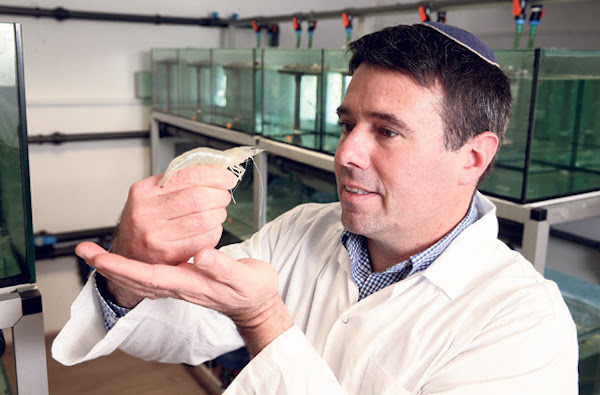
Avi Schroeder Technion, cures shrimp virus and cancer
Taking care of all things big and small. Initial work with mRNA in cancer has led to a new commercial breakthrough that can alleviate a devastating shrimp virus crippling the shrimp industry. He may keep kosher, but he is happy to help.

Avi Schroeder’s lab at the Technion Israel Institute of Technology is tiny but mighty. Thirty researchers crowd it daily, covering areas such as biology, chemistry, medicine, pharmaceuticals, and even mechanical engineering.


Schroeder’s life’s work is to advance liposome-based cancer treatments. While there’s still work to do on that front, Schroeder’s innovations to date have brought on a surprising twist for the kosher-keeping, yarmulke-wearing yeshiva graduate: for the past few years, he has been busy curing that very unkosher crustacean, the shrimp.

To his mother, Schroeder initially said he was working on a cure for cancer, which was a white lie—in Hebrew, the same word is used for both cancer and crab. He considers himself a liberal person, one who doesn’t care about what other people put on their plates, he said. “The important thing for me is that I am saving a crucial food source for many people. Indeed, people here sometimes tease me about the fact that I don’t know how tasty shrimp is and about what I’m losing out on, but I don’t care about that.”

The connection between Schroeder and shrimp was accidental, the result of his specialization in drug delivery methods. Six years ago, he gave a lecture at Israeli pharmaceutical company where he met molecular biologist Shai Ufaz.

Ufaz found the lecture enlightening. He previously worked for a marine agriculture company and understood the span of the damage shrimp growers contend with. Hearing the lecture, it dawned on him that Schroeder’s direction could offer a solution to a very wide-spread problem.

The disease Ufaz was thinking about is white spot syndrome, a virus that affects a wide variety of crustaceans and is viral among shrimp, especially in east Asia, where most commercial farming—an industry with an annual turnover of over $30 billion—is located.

An infected shrimp farming pond has a mortality rate of around 80%, with deaths occurring within hours of infection. To date, most attempts to control the virus and prevent it from spreading to other parts of the world focused on bettering sanitation and thinning out the animals, but these measures are only partly effective.

The syndrome causes damages of around $6 billion a year.

In a little cabin at the edge of the Technion’s campus, a few dozen small aquariums have a great view of Haifa bay. Inside those containers, thousands of test shrimp (for the new company ViAqua) await their midday meal.

There is one special ingredient inside the little food pellets they receive—a food additive that should provide immunity to the virus. “We created a substance that is made of a shrimp’s usual food sources, so it is defined as a food additive and not a drug,” Ufaz explained. “We want to reach the shrimp when they’re still young and inoculate them against the disease before they have a chance to catch it.”

 Schroeder's team. Photo: Doron GolanSchroeder’s team
 

The Technion cabin only hosts ViAqua’s base trial, for the pellet formula. As Israel forbids bringing the white spot syndrome virus into the country, even for research purposes, the company’s clinical trial is held in three locations in Europe, Asia, and the U.S. Company data shows inoculated shrimp experience a drop of over 50% in mortality rates.

ViAqua’s vaccine is based on RNAi. In 1998, American researchers Andrew Fire and Craig Mello discovered that RNA molecules can under certain circumstances, inhibit gene expression or translation. They won the 2006 Nobel Prize in medicine for their discovery, called RNA interference, or RNAi.

“In 2012, when I arrived at MIT for my post-doc, the discovery of the RNAi mechanism was still completely new, and many people attempted to harness it for cancer-related applications, like the prevention of metastatic cancer,” Schroeder said.

When cancer cells leave the original tumor and invade the lungs, for example, they require a certain protein to attach themselves to lung tissue. It has been proven that if the production of that protein is delayed, there is less metastation, Schroeder said. “We can synthesize a molecule called siRNA, which knows to replace the body’s original RNA. We can create this molecule with a certain sequence that will stop cells from becoming infected and metastating, and such a molecule with a different sequence will make the cell more vulnerable to drugs.”

The process is the same in both humans and shrimp, Schroeder explained. “For the virus to pass from one cell to another in shrimps, it needs certain proteins, the production of which we now know how to stop.” In shrimps, though, there is only one protein responsible for the virus that needs targeting, while in cancer cells, there are multiple ones.

ViAqua’s product is currently in the process of receiving regulatory approval in 11 countries, and if all goes well, it will hit the market within the next 12 months. The company, which forecasts revenues of 5 million euros for the first year, has recently signed an exclusivity agreement with Nutreco, one of the industry’s leading companies for animal nutrition and aquafeed.

Nutreco NV also became a partner in ViAqua. 

Before shrimps, however, there was cancer. Schroeder’s first run-in with the disease was during his BSc days, when he studied chemical engineering at Ben-Gurion University of the Negev. At the time, he was a low-level employee at Teva Pharmaceutical Industries Ltd. who dreamt of a career as a pharmaceutical engineer.

He was sent to assist at the lab of Hebrew University biochemist Yechezkel Barenholz, a medical nanotechnology pioneer and one of the developers of breast cancer treatment Doxil, the first liposomal drug and nano-medicine approved by the U.S. Food and Drug Administration. Barenholz was working to develop liposome-based technology for the safe conduction of chemotherapy drugs in hopes of finding a way to bypass chemotherapy’s debilitating side effects. While the project failed to reach commercialization, it changed Schroeder’s life.

“I had no intention of continuing in academia, I wanted to develop drugs, but when I understood the things research can accomplish I realized my place was in academic research and not the industry,” he said.

Schroeder is still focused on cancer but just understands now that curing shrimp is faster than curing cancer. But he is optimistic. “I feel, and this is supported by research data, that in the upcoming decade, we will solve most problems with cancer treatment,” he said. “By 2030, we will reach a place where most cancer patients will be cured. All developments are converging into personalized treatments, with a maximal delivery capability, that will enable a drastic reduction of chemotherapy’s side effects.”

Colorado College is now carbon neutral – and they didn’t buy their way out

0
plant researcher colorado college carbon neutral
How do lazy people and companies declare carbon neutrality? By carrying on in their old ways and by buying carbon credits. This university started in 2009 and they did not take the short-cut. This is how you lead the next generation forward.

Colorado College has achieved carbon neutrality, a goal it set in 2009 when it committed to becoming carbon neutral by 2020. After a decade of work, the ambitious target has been met — even as the college increased its building footprint by more than 10% during that time. CC is only the eighth institution in North America, and the first in the Rocky Mountain region, to achieve this goal.

Colorado College stands out among other schools that have reached carbon neutrality in an important way. The selective liberal arts school at the base of Pikes Peak, has the greatest emission reductions on campus while buying fewer offsets than any other US campus. This means the milestone has been achieved primarily by steep reductions in the college’s carbon footprint on campus.

Not buying their way to becoming carbon neutral

solar panels colorado campus
“We’ve done the difficult work of reducing our on-campus emissions first, rather than what some see as ‘buying our way’ to neutrality through offsets,” said Director of Sustainability Ian Johnson.

Colorado College has done this in a replicable and scalable way, meaning nearly any other institution could apply the strategies used by CC to achieve its goal of carbon neutrality. Offset market development also is critical, notes Johnson, but only after working to reduce on-campus emissions as much as possible.

Another significant factor is that Colorado College is the only carbon-neutral institution located in a high carbon intensity electric grid with two functioning coal plants operating in the city. This is noteworthy, said Johnson, because “electricity use in our region generates more carbon emissions than most any other region, making major reductions in our footprint all the more difficult to achieve as our electricity use pushes up emission faster than other institutions.  It also means our renewable energy generation and use have bigger impacts on global emissions than in other regions.”

Colorado College embarked on its journey to carbon neutrality in 2009. Since the college’s baseline year in 2008, CC has reduced on-campus emissions by 75%. Colorado College achieved neutrality through a variety of initiatives, including efficiency upgrades, building renovations, campus engagement, on-site renewable energy and local renewable energy purchases, reducing its carbon footprint even as its physical footprint expanded by 10% with the alliance with the Colorado Springs Fine Arts Center in 2017.

Between the Fine Arts Center and the Bemis School of Art, CC added more than 142,000 square feet to its building footprint.

Because climate change is linked to and influenced by many different factors — from environmental racism to human health and income inequality, clean water, food production and access, and more — achieving carbon neutrality impacts far more than just the college’s operations, says Johnson.

Many of the initiatives the college is undertaking, including adding more sustainability courses and finding new ways to make the college more accessible to students from diverse geographic, ethnic and socioeconomic backgrounds, increase students’ literacy and understanding across majors and strengthen the institutions that build the resilient society that will be needed to adapt to impacts from climate change.

Some of the college’s major carbon neutral initiatives have included:

  • A behavioral change program involving 14 weeks, 14 habits and a 14% reduction in electricity, heat and water use. CC saved nearly $100,000 in utility costs through the “aCClimate14” effort.
  • Colorado College’s first high-performance energy design guidelines were written for new and renovated buildings. 
  • Tutt Library became the nation’s largest academic net-zero energy library following a massive underground geothermal energy project and major renovations.
  • East Campus Housing opened with sustainable architecture and energy systems.
  • Numerous solar PV installations were constructed on and off campus, originally initiated by a student in 2008.
  • CC has worked with Colorado Springs Utilities over the past decade to find ways to partner and meet its goals. This helped lead to the addition of the 255 megawatts of solar in current and planned projects for the utility.

To account for remaining emissions, which include difficult-to-avoid emissions such as college-related air travel, study abroad, commuting and wastewater, Colorado College is investing in carbon offsets — innovative projects that reduce or eliminate greenhouse gas emissions elsewhere.

Specifically, the college has invested in a methane destruction project at the Larimer Country landfill in Northern Colorado. This project prevents methane (CH4), a very potent greenhouse gas, from entering the atmosphere, and instead uses the CH4 to generate electricity directly to the Larimer County community.

Although Colorado College has met its carbon neutrality goal, it does not mean the work is finished. 

Colorado College also is looking at options to not simply purchase carbon offsets, but to invest in developing new projects that are more socially and environmentally responsible, thereby benefiting its core academic mission, developing markets as part of the solution to climate change and providing positive social benefits for the community and region.

Carbon defined:

How is “climate neutral” defined?

Climate-neutral means that the operation of the business does not increase the amount of greenhouse gases in the atmosphere. However, there are differences in how CO2 can be avoided.

A business can either reduce the emissions on-site itself by adapting its processes or by participating in certified projects to compensate for CO2 production, i.e. the business pays fees to an organization that finances projects to reduce the number of greenhouse gases in emerging and developing countries.

Both options contribute to reducing CO2 emissions into the atmosphere.

Climate-positive goes even further; more CO2 is compensated for through climate protection projects or own process optimizations than is actually produced, thus making a positive contribution to the environment.

Zero emissions are defined by the fact that neither the construction nor the operation of the business produces environmentally harmful emissions

Boy mushroom hunting uncovers ancient “Bel Air” tombstone in Israel

0

stav meir mushroom hunting finds ancient tombstone

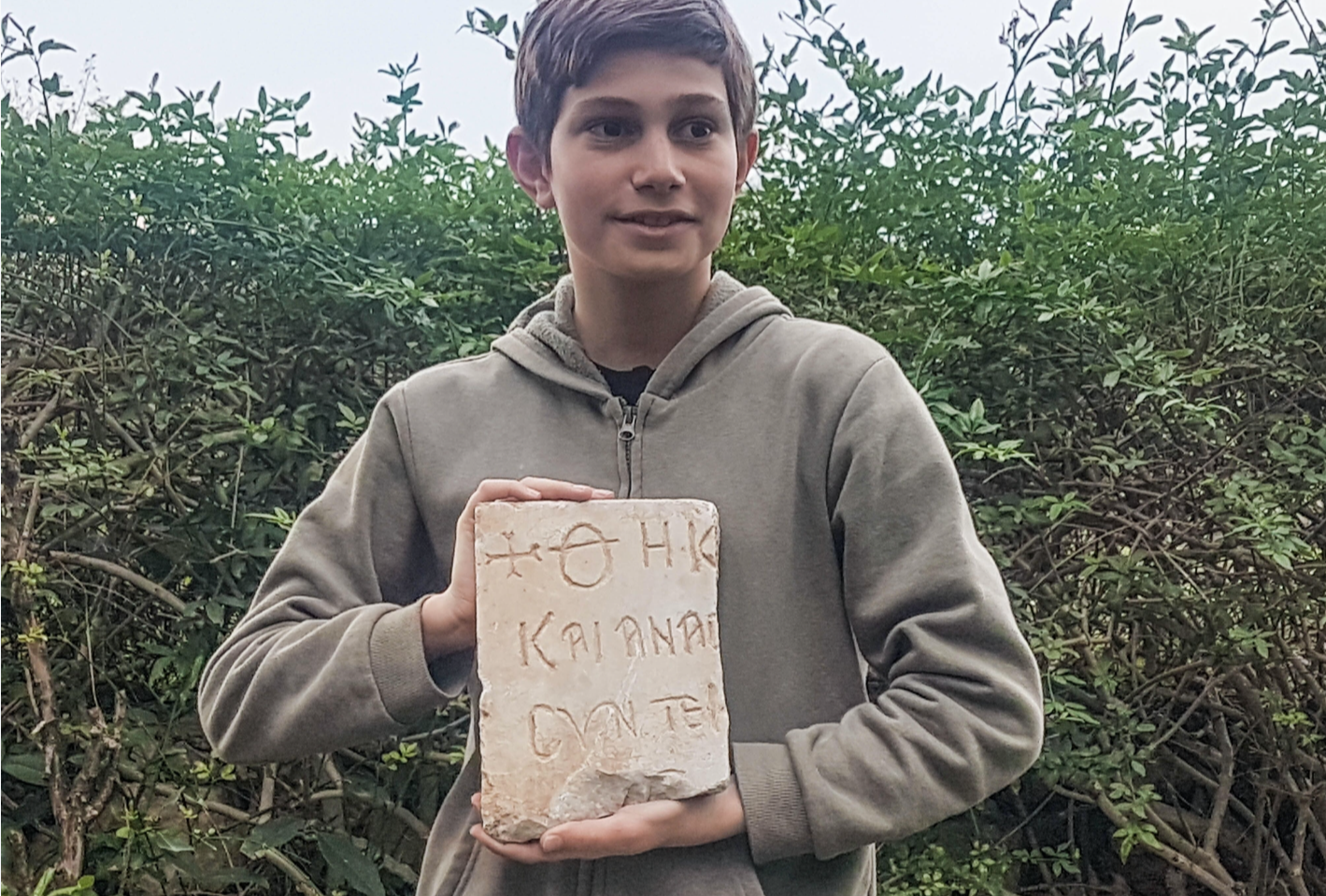
Thirteen-year-old Stav Meir, from Caesarea, Israel went out a week ago with his father Zohar, his brothers and cousins, ​​to look for mushrooms in the Caesarea area after the rains. The plentiful rains recently meant the harvest would be good. In his hunting the boy found a slab of marble poking out of the ground, with Greek letters.

“I immediately recognized that it was something ancient,” said Stav, a seventh-grader. “I studied archeology in school together with the Israel Antiquities Authority, so I can easily identify antiquities when I see them,” he noted.

The excited Stav, who understood the importance of reporting such a find, quickly reported his discovery of the slab with the Greek inscription to the Israel Antiquities Authority, and an archaeologist came to collect it for research.

The Bel Air of Ancient Times and Present

The archaeologists familiar with the site confirm that the slab is  part of a tombstone, the quality of which well illustrates the extraordinary wealth of Caesarea’s rich some 1500 years ago.

According to the archaeologist Dr. Peter Gendelman, a Caesarea researcher at the Israel Antiquities Authority, “This is a burial inscription – a marble slab with an inscription engraved in Greek, and started with a cross. The slab, which apparently indicated the grave’s location in the cemetery and the identity of the deceased, reads:

“The grave of …. and of Anastasius, or Anastasia ……” Gendelman added that, “Already, in ancient times, Caesarea was a center of attraction for a wealthy population.

“The quality of the slab discovered by Stav, indicates the wealthy status of the person entombed, as well as the customs and beliefs of inhabitants of Caesarea in the Byzantine period. This inscription joins a large collection of burial inscriptions previously discovered around ancient Caesarea.”

During the Byzantine period, the rich of Caesarea built magnificent mansions in the suburbs of the city. These buildings gave their owners quality of life, and thus they enjoyed the rural character of the area on the one hand, and proximity to the heart of the city on the other.

Future Indiana Jones

To this day sections of five magnificent mansions have been discovered each covering an extensive area. The best known being the ‘Bird Mosaic’ mansion, whose area is estimated to cover a dunam and a half. Most of the floors, in the sections of the complex that have been excavated, were colored mosaics and some are open to the public today.

The country’s recent rainstorms have uncovered archeological finds buried in the ground. 

forest mushrooms hunting variety

Thousands of schoolchildren across the country study archeology with the Israel Antiquities Authority. The curriculum breathes life into cultures and ancient times, in classroom and field studies, combining archeological finds, puzzles, workshops, archaeological excavations, and tours.

Palestinians cultivate the West Bank’s first organic mushrooms!

Greta Thunberg is reshaping how stakeholders invest

0

Greta Thunberg on a sign protesting

Microsoft, Stripe, Goldman Sachs. They are investing billions in a trillions market opportunity. We can thank Greta Thunberg, says the deVere Group. “Greta is not just helping to save the planet – she is reshaping the global investment industry,” says the head of one of the world’s largest independent financial advisory organizations.

The comments from Nigel Green, the chief executive and founder of deVere Group, which operates in 100 countries worldwide, come as the high-profile young Swedish environmental activist urged political and business leaders and the media at the World Economic Forum in Davos to heed the science as she warned time was running out to tackle global warming.

Thunberg said: “With today’s emissions levels, the remaining budget is gone in less than eight years. These aren’t anyone’s views, this is the science,” Thunberg said, citing a 2018 Intergovernmental Panel on Climate Change (IPCC) report. “I know you don’t want to report this or talk about this but I will keep repeating the numbers until you do.”

Her comments at the elite meeting in the Swiss mountain town came just before US President Donald Trump – a global warming sceptic – was due to make a keynote address.

deVere CEO Nigel Green affirms: “Greta’s message is a consistent one, one based on science and fact, and one that is likely to hit home with millennials and Gen Z.

nigel green devere

“Typically, these generations – those born from the early 1980s onwards – seem to ‘get’ the climate emergency we’re facing, and the urgency with which it needs to be tackled, far better than older generations.

“This is why it is crucial that she was at Davos in order to drive her message through to the political and business leaders who can actually do something about it right now.”

He continues: “These younger generations who will listen to the message and warnings of Greta Thunberg, amongst others, are going to be the beneficiaries of the biggest-ever generational transfer of wealth – likely to be around $30trn – over the next few years.

planet is melting sign with gen z

Children and Exercise

0

While most of us enjoyed playing outside and being active often when we were growing, today kids tend to spend a lot less time exercising and in the outdoors. This lack of activity leads to physical, emotional, and mental issues for many youngsters as a result.

As such, parents must find ways to make exercise more enjoyable for their children, so they’re more inclined to move their bodies. Here are some strategies you can try in 2020.

Change the Language You Use

If you want your children to be more open to exercise and not seeing it as a chore to be dreaded, be careful how you talk about movement yourself. The language you use to describe exercise will have an impact on how your children view and do it. If you speak about exercise in a way that makes it seem it’s something that must be done, as a job, or that is about purely losing weight or looking a particular way, you will set up negative links in their mind.

Instead, try to concentrate more on words such as fun, healthy, activity, movement, outdoors, etc., and all the wonderful physical, emotional, and mental benefits that come from being physically active.

Be a Positive Role Model

Similarly, make sure you’re a positive role model for your children by exercising yourself. After all, kids always look to their parents to see what they do, so if you’re not active, your children will wonder why they should be, and why it’s only something you try to make them do. This all leads to more negative associations.

If you exercise regularly, your kids are more likely to follow your lead. Let them know when you’re off to the gym, for a walk, or to swim some laps, and so on, and let them see you pack your bag and otherwise get ready for workouts. Also, talking to them about why you exercise and how good you feel after will help encourage them to want to be active like you.

Get Outdoors More as a Family

Another great way to make exercise more enjoyable for your children is to get outdoors more as a family, moving and being active together. Rather than spending all your family time sitting down watching movies, eating, playing board games, and so on, make sure you incorporate plenty of times where you can also move your bodies as part of family activities.

For example, walk the dog daily, spend time at the beach, do some yoga, go for hikes through nature, have a friendly game of basketball, swim in the pool, learn karate together, go rollerblading or ice skating, hit the slopes, or do anything else that appeals.

Integrate Movement in a Natural Way

man spinning kids into sunset, at the sea, two kids

It also helps to get kids to integrate movement naturally throughout the day. For instance, rather than driving them right to school, why don’t you all walk there together of a morning or at least drop your kids a few blocks away so they can stretch their legs and get their brain nicely oxygenated before they have to start concentrating at school?

You can also encourage things like taking the stairs rather than the lift, doing chores around the home (e.g. vacuuming, mopping, cleaning), and getting help carrying groceries and other shopping. Through these kinds of activities, kids will increase the amount of incidental exercise they do each day without noticing too much.

Up the Social Aspect of Activity

Even the most introverted of people are still social animals, so to get your kids enjoying movement, look for ways to make it more interactive for them. If you up the social aspect of activity time, they will be more focused on laughing with friends or making new ones than on the fact that they’re exercising.

For example, let your child invite one or more of their friends over to play each week, and enroll them in school sports where they can join a team, or in organizations like the Scouts or Girl Guides. Also, consider social activities during vacation periods, such as spring or fall tennis camps, or karate boot camps, or swimming sessions at the local beach or pool.

Three other ways to up the fun of exercise for your children are:

girl in lotus position yoga saying om

  • Consider your child’s interests and find activities to match
  • Add variety, so that kids get to try lots of different sports and exercises
  • Incorporate more games and creative ideas into movement sessions, so kids focus on the fun

Exercise is an essential part of being a healthy, happy human. As such, parents should try various strategies to help their children, even those who aren’t naturally coordinated or athletic, to enjoy moving their bodies daily.