
Design

Hemp Textiles Pave the Way for a Regenerative Economy 

We have the opportunity at Anact, as a nimble and emerging brand, to set the standard for how things should be. This is the beauty of being a start-up in an industry that has great potential to impact sustainability with hemp and regenerative practices. We are creating an ecosystem that is value-added for farmers, employees, customers, banks, and more, which will only be made possible with capital investment and supportive policy. 

What Cabinet Materials Work Best in Miami’s Coastal Climate?

Miami’s coastal climate presents unique challenges for kitchen and bathroom cabinets due to high humidity, salt air, and intense sunlight. Some materials are better...

Emirates Turns Retired Aircraft into Luxury Bags

Emirates, the UAE airline, is giving aviation waste a second life—and a stylish one at that. Following the rapid sellout of its 2023 launch,...

Eco-Friendly Playgrounds: How Schools and Parks Are Reducing Their Environmental Footprint

One of the main concerns with using sustainable materials is that it won’t look like a modernized playground. This couldn’t be farther from the truth! Many of these recycled, sustainable materials can be painted and purchased in fun and vibrant colors. You may just be surprised to see the possibilities. And upon first glance, many visitors may not even realize that the playground is eco-friendly in the first place.

How Eco-Friendly Playgrounds Are Reshaping Community Green Spaces

An eco-friendly playground goes a long way toward saving the city money. This is obviously also true for schools and churches that want to create new play spaces for the kids. The equipment can come in at a lower cost because the materials have been repurposed.

Living Plastics That Clean Water and Heal Themselves—Powered by Sunlight

"By integrating photosynthetic organisms into materials science, we can harness the sun’s renewable energy to create valuable materials," said Bae. "There is a great need for sustainable alternatives to current practices that rely on finite resources."

How Termites and Ants Built the Tropics’ Best Soil

This is like discovering that the pyramids weren’t built by natural erosion, but by ancient engineers

Microplastics in Your Food Links Nanoplastics to Liver Damage and Glucose Imbalance

Next time you reach for a plastic-wrapped snack or sip from a disposable cup, remember: the real cost may not show up on the price tag, but in your liver enzymes or your glucose test.

Meet Hyphyn, the First Biodegradable Performance Upholstery

In an industry often criticized for waste and pollution, a revolutionary material is changing the narrative. Hyphyn, the first biodegradable performance vinyl, is setting...

Off-the-Grid and On Point: Rechargeable Lighting That Supports a Greener Lifestyle

Lighting sources that use rechargeable batteries include an LED flashlight, a generator, and an outdoor solar light fixture. Flashlights are some of the more versatile lighting choices, since these devices offer various sizes and brightness. Brightness capability is also known as lumens. If you need strong lighting, choose a device with a higher lumen output.

7 Startups Redefining Sustainable Consumer Products in 2025

In 2025, sustainability is no longer a luxury or a greenwashed afterthought—it’s a business imperative. Consumers around the world are making purchasing decisions based not just on price or style, but on how products are made, what they’re made of, and what happens after they’re used. Enter a wave of bold startups building circular, ethical, and regenerative models for everyday items—from sneakers and smartphones to menstrual pads and incense sticks.

What Circular Design Means in 2025—and Why It’s Finally Real

Back in the day when we started Green Prophet, “circular design” was a new buzzword and mostly just a slide in a PowerPoint deck—something sustainability consultants pitched people who knew nothing. In 2025, it’s different. Circular design isn’t just theory now—it’s practice. It’s policy in some of the boldest companies, cities, and thinkers who are reshaping the future.

The Future of Color is Green (and Blue): Algae as a Natural Dye for a Planet in Transition

At Green Prophet, we’ve long followed algae’s transformative potential—from algae solar panels and bioplastics to its use in wastewater treatment and as a vegan protein source. Now, as color becomes another frontier of ecological consciousness, we see a full-circle return to Earth’s original pigments.

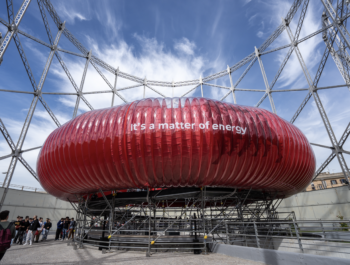
SOMBRA Pavilion: MVRDV’s Living Ode to the Sun Debuts in Venice

SOMBRA, a name fusing the Latin words for sun (sol) and shade (umbra), is more than a temporary pavilion—it’s a living laboratory. Shaped like a heliodon, the structure mimics how the sun moves through the sky, providing an intuitive experience of solar patterns. It operates without motors, electronics, or external energy. Instead, it breathes, opens, and closes using only passive physical principles.

Make moss graffiti

Express your green views for all to see - right on the walls of your house, restaurant or office. Moss grafitti is the hottest trend in urban agriculture, after hydroponics and vertical farming.

Hot this week

The Best of Hobart: Experiences to Have, Places to Visit, and Flavours to Try

Hobart, Tasmania’s capital, is the kind of city that makes you regret not having come sooner. Mount Wellington/kunanyi that shapes the skyline, Bruny Island's dolphins, Port Arthur's convict ruins and Salamanca's Saturday market are all close enough to fit into the same week.

How Responsible Tourism Could Help Protect the World’s Last Wild Places

From Antarctica and South Georgia to the Galápagos and Thailand, fragile destinations are finding ways to manage tourism without shutting visitors out. Visitor caps, conservation fees, biosecurity rules and controlled access can reduce environmental damage while helping fund the protection of wild places.

How Slow Travel Is Changing the Way We Explore

From trekking fees in Nepal and wildlife conservancies in Kenya to visitor limits in Patagonia and strict Arctic rules in Svalbard, responsible adventure travel can help fund conservation, protect habitats, and create sustainable income for local communities.

How Responsible Adventure Travel Can Protect the World’s Wild Places

From trekking fees in Nepal and wildlife conservancies in Kenya to visitor limits in Patagonia and strict Arctic rules in Svalbard, responsible adventure travel can help fund conservation, protect habitats, and create sustainable income for local communities.

Here is how Europe is still buying Russian gas

Greek-linked shipping vessels transported an estimated €2.35 billion worth of Russian Arctic liquefied natural gas to European ports during the first seven months of 2026, according to new analysis from Urgewald, a Germany-based environmental and human rights organization that investigates the financial institutions and companies supporting fossil fuel and other environmentally damaging industries.

Topics

The Best of Hobart: Experiences to Have, Places to Visit, and Flavours to Try

Hobart, Tasmania’s capital, is the kind of city that makes you regret not having come sooner. Mount Wellington/kunanyi that shapes the skyline, Bruny Island's dolphins, Port Arthur's convict ruins and Salamanca's Saturday market are all close enough to fit into the same week.

How Responsible Tourism Could Help Protect the World’s Last Wild Places

From Antarctica and South Georgia to the Galápagos and Thailand, fragile destinations are finding ways to manage tourism without shutting visitors out. Visitor caps, conservation fees, biosecurity rules and controlled access can reduce environmental damage while helping fund the protection of wild places.

How Slow Travel Is Changing the Way We Explore

From trekking fees in Nepal and wildlife conservancies in Kenya to visitor limits in Patagonia and strict Arctic rules in Svalbard, responsible adventure travel can help fund conservation, protect habitats, and create sustainable income for local communities.

How Responsible Adventure Travel Can Protect the World’s Wild Places

From trekking fees in Nepal and wildlife conservancies in Kenya to visitor limits in Patagonia and strict Arctic rules in Svalbard, responsible adventure travel can help fund conservation, protect habitats, and create sustainable income for local communities.

Here is how Europe is still buying Russian gas

Greek-linked shipping vessels transported an estimated €2.35 billion worth of Russian Arctic liquefied natural gas to European ports during the first seven months of 2026, according to new analysis from Urgewald, a Germany-based environmental and human rights organization that investigates the financial institutions and companies supporting fossil fuel and other environmentally damaging industries.

Ancient Jewish New Year for Animals revived with global campaign against factory farming

Jewish Vegan Life has launched a global campaign celebrating the New Year for Animals, with synchronized events in Washington, D.C., Los Angeles, Pittsburgh, Montreal and Jerusalem, alongside an international livestream on August 9 featuring partners including Mercy for Animals, The Good Food Institute and Freedom Farm Animal Sanctuary.

The Space Orchestra, and the search for extraterrestrial life, to eclipse celebration

The event will livestream eclipse views from Iceland and northern Spain, where the eclipse will be total, while the 35-member International Space Orchestra, made up of astronauts, scientists, engineers, and researchers—performs a new orchestral interpretation of Voyager by PJ Harvey.

Canada’s healthcare became the world’s digital health laboratory. Now Europe is taking notice

Canada's healthcare system may be under pressure, but its decades-long experience with digital transformation is becoming a model for Europe and beyond. In an interview with Nordic's Alison MacDonald, Green Prophet explores why successful AI in healthcare depends less on software than on empowering clinicians, improving workflows and building resilient systems.
spot_img

Related Articles