Make home-fermented olives

Make olives at home

The tastiest olives are the ones you pickle yourself. Read on for ways of upgrading store bought olives too.

Olives are eaten with almost every meal in the Middle East, sometimes even at breakfast. Organically grown olives are the most delicious. You might be growing an olive tree in a container, but be realistic. If your tree gives fruit, there will probably not be enough for pickling. 

Dried and salty or plump and succulent, glowing in gem-like green, black, brown, and purple, olives have their own displays in supermarkets and open-air markets everywhere (see Karin’s post on Israeli fresh food markets). Some people like their olives hot with fiery chilis. Some prefer them tangy with preserved lemons, or mellowed with bay leaves. You can pickle and season fresh olives by the kilo if you want, and it’s not hard.

foraged olives in Jaffa, bt Karin Kloosterman
Foraged black and green olives in Jaffa by Karin Kloosterman. Salt the black olives, and

It’s in autumn that olives are harvested and appear in the markets. But if you missed the season, a recipe for improving supermarket olives follows this one.

The olives sit in plain water, changed daily, for a week. During that time their original bitterness will leach out into the water. In the following 4-8 weeks, they marinate in fresh brine and seasonings.

Ingredients for fermented (pickled) olives:

1 kilo fresh olives

water

After a week, you will need:

Fresh water

Salt

Olive oil

4 cloves garlic, peeled and halved

1 lemon, sliced

chili peppers to taste

2 bay leaves

Optional: oregano, thyme, rosemary, grains of black pepper, allspice

Equipment:

image-homemade-olives

Knife or clean rock

Mason jar or other large jar with a tight-fitting lid

Rinse the olives and drain. Discard any spoiled ones.

Either cut three slits in each olive or crush them with a clean rock, a few at a time. If crushing, only press hard enough to crack them open, not mash them.

Put the olives in the jar.  Cover them with water. Make sure there are none floating – weigh them down with a small saucer or drape a clean recycled plastic bag over the surface of the water to keep them under.

Change the water every 24 hours. Do this for a week.

The olives will lose their bright color as their bitterness leaches out. When the olives are uniformly darker, taste them to judge if they’re ready for brining. If they’re still bitter, soak them and change the water for another few days.

Once the olives are ready, drain them and put them in a large bowl while washing out their jar. Make a brine. This is 1/4 cup kosher salt to 4 cups fresh water. 

Mix well.
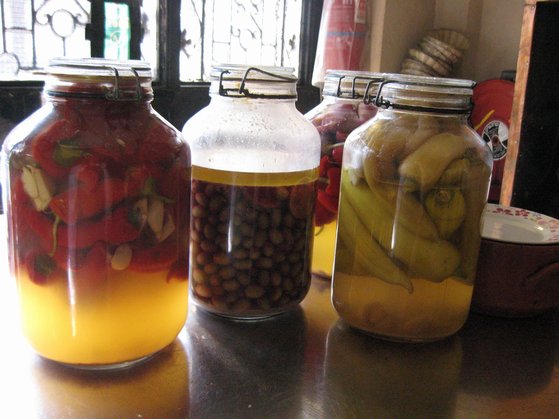
image-pickled-peppers

Replace the olives in the clean jar. Pour the brine over all. Add herbs and spices to taste.

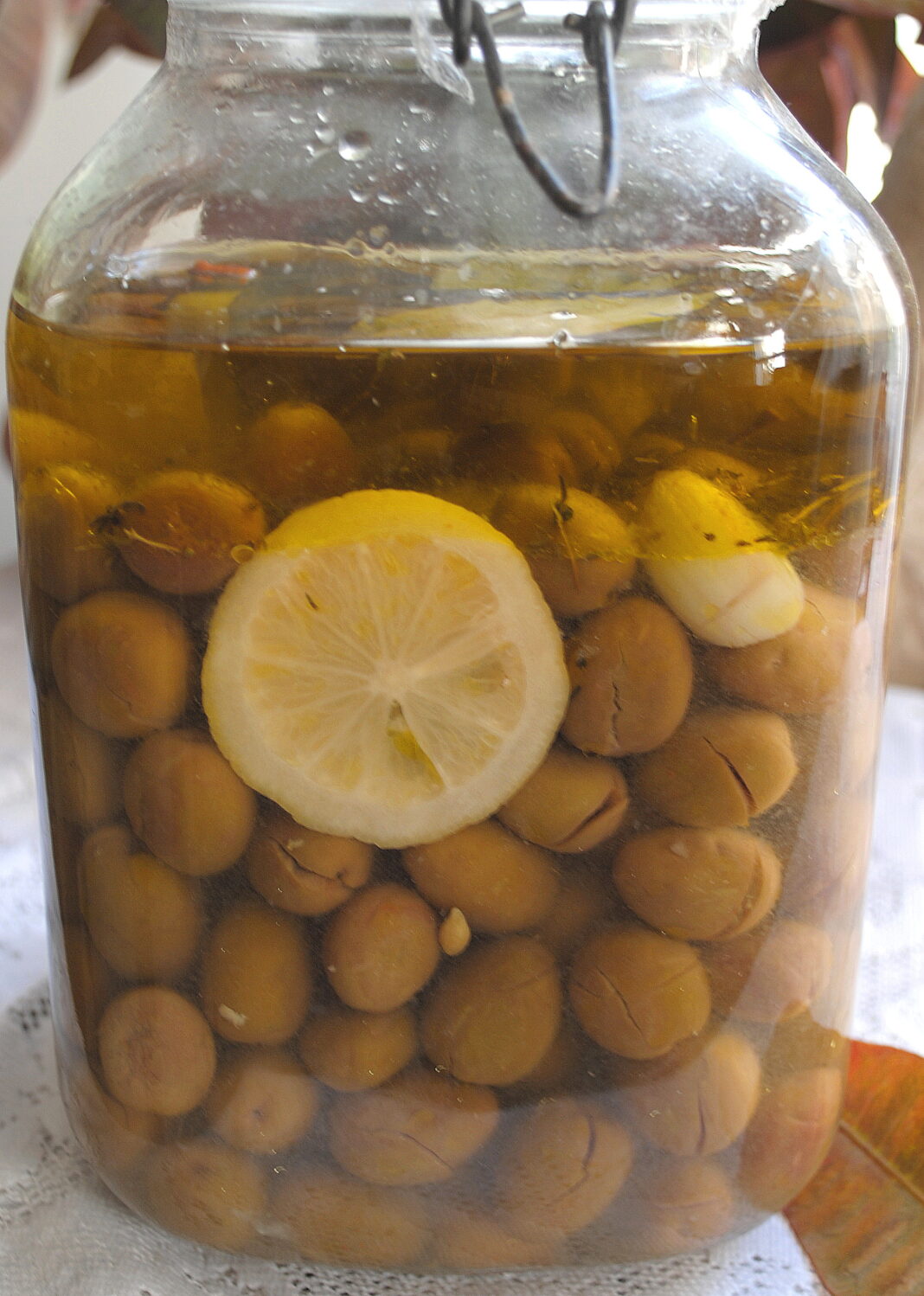
Cover the olives with plenty of olive oil (as in the image above) to exclude air and prevent spoilage. Close the jar. You can use the olive oil later. 

Leave it alone for a month, then taste an olive every week or so till you’re satisfied. 
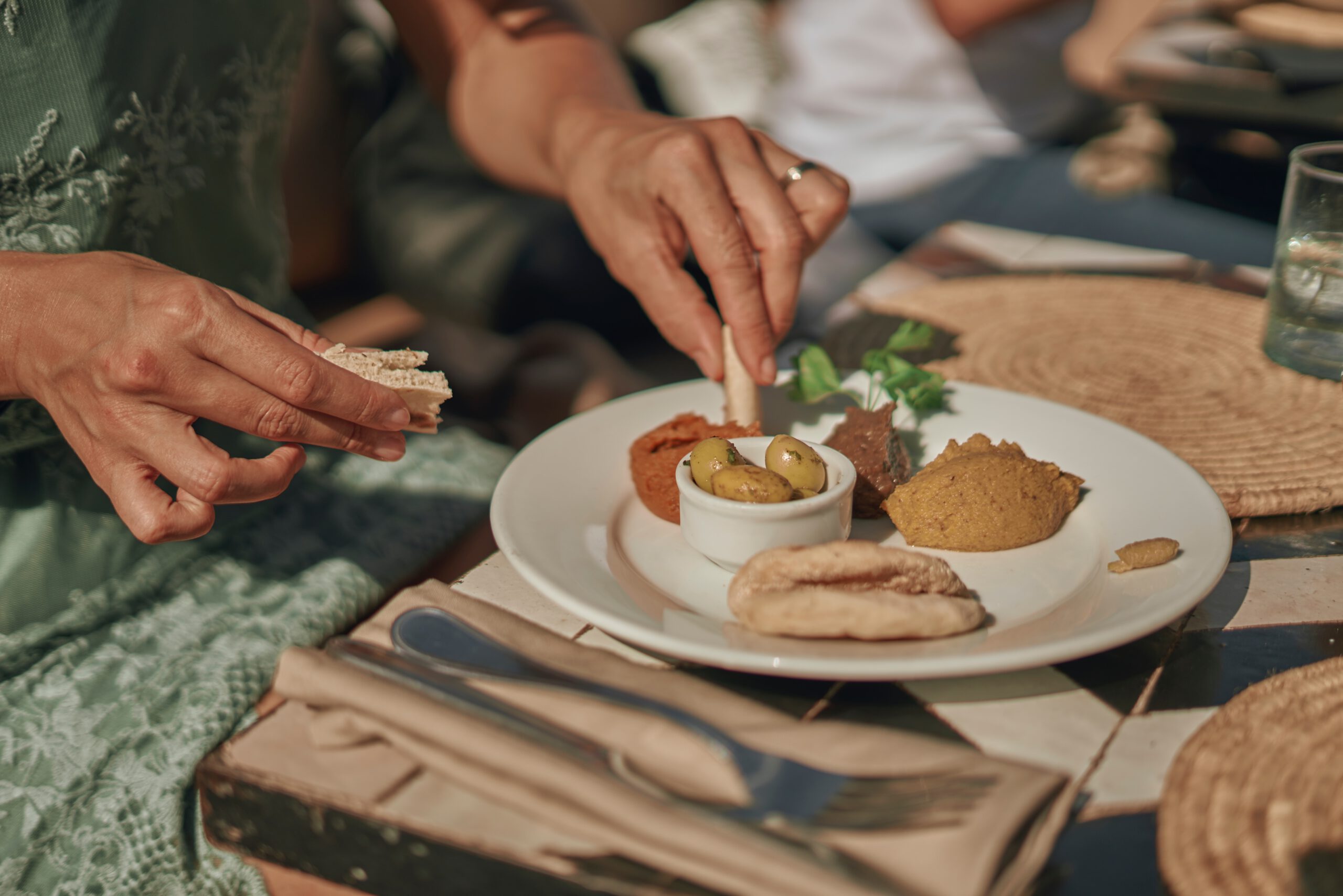
olives and tapas
Olives and tapas

Always remove olives for serving with a clean, dry spoon. Keep the majority in their brine and seasonings – they will only improve.

How To Make Cheap Olives Delicious

olive marinade
Make your own tasty marinade, no matter what olives you have at home.

Pour out the brine they came in, and as above, season with garlic, peppers, bay leaves, and lemon. Pour 1/4 cup dry red wine over them if you wish. Cover them with olive oil. Store in the fridge and eat after 1 day to allow the flavors to penetrate. The olives will stay good 1 week.

Enjoy!

More about olives and olive oil on Green Prophet:

Vegan Pesto Recipe

Olive Oil Pioneer Fixes His Heart


Miriam Kresh
Miriam Kreshhttps://www.greenprophet.com/
Miriam Kresh is an American ex-pat living in Israel. Her love of Middle Eastern food evolved from close friendships with enthusiastic Moroccan, Tunisian and Turkish home cooks. She owns too many cookbooks and is always planning the next meal. Miriam can be reached at miriam (at) greenprophet (dot) com.
3 COMMENTS

Comments are closed.

Hot this week

How Renewable Energy is Revolutionizing the Way We Power Our World

Solar has become the star of the transition thanks to modular hardware and straightforward installation. It fits dense cities and remote towns alike. Many companies are turning to rooftop arrays and carport systems - and exploring commercial solar installation as a practical way to lock in future savings.

How does one start prepping?

Faced with an extreme winter storm this year, Americans wonder how to be prepared for catastrophe. Miriam has lived through wars in the Middle East - so she's prepared on giving you a guide to prepping.

Fishermen sue tire manufacturers on behalf of the salmon

A federal trial in San Francisco has brought US tire manufacturers, fishing groups, and environmental scientists into court over a chemical most drivers have never heard of — but which scientists say may be silently reshaping aquatic ecosystems.

Listening to Water: Tarek Atoui’s Next Work for Tate Modern

Born in Beirut, Lebanon in 1980 and now living in Paris, Atoui has spent years building instruments that don’t sit comfortably in concert halls. Many of them involve water, glass, and ceramics — materials that react to sound instead of simply producing it.

Leading Through a Dual-Energy Transition: Balancing Decarbonisation with Energy Security

Experience in one area of the energy industry isn't enough to guarantee readiness across all the others. That's where a structured program like an MBA in energy can come in. Today's advanced curricula explore energy economics, finance, policy, and strategic management alongside the technical subjects. And when pursuing an energy MBA online, professionals can skill up and retrain without having to step out of the labor market -- an important perk at a time when skilled professionals are already in short supply.

Topics

How Renewable Energy is Revolutionizing the Way We Power Our World

Solar has become the star of the transition thanks to modular hardware and straightforward installation. It fits dense cities and remote towns alike. Many companies are turning to rooftop arrays and carport systems - and exploring commercial solar installation as a practical way to lock in future savings.

How does one start prepping?

Faced with an extreme winter storm this year, Americans wonder how to be prepared for catastrophe. Miriam has lived through wars in the Middle East - so she's prepared on giving you a guide to prepping.

Fishermen sue tire manufacturers on behalf of the salmon

A federal trial in San Francisco has brought US tire manufacturers, fishing groups, and environmental scientists into court over a chemical most drivers have never heard of — but which scientists say may be silently reshaping aquatic ecosystems.

Listening to Water: Tarek Atoui’s Next Work for Tate Modern

Born in Beirut, Lebanon in 1980 and now living in Paris, Atoui has spent years building instruments that don’t sit comfortably in concert halls. Many of them involve water, glass, and ceramics — materials that react to sound instead of simply producing it.

Leading Through a Dual-Energy Transition: Balancing Decarbonisation with Energy Security

Experience in one area of the energy industry isn't enough to guarantee readiness across all the others. That's where a structured program like an MBA in energy can come in. Today's advanced curricula explore energy economics, finance, policy, and strategic management alongside the technical subjects. And when pursuing an energy MBA online, professionals can skill up and retrain without having to step out of the labor market -- an important perk at a time when skilled professionals are already in short supply.

From Green Energy to Healthy Societies: Why old systems thinking is becoming relevant again

Across the Middle East and North Africa, large investments are being made in green hydrogen, renewable energy, water infrastructure and sustainability. Most of these efforts are discussed in the context of climate change, decarbonization and economic diversification. That framing is important, but it may not capture their full value.

We saw peace – an interreligious encounter deep in our eyes

They came from Israel, Palestine, Jordan, Iraq, Yemen, Morocco, Tunisia, Lebanon, Egypt… There are Sunni Muslims, Shiite Muslims, Jews (Orthodox and Reform), Orthodox Christians, Coptic Christians, Protestant Christians, Druze, Baha'is, a Scientologist.

Can biochar reduce ‘Forever Chemicals’ in food if it’s used in farms?

Biochar is produced by heating organic material in a low-oxygen environment so it does not burn. This process, known as pyrolysis, transforms plant matter into a stable, carbon-rich material.

Related Articles

Popular Categories