
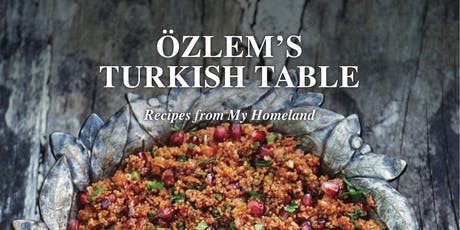
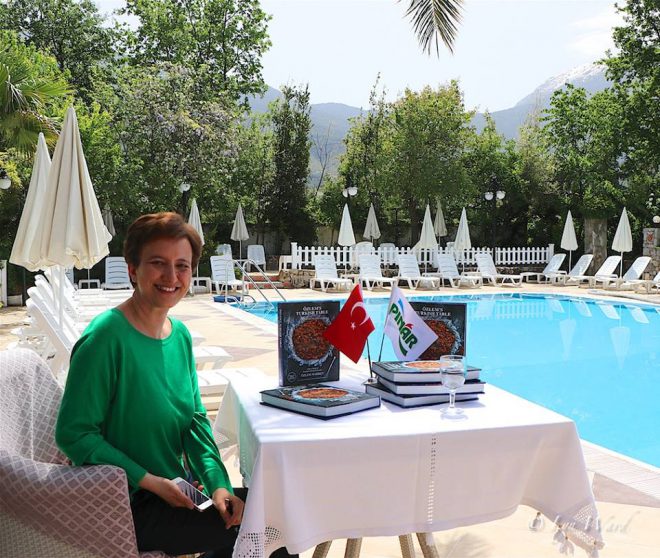
Ozlem’s Turkish Table cookbook for everyday and festivals: Our Review

Cook like the Turks, healthy and delicious. Miriam finds a few “keeper” recipes in this new Turkish cookbook

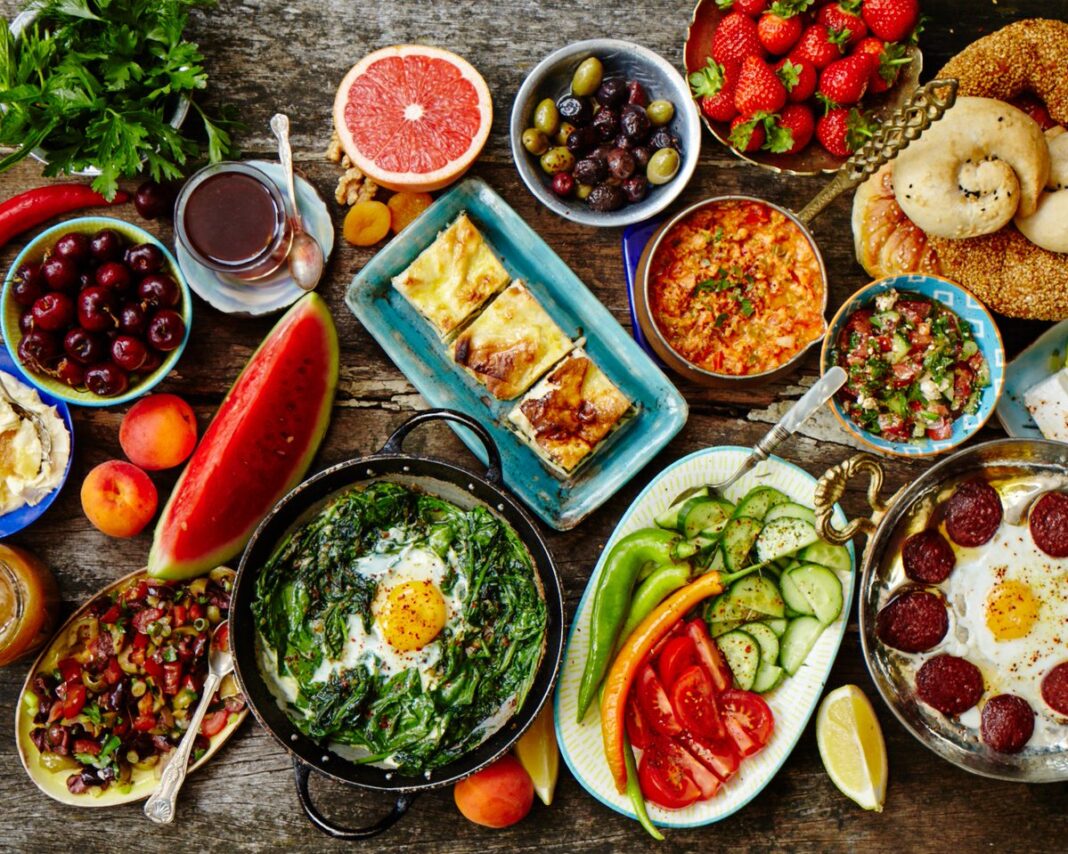
Every Turkish kitchen produces dishes that began somewhere in Central Asia, the Middle East, Eastern Europe or the Balkans. Even with natural regional variations, there’s something characteristically Turkish in every bite you take. It’s the sweet/sour taste of pomegranate molasses, the tang of sumac, yogurt flavored with mint or dill, and Turkish pepper paste. So many flavors to intrigue and tease the palate.

The south of Turkey is especially famous for its dazzling variety of luscious foods, and Özlem Warren, food writer, teacher and blogger (www.ozlemsturkishtable.com), shows you shows you how to cook them yourself. Beginning her own family’s story, the book moves through Turkish culinary history and in particular, the world of southern Turkish cuisine.
We’re introduced to two essential Turkish condiments that appear over and over again throughout the recipes: red pepper paste and pomegranate molasses. I made the red pepper paste, and it wasn’t hard. I admit that I balked somewhat at making my own pomegranate molasses, but luckily every grocery store carries bottles of it where I live. There is a recipe for za’atar blend, which I was intrigued to see includes ground, cooked chickpeas. We love za’atar: see a version of za’atar pesto here.

Another thing you can count on in Turkish food is how healthy it is. There are infinite ways to cook vegetables and grains. People are eating more meat than formerly, but still prefer a relatively light touch of it in everyday foods. And most Turks still prefer to eat at home. You don’t hear moaning about fast-food taking the culture over, because everyone’s too busy cooking and eating foods made from scratch.

Özlem’s Turkish Table carries you through authentic recipes for soups and dips, a variety of mezze, and salads. Sections on the Turkish breakfast and savory pastries follow, segueing into chapters on vegetables, meat and poultry, grains, fish and seafood, and finally desserts. To help you build a typical Turkish meal, there’s a chapter on suggested menus.

The book is packed with attractive photographs, but it’s not a coffee-table book. It’s meant to be taken into the kitchen and cooked out of. Some recipes are quick and easy, like the mezze of sauteed carrots mixed with garlicky yogurt. Others are more elaborate, like the luscious kaytaz boregi, savory pastry squares topped with seasoned ground beef. The most time-consuming is oruk, bulgar balls filled with walnuts and ground meat. A dish for festivals.

It’s not a book for beginning cooks, but no recipe is really difficult to manage. For example, baklava might seem intimidating to make, but with filo pastry from the supermarket, a careful cook can easily produce a trayful of that exotic sweet from this book.

The instructions given are clear and easy to understand, with tips and explanations interspersed throughout to ensure the reader success. The only thing I found bothersome is the index, which is extensive and well-organized, but gives the names of some dishes only in Turkish, which assumes that readers remember their unfamiliar names. For example, what is sini oruğu? I’m mystified.

Altogether, Ă–zlem’s Turkish Table makes a nice addition to the cookbook shelf. I’ve already promised to lend my copy to a friend married to a Turkish man – she wants to surprise him with dishes he doesn’t expect his Western wife to know. I’m confident that they’ll find a good few keepers in this book.
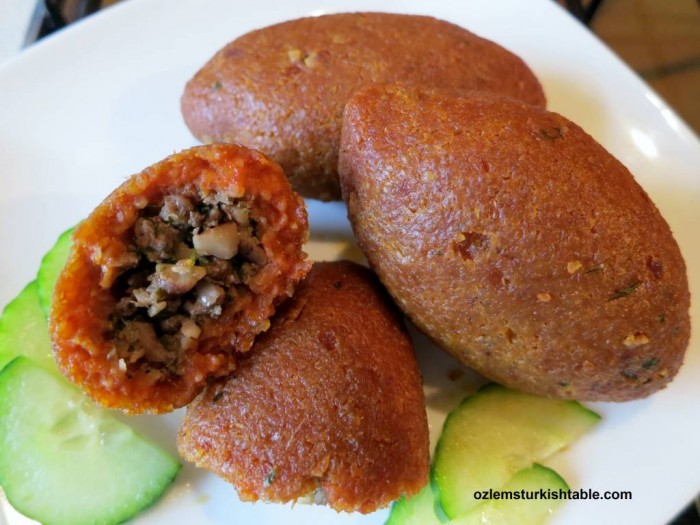
Turkish stuffed bulgur balls

Özlem’s Turkish Table, 2018.
304 pages with an introduction by Ghillie BaÅŸan
ISBN 978-1-912031-94-8

Publisher: GB Publishing
Available from the author’s website (www.ozlemsturkishtable.com); GB Publishing (www.gbpublishing.co.uk/ozemsturkishtable), or via Kindle.
Miriam Kresh
Miriam Kreshhttps://www.greenprophet.com/
Miriam Kresh is an American ex-pat living in Israel. Her love of Middle Eastern food evolved from close friendships with enthusiastic Moroccan, Tunisian and Turkish home cooks. She owns too many cookbooks and is always planning the next meal. Miriam can be reached at miriam (at) greenprophet (dot) com.

Hot this week

How Renewable Energy is Revolutionizing the Way We Power Our World

Solar has become the star of the transition thanks to modular hardware and straightforward installation. It fits dense cities and remote towns alike. Many companies are turning to rooftop arrays and carport systems - and exploring commercial solar installation as a practical way to lock in future savings.

How does one start prepping?

Faced with an extreme winter storm this year, Americans wonder how to be prepared for catastrophe. Miriam has lived through wars in the Middle East - so she's prepared on giving you a guide to prepping.

Fishermen sue tire manufacturers on behalf of the salmon

A federal trial in San Francisco has brought US tire manufacturers, fishing groups, and environmental scientists into court over a chemical most drivers have never heard of — but which scientists say may be silently reshaping aquatic ecosystems.

Listening to Water: Tarek Atoui’s Next Work for Tate Modern

Born in Beirut, Lebanon in 1980 and now living in Paris, Atoui has spent years building instruments that don’t sit comfortably in concert halls. Many of them involve water, glass, and ceramics — materials that react to sound instead of simply producing it.

Leading Through a Dual-Energy Transition: Balancing Decarbonisation with Energy Security

Experience in one area of the energy industry isn't enough to guarantee readiness across all the others. That's where a structured program like an MBA in energy can come in. Today's advanced curricula explore energy economics, finance, policy, and strategic management alongside the technical subjects. And when pursuing an energy MBA online, professionals can skill up and retrain without having to step out of the labor market -- an important perk at a time when skilled professionals are already in short supply.

Topics

How Renewable Energy is Revolutionizing the Way We Power Our World

Solar has become the star of the transition thanks to modular hardware and straightforward installation. It fits dense cities and remote towns alike. Many companies are turning to rooftop arrays and carport systems - and exploring commercial solar installation as a practical way to lock in future savings.

How does one start prepping?

Faced with an extreme winter storm this year, Americans wonder how to be prepared for catastrophe. Miriam has lived through wars in the Middle East - so she's prepared on giving you a guide to prepping.

Fishermen sue tire manufacturers on behalf of the salmon

A federal trial in San Francisco has brought US tire manufacturers, fishing groups, and environmental scientists into court over a chemical most drivers have never heard of — but which scientists say may be silently reshaping aquatic ecosystems.

Listening to Water: Tarek Atoui’s Next Work for Tate Modern

Born in Beirut, Lebanon in 1980 and now living in Paris, Atoui has spent years building instruments that don’t sit comfortably in concert halls. Many of them involve water, glass, and ceramics — materials that react to sound instead of simply producing it.

Leading Through a Dual-Energy Transition: Balancing Decarbonisation with Energy Security

Experience in one area of the energy industry isn't enough to guarantee readiness across all the others. That's where a structured program like an MBA in energy can come in. Today's advanced curricula explore energy economics, finance, policy, and strategic management alongside the technical subjects. And when pursuing an energy MBA online, professionals can skill up and retrain without having to step out of the labor market -- an important perk at a time when skilled professionals are already in short supply.

From Green Energy to Healthy Societies: Why old systems thinking is becoming relevant again

Across the Middle East and North Africa, large investments are being made in green hydrogen, renewable energy, water infrastructure and sustainability. Most of these efforts are discussed in the context of climate change, decarbonization and economic diversification. That framing is important, but it may not capture their full value.

We saw peace – an interreligious encounter deep in our eyes

They came from Israel, Palestine, Jordan, Iraq, Yemen, Morocco, Tunisia, Lebanon, Egypt… There are Sunni Muslims, Shiite Muslims, Jews (Orthodox and Reform), Orthodox Christians, Coptic Christians, Protestant Christians, Druze, Baha'is, a Scientologist.

Can biochar reduce ‘Forever Chemicals’ in food if it’s used in farms?

Biochar is produced by heating organic material in a low-oxygen environment so it does not burn. This process, known as pyrolysis, transforms plant matter into a stable, carbon-rich material.

Related Articles

Popular Categories