
It’s late winter, almost spring in the Mediterranean, and the time to harvest wild greens is now. In a week or two, the best will be gone to seed, gotten leggy and tough, or infested with bugs.
I went out foraging for nettles, my favorite wild edible. I was aiming to make nettles dumplings, or as they’d be known in Italy, malfatti. See our other 5 ways to eat iron-rich nettles. And here we show inventive ways to make dumlings.
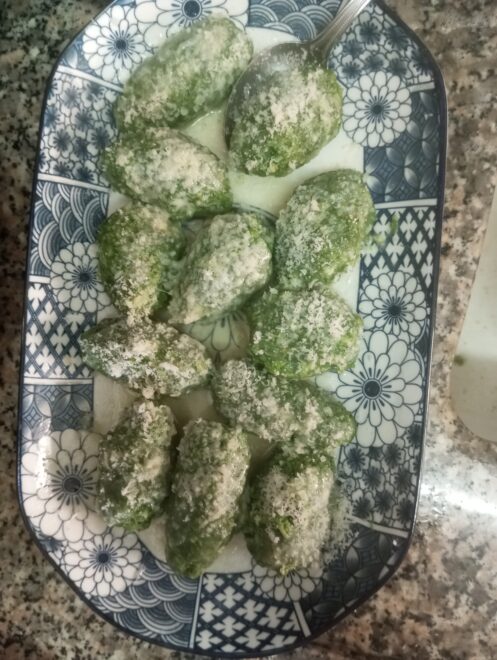
Malfatti means “badly formed,” and these dumplings, quickly shaped in the hand, have an awkward, rough look. Traditionally, spinach is the leafy ingredient, and the malfatti come out white speckled with green. These, based on nettles, are a rich, dark green.
I found this recipe in the late Leda Meredith’s book, “The Forager’s Feast.”
When I mention harvesting nettles to people who don’t forage, I get plenty of rolled eyes and the usual question: “Don’t you get stung, picking them?”
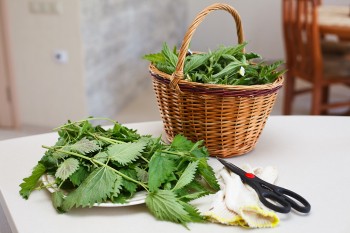
I do get stung. In my first years of picking nettles, I found that wearing gloves and taking scissors along was the way to deal with them.
Snip the stems and holding them with the scissor blades, put them down, all facing one way. That makes them easier to handle when rinsing them and hanging them up to dry.
But that was years ago. I pick nettles with bare hands now, and while I feel the sting, I don’t mind it anymore. Remember, all the sting goes away in the cooking. If you’re new to eating nettles and curious about their flavor, I’ll say that they don’t taste like spinach.
All wild greens are described as tasting like spinach, but the truth is that each has its distinctive taste, as with artichokes and lettuce, which are botanically related but taste nothing like each other. Nettles’s taste is dark, if you like, and a little salty; a little like seaweed.
This is how I learned to make delicious green malfatti. Like the ancient recipes that start, “First go out and catch a rabbit,” you need 4 ounces of raw, rinsed nettles that you went out and picked yourself.
Nettles Malfatti Recipe
Serves 2 as a main dish; 3-4 as a hot appetizer or side dish
Ingredients:
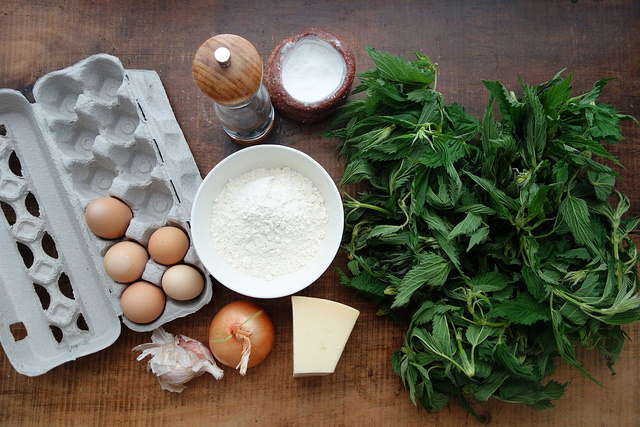
4 oz. – a tightly packed 1/2-cup of raw nettle leaves – stripped from the stems. My note: ignore any seeds present; they’re also excellent nutrition when young and green.
1 tablespoon olive oil
1 small onion, peeled and chopped finely
2 eggs, beaten
3/4 cup dry breadcrumbs
1/2 cup Parmesan cheese, grated
1 teaspoon salt
1/4 teaspoon black pepper, or more if liked
1/2 cup cup flour for rolling the malfatti in
About 1/2 cup melted butter and 1/4 cup grated extra Parmesan for saucing the malfatti
Instructions:
Blanch the nettles. Bring a medium-sized pot of water to a boil.
Drop the nettles in and cook for 3 minutes. I set the timer on my phone to avoid over-cooking. You’re only blanching the greens here.
Have ready a bowl of cold water. Remove the blanched nettles from the hot water with tongs or a slotted spoon and immediately drop them in the cold water. Let them sit for a minute or so or until cool.
Drain the nettles in a colander or sieve, and squeeze as much liquid out of them as possible by pushing them hard against the side of the colander. Do this over a bowl, to catch that dark-green juice. It’s tasty and sky-high full of nutrients. You can add it to soups or green smoothies later.
Coarsely chop the wad of squeezed-out nettles.
Empty the pot you boiled the nettles in. Pour the olive oil in and set it over medium heat to warm. (Leda’s tip for reducing the washing up by one pot).
Cook the onion in the oil until soft and translucent, stirring, 4-5 minutes.
Using the knife blade of a food processor, blend the onions and nettles together with the salt and pepper, eggs, breadcrumbs, and cheese until you have a coarse paste.
Scoop the nettles mixture into a bowl, cover it, and refrigerate 6 hours or overnight. I’ve let it mature as long as 24 hours.
Set a large pot of lightly salted water to boil.
Either flour a surface like a baking sheet with the 1/2-cup flour, or dump the flour into a wide bowl. Either way, flour your hands. You’ll need to flour your hands again at intervals.
Pinch off a generous tablespoon of the chilled dough and roll into a torpedo shape. Some prefer a nice round dumpling like a mazah ball; your choice. In either case, your palms will be green.
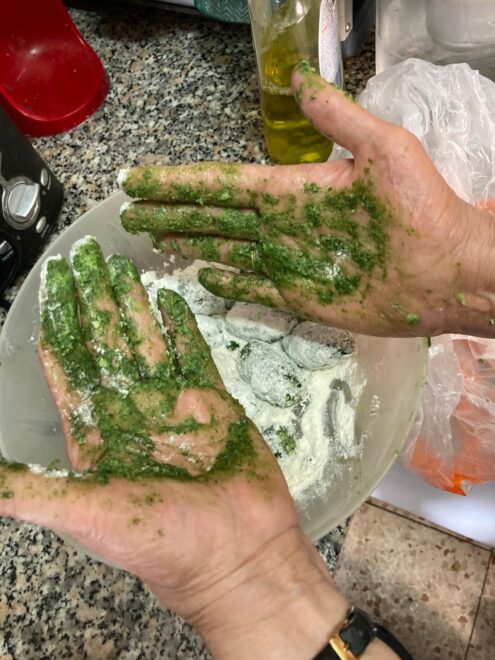
Roll each malfatti in the flour and set it aside on a floured surface while rolling the rest. If your bowl is wide enough, just place them around the inside and roll the rest of the malfatti in the flour heap in the center of the bowl.
Gently lower the malfatti into the water, which by now should be boiling. Don’t crowd the dumplings; they swell and need room to move. You’ll know they’re close to done when they rise and bob around. Cook them 4-5 minutes, no longer or they’ll break apart. You may need to do this in 2 batches.
Using a slotted spoon, remove the cooked malfatti to a platter or serving bowl.
Gently pour melted butter over the malfatti, and sprinkle with the extra grated Parmesan. Serve right away.
Some take malfatti to another level by baking them, cooked as described above, in a bechamel or a tomato sauce for 15 minutes at 350° F – 175°C. Sprinkle with more cheese before serving.