

Rare whale species spotted for the first time

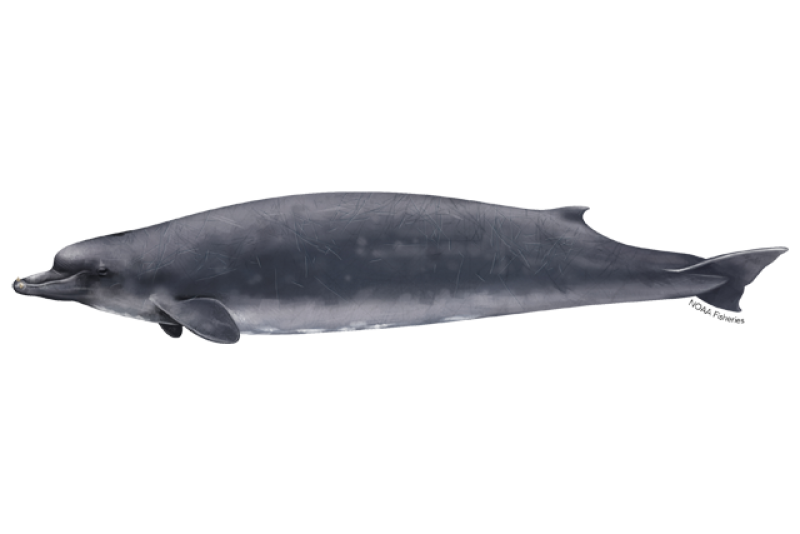
A beak nose whale, or a ginkgo-toothed beaked whale, scientific name: Mesoplodon ginkgodens

For years, biologists studying the deep Pacific had been listening for a mysterious underwater signal: a beaked whale call labeled BW43. The signature appeared in hydrophone data beginning in 2020, but no one had ever seen the animal that produced it. That changed on a June morning in 2024, off Baja California, Mexico, aboard Oregon State University’s research vessel Pacific Storm.

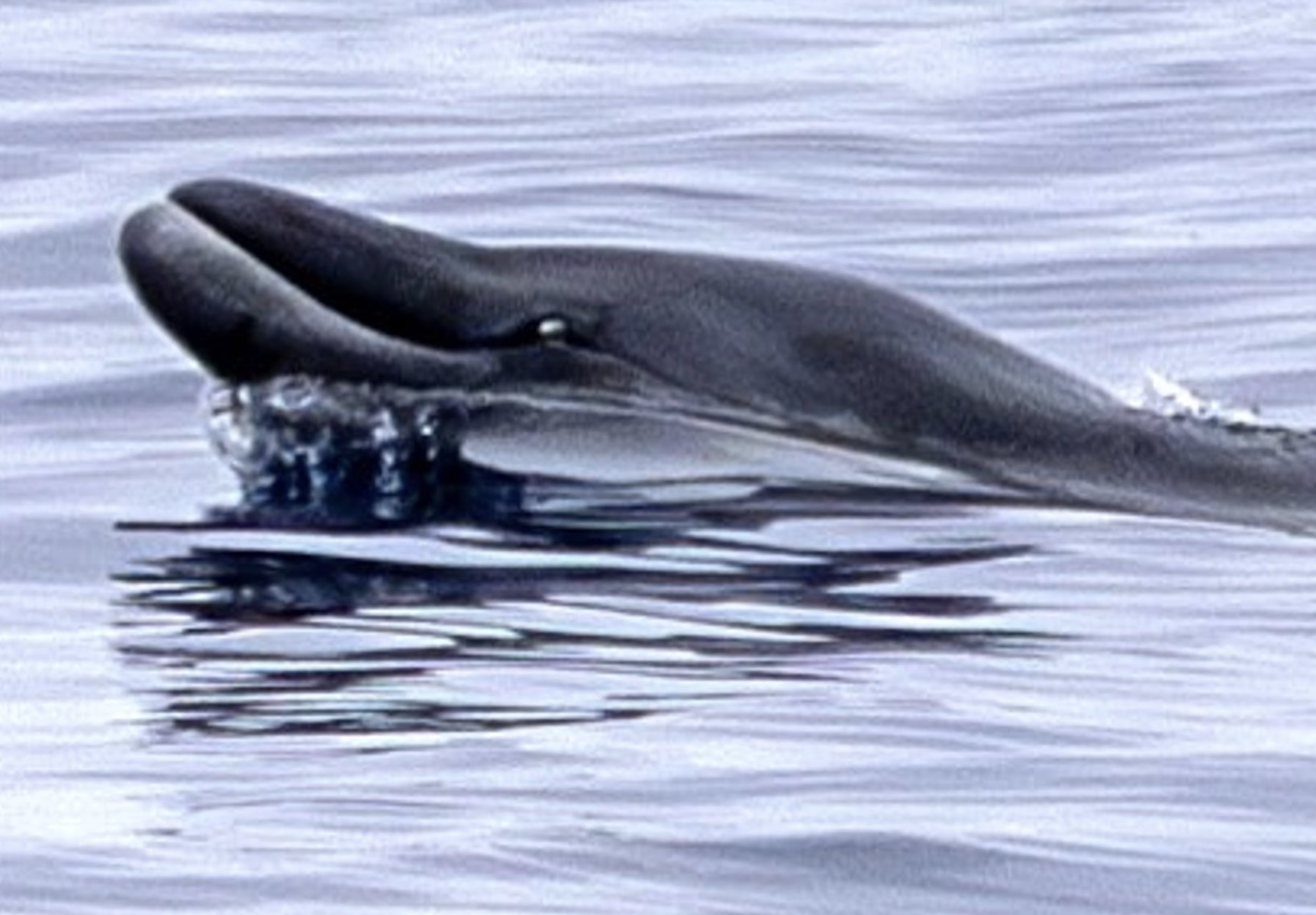
Scientists on deck were preparing for another day of searching when a call came from the bridge — whales surfacing on the starboard side. For hours, two small beaked whales appeared and vanished in the distance, long enough for brief looks but not long enough to identify them with certainty.

Then researcher Robert Pitman, a now-retired scientist from Oregon State University, managed to take a small biopsy using a crossbow fitted with a sampling arrow. The fragment of skin — about the size of a pencil eraser — would later confirm what the team suspected: the whales were ginkgo-toothed beaked whales, a species never before documented alive in the wild.

The confirmation, published later in Marine Mammal Science and led by Elizabeth Henderson of the US Naval Information Warfare Center, marked the end of a five-year search. Henderson and colleagues from Mexico and the United States had been tracking the BW43 call since 2020, originally believing it might belong to Perrin’s beaked whale, another species never seen alive.

The team returned to the same area for three seasons, first with a sailboat and later a Mexican fishing vessel, without success. In 2024, working with Oregon State University and its more advanced equipment, they were finally able to pair the acoustic signal with a live animal. The Pacific Storm towed an array of hydrophones capable of identifying specific beaked whale calls and carried high-powered binoculars suited for long-distance visual searches.

Beaked whales are among the least understood mammals on Earth. There are 24 known species, most of them rarely seen because they dive deeper and stay underwater longer than any other marine mammal. Many species have only been described from stranded carcasses, and new species continue to be identified, including one as recently as 2021.

Their sensitivity to sonar is well-documented; exposure in certain circumstances can disrupt foraging or cause rapid ascents that lead to fatal injuries similar to decompression sickness. Understanding where these species live is essential for reducing the risk from naval activities and other noise disturbances.

The biopsy itself was almost lost. Before the researchers could retrieve it from the water, an albatross attempted to take it, forcing the crew to scare the bird off before recovering the sample.

The find also shifted assumptions about the whales’ range. Ginkgo-toothed beaked whales were previously known mostly from strandings across the Pacific, particularly Japan. The team’s analysis of acoustic databases suggests they live year-round off California and northern Baja California. Two previous strandings on the west coast of North America, once considered rare anomalies, now appear consistent with this distribution.

Many beaked whale calls remain unmatched to species, and several species still have no confirmed call at all. Researchers are now working to link additional acoustic signatures with specific animals so that long-term monitoring can rely on underwater listening rather than visual sightings — often the only viable method for such elusive species.


TRENDING

First ever recorded humpback whale recording found from 1949

Unlike most recordings from this era, which were lost as early media deteriorated, the audograph discs survived and appear to have been uniquely used for underwater sound — making them a rare, possibly singular example of early ocean listening preserved from the dawn of marine acoustics.

Deep sea mining and what’s at risk

Greenpeace is calling leaked undercover footage of wastewater pouring into the Pacific ocean during deep sea mining tests “damning”. The undercover footage shown above of the latest deep sea mining tests in the Pacific Ocean shows wastewater being dumped by Canadian miner The Metals Company at the ocean surface, with unknown toxicity and ecological impacts.

Microplastics you breathe from dust in the desert

Plastics from dollar store products, packaging for our every day lives and industry have been a problem for decades, and the more scientists learn about plastic pollution the more serious the problems are shown to be for the environment and the health of all living things.

Water purifier company takes on plastic polluters at UN climate conference

Bluewater, a world leading water purification technology and solutions leader, today called on global energy, finance and environment ministers attending the UN’s Climate Conference in Madrid to take a powerful approach to tackling water quality issues that are spurring sales of polluting single-use plastic bottles of water.

Sun, sea and…solar power for Egypt’s Sharm el-Sheikh

Egypt’s tourist hotspot of Sharm el-Sheikh has plenty of...

Turning Your Energy Consultancy into an LLC: 4 Legal Steps for Founders in Texas

If you are starting a renewable energy business in Texas, learn how to start an LLC by the books.

Tracking the Impacts of a Hydroelectric Dam Along the Tigris River

For the next two months, I'll be taking a break from my usual Green Prophet posts to report on a transnational environmental issue: the Ilısu Dam currently under construction in Turkey, and the ways it will transform life along the Tigris River.

6 Payment Processors With the Fastest Onboarding for SMBs

Get your SMB up and running fast with these 6 payment processors. Compare the quickest onboarding options to start accepting customer payments without delay.

Qatar’s climate hypocrisy rides the London Underground

Qatar remains a master of doublethink—burning gas by the megaton while selling “sustainability” to a world desperate for clean air. Wake up from your slumber people.

How Quality of Hire Shapes Modern Recruitment

A 2024 survey by Deloitte found that 76% of talent leaders now consider long-term retention and workforce contribution among their most important hiring success metrics—far surpassing time-to-fill or cost-per-hire. As the expectations for new hires deepen, companies must also confront the inherent challenges in redefining and accurately measuring hiring quality.

8 Team-Building Exercises to Start the Week Off 

Team building to change the world! The best renewable energy companies are ones that function.

Thank you, LinkedIn — and what your Jobs on the Rise report means for sustainable careers

While “green jobs” aren’t always labeled as such, many of the fastest-growing roles are directly enabling the energy transition, climate resilience, and lower-carbon systems: Number one on their list is Artificial Intelligence engineers. But what does that mean? Vibe coding Claude? 

Somali pirates steal oil tankers

The pirates often stage their heists out of Somalia, a lawless country, with a weak central government that is grappling with a violent Islamist insurgency. Using speedboats that swarm the targets, the machine-gun-toting pirates take control of merchant ships and then hold the vessels, crew and cargo for ransom.

Related Articles

Popular Categories