Mediterranean Mega Fires Burn Record Land as Climate Change Fuels Extreme Heat and Drought

Mediterranean Mega Fires Burn Record Land as Climate Change Fuels Extreme Heat and Drought
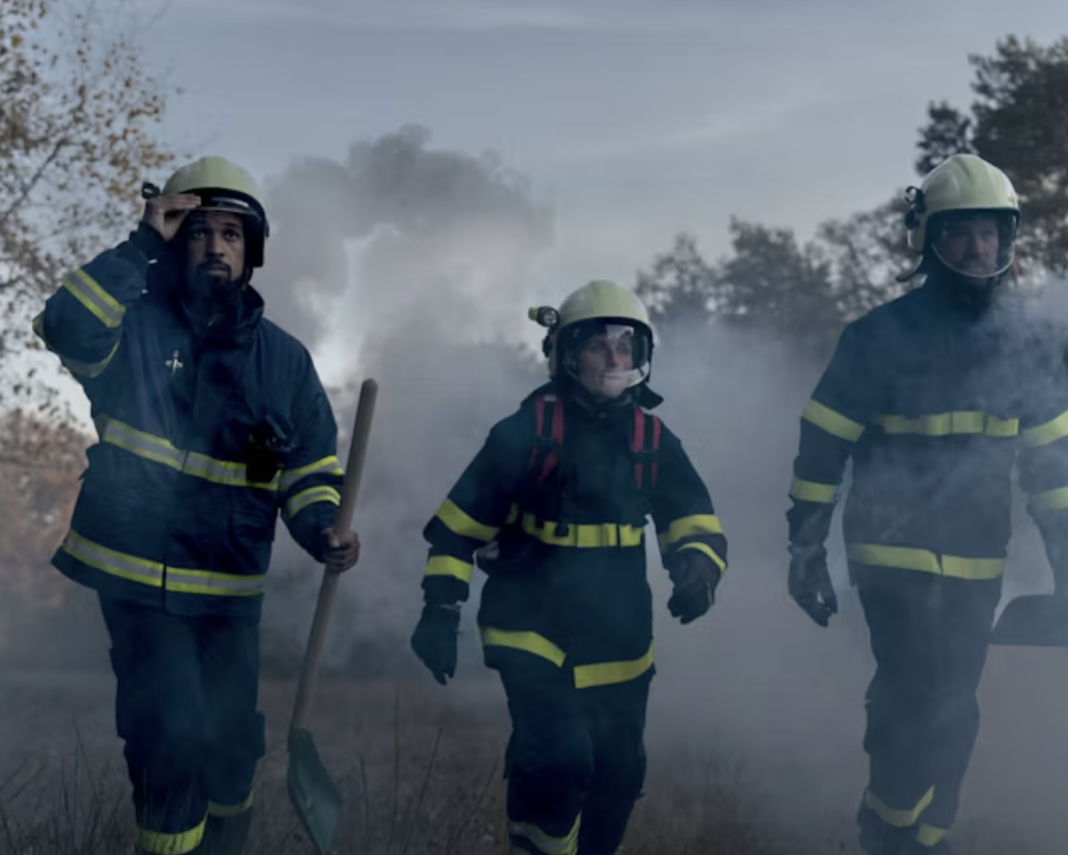
Firefighters in Europe

At the start of August, wildfires exploded across the Mediterranean basin, fueled by a wicked trio of extreme heat, drought and wind. In southern France, the Aude region around Carcassonne saw the country’s largest blaze since 1949, burning more than 16,000 hectares. In Spain, a 16-day heatwave — described by the national weather service as the most intense on record — set the stage for weeks of fire in the northwest near Zamora.

Greece endured simultaneous outbreaks around Patras, several Ionian islands, and Chios; satellites showed ~100,000 acres burned in just two days. By early September, the EU’s science hub estimated roughly one million hectares scorched across Europe in 2025 — an area bigger than Cyprus — with emissions and fire counts well above last year.

This isn’t just “bad luck.” Rapid attribution studies from World Weather Attribution find that the specific cocktail of hot, dry and windy weather that supercharged fires in Türkiye, Greece and Cyprus this summer is ~10 times more likely because of human-caused climate change. A separate WWA analysis shows extreme fire weather in Spain and Portugal is now effectively “common” in a warming world — a grim new baseline we’ll have to plan around, not a blip we can just ride out.

What it feels like on the ground

Fires today don’t behave like the fires our grandparents knew. Structures ignite faster; smoke is a toxic stew; embers leap roads like they weren’t even there. Our own reporting on smoke’s health harms — even from far-away blazes — is sobering: see how wildfire smoke damages lungs and hearts.

In Israel, we’ve documented both the on-the-line response and long-tail recovery, from front-line firefighting and evacuations to lessons from the Carmel blaze a decade ago — when, counter-intuitively, letting nature lead regrowth proved wiser than rushing in with well-meant tree plantings.

A warmer Mediterranean from climate change means longer fire seasons, drier fuels and stronger heat waves. We’ve reported on this shift for years — from early signals of Mediterranean winter drought trends to the uncomfortable truth that it’s not “just warming” but global scorching.

Add land-use change — abandoned farms, flammable plantations, dense edge housing — and fires spread faster and hit more people. Meanwhile, climate whiplash is reshaping risk across our region; the same storm systems that flood deserts are part of a new normal we covered in MENA’s flash-flood wave.

What we can do next (like, starting yesterday)

Prevention isn’t sexy, but it works. We can make homes less flammable, communities more prepared, and landscapes less primed to explode. That looks like smarter codes and materials — even bio-based ones. Our look at hemp-lime blocks found they smolder slowly and hold structure in fire tests,buying valuable minutes for firefighters  and families alike. For deeper resilience, check out Earthship-style off-grid homes that reduce dependence on fragile grids when heat waves knock power and comms offline.

We also need to treat mental resilience as climate infrastructure. Neighborhood-scale actions can ease eco-anxiety while cutting risk: placemaking to build social ties, shrinking our personal footprints, and backing projects that restore ecosystems at scale — from community-led reforestation in Iran to ambitious corporate pledges like doTERRA’s native tree plantings in Hawaii.

Policy matters too — and we’ll keep holding leaders to account (see our coverage of health-protective climate rules).

What Green Prophet readers can do

Feeling overwhelmed is normal, but it’s not the end of the story. Start where you live: create defensible space (clear brush, prune trees), swap to ember-resistant vents, and ask your city for shaded “cool corridors” and community fire drills. Learn the health basics for smoky days (N95s > cloth masks), keep HEPA purifiers on hand, and check in on elders and neighbors. Put your money and voice behind solutions: fund local ecological grazing and prescribed burns; back nature-positive jobs; and push for serious climate policy, not just slogans.

And yes, keep sharing rigorous reporting — amplify scientists, firefighters, and the communities living on the frontlines. Together, we can make the next fire season a little less brutal, and a little more survivable. Even small steps add up, promise.

Karin Kloosterman
Karin Kloostermanhttp://www.greenprophet.com
Karin Kloosterman is an award-winning journalist, innovation strategist, and founder of Green Prophet, one of the Middle East’s pioneering sustainability platforms. She has ranked in the Top 10 of Verizon innovation competitions, participated in NASA-linked challenges, and spoken worldwide on climate, food security, and future resilience. With an IoT technology patent, features in Canada’s National Post, and leadership inside teams building next-generation agricultural and planetary systems — including Mars-farming concepts — Karin operates at the intersection of storytelling, science, and systems change. She doesn’t report on the future – she helps design it. Reach out directly to [email protected]

LEAVE A REPLY

Please enter your comment!
Please enter your name here

TRENDING

Huge Fish Nursery Discovered Under Freezing Arctic Seas

In 2019, an underwater robot camera exploring the seabed...

Remilk makes cloned milk so cows don’t need to suffer and it’s hormone-free

This week, Israel’s precision-fermentation milk from Remilk is finally appearing on supermarket shelves. Staff members have been posting photos in Hebrew, smiling, tasting, and clearly enjoying the moment — not because it’s science fiction, but because it tastes like the real thing.

The US leaves 66 United Nations organizations to “put America first”

The world needs a reset and to restart well intentioned cooperation projects from start. Because right now the UN and EU projects look like software built on code from the 80s, rickety, patched, slow to adapt, and prone to crashing under the weight of outdated assumptions.

Is It Safe to Be Around Artificial Snow?

The bacterium used in Snomax is non-viable (it is killed first) and it cannot grow at human body temperature. Regulatory reviews in Europe and North America have not found evidence that it causes infectious disease in humans. But not a lot of studies have been done.

Why this French ski village is being stalked by a nerve disease

Researchers found that this French ski village was known for eating this one thing

Qatar’s climate hypocrisy rides the London Underground

Qatar remains a master of doublethink—burning gas by the megaton while selling “sustainability” to a world desperate for clean air. Wake up from your slumber people.

How Quality of Hire Shapes Modern Recruitment

A 2024 survey by Deloitte found that 76% of talent leaders now consider long-term retention and workforce contribution among their most important hiring success metrics—far surpassing time-to-fill or cost-per-hire. As the expectations for new hires deepen, companies must also confront the inherent challenges in redefining and accurately measuring hiring quality.

8 Team-Building Exercises to Start the Week Off 

Team building to change the world! The best renewable energy companies are ones that function.

Thank you, LinkedIn — and what your Jobs on the Rise report means for sustainable careers

While “green jobs” aren’t always labeled as such, many of the fastest-growing roles are directly enabling the energy transition, climate resilience, and lower-carbon systems: Number one on their list is Artificial Intelligence engineers. But what does that mean? Vibe coding Claude? 

Somali pirates steal oil tankers

The pirates often stage their heists out of Somalia, a lawless country, with a weak central government that is grappling with a violent Islamist insurgency. Using speedboats that swarm the targets, the machine-gun-toting pirates take control of merchant ships and then hold the vessels, crew and cargo for ransom.

Leopoldo Alejandro Betancourt López Turned Ocean Plastic Into Profitable Sunglasses

Few fashion accessories carry the environmental burden of sunglasses. Most frames are constructed from petroleum-based plastics and acrylic polymers that linger in landfills for centuries, shedding microplastics into soil and waterways long after they've been discarded. Leopoldo Alejandro Betancourt López, president of the Spanish eyewear brand Hawkers, saw this problem differently than most industry executives.

Why Dr. Tony Jacob Sees Texas Business Egos as Warning Signs

Everything's bigger in Texas. Except business egos.  Dr. Tony Jacob figured...

Israel and America Sign Renewable Energy Cooperation Deal

Other announcements made at the conference include the Timna Renewable Energy Park, which will be a center for R&D, and the AORA Solar Thermal Module at Kibbutz Samar, the world's first commercial hybrid solar gas-turbine power plant that is already nearing completion. Solel Solar Systems announced it was beginning construction of a 50 MW solar field in Lebrija, Spain, and Brightsource Energy made a pre-conference announcement that it had inked the world's largest solar deal to date with Southern California Edison (SCE).

Related Articles

Popular Categories