

Moving to Mars? He’s a new fungus-based sunscreen to protect you from gamma radiation
Planning on traveling aboard SpaceX on a trip to Mars? An American lab just found a new potential sunscreen that creates protective melanin, a low-cost alternative to squid ink. It can be grown on space labs and used on Mars.
Here is the story!
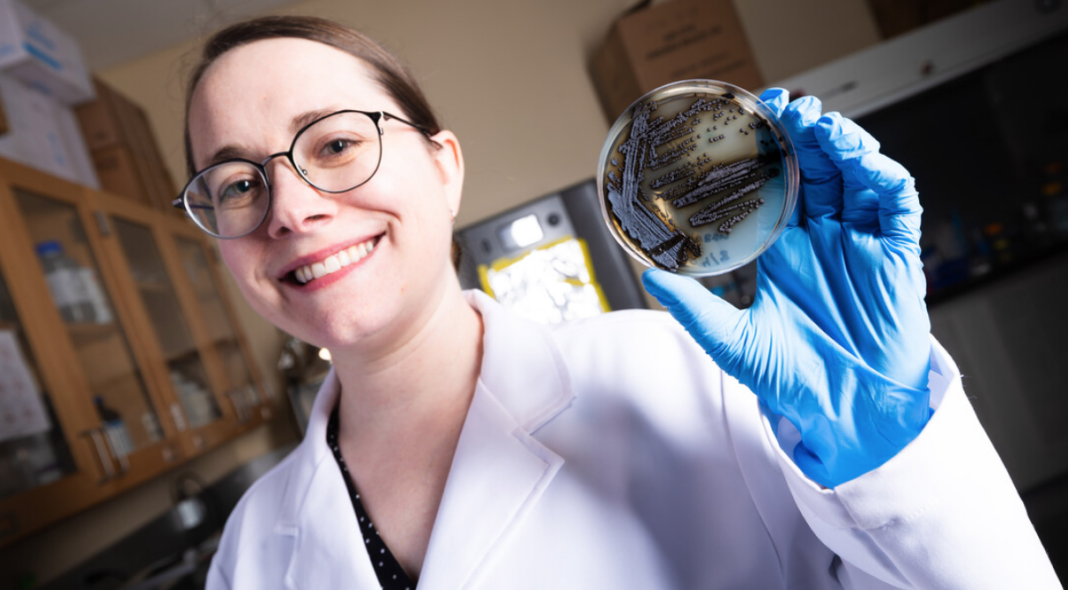
Several years ago, Erin Carr’s doctoral adviser Steven Harris handed her bags of soil collected from the soil crust of a cold British Columbian desert. She went to work on it, suspending it in liquid, plating it onto a growth medium and treating it with antibiotics and antifungals. Then, she replated the tiny black dots that emerged.
Those dots turned out to be a novel fungus — Exophiala viscosa, though Carr dubbed it Goopy — that may just be a resource for large-scale, cost-effective production of melanin, with applications in ultraviolet-protective products and advanced materials for aerospace and other industries.
Related: Mars found a way to store carbon, can we?
Melanin is a natural pigment that determines the color of human skin, hair and eyes. Humans produce it with specialized cells called melanocytes and its concentration directly impacts skin tone, with more melanin resulting in darker skin. Melanin also plays a crucial role in a number of human health concerns: It protects the skin from harmful UV radiation, helping prevent skin cancer and other cancers and reducing inflammation associated with diseases such as diabetes and fatty liver disease.
Acquiring large quantities of melanin is problematic. Its primary source is squid ink, which requires a squid’s death to obtain small amounts, at a cost of about $300 per gram, said Carr, a postdoctoral research associate at Rajib Saha’s Systems and Synthetic Biology Lab in the Department of Chemical and Biomolecular Engineering.
Related: she’s growing food on Mars
Certain fungi in cold deserts also naturally produce melanin, incorporating it into cell walls and releasing it under certain conditions. That is where Goopy comes in, said Rajib Saha, Richard L. and Carol S. McNeel Associate Professor of Chemical and Biomolecular Engineering and the principal investigator on a three-year, $1,032,070 grant from the National Science Foundation to study the fungi’s potential in melanin production.
The difference between E. viscosa’s production of melanin and other fungi’s is that it “not only produces melanin and not only stores melanin in the membrane, it transports it out,” Saha said.
It is an unusual behavior that could make E. viscosa useful in large-scale melanin production.
Other fungi produce and store melanin but do not excrete it.
One hypothesis is that E. viscosa is partnering with photosynthetic organisms also found in that cold desert crust environment, such as algae and cyanobacteria, and within that relationship, melanin is being exchanged for essential nutrients, Carr said.
Because melanin may be an essential biomolecule for the survival of E. viscosa, its production of the substance may function more as a primary metabolite rather than a secondary, non-essential metabolite, she added.
Saha said the research aims to investigate this symbiosis to uncover the triggers regulating melanin production.
Carr is growing the fungus in a triculture that includes algae and cyanobacteria. Saha and his grad students will run computer metabolic modeling to help optimize and manipulate melanin pathways in the fungus and identify transcription factors used to regulate melanin production.
“We want to figure out how to optimize and increase the melanin secreted out of the cell so that we can use that melanin to do a wide variety of beneficial things for humanity,” Carr said.
That could mean adding it to sunscreen or textiles for UV radiation protection. It could be useful for space travel since melanin has been known to protect against gamma radiation. Melanin also might be useful in bioremediation of so-called “forever chemicals” and toxic metals that linger in the environment.