Arab agricultural land is on the brink

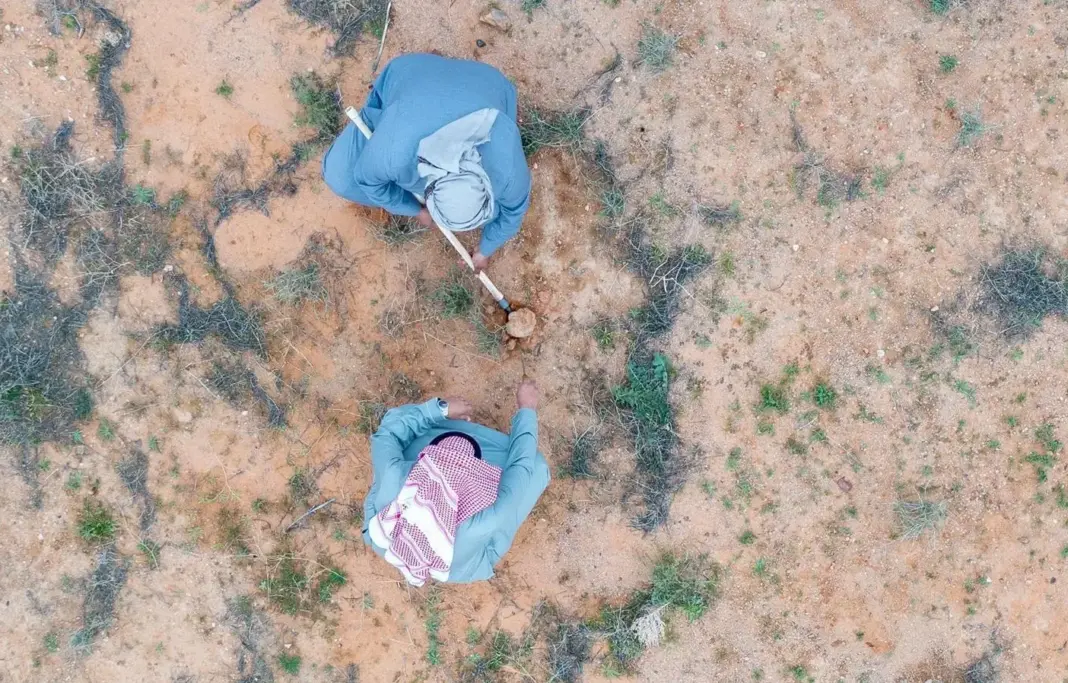
Saudi Arabia is home to desert truffles.
Truffle hunting in the deserts of Saudi Arabia

A new study by the UN’s Food and Agriculture Organization (FAO) paints a stark picture of agricultural land degradation, particularly in the Arab region. More than 46 million hectares—nearly two-thirds of all land suffering human-induced damage in the region—are now at risk. The findings, published in Agriculture (MDPI), stress the urgent need to restore degraded land to safeguard food supplies, especially where climate pressures are mounting.

The Arab Spring started because of the price of bread and the lack of water resources to grow food. The civil war in Syria began for the same reasons. As the Arab world gets drier, conflicts in countries such as Iraq, Afghanistan, Iran and Pakistan will only get more intense.

Globally, an estimated 1.66 billion hectares of land have been degraded by human activities such as deforestation, overgrazing, mismanaged irrigation, and heavy chemical use. Over 60 percent of that damage falls on croplands and pastures—the soils that feed 95 percent of the world’s population. If allowed to worsen, degradation could undercut entire agrifood systems and the communities that depend on them.

Related: this greenhouse technology grows food on salty aquifers 

Across the Arab world, croplands face a perfect storm of stressors. Excessive fertilizers and pesticides erode soil ecology. Poor drainage and over-irrigation drive salinization, leaving fields crusted with salt. Rising temperatures, dwindling groundwater, and more frequent sand-and-dust storms—all amplified by climate change—compound the crisis. These are unmistakably human-driven pressures, and they are accelerating. Consider that Morocco lost half its wheat last year from drought. How many more migrants and climate refugees from the Middle East and North Africa can Europe accept? The solution is to help.

Less than 4 percent of degraded land in the Arab region is currently earmarked for restoration. FAO analysts calculate that rehabilitating 26 million hectares of worn-out cropland could trim yield gaps by as much as 50 percent for oil crops and lift cereals, roots, and tubers toward their full potential—a direct boost to local food security and rural incomes.

The study urges governments, farmers, investors, and researchers to adopt integrated soil, water, and land-management strategies designed to stop further degradation and rebuild fertility. Rather than relying on one-off projects, it recommends coordinated regional programs that share data, finance, and know-how—tailored to the diverse ecological zones from Morocco’s Atlantic coast to Iraq’s river valleys. Israel has water technologies from water companies such as Netafim to help rip irrigation deliver more drops per crop.

Momentum is growing. Recent ministerial meetings in Riyadh committed to ambitious restoration targets, and the UN’s FAO-backed NENA Regional Investment Framework for Ecosystem Restoration is lining up “champion countries” to pilot scalable projects. Innovative tools such as the Suitability Crop Platform—an open database of soil profiles, climate metrics, and crop requirements—are making it easier for farmers and planners to match the right crops to recovering lands.

See this museum of Middle East soil in the UAE

Soil bank in the UAE
A soil bank in the UAE

Healthy soils do more than grow food. They store carbon, regulate water, and support biodiversity—services that underpin every other climate-adaptation effort. By restoring degraded fields, countries in the Arab region can build jobs, reduce rural poverty, and bolster resilience against heat and drought. The lesson is clear: investing in the ground beneath our feet is the fastest way to secure food sovereignty in a hotter, drier future.

Karin Kloosterman
Karin Kloostermanhttp://www.greenprophet.com
Karin Kloosterman is an award-winning journalist, innovation strategist, and founder of Green Prophet, one of the Middle East’s pioneering sustainability platforms. She has ranked in the Top 10 of Verizon innovation competitions, participated in NASA-linked challenges, and spoken worldwide on climate, food security, and future resilience. With an IoT technology patent, features in Canada’s National Post, and leadership inside teams building next-generation agricultural and planetary systems — including Mars-farming concepts — Karin operates at the intersection of storytelling, science, and systems change. She doesn’t report on the future – she helps design it. Reach out directly to [email protected]

LEAVE A REPLY

Please enter your comment!
Please enter your name here

TRENDING

Farm To Table Israel Connects People To The Land

Farm To Table Israel is transforming the traditional dining experience into a hands-on journey.

Sink holes from over-watering farmers’ fields

Sinkholes are rapidly appearing in Turkey’s central Anatolian farming region, particularly around Konya and Karapınar. These giant gaping holes in the ground in areas of farmland, known locally as obruk, are not random geological events. They are linked to prolonged drought, climate-driven heat stress, and heavy groundwater extraction for agriculture in one of the country’s most important breadbaskets.

Iran’s holiest city about to run dry as terror chosen over water management

Iran’s second-largest city, Mashhad, is facing an acute water emergency after dam reservoirs feeding the city fell below three percent capacity, according to Iranian state and local media. Officials warn that without rainfall or improved inflows from neighboring Afghanistan, the city’s supply could soon collapse.

Lizard tail stew, dhub mansaf, is a favored folk dish in Saudi Arabia

By exploring forgotten folk dishes like lizard stew, Green Prophet continues to connect the dots between culture, ecology, and the future of sustainable living in the Middle East.

Afghan Taxis Get Ancient Persian A/C Hack—And It Works Better Than Yours

The Afghan windcatcher car cooler isn’t just clever. It’s low-cost climate adaptation. With rising global temperatures and millions of cars still without functioning air con, it’s a design-for-the-rest-of-us moment. A punk rock move in a world of overdesigned heat tech. Plus, it’s deeply sustainable: no refrigerants, no increased fuel use, no carbon guilt. Just water, airflow, and a little DIY spirit.

Qatar’s climate hypocrisy rides the London Underground

Qatar remains a master of doublethink—burning gas by the megaton while selling “sustainability” to a world desperate for clean air. Wake up from your slumber people.

How Quality of Hire Shapes Modern Recruitment

A 2024 survey by Deloitte found that 76% of talent leaders now consider long-term retention and workforce contribution among their most important hiring success metrics—far surpassing time-to-fill or cost-per-hire. As the expectations for new hires deepen, companies must also confront the inherent challenges in redefining and accurately measuring hiring quality.

8 Team-Building Exercises to Start the Week Off 

Team building to change the world! The best renewable energy companies are ones that function.

Thank you, LinkedIn — and what your Jobs on the Rise report means for sustainable careers

While “green jobs” aren’t always labeled as such, many of the fastest-growing roles are directly enabling the energy transition, climate resilience, and lower-carbon systems: Number one on their list is Artificial Intelligence engineers. But what does that mean? Vibe coding Claude? 

Somali pirates steal oil tankers

The pirates often stage their heists out of Somalia, a lawless country, with a weak central government that is grappling with a violent Islamist insurgency. Using speedboats that swarm the targets, the machine-gun-toting pirates take control of merchant ships and then hold the vessels, crew and cargo for ransom.

Leopoldo Alejandro Betancourt López Turned Ocean Plastic Into Profitable Sunglasses

Few fashion accessories carry the environmental burden of sunglasses. Most frames are constructed from petroleum-based plastics and acrylic polymers that linger in landfills for centuries, shedding microplastics into soil and waterways long after they've been discarded. Leopoldo Alejandro Betancourt López, president of the Spanish eyewear brand Hawkers, saw this problem differently than most industry executives.

Why Dr. Tony Jacob Sees Texas Business Egos as Warning Signs

Everything's bigger in Texas. Except business egos.  Dr. Tony Jacob figured...

Israel and America Sign Renewable Energy Cooperation Deal

Other announcements made at the conference include the Timna Renewable Energy Park, which will be a center for R&D, and the AORA Solar Thermal Module at Kibbutz Samar, the world's first commercial hybrid solar gas-turbine power plant that is already nearing completion. Solel Solar Systems announced it was beginning construction of a 50 MW solar field in Lebrija, Spain, and Brightsource Energy made a pre-conference announcement that it had inked the world's largest solar deal to date with Southern California Edison (SCE).

Related Articles

Popular Categories