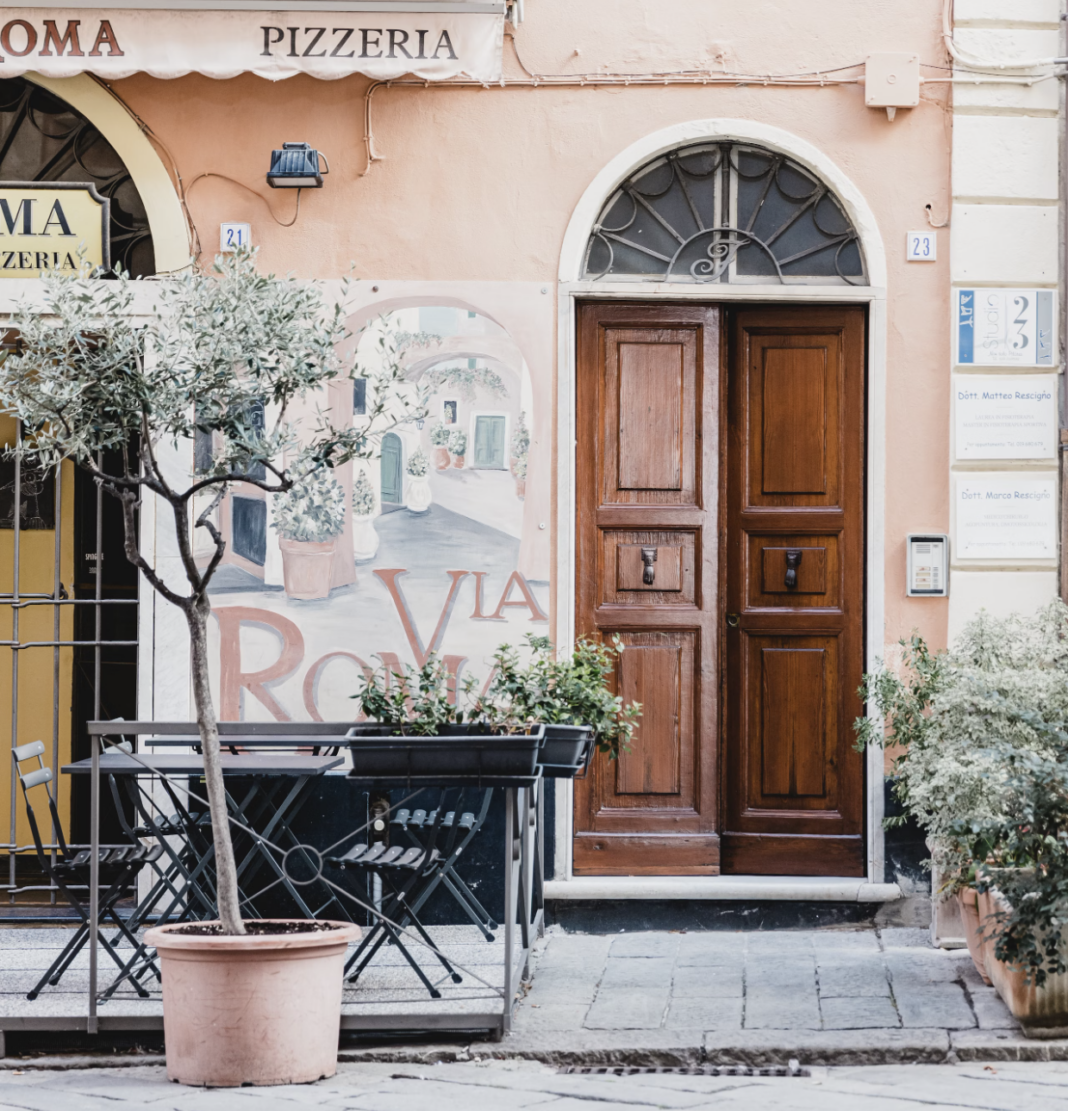


Environmentalists have been stressing the problems of modern construction and architecture for decades. Some of the biggest concerns are the use of concrete –– its impact on sand and carbon emissions, and its poor thermal capabilities. Or the fact that local materials just aren’t used enough. If you look at the rapid expansion of cities like Dubai, the problems are obvious: starchitects brought in from abroad to build a glittering city meant to support “the high life” and create a feeling of abundance among the sand dunes. As though sand dunes and deserts aren’t glorious enough.
Dubai has created the Palm Jebel man-made islands with un-circulating swamps and a Burj mega-tower that is built so trucks need to pump out sewage daily. These are examples of unsustainable architecture. Can architects, and students of architecture do better for planet and people? Yes, and the answers are somewhere in the bible of vernacular architecture called Habitat: Vernacular Architecture for a Changing World, edited by architect Sandra Piesik with contributions from about 100 architects who specialise in geographic regions, climates, and local materials.
What you get in Habitat, updated just last year, is a world of possibilities as we look forward to new sustainable practices that mesh with nature and the humanity in us. You get proven examples of low-cost sustainable architecture for every geographic and climatic region on this planet. You also get modern takes of vernacular values, and applications providing inspiration for architecture firms young and old.

Your life as an architect or student can not be complete without owning a copy of this masterpiece of a book.
The problem I see in architecture today is a disconnect between architects, the investors in architecture and the approach to culture and place. Big firms still get the highest bids for so-called sustainable architecture, with firms like Foster + Partners and Zaha Hadid‘s firm winning the bids even when the plans for cities in Saudi Arabia could mean wiping out an island’s ecosystem or making no sense for the climate. There will be ski hills in the hot desert or a linear city that transects a mile of desert on the Red Sea. We learn from the ultra-modern zero-waste Masdar City that no-one wants to live in futuristic ideas alone. We also learn from Hasan Fathy that a local architect’s vision of mud housing may not fit the cultural needs of a people. How can we create a better fit? HABITAT offers some clues.
If you are an architect who wants a crash course on sustainable architecture this book is an antidote to the troubles to today’s senseless planning and construction industry.

What I get from the book as I was thumbing through it: people need a human-scale approach to housing: that’s why we seek balconies, terraces and small gardens in the city. We feel better around trees and nature in any instance, and if you have had the chance to sleep in a home made from natural materials, you will agree it impacts your sleep and overall mood.
I’ve stayed in vernacular homes in Normandy, France (built with no nails); in mud and stone palaces in Syria, in caves in Cappadocia, in my own vernacularly built pioneer home in Canada; in Bedouin tents in Israel; I’ve stayed in strawbale homes with Bill and Athena Steen in Arizona, and I’d spent plenty of nights bamboo huts and homes in Thailand.

What links all these remarkable dwellings is the local: homes and shelter built without architects or designers, built with local materials such as stones and wood, wool, mud and bamboo, and in a way anchored with ancient wisdom that kept climate in mind because that’s how people survived.

Every architecture student, practitioner and teacher needs to read Habitat: Vernacular Architecture for a Changing World by Thames & Hudson: It is a breathtaking and astounding encyclopaedia of natural building that can save our planet. Professionally speaking indigenous architecture is also called vernacular architecture. Vernacular is a great way to describe indigenous architecture as it can include materials from the built environment, as we see in images and descriptions of slums in Brazil and Africa.


Habitat, recently updated in May 2023 since its original publication in 2017, and edited by architect Sandra Piesik, shows you the power of a dedicated publishing house in this book. It is a landmark publication signalling to every nation and people in the world to start cataloguing their vernacular before it it is lost. HABITAT can be the basis for a series of vernacular architecture books from every corner of the world.
Habitat contains over 1000 illustration, organised by the five major climate zones, covering polar, temperate, tropical, desert and continental, and more than eighty countries worldwide. The book reveals how people and cultures have adapted to their environment to make the best use of indigenous materials and construction techniques, and stresses the importance of preserving disappearing craftsmanship and local knowledge before it is too late. It is an invaluable resource document for the future generation who will shape our built environment.

Over in the Middle East we know that Hassan Fathy devoted decades of his life to building New Gourna, a model as architecture for the people. His experiment worked as a concept but did not spread as much as he would have wanted. An almost 500 pages of this book, includes the vernacular greats like Fathy, but it also serves to show the reader highly unusual and sometimes temporary structures built by tribes in the jungle, like the stilt houses of the Korowai people in New Guinea.


What gives the book credibility is the approximate 100 authors and researchers, leaders in their fields of sustainable architecture giving an historical, climatic and materials overview to their geographical sections. If you are dealing with climates and materials you can search in the notes and bibliography according to geography, climate regions, learning more than you thought you could know about local architecture around the world.

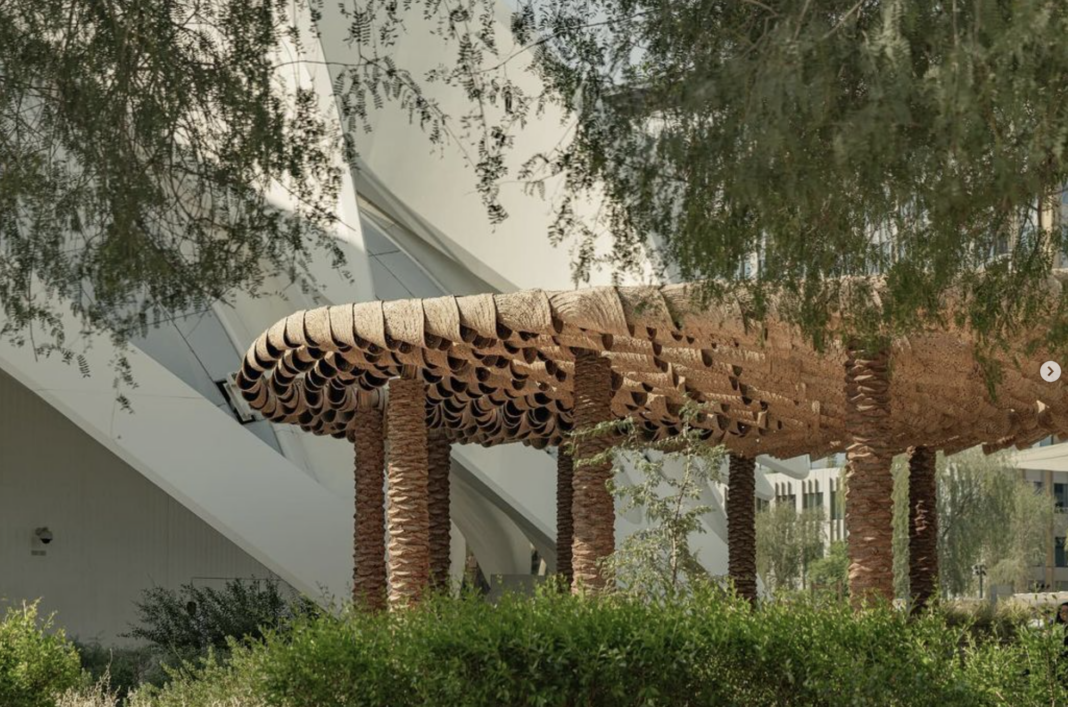
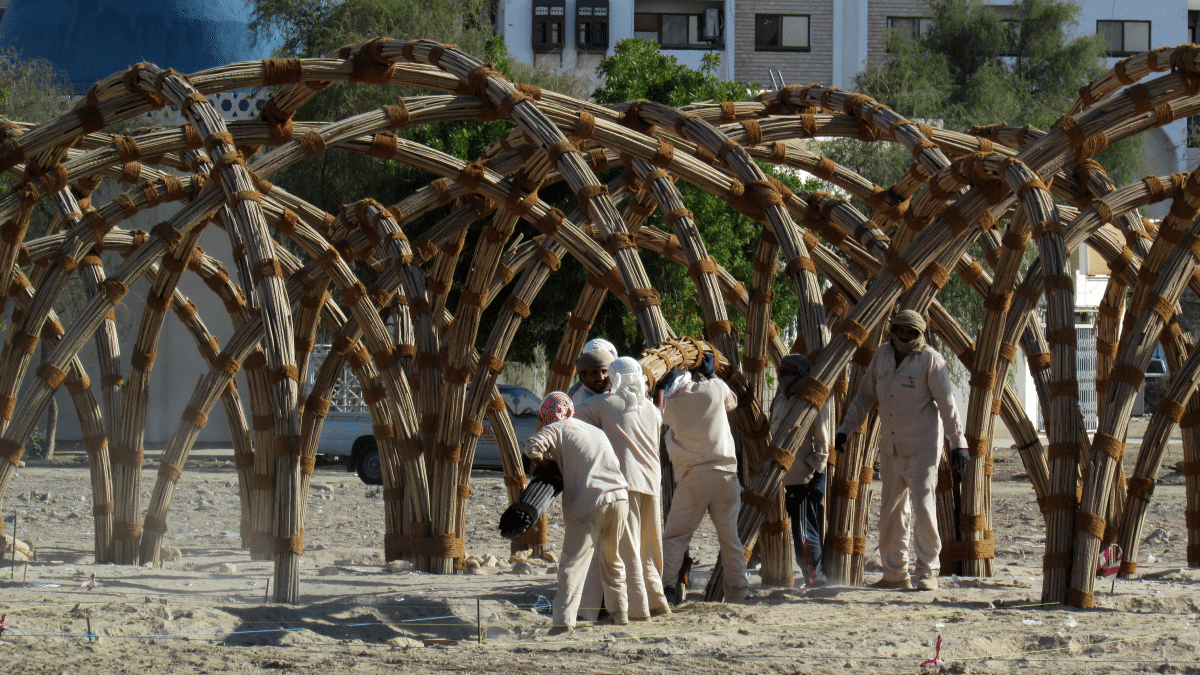
A series of helpful essays and photos gives us a glance at how we can apply contemporary vernacular in today’s buildings, with a look at Morocco’s Technology School of Guelmim or Sabla’s Palm Leaf Shelter’s in Abu Dhabi. If I have one complaint about Habitat is that the photos are too incredible, the essays too information-filled that it makes reading the book from cover to cover an impossible task. It is the grandmother book to Lo-TEK, a book I own that covers radical indigenism in building, as the author puts it, or rather, radical ways to build using natural building materials and knowledge at hand.

Productive healthy, happy people need a roof over their heads –– one that offers an honorable, comfortable and secure place to live is something that everyone everywhere needs. If you have traveled to any desert in the Middle East or even Egypt, you will see people living in hobbled-together tin shacks, barely keeping out the freezing wind at night or the debilitating sun by day. Better-loved vernacular practices can show the people how to build better, and maintain the homes with local materials.
Don’t think this is just an idea for developing countries. The tiny home and global nomad movements in America, Europe and Canada are fuelled by economics. People don’t want to spend their lives working for the home they don’t get time to live in. People want to live not to spend their lives working.

An interview with the editor of HABITAT Sandra Piesek

Sandra Piesik is an award-winning architect, author, and scientist specialising in a diverse range of subjects from art and design to the implementation of global sustainable legislation, nature-based solutions, innovation, technology transfer, and contemporary adaptation of traditional knowledge. She is the founder of 3 ideas, an Amsterdam-based consultancy, a member of the New European Bauhaus EU initiative, an advisor to UNFCCC, and a former senior consultant to UNFCCC, UNCCD, and UN-HABITAT Global Solutions Division on territorial integration. She’s also edited a book on Arish – Palm leaf architecture.
Here is our interview with her:
What inspired you to start this massive undertaking of cataloguing the world’s vernacular architecture.
I was invited by Thames & Hudson to edit HABITAT in London in 2012, following our previous book ‘Arish: Palm – Leaf Architecture’, which coincided with the first European Exhibition on Date Palm Leaf Architecture in the United Arab Emirates at The Royal Geographical Society in London in 2012. The genesis of understanding vernacular architecture came from my research in the UAE focused on date palm architecture and conviction that it holds solutions to some of the pressing challenges of our times.
HABITAT seems very neutral. What is your approach with the book?
HABITAT is structured around five climate zones of the planet, based on the Köppen Geiger climate classification. We focused on the geography and ecosystems, and by doing so we provided evidence of an intrinsic relationship and co-dependency of the built environment with individual climate zones, their natural resources, and the built environment. I have to credit 143 contributors from over 50 countries and the Thames & Hudson editorial team.
Despite your neutrality, do you have 3 favorite vernacular architects? Who are they?
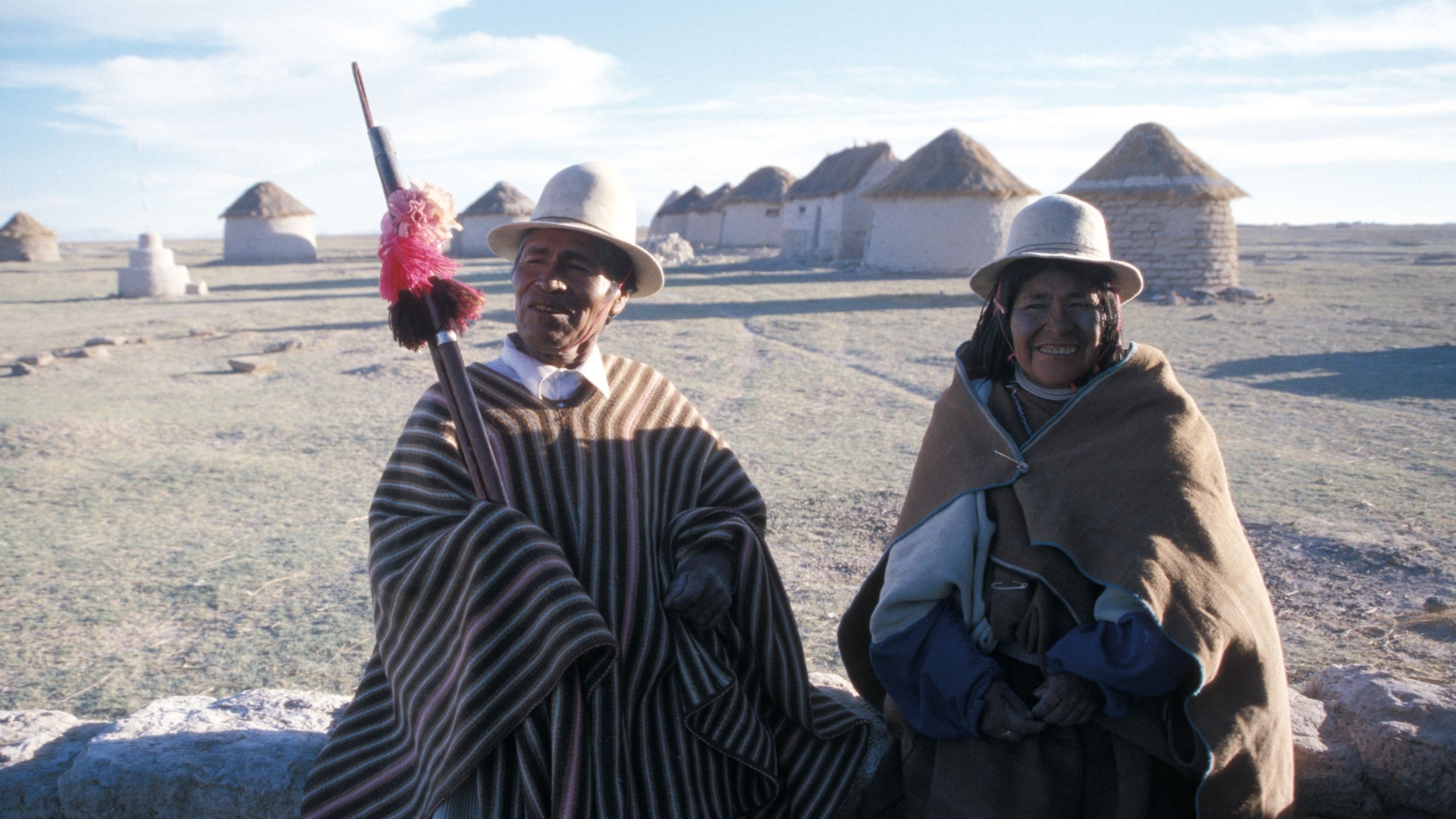
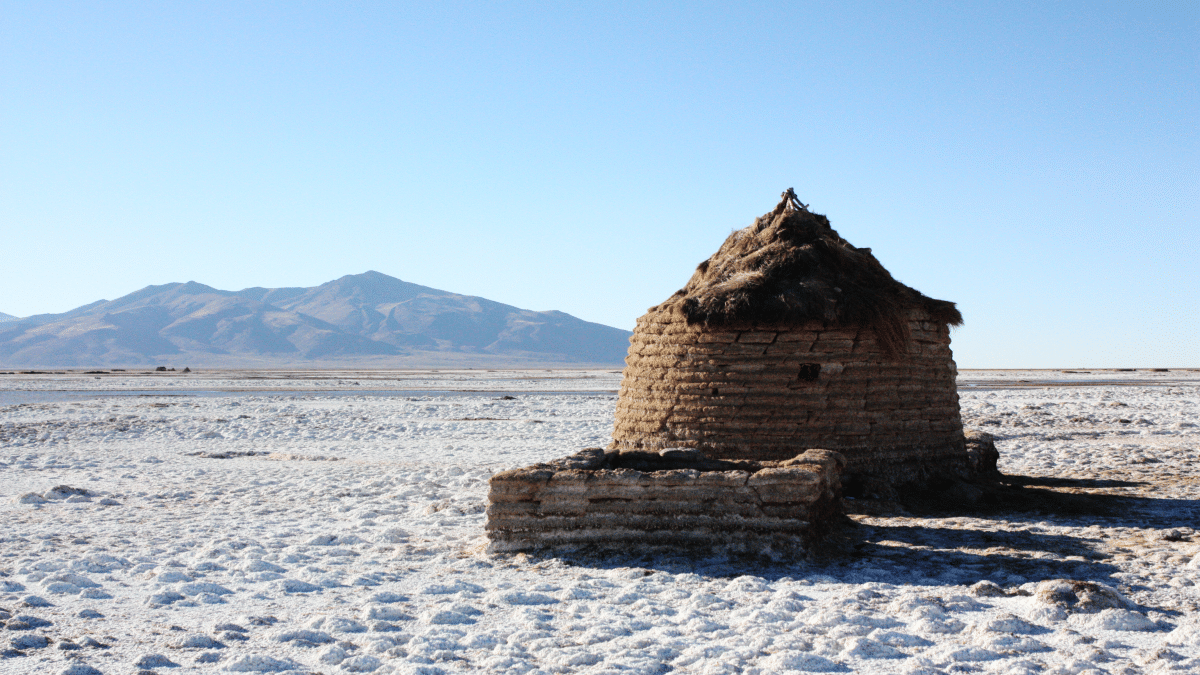
Vernacular architecture is ‘architecture without architects’ in other words indigenous peoples of the past were all architects creating bio-design masterpieces based on one fundamental skill: their capacity to observe nature. My favorite case studies are from Bolivia, where Chipaya indigenous peoples worked as civil engineers at the regional scale redirecting rivers and intervening in the ecology of the salt flats in Bolivia, vernacular architecture there is a by-product of environmental activities. In China, Kam communities embraced agroforestry, and their spectacular drum towers as well as timber architecture reflect the regional bioeconomy. I must also mention Liwa Oasis in the United Arab Emirates and a date palm leaf architecture by Bedouin tribes of the Rub Al Khali desert, whom I had the privilege to meet in person.
We created an online exhibition: ‘HABITAT Embracing Change in the post-2030 Future’ in collaboration with G-STIC and all three case studies are mentioned there as well in addition to HABITAT.
What are the biggest lessons architecture students can take from this book?
The intrinsic relationship and interconnectedness of the built environment with its natural ecosystems and climate zones. Contextualization of architecture and urbanism within bio-economic activities, giving birth to bio-circular economy and bioregional approaches 12,000 years ago. Frugal innovation derived from the observation of nature and shaping an identity of the place through ornamentation and design.
We see catastrophic situations for refugees and migrants around the world. In Gaza, Syria, Afghanistan. What kinds of projects could scale quickly to get decent and local housing for people in a crisis? Do you have any thoughts for architects building shelter?
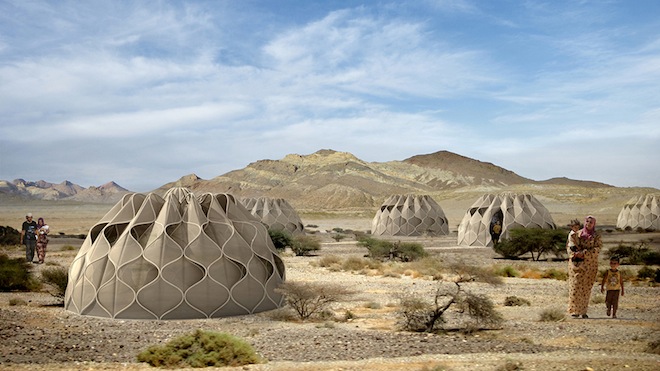
The fundamental issue here is to bring geography to the discussion on climate change, which has been absent in recent years. Understanding the interconnectedness between climate change, agriculture, provision of jobs, and livelihood strategies would reduce migration and allow for holistic approaches. The demand for emergency accommodation is increasing all over the world. Cities like New York work within the existing urban fabric, historically the Gulf basin cities provided accommodation for the refugees in the peri-urban areas and what is needed are livelihood strategies in addition to housing alone, as well as a socio-economic mix to building shelters.
What would you like to see less of in architecture?
De-globalization and de-westernisation of architecture will lead us to new bio-regional models of urbanism which the planet and its peoples desperately need. Narrow and sectorial approaches to the built environment limit our capacity to address the multidimensional challenges of our time, and I hope that the future will bring broader perspectives. I also think that quantitative approaches to sustainability focusing purely on metrics limit the role of architects’ qualitative and creative approaches and this is what historically we as architects had to offer.
What would you like to see more of?
I would like to see more bio-regional initiatives such as the New European Bauhaus embracing sustainability, inclusion, and beauty adopted by various regions across the world within their own ecological, cultural, and social domains. I would like to see more of the plurality of approaches, where once again we will be able to co-create new forms of regional cultures. I hope that in 2024 and the future, we will be able to base all our actions and decisions on the positive impact we are making on nature and each other.
About the publisher of Habitat
Thames & Hudson is a publisher of illustrated books in all visually creative categories: art, architecture, design, photography, fashion, film, and the performing arts. It also publishes books on archaeology, history, and popular culture.
More Vernacular Architecture on Green Prophet
Other earthen buildings in the Middle East include adobe (mud brick) houses in the Marshes of Iraq, the tallest city of Shibam in Yemen, Bam in Iran as well as the eco-friendly architecture of the Egyptian architect Hassan Fathy.
Nader Khahili Homes for Palestinians
Palm Leaf Habitat at Dubai Design week