Swimmer finds ancient Roman treasure off Israel’s coast

ancient marble treasure under the sea
Ancient marble treasure found under the sea closes questions about how Roman structures were built in the Near East. They are being studied by marine archeologists

Thousands of years ago there was an active route of ships sailing between Europe and the Holy Land on the Mediterranean Sea. Here are there sea storms wiped out ships along with their contents before they reached shore. Treasure seekers still find surprising troves of ancient goods deep down under the sea.

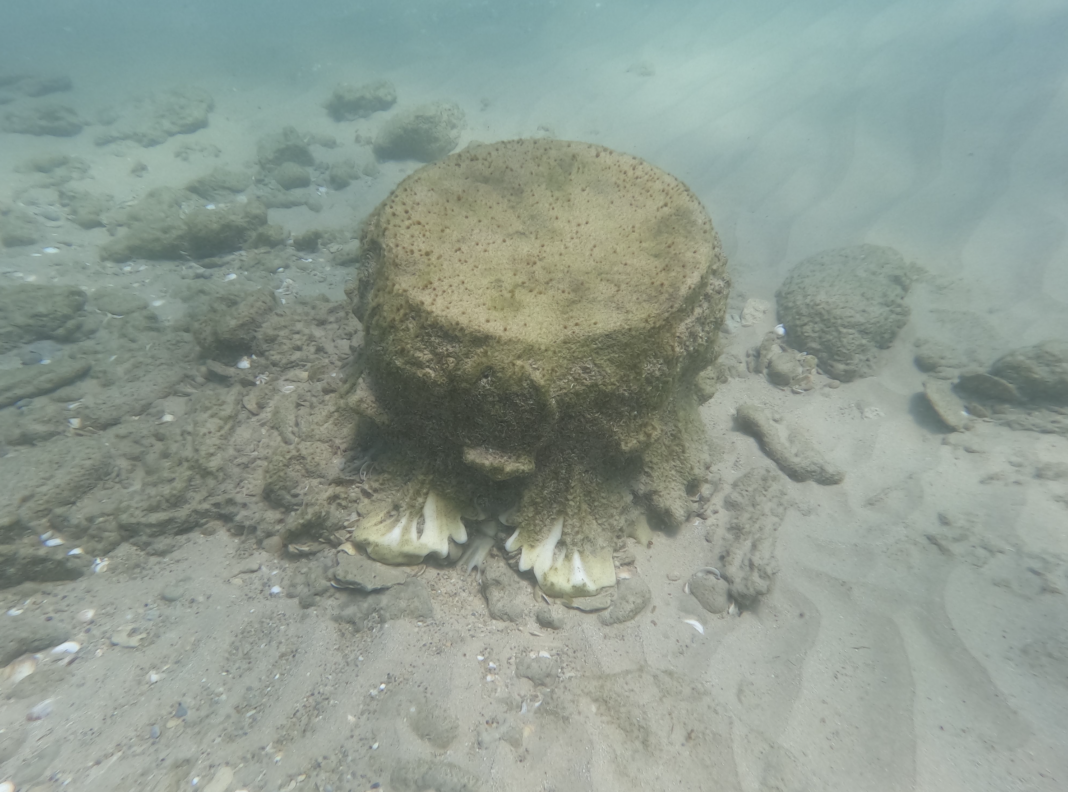
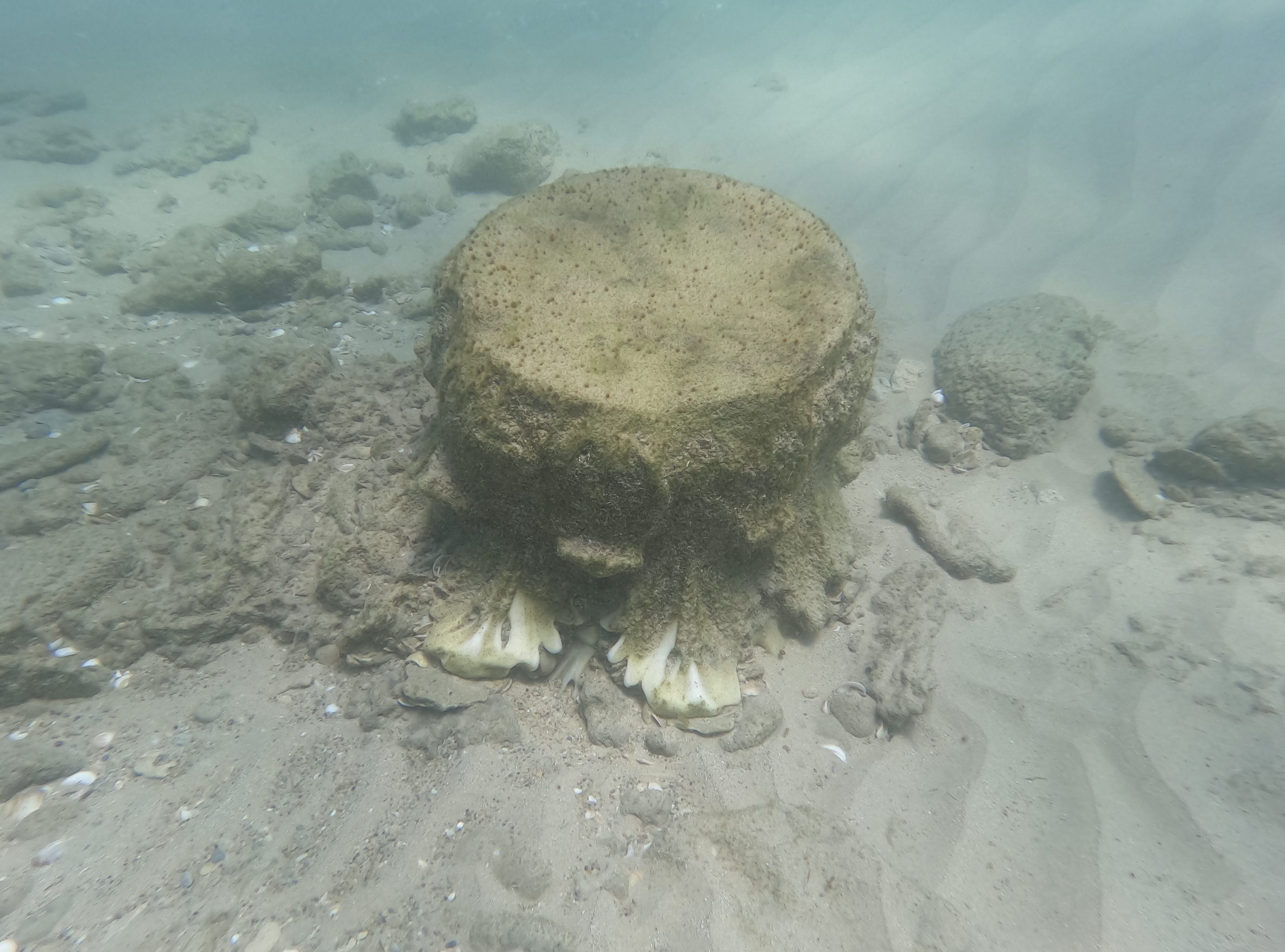
In Beit Yanai, a small coastal village north of Netanya, a swimmer uncovered an enormous and rare cargo that sank in the sea. The 1800-year old marble columns were transported on a merchant ship from the Roman era and didn’t make. 

This is the first cargo shipment of its kind known in the Eastern Mediterranean and included 44 tons of Corinthian capitals adorned with plant motifs; partially carved capitals, and marble columns up to 6 meters long never made to Israel’s shores. These valuable architectural pieces were meant for a temple or a theatre but a storm stopped the shipment. 

The treasure was only about 200 meters from the seashore and was found by a man named Gideon Harris, while swimming out in the sea. 

The Israel Antiquity Authorities announced that they’d known about the cargo for some time but had lost track of its exact location. Then they sent marine archeologists: “The recent storms must have exposed the cargo, and thanks to Gideon’s important report, we have been able to register its location, and carry out preliminary archaeological investigations, which will lead to a more in-depth research project,” says Koby Sharvit, Director of the underwater archaeology unit at the Israel Antiquities Authority.  

From the position the site formation and angle of the cargo on the seabed, it is evident that the ship bearing the cargo was wrecked after the ship’s crew encountered a storm in the shallow waters, and dropped anchor in a desperate effort to prevent the ship from grounding: “Such storms often blow up suddenly along the country’s coast,” says Sharvit, “and due to the ships’ limited manoeuvring potential, they are often dragged into the shallow waters and shipwrecked.”

“From the size of the architectural elements, we can calculate the dimensions of the ship; we are talking about a merchant ship that could bear a cargo of at least 200 tons,” he adds. “These fine pieces are characteristic of large-scale, majestic public buildings. Even in Roman Caesarea, such architectural elements were made of local stone covered with white plaster to appear like marble.

“Here we are talking about genuine marble.”

The marble marble cargo likely came from the Aegean or Black Sea region, in Turkey or Greece, and since it was discovered south of the port of Caesarea, it seems that it was destined for one of the ports along the southern Levantine coast, Ashkelon or Gaza, or possibly even Alexandria in Egypt, the Authority body reports.

The finding resolves some old questions: Land and Sea archaeologists have long argued whether the Roman period imported architectural elements were completely worked in their lands of origin, or whether they were transported in a partially carved form, and were carved and fashioned at their site of destination.

The find of this cargo resolves the issue, as it is evident that the architectural elements left the quarry as basic raw material or partially worked artifacts and that they were fashioned and finished on the construction site, either by local artists and artisans or by artists who were brought to the site from other countries, similarly to specialist mosaic artists who traveled from site to site following commissioned projects. 

Karin Kloosterman
Karin Kloostermanhttp://www.greenprophet.com
Karin Kloosterman is an award-winning journalist, innovation strategist, and founder of Green Prophet, one of the Middle East’s pioneering sustainability platforms. She has ranked in the Top 10 of Verizon innovation competitions, participated in NASA-linked challenges, and spoken worldwide on climate, food security, and future resilience. With an IoT technology patent, features in Canada’s National Post, and leadership inside teams building next-generation agricultural and planetary systems — including Mars-farming concepts — Karin operates at the intersection of storytelling, science, and systems change. She doesn’t report on the future – she helps design it. Reach out directly to [email protected]

TRENDING

Earth building with Dead Sea salt bricks

Researchers develop a brick made largely from recycled Dead Sea salt—offering a potential alternative to carbon-intensive cement.

Farm To Table Israel Connects People To The Land

Farm To Table Israel is transforming the traditional dining experience into a hands-on journey.

Remilk makes cloned milk so cows don’t need to suffer and it’s hormone-free

This week, Israel’s precision-fermentation milk from Remilk is finally appearing on supermarket shelves. Staff members have been posting photos in Hebrew, smiling, tasting, and clearly enjoying the moment — not because it’s science fiction, but because it tastes like the real thing.

An Army of Healers Wins the 2025 IIE Goldberg Prize for Peace in the Middle East

In a region more accustomed to headlines of loss than of listening, the Institute of International Education (IIE) has chosen to honor something quietly radical: healing. The 2025 Victor J. Goldberg Prize for Peace in the Middle East has been awarded to Nitsan Joy Gordon and Jawdat Lajon Kasab, the co-founders of the Army of Healers, for building spaces where Israelis and Palestinians — Jews, Muslims, Christians, Druze, and Bedouins — can grieve, speak, and rebuild trust together.

Peace hospital opens between Jordan and Israel

The proposed medical centre, described by Emek HaMaayanot Regional Council head Itamar Matiash as “a centre for cancer treatment, so that people from Jordan or further away could come and receive treatment,” would become the flagship of a wider cluster of medical, academic and innovation-based services planned for the Israeli half of the zone.

Qatar’s climate hypocrisy rides the London Underground

Qatar remains a master of doublethink—burning gas by the megaton while selling “sustainability” to a world desperate for clean air. Wake up from your slumber people.

How Quality of Hire Shapes Modern Recruitment

A 2024 survey by Deloitte found that 76% of talent leaders now consider long-term retention and workforce contribution among their most important hiring success metrics—far surpassing time-to-fill or cost-per-hire. As the expectations for new hires deepen, companies must also confront the inherent challenges in redefining and accurately measuring hiring quality.

8 Team-Building Exercises to Start the Week Off 

Team building to change the world! The best renewable energy companies are ones that function.

Thank you, LinkedIn — and what your Jobs on the Rise report means for sustainable careers

While “green jobs” aren’t always labeled as such, many of the fastest-growing roles are directly enabling the energy transition, climate resilience, and lower-carbon systems: Number one on their list is Artificial Intelligence engineers. But what does that mean? Vibe coding Claude? 

Somali pirates steal oil tankers

The pirates often stage their heists out of Somalia, a lawless country, with a weak central government that is grappling with a violent Islamist insurgency. Using speedboats that swarm the targets, the machine-gun-toting pirates take control of merchant ships and then hold the vessels, crew and cargo for ransom.

Leopoldo Alejandro Betancourt López Turned Ocean Plastic Into Profitable Sunglasses

Few fashion accessories carry the environmental burden of sunglasses. Most frames are constructed from petroleum-based plastics and acrylic polymers that linger in landfills for centuries, shedding microplastics into soil and waterways long after they've been discarded. Leopoldo Alejandro Betancourt López, president of the Spanish eyewear brand Hawkers, saw this problem differently than most industry executives.

Why Dr. Tony Jacob Sees Texas Business Egos as Warning Signs

Everything's bigger in Texas. Except business egos.  Dr. Tony Jacob figured...

Israel and America Sign Renewable Energy Cooperation Deal

Other announcements made at the conference include the Timna Renewable Energy Park, which will be a center for R&D, and the AORA Solar Thermal Module at Kibbutz Samar, the world's first commercial hybrid solar gas-turbine power plant that is already nearing completion. Solel Solar Systems announced it was beginning construction of a 50 MW solar field in Lebrija, Spain, and Brightsource Energy made a pre-conference announcement that it had inked the world's largest solar deal to date with Southern California Edison (SCE).

Related Articles

Popular Categories