Insect radar monitors the web of life

insect radar, Hula Valley

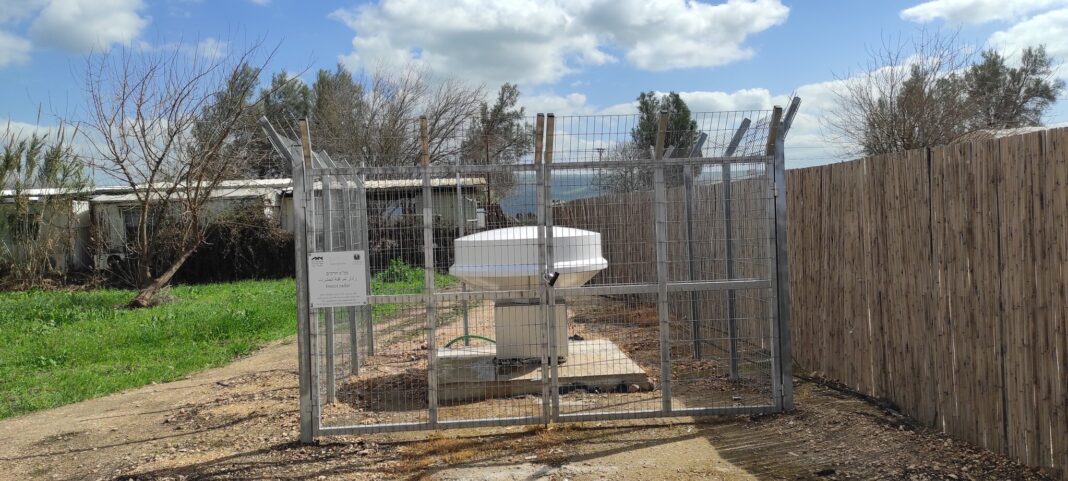
Radar entomology: The first insect radar installed in Israel near the Hula Valley

Despite your hatred for mosquitos, or the Fall Armyworm that’s eating lawns and football fields, insects are an important part in the web of life. The bodies of insects contain 10% nitrogen and 1% phosphorus and they are full of protein. Some startups like Flying Spark are even marketing insects for human consumption as part of the Alt Protein movement. Insects, of course, and their larvae, are already a nutritious food source in countries in Africa and East Asia. 

But beyond how insects can feed us humans directly, they are excellent fertilizer for plants and crops, they make nutritious meals for birds, bats, and amphibians like frogs and salamanders. Frogs and salamanders are indicator species, helping us know they health of ecosystems. Insects pollinate the food we eat.

If insects go, amphibians go. And if anyone reading this has noticed how much fewer insects stick to your windshield when driving in the country, you can maybe surmise – we have a problem.

Reasons for fewer insects? Pesticides, human development, invasive pests taking over, forestry, industrial pollution.  

To help understand insect populations, a new insect radar, the first for Israel, has been installed near the Hula Valley nature reserve. The area is a major rest stop for millions of migratory birds moving between Africa and Europe each year. 

The insect radar offers a chance to gauge the quantity of insects in Israel’s skies and was installed by the University of Haifa. The insect radar, like the bird radar installed by Prof. Yossi Leshem a couple of decades ago, will allow researchers to estimate the density, direction and speed of migration, elevation, and body size of the insects, and to assess factors influencing the insects that fly in this area.

“We will be able to identify pollinating insets that are of great importance for wild plants and agriculture, as well as other insects that cause damage to agriculture, such as various species of moths,” said Prof. Nir Sapir at the University of Haifa.

Insects mass migration larger than birds

In a previous study in which Prof. Sapir was also involved, and which was published in the journal Science, it was found that insect migration is the largest migration in terrestrial environments.

In Britain alone, some 3.5 trillion insects migrate every year, creating a biomass almost eight times greater than that of migrating birds.

Prof. Sapir anticipates that insect migration in Israel will be on an even larger scale: “In northern areas such as England, there is no insect activity in winter. In our region there are large insect populations throughout the year, including in winter. The conditions for the development of large populations are much more favorable here.

“Thanks to the radar, we will be able to calculate the quantities of insects of each given size and group that cross Israel – something that was impossible with the previous tools. We will be able to understand if between environmental temperature and other conditions, such as wind, affect the number of insects. We will be able to gauge the impact of global warming on the number of insect.

“This is importance, because insects constitute a major part in vital ecological interactions in many ecosystems,” Prof. Sapir concluded.

Monitoring invasive insects

One of the first studies undertaken by the researchers with the help of the insect radar seeks to monitor the fall armyworm, an invasive species of moth that arrived in Israel recently from South America. It was also detected in Egypt in 2021 so its spread could be rapid and devastating for countries in the Middle East already on the brink of starvation. Prof. Sapir explains that this species is one of the most harmful in the world and is known to cause damage to more than 350 species of plants.

“The crop that is worst affected by the fall armyworm larvae is maize…we have begun to use the radar in order to understand the movement of these moths, as a first step toward controlling their spread,” Prof. Sapir added.
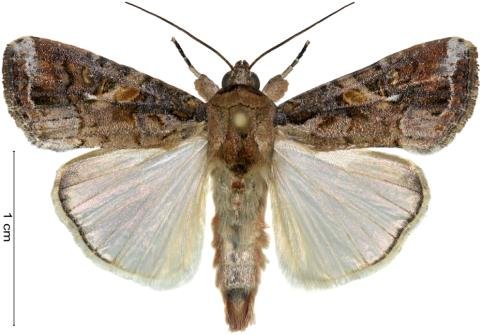
fall armyworm, 1 cm
A fall armyworm in its final, moth stage. As a larva it devastates. Fall armyworms feed on a wide range of plants, including corn, fescue, Johnsongrass, rice, ryegrass, small grain crops, sorghum, Sudangrass and timothy. In corn, caterpillars can injure foliage as well as the ears.

Using such variables as size, flight speed, wing movement pattern, and body shape obtained from the radar, the researchers plan to apply a classification tool based on “teaching” the machine to identify groups of insects and later on specific species, such as the fall armyworm, with the help of the radar.

Could it works as an early warning system against locusts and new invaders? Let’s hope countries nearby, such as Lebanon, Egypt, Jordan and Syria, will also invest in insect radars so that science can help draw links in a regional, rather than a local scale. 

radar entomology cabi biosciences
Radar Entomology, a handbook published by CABI Bioscience

CABI, an England-based agriculture NGO I used to do with research with as a graduate student in Switzerland, published a book some 20 years ago – Radar Entomology – indicating how radar can be used for insect pest management. The book deals with the applications of radar findings in the management and forecasting of both pest and beneficial insects, and is an important reference for those working in agricultural entomology and pest management.




Karin Kloosterman
Karin Kloostermanhttp://www.greenprophet.com
Karin Kloosterman is an award-winning journalist, innovation strategist, and founder of Green Prophet, one of the Middle East’s pioneering sustainability platforms. She has ranked in the Top 10 of Verizon innovation competitions, participated in NASA-linked challenges, and spoken worldwide on climate, food security, and future resilience. With an IoT technology patent, features in Canada’s National Post, and leadership inside teams building next-generation agricultural and planetary systems — including Mars-farming concepts — Karin operates at the intersection of storytelling, science, and systems change. She doesn’t report on the future – she helps design it. Reach out directly to [email protected]

Hot this week

How Renewable Energy is Revolutionizing the Way We Power Our World

Solar has become the star of the transition thanks to modular hardware and straightforward installation. It fits dense cities and remote towns alike. Many companies are turning to rooftop arrays and carport systems - and exploring commercial solar installation as a practical way to lock in future savings.

How does one start prepping?

Faced with an extreme winter storm this year, Americans wonder how to be prepared for catastrophe. Miriam has lived through wars in the Middle East - so she's prepared on giving you a guide to prepping.

Fishermen sue tire manufacturers on behalf of the salmon

A federal trial in San Francisco has brought US tire manufacturers, fishing groups, and environmental scientists into court over a chemical most drivers have never heard of — but which scientists say may be silently reshaping aquatic ecosystems.

Listening to Water: Tarek Atoui’s Next Work for Tate Modern

Born in Beirut, Lebanon in 1980 and now living in Paris, Atoui has spent years building instruments that don’t sit comfortably in concert halls. Many of them involve water, glass, and ceramics — materials that react to sound instead of simply producing it.

Leading Through a Dual-Energy Transition: Balancing Decarbonisation with Energy Security

Experience in one area of the energy industry isn't enough to guarantee readiness across all the others. That's where a structured program like an MBA in energy can come in. Today's advanced curricula explore energy economics, finance, policy, and strategic management alongside the technical subjects. And when pursuing an energy MBA online, professionals can skill up and retrain without having to step out of the labor market -- an important perk at a time when skilled professionals are already in short supply.

Topics

How Renewable Energy is Revolutionizing the Way We Power Our World

Solar has become the star of the transition thanks to modular hardware and straightforward installation. It fits dense cities and remote towns alike. Many companies are turning to rooftop arrays and carport systems - and exploring commercial solar installation as a practical way to lock in future savings.

How does one start prepping?

Faced with an extreme winter storm this year, Americans wonder how to be prepared for catastrophe. Miriam has lived through wars in the Middle East - so she's prepared on giving you a guide to prepping.

Fishermen sue tire manufacturers on behalf of the salmon

A federal trial in San Francisco has brought US tire manufacturers, fishing groups, and environmental scientists into court over a chemical most drivers have never heard of — but which scientists say may be silently reshaping aquatic ecosystems.

Listening to Water: Tarek Atoui’s Next Work for Tate Modern

Born in Beirut, Lebanon in 1980 and now living in Paris, Atoui has spent years building instruments that don’t sit comfortably in concert halls. Many of them involve water, glass, and ceramics — materials that react to sound instead of simply producing it.

Leading Through a Dual-Energy Transition: Balancing Decarbonisation with Energy Security

Experience in one area of the energy industry isn't enough to guarantee readiness across all the others. That's where a structured program like an MBA in energy can come in. Today's advanced curricula explore energy economics, finance, policy, and strategic management alongside the technical subjects. And when pursuing an energy MBA online, professionals can skill up and retrain without having to step out of the labor market -- an important perk at a time when skilled professionals are already in short supply.

From Green Energy to Healthy Societies: Why old systems thinking is becoming relevant again

Across the Middle East and North Africa, large investments are being made in green hydrogen, renewable energy, water infrastructure and sustainability. Most of these efforts are discussed in the context of climate change, decarbonization and economic diversification. That framing is important, but it may not capture their full value.

We saw peace – an interreligious encounter deep in our eyes

They came from Israel, Palestine, Jordan, Iraq, Yemen, Morocco, Tunisia, Lebanon, Egypt… There are Sunni Muslims, Shiite Muslims, Jews (Orthodox and Reform), Orthodox Christians, Coptic Christians, Protestant Christians, Druze, Baha'is, a Scientologist.

Can biochar reduce ‘Forever Chemicals’ in food if it’s used in farms?

Biochar is produced by heating organic material in a low-oxygen environment so it does not burn. This process, known as pyrolysis, transforms plant matter into a stable, carbon-rich material.

Related Articles

Popular Categories