



Engineering a bee’s stomach for vegan honey? This is the latest in the foodtech trend from Israel. Can technology solve any problem we are in?
A world without bees, or a world without honey? Which is worse? If you ask the bees, the choice is clear. Why bee populations are in decline is the same reason why the last male white rhinoceros has become extinct. The reason is us. But before the doom and gloom catches you in a cycle of despair, as individuals we can take the optimist’s approach.
Pollinating bees are in decline because the conventional food industry relies on non-specific pesticides to kill animal pests in agriculture and forestry. I know this from my several years of work in Biology where I worked in a research institute that looks for non-chemical pesticide solutions –– or rather natural solutions to “pests” using nature and the in-built predator-prey relationship that exists in nature.
Bees you could say are in decline because our desire for their honey has become more intense. Our industrialist mindset has put bees to work for our needs without considering their rights. For this reason vegans do not eat honey as honey cultivation involves animals –- and while it’s not a part of their body –– unlike flesh, milk or eggs –– honey is made from pollen inside the bee stomach. Honey is made to feed the bees.
The last decade with the advances of Internet of Things products –– think Alexa, Canary the home security system, or a fridge that tells you when it’s empty (there is even a bird feeder on Kickstarter that takes pictures of birds and sends them to you) –– all rely on Wifi and low-cost sensors to connect to the Internet to help you get more out of your life.
The technological hurdle of connecting these low cost sensors to data and software algorithms to figure out new things or to enact a change in the hardware – like shutting on or off your furnace, or adding light, a chemical or taking a picture –– is a no brainer. And geeks have been doing it for a decade with the help of low-cost computers like Raspberry Pi or Arduinos.
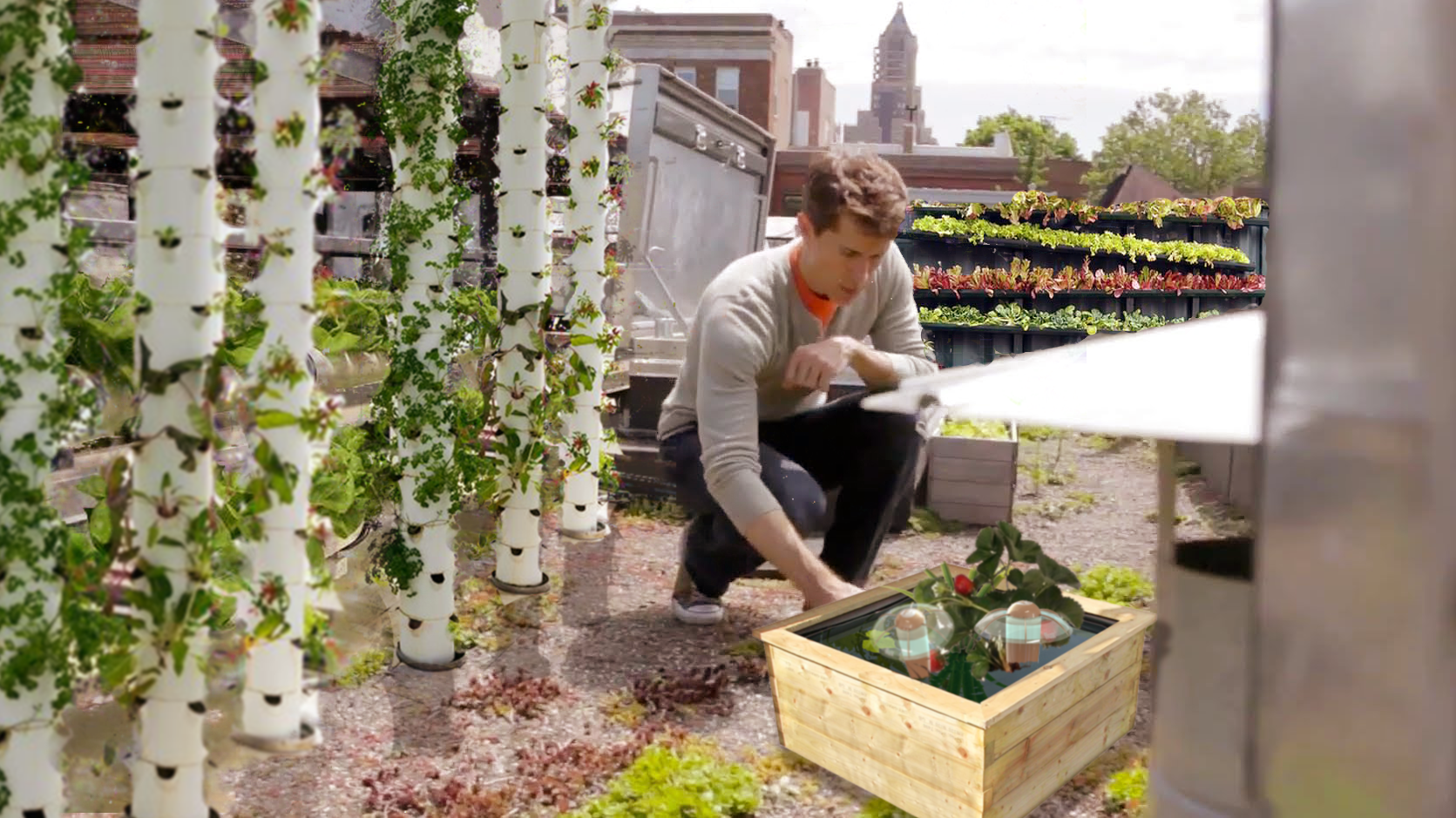
We did this in my startup where we invented an even smarter Arduino. Our application was to “speak for the plants” –– a robot that attempts to translate the language of nature so we can better water, feed, and grow plants according to our needs, and Nature’s. One of our applications was growing cannabis and another was for growing plants matched to a person’s optimal nutrient needs.
So along with the advancement of consumer products the industrial Internet of Things market has grown faster and bigger. In agriculture this means drones that can speak with sensors and satellites to manage crops. It also means sensors in beehives to help fight bee colony collapse disorder which means loss of profit if you run an apiary. Apiaries are looking for data about their hives that tell them about the health of the bees: temperature, weight, sound, humidity – biological data like that. This paper offers a good background.
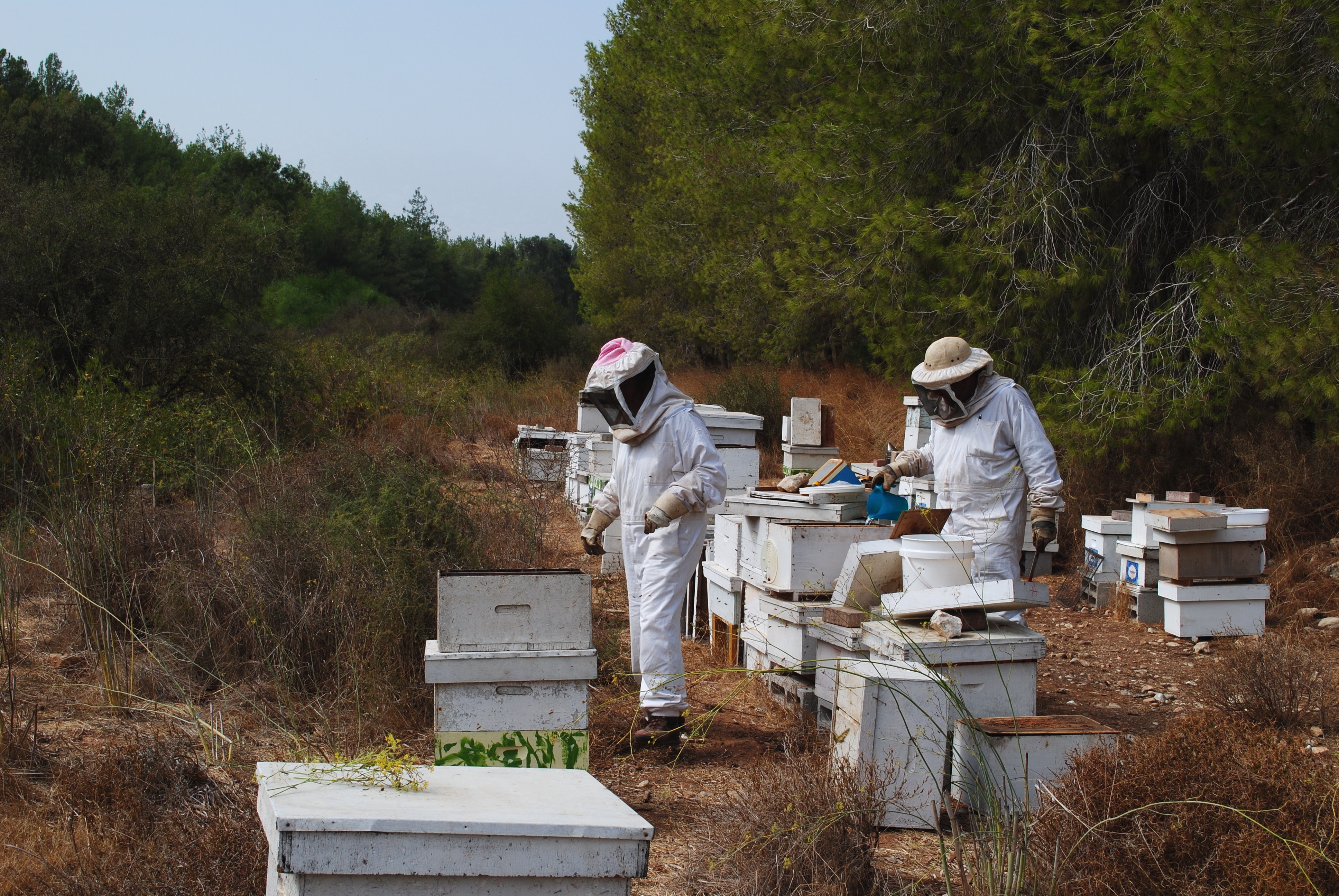
My experience in this area has led me to a few different “alternative” approaches to managing the bee decline in apiaries and the world in general.
Free the Bees
I met Yan and Sherry from Piepird in Northern Ontario eight years ago. I found them on a poster in a small supermarket advertising a music event at their bed and breakfast. Turns out the couple also run an animal sanctuary where they take in goats, chickens, turkeys and animals that would otherwise be slaughtered.
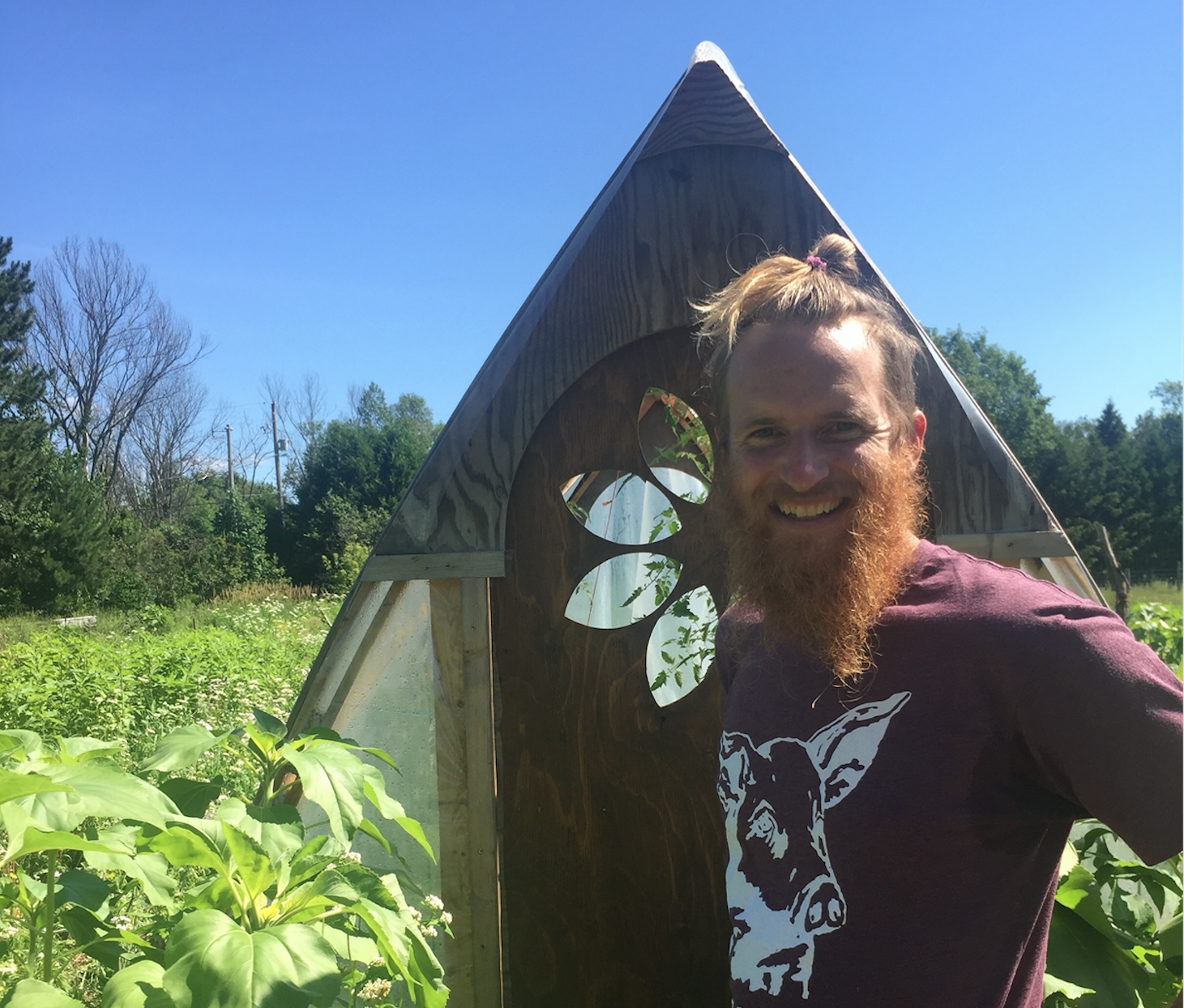
Yan (above) has liberated beehives and shown me some of the healthy hives he leaves to grow on his permaculture farm.
As vegans they do not take honey from the hives, and as permaculturists use all sorts of natural methods to help bring pollinators to their farm every summer. This method means no more eating honey. Read more about the Piebird Method here.
Technology saves the day?
You can find a large number of sensor-based solutions on the market that can give information about the hives. ApisTech (now called Beeyard), OS Beehives. This technology approach is selling the notion that technology can fix the problem by monitoring it and augmenting the hives.
They are doing their work and are looking for tools to better manage the outcomes of the honey crop every year. Looking for clues like weight and sound help beehive managers understand the health of their hives and if intervention is needed. Some beehive owners scatter their hives over a wide radius of thousands of acres and these apiaries need solutions that can help them spot a collapse.
The vegan bee-free honey in a lab
I started to yawn when I read in the Haaretz newspaper today about another Israeli startup that thinks it can save the world using technology. Then I read on and understood this is something new. It’s not a company trying to farm the most out of bees –- they are working to make a honey substitute like Beyond Meat did for the vegan meat industry. Bee-io is trying to create cultured honey, without the bees. They have created an artificial bee stomach to imitate the enzymes that are present in real life bees. This is refreshing! But is the honey tasty and with health benefits?
According to Haaretz (we didn’t link to the paywall), the CEO Ofer Dvash (means honey in Hebrew) said: “You can’t take sugar and turn it into honey. Honey needs to be made from a natural source, pollen, and it needs to pass through a honeybee’s stomach, because it contains enzymes that break down the sugars from the pollen in a certain way. Via genetic engineering and biological processes we can try to imitate what goes on in the bee’s stomach.”
According to the company cultured honey would harm no bees and would not be dependent on the season or bee colony collapse disorder. Which means one of two things –– “let them eat honey” while the world burns or –– we eat the fake honey giving us energy to take the pressure off of the bees, build them shelters and plant orchards and go back to the land so eventually we can eat real honey again, but in moderation and in a healthier, more balanced way.
Global honey prices have doubled in the past decade, notes Bee-io. “We want to disconnect human nutrition from animals, and we can’t go on exploiting animals. We’re seeing this happen with milk and meat, and also with honey,” states Dvash.
Honey substitutes are available today but they aren’t made in the same way as the Bee-io approach. It’s not clear if the Bee-io commercial approach is connected to the prize-winning student-led solution presented by students from the Technion in 2019. See the video below.
“Our vision is to create a sustainable BeeFree honey using engineered bacteria, which will process a nectar-like solution using secreted enzymes that mimic the honey stomach environment,” the students said.
The role for urban beekeepers

See the Vegan Society for more on the problems of farmed honey. Or for fun watch as Miriam gets swarmed on her visit to an apiary. You can also learn how to test if it’s real honey or fake, or the healing powers of honey.
Could urban beekeepers buffer bee colony collapse? Maybe. Our writer Jeff discusses.
Our eco-commentator/voice of reason Pablo Solomon says: “Why are we even talking about “Green” in the same breath as “man made fake”?? Every time I hear about these sorts of hair-brained nerd schemes, my head almost explodes.
“My broken record—use our money and brains to provide clean water, desalinate sea water, stop urban sprawl, plant greenery everywhere possible, teach people how to grow food in cities, etc. Enough with “Mars” and self driving cars and —for heaven’s sake fake honey.”
Americans should say bye to the honeybee
Steven Jacobs, who pioneered hydroponics systems at high tech companies like Microsoft, says: “Thing is, this is putting in resources to help the bees. In the US for example, honeybee production is decimating the native bees. Honeybees are not native here and they spread diseases to, and compete directly with, our native honey-less bees.
“Eliminating honeybees entirely from the continent would do better for the bees than any other thing.
“So maybe in places where honeybees are native this isn’t an issue. But it is an issue in many places. Why reinvent the wheel? Well, what if that wheel is running over and crushing everything in its path? Maybe reinventing the wheel is needed sometimes.”


