

Ktak drum is a snare you can wear!

A few years ago, a professional drummer friend came to my husband, Shachar, asking if he could build him a cajon. The friend had tried umpteen cajons, and none of them had the quality of sound he was looking for. My husband co-owned a carpentry, and at the time his work was divided between designing high-scale home interiors and handmade electrical bass guitars. But drums?

‘No problem,’ he said, and when Yair gave a big thumbs-up to the results, the Kandu cajon was born and the carpentry slowly but surely began to move its area of core competence over from kitchens to cajons. Today, Kandu can be found throughout the world; it was even recently seen being played by a few of the Muppets.
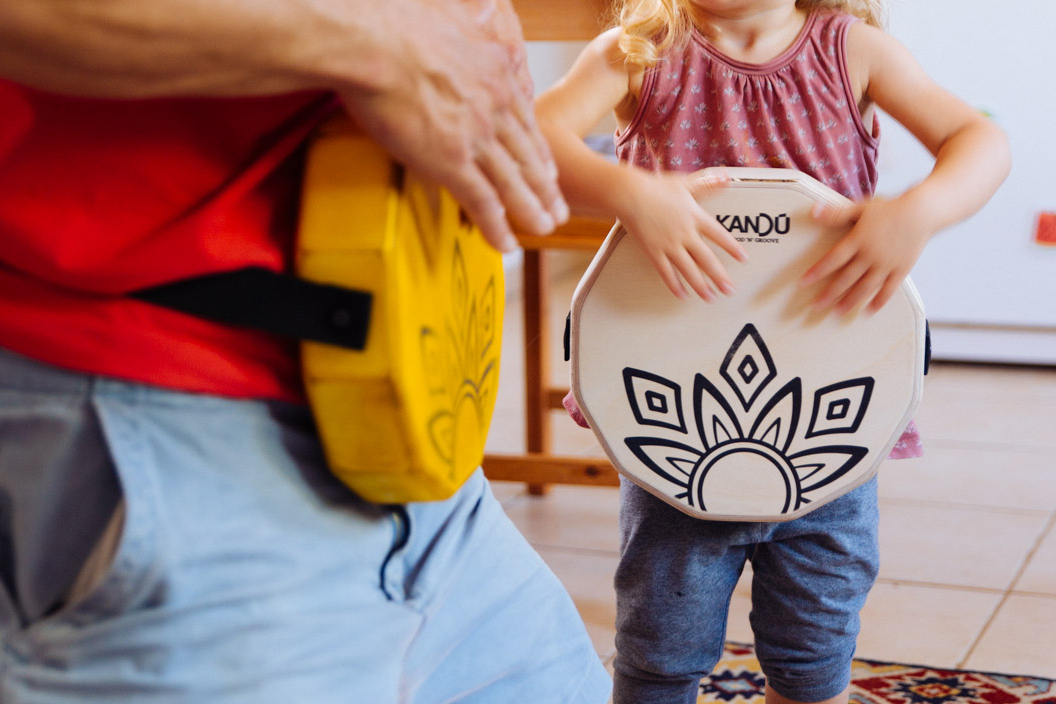
This year, it happened again. Another percussionist friend approached Shachar and Yaniv, his partner, with a new request: a small, yet uber-powerful drum they could take easily wherever they go. Something unique, something diverse. Something that would offer a wide range of sound quality – from crisp snare to smooth ethnic.

A few months later, KTÄK was born.

KTÄK is the world’s first handcrafted, ecological, two-sound body snare. In other words, it’s a snare you can wear. Highly versatile, made of Finnish birch wood and coated with a child-friendly, water-based lacquer, it’s ideal for musicians on the go, great for musical families going on trips or hikes who want to be ready to respond to any musical opportunity. It’s affordable enough to give your kids and high-quality enough to play on stage.

And the best thing about the KTÄK, in my opinion?
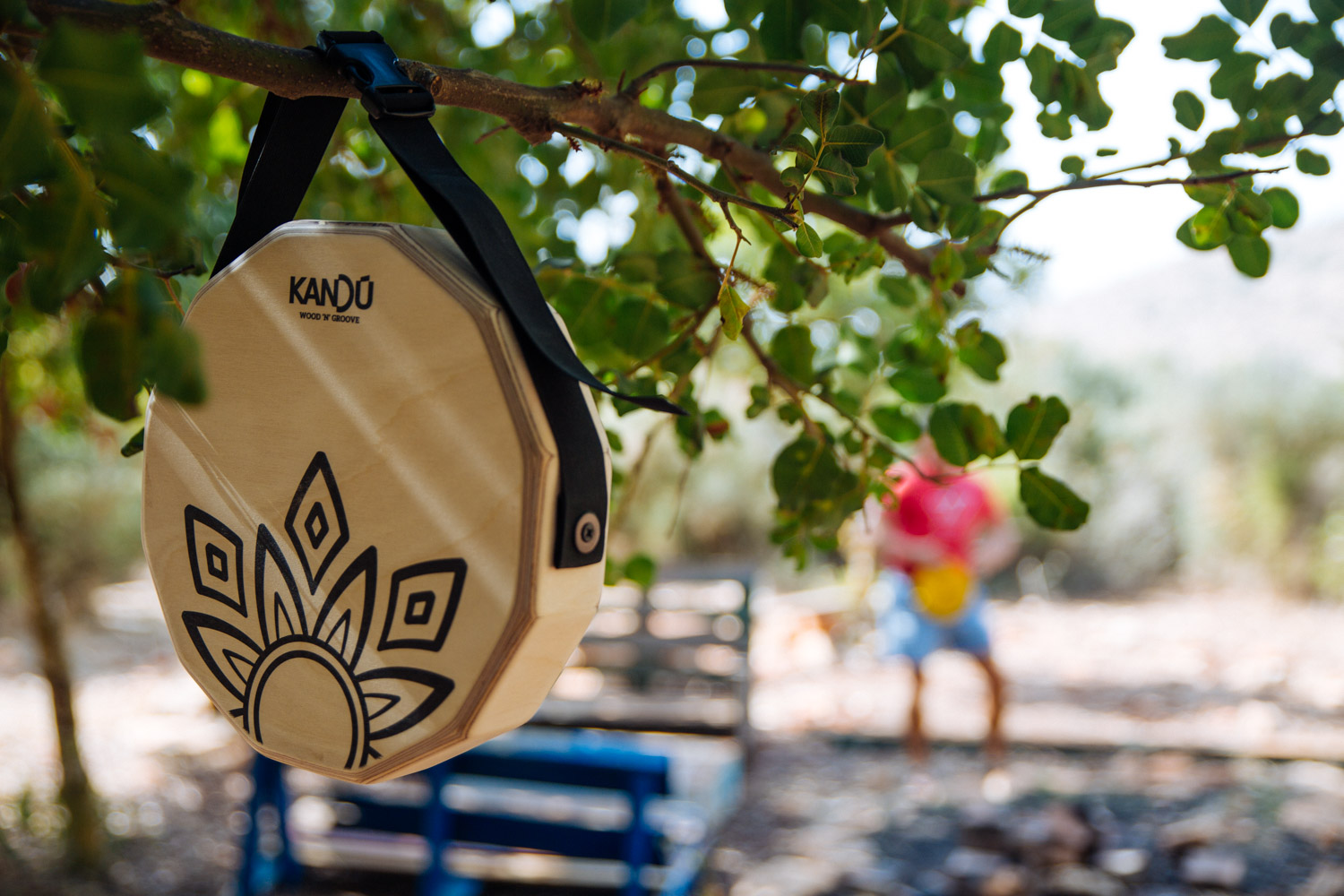
It’s proof that there are still some idealistic artisans out there who aren’t looking to copy what anyone else is doing – they’re looking around at the needs of the world today, and trying to create something the future will want.

Check them out on Kickstarter, where you can support their project and even order one of your own.

Or come visit the Kandu carpentry, located in an ecological, spiritual village called Maale Zvia, nestled in the hills of the Galilee in northern Israel.

This guest post is by Shachar’s wife, and a Green Prophet friend – Joy Pincus 

Read More

TRENDING

How Torvinen Jaakko’s ugly wood can lay the foundations for green building

Canada's forests generate billions of dollars in economic value each year, yet vast amounts of irregular timber are downgraded to wood chips or biomass. A collaboration between researchers at Carleton University and Aalto University is challenging that model, demonstrating how "ugly wood" can be transformed into high-value architecture while reducing waste and storing more carbon in buildings.

A Face Swap Tool for Training and Internal Comms

Corporate training videos often require repeated filming, travel, and production resources every time policies or personnel change. AI-powered face swap tools offer a more sustainable approach by extending the life of digital training content, reducing unnecessary reshoots, and helping organizations communicate more efficiently—provided they are used transparently with clear consent and ethical governance.

How a tick bite can lead to a life-threatening meat allergy AFG

Imagine developing a severe allergy to steak after a single tick bite. That's the reality for people with alpha-gal syndrome, a rapidly emerging condition linked to lone star ticks and other tick species. As researchers uncover how tick saliva rewires the immune system, health officials warn that hundreds of thousands of Americans may already be living with this unusual red meat allergy.

Russia’s Arctic superdeep oil drill revives debunked ‘infinite oil’ theory

Russia is reviving the controversial abiotic oil theory with plans to drill superdeep holes in the Arctic. While small amounts of abiotic methane exist deep within the Earth, most geologists reject the idea that commercial oil reserves originate from non-biological processes, raising questions about the environmental cost and scientific value of the project.

Code Red from the Galapagos: human drugs and sunscreen are polluting the sea

Millions of visitors swim in the pristine waters of the Galápagos each year, but new research suggests sunscreen chemicals and other human-made pollutants are reaching even the islands' most protected marine habitats. Scientists are calling for urgent monitoring to safeguard one of Earth's most iconic ecosystems.

Yerukim Forms a New Green Economy Where the Money is Really Green

The Yerukim members who pick up the recyclables get to keep the monetary reward, the public earns "green" bills that can be used in shops, and business owners get to be associated with environmentalism.

Choosing Riyadh over Dubai? What Investors Should Know

Saudi Arabia is deploying capital at unmatched scale to catalyze tourism and advanced industry while rewiring its power-and-water backbone. The investable frontier is widening—especially in renewables, grid storage, water efficiency/desal retrofits, and hospitality operating platforms. Prudent investors will insist on phased delivery, enforceable KPIs (energy, water, biodiversity), and RHQ/zone compliance—while pricing political-economy and reputational risks alongside growth upside.

Sell your cooking oil for biodiesel money

Want to make money on old french fry oil? Sell it.

Qatar Alternative Energy Summit Pairs Investors And Innovators

Alternative energy investors and innovators can meet n' greet in Doha, Qatar March 16 and 17.

Here’s How To Implement The Four Pillars Of Employee Engagement

If you throw a party for your work team and they are vegans, don't make it a barbecue. Know the sustainability values of your team to boost moral and retain good people.

Locals From Rishon Fight IKEA

Big Box stores are a pretty new concept in Israel, and thank God that not every Israeli city wants them in their backyard. A word from someone who has see the beautiful farmland around her hometown Newmarket, Ontario stripped and converted into vulgar strip malls of big box shops: they have no place in a healthy and sustainable town or city.

The Jewish National Fund Meets An Inconvenient Truth

According to the JNF, it has transformed thousands of acres of barren land into green forests in Israel. They state that each person emits about 23 tons of carbon per year, estimating that each tree planted can absorb one ton of carbon in its lifetime. That's a whole lot of trees you'd need to be planting. Could so many fit in Israel?

How to quiet noise from construction in your office

Streets need to be resurfaced in New York but the humming and grinding noise is unsettling. Noise is environmental pollution. 

Popular Categories