

 Ben-Gurion researchers claim that Israel’s urge to shop will eventually force Shabbat laws to change.
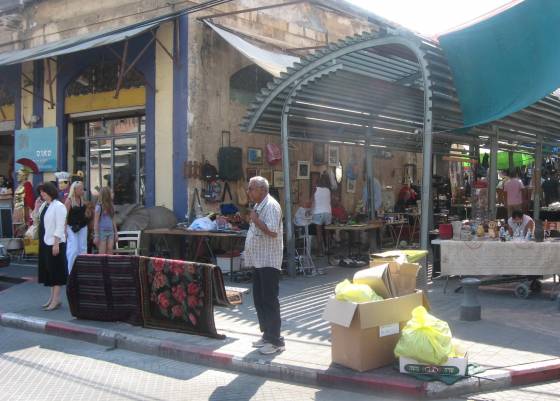
This is a typical side street in the Yaffa flea market, Israel. From left to right, notice a charming second-hand shop that sells amusing things like the full-sized statue of a Roman gladiator. Blond tourists with cameras hanging from their necks stroll by. A woman consults with her husband by cellphone. A rug vendor gazes at something across the street. And stacked away for city garbage disposal, garbage.
It’s a work day in a shopping district. Inevitably there’s garbage, packaging mostly. I wonder if any of this shopping detritus will get recycled, although I feel doubtful. But at least on one day a week, there is less garbage and energy consumption because shops are closed by law. That’s Shabbat. See Tafline’s post on Shabbat awareness.
Yet Israeli’s urge to shop is so strong, according to Ben-Gurion University researchers Guy Ben-Porat and Omri Shamir, that it may well put an end to Shabbat store closure. So traditional values erode, and so do landfills rise.
“As Israel transitioned from a socialist to a capitalist country and adopted Western consumer values, secular store owners noticed a rising demand for shopping on the weekend. As the secular population discovered shopping as a leisure and family time activity, the commercial enterprises discovered lucrative new markets.”
The tone taken by Ben-Porat and Shamir (press release from the Faculty of Business and Management, Ben-Gurion University, April 17th) seems to imply that keeping shops open on Shabbat is a good thing for Israelis. More opportunities for consumers, more places open for “leisure and family time.”
In good conscience, I don’t urge Israelis to leave their houses and drive on Shabbat. But spending the one day of rest going in and out of shops seems like a sad waste of human life. And I have some question as to the value of shopping as a family activity. In what way does spending a day at the mall strengthen relationships, exemplify values, make group memories? It seems more like willingly submitting to big industry’s hypnotic mantra: Feed Your Greed (And Make Us Richer).
Israel has hundreds of sites for picnics, hikes, or just lazing around in the fresh air. There are many organizations needing volunteers (and volunteering as a family is a very special experience). The culture is very friend and family-oriented: why not spend a leisurely day with the grandparents or friends? Those memories will remain long after the clothes you wore have gone out of fashion. In other words, life-enhancing, enriching activities reserved for Shabbat are out there. It might take a bit more effort to discover them than popping over to mall, but they’re so much more rewarding.
And the great thing is, a no-shopping Shabbat means less energy consumption on a national scale. Less garbage in landfills. Less strain on the budget because less impulse buying. And honestly – a little Shabbat observance is good for the soul too.
Israel celebrates Earth Day this year on April 22nd. Yes – let’s turn off our electricity for an hour and help raise eco-awareness. And on a personal level, make a mini-Earth Day happen every week. Do your shopping over the work week. On Shabbat, unplug from the material and reconnect to the timeless.
Past Earth Days in Israel:
- Putting the Pedal to Heavy Metal
- Video: Israelis Pedal Power Earth Day Concert
- Israel Celebrates Earth Day
Photo of Jaffo Flea Market by Miriam Kresh.



Oh, sometimes I jus love hanging out at the mall with the family… it’s almost like watching TV.
Israeli demographics show a shift towards tradition, including shabbath observance. I wonder what evidence Ben Gurion University researchers Ben-Porath & Shamir were analyzing.