
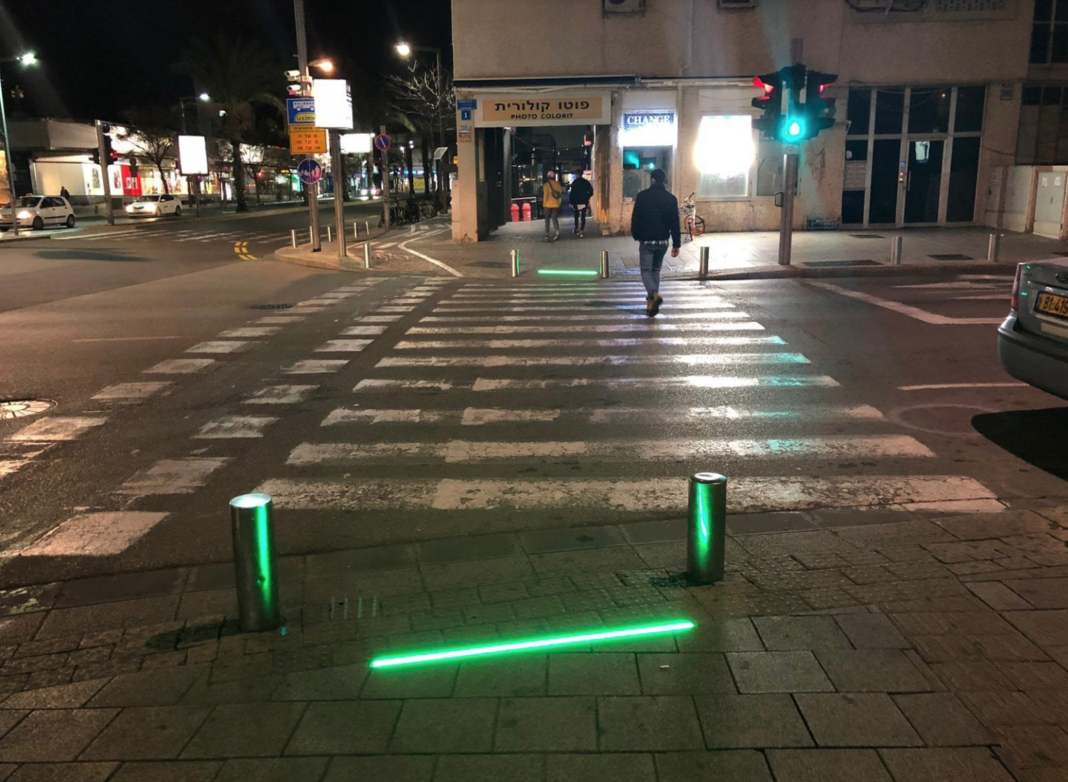

 For the first time scientists examined melatonin suppression in a various types of light bulbs, primarily those used for outdoor illumination, such as streetlights, road lighting, mall lighting and the like.
Just as IKEA stops selling incandescent bulbs in Israel, a new study that illuminates some unknown health effects of newer environmentally friendly LED lights – effects that might help us know more about lighting and cancer.
Exposure to the light of white LED bulbs, it turns out, suppresses melatonin five times more than exposure to the outdoor lights filled with high pressure sodium bulbs that give off an orange-yellow light. “Just as there are regulations and standards for ‘classic’ pollutants, there should also be regulations and rules for the pollution stemming from artificial light at night,” says Prof. Abraham Haim of the University of Haifa who is following the effects of cancer and artificial lights at night.
A 2021 study found that lights at night doesn’t only mess with us but it’s probably ravaging the entire animal world that lives near us. Crickets have lost their sense of timing, and ability to mate, beetles can’t find the Milky Way, and sea turtles
Melatonin is a compound that adjusts our biological clock and is known for its anti-oxidant and anti-cancerous properties. The study investigated the influence of different types of bulbs on “light pollution” and the suppression of melatonin, with the researchers recommending several steps that should be taken to balance the need to save energy and protecting public health.
The fact that “white” artificial light (which is actually blue light on the spectrum, emitted at wavelengths of between 440-500 nanometers) suppresses the production of melatonin in the brain’s pineal gland is already known.
Also known is the fact that suppressing the production of melatonin, which is responsible, among other things, for the regulation of our biological clock, causes behavior disruptions and health problems.
In this study, conducted by astronomers, physicists and biologists from ISTIL- Light Pollution Science and Technology Institute in Italy, the National Geophysical Data Center in Boulder, Colorado, and the University of Haifa, researchers for the first time examined the differences in melatonin suppression in a various types of light bulbs, primarily those used for outdoor illumination, such as streetlights, road lighting, mall lighting and the like.
In the first, analytical part of the study, the researchers, relying on various data, calculated the wavelength and energy output of bulbs that are generally used for outdoor lighting. Next, they compared that information with existing research regarding melatonin suppression to determine the melatonin suppression level of each bulb type.
Taking into account the necessity for artificial lighting in cities, as well as the importance of energy-saving bulbs, the research team took as a reference point the level of melatonin suppression by a high-pressure sodium (HPS) bulb, a bulb that gives off orange-yellow light and is often used for street and road lighting, and compared the data from the other bulbs to that one.
From this comparison it emerged that the metal halide bulb, which gives off a white light and is used for stadium lighting, among other uses, suppresses melatonin at a rate more than 3 times greater than the HPS bulb, while the light-emitting diode (LED) bulb, which also gives off a white light, suppresses melatonin at a rate more than 5 times higher than the HPS bulb.
“The current migration from the now widely used sodium lamps to white lamps will increase melatonin suppression in humans and animals,” the researchers say.
The researchers make some concrete suggestions that could alter the situation without throwing our world into total darkness, but first and foremost, they assert that it is necessary to understand that artificial light creates “light pollution” that ought to be addressed in the realms of regulation and legislation.
White light limits
Their first suggestion of course, is to limit the use of “white” light to those instances where it is absolutely necessary. Another suggestion is to adjust lampposts so that their light is not directed beyond the horizon, which would significantly reduce light pollution.
They also advise against “over-lighting”, using only the amount of light needed for a task, and, of course, to simply turn off lighting when not in use – “Just like we all turn off the light when we leave the room. This is the first and primary way to save energy,” the researchers say.
“Most Italian regions have legislations to lower the impact of light pollution, but they still lack a regulation on the spectrum emitted by lamps. Unless legislation is updated soon, with the current trend toward sources as white LEDs, which emit a huge amount of blue light, we will enter a period of elevated negative effects of light at night on human health and environment. Lamp manufacturers cannot claim that they don’t know about the consequences of artificial light at night,” says Dr. Fabio Falchi of ISTIL.
“As a first step in Israel, for example, the Standards Institution of Israel should obligate bulb importers to state clearly on their packaging what wavelengths are produced by each bulb. If wavelength indeed influences melatonin production, this is information that needs to be brought to the public’s attention, so consumers can decide whether to buy this lighting or not,” Prof. Haim says.



This is a great post Karin,
I think that LED light is better than neon light, especial for eyes.
On the melatonin issue, how does that affect the lives of the local fauna? If their natural sleep cycles are disrupted I’d suspect their procreation results would suffer. Not that I’d miss the wrens and raccoons.
Isn’t that a picture of a compact flourescent? It is not an “LED bulb”. Don’t you know what you are talking about? Just sayin!
It is!
CFL’s are really horrible for the environment due to the mercury content and they can contaminate our water supplies if not properly disposed of. As we know, most of us are lazy and toss old bulbs in the garbage with everything else. LED’s are the best and most modern lighting. They are relatively inexpensive now and when I buy mine from EarthLED I have a 3 year warranty on my lights, so I feel better about spending the extra money on longer lasting and warranty backed products.
Ed hopefully authors of the study will read your comment and take this into account for future studies.
It is true that LED, flourescent and metal halide luminaires provide blue light within their “white” light spectrum, but all of them also have a red component, typically of greater magnitude. Buyers could be advised to look at the Kelvin rating of the bulbs and purchase those with lower numbers, below 4,000 Kelvins. These will increase the red portion of the spectrum as compared to the blue and thus be more like the HPS luminaire. I do not know the impact on melatonin.