
ARC To Revive Faith In Food

ARC works with major religions like Islam, Christianity and Judaism to develop environmental programs. Now they look at food.

It might have something to with the fact that it’s almost Eid al-Adha, where halal slaughter is carried out en masse, but it feels like everywhere I look halal is getting a hard time in the press. First, the iconic Campbell’s soup was targeted for a boycott after introducing halal labelling and then the Australian government refuses to send their cattle to Egypt for the Eid sacrifice.

Although it turned out that the Campbell boycott was entirely orchestrated by right-wing Islamaphobes, there is more substance to the Australian government’s move which was based on serious concerns about the way the animals were treated. An expose released by the animal rights organisation Animals Australia, documented the cruel handling and slaughter of the animals who were also forced to travel long distances in harsh conditions to reach Egypt.

With this in mind, you’ll understand how happy I was to hear about the Alliance of Religions and Conservation’s (ARC)  latest project ‘Faith in Food’ which aims to inspire faith communities to adopt fairer, healthier and more sustainable ways to produce, purchase and consume food.

“What would Jesus say about farmed eggs?”

The Alliance of Religions and Conservation is a UK-based organisation founded in 1995 which works with the world’s major religions to develop environmental programmes based on their core teachings and beliefs.

Previous projects include greening religious buildings, tree planting and fitting Doaist temples in China with solar panels.

The idea behind their recent ‘Faith in Food’ project is to help people of faith rediscover the link between their food and the land and livestock, and to get them to ask questions about whether the food they are purchasing honours their religious beliefs about caring for creation.

They want to encourage more people to think carefully about the food they eat and whether it is ethically and environmentally sourced in accordance to their religious principles. If not, then positive steps are recommended to ensure that they food they eat cares for the planet by being more sustainable and cares for creation by being moving away from factory-farming.

Leading A Food Revolution

Food plays an important role in faith celebrations such as Ramadan and Purim and ARC also state that food consumption accounts for around 30% of each individuals carbon footprint so making simple changes could have a real impact. In fact, ARC is launching Faith in Food in partnership with the Soil Association, the UK’s leading organic body, as well as the Fairtrade Foundation in a bid to encourage more sustainable food habits.

Susie Weldon from ARC explained that the idea for Faith in Food partly came from discussions around the Muslim Seven Year Plan in which it was suggested that a faith-based ethical label, for goods and services, would be really useful for people of faith to know that they’re buying something that fits with their faith beliefs.

She added: “We believe Faith in Food could be the most powerful global movement in creating a more sustainable, healthier food and farming culture – with immense benefits to the environment, animal welfare and social justice.”

For more on Faith and Food see:

Eid Al-Adha: The Muslim Festival of Meat?
Have a Green and Joyful Sizdah Bedar (Persian New Year)
Repair Your Eating Habits in Time for Yom Kippur

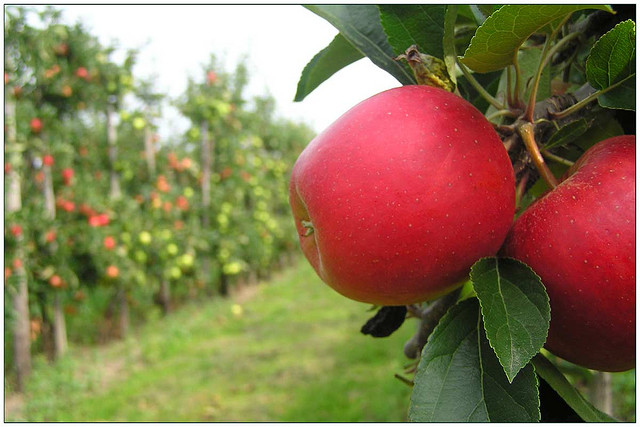
Image via digicla
Arwa Aburawa
Arwa Aburawahttp://www.greenprophet.com
Arwa is a Muslim freelance writer who is interested in everything climate change related and how Islam can inspire more people to care for their planet and take active steps to save it while we can. She is endlessly suspicious of all politicians and their ceaseless meetings, especially as they make normal people believe that they are not part of the solution when they are the ONLY solution. Her Indian auntie is her model eco-warrier, and when Arwa is not busy helping out in the neighborhood alleyway garden, swap shopping or attempting fusion vegetarian dishes- with mixed success, she’d like to add- she can be found sipping on foraged nettle tea.
1 COMMENT

Comments are closed.

TRENDING

Jujube, the sidr tree of medicine and magic

A magic holy sidr bath to deflect the evil eye? It needs 7 powdered sidr leaves stirred into a bucket of warm water. The hadith of the Prophet Muhammad allows to repeat healing prayers and verses from the Koran to increase the water’s potency. 5 grams, or 1 tablespoon of sidr powder equals 7 leaves.

The Christ’s thorn (sidr tree) is also a well-known folk medicine

Christ’s thorn jujube (Ziziphus spina-christi) also known as the sidr tree is a real, identifiable tree native to the Middle East, and it appears—directly or indirectly—in Islam, Judaism, and later Christian tradition. The connections between the three faiths are not theological agreements but overlapping uses, names, and symbolic associations rooted in the same landscape.

The Lote Tree of the Utmost Boundary, explained

Knowing about the concept of the Lote Tree of the Utmost Boundary helps explain a core idea in Islam.

Female Genital Mutilation still happens — quietly, at home, and across borders in Canada

A service provider explains that women may choose midwives from within their community to keep their status private. Another line cuts to the core: “There’s a lack of understanding… especially psychologically.”

Sustainable Architect Ronak Roshan on the Politics Behind the Houston Ismaili Center

Roshan’s reflection situates the Houston Ismaili Center within a broader discussion about architecture as diplomacy — where aesthetics, faith, and geopolitics intersect. Her words challenge readers to question whether “green” design and grand symbolism can coexist without transparency and accountability.

Turning Your Energy Consultancy into an LLC: 4 Legal Steps for Founders in Texas

If you are starting a renewable energy business in Texas, learn how to start an LLC by the books.

Tracking the Impacts of a Hydroelectric Dam Along the Tigris River

For the next two months, I'll be taking a break from my usual Green Prophet posts to report on a transnational environmental issue: the Ilısu Dam currently under construction in Turkey, and the ways it will transform life along the Tigris River.

6 Payment Processors With the Fastest Onboarding for SMBs

Get your SMB up and running fast with these 6 payment processors. Compare the quickest onboarding options to start accepting customer payments without delay.

Qatar’s climate hypocrisy rides the London Underground

Qatar remains a master of doublethink—burning gas by the megaton while selling “sustainability” to a world desperate for clean air. Wake up from your slumber people.

How Quality of Hire Shapes Modern Recruitment

A 2024 survey by Deloitte found that 76% of talent leaders now consider long-term retention and workforce contribution among their most important hiring success metrics—far surpassing time-to-fill or cost-per-hire. As the expectations for new hires deepen, companies must also confront the inherent challenges in redefining and accurately measuring hiring quality.

8 Team-Building Exercises to Start the Week Off 

Team building to change the world! The best renewable energy companies are ones that function.

Thank you, LinkedIn — and what your Jobs on the Rise report means for sustainable careers

While “green jobs” aren’t always labeled as such, many of the fastest-growing roles are directly enabling the energy transition, climate resilience, and lower-carbon systems: Number one on their list is Artificial Intelligence engineers. But what does that mean? Vibe coding Claude? 

Somali pirates steal oil tankers

The pirates often stage their heists out of Somalia, a lawless country, with a weak central government that is grappling with a violent Islamist insurgency. Using speedboats that swarm the targets, the machine-gun-toting pirates take control of merchant ships and then hold the vessels, crew and cargo for ransom.

Related Articles

Popular Categories