
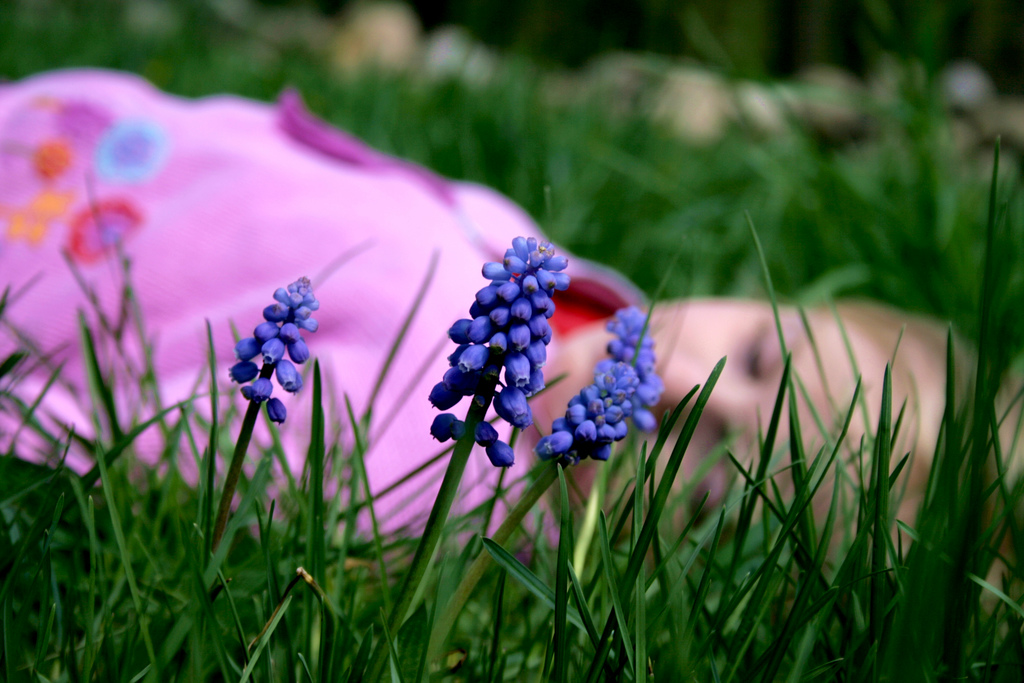

 Her future doesn’t just depend on how we learn to care for the planet from here on out, but how many other children will be born in her lifetime.
Mention eco-sexuality to the uninformed, and you’ll get often blank stares or snickers; people assume that being conscious about one’s personal life takes all the fun out of intimacy, or that it is a meaningless exercise in the absurd. Some ardent environmentalists, it turns out, have issues with greening your love life too. Take the comments on an article describing the basic tenets of this philosophy, and you’ll find more criticism than consensus.
Both camps miss the point that green sex is safe sex, and it’s a natural compliment to living a more sustainable life. For example, using the right kind of pillow or recycling waters from ritual baths won’t necessarily reduce global warming, but it sets the foundation for a more conscious lifestyle without sacrificing joy.Doubter fence
If we are to grow this membership from both sides of the doubter fence, we at greenprophet.com accept that constructive dialogue must be forthcoming, and today we focus on a huge underlying issue that threatens Mother Earth and her inhabitants alike: population growth.
It turns out, the Middle East has some explaining to do when it comes to family size.
According to Stefanie Iris Weiss, author of Eco-Sex: Going Green Between the Sheets and Make Your Love Life Sustainable (2010), by the middle of the 20th century, the global population will hit the nine billion mark. That’s a lot of people straining the resources of our planet, but addressing it in the past didn’t always leave a pleasant aftertaste. That’s because people don’t take too kindly to being told how many children they are allowed to have (think China’s one child policy, and the resultant challenges of a society that prefers boys over girls).
Then there are the assumptions about population and consumption that hinder better stewardship of the planet. For example, Westerners often think that the larger families of developing countries are more problematic than the fewer children more common in places like the United States, and certain demographics (more secular) in the Middle East.
Weiss points out, however, that consumption per child is critical to evaluating long-term impact on population growth. “A child born in the United States has more than 160 times the impact on the planet as a Bangladeshi child, if you add in potential descendants,” she writes. In other words, the carbon footprints of our descendents is as much a function of where they are born, as how many are produced.
Bad News from the Middle East
According to Euromonitor International, the number of children globally ages 0-14 has actually declined this past decade with a few exceptions. Family size in the Middle East and North Africa is bucking this trend. “For instance growth in Qatar and Bahrain was 6.6% and 6.4% respectively on average per year over 2000-2010, although the small size of these countries makes them special cases. Many African countries had very high child population growth in the same period, especially Niger (4.0% per year), Sierra Leone (3.6% annually).”
The full report in Euromonitor International breaks down these trends in population growth into geographical areas.
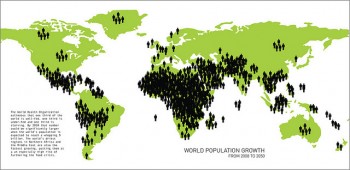 Level of religious observance is also a factor in family size. In Israel, for example, reports show that secular Jews prefer family sizes of 2-4 children with only 14% advocating for five or more kids; whereas amongst Haredim, 34% describe their ideal family size to include seven or more children. Statistics suggest that a community, in order to sustain itself at zero-population growth, needs to have live 2.1 births per family (world population growth photo credit: Lauren Manning).
This contrast holds up amongst other religious groups, globally and across the Middle East: more religious families often have more children, and more children, particularly in consumer-driven societies, put additional strain on the resources available at the micro and macro levels.
Weiss insists however that people should NOT be made “to feel guilty for wanting kids…they should be armed with all the facts and empowered to make their own decision.” She acknowledges that raising a family remains an important value around the globe, even in communities that no longer view marriage as a social necessity or norm.
Zero population and adoption
Instead of guilting people into not having kids, this eco-sexpert (who intends to adopt when the time is right) advocates sweeter and greener alternatives including zero population growth (which equals 2.1 live births per couple) and adoption (estimates are that by 2017, 250 million children will need adoptive families).
“If we don’t halt population growth with justice and compassion, it will be done for us by nature, brutally and without pity – and will leave a ravaged world,” Nobel Laureate Dr. Henry W. Kendall wrote (and we quote from Eco-Sex). Understanding the impact of our choices and being conscious is as much a part of eco-sexuality as using safer intimate products.
A sense of awareness and urgency vis-à-vis the number of children we have is central to any enlightenment on the topic of earth-friendly love, whether or not it is mentioned in every article written here, or elsewhere.
As Weiss puts it, “You’ve got to want to save the planet as much as you want to get laid.” Anyone who uses a failure to mention population growth as a means to criticize living a more eco-friendly love life is simply, in our opinion, jaded, lazy or missing out on all the eco-sexy fun.
More eco-sexuality news:
Islamic Websites Offer Halal Sex Aids
When Females Rule Fornication, Mother Earth Delights
Making Love Sustainable With the Five Percent Rule
Tinamarie is a regular contributor to Greenprophet.com. You can follow her on @ModernLoveMuse and facebook. She blogs at www.tinamariebernard.com. 




Yes. What you don’t say, but maybe are implying, is that some of the countries in the ME with exploding populations are also contributing to global political instability. They aren’t necessarily exporting viable goods or ideas to better the world…
It’s now how many kids are being born, it’s what those kids grow up too. If they grow up and become inventors, scientists, and in come cases leaders then they are effectively “adding” resources to the planet (making us more efficient, or more eco-friendly).
Highly entrepreneurial countries and countries with high marks in education are not the places you need to worry about population growth. Places with low median productivity per capita are much more worrying. (India, Russia, Africa, etc..)
It’s like the ecology of water conservation. In Israel, save every drop. In Canada … who cares? It’s all about context.