

Omar Yousef’s Crowded Architecture

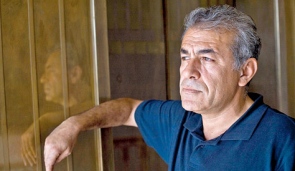
omar-yousef-architectPalestinian Architect Omar Yousef draws attention to the occupation’s “forced ecology” at the Ecoweek conference in Israel [image taken by Tomer Appelbaum]

Designed to teach young architects the most progressive building practices available, beyond borders or cultural differences, the Ecoweek conference taking place in Israel draws inevitable attention to disparities.

Green Prophet’s interest in natural building practices such as Hassan Fathy’s Nubian-esque structures stems from our intellectual interest in and understanding of ecology. Yousef, on the other hand, explains how in Palestinian territories, natural building occurs out of necessity.

Haphazard Architecture

A Professor at Al Quds Palestinian University in Jerusalem, Omar Yousef is one of several guests slated to influence budding architects to incorporate greener principles into their design.

But his presentation, entitled “Recyling Water in Gaza: Discrepancy between Sustainable Ecology and the Occupation,” has a political spin, according to Haaretz reporter Esther Zandberg.

Yousef grew up in East Jerusalem and lives and works in Shuafat. In his time, he has not witnessed a systematic building pattern, but rather a haphazard pattern that responds to daily happenstance.

“It is an architecture of chaos, crowdedness, instability, temporariness and destruction, improvised building additions and a separation fence,” he told Zandberg, “…an authentic reaction to necessities, a testimony to the survival instinct of Palestinian society.”

Ideology vs necessity

Whereas we tout the benefits of green building techniques and earth-based architecture, advocating a healthy dose of peaceful harmony thrown in the mix, Palestinians can’t afford to be so ideological. According to Yousef,

Ironically, Gaza’s population is also very ecologically aware, involuntarily, and the consumer world could learn from it.For lack of conventional building materials, they build houses out of mud and straw. For lack of waste disposal sites, they use junk to build playgrounds for children and recycle overflowing sewerage for irrigation and watering vegetable plots (permaculture.)

Though the complicated political situation does not escape us, and we are deeply empathetic to all  suffering, we provide environmental news and leave politics to the experts. However, what we did find interesting is this notion of what Yousef calls “forced ecology.”

Living and building simply

Without the political spin, the description of houses built of mud and straw sounds like a community using the materials at hand to eke out a life. This is what we did before the Industrial Revolution. This is what we always should do.

Our modern concept of architecture and design, on the other hand, assumes that there are no limits to where we can source our materials, no limits to how big we can build, because the earth’s bounty overflows.

This thinking has given us front row tickets to the uncomfortable, and sometimes frightening, theater of rising temperatures and seas.

Earth architecture is sustainable

“Currently it is estimated that one half of the world’s population—approximately three billion people on six continents—lives or works in buildings constructed of earth,” according to EarthArchitecture.org.

Earth construction is worthwhile. It is sustainable. And I dare to say it only seems unfortunate when compared to the unsustainable high-rises and mansions built by wealthier nations.

Of course, there is no excuse for ruptured infrastructure – such as mismanaged sewage or the lack of waste disposal facilities – that imperils health or happiness, and we hope these issues will be addressed.

But we can all learn a lesson about simpler living from the people who have no other choice.

:: Haaretz

More on Sustainable Building:

Geotectura’s Residential Building Set to Sail

Cambridge to Build Europe’s First Eco-Mosque

Sharing Eco-Friendly Construction Techniques is So’Eco

Tafline Laylin
Tafline Laylinhttp://www.greenprophet.com
As a tour leader who led “eco-friendly” camping trips throughout North America, Tafline soon realized that she was instead leaving behind a trail of gas fumes, plastic bottles and Pringles. In fact, wherever she traveled – whether it was Viet Nam or South Africa or England – it became clear how inefficiently the mandate to re-think our consumer culture is reaching the general public. Born in Iran, raised in South Africa and the United States, she currently splits her time between Africa and the Middle East. Tafline can be reached at tafline (at) greenprophet (dot) com.

TRENDING

Eco organization offices destroyed by Iran missile

Tel Aviv's eco organization, the Heschel Center, was impacted by an Iranian missile.

What are AWG air-water generators, and why they aren’t a golden-bullet solution (yet)

Atmospheric water generators (AWGs) sound like magic: machines that can pull drinking water out of air. The idea is mentioned in the Bible, where the elders would pray for water collected as dew on plants and the catch on turning this into a machine is in the physics. To turn invisible vapor into liquid, you must remove heat, especially the latent heat of condensation.

Jordan’s $6 Billion Aqaba–Amman Desalination Project from the Red Sea Moves Forward

In 2025, the Jordanian government signed agreements with a consortium led by Meridiam and SUEZ, alongside VINCI Construction and Orascom Construction. Under a 30-year concession agreement, the consortium will design, build, finance, operate, and maintain the system before transferring it back to the Jordanian government. The total investment is estimated at approximately $6 billion USD.

The Saudi Startup Turning Desalination’s Toxic Waste Into Its Own Disinfectant

For millennia, the Middle East's water crisis seemed an immutable fact of geography — a region defined as much by what it lacked as by what lay beneath its sands. Today, a convergence of plummeting solar costs, advancing membrane technology, and hard-won engineering expertise is rewriting that story.

Earth building with Dead Sea salt bricks

Researchers develop a brick made largely from recycled Dead Sea salt—offering a potential alternative to carbon-intensive cement.

Should You Invest in the Private Market?

startustartup Unlike public stock exchanges, which offer daily trading, strict...

How to build a 100-year-company

Kongō Gumi is a Japanese construction company, purportedly founded in 578 A.D., making it the world's oldest documented company. What can we learn about building sustainable businesses from them?

From Pilot Plant to Global Stage: How Aduro Clean Technologies’ 2026 Expansion Signals a Turning Point for Chemical Recycling Investors Like Yazan Al Homsi

The company's Next Generation Process (NGP) Pilot Plant in London, Ontario, has officially moved into initial operating campaigns, generating the kind of structured, repeatable data that separates laboratory promise from commercial viability.

How AI Helps SaaS Companies Reduce Repetitive Customer Support Work

SaaS products are designed for large numbers of users with different levels of experience, and also in renewable energy.

Pulling Water from the Air

Faced with water shortage in Amman, Laurie digs up...

Turning Your Energy Consultancy into an LLC: 4 Legal Steps for Founders in Texas

If you are starting a renewable energy business in Texas, learn how to start an LLC by the books.

Tracking the Impacts of a Hydroelectric Dam Along the Tigris River

For the next two months, I'll be taking a break from my usual Green Prophet posts to report on a transnational environmental issue: the Ilısu Dam currently under construction in Turkey, and the ways it will transform life along the Tigris River.

6 Payment Processors With the Fastest Onboarding for SMBs

Get your SMB up and running fast with these 6 payment processors. Compare the quickest onboarding options to start accepting customer payments without delay.

Related Articles

Popular Categories