

Tooth Enamel Biomimicry Inspires Lighter, More Fuel Efficient Planes and Spacecraft

plant sharing two women holding pots
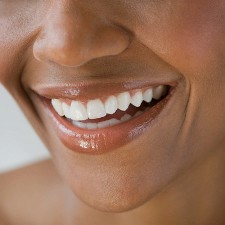
Smile it’s free

It’s been a mystery: how can our teeth withstand such an enormous amount of pressure, over many years, when tooth enamel is only about as strong as glass?

A new study by Prof. Herzl Chai of Tel Aviv University’s School of Mechanical Engineering and his colleagues at the National Institute of Standards and Technology and George Washington University gives the answer. And it has applications in the field of green aeronautics.

The researchers applied varying degrees of mechanical pressure to hundreds of extracted teeth, and studied what occurred on the surface and deep inside them.

The study, published in the May 5, 2009, issue of the Proceedings of the National Academy of Science, shows that it is the highly-sophisticated structure of our teeth that keeps them in one piece — and that structure holds promising clues for aerospace engineers as they build “greener” aircraft and space vehicles of the future.

“Teeth are made from an extremely sophisticated composite material which reacts in an extraordinary way under pressure,” says Prof. Chai. “Teeth exhibit graded mechanical properties and a cathedral-like geometry, and over time they develop a network of micro-cracks which help diffuse stress. This, and the tooth’s built-in ability to heal the micro-cracks over time, prevents it from fracturing into large pieces when we eat hard food, like nuts.”

News the aviation industry can bite into

The automotive and aviation industries already use sophisticated materials to prevent break-up on impact. For example, airplane bodies are made from composite materials — layers of glass or carbon fibers — held together by a brittle matrix.

In teeth, though, fibers aren’t arranged in a grid, but are “wavy” in structure. There are hierarchies of fibers and matrices arranged in several layers, unlike the single-thickness layers used in aircrafts. Under mechanical pressure, this architecture presents no clear path for the release of stress.

Therefore, “tufts” — built-in micro cracks — absorb pressure in unison to prevent splits and major fractures. As Prof. Chai puts it, tooth fractures “have a hard time deciding which way to go,” making the tooth more resistant to cracking apart. Harnessing this property could lead to a new generation of much stronger composites for planes.

Prof. Chai, himself an aerospace engineer, suggests that if engineers can incorporate tooth enamel’s wavy hierarchy, micro-cracking mechanism, and capacity to heal, lighter and stronger aircraft and space vehicles can be developed. And while creating a self-healing airplane is far in the future, this significant research on the composite structure of teeth can already begin to inspire aerospace engineers — and, of course, dentists.

Read more on biomimicry here.

And more on green aviation:

Israel’s IAI Joins Europe to Make “Clean Skies” and Greener and Quieter Aircraft

NASA Abandons Flying Cars for Greener Flight with a $1.5m Prize for Green Plane Innovation

Etihad Airways Joins Qatar Airways In Bid To Cut Greenhouse Gas Emissions

2 COMMENTS

LEAVE A REPLY

Please enter your comment!
Please enter your name here

TRENDING

Earth building with Dead Sea salt bricks

Researchers develop a brick made largely from recycled Dead Sea salt—offering a potential alternative to carbon-intensive cement.

Farm To Table Israel Connects People To The Land

Farm To Table Israel is transforming the traditional dining experience into a hands-on journey.

Remilk makes cloned milk so cows don’t need to suffer and it’s hormone-free

This week, Israel’s precision-fermentation milk from Remilk is finally appearing on supermarket shelves. Staff members have been posting photos in Hebrew, smiling, tasting, and clearly enjoying the moment — not because it’s science fiction, but because it tastes like the real thing.

An Army of Healers Wins the 2025 IIE Goldberg Prize for Peace in the Middle East

In a region more accustomed to headlines of loss than of listening, the Institute of International Education (IIE) has chosen to honor something quietly radical: healing. The 2025 Victor J. Goldberg Prize for Peace in the Middle East has been awarded to Nitsan Joy Gordon and Jawdat Lajon Kasab, the co-founders of the Army of Healers, for building spaces where Israelis and Palestinians — Jews, Muslims, Christians, Druze, and Bedouins — can grieve, speak, and rebuild trust together.

What is the Jewish Climate Trust?

Jewish Climate Trust has quickly attracted the attention and support of some of the most influential voices in Jewish philanthropy, drawing backing from prominent family foundations and business leaders connected to the Bronfman and Schusterman philanthropic networks, alongside climate-focused investors and community builders aligned with founding leader Nigel Savage. Together, these donors have committed many millions of dollars to build a serious, long-term climate platform for the Jewish world — not as a symbolic gesture, but as a strategic intervention in one of the defining challenges of this generation.

Qatar’s climate hypocrisy rides the London Underground

Qatar remains a master of doublethink—burning gas by the megaton while selling “sustainability” to a world desperate for clean air. Wake up from your slumber people.

How Quality of Hire Shapes Modern Recruitment

A 2024 survey by Deloitte found that 76% of talent leaders now consider long-term retention and workforce contribution among their most important hiring success metrics—far surpassing time-to-fill or cost-per-hire. As the expectations for new hires deepen, companies must also confront the inherent challenges in redefining and accurately measuring hiring quality.

8 Team-Building Exercises to Start the Week Off 

Team building to change the world! The best renewable energy companies are ones that function.

Thank you, LinkedIn — and what your Jobs on the Rise report means for sustainable careers

While “green jobs” aren’t always labeled as such, many of the fastest-growing roles are directly enabling the energy transition, climate resilience, and lower-carbon systems: Number one on their list is Artificial Intelligence engineers. But what does that mean? Vibe coding Claude? 

Somali pirates steal oil tankers

The pirates often stage their heists out of Somalia, a lawless country, with a weak central government that is grappling with a violent Islamist insurgency. Using speedboats that swarm the targets, the machine-gun-toting pirates take control of merchant ships and then hold the vessels, crew and cargo for ransom.

Leopoldo Alejandro Betancourt López Turned Ocean Plastic Into Profitable Sunglasses

Few fashion accessories carry the environmental burden of sunglasses. Most frames are constructed from petroleum-based plastics and acrylic polymers that linger in landfills for centuries, shedding microplastics into soil and waterways long after they've been discarded. Leopoldo Alejandro Betancourt López, president of the Spanish eyewear brand Hawkers, saw this problem differently than most industry executives.

Why Dr. Tony Jacob Sees Texas Business Egos as Warning Signs

Everything's bigger in Texas. Except business egos.  Dr. Tony Jacob figured...

Israel and America Sign Renewable Energy Cooperation Deal

Other announcements made at the conference include the Timna Renewable Energy Park, which will be a center for R&D, and the AORA Solar Thermal Module at Kibbutz Samar, the world's first commercial hybrid solar gas-turbine power plant that is already nearing completion. Solel Solar Systems announced it was beginning construction of a 50 MW solar field in Lebrija, Spain, and Brightsource Energy made a pre-conference announcement that it had inked the world's largest solar deal to date with Southern California Edison (SCE).

Related Articles

Popular Categories