An extremely rare 2,550 tear old coin discovered in the Judean Hills from a Return to Zion period when 50,000 exiled Jews returned to Israel from Persian empire.
Following a decree by the Persian King Cyrus, conqueror of the Babylonian empire (538 BCE), some 50,000 Jews set out on the first return to the Land of Israel, led by Zerubbabel, a descendant of the House of David. Dating from around this time, 2550 years ago, antiquity researchers have found both a one shekel weight and fragments of a silver coin. It was found in the Judean Hills outside Jerusalem in the course of infrastructure works undertaken by the Netivei Israel National Transport Infrastructure Company. A building from the First Temple Period was also unearthed.
Site of excavation
The rare coin was discovered by Semyon Gendler, the Acting Judean District Archaeologist of the Israel Antiquities Authority. The coin, found intentionally broken, was minted with a square stamp embedded into one face; later, more sophisticated techniques produced coins with protruding rather than sunken stamps.
According to Dr. Robert Kool, Head of the Israel Antiquities Authority Numismatic Department, “The coin is extremely rare, joining only half a dozen coins of its type that have been found in archaeological excavations in the country. The coin was minted in a period when the use of coins had just begun.
Rare shekel Zionist-era weight from 2500 years ago
The rare find contributes information concerning the way trade was carried out, and the process whereby global commerce moved from payment by weighing silver pieces, to the use of coins. The coin belongs to a group of very early coins that were minted outside Israel, in the regions of ancient Greece, Cyprus and Turkey. In the 6th to 5th centuries BCE, such coins began to appear at sites in the Land of Israel.
An additional indication of the gradual process is the fact that, although the silver coin was minted as a coin, it was found intentionally cut into two. This indicates that in the 4th century BCE, it was used as a weighed piece of silver, rather than as a coin, even though coins were current in this period.
According to Michal Mermelstein and Danny Benayoun, Excavation directors on behalf of the Israel Antiquities Authority, “The site was situated in the rural area of the Kingdom of Judah, whose capital was in Jerusalem. It was first settled in the First Temple period, in the 7th century BCE (2,700 years ago), during the reigns of the kings of Judah, Hezekiah, Manasseh, Amon and Josiah, a peak settlement period in the kingdom of Judah.
A characteristic ‘four-room house’ was uncovered from this period, and the sheqel weight, found on the floor of one of the rooms in the house, provides early evidence for trade. The dome-shaped stone weight would have been used for weighing metals, spices, and other expensive commodities.
The sign on the weight was an ancient Egyptian (hieratic) abbreviation for the word sheqel, and the single incised stroke represents one sheqel. The weight weighs 11.07 g. “This was in effect a standard weight in the region of the kingdom of Judah, showing that commodities were carefully weighed in the markets,” say the archaeologists.
Better Juice partners with Ingredion for less sugar in juice
FoodTech start-up Better Juice from Israel is collaborating with Ingredion (NYSE: INGR), a publicly traded company of specialty ingredients to the food and beverage industry. Better Juice creates a sugar replacement, non GMO, which ca reduce sugars in juice by 80%.
Ingredion Ventures, Ingredion’s venture investment arm, will lead the Series A funding round for Better Juice which will fast-track penetration of its breakthrough sugar reduction solution into the US juice market.
Better Juice’s innovative sugar reduction technology removes simple sugars in juice-based beverages, concentrates and other natural sugar-containing liquids.
The Company developed an enzymatic technology, which converts sugars into non-digestible compounds, such as dietary fibers and non-digestible sugars, while maintaining the natural profile of vitamins, minerals and organic acids in the final product.
“The Better Juice technology adds a completely new dimension to our portfolio of sugar reduction solutions for food and beverage brands on a mission to meet increased consumer demand for less sugar,” says Nate Yates, Sugar Reduction Business Leader at Ingredion. “This technology also provides manufacturers with more options to successfully reduce sugar without compromising on great taste or nutrition.”
Non GMO
The environmentally friendly clean-label conversion process applies proprietary beads composed of non-GMO microorganisms which produce enzymes. These enzymes convert the juice’s composition of fruit sugars including sucrose, glucose, and fructose into better-for-you prebiotic fibers and other non-digestible molecules. This enables sugar reduction by 30 to 80 percent.
“This alliance will accelerate our go-to-market journey,” explains Eran Blachinsky, PhD, co-founder and co-CEO of Better Juice. “Ingredion’s capital support will allow us to extend the technology to other liquids with natural sources of sugar, such as milk, beer, and wine.”
This achievement follows Better Juice’s well-established partnership with GEA Group, one of the largest suppliers of food processing technology.
Better Juice’s solution has successfully advanced to commercial scale in the US. In recent years, it demonstrated its full proof of concept in collaboration with juice manufacturers in the US and Asia. These companies are now poised to progress to the next stage of commercialization.
Better Juice is now fully prepped for market entry, with a capacity to process 250 million liters of sugar reduced juice per year.
Since 2022, the groundbreaking GEA Better Juice Sugar Converter Skid is included in GEA’s test center in Ahaus, Germany.Better Juice collaborates with GEA for manufacturing the bioreactor, and together they install the technology in customers’ facilities.
The Better Juice team
Better Juice, Ltd., was founded in 2018 by a team of biochemists and microbiologists from industry and from The Hebrew University in Jerusalem with the aim of helping beverage manufacturers produce better-for-you, lower-sugar fruit juice.
Their technology has accrued several patents and was initially funded and supported by The Kitchen Hub, Strauss Group’s food-tech incubator, and has raised $8 million in seed-round investments.
Better Juice partners include: The Kitchen Hub, part of Strauss Group, iAngels, Maverick Ventures Israel, NEOME–Women’s Investing Club, Semillero Partners LLC, theFoodTechLab (TFTL) and S. Schestowitz. Most of the investors who participated in the seed round will also join Round A. These include Emil Capital Partners from Connecticut.
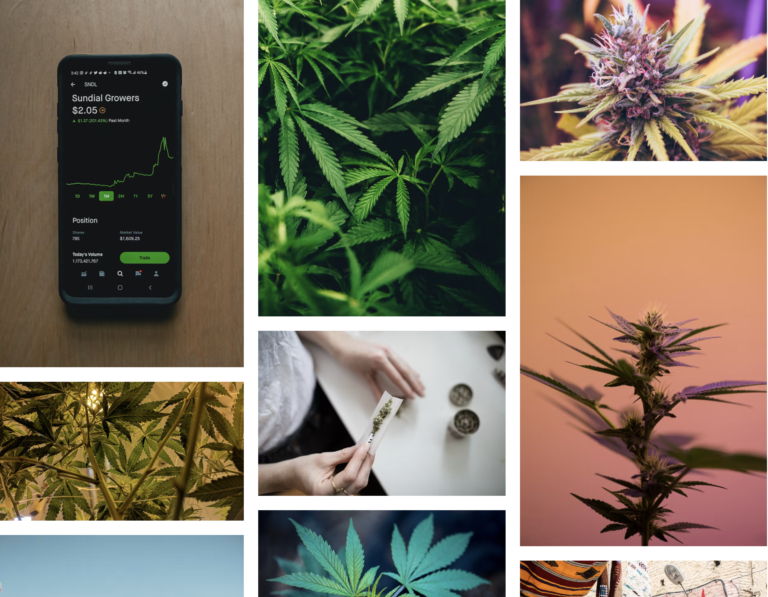
The recent wave of legalization of cannabis globally has caught the attention of investors seeking new and lucrative opportunities. As more countries embrace the potential of the cannabis industry, it has witnessed unprecedented growth, creating a fertile ground for significant investment possibilities.
In this article, we will delve into the intricacies of cannabis as an investment, exploring its potential for financial returns and its impact on the healthcare sector, job creation, and sustainable development. Join us as we uncover the multifaceted world of cannabis investments and the exciting prospects it holds for the future.
The promise of the cannabis industry
The legal cannabis market is becoming prevalent and is growing at a staggering rate. According to a recent report, the size of the global legal marijuana market is expected to reach USD 73.6 billion by 2027. This growth can be attributed to several critical factors, including increased legalization and decriminalization efforts, rising consumer demand for cannabis products, and advancements in technology and research.
But what exactly makes cannabis such an attractive investment opportunity? For starters, the potential for financial returns is enormous. The increasing prevalence and acceptance of cannabis as a medicine and recreational substance has opened up a vast market for cannabis-based products. From beauty and wellness to food and beverages, the applications of cannabis are diverse, making it a lucrative industry for potential investors.
Cannabis is also seen as a sustainable investment option due to its positive environmental impact. As a fast-growing crop, cannabis has been found to have many environmental benefits, like reducing carbon emissions and conserving water usage. It makes it an appealing choice for socially responsible investors looking to make a positive impact.
The risks involved
As with any investment opportunity, there are also risks involved in investing in the cannabis industry. One of the main challenges stems from the legal status of cannabis in many countries. While some nations have embraced its use and legalization, others still have strict laws against it. It creates uncertainty and potential legal hurdles for investors.
The lack of federal regulation in many countries means that the cannabis market is highly fragmented, with varying standards and regulations across different regions. It can make navigating difficult for investors, leading to unpredictable financial returns.
Another risk factor is the volatility of the cannabis market. Due to its relatively new status as a legal industry, there is still a lot of uncertainty surrounding its potential growth and profitability. It can lead to fluctuations in stock prices and unpredictable returns for investors.
Investing in the healthcare sector
One of the most significant potential impacts of cannabis as an investment is in the healthcare sector. With the growing acceptance and legalization of medical cannabis, there has been a surge in research on its medicinal properties. It has led to the development of various cannabis-based pharmaceuticals and treatments for ailments such as chronic pain, anxiety, and epilepsy.
Investing in the healthcare sector of the cannabis industry has the potential for financial returns and contributes to advancements in medical treatments. It can significantly impact individuals’ health and well-being, making it a socially responsible investment option.
Job creation and economic growth
The cannabis industry has emerged as a catalyst for job creation and economic development in many countries. With the expansion of legalization, there is a growing demand for a skilled workforce in various areas such as cultivation, production, and sales. This surge in demand can generate thousands of new job opportunities, stimulating local economies and fostering growth.
Investing in the cannabis industry fuels economic progress, nurtures small businesses, and empowers aspiring entrepreneurs. Investors are pivotal in helping these businesses thrive by providing essential funding and resources. Their support contributes to sustainable economic growth and promotes a flourishing ecosystem within the industry.
Navigating the cannabis investment landscape
To effectively navigate the cannabis investment landscape, staying informed and up-to-date on industry developments and regulations is essential. Researching and analyzing potential investments thoroughly can help mitigate risks and maximize returns.
Investors should also consider diversifying their portfolios by investing in various sectors within the cannabis industry, such as healthcare, technology, and consumer goods. It can help reduce risks and capitalize on the industry’s growth potential. For more information on how to invest in medical cannabis, go to this resource on investing in cannabis stocksand find out how you can get started in this growing market.
All in all
As we have thoroughly explored, the cannabis industry presents many investment opportunities with immense potential for financial returns and positive societal impact. However, gaining a solid understanding of its nuances and associated risks is vital before diving into this promising field. By staying informed and being aware of the legal, regulatory, and market dynamics, investors can make well-informed decisions that align with their goals.
With the increasing acceptance and global expansion of the cannabis industry, its future appears to be exceptionally bright. The legalization and decriminalization efforts in numerous countries and the increased demand for medical cannabis create rich grounds for innovation and growth. It presents an exciting and dynamic arena for adventurous investors who seek to diversify their portfolios and capitalize on the evolving market trends.
The cannabis industry offers a compelling landscape for investors willing to navigate the complexities and embrace its opportunities. With the proper knowledge, due diligence, and a long-term perspective, investors can participate in this thriving industry and shape its future trajectory.
Physically, the building acts as a gateway between the university campus and city – its dynamic social spaces and laboratory facilities are designed to attract exceptional scientists, as well as to foster an interest in the centre’s research activities within the wider community.
The building is arranged as two parallel wings around a central courtyard. The upper levels house twenty-eight highly flexible laboratories linked by social hubs, which are conceived to encourage interaction and the exchange of ideas between students and staff. At ground floor, there are teaching facilities, a 200-seat auditorium, a library, café and a gallery for the display of brain art.
Foster + Partners in Israel
Design tip: help make windows wash themselvesOrange trees help passively heat and cool
The courtyard at the heart of the scheme unites these different functions, establishes new circulation routes through the campus and draws the greenery of the surrounding landscape into the building. Planted with citrus trees and with a water feature along its length, the courtyard forms a quiet, reflective space and a cool microclimate, which can be further mediated by a retractable ETFE roof.
The centre’s progressive environmental strategy makes use of passive techniques to naturally reduce energy use. Local materials, such as Jerusalem stone, are utilised where possible, and the building is orientated east-west to reduce solar gain.
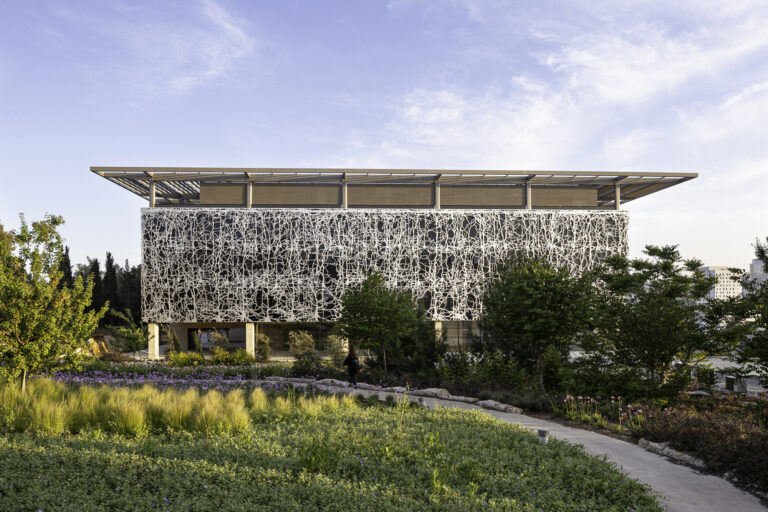
The upper three levels are shaded by a perforated aluminium screen, with a pattern derived from the neurological brain structure. Further passive cooling of the building is provided by translucent ETFE canopies to the west and east, which form distinctive markers for the main entrances.
Suicidal thoughts are linked to sleep deprivation: new study. Prevention of suicide might include a better sleep plan
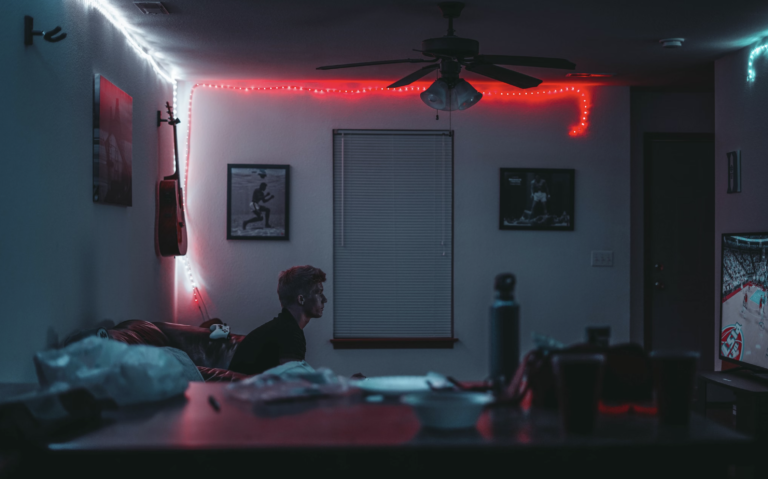
Teens who attempt suicide or even think about it might actually be sleep deprived, finds a new study which found a link between the minutes of sleep at night and suicidal ideation. The study is published in the journal European Child & Adolescent Psychiatry.
Suicide is the leading cause of death among American youth aged 15 to 24 and finding risk factors to stop suicide is a major issue among parents and health practitioners globally.
The new study comes out of the Hebrew University in Jerusalem and has found that sleep deprivation and next-day suicidal ideation in high-risk youth has a link. It is not the first study to look at the risk of lack of sleep and suicide but it is the first to study suicidal teens as young as 12 in an in-patient setting.
The study was led by child psychiatrists Dr. Roy Ratzon and child Dr. Amit Shalev, both affiliated with the Hebrew University of Jerusalem.
Green Prophet interviewed Dr. Shalev: “There is a scarcity of research concerning youth and suicide and today we are not good enough in preventing suicide,” he says. “Most research that has come out in this area is about adults. The other aspect that makes our study unique is the population –– we are talking about youth at high risk for suicide, which gives us a very rare or important opportunity to see how they are doing. We can examine our interventions to see if they have an important thing to say about this specific population admitted to inpatient care.
“This is the highest risk group I can think of with certainty. We have those who have attempted suicide multiple times, and we are working with them in a highly guarded and closed ward.
“The bottom line is that sleep is a very important target for monitoring as a proximal risk factor for suicidal youth,” says Shalev. “If I understand that suicidal youth do not sleep well we can help them better.”
The researchers interviewed 29 adolescents, 12 to 18 years old, admitted to the inpatient psychiatric ward after a suicide attempt or after expressing suicidal intent within the previous month. They conducted objective (actigraphy) and subjective sleep pattern assessments over ten consecutive days using a sleep diary.
Daily suicidal ideation was evaluated using a questionnaire and the researchers found a significant positive association was observed between sleep onset and expressing a “death wish” the following day, with each minute of not being able to fall asleep increasing the risk for a death wish the following day by 6%.
A marginally significant negative association was observed between total sleep time and expressing a “death wish” the following day, with each one-hour decrease in objectively measured total sleep time increasing the odds of a death wish by 43%.
“There is so much in psychiatry that is not measurable. Sleep patterns is an important direction for intervention,” says Shalev who is working with the University of Pittsburgh to better examine the efficacy of sleep intervention for youth. Does TSC or the trans diagnostic sleep circadian rhythm help prevent suicide in youth? This is a question he wants to answer.
Shalev’s is part of a bigger study that aims to examine the efficacy of novel interventions developed for BRITE –– an app and program was developed by researchers and faculty in psychiatry and psychology at the University of Pittsburgh and University of Texas Southwestern (UTSW).
Tips for helping teens get better sleep
Some take home ideas to educators and parents? Start the school day later in the day for high-school students. According to the National Educators Association the majority of teenagers do not get the recommended 8 to 10 hours of sleep. Inadequate sleep can lead to countless negative health consequences that impact students’ ability to learn.
Many experts have advocated for later school start times—sometimes up to an hour later, to help students get the sleep they need. In 2022, California became the first state to mandate a later school start time.
Shalev, who counsels patients and parents, says that parents can help teens by emphasising the importance of sleep: “Parents shouldn’t be too strict about it, but they should give good sleep hygiene advice,” he tells Green Prophet.
Other tips? “Use a blue light filter at night on your screens, and tell your teens you prefer them not to sleep with their phone in the room,” he says. “Maintaining a deadline for bedtime along with time limits on smartphone and social media use is a good idea,” Shalev adds.
One should let children who do not sleep well know they can be helped. There are sleep doctors and people who specialise in sleep and can help parents as well.
Teens change their sleep patterns throughout their development with a natural shift in their sleep times. Melatonin is secreted later in the day in teens, so they tend to sleep later at night and longer in the morning. And there is something natural in that, Shalev explains. But the magnitude of the shift is important to monitor and this is where therapists and physicians can help.
In Israel, Shira Barzilay and Michal Zohar are working on an app to prevent suicide risk using big data. Globally, on the next frontier of artificial intelligence, sleep and health Carnegie Melon is applying data to predict suicidal risk with researcher David Brand.
Saving black churches with a new fund. “The heart of our spiritual world is the Black church”
Martin Luther King would be proud: as the US commemorates the life and impact of Reverend Dr. Martin Luther King Jr., the National Trust for Historic Preservation’s African American Cultural Heritage Action Fund is awarding $4 million in its second round of Preserving Black Churches grants to 31 historic Black churches across the US. With over $95 million in funding, the Action Fund is the largest American resource dedicated to preserving historic African American places. Since launching the Preserving Black Churches in 2022, the Action Fund has provided over $9.8 million in grants to over 80 historic churches. Even though signs of Christianity may be wavering in some communities, the church should stand for community and be a place to gather.
Black churches stand as timeless bastions of faith, resilience, and achievement in communities across America. These sacred spaces have been the birthplace of movements, the planning grounds for change, and a refuge for those seeking solace, says press material from the fund. “We created the Preserving Black Churches program to ensure the historic Black church’s legacy is told and secured.
“That these cultural assets can continue to foster community resilience and drive meaningful change in our society,” said Brent Leggs, Executive Director of the African American Cultural Heritage Action Fund. Preserving Black Churches is a $20 Million Action Fund program that equips historic Black churches and their congregations with the critical resources and technical preservation expertise to protect the historic assets and legacies they steward.
With this round’s grants ranging from $50,000 to $200,000, the Preserving Black Churches program helps congregations solve urgent and ongoing preservation threats such as deferred maintenance, insufficient funding, demolition, water filtration, and mold contamination.
Henry Louis Gates Jr. attends the 16th Annual National Arts & Entertainment Journalism Awards Gala at Millennium Biltmore Hotel Los Angeles on December 03, 2023 in Los Angeles, California. (Photo by David Livingston/Getty Images)
“Black churches have been at the forefront of meaningful democratic reform since this nation’s founding. They’re a living testament to the resilience of our ancestors in the face of unimaginably daunting challenges,” said Henry Louis Gates, Jr., historian and advisor to the Action Fund. He is the host of the PBS program Finding Your Roots. “The heart of our spiritual world is the Black church. These places of worship, these sacred cultural centers, must exist for future generations to understand who we were as a people.” Sites selected for this year’s Preserving Black Churches grants include historic sites such as:
Founded by a group of freedmen, St. James is the oldest Black Protestant church in New Orleans. It served as the headquarters for the Louisiana Native Guards, Black Union soldiers during the Civil War, and was a staging site for marches during the Civil Rights movement. Funding will allow the church to make roof repairs that will stop 18 years of water intrusion in the upper sanctuary balcony and restore the church’s historic facade.
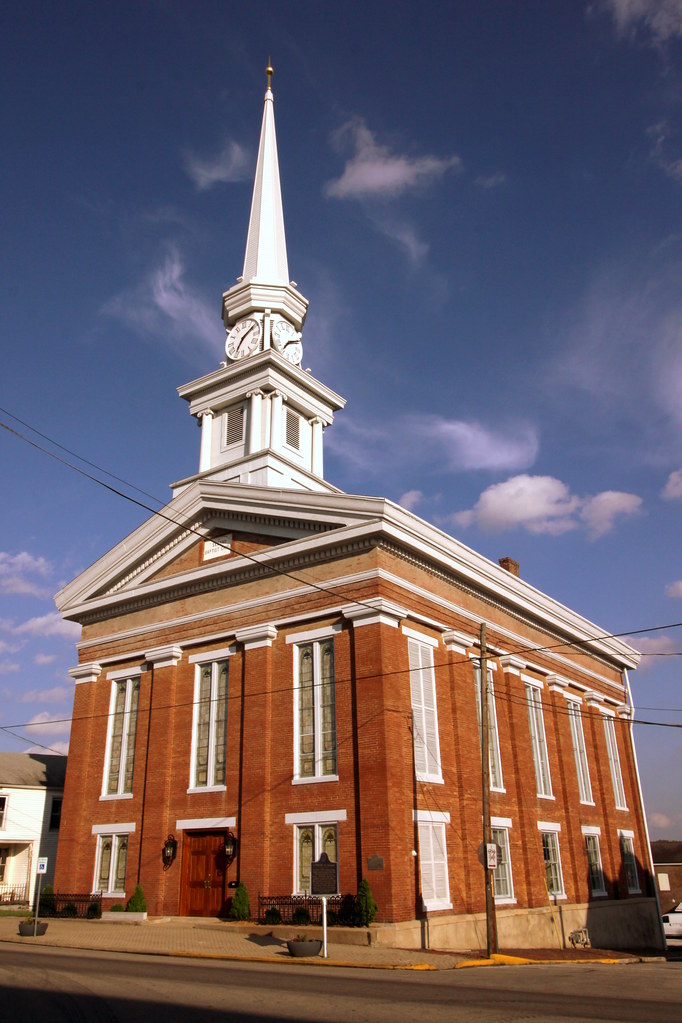
Town Clock Church in New Albany, Indiana
Town Clock Church in New Albany. Image by Brent Moore
Built in 1852 as Second Presbyterian Church, the building served as a station on the Underground Railroad. Oral histories claims that the structure’s basement hid fugitives and an adjoining tunnel led from the north side of the building to what was once a hotel across the street. Funding will support endowment growth to ensure that the 2014 restoration and preservation efforts are sustained in the future.
Big Bethel African Methodist Episcopal Church in Atlanta, Georgia
The oldest predominantly African American congregation in the Atlanta metropolitan area, Big Bethel AME Church was founded in 1847 and is the birthplace of Morris Brown College—the first educational institution in Georgia to be owned and operated entirely by African Americans. The Church hosted the first National Convention of the National Association for the Advancement of Colored People (NAACP) in 1920. Funding will support time-critical structural repairs and remedy safety concerns due to severe interior and exterior water damage.
Henderson Chapel AME Zion Church
Henderson Chapel AME Zion Church
The church was constructed in 1890, and its front gable form represents the architectural style of rural churches built between 1870 and 1950. The church served as a center of cultural activity throughout the Jim Crow Era as the site of lectures, community picnics, and other social activities. The building is not currently in use due to structural issues. Funding will support an architectural assessment and comprehensive preservation plan to restore the chapel so that it may serve as a place of worship, community event space, and tourist attraction.
Sehmus Erginoglu poses with photo of trees he helped restore. (All pictures by Murat Bayram/MEE)
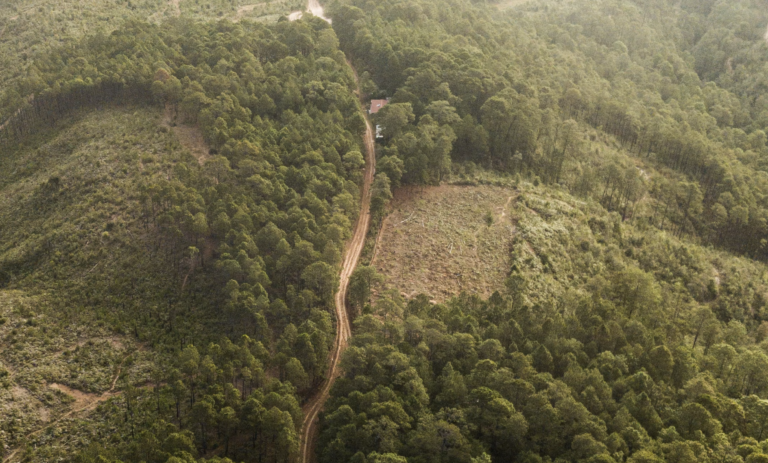
A beautiful story to carry one’s legacy and to make Miss Rumphius proud: a man in Turkey has single-handedly restored a forest in his hometown. Sehmus Erginoglu now in his early 70s decided to do something about an area of wasteland in his home city of Mardin in southern Turkey.
According to the Middle East Eye he began by clearing out rubbish from the site about 30 years ago, and then he installed water pipes and eventually started to plant saplings. Today the site is home to a small forest of around 11,000 trees, with thousands more planted in areas nearby.
Sehmus Erginoglu
In a world breeding so much intolerance and hatred for the “other” inside Turkey and the Middle East at large, let’s take Erginoglu’s example and make the world a bit better than the way we found it.
As a teen in French class in Canada we read The Man Who Planted Trees (L’homme qui plantait des arbres). The story of Elzéard Bouffier is an allegorical tale by French author Jean Giono, published in 1953 which tells the story of one shepherd’s long and successful effort to re-forest a desolate valley in the foothills of the Alps, near Provence, throughout the first half of the 20th century.
Erginoglu has taken the cue: “I have built 50 spring water fountains in Mardin. I have only planted 10,000 saplings in Savurkapı, and I keep going further. I come every day to water the saplings,” he told Hurriyet, a Turkish newspaper.
His only request to visitors was not to damage the trees.
Turkey’s Agriculture and Forestry Minister Bekir Pakdemirli has shared showing him as an example in the public eyes. But we do know that forest protectors in Turkey have been murdered. And you can go to jail if you are reporting about toxicity in the soil.
The story of Erginoglu is an inspiration for ecological regeneration brought about by man. And if you are wondering Miss Alice Rumphius is a children’s story about a woman who sought a way to make the world more beautiful and found it in planting lupines.
Pollination is big business in the United States. Pollination from bees, beetles, flies and birds makes sure that olive trees and agriculture crops such as strawberries and almonds will grow. In fact 75% of all pollination comes from bees. But about 40% of managed honey bee colonies in the US were lost between 2021 to 2022, a problem for farms and farmers.
Part of the reason the bees are being lost –– or colonies dying –– I am acutely aware, is because of the conventional farming system that creates monoculture crops and which uses pesticides. However, beekeeping for honey and as a pollinator service is big business in the United States, expected to grow to about $700 million USD by 2027.
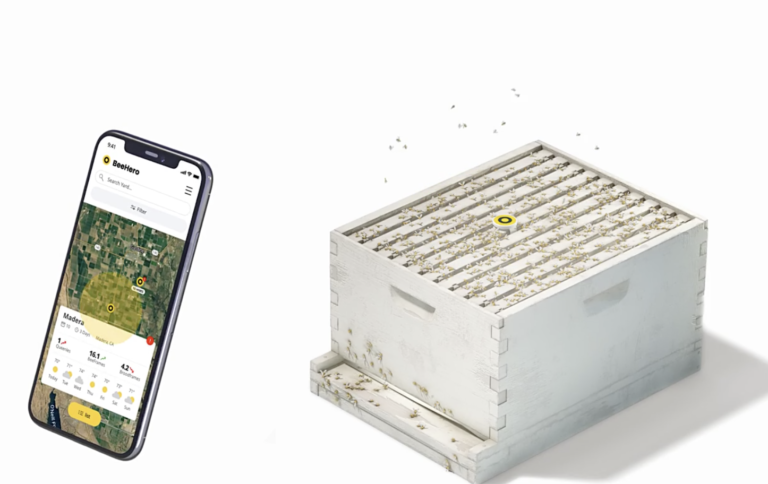
A startup from Israel called BeeHero, based now in California with an R&D office in Tel Aviv, is using sensors and data to help conventional beekeepers maintain healthy hives. A sensor in the hive that monitors conditions paired with data inputs from research and a sharing app helps commercial beekeepers keep track of their hives in the field, real time.
In 2022 BeeHero had already raised $42 million USD. This year they are voted one of 100 companies of the year by the CleanTech Group. The Cleantech Group totaled 25,435 nominations from over 65 countries to offers a fair representation of global innovation and private company creation.
Beeher’s latest $42M Series B funding round led by Convent Capital was joined by General Mills, Cibus Capital (formerly ADM Capital), Rabobank, MS&AD, Firstime, J-Ventures, Plug&Play, iAngels, Gaingels, UpWest, and more. By that point they had raised $64M.
BeeHero creates what they call a Healthy Hive Score, a metric for measuring bee health that promotes bee welfare management. Their beehive sensors collectively saved a quarter of a billion bees this past year, according to their data, and beekeepers using BeeHero’s technology have reported 33% fewer colony losses compared to the US national average.
BeeHero screengrab
As the human population continues to rise, growers are faced with the challenge of producing more food with fewer resources. Bee pollination is indispensable to this production of the world’s most valuable and nutritious foods, providing $18 billion annually in value to US agricultural crops alone.
BeeHero currently runs the largest database of bee behavior in existence, according to the company. They have amassed data from hundreds of thousands of monitored colonies, and existing academic research, to give beekeepers a way to assess colony health based on colony growth, brood health, and queen presence, normalized against weather conditions and flight hours.
Beehives in the Banias, Israel. Photo by Karin Kloosterman for Green Prophet
For growers, they can decide where and when to place bees for better pollination rates: “While beekeepers and growers depend upon strong and healthy hives, they have long struggled to accurately see inside their hives to better understand and care for their colonies, leaving both their crop yields and bottom lines at risk,” says Omer Davidi, the CEO of BeeHero. This is especially true in the United States and Canada where a significant number of colonies do not withstand winter. Other stressors include disease and climate change.
We wrote about the problems with almonds and almond milk here. And our demanding almond milk is also part of the problem. California supplies 80% of the world’s almonds. In 2019, that amounted to 2.5 billion pounds of the nuts. And the demand rises, with companies especially eyeing the growing Chinese market. California farmers have ripped out citrus trees and planted almond groves that cover over 1000,000 acres – an area comparable to the size of Delaware.
While Americans eat plenty of almonds – an estimated 900 grams every year – it’s the demand for almond milk that’s driving the industry. At sales of $1.2 billion yearly, hugely topping other non-dairy milks, it’s easy to see why.
The catch is that almond farmers can’t rely on native bees to pollinate their orchards. There aren’t enough of them, and they can’t be counted on to pollinate a predictable number of trees. The farmers contract commercial beekeepers to transport their hives to the orchards while the trees blossom. 1.6 million hives are needed to make USA almond trees produce every spring – over ten times what other crops, like apples, demand.
And this is where BeeHero hopes to fit into the market.
The first application of BeeHero’s Healthy Hive Score was during the 2023 almond pollination season in California. Growers received scores based on analysis of each of the orchards pollinated by hives under BeeHero management. Based on the average outcome of almonds per acre, growers that worked with BeeHero during this season collectively produced about 270 million pounds of almonds all grown under bee-friendly conditions.
A lot of people trust major organizations and regulatory bodies to fix all the problems. Sure, major industries like mining and manufacturing are the largest polluters in the world, but what about personal responsibility?
There’s nothing easier than waiting for someone else to fix the problem, but what about making a personal effort to fix the problem? What about personally contributing to the resolution of these problems?
Well, there are five major choices that every individual can make in order to lead a greener life. Here’s how each of these choices can benefit you, other than just saving the planet.
Switch to water-saving practices
Tomatoes growing at RedSea farms, Saudi Arabia
Water conservation is important for the future of our planet, but it also lowers your water bill. Most importantly, there’s a way for you to save water without impacting your daily routine in any way.
The first thing you can do is be more mindful of the way you’re spending water. Rinse instead of washing, turn the tap off while brushing, and try to stick to similar water-conserving behavior patterns as best as you can.
The easiest way to save water is to go with low-flow fixtures. By replacing your toilet, faucet, and showerhead with low-flow alternatives, you’ll save huge amounts of water and never feel the difference. Your toilet alone is responsible for one-quarter of all water spent in your household. A low-flow toilet is just as efficient, but it wastes a lot less water.
Next, you want to change the way you’re watering your garden. While drip irrigation is quite an effective (and surprisingly water-efficient) way to water these plants, there’s a way to go even beyond. Smart irrigation systems are, by far, the most efficient way to ensure that your plants get the exact amount of water they need. In other words, it’s a boon to both your water saving and your gardening.
Choose greener digital practices
Looking for a server powered by the sun?
The majority of individuals use at least one or several digital devices. The choice of the right device can reduce the amount of power that your household uses, but it’s not just about hardware.
By using cloud computing, you usually spend less power than if you were to store data on your own devices. Sure, these data centers often get a bad reputation for being power-hungry, but if you look at the equivalent of storing an equivalent amount of data on private devices, you’ll get a chance to see just how big of a difference this can make.
When hosting, make sure to check if the host in question is “green.” Sure, a lot of people don’t pay much attention to the carbon footprint of their site, but all it takes is just a bit of research to make a significant difference.
You can even make a difference with a VPN that’s optimized for server usage. To understand how this works and find the platform that will deliver the best results, you might want to first go through some VPN guides and resources.
Ultimately, you need to be extra careful when disposing of anything containing electronics. Make sure to dispose of it in a prescribed way and prioritize methods that offer recycling.
Green gardening
In order not to drain the soil and torment the ecosystem of your property, you need to start with the right plan. This means researching plants that work well in your climate and taking your soil for analysis. If you make the right selection of plants, your effort will be minimal, and you won’t have to disturb the local ecosystem too much.
Another concept worth exploring is the one of companion planting. Some plants are natural repellents of pests that destroy your other crops. By planting them next to each other, you can improve the crop yield without using pesticides and polluting the soil.
You should also start composting. This way, you’re recycling your food leftovers and providing your garden with a lot of natural nutrients. You can use almost all of your food leftovers except for meat and dairy. Even eggshells can be used.
In order to keep your garden warm during the colder part of the year and prevent it from losing too much moisture during summer, you might want to consider mulching. All you need to do is get a wood chipper and use any branches and debris that you encounter on your property. Just make sure that you don’t do this with processed wood since it has chemicals that might be released into the soil.
Mindful shopping
Another thing you need to do is consider what you’re buying. Read the labels and check how your products are made. It’s not just about buying something that has a harmful or dubious origin, it’s about feeding the money into that industry, potentially making it even larger in the future.
You also want to support ethical businesses by diverting your resources toward them and incentivizing them to keep doing a great job. This will not only feel good but also produce a butterfly effect further down the line.
Buying locally is also a conscientious choice. The thing is that even if someone else is delivering the product, it still has to be delivered. If you’re ordering it from anywhere in the world, the process of shipment will cause pollution. We’re not suggesting that you completely stop ordering products online, but it might be a good idea to start by checking if there are such products locally.
Planning bigger, fewer grocery runs is another amazing idea. This way, you take fewer trips. Ordering online doesn’t really help since you’re having someone take the trip either way. Sure, one might argue that they would be passing down this route to deliver to someone else, and, in that case, this would be the less polluting alternative.
Reexamining your transportation habits
Try cycling by the sea in Venice, LA
Lastly, you need to start reexamining your transportation habits.
Public transportation and carpooling are the best course of action, but they can be quite inconvenient, and they’re not always available. Your office might be too far out of the way, and while walking 30 minutes from the bus station is even greener, the majority of people don’t have the luxury of that much extra time.
You might also want to consider cycling and walking from time to time. Sure, some people live in remote areas, and not a lot of people are willing to relocate in order to get more transportation options (for the sake of eco-friendliness). Still, you don’t have to go that far. We’re just suggesting that you could walk when you have the time and energy.
Most importantly, there is a way that will allow you to save money on gas, as well as keep driving in a more eco-friendly manner. You could switch to an electric car or a hybrid. Sure, a lot of people are concerned about being early adopters and have the so-called range anxiety, but these problems are getting better and better solutions by the minute. If not, you could at least, take gas mileage into consideration when buying your next car.
When you want something done, do it yourself
The last thing you need to consider is the importance of taking action and making adjustments to your life. Sure, your household is not going to save the planet or ruin it, but it’s important to take sides. Spending just one glass of water less per day makes more difference than all the moral grandstanding in the world. Always keep that in m
Aquellum is a new Aqaba-area giga project by Neom on the Red Sea
It seems like every week Neom, the Saudi Arabian-run company building The Line, the world’s first 15-minute city, is coming up with a new idea. Last week the fantasy was about Leyja, “sustainable” hotels in the desert. This week the fantasy is about Aquellum, a futuristic community for global nomads that will be completely encased in a mountain, invisible to anyone outside. But accessible from the Aqaba coast on the Red Sea though a “secret” location.
The coastal destination will be a hub for hotels, apartments, retail spaces, leisure and entertainment zones and innovative hubs, all in a vertical format, says Neom.
Some press bites about Aquellum: “A signature space, dubbed The Generator, houses unique research labs for disruptors, innovators, and creative thinkers, offering a platform where the future is reimagined.
“An omnidirectional internal transit system facilitates easy access to upper floors, transporting residents and visitors to their homes and hotels, ascending to rooftop gardens with breathtaking coastal views.”
Fun ideas, but nothing will be developed or populated by foreigners if Saudi Arabia can’t reign in Iran and the troubles with the Yemeni Houthi terrorists. The Houthis have been highjacking ships and firing at Saudi Arabia for years, and most recently taking the opportunity of the Hamas war with Israel to start shooting at Israeli-linked tankers. The Houthis held an oil tanker hostage for years and released it to international bodies just this summer to drain the oil cargo before it leaked into the sea. This was after several years of campaigns to get the Houthis to let the ship go.
Deforestation in the Amazon is causing fewer storms
For the first time scientists have determined that due to the ongoing deforestation in the Amazon basin in recent decades, the number of thunderstorms and rain in the region has decreased significantly, and the area over which they occur has shrunk.
This is opposite to what happens in other places, says climate change expert Colin Price: “In most areas of the world, global warming has resulted in an increase in the number of thunderstorms, but in this study we discovered that precisely in those areas where deforestation has increased the number of storms actually decreased, even with rising temperatures,” he says.
These findings are worrying because a decrease in the amount of storms leads to a decrease in the amount of rain, which in turn causes further damage to the forests. This is a dangerous feedback loop, which could severely damage the forests that provide the earth with a significant portion of the oxygen in the atmosphere and absorb a large portion of the carbon dioxide emitted by us into the atmosphere.”
What’s happening here? Price who has studied weather events and climate change for decades, postulates: “The Amazon tropical rainforests are the largest in the world and play a critical role in regulating the earth’s climate. These forests are often called ‘the lungs of the earth’, because through the process of photosynthesis the forests produce a significant portion of the oxygen in the atmosphere and absorb a large amount of its carbon dioxide – a greenhouse gas that makes a significant contribution to climate change.”
Cutting down the rainmakers
The rainforests themselves produce their own rain,” says Price. “The trees emit water vapor via evaporation into the air that eventually condenses and forms clouds and rain above the rainforests. The forests influence the local and regional rainfall.”
The researchers point out that these important processes are currently in danger due to the extensive activity of deforestation in the Amazon, from cutting down trees for wood and clearing areas for agriculture, infrastructure development, and mining.
In the 30 years between 1990 and 2020, forests whose total area is larger than the entire continent of Europe were destroyed in the Amazon basin. To sum up: the destruction of rainforests impacts global oxygen levels, while increasing the greenhouse gases in the atmosphere, and disrupts natural rainfall patterns that may lead to further drought in some areas. In addition, the trees that have been cut down are often burned, releasing additional carbon dioxide into the air and contributing to global warming.
In this study the researchers tracked changes in thunderstorms in the Amazon basin in recent decades using a variety of mapping and tracking technologies.
“We expected to find an increase in the number of storms due to global warming, as has been observed in many regions of the world, but to our surprise we found the opposite trend: a decrease of 8% over 40 years.
“Further analysis revealed that most of the decrease was observed precisely in those areas where the rainforests were replaced by agriculture or other human activity. The decrease can be explained by the fact that the absence of the forests significantly reduced the moisture in the air, which is the source of energy and moisture needed for the formation of thunderstorms.
“The result is fewer thunderstorms, fewer clouds, less rain, and consequently less growth of the forest. This creates a dangerous feedback loop that can cause the forests to dry out and significantly reduce the vital contribution of the ‘Lungs of the Earth’ to oxygen production and carbon dioxide absorption.”
Where is the Amazon Forest and how can you help?
The Amazon is a vast biome that spans eight rapidly developing countries—Brazil, Bolivia, Peru, Ecuador, Colombia, Venezuela, Guyana, and Suriname—and French Guiana, an overseas territory of France.
Take deforestation from your diet
Many of the foods we eat are grown on land cleared for beef and soy and palm oil. Eat less beef, palm and soy and it will help.
Buy Amazon Land for preservation
Find a local group near you pooling funds to buy Amazon forests that can be reserved for preservation.
Find ways to support indigenous people
Decision makers and corporations create the fate for the Amazon. Support local people and help them develop sustainable incomes that don’t require slashing and burning the lungs of the planet.
Sitting in a field in the heart of Uzbekistan’s Fergana Valley, Shaodatkhon Oripova’s greenhouse isn’t just the simple structure it used to be. It’s now alive with digital sensors connected to the internet, through which the 62-year-old farmer can control the temperature, humidity, light and soil moisture. Uzbek farmers also work with drip irrigation.
“In the past,” she said, “a lot of my earnings would disappear into paying for utility bills and buying fertilizers,” says the mother of three, whose farm produces herbs, tomatoes, lemons, corn and clover.
Now, Shaodatkhon can better regulate these inputs through the sensors. If anything needs to be adjusted in the greenhouse, her mobile phone buzzes to alert her.
New “smart” farming techniques and technologies, like drip irrigation and pest traps, are helping farmers in Uzbekistan revolutionize their greenhouses, save water and increase their crop yields and incomes.
These sensors were particularly useful over the summer when extreme heat and lack of water impacted production from her greenhouse. While other farmers sustained great losses, she was able to maintain her production at close to last year’s levels.
Shaodatkhon has been used to the hard work and highs and lows of farming. “I was born into a family of farmers, and I have been a farmer my whole life, but it has not been easy,” she said.
It is a different type of farming now. Shaodatkhon describes how every day is a new learning experience with digital technology. She can now free up more time for other things such as marketing her produce, spending time with her family and improving her education and quality of life.
Shaodatkhon is one of the farmers taking part in the Smart Farming for the Future Generations project of the Food and Agriculture Organization of the United Nations (FAO). It is closely aligned with the Digital Villages Initiative, which was introduced in the villages of Novkent and Yuksalish in the Fergana Valley of Uzbekistan in 2023.
The Digital Villages Initiative is a flagship programme of FAO aiming to transform at least 1 000 villages around the world into digital hubs. The initiative seeks to foster rural transformation and empower communities through digitalization and participatory approaches to combat hunger, poverty and inequality. The Digital Village Initiative helps farmers access technology to boost production, access rural services and improve livelihoods.
But it’s not just farmers who are getting involved. FAO is also offering training programmes to local young people. A coding camp helped train youth in replicating smart sensor devices. In the culmination of the training programmes, a Digital Villages Hackathon took place in November 2023 yielding an array of innovative agritech solutions to the challenges faced by rural people in the Fergana Valley.
The continuation of regular collaborative innovation workshops, known as “living labs”, also provides a vital platform for exchange among farmers, experts and innovators. During these sessions, farmers like Shaodatkhon and her family discuss the challenges they face, for example heating the greenhouse against the biting winter cold. Other topics brainstormed with a range of local actors and experts have included water scarcity, a lack of infrastructure and limited access to reliable extension services.
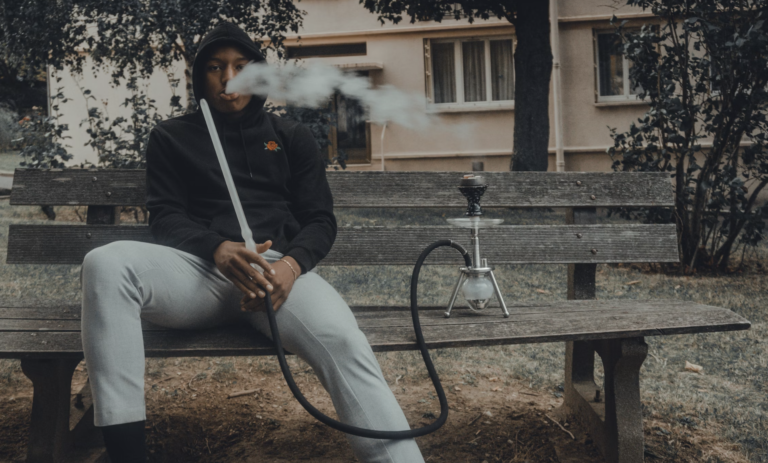
Smoking is still a big deal in the Middle East. Tel Aviv smokes like Paris in the 80s, and the hookah and shisha pipe is going strong in every city where the taste of apple tobacco makes you forget that the smoke is bad for your lungs. Vaping is pretty much everywhere in the world. Parents typically shoo the kids outside or smoke on the balcony but the residue from smoking can also do harm, finds a new study, citing third-hand smoke.
In a new study, published in the Journal of Exposure Science & Environmental Epidemiology, researchers tested the surfaces in smoking households where children reside and found troubling results, says Ashley Merianos, a tobacco researcher at the University of Cincinnati who led the study.
Researchers found nicotine on surfaces in all of the children’s homes and detected the presence of a tobacco-specific carcinogen (called NNK) in nearly half of the homes, she says. The study reported that the NNK levels on surfaces and vacuumed dust were similar, which Merianos says indicates that surfaces and dust can be similar reservoirs and sources of thirdhand smoke exposure for children.
Ashley Merianos
“This is critically important and concerning, since NNK is considered the most potent carcinogen for tobacco-induced cancers,” says Merianos, an associate professor in UC’s School of Human Services.
Nicotine affects poorer families
Children living in lower-income households had higher levels of NNK and nicotine found on home surfaces.
Children living in homes that did not ban indoor smoking had higher levels of NNK and nicotine found on surfaces.
Merianos says that NNK and nicotine were still detected in homes with voluntary indoor smoking bans, which highlights the persistence of thirdhand smoke pollutants on surfaces in children’s homes: “This research highlights that home smoking bans do not fully protect children and their families from the dangers of tobacco,” she adds.
The enzyme that makes urine yellow has been finally identified. It has been known for more than 125 years that a compound called urobilin is responsible for urine’s yellow colour. But it was unclear how exactly it is created from the red-orange bilirubin.
“It’s remarkable that an everyday biological phenomenon went unexplained for so long, and our team is excited to be able to explain it,” Brantley Hall, an assistant professor in the University of Maryland’s Department of Cell Biology and Molecular Genetics, said in a news statement.
This waste product from degraded red blood cells can lead to jaundice and neurological damage if too much of it builds up in the body.
The enzyme, bilirubin reductase, is made by gut microbes and converts bilirubin into colourless urobilinogen, which breaks down further into yellow urobilin.
“Gut microbes encode the enzyme bilirubin reductase that converts bilirubin into a colorless byproduct called urobilinogen,” Hall, the study’s lead author, said. “Urobilinogen then spontaneously degrades into a molecule called urobilin, which is responsible for the yellow color we are all familiar with.”
The study authors said that before their research, scientists thought there were multiple enzymes involved, rather than a single enzyme.
A steak grown in the lab made by Aleph Farms. Is it a pharmaceutical product or a food product?
Lab-grown meat companies such as US–based Mission Barns and Israel-based Aleph Farms (includes Leonardo Dicaprio as investor), are making cultured meat from animal cells. This process is often marketed to be more environmentally friendly than beef because it’s predicted to need less land, water and greenhouse gases than raising cattle.
But in a preprint, not yet peer-reviewed, researchers at the University of California, Davis, have found that lab-grown or “cultivated” meat’s environmental impact is likely to be “orders of magnitude” higher than retail beef based on current and near-term production methods.
Researchers conducted a life-cycle assessment of the energy needed and greenhouse gases emitted in all stages of production and compared that with beef. One of the current challenges with lab-grown meat is the use of highly refined or purified growth media, the ingredients needed to help animal cells multiply. Currently, this method is similar to the biotechnology used to make pharmaceuticals. This sets up a critical question for cultured meat production: Is it a pharmaceutical product or a food product?
“If companies are having to purify growth media to pharmaceutical levels, it uses more resources, which then increases global warming potential,” said lead author and doctoral graduate Derrick Risner, UC Davis Department of Food Science and Technology. “If this product continues to be produced using the “pharma” approach, it’s going to be worse for the environment and more expensive than conventional beef production.”
The scientists defined the global warming potential as the carbon dioxide equivalents emitted for each kilogram of meat produced. The study found that the global warming potential of lab-based meat using these purified media is four to 25 times greater than the average for retail beef.
A more climate friendly burger in the future?
Beyond Meat, a flailing meat alternative company that uses pea protein, uses the lab to refine its ingredients for Beyond Burger, but is not considered lab-based meat
One of the goals of the industry is to eventually create lab-grown meat using primarily food-grade ingredients or cultures without the use of expensive and energy-intensive pharmaceutical grade ingredients and processes.
Under that scenario, researchers found cultured meat is much more environmentally competitive, but with a wide range. Cultured meat’s global warming potential could be between 80% lower to 26% above that of conventional beef production, they calculate. While these results are more promising, the leap from “pharma to food” still represents a significant technical challenge for system scale-up.
“Our findings suggest that cultured meat is not inherently better for the environment than conventional beef. It’s not a panacea,” said corresponding author Edward Spang, an associate professor in the Department of Food Science and Technology. “It’s possible we could reduce its environmental impact in the future, but it will require significant technical advancement to simultaneously increase the performance and decrease the cost of the cell culture media.”
Even the most efficient beef production systems reviewed in the study outperform cultured meat across all scenarios (both food and pharma), suggesting that investments to advance more climate-friendly beef production may yield greater reductions in emissions more quickly than investments in cultured meat.
Risner said even if lab-based meat doesn’t result in a more climate-friendly burger, there is still valuable science to be learned from the endeavor.
“It may not lead to environmentally friendly commodity meat, but it could lead to less expensive pharmaceuticals, for example,” said Risner. “My concern would just be scaling this up too quickly and doing something harmful for the environment.”











 “There is so much in psychiatry that is not measurable. Sleep patterns is an important direction for intervention,” says Shalev who is working with the University of Pittsburgh to better examine the efficacy of sleep intervention for youth. Does TSC or the trans diagnostic sleep circadian rhythm help prevent suicide in youth? This is a question he wants to answer.



 The oldest predominantly African American congregation in the Atlanta metropolitan area, Big Bethel AME Church was founded in 1847 and is the birthplace of Morris Brown College—the first educational institution in Georgia to be owned and operated entirely by African Americans. The Church hosted the first National Convention of the National Association for the Advancement of Colored People (NAACP) in 1920. Funding will support time-critical structural repairs and remedy safety concerns due to severe interior and exterior water damage.