Home Blog Page 79

How the Emirates is green powering Caribbean islands

0
Bermuda hurricane resistant solar panels
Island nations are at risk for climate change. A new solar plant will enable Barbuda to reduce annual diesel fuel consumption by 406,000 litres and cut carbon dioxide emissions by over 1 million kg.

The United Arab Emirates UAE-Caribbean Renewable Energy Fund (UAE-CREF) announced that the hurricane-resistant power project developed by Masdar for Antigua and Barbuda to withstand even the fiercest winds, is now operational.

In the wake of Hurricane Irma, which destroyed 95 percent of Barbuda on 6th September, 2017, and forced all 1,800 residents to be evacuated to Antigua, the climate-resistant plant is designed to survive 265 km-per-hour winds and provide a safe, reliable, and sustainable supply of electrical power for the island.

Some of Green Prophet’s family members were airlifted out of Dominica after a hurricane destroyed the island.

The hybrid solar, batteries, and back-up diesel project is already helping to support the twin-island nation’s objective of meeting 86 percent of its electricity sources from renewable energy by 2030. The Green Barbuda project was formally inaugurated at an event on the island of Barbuda by Gaston Browne, Prime Minister of Antigua and Barbuda, Hazza Ahmed Al Kaabi, UAE Ambassador to the Republic of Cuba, and Ambassador Brian Challenger from Ministry of Energy of Antigua and Barbuda, accompanied by a delegation from local and state entities.

Masdar developed and implemented the Green Barbuda project as part of its work under UAE-CREF, the largest renewable energy investment of its type in the region.

greencells masdar office
Masdar’s model eco city just outside Abu Dhabi

Fully financed by the Abu Dhabi Fund for Development (ADFD), the US$50 million UAE-CREF was launched at Abu Dhabi Sustainability Week 2017 as a partnership between the Ministry of Foreign Affairs (MoFA), ADFD and Masdar. New Zealand, Antigua and Barbuda and the CARICOM Development Fund (CDF) also provided funding for the project.

Mohamed Saif Al Suwaidi, Director-General of ADFD, said, “It is a landmark achievement for the UAE-CREF to have driven an energy transformation in Antigua and Barbuda at such a scale. The project took into consideration the country’s high dependence on fossil fuel imports for energy needs despite having the potential to exploit its solar, wind and geothermal power. This initiative highlights the extraordinary capability of clean energy to drive socioeconomic development. This is why ADFD is multiplying its effort to accelerate the energy transition in the developing world, as the UAE leads the way to a low-carbon and zero-emission future.”

Read Also: Masdar shows off smart city and smart irrigation

Renewable energy plays a key role in enhancing energy security within emerging markets, especially in small island countries that are vulnerable to the consequences of climate change.

The Prime Minister of Antigua and Barbuda, Gaston Browne, said, “The Government and people of Antigua and Barbuda are extremely appreciative of the assistance from the UAE in our efforts to achieve sustainable development. In that regard, the Green Barbuda electricity project has been a truly transformative one for Barbuda. It harnesses our indigenous renewable energy resources and has provided for the transfer of cutting-edge technologies as well as capacity building at the local level to manage the project.

The project supports Antigua and Barbuda’s efforts to reduce its dependence on costly and volatile imported petroleum fuels and to develop our own renewable energy resources. At the same time, it also enables us in both adapting to and mitigating the adverse impacts of climate change. We look forward to continuing to collaborate with the UAE and other partners in expanding this project as a showcase of sustainable energy in the Caribbean.”

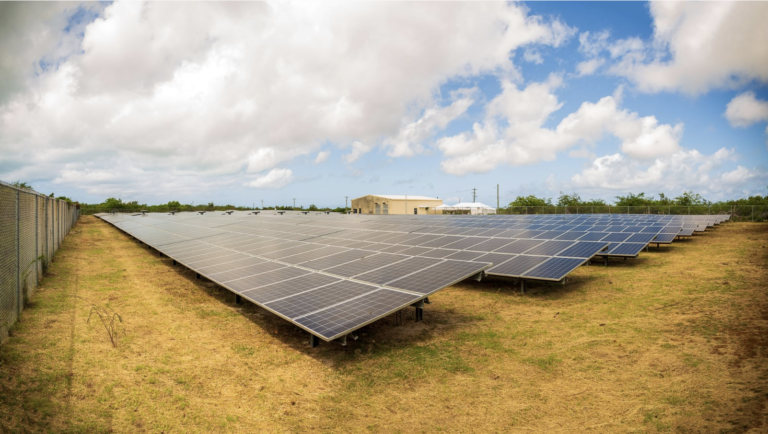
The project combines a hybrid solar photovoltaic (PV) plant, featuring 720 kilowatts-peak (kWp) of solar PV panels, connected to an 863 kilowatt-hour (kWh) battery, and capable of fully meeting the island’s current daytime energy demand. The plant will enable Barbuda to reduce annual diesel fuel consumption by 406,000 litres and cut carbon dioxide emissions by over 1 million kg.

The UAE-CREF initiative intends to deploy renewable energy projects in 16 Caribbean countries in three cycles to reduce energy costs, increase energy access, and enhance climate resilience.

Projects have already been successfully launched in the Bahamas, Barbados, and Saint Vincent and the Grenadines.

ADVERTISEMENT

Are you interested in sustainable investment and generational wealth? Green Prophet is working with 36North, an investment advisory in Canada on how to teach you how to build generational wealth. Email [email protected] for an introduction.

EcohubMap: Empowering Environmental Sustainability Through Information Systematisation

0


Trees roots and sunshine

Today, environmental information systems are essential weapons in the arsenal of organisations in the quest to promote environmental sustainability. These systems facilitate the dissemination of ecological data to assess climate impact, greenhouses, and other environmental pollutants and highlight measures and policies to address these issues.

Knowledge of environmental issues continues to grow, making information systems unique because of their growing use in decision-making to drive positive change, raise awareness and inspire many to be environmentally conscious. The impact of this revolution is already being felt, especially in the monitoring and control of emissions.

Globally, biodiverse-rich regions are under threat, facing several environmental issues, including climate change and land degradation. The result? Decline of natural resources and their unique species.

The global approach to environmental protection has significantly evolved over the past decades to become more comprehensive. This change demonstrates an increased recognition of the interconnectedness of various ecological issues and, hence, the need for multi-faceted solutions to address them effectively.

EcohubMap, an innovative online platform that serves as a comprehensive business directory, listing and promoting sustainable companies globally, stands at the forefront of information systemisation.

By recognizing that environmental challenges are interrelated and necessitate coordinated solutions, this platform has more sustainability sectors, but these are the most popular:
Renewable Energy: Companies in this sector are harnessing natural resources to produce clean energy from wind, solar, and bioenergy sources. These businesses are pivotal in transitioning the state towards a more sustainable energy future.

Agriculture: Innovative agricultural firms are implementing eco-friendly practices to boost productivity while preserving the natural ecosystem. They focus on sustainable land management and the use of renewable resources to minimise their carbon footprint.

Waste Management: With a commitment to the circular economy, waste management enterprises are finding new ways to reduce, reuse, and recycle waste materials. Their efforts are crucial in reducing landfills and promoting resource recovery.

Electric Vehicles: The electric vehicle industry is gaining momentum across the globe, with companies dedicated to reducing transportation emissions. They are at the forefront of developing and promoting electric mobility solutions.
Undoubtedly, sustainable businesses across the globe are growing every day to tackle challenges posed by climate change or loss of habitat. While advocating for sustainability, their efforts alone are inadequate in addressing global perturbations of natural systems, hence the need to utilise EcohubMap’s innovative platform.

How Can We Leverage Systematisation to Achieve Positive Environmental Change?

The current environmental issues demand innovative solutions, and most sustainable companies worldwide are well-positioned to be agents of change. Leveraging systematisation through EcoHubmap functions, businesses can achieve positive environmental impact.

Here is how:

Data-driven decision-making: Systematisation allows for data-driven decision-making, leading to better environmental initiatives.

Building robust feedback loops: Robust feedback loops are enabled through systemisation to help tackle the impact of our interventions. This ensures we are constantly improving and directing the efforts where they are most needed.
Habitat management: Systematisation facilitates mapping the conservation of natural habitats. This is achieved by mapping habitats and species distribution, status, and threats. As a result, this can help conversations identify environmental hotspots and do something to mitigate issues.

Environmental communication: Systematisation can help facilitate communication of ecological information to various policymakers, researchers and the media. When properly used, this can help raise awareness, educate people on environmental issues, and teach them to take action.

Leveraging on systematisation will enable an integrated economy while addressing environmental concerns that require a multidimensional approach. In many ways, systematisation will continue to contribute positively to the environment by advocating sustainable environmental practices.

How Does Ecohubmap Connect and Support Environmental Organisations?

EcohubMap is the world’s largest eco-business directory of environmental organisations. It connects and supports conscious business and environmental organisations by providing an innovative platform where they can easily be discovered and connect with others.

The platform achieves systematisation by fostering collaboration among different businesses to initiate environmental change or address environmental issues. Think of it as a one-stop shop for green changemakers.

Having been following up on the site for several months, EcohuMap has expanded the functionality of its platform, making it easier for sustainable businesses to be added to the business directory. It is easier to locate a list of green businesses globally. This allows organisations to share best practices, join forces, and tackle challenges.

Having a team working around the clock 24/7, the platform offers real-time monitoring of environmental issues. Thus, it keeps related organisations updated and empowers them to act swiftly on emerging environmental issues.

In essence, EcoHubMap nurtures a thriving network dedicated to ecological sustainability.

How Can Eco-Friendly Businesses and Non-profit Environmental Organisations Globally Use and Benefit From the Platform?

Climate change and renewable energy are pressing issues globally, but many other local issues include overgrazing, bushfires, pollution and land degradation. Addressing these challenges is paramount for the sustainable future of our planet.

Several sustainable companies worldwide are at the forefront of this fight, and they can significantly benefit from EcohuMap’s innovative platform. This platform offers practical solutions that can save time for such organisations.

Take, for example, an organisation aiming to show its green initiatives and connect with like-minded individuals. It can list its company in the business directory. It features more than 100 sustainable companies and environmental organisations, enabling them to showcase their environment-friendly initiatives.

While the planet grapples with various environmental challenges, a call to action resonates with this discourse – EcohubMap as an innovative platform that bridges ecological entities, facilitating sustainable practices and collective efforts. Organisations can easily add a business page to enhance their credibility and reach.

Mitigating climate issues globally requires collective effort. As a concrete step towards moving forward, it is essential to consider partnering with innovative knowledge systems such as Ecohubmap.

Conclusion
The global environmental crisis demands transformative solutions, and information systematisation offers a powerful tool to achieve them. EcohubMap is a transformative tool that paves the way for a greener and sustainable future.

Eco-businesses should consider partnering with this innovative platform in its more significant effort to unite them in their contribution towards world environmental protection. Every day, the platform gets even better with new features added. This is important for eco-conscious businesses worldwide with a shared commitment to safeguarding our planet’s environment for future generations.

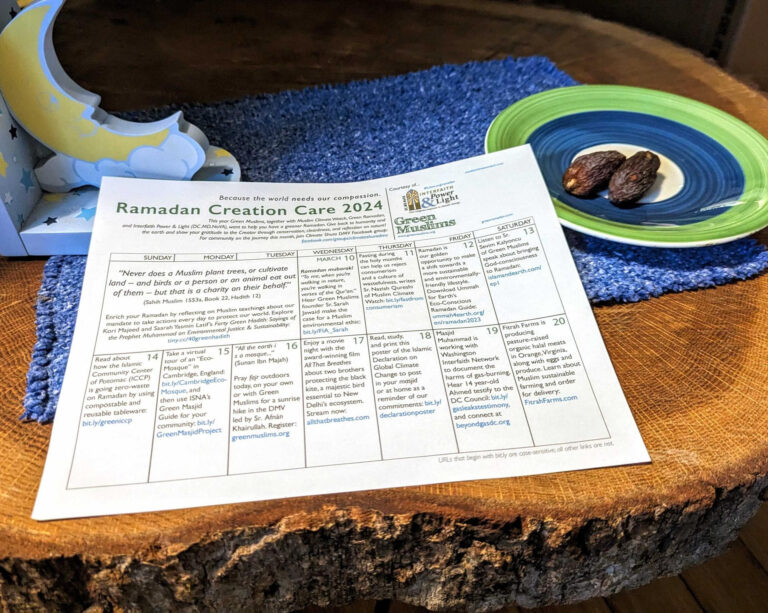
Muslim Climate Watch and the Green Ramadan Calendar Download 2024

Muslim ramadan calendar

Nazish Qureshi, Green Muslim
Nazish Qureshi, Muslim Climate Watch

Nazish Qureshi, the founder of Muslim Climate Watch says that the Muslim-fasting month of Ramadan offers “a wonderful pathway towards rejection of a culture of consumption and wastefulness, factors that have contributed to Earth’s pollution and accelerated global warming.

“Abstaining from food and choices that impede our self-actualization enables us to transcend the vices of greed and envy, which thrive in the realm of overindulgence and consumerism,” she says.

Green Muslims
Green Muslims create a calendar for Ramadan

She founded Muslim Climate Watch to empower Muslims with the education and resources to lead the climate justice movement as khalifa on Earth. “We advocate for climate action rooted in Islamic principles and inspired by the teachings of Prophet Muhammad (pbuh).

Read Also: 11 books for eco-Muslims

“Through research-based education and advocacy, we amplify the voices of marginalized Muslims disproportionately affected by climate change.

As we enter this holy time for Muslims, Qureshi shares a resource developed together with Green Muslims, Green Ramadan, and Interfaith Power & Light –– a Ramadan Creation Care calendar, to print and post in your masjid or at home.

Get your Ramadan calendar here (links to PDF).

Read Also: Green Prophet’s sustainable Ramadan guide


Treating epilepsy across the brain barrier with an injectable CBD

0
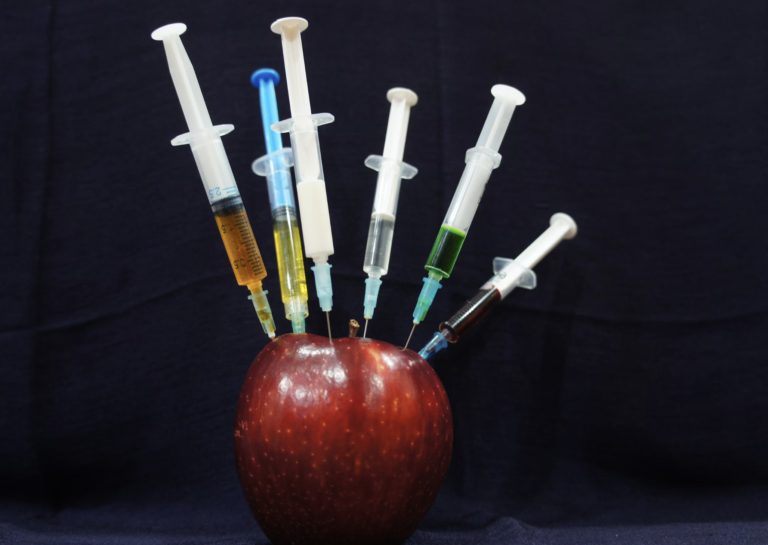
injections of CBD to cross the blood brain barrier
CBD injections to help epilepsy, pain relief.

Cannabis has been found anecdotally to treat epilepsy. The mode of action is inhibiting neurotransmitters in the brain. But turning parts of a plant into an actual pharmaceutical can take years, even decades to figure out dosing, efficacy and to check safety protocols. An Israeli-Canadian company Innocan, traded on the Canadian stock exchange (CSE: INNO) (FSE: IP4) (OTCQB: INNPF) is trying to tackle pain relief and epilepsy by injected a CBD formulation along with a lipid so it can linger longer in the body.

In a new study in animals they say their CBD-based injection that can last several weeks in the blood, passing through to the brain where it can offer relief potentially for weeks.

The proof-of-concept study found that CBD could be found in the brains of both mice and rabbits weeks after a formulation of CBD and liposomes was subcutaneously injected to them. These results show a strong correlation between the prolonged blood exposure of CBD and its brain distribution. Their delivery technology called LPT keeps the CBD in the bloodstream enabling CBD to pass the blood brain barrier (BBB) and deliver long brain exposure over time.

“The company is encouraged by these study results,” said Eyal Kalo, Innocan’s R&D Director. Sufficient exposure of CBD in the brain is the hallmark of CBD therapy associated with various neurological conditions, he says.

Read Also: We meet the cannabis doctor who prescribed cannabis to Charlotte Figi 

CBD or cannabidiol has demonstrated positive effects in association with various neurological disorders. Besides its well-established anti-epileptic activity, CBD can also protect brains pathology via the activation of anti-inflammatory and antioxidant mechanisms.

For example, CBD was demonstrated to efficiently protect brain cells from Alzheimer-induced degeneration, reducing the onset of the diseases. In addition, CBD can protect from damage that occurs following an ischemic brain stroke leading to better tissue regeneration and patient recuperation. CBD was shown to have strong beneficial effects in other neurological conditions such as autism or schizophrenia emphasizing its high contribution in improving behavioral impairment usually associated with such pathologies.

The fact that LPT-CBD successively delivers CBD to the brain in a long-lasting manner opens a big venue for the treatment of various neurological disorders.

Read Also: THC to treat autism

According to physicians Green Prophet has interviewed, they suggest a small amount of THC administered to each therapy in order for the CBD to have a maximum effect. THC is the pyscho-active compound in cannabis and its use is still illegal in some US states. Medical marijuana and recreational cannabis is legal in Canada making it easier for approvals for Health Canada to oversee studies and regulations.

CBD is typically take in drops infused in oil but once the compound hits the stomach it is quickly digested by gut enzymes, leaving less of the treatment to enter the blood system. Delivering the drug this way makes it harder to dose patients and a drug would need to be taken several times a day for efficacy. Innocan, in theory, offer a drug delivery mechanism for all types of CBD therapies tackling a wide range of needs.


How to Make Sure Your Audience Understands Complex Information

0
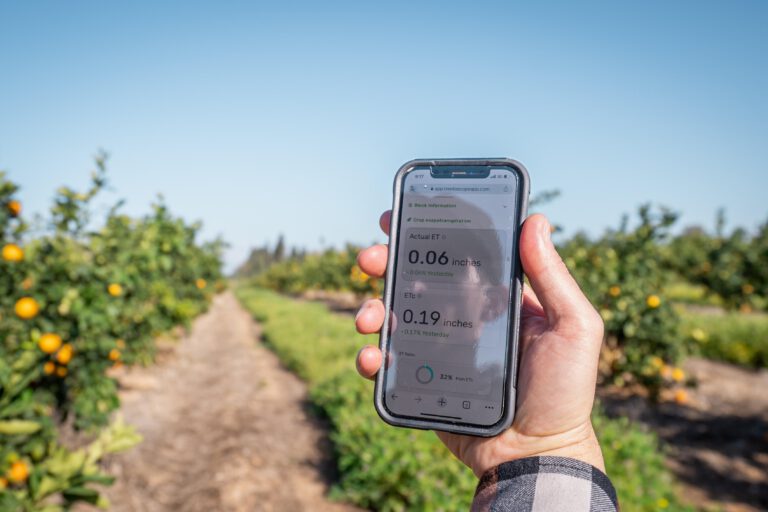
Treetoscope’s ingenious system monitors plant indicators in real time to provide worldwide farmers a SaaS platform to optimize irrigation at substantial water savings
The Treetoscope app helps people understand the complex processes in orchards.

Sharing information is crucial for building a collaborative culture focused on creativity and innovation. Whether you are a business executive, a teacher, or an online influencer, strong communication can be key to your success. In many instances, your audience is there to learn from you. This means you have a responsibility to be an effective communicator. The ultimate objective is to convey the message in the simplest, yet fastest, way possible.

Sometimes topics that seem simple to you may be difficult to grasp for your listeners. In such cases, the speaker must meet the level of the listener, guiding them through the learning curve. Whether you’ve been given the job or taken the responsibility of teaching, make it worthwhile for the audience. If they leave without understanding the subject, it may be seen as a failure on your part, not theirs.

Communication relies on several factors including the speaker, the audience, and the environment. Here are five tips that can help improve your communication and strengthen connections both in your personal and professional lives.

1. Use the Correct Medium

BeeHero screengrab
BeeHero screengrab.

Modes of sharing information are continually evolving. Remember how the chalkboard gave way to the whiteboard, which eventually turned into projector screens and now smart touchscreens? With online discussions becoming the norm nowadays, practices like screen recording or using a screenshot app are becoming increasingly popular for capturing and sharing information. These tools allow participants to easily capture important points in real-time.

These types of tools also enable the audience to learn at their own time and pace, since they can refer to the information later on. Many people are visual learners, so try to utilize color-coded charts, flow diagrams, and infographics wherever possible. This helps break down complex text into simple chunks, which can be digested more easily. Visuals enhance clarity and engage the audience, making the learning experience more informative and enjoyable.

2. Know Your Audience

Apples Jewish new year
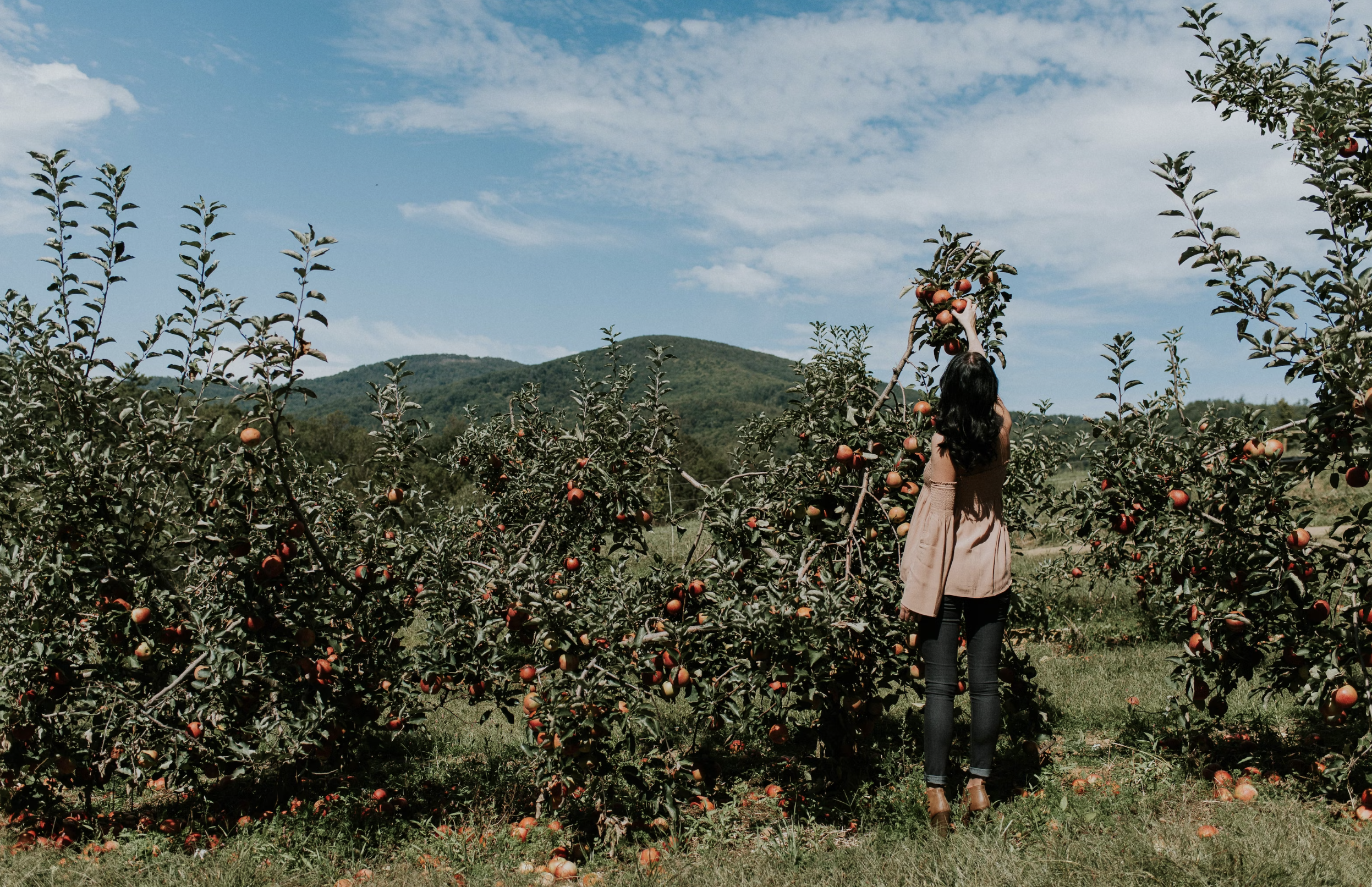
Apples picked by hand in Europe

Whether you’re explaining quantum physics or a cheesecake recipe, tailor your information according to your listener’s level of comprehension. Consider their demographic, educational background, and familiarity with the subject matter. The job gets tricky if your audience is diverse, but being aware of this prepares you better for your session. 

If you’re explaining that cheesecake recipe, you may choose to provide guides to help your audience know what measurements to use. If you are baking with cup measurements, still include grams and ounces in the written caption of your YouTube video. This way your viewers, no matter where they’re located, will have the right amounts. They won’t have to perform a conversion to see how much vanilla and sugar they need.

When presenting more complex information, starting off with ice-breakers can give you an idea of your audience’s basic level of understanding. Once you have the baseline, start building gradually. Use simple language and analogies to make abstract ideas more tangible. Be creative and use your imagination. Find ways to ensure the session doesn’t feel like a boring lecture but something more enjoyable.

3. Tell a Story

tiny office on the road
Work remote, do the #vanlife or stay where you are. Work environments are flexible these days

Everyone loves a good story. Narratives with various characters or conflicts help anchor complex information in the minds of your audience. Let the audience feel like a main character out on a quest for knowledge.

By incorporating jokes and puzzles, you can make the listeners feel like they’re a part of the story. By the end, they should feel like they’ve embarked on an intellectual adventure and not just received a data dump. Simple language helps your message resonate with a broader audience as well. So avoid technical jargon and convoluted sentences that may confuse your audience.

Keep pausing in between your points and assess whether the audience is with you or not. Allow attendees to ask questions. This can keep people engaged. You can even plant some good questions in the audience to break the ice. Remind yourself that the goal is not just to showcase your expertise. Primarily, you should be there to facilitate understanding.

4. Encourage Interaction

It’s natural to zone out if you’re unable to understand what is being said. As the speaker, it is your responsibility to keep your audience awake. Encourage questions, discussions, and feedback. Including a hands-on activity could be a game changer as well. Once your audience is actively engaged, they’ll find it easier to take in the information and share their perspective.

While getting audience feedback and having active participation is great for engagement, it can be difficult to deal with arguments and different viewpoints. During a photography workshop focusing on composition techniques, participants might express contrasting viewpoints on the use of negative space in framing a subject. Some may argue for minimalist approaches, emphasizing the power of simplicity, while others advocate for more detailed compositions to convey richer narratives. 

Encouraging respectful dialogue and providing evidence-based insights can help address conflicting viewpoints while maintaining a productive atmosphere. For a healthy learning experience, acknowledge the diversity of viewpoints and present a balanced synopsis. This allows your audience to see the complexity from different angles, for a better understanding. By creating and encouraging open discussions, you’re teaching your listeners to think critically and come to their own conclusion.

5. Reinforce Key Points

While the discussion may go any way, don’t forget to reinforce the key points at the end of the session. With finite memory and dwindling attention spans, instructors need to reinforce core material. Repetition is a strong tool and can drill the information into the minds of the audience. Use different methods, such as visual cues or anecdotes to highlight the critical information.

If you’re on-site, distributing handouts with key points can also be helpful. That way the audience can have a concise summary to refer to later. Don’t forget to add your own name and contact information if you’re speaking to a new group. Making yourself available for listeners who take more time to process information shows empathy and a commitment to teach.

In a world where information overload is the norm, take time out to strategize your plan of communication. Make sure you’ve organized your content so the audience can grasp one concept before moving onto the next. Don’t let them drown in a sea of intricate details. Instead, hold their hand as you embark on this journey with them. Give them confidence and clarity so they’re able to navigate the vast sea of information.


Songbird poaching reaches new highs in Cyprus, Malta and Italy

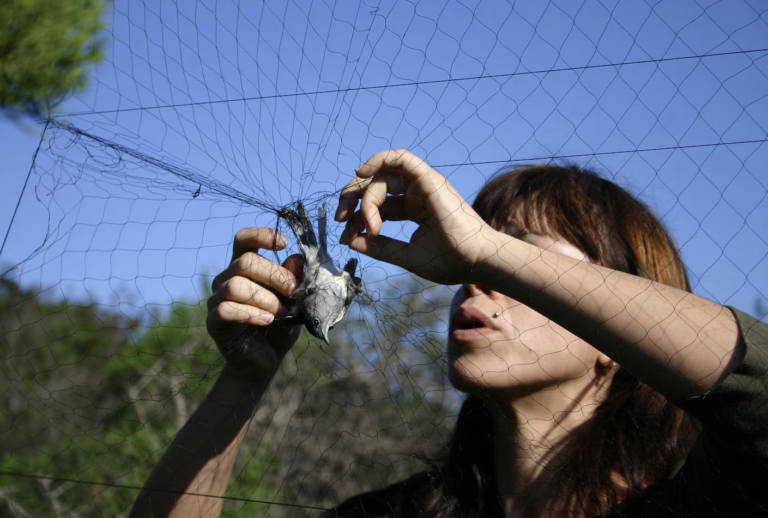
songbirds trapped in a net A volunteer with the Committee Against Bird Slaughter frees a bird snared in a mist net in Sardinia. Suspended between two poles, the nets are made of thread so fine that birds in flight don’t see them.

Finch trapping was banned in Malta in 2018, but conservation groups say it hasn’t stopped.

A new report coming out of Cyprus alleges that more than 400,000 songbirds were trapped illegally in the autumn of 2023, poached for an illegal dish. And animal rights activists there say the practice is on the rise.

“Illegal bird trapping has become a demand-driven wildlife crime, with the trading of trapped birds in lawbreaking restaurants being the key economic driver for organised trappers, who, as is generally acknowledged, make thousands of euros of illegal profit every year,” says BirdLife Cyprus.

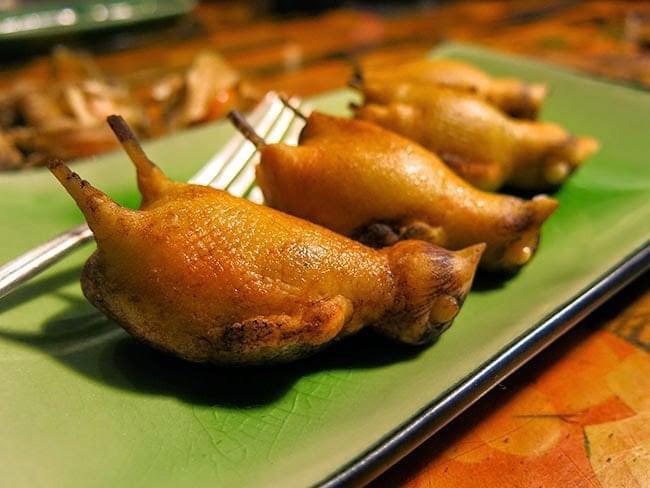
Songbirds are trapped in nets and then cooked into what is known as ambelopoulia, a controversial dish of grilled, fried, pickled or boiled songbirds. It is a traditional dish enjoyed by native Cypriots and you can find it in some restaurants.

pickled songbirds

BirdLife Cyprus, who conducted the study found that “illegal bird trapping with mist nets showed an apparent increase during autumn 2023, based on the survey data. Despite this increase, the enforcement efforts of both the SBA police and the Game and Fauna Service are fully acknowledged.

“Autumn 2023 was a good case study of what would happen if resources are removed/ or diverted too soon. Pressure and sufficient enforcement resources committed to tackling bird trapping need to be maintained for many years, to ensure that trapping levels remain low. Any relaxation could undo the positive progress recorded over the last few seasons,” they recommend.

Mark Thomas, the head of the bird group RSPB investigations, said organised trappers are continuing to make huge profits for little risk. “We cannot allow the progress we have made to be undone and the shocking levels of songbird killings to return to the abhorrent levels we once saw,” he said.

The death death toll estimates do not take into consideration any illegal bird trapping taking place into the Turkish occupied part of Cyprus.

Trapping songbirds is currently illegal in Cyprus as it involves trapping wild birds such as blackcaps and European robins. As spring begins in the Middle East and Africa, and migratory birds head to Europe be cautious to not support this illegal dish. While some countries ban the consumption of wildlife to protect it, there is often a problem enforcing the law – as is the case with shark fin soup.

songbird poaching net Cyprus
A songbird poacher net in Cyprus

You can also find songbirds for sale in restaurants in Italy and Malta, and according to BirdLife Italy it is estimated that more than 5 million birds are hunted illegally in Italy every year. Some are killed for use in traditional dishes and others, particularly songbirds, are kept alive to be smuggled into Malta.

In northern Italy, “polenta uccelli” is a traditional autumn dish. The birds are grilled on a spit and served with a portion of polenta, as well as a local sausage.

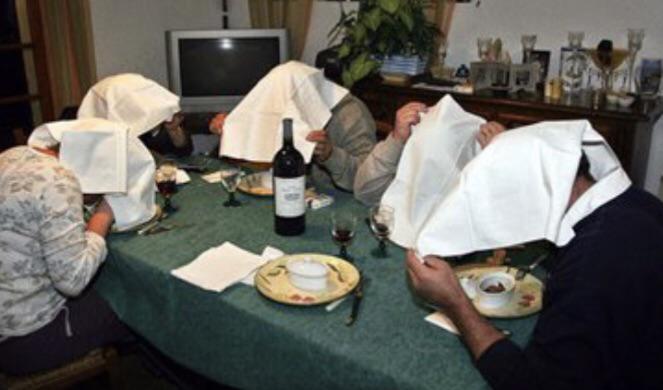
In France a songbird Ortolan Bunting is eaten and is called the sin plate. To hide their shame, people eat it with their heads covered in napkins to hide their sin from God. It is banned in France, but the practice continues.

french eating ortolon
The french eating songbirds, ortolon. Source: unknown
Roast Ortolon
According to a Reddit submission: Roast Ortolan, an adorable bird the size of a man’s thumb and weighs less than an ounce. It is meant to be eaten feet first with the beak and head being last so you can enjoy the subtle flavours of the brain when the little skull breaks between your teeth. It’s a French delicacy.

What’s a person to do? Keep an eye our for bird poaching nets when on hikes in Cyprus, Turkey-occupied Cyprus, Italy, and Malta. If you find the nets or this illegal dish for sale in a restaurant, contact BirdLife Cyprus or BirdLife International. The group also offers ideas for you to do your part, like how to protect songbird nests. last thing: never order a wild bird for dinner.

Get the report on songbirds in Cyprus here. Scroll down to see the report in English.


Forage Wild Herbs of the Mediterranean Winter: Navelwort, AKA Pennywort

0

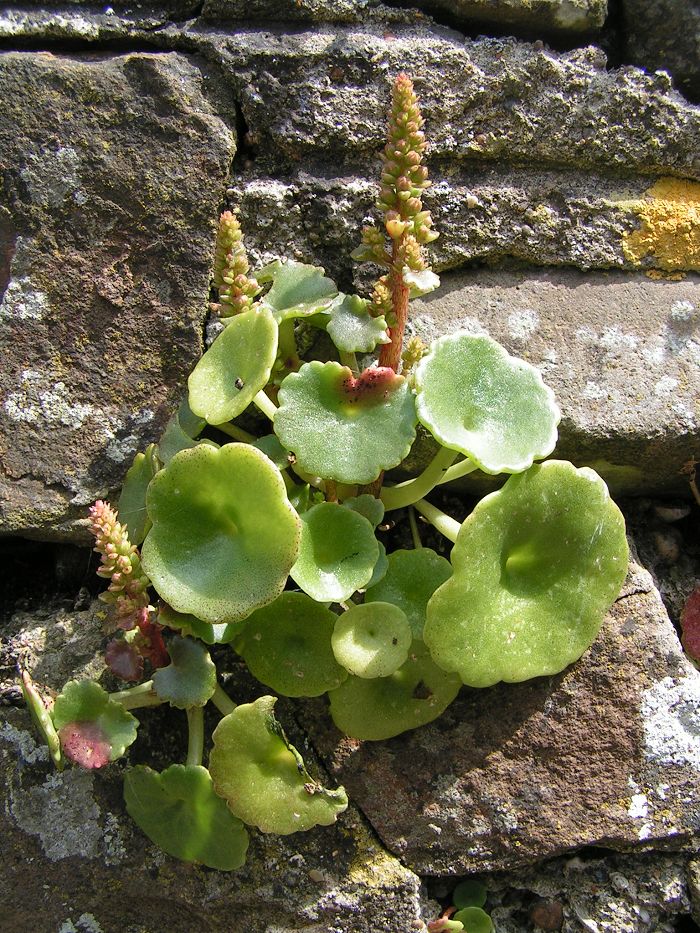
Navelwort

In my foraging walks during late winter and spring, I’m always glad to find Navelwort (Umbelicus rupestris). It’s a fleshy, light-green plant often rooted in damp old walls and piles of rocks. Navelwort, also known as pennywort, is becoming rare.

I collect a few of the juicy leaves for use in my moisturizing formula, where they’ll add soothing, anti-inflammatory properties. Is navelwort edible? Yes, and if by chance I come across a place where navelwort grows abundantly, I’ll bring a few more leaves home to eat raw in salad – to be honest, more because I enjoy the experience than because of their flavor, which is mild and neutral.

For the hungry forager, we have a post about a tastier, more easily found wild edible: beet greens.

The seventeenth-century herbalist Nicholas Culpepper knew and appreciated navelwort, saying this of it:

“The juice or the distilled water being drank, is very effectual for all inflammations and unnatural heats, to cool a fainting hot stomach, a hot liver, or the bowels: the herb, juice, or distilled water thereof, outwardly applied, heals pimples, St. Anthony’s fire, and other outward heats.

“The said juice or water helps to heal sore kidneys, torn or fretted by the stone, or exulcerated within; it also provokes urine, is available for the dropsy, and helps to break the stone. Being used as a bath, or made into an ointment, it cools the painful piles or hæmorrhoidal veins. It is no less effectual to give ease to the pains of the gout, the sciatica, and helps the kernels or knots in the neck or throat, called the king’s evil: healing kibes (ulcerated chilblains) and chilblains if they be bathed with the juice, or anointed with ointment made thereof, and some of the skin of the leaf upon them: it is also used in green wounds to stay the blood, and to heal them quickly.”

According to the Plants For A Future Plant Database (PFAF), navelwort can be found in leaf all year, in flower from June to August. The seeds ripen from July to September. The species is hermaphrodite (has both male and female organs) and is self-fertile. The flowers turn red if the plant grows in a sunny spot.

Keep in mind that PFAF’s articles concern plants growing in the UK and Europe, not often mentioning growing conditions in the Levant. In Israel, where I live, navelwort has dried up and disappeared by July.

If you’re intrigued enough to try cultivating Navelwort, it’s (again, via the PFAF database) suitable for light (sandy) and medium (loamy) soils and prefers well-drained soil. Suitable pH: mildly acid, neutral and basic (mildly alkaline) soils. It can grow in semi-shade (light woodland) or no shade. It prefers moist soil.

I myself don’t think of cultivating navelwort; it’s too dry and hot where I live. But when I lived in the cool north of the country, where there are still many uncultivated green spots and ancient, fallen-down stone houses, I’d love to find the round leaves, that look like a collection of belly-buttons, poking up from some old wall. Those ancient Romans had a knack for naming things: umbilicus meaning navel, and rupestris, of the wall.

Or you can imagine  that a long-ago someone poked a finger into the leaves to leave a dimple in the middle.

I cherish navelwort not only for the uses I put it to, but because of its growing rarity. The places that favor its growth are fast disappearing under urban construction.

It recalls a much earlier time, when a kindlier climate allowed these innocent herbs to thrive undisturbed, and humans in their foraging took only what they needed and left the rest alone.

Navelwort

Sea cucumbers are janitors of the sea

0

Sea cucumbers

“If you remove all the scum suckers in the great fish tank of Earth, you’re going to get a dirty tank eventually”

Known as the rainforests of the sea, coral reefs create habitats for 25% of all marine organisms, despite only covering less than 1% of the ocean’s area.  Coral patches the width and height of basketball arenas used to be common throughout the world’s oceans. But due to numerous human-generated stresses and coral disease, which is known to be associated with ocean sediments, most of the world’s coral is gone.

“It’s like if all the pine trees in Georgia disappeared over a period of 30 to 40 years,” said Mark Hay, Regents’ Chair and the Harry and Anna Teasley Chair in Environmental Biology in the School of Biological Sciences at the Georgia Institute of Technology. “Just imagine how that affects biodiversity and ecosystems of the ocean.”

Read Also: Houthis sink Red Sea ship putting reefs at risk

In first-of-its-kind research, Hay, along with research scientist Cody Clements, discovered a crucial missing element that plays a profound role in keeping coral healthy — an animal of overlooked importance known as a sea cucumber.

Their study, undertaken in remote tropical islands in the Pacific, investigated the role that sea cucumbers play in coral health. The small, unassuming, sediment-eating organisms function like autonomous vacuum cleaners of the ocean floor.

But, because they have been overharvested for decades for food and cannot reproduce effectively when in low densities, they are now rare and slow to recover following harvests. They have been gone so long that it wasn’t known exactly how important they are — until now.

“We knew that removing big predators has cascading effects that commonly change how ecosystems are organized and how they function,” said Hay. “What we didn’t know is what would happen following removal of detritivores — or as we like to call them, the janitors of the system.”

The team’s research was published in the journal Nature Communications.

A Missing Component

French Polynesia coral reefs Khalid bin sultan

The idea began when Hay saw an etching of a 19th-century sailing ship in a Fiji museum. The caption explained that the ship was leaving Fiji carrying many tons of dried sea cucumbers. Hay realized that the creatures he would rarely see while diving and working around reefs had likely once covered the bottom of shallow tropical oceans.

Sea cucumbers are invertebrate sea animals that come in all different sizes, colors, and shapes. They lie on and burrow under the sand all day, sucking, digesting, and excreting sediment, consuming bacteria and other organics. Hay and Clements were curious about the role sea cucumbers played when they were abundant. But it wasn’t until Clements was doing unrelated field work in Mo’orea, a tropical island in French Polynesia, that an opportunity presented itself.

Clements, who has worked in coral restoration for years, has planted upwards of 10,000 corals in his career. He was planting corals in the sand just off the island shore, in an area where many sea cucumbers were present. He decided to clear out the sea cucumbers from the area because there were so many.

He noticed that the corals started to die, which seemed unusual.

Read Also: Artificial reefs take the pressure off the natural reefs letting them recover

artificial reef in Eilat, Israel
An artificial reef in Eilat

“I’ve planted a lot of corals in my day, and my corals generally don’t die,” Clements said. “So I thought there must be something to this.”

Hay and Clements set up patches to monitor coral health with and without the presence of sea cucumbers. They marked the patches via GPS and went to check them daily.

For the patches without sea cucumbers, they often observed a white band developing at the base of the corals, which would work its way up and eventually kill the entire colony. It was a hallmark of sediment-associated coral diseases seen around the world.

The presence of sea cucumbers seemed to suppress coral disease. They observed that corals without sea cucumbers present were 15 times more likely to die. They did a similar experiment in Palmyra Atoll, which is part of the U.S. Minor Outlying Islands that is protected by the Nature Conservancy and the U.S. Fish and Wildlife Service. In Palmyra, the experiment had different coral species and different sea cucumbers, but they found similar results — suggesting a robust interaction.

“If you remove all the scum suckers in the great fish tank of Earth, you’re going to get a dirty tank eventually,” Clements said. “People have paid lip service to the idea that sea cucumbers could be important for a long time, but we didn’t know the scale of their importance until now.

“Basically, we’ve been polluting our environs at the same time that we’ve removed all the janitors,” Hay said.

Hay and Clements hope their findings will encourage communities to limit harvesting and begin to repopulate sea cucumber species.

Drought and then wildfires favor invaders

0
Migrants are moving around Africa because of drought

In a study recently published in the journal Ecology, University of California, Irvine scientists uncover the intricate dance between drought, wildfires and invasive species in Southern California’s coastal sage scrub ecosystems. The research, led by Sarah Kimball, director of the Center for Environmental Biology at UCI, sheds light on the critical interplay of these factors and its profound implications for ecosystem health.

The research, conducted at the Loma Ridge Global Change Experiment, showcases how prolonged drought acts as a catalyst, influencing not only the severity of wildfires but also paving the way for invasive species to take center stage. By simulating drought conditions, the study clarifies connections between climate change, wildfire dynamics, and shifts in plant communities.

Reduced fire severity associated with drought creates an environment conducive to invasive species. Non-native grasses, in particular, thrive in these conditions, potentially leading to a transformation of the landscape and abundance and diversity of native species.

The findings carry significant implications for managing these vulnerable ecosystems. The study advocates for strategies that carefully consider the frequency of wildfires and the control of invasive species post-fire. Controlled burns, commonly used in other ecosystems, are not recommended for coastal sage scrub systems, as they can inadvertently promote invasive species.

“This study is unique in that replicate experimental plots were subjected to several years of different precipitation regimes prior to the wildfire, allowing an opportunity to test how a range of pre-fire weather conditions influenced fire severity and resulting plant community composition,” says Kimball: “We found feedbacks between invasive species and low-severity wildfire, indicating that control burns should not be conducted in this system.”

Beyond academic circles, the research holds significance for the public. As wildfires increasingly impact communities, comprehending the factors influencing their severity becomes paramount. The study prompts a reevaluation of traditional wildfire management approaches, highlighting the urgent need to address climate change for the preservation of natural ecosystems.

Steel clad hub at Turkey solar farm highlights renewable energy

0
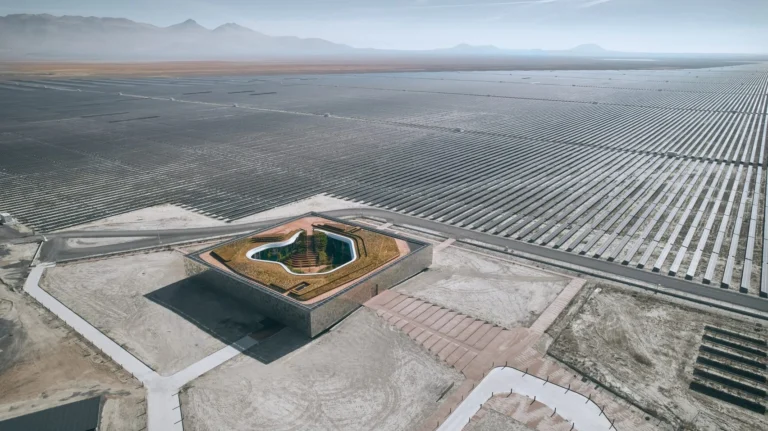
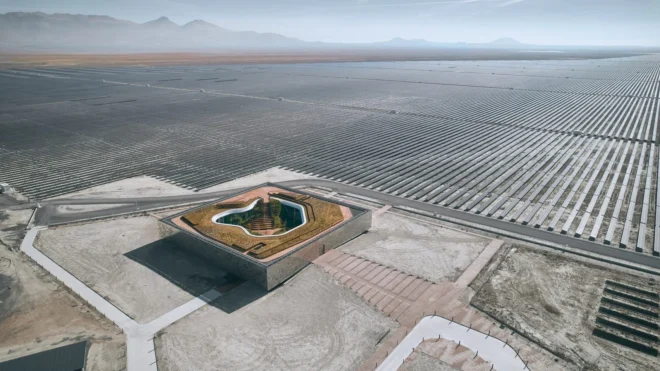
A facade of shimmering steel panels envelops this control centre that Istanbul studio Bilgin Architects has created in the plains of Karapinar, Turkey, for one of Europe's largest solar farms. Named Central Control Building, it is designed by Bilgin Architects to act as a centralised location from which to monitor and control the expansive field of 3.2 million solar panels, Kalyon Karapınar
The 3.2 million panel solar farm, Kalyon Karapınar Solar Power Plant, in Turkey will give power to more than 2 million people.

The Ottomans controlled the Levant’s Lebanon, Israel and Syria from the 1500s until the end of World War I in 1918. The Ottoman Empire, from Turkey, was known for its notable architecture of domes and design. These are buildings that last until today. Good architecture is sustainable because people like to protect beautiful buildings. This is what we are seeing in a rare instance where design meets an industrial solar power plant in Turkey. The 3.2 million panel solar farm, Kalyon Karapınar Solar Power Plant, is one of the largest in the region.

Istanbul-based studio Bilgin Architects have designed the the solar farm’s offices and hub called the Central Control Building and have covered it in shimmering steel panels. It is the nerve center for one of the region’s largest solar farms.

We love that Turkey is using local architects –– important so that vision matches culture and sensibilities. This is not the case in Saudi Arabia, which hires starchitects from the west to build Neom.

A facade of shimmering steel panels envelops this control centre that Istanbul studio Bilgin Architects has created in the plains of Karapinar, Turkey, for one of Europe's largest solar farms. Named Central Control Building, it is designed by Bilgin Architects to act as a centralised location from which to monitor and control the expansive field of 3.2 million solar panels. A facade of shimmering steel panels envelops this control centre that Istanbul studio Bilgin Architects has created in the plains of Karapinar, Turkey, for one of Europe's largest solar farms. Named Central Control Building, it is designed by Bilgin Architects to act as a centralised location from which to monitor and control the expansive field of 3.2 million solar panels.

A facade of shimmering steel panels envelops this control centre that Istanbul studio Bilgin Architects has created in the plains of Karapinar, Turkey, for one of Europe's largest solar farms. Named Central Control Building, it is designed by Bilgin Architects to act as a centralised location from which to monitor and control the expansive field of 3.2 million solar panels.


Read Also: Maraya the biggest mirror building in the world. 

The Central Control Building is more than just a utilitarian structure; it is a study in contrasts. The shimmering steel panels are in stark juxtaposition to the arid landscape that surrounds it. The metallic skin, composed of 7,200 stainless steel panels, is not merely a design choice but a strategic decision to integrate the building with its environment.

A facade of shimmering steel panels envelops this control centre that Istanbul studio Bilgin Architects has created in the plains of Karapinar, Turkey, for one of Europe's largest solar farms. Named Central Control Building, it is designed by Bilgin Architects to act as a centralised location from which to monitor and control the expansive field of 3.2 million solar panels.
A facade of shimmering steel panels envelops this control centre that Istanbul studio Bilgin Architects has created in the plains of Karapinar, Turkey. Named Central Control Building, it is designed by Bilgin Architects to act as a centralised location from which to monitor and control the expansive field of 3.2 million solar panels.

Caner Bilgin, the studio’s founding partner, explains that the high reflectance levels of the facade allow the building to blend seamlessly into the horizon, creating a visual continuity that is both striking and harmonious. The building became operational in 2023.

A facade of shimmering steel panels envelops this control centre that Istanbul studio Bilgin Architects has created in the plains of Karapinar, Turkey, for one of Europe's largest solar farms. Named Central Control Building, it is designed by Bilgin Architects to act as a centralised location from which to monitor and control the expansive field of 3.2 million solar panels.

But the facade is more than just a static element; it is a dynamic interplay of light and shadow, transparency and opacity. Perforations in the steel panels create varying levels of transparency, resulting in an ever-changing pattern that interacts with the shifting light and weather conditions.

From the inside, the facade acts as a semi-transparent screen, veiling the outside landscape during the day and revealing the internal spaces at night. This interplay of light not only enhances the building’s aesthetic appeal but also serves practical purposes, optimizing airflow and minimizing heat absorption.

Read Also: The wind catchers of Yazd

The design of the Central Control Building is not confined to its exterior; it extends inward to create a space that is both functional and inviting. Offices and meeting spaces for engineering and management teams are housed within its walls, while public areas serve as venues for educational events and exhibitions, inviting visitors to engage with solar technology firsthand.

It’s a place people will want to work, show their friends and family and where visitors and prospective investors can feel the power and performance of solar energy.

A facade of shimmering steel panels envelops this control centre that Istanbul studio Bilgin Architects has created in the plains of Karapinar, Turkey, for one of Europe's largest solar farms. Named Central Control Building, it is designed by Bilgin Architects to act as a centralised location from which to monitor and control the expansive field of 3.2 million solar panels.

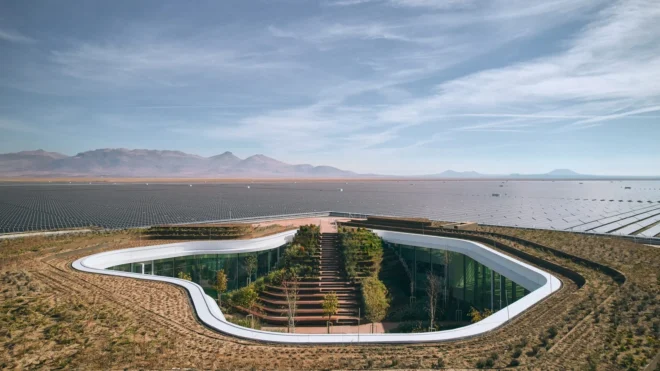
At the heart of the steel-mirrored building lies a central courtyard, and a green roof planted with local species that thrive in the harsh desert climate. This oasis not only provides a refuge from the sun but also contributes to the building’s energy efficiency, acting as a natural cooling system that reduces the need for artificial ventilation.

A facade of shimmering steel panels envelops this control centre that Istanbul studio Bilgin Architects has created in the plains of Karapinar, Turkey, for one of Europe's largest solar farms. Named Central Control Building, it is designed by Bilgin Architects to act as a centralised location from which to monitor and control the expansive field of 3.2 million solar panels.

In contrast to the sprawling field of solar panels that stretches to the horizon, the courtyard and interiors of the Central Control Building offer a sense of human scale and connection to nature. Visitors can find solace in the shade of a tree.

Solar energy business

“Türkiye will no longer be a country in need of energy resources but will rather be a country capable of energy export,” Recep Tayyip Erdoğan said in inauguration ceremony in 2023. Developed by Kalyon Energy, the solar plant in the central province of Konya boasts an installed capacity of 1,350 megawatts (MW). It promises to help Turkey curb its vast energy imports.

More than 3.2 million solar panels at the facility are to generate 3 million kilowatt-hours of electricity annually, enough to provide power to 2 million people and prevent the consumption of fossil fuel resources equivalent to $450 million USD.

The $1 billion plant has already started producing electricity, and will prevent 1.5 million tons of carbon emissions annually and increase the share of solar energy in Turkey’s total energy production by 20%.

Kalyon Holding, in August last year, agreed to sell a 50% stake in Kalyon Energy to the Abu Dhabi conglomerate International Holding Co (IHC) for about $490 million. The transaction included the solar power project in Karapınar, in addition to another one in the Gaziantep region and a wind power project in Ankara.

Turkey’s current renewable capacity accounts for over half of its total installed power capacity at 104,488mw. Hydropower capacity stands at around 31,600mw, followed by wind at 11,490mw. Solar power generation reached 9,820mw.

The secret of Earth’s incredible moving star sand dunes

0

Lala Lallia sand dunes, Morocco secrets

Scientists reveal secrets to Earth’s magnificent desert star dunes, found in Asia, African –– and on Mars

Star dunes, or pyramid dunes, have fascinated historians and captured the imaginations of indigenous people seeking wisdom and meaning. They can be found in Asia, Africa and on Mars and they move around from time to time, rising up to about 1000 feet at their peak. Scientists believe they understand the mechanics of star dunes, by observing a star dune in eastern Morocco called Lala Lallia, meaning ‘highest sacred point’ in local Berber tongue.

Berber en Maroc
Berbers in Morocco

The researchers used radar to look inside the dune applying luminescence dating to determine how long Lala Lallia has taken to form, a method that looks at the amount of energy trapped inside the grains of sand. The answer: it started growing about 13,000 years ago, shifted directions and 900 years ago started accumulating roughly 6,400 metric tons of sand annually as wind relentlessly blows sand through the desert.

Read Also: Can you believe the world is running out of sand?

Only about 10% of the world’s sand dunes are star dunes. Driving on sand dunes is a past-time in the Sahara and the Middle East. But Green Prophet’s writer Ajmal bashes dune bashing saying it destroys nature. Trekking by camel or on foot is better, and if you are flexible, watch what you can do on sand dunes below.

“I first encountered star dunes in Namibia 20 years ago, and was instantly amazed at the size of them. I have a vivid memory of the long climb to the top, struggling up very loose sand in the heat of the day,” said geographer Geoff Duller of Aberystwyth University in Wales, co-author of the study published in the journal Scientific Reports.

He told the Deccan Herald:

“I find desert dunes very beautiful,” Duller added. “The sight of the sinuous curves, and the way that the light and shadow changes with the sun mean that they always look different, whether that is in the cool of the morning, the midday sun or near sunset. The different colours of sand in different deserts are also very striking, with yellow, white, red and even black dunes in different parts of the world.”

Rub' al Khali, Empty Quarter, Saudi Arabia.
Rub’ al Khali, Empty Quarter, Saudi Arabia (Wikipedia)

Earth’s largest star dunes can be found in the the Badain Jaran desert in western China. There are also sand seas in Algeria such as the Grand Erg Oriental and Grand Erg Occidental, and Rub’ al Khali in Saudi Arabia.

Want more on sand? This artist’s work blows back to the sand in Saudi Arabia


Red Sea cargo ship sinks with no condemnation from Greenpeace

0
houthis red sea cargo ship
Belize-flagged cargo ship Rubymar, damaged in a February 19 missile strike claimed by the Iran-backed Houthi rebels, floats in the Red Sea. (Satellite image ©2024 Maxar Technologies)

The US Navy confirms that the British-owned bulk carrier M/V Rubymar has sunk. It was struck by a Houthi missile two weeks ago and the published this picture below is showing the vessel sunk on a sandbank in the Red Sea. It went down with 21,000 metric tons of fertilizer.

The US Central Command (CENTCOM) confirmed late Saturday that the vessel “sank in the Red Sea after being struck” by an anti-ship ballistic missile last month.

“The approximately 21,000 metric tons of ammonium phosphate sulfate fertilizer that the vessel was carrying presents an environmental risk in the Red Sea,” CENTCOM said in a statement. “As the ship sinks it also presents a subsurface impact risk to other ships transiting the busy shipping lanes of the waterway,” it added.

Rubymar ship sink

The Yemen-based terror group, known as the Houthis, were holding an oil tank, the FSO Safer, hostage until this past summer when international organizations finally negotiated a rescue deal.

Greenpeace Middle East North Africa (MENA) which works independently from Greenpeace, or Greenpeace International have not condemned the Houthis and their persistent attacks against cargo ships and oil tankers in the Red Sea since the October 7, terror attack by Hamas in the Gaza Strip.

Green Prophet reached out to Greenpeace MENA in late December, and several times thereafter, and there has been no response to the attacks on naval traffic heading to the Suez Canal. A statement came out only after the ship had sunk. Greenpeace MENA released a statement yesterday they were “concerned”.

Lebanon-based Julien Jreissati, Programme Director at Greenpeace MENA said: “This disruption could have far-reaching consequences, affecting various species that depend on these ecosystems and, in turn, potentially impacting the very livelihoods of coastal communities. Immediate access to the shipwreck site is imperative for an expert response team to assess the situation and swiftly devise and implement an emergency plan.”

The coral reefs in the Red Sea are the most northerly reef on the planet. Thousands of divers go to Sinai, Egypt every year on dive trips to sites like Abu Galum and the Blue Hole, near Dahab. Saudi Arabia is building its future tourism industry on Red Sea coastal resorts and towns like The Line. The Houthis have been firing at Saudi Arabia indiscriminately for the last several years while a majority of ordinary Yemenites starve.

Taba Nuweiba Beach, Bir Sweir, Sinai, Egypt
Trankila Beach in Sinai is surrounded by coral reefs that aren’t doing well.

Post-revolution sites like Dahab have since recovered since the 2011 uprisings in Cairo. The ongoing Hamas-Israel war presents an uncertain future for future Red Sea tourism, certainly at beach camps in Sinai which have little security and where terror operatives can find refuge.

“Yemen will continue to sink more British ships, and any repercussions or other damages will be added to Britain’s bill,” Hussein al-Ezzi, a head terror operative said said in a post on X. “It is a rogue state that attacks Yemen and partners with America in sponsoring ongoing crimes against civilians in Gaza.”

Greenpeace Israel had no comment.


Introduction to Mindful Movement from Body & Brain Through Yoga and Tai Chi

0

women on a seashore doing yoga, diversity

Many people today are searching for new ways to achieve physical and mental fitness, and they’re increasingly turning to two practices from ancient Asian cultures, according to Body & Brain teachers of yoga and tai chi.

Yoga and tai chi help to connect the mind and body into one and include various techniques in addition to stretching and poses, such as meditation and controlled breathing. Each practice offers a unique way to achieve holistic fitness and overall well-being.

Below is a further explanation of where the practices of yoga and tai chi originated and how beneficial they can be.

Yoga

man in yoga pose, CBD anxiety
Stressful events like the day-to-day grind or moving houses can be stressful. Yoga can help.

Yoga is a practice that was first created in ancient India. It is a holistic approach to wellness that encompasses three main areas — meditation, breath control, and physical postures. In this way, its goal is to achieve complete harmony between mind, body, and spirit.

By practicing yoga, people can gain flexibility and strength as physical activity forces the body to work multiple muscle groups.

In the same vein, the physical aspects of yoga can result in improved body alignment and posture. This can reduce the potential risk of developing musculoskeletal problems.

From a mindfulness standpoint, yoga is proven to reduce stress and, as a result, improve mental clarity. A constant focus on the breath is central to yoga, which helps you stamp out the noise and bring awareness back to what really matters.

All of this can feel like a very spiritual experience, as you’re forced to focus inward. A great part about yoga is that a program can be created for beginners and experts alike.

Tai Chi

Tai chi, meanwhile, originated in ancient China. Much like yoga, it harmonizes the mind, body, and spirit and can be thought of as a moving meditation. 

The practice is rooted in Taoism and an awareness of Qi, also known as vital energy, which flows through your body. The practice emphasizes body movements that are slow and flowing, combining those with deep breathing exercises and focusing on mental clarity.

In many ways, the benefits of tai chi are similar to those of yoga. 

Since it’s a low-impact exercise, it can be a great physical activity for many people — regardless of age, fitness level, or potential ailments.

The exercise engages your body’s joints and muscles in a gentle way, allowing you to enhance stability and gain flexibility. This benefits older adults particularly well since it helps them to lower their fall risk.

From a mindfulness standpoint, tai chi is great at reducing stress. Thanks to its focus on meditation, doing tai chi can result in you achieving a calmer mind, which can promote relaxation and inner peace while reducing stress.

Body & Brain also says tai chi focuses heavily on connecting the mind and body. Those who do the exercise are encouraged to increase their body awareness while engaging in mindful practices.

Those who are looking to improve their physical and mental well-being from a holistic standpoint would do well to consider trying tai chi and/or yoga.

About Body and Brain

Body & Brain offers yoga, tai chi, and a wide variety of mind-body practices online and in-studio for holistic fitness and energy healing. Founder Ilchi Lee began sharing his transformative principles with a single stroke patient forty years ago. His audience grew, and his principles became known as Brain Education. Today, this curriculum is practiced in 80 Body & Brain locations nationwide and several countries worldwide.


New Saudi Arabia Desalination Plant Powered by Clean Energy

0

Desalination plant saudi arabia

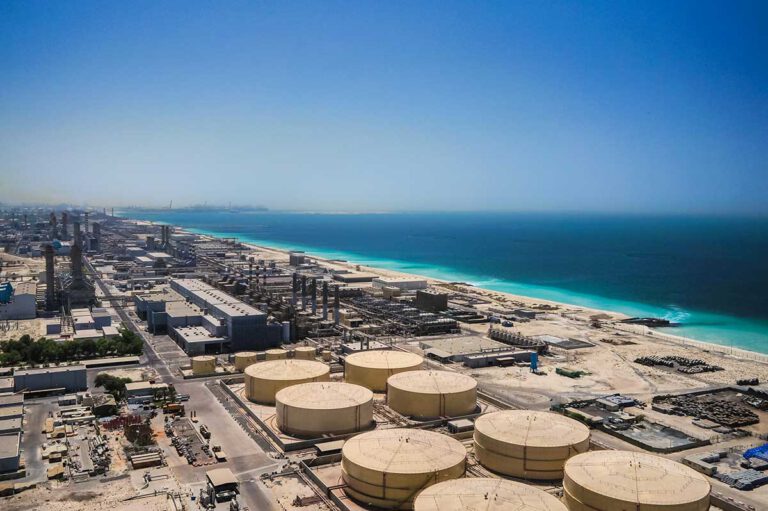
Toray Industries from Japan announces it will supply the membranes for a new reverse osmosis desalination plant in the Kingdom of Saudi Arabia. This will be the Kingdom’s first seawater reverse osmosis  desalination plant using clean energy under a public-private-partnership (PPP) structure. 

The Yanbu 4 desalination plant is located 100 miles of Saudi’s Madinah province, near the town of Ar Rayyis. With the production capacity of 450,000 cubic meters per day of potable water once it is completed, the plant will supply drinking water to the Makkah and  Madinah regions respectively. This is where millions of Muslims go on a Hajj pilgrimage. Good green news in advance of Ramadan which starts next week. 

Mecca from Space
United Arab Emirates astronaut Sultan Al Neyadi shared this picture of Mecca during the annual Hajj pilgrimage on June 26, 2023. (UAE Space Agency)

Toray will supply the RO elements  and provide technical services and will help alleviate water shortages not  only in Makkah and Madinah regions but in the Middle East and North Africa.

Over the years, Toray has expanded RO membrane sales, production, and technical  support to help resolve global water issues. Applications extend from desalination and  waste water reclamation to industrial usage. The aggregate water production capacity of  Toray RO membranes is 120,000,000 cubic meters per day. That is enough to serve the  water needs of 840 million people. 

Providing access to clean water is pivotal to the Toray Group Sustainability Vision,  representing a roadmap to the World as Envisioned by Toray Group in 2050, and embodies Toray Vision 2030, through which the Group pursues sound, sustainable growth.  

Toray will continue to provide RO membranes and other advanced membrane  technologies and strengthen technical services to cater to local demand. It will thereby  help resolve water issues in the Middle East and other regions in which industrial and  population expansions will likely boost water demand. 

Kefir, legendary health milk traced back to Mohammad’s gift

2


Nomads of the Caucasus Mountains attribute their long, vigorous lives to a natural diet, plenty of outdoor exercise – and kefir. Kefir is fermented milk, something like yogurt. Its taste ranges from mildly sour to cheeselike, depending on how long the milk ferments. It has lots of probiotics and proven anti-bacterial power.

As Kombucha tea does, kefir helps the body to metabolize foods, and also raises immunities. Studies show that drinking kefir every day regulates blood pressure and blood sugar levels.

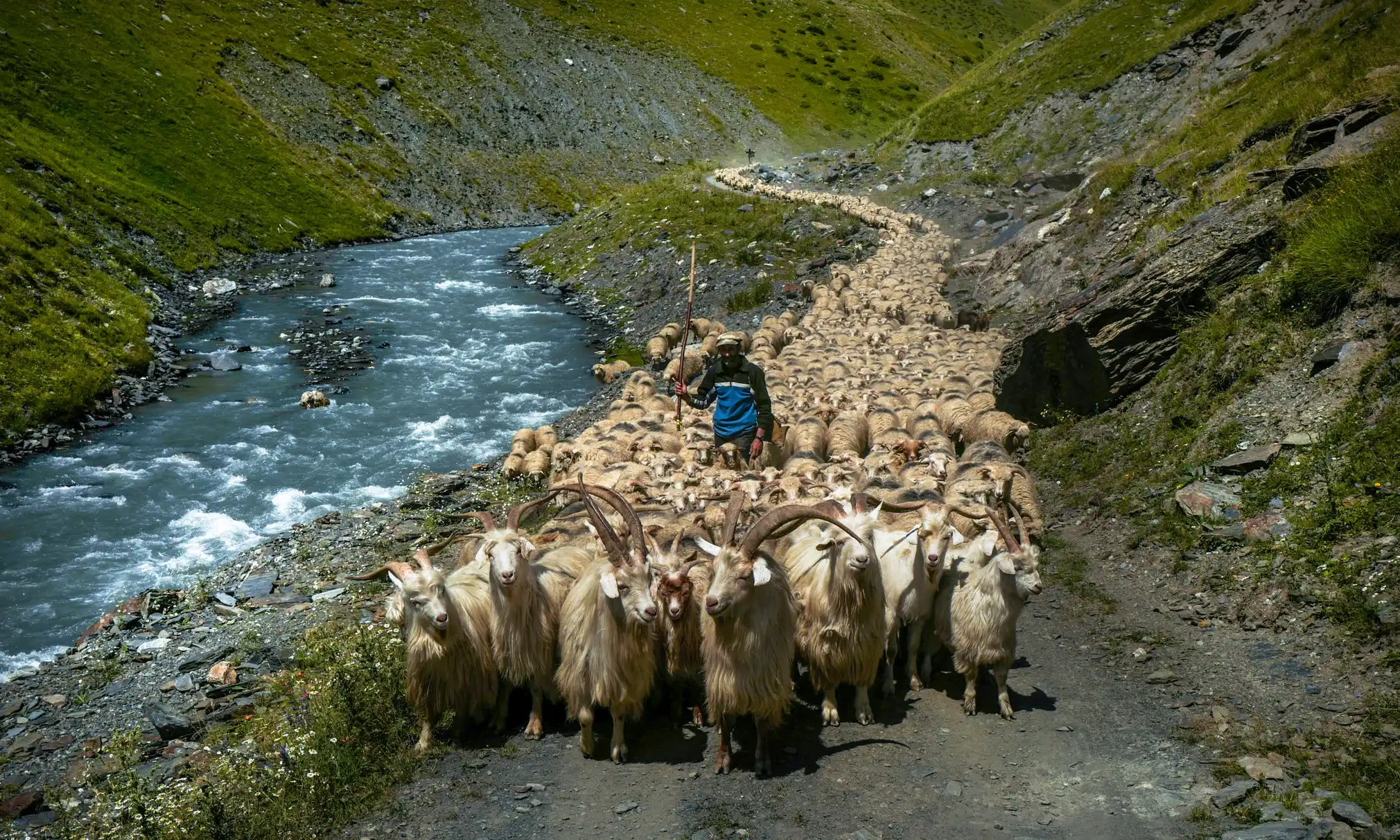
Fulvio Bugani travelled to one of the few still-inhabited villages in the Greater Caucasus mountains and documented the lives of the Tusheti, defined by tradition and ancient customs

And like Kombucha, the origins of the “mother” substance are lost in ancient history.  Legend has it that Mohammed himself gifted the nomad community with the yellowish-white kefir culture “grains,”  and taught them how to ferment milk with them. We posted about black cumin, another legendary gift from Mohammed, here.

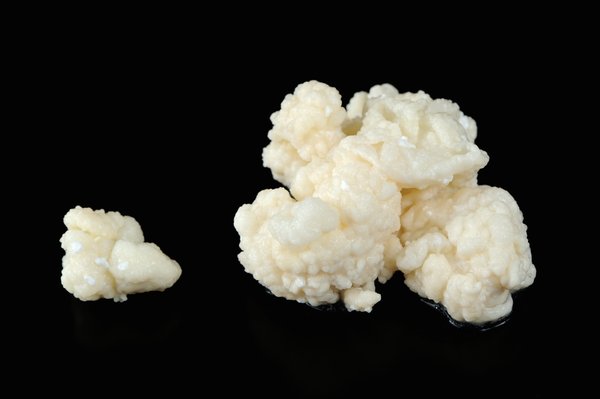
Science says, according to Wikipedia, that kefir is a combination of  ” lactic acid bacteria and yeasts in a matrix of proteins, lipids, and sugars, and this symbiotic matrix, or (SCOBY) forms “grains” that resemble cauliflower. For this reason, a complex and highly variable community of lactic acid bacteria and yeasts can be found in these grains.”

The nomads jealously guarded kefir’s secret for centuries, but eventually the fame of the magic milk reached Russian society.

Small quantities of kefir became available, made cottage-industry fashion in a few people’s homes. Doctors prescribed it for digestive troubles and tuberculosis. In the late 19th century, Moscow physicians published studies  attesting to kefir’s medicinal properties. Convinced, the All Russian Physician’s Society determined to produce kefir on a large scale.

But “mother” grains were scarce, and the people of the Caucasus wouldn’t yield the secret.

In 1908, the Physician’s Society approached the Blandov brothers, owners of a big Moscow dairy, and asked for help in obtaining kefir grains. The Blandovs agreed to send an emissary to the Caucasus, on condition of receiving exclusive rights to manufacturing kefir. The agent was an employee of their dairy, a beautiful young woman named Irina Sakharov.

Irina traveled north and met with the ruling prince of the region. He wouldn’t give her kefir grains. Instead, he kidnapped her on her return journey home, and demanded that she marry him. But all ended well for Irina, for the men who had accompanied her from Moscow rescued her and brought the case before the prince’s father.
To avert conflict with the powers in Moscow, the king granted Irina enough grains to start large-scale manufacture of kefir. Some say it was a cup of grains, some say it was a sheepskin-full. What’s known is that the grains Irina brought home from her adventures are the mothers of just about all the kefir that’s drunk in Russia, Eastern and Western Europe, Australia and the USA today.

In 1973, Irina received official recognition and thanks for having brought kefir to Russia.

Today, commercial kefir drinks are even sold in supermarkets. But you won’t know if you’re getting just a pleasantly yogurt-like drink without real health benefits. It’s worth fermenting your own kefir at home. And it’s ridiculously easy.

How to make kefir using kefir grains

Kefir is a type of fermented milk that may help manage blood sugar, lower cholesterol, and boost digestive health, among other benefits. However, more evidence is needed to back some of these claims. The name kefir comes from the Turkish word “keyif,” which refers to the “good feeling” a person gets after drinking it.

In spite of the huge mystique made around kefir, all you have to do is place a mother grain or two in the bottom of a clean glass jar and fill the jar with milk. Stir gently, with a wooden or plastic spoon, and cover with a clean kitchen towel. Leave out overnight.

kefir grains

By morning, you’ll have thick, white kefir. It may have a little fizz, which is fine.

Pour off a glass and enjoy, or make a smoothie from it. Just don’t drink down the mother, or you’ll have to get another one! The longer you leave the milk to ferment, the thicker and more sour the kefir. The mother grains will continue growing if left in milk.

Eventually “baby” buds will break off that will continuing growing and become mothers in turn. You may find your jar crowded with grains after a while.Then you might want to distribute some among your friends. Or you may join the international kefir lovers who mail out grains, enclosed with a little milk in zip-locked bags, only for the price of shipping.

I wrote about kefir several years ago, and ever since then, have had to fend off strangers asking me for grains. I usually reply, grumpily, that I had bought my original mother via eBay for about $4 and that they can do the same.

My own kefir grains don’t reproduce much. They make one or two new mothers over a year’s time. I don’t know why. Apparently kefir grains respond individually to their particular environment: the  type of milk used, and how or where they’re stored. In someone elses’ kitchen, maybe they would make many more babies. But I’m fine with what I have. I don’t like being regarded as a source for kefir grains.

This week, a different sort of request for kefir grains appeared in my Inbox. It’s for a little girl, I read.

Something in me gave way. Alright, for a child, I’ll go through the bother of receiving a stranger into my home, explaining about kefir and how to store it in between fermentations (covered with fresh milk, in the refrigerator), and how it has to be kept cool. Kefir has its conditions for optimal life, just like any other fresh, living thing. I sighed.

Okay, I wrote back, Come over.

The little girl’s mother knocked on my door that evening. “Why does your daughter need kefir?” I asked, showing her in.

The lady turned haunted eyes to me. “Her name is Noa. She’s only a year and four months old. She has cancer. They’ve already removed her ovaries. We’re hoping to avoid chemotherapy and manage it with surgery. But she needs everything she can get to stay strong.”

I swallowed, and tears came to my eyes. An innocent little girl, with such a terrible thing. God willing, she’ll survive, but she’ll never bear children.

And I was humbled. You just never know what might come of things you do, say, or write. Maybe my post, written four years before Noa was even born, came out of my computer for no other reason than to help her in the end.

I explained the health benefits of kefir and advised how to feed Noa with it. I told her mother that while my mothers never reproduce much, hers may very well make lots of baby grains. Her face brightened.

“If I see that it really helps, and it makes more mothers, I’ll give kefir grains out to everyone in the oncology ward,” she exclaimed. “I’ll get so many mitzvas that way!”

I hope so. I hope that many little zip-locked bags containing new kefir grains will go out of Noa’s house to help other sick children.  May Noa bat Revital will have a complete healing of body and spirit. May she go on to a good life.

There’s lots of online information about kefir. Just google it and you’ll get full instructions on here to obtain grains, how to make it, and recipe.

More alternative health practices on Green Prophet: