“In the midst of uncertain time, renewable energy remains consistent and steadfast in its expansion,” said Francesco La Camera, IRENA’s Director-General. “A more decentralised energy system, with a growing share of renewables and more market players, is structurally more resilient.”
Health insurance is a regulated financial product. Insurers operate under binding contracts, overseen by state insurance commissioners, that legally obligate them to pay claims meeting policy terms. Policyholders who believe a covered claim was wrongfully denied have legal recourse through state regulatory channels.
The New Zealand Merino Company, now rebranded as Zentera, has quietly removed the phrase “world’s leading ethical wool brand” from its website, a notable change that comes after a disturbing investigation by PETA Asia-Pacific into the company’s ZQ-certified wool supply chain, PETA reports to Green Prophet.
Somehow vegetables with short seasons excite the imagination and appetite more sharply than produce that’s available all year around. Good Middle Eastern cooks have many recipes for delicate fava beans, and this turmeric-fragrant soup is one.
“In the midst of uncertain time, renewable energy remains consistent and steadfast in its expansion,” said Francesco La Camera, IRENA’s Director-General. “A more decentralised energy system, with a growing share of renewables and more market players, is structurally more resilient.”
Health insurance is a regulated financial product. Insurers operate under binding contracts, overseen by state insurance commissioners, that legally obligate them to pay claims meeting policy terms. Policyholders who believe a covered claim was wrongfully denied have legal recourse through state regulatory channels.
The New Zealand Merino Company, now rebranded as Zentera, has quietly removed the phrase “world’s leading ethical wool brand” from its website, a notable change that comes after a disturbing investigation by PETA Asia-Pacific into the company’s ZQ-certified wool supply chain, PETA reports to Green Prophet.
Somehow vegetables with short seasons excite the imagination and appetite more sharply than produce that’s available all year around. Good Middle Eastern cooks have many recipes for delicate fava beans, and this turmeric-fragrant soup is one.
“In the midst of uncertain time, renewable energy remains consistent and steadfast in its expansion,” said Francesco La Camera, IRENA’s Director-General. “A more decentralised energy system, with a growing share of renewables and more market players, is structurally more resilient.”
Health insurance is a regulated financial product. Insurers operate under binding contracts, overseen by state insurance commissioners, that legally obligate them to pay claims meeting policy terms. Policyholders who believe a covered claim was wrongfully denied have legal recourse through state regulatory channels.
The New Zealand Merino Company, now rebranded as Zentera, has quietly removed the phrase “world’s leading ethical wool brand” from its website, a notable change that comes after a disturbing investigation by PETA Asia-Pacific into the company’s ZQ-certified wool supply chain, PETA reports to Green Prophet.
Somehow vegetables with short seasons excite the imagination and appetite more sharply than produce that’s available all year around. Good Middle Eastern cooks have many recipes for delicate fava beans, and this turmeric-fragrant soup is one.
“In the midst of uncertain time, renewable energy remains consistent and steadfast in its expansion,” said Francesco La Camera, IRENA’s Director-General. “A more decentralised energy system, with a growing share of renewables and more market players, is structurally more resilient.”
Health insurance is a regulated financial product. Insurers operate under binding contracts, overseen by state insurance commissioners, that legally obligate them to pay claims meeting policy terms. Policyholders who believe a covered claim was wrongfully denied have legal recourse through state regulatory channels.
The New Zealand Merino Company, now rebranded as Zentera, has quietly removed the phrase “world’s leading ethical wool brand” from its website, a notable change that comes after a disturbing investigation by PETA Asia-Pacific into the company’s ZQ-certified wool supply chain, PETA reports to Green Prophet.
Somehow vegetables with short seasons excite the imagination and appetite more sharply than produce that’s available all year around. Good Middle Eastern cooks have many recipes for delicate fava beans, and this turmeric-fragrant soup is one.
“In the midst of uncertain time, renewable energy remains consistent and steadfast in its expansion,” said Francesco La Camera, IRENA’s Director-General. “A more decentralised energy system, with a growing share of renewables and more market players, is structurally more resilient.”
Health insurance is a regulated financial product. Insurers operate under binding contracts, overseen by state insurance commissioners, that legally obligate them to pay claims meeting policy terms. Policyholders who believe a covered claim was wrongfully denied have legal recourse through state regulatory channels.
The New Zealand Merino Company, now rebranded as Zentera, has quietly removed the phrase “world’s leading ethical wool brand” from its website, a notable change that comes after a disturbing investigation by PETA Asia-Pacific into the company’s ZQ-certified wool supply chain, PETA reports to Green Prophet.
Somehow vegetables with short seasons excite the imagination and appetite more sharply than produce that’s available all year around. Good Middle Eastern cooks have many recipes for delicate fava beans, and this turmeric-fragrant soup is one.
“In the midst of uncertain time, renewable energy remains consistent and steadfast in its expansion,” said Francesco La Camera, IRENA’s Director-General. “A more decentralised energy system, with a growing share of renewables and more market players, is structurally more resilient.”
Health insurance is a regulated financial product. Insurers operate under binding contracts, overseen by state insurance commissioners, that legally obligate them to pay claims meeting policy terms. Policyholders who believe a covered claim was wrongfully denied have legal recourse through state regulatory channels.
The New Zealand Merino Company, now rebranded as Zentera, has quietly removed the phrase “world’s leading ethical wool brand” from its website, a notable change that comes after a disturbing investigation by PETA Asia-Pacific into the company’s ZQ-certified wool supply chain, PETA reports to Green Prophet.
Somehow vegetables with short seasons excite the imagination and appetite more sharply than produce that’s available all year around. Good Middle Eastern cooks have many recipes for delicate fava beans, and this turmeric-fragrant soup is one.
“In the midst of uncertain time, renewable energy remains consistent and steadfast in its expansion,” said Francesco La Camera, IRENA’s Director-General. “A more decentralised energy system, with a growing share of renewables and more market players, is structurally more resilient.”
Health insurance is a regulated financial product. Insurers operate under binding contracts, overseen by state insurance commissioners, that legally obligate them to pay claims meeting policy terms. Policyholders who believe a covered claim was wrongfully denied have legal recourse through state regulatory channels.
The New Zealand Merino Company, now rebranded as Zentera, has quietly removed the phrase “world’s leading ethical wool brand” from its website, a notable change that comes after a disturbing investigation by PETA Asia-Pacific into the company’s ZQ-certified wool supply chain, PETA reports to Green Prophet.
Somehow vegetables with short seasons excite the imagination and appetite more sharply than produce that’s available all year around. Good Middle Eastern cooks have many recipes for delicate fava beans, and this turmeric-fragrant soup is one.
“In the midst of uncertain time, renewable energy remains consistent and steadfast in its expansion,” said Francesco La Camera, IRENA’s Director-General. “A more decentralised energy system, with a growing share of renewables and more market players, is structurally more resilient.”
Health insurance is a regulated financial product. Insurers operate under binding contracts, overseen by state insurance commissioners, that legally obligate them to pay claims meeting policy terms. Policyholders who believe a covered claim was wrongfully denied have legal recourse through state regulatory channels.
The New Zealand Merino Company, now rebranded as Zentera, has quietly removed the phrase “world’s leading ethical wool brand” from its website, a notable change that comes after a disturbing investigation by PETA Asia-Pacific into the company’s ZQ-certified wool supply chain, PETA reports to Green Prophet.
Somehow vegetables with short seasons excite the imagination and appetite more sharply than produce that’s available all year around. Good Middle Eastern cooks have many recipes for delicate fava beans, and this turmeric-fragrant soup is one.
For some reason my mother always hated hanging plants. And clutter. And collecting things. And although I admire her from here to the moon and back – and learned a great deal from her as well, especially in the taste department – it took one Israeli design student to question her authority.
Well, not really but I knew it would get a rise out of her. Check out the superneato square cork hanging plant by Israeli industrial design student Kobi Nakav. Featured at the Designed in Israel 08 exhibition last week as part of the Future Designers section, Nakav strives to bring the outdoors in with this innovative and modern proposal for growing greener interior pastures.
Living in Jerusalem’s city center is an occasionally harrowing, occasionally exhilirating experience. Towards the middle of the spectrum (with “harrowing” being defined, roughly, as beer bottles shattering against the side of the building at 3am) is the state of grocery shopping in the center of town, or rather, the lack thereof.
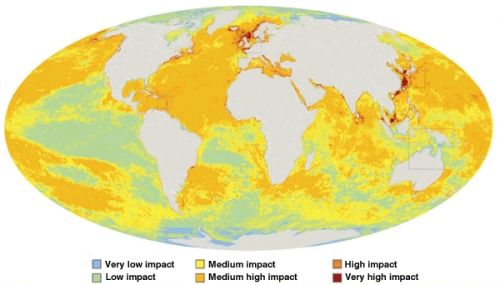
The wonderful wild weather of last week, and according to forecasts, in the week to come; has inspired a series of special water-related posts. This first one examines the findings of a new International report focusing on the condition of the World’s Oceans. It does not unfortunately make for happy reading………………….
Ben Halpern, a research scientist in California published a report last week in Science Journal, which concluded that only about 4% of the world’s oceans remain unaffected by human activity. Pollution, fishing (read ‘over fishing’) and climate change feature at the top of a list of 17 human activities that have destroyed pristine ocean areas and irreparably damaged water quality, marine life, and the fragile eco-system that exists beneath the waves.
It’s only February and the beach is already a hot topic in Israel, but alas, for all the wrong reasons.
Work has got underway in the last few weeks to build a 350-apartment holiday resort on a virtually untouched part of Palmachim Beach, which lies midway between the cities of Tel Aviv and Ashdod.
It may have rained most of this past week – not to mention the snowfall a fortnight previously – but my luck was in as the sun came out when I paid a visit recently to the beach and nearby kibbutz researching a report about the development.
It may only be a tiny place – sandwiched between the private land of Kibbutz Palmachim and the larger commercial Palmachim Beach – but the secluded bay, dubbed the ‘fishermen’s beach’ by locals, is one of the last ‘wild’ spaces on Israel’s small, but built-up, Mediterranean coastline. So no surprise that the prospect of hundreds of extra people (plus the associated noise, litter and pollution) have caused a stir among local residents and beach-users, some of whom have even set up camp on the beach itself.
Did you know that when you drive at a speed that is over 40 mph using the air conditioner uses less fuel than having the windows open? Because of air resistance when you travel with your windows open you slow down your car and you use more gas. If you are traveling over 40 mph close your windows and keep cool in style.This is a great way to feel good and GreenYourselfDaily.
Israel is no stranger to wind power, but using it as a source of viable alternative energy has been criticized by green groups such as SPNI for several reasons. One major reason is that Israel is a flyway for millions of migrating birds heading to Europe via Africa and vice-versa. And no system is in place to protect these birds.
Channel One’s Yoman reports on the struggle by residents of Florentine, a neighborhood in south Tel Aviv, against the city’s building plans in the area. The city wants to build a ring of skyscrapers encircling the adjacent Neve Tzedek neighborhood, as well as a new neighborhood in Florentine that would include buildings up to 11 stories tall.
Most neighborhoods have recycle bins for paper. However there still are many that do not. If you are unlucky enough to live in one of these neighborhoods tie your newspapers into a bundle before you dispose of them. This way you can prevent newspaper from blowing through your neighborhood and you can use one less plastic bag for your garbage.
Eco-Mom Sophie started the debate on cloth diapers (or nappies as she calls them – it must be a UK thing). She continues her argument for why parents should switch over to cloth. Stinky khaki buckets aside, her arguments are in favor of making this earth a little bit greener.
“The Cloth Nappy Reigns”
It certainly does! Today we will be looking at what’s available here in Israel; you’ll be amazed at what we have got, also cloth nappy care routine with tips to get you started. But first, again just to show how important it is to your baby as well as our environment, here’s a few more unfriendly facts about disposables:
That gel that sucks up and holds all the pee pee is sodium polyacrylate; it’s a real nasty, it has been linked to allergic reactions & toxic shock syndrome, it is a lethal chemical.
Very nice and just to reassure you, to make those nappies nice and white chlorine is used which has been linked to dioxin, a known carcinogenic.
The thing is disposables have only been around for the last 40 years or so, just like the majority of chemicals used in everyday products which means there really is no long term data about their health effects, so when you choose between cloth and disposable you are looking at a known and an unknown, well I know what I would choose. You?
So where to start: The great news is that all the suppliers in Israel have websites where you can take a look, have a read, ask all your questions, get advice and order the nappies straight to your home.
Siach Teva sells Kushies that have an excellent all in one nappy for the hard to convert, just put it in the laundry instead of the rubbish; they also have the classic which is used with a cover, prefolds and a swimsuit nappy.
Prices start from 32 NIS for the basic up to 69 NIS for the Ultra.
Motherease is a big favorite, literally, as it is a onesize nappy and by folding it up it can be used from birth to potty, this is the most economical option in the long run as you do not need to buy several sizes, prices start from 65 NIS.
Dahlias Diapers offers Happy Heinys which are pocket diapers, this is also an easy to use all in one option, and Bummis which work with flat & prefolds, prices start from 65 NIS.
Robyna this is a local company manufacturing pocket diapers from fleece, prices start from 75 NIS.
All of these companies offer discounts for multibuy packs for further savings and also offer trial packs.
So what do you need to get started? Checklist:
It’s recommended between 18 to 20 nappies/diapers
4 nappy covers
you can also buy extra booster pads for extra absorbency – ideal for the nighttime or heavy wetters
and a roll of liners, biodegradable & flushable of course, to keep it super easy with the khaki.
Top Tip – Do not use fabric softeners on your nappies and your towels and if we are really talking about it, not at all. First of all, it coats the fabrics with oils which affects its ability to absorb and there is nothing natural about it and can irritate your baby’s delicate skin. Use vinegar, an essential in every green household. About 1/2 cup of white vinegar will leave all your washes soft & fresh. It’s cheaper too!
An Israeli scientist, Dr. Siegal Sadetzki, has found a link between cell phone usage and the development of tumors. Dr. Sadetzki, a physician, epidemiologist and lecturer at Tel Aviv University, published the results of a study recently in the American Journal of Epidemiology, in which she and her colleagues found that heavy cell phone users were subject to a higher risk of benign and malignant tumors of the salivary gland.
Those who used a cell phone heavily on the side of the head where the tumor developed were found to have an increased risk of about 50% for developing a tumor of the main salivary gland (parotid), compared to those who did not use cell phones.
The fact that the study was done on an Israeli population is significant. Says Sadetzki, “Unlike people in other countries, Israelis were quick to adopt cell phone technology and have continued to be exceptionally heavy users. Therefore, the amount of exposure to radiofrequency radiation found in this study has been higher than in previous cell phone studies.
“This unique population has given us an indication that cell phone use is associated with cancer,” adds Sadetzki, whose study investigated nearly 500 people who had been diagnosed with benign and malignant tumors of the salivary gland.
Controlled Study Reveals Link
The study’s subjects were asked to detail their cell phone use patterns in terms of how frequently they used one, and the average length of calls. They were compared to a sample of about 1,300 healthy control subjects.
The study also found an increased risk of cancer for heavy users who lived in rural areas. Due to fewer antennas, cell phones in rural areas need to emit more radiation to communicate effectively.
Sadetzki predicts that, over time, the greatest effects will be found in heavy users and children.
While anecdotal evidence has been substantial, the consistency of the results of this study support an association between cell phone use and these tumors. The risks have been hard to prove, mainly due to the long latency period involved in cancer development, explains Sadetzki.
Keep Calling but Call Smarter
Today it is estimated that more than 90% percent of the Western world uses cell phones. As the technology becomes cheaper and more accessible, its usage by a greater number of people, including children, is bound to increase.
“While I think this technology is here to stay,” Sadetzki says, “I believe precautions should be taken in order to diminish the exposure and lower the risk for health hazards.” She recommends that people use hands-free devices at all times, and when talking, hold the phone away from one’s body. Less frequent calls, shorter in duration, should also have some preventative effect.
While she appreciates the ease of communication that cell phones allow between parents and their children, Sadetzki says that parents need to consider at what age their children start using them. Parents should be vigilant about their children’s using speakers or hands-free devices, and about limiting the number of calls and amount of time their children spend on the phone.
“Some technology that we use today carries a risk. The question is not if we use it, but how we use it,” concludes Sadetzki.
Sadetzki’s main research on this new study was carried out at the Gertner Institute for Epidemiology and Health Policy Research at the Sheba Medical Center. Her research is part of the international Interphone Study, which attempts to determine an association between cell phones and several types of brain and parotid gland tumors.
Fifteen of the largest cities and towns in Israel have signed an international environmental resolution to cut down on greenhouse gases emissions, joining 800 local governments worldwide.
The pledge is to reduce emissions by 20% by 2020.
It will be interesting to see how this resolution is enforced. While there’s a lot of talk about which areas will be addressed (such as transportation) it still seems unclear how that would work. There will be initiatives to plant more gardens and trees, which is never a bad thing.
It once happened that a farmer was removing stones from his field and putting them onto a public thoroughfare. There was a certain pious person who challenged the farmer: “Why are you taking stones from what is not yours and putting them onto what belongs to you?” The farmer just laughed.
We’ve talked about the wonders of bamboo, but another material, being researched and improved by Israeli scientists may become the new bamboo, the new hemp and the new wood. Watch Jonathan Dayan from Tel Aviv University talk about his PhD research on kenaf.
Eight years ago Ofir Drori, now 31, set off for Africa. He was looking for adventure and work as a photojournalist. Inspired by animal right’s activists Jane Goodall and Dian Fossey, Israeli Drori got in deeper than he expected.
He is now fighting crime and corruption in the animal trade business in Africa – working to stop animal trafficking and poaching. Based in the Nlongkak Valley in Cameroon, Drori heads the Last Great Ape Organization, known for short as LAGA.
LAGA was founded in Israel by Drori and other Israeli conservation colleagues including the editor of the Israeli Geographical magazine, and the manager of the Safari, a safari park near Tel Aviv.
The organization, which is based in the Cameroon, is small and lean, with just 10 team members. Its mission is to make sure that a 1994 law in Cameroon made to protect endangered species, such as gorillas, elephants, chimps and lions, is enforced.
Ofir Drori with his rescue chimp
Before Drori no one had been prosecuted for trafficking or poaching animals in most of Central and West Africa. Estimates say that about 3,000 gorillas, 4,000 chimps and about 4,000 elephants are killed each year in Cameroon.
While organizations such as the World Wildlife Foundation are in place to fight such violations, their effectiveness is damaged by corruption on the local level, Drori, the organization’s executive director says.
Looking at Goodall, who devoted a part of her life to saving chimps in Tanzania, Drori says, “Jane Goodall was predicting the start of ape extinction within 15 years. This brought me to Cameroon to write about this crisis. Searching for the heroes fighting to change this forecast, I found a larger problem instead.”
Although there is a law to prevent the killing of endangered animals such as gorillas, and lions (known by locals as bushmeat), Drori started researching into why it wasn’t being enforced.
His impetus to start LAGA (now called EAGLE) came from a shocking encounter at a remote village, known for its extensive ape trade. “I was led to an infant survivor of the bushmeat trade,” he says, “a baby chimp, tied up abused and sick, in a dirty room. His eyes were like those of human babies, but nobody seemed to notice.”
Drori knew that if nothing was done, the chimp would die. Appealing to the local authorities didn’t seem to help. He bluffed the poachers, and got them to hand him over the chimp. “I untied him from his ropes,” he reports “and hugged him. In seconds he was transformed to a baby and he clung to my chest like it was an island of safety.”
Drori saved the chimp he named Future, and decided to open a wildlife law enforcement NGO to fight for and save the lives of other animals.
Defending wildlife from extinction is a moral obligation, says Drori – a cause worth dedicating one’s life to. Drori, who grew up in a suburb of Tel Aviv, was always drawn to the natural world and to Africa in particular. As a youth he attended the Nature School in Jaffa and traveled to Africa for the first time before joining the army.
Only two months after finishing his three-year military service – while his friends were heading to Goa and Tierra del Fuego – Drori opted to return to Africa. Although Drori had no experience in animal conservation prior to founding LAGA four years ago, he recognized that this lack of knowledge could also be an advantage.
“LAGA was born out of criticism against the failure of conservation and the realities of the foreign aid business in general,” he says. He is looking to create “a paradigm shift.”
The efforts have paid off. From a baseline of zero, Cameroon is now monitoring its wildlife traffickers. A majority of those convicted end up with long imprisonment terms, says Drori.
Wildlife traffickers usually get caught by LAGA’s undercover spy network. Their work has helped break down an international ring of ivory smugglers selling products to Hong Kong.
To take the organization to the next level, one of the crew Njike Horline, a lawyer who heads LAGA’s legal department, is now in the US by invitation of the US Embassy in Cameroon to learn about the American court of justice system.
“If repressive measures are not taken to control commercial hunting, we risk losing these animals in 10 to 15 years,” says Drori.



 For some reason my mother always hated hanging plants. And clutter. And collecting things. And although I admire her from here to the moon and back – and learned a great deal from her as well, especially in the taste department – it took one Israeli design student to question her authority.





 Did you know that when you drive at a speed that is over 40 mph using the air conditioner uses less fuel than having the windows open? Because of air resistance when you travel with your windows open you slow down your car and you use more gas. If you are traveling over 40 mph close your windows and keep cool in style.This is a great way to feel good and GreenYourselfDaily.