With America’s and the world’s financial markets going belly up, it will be interesting to see what happens to the carbon market. Smart CEOs will realize that a less carbon intensive business is better for the bottom line, as most companies can kick a lot of wasteful carbon habits, simply by doing a carbon audit. I’ve written about ways companies can get started, with eight handy tips, over on Carbon Catalog.
This prelude on carbon, comes to introduce the latest story on carbon footprints and offsetting. And it’s one of my favorite companies. One from childhood. The Jaffa orange, the sweet shamouti orange, coming into season as we speak (I just ate a few orange smiles), is getting a carbon label. Read all about it in a story that first appeared in ISRAEL21c, thanks to Green Prophet’s James:
Some of the most delicious oranges eaten around the world are produced in Israel. A famous grower of the Jaffa orange, also known as the Shamouti orange, the sweet, near seedless variety is easy to peel, and a favorite in Europe and North America. People often remember eating Jaffa oranges while growing up.
Taking its name from the city of Jaffa, where the oranges were first cultivated and exported in the late 1800s, modern growers today have a new plan for the old treat. Usually oranges turn from green to orange while on the tree. But when ripe, Jaffa oranges – thanks to a new initiative by the grower and supplier Mehadrin – will soon turn “green.”





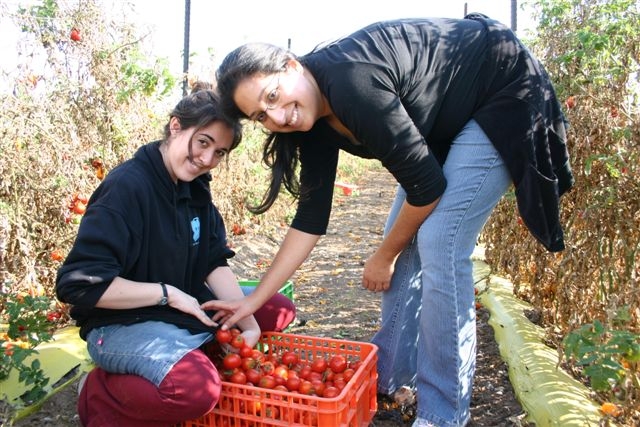



 College students don’t usually need a justifiable reason for studying abroad. And study abroad in Israel? There’s the sun, the beach, the good food, the beautiful people… all very educational, of course. But for those students who are looking for a justifiable reason (at least one they can tell their undergraduate advisors or parents), how about a study abroad program with a conscience?