Home Blog Page 734

Eco Rabbi: Parshat Vayetzei – Working Together

0

mountain, israel, sunset, vayetzei, eco rabbi picture

In this week’s segment Jacob leaves his parent’s home. Jacob just out-maneuvered Esau, his brother, for the birthright and now Esau wants revenge. Jacob hopes to stay with family in Haran. On his way there Jacob sets up camp in a special “place.” Sources explain that that place is holy and is either the Temple Mount in Jerusalem or Hevron. In order to protect himself from dangerous animals Jacob surrounds his head with stones from the area. That night he has a paradigm-shifting dream where God promises Jacob that he will be with him wherever he goes.

There is an interesting grammatical inconsistency in this text. When Jacob lies down to rest he takes stones from the area and places them around his head, but when he wakes up the text only mentions one stone. Genesis Rabba, a sixth century commentary, picks up on this and explain that the stones understood that Jacob was holy and a very special person. All of the stones wanted to support the head of this great man so they joined together into one stone.

Kishon River 2? IDF NAHAL Infantry Unit Afflicted by Cancer–Causes Unknown

5

idf nahal unit cancer image kishon river

The army unit I served in (way back when) was featured in tonight’s news broadcast for having cancer levels more than twice as high as other infantry units.  Channel 2 TV (Arutz 2) reported this evening (video, in Hebrew) that IDF’s Nachal infantry had 2.5 as many Hodgkin’s Lymphoma cases than either Paratroopers or Golani, the two main “competitor” infantry units.  This raised echoes of an earlier cancer cluster in the Navy Seal commandos who trained in the polluted Kishon River.

Levels of Cancer: According to the report, the army medical corps ignored reports from casualty officers about cancer cases in the unit for 8 years, declaring that the data was insufficient and not deserving of comments.  An investigation was begun only in the past few months, including the IDF, the Health Ministry, and a group of independent expert consultants.  The results?

Lymphoma cancer cases in the Nachal were 2.5 times higher than in other infantry units, a statistically significant difference, and all types of cancers were also higher in this unit, according to Micha Bar Chana, the chief cancer scientist in the Health Ministry.

How much higher? Among soldiers – warriors in top physical condition – who served between 1994 and 2004, lymphoma cases were
7 among paratrooper and Golani soldiers
17 among the Nachal soldiers, 2.5 times greater.

For all forms of cancer, there were 58 cases in the Nachal, compared with 43 cases in Golani and 47 among paratroopers.

Hawaii Will Be First US State To Hook Up Shai Agassi's Electric Car

2

hawaii shai agassi electric car better place photo

Hot off the press –– According to the AP, Hawaii has unveiled plans to be first in the nation to roll out electric car stations statewide — a move the governor hailed as a major step toward weaning the islands off oil. This news follows a recent declaration that California cities will be entering into a similar $1 billion project with the electric car provider, Better Place.

Hawaii currently imports foreign oil to meet 90 percent of its energy needs. Hawaii going electric is great news, because one-third of that oil is used to power cars and buses on island streets.

Gov. Linda Lingle said Tuesday this new program, developed by the Israeli Shai Agassi of Better Place, would help Hawaii meet its goal of slashing fossil fuel use 70 percent by 2030. In a press conference, he said: “This is the preferred future. Today is a part of the execution of our energy independence, and our getting off the addiction to oil.”

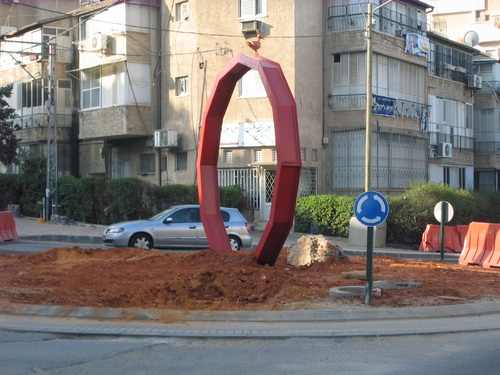
Urban Design: The Traffic Circle as a Space for Art

7

Petach Tikva traffic circle art image

According to surveys, Petach Tikva is the number one destination for young couples purchasing apartments, with a population that is growing at an annual rate of 2.4 percent.  As part of a public improvement campaign before the recent municipal elections, the city began two new traffic circles. One is near my home at a dangerous intersection, where drivers routinely threaten pedestrians by making illegal turns.

I’m pleased that traffic will slow, but I suspect the city’s main concern is traffic patterns and not safety. A circle will provide an additional way for cars to cross the main road. My daughter, though, worries that in times of heavy traffic the circle will make it difficult to cross the street, as she won’t know whether a car is headed toward her until the last minute.

Neighbors on a side street sued the city because they feared increased traffic and noise. Traffic violations don’t seem to concern them. They managed to have the work stopped on a technicality.

Then we have the aesthetic issue, as every traffic circle creates a new public space to be filled. Here’s how my friend Victoria describes one notable sculpture: “An astronaut holding a giant eyeball, standing on a pea pod that is growing out of a kettle.”

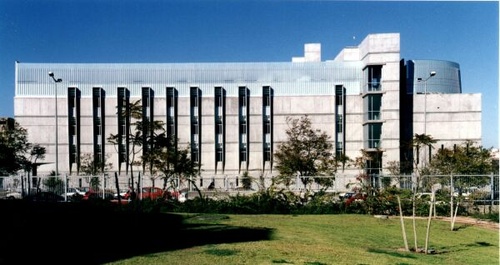
Ben Gurion University to Host International Desertification Conference

2

ben gurion university desertification conference image

Convening at the Ben Gurion University’s Sede Boqer campus on December 14-17, over 350 people from 40 countries are expected to meet and map out ways to combat desertification around the world. The four-day gathering is the largest international conference ever held in Israel focused on an environmental topic, and probably the largest international academic forum ever on desertification. Delegates will be coming from as close as Jordan, and as far away as China, North Africa, India and Pakistan.

Amid warnings by the United Nations of a looming desertification crisis in both the developed and underdeveloped world, the Jacob Blaustein Institutes for Desert Research (BIDR) at Ben-Gurion University of the Negev will be hosting a major conference aimed at examining new ideas to combat the phenomenon.

Beyond the academic and practical aspects of the conference, the forum will also serve as a meeting place for scientists, farmers and bureaucrats from across the globe to share their experiences and exchange ideas.

US and Israel Expect to Launch $20 Million Annual Energy Co-op Agreement At Eilat Conference

1


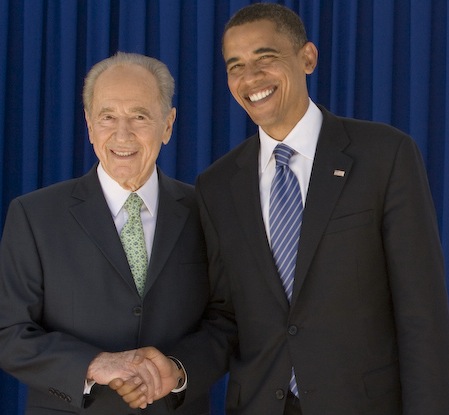
(Barak Obama meets Israel’s President Shimon Peres)

Conferences on CSR, conferences for greening Islam, conferences honoring Al Gore. Israelis love them. And now that clean technology and energy is becoming a national priority (just ask Shimon Peres), green-themed conferences are popping up around Israel like sabra fruit on a desert cactus. Get out your day planners, and your hybrid engines purring: The latest is a 3-day conference, The Eilat-Eilot International Renewable Energy Conference, next February 17-19 in Eilat. (That Israeli city north of the Sinai Peninsula).

According to organizers, the meet will feature an “unveiling of plans” for a 200 MW renewable energy center in Timna as well as “major announcements” from international solar power companies. Woo hoo! As part of the green festivities, the US-Israeli Energy Cooperation Act, passed two years ago by the US Congress, will finally come into effect.

The cooperation act will fund eligible joint ventures between US and Israeli businesses, as well as establish the International Energy Advisory Board.

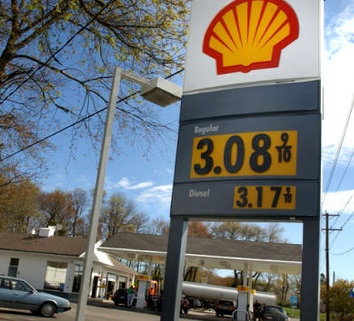
Will Shell Oil Strike a Mega-Deal in Oil Shale With Jordan?

1

shell oil image

The Kingdom of Jordan may be about to finalize a mega-deal with Shell Oil for the extraction of oil shale on 22,000 square meters of land–almost one quarter of the country. Some 40 billion tons of shale oil are believed to exist in the central and southern regions.

Natural Resources Authority (NRA) Director Maher Hijazin told The Jordan Times,“We are close to finishing negotiations and we expect the agreement to go before Parliament for approval within the next month.”

Shell, meanwhile, is staying mum about the reports. And well they may, because oil shale is a controversial topic, especially in the context of today’s heightened awareness of climate change.

Is the Israeli Media Going Green?

2

Israeli media green image

As Green Prophet nears its first birthday, we’re are pleased to have brought you hundreds of stories about environmental issues and activism in Israel and the Middle East over the last 12 months.

We’re glad to be playing our part in the mushrooming of environmental awareness in the region. According to data from Yifat Media Research, environmental reporting in the media rose by 300% in the last decade, including a 25% increase in 2007 alone (reported by the Ministry of Environmental Protection’s Sharon Achdut in the Ministry’s latest Israel Environmental Bulletin.)

Sidelined for many years by the Israel’s traditional three national priorities (security, security and security), the increase in media coverage is a sure sign of ‘green issues’ moving into mainstream public consciousness, as demonstrated by candidates vying for the green vote in last month’s municipal elections.

“In the beginning of this decade, environmental stories only hit the front pages under exceptional circumstance,” writes Achdut. “However, much has changed in recent years, with environmental awareness on the rise among all sectors of Israeli society… The mass media has followed suit, generating even greater public interest in environmental issues.”

It’s reassuring to see that Middle Eastern journalists and editors are catching up with activists, NGOs and scientists – and finally taking the environment seriously. Hopefully these green words will be translated into action.

:: ‘Greening the media’, Israel Environment Bulletin, Vol 34, November 2008.

Photo: metamuro.

Green Prophet Interviews Green Movement Spokesman Rami Livni

3

Rami Livni image

Eight months ago, Israeli environmental veterans founded Tnua Yeruka, or the Green Movement. Led by Eran Ben-Yemini, the founder of the student environmental movement Megama Yeruka, and by veteran Israeli environmentalist Alon Tal, Tnua Yeruka aims to marry the values of the green worldview with those of traditional left-wing parties, such as reducing the gaps between the rich and poor and negotiating with the Palestinians, Syria and Lebanon. The full party platform is here.

Rami Livni image

Green Prophet sat with Green Movement spokesperson Rami Livni last week in a café on Tel Aviv’s King George Street. Currently the Media Project Coordinator at the Heschel Center, Livni has an MA in literature from Tel Aviv University and was foreign editor at Haaretz. In jeans and a light green t-shirt bearing the Green Movement logo, Livni explained the history and vision of his party.

Dancing Camel Brewery supports the Sea

4

white-house-beer-recipe-man-balcony-beerDancing Camel, one of Tel Aviv’s great small, local breweries, makes absolutely delicious beer.

From Pomegranate Ale to Cherry Vanilla Stout… they know what they’re doing.  Coming from a female non-beer drinker, you can take my word for it.  I would never drink the stuff unless it was good.

They offer a great local product that serves as a wonderful alternative to imported, carbon-footprint heavy beers (they recently sold their beers at Tel Aviv’s slow food farmer’s market).  And to top it all off, their brewery in southern Tel Aviv has been the home of some great parties.

This Wednesday night Dancing Camel will be hosting a party with an environmental conscience.

Their dance party (tunes courtesy of DJ Lindzee) will collect a 40 NIS donation at the door to benefit the Zalul Environmental Association’s environmental education program.  All donations will go towards the cause.

As their poster says, it’ll be great beer, great hors d’oeuvres, great music, and a great cause.

Zalul is a non-profit organization with a focus on protecting and maintaining clean, clear water along Israel’s rivers and shorelines.  It was founded in 1999 by a group of concerned citizens and has since grown to include a small team of professionals from various fields.  It is currently one of Israel’s leading environmental NGOs.

It’s not very often that environmental benefits are both fund-raising and fun-raising, and we applaud both Zalul and Dancing Camel for their joint efforts.

Read more Israeli water issues on Green Prophet:

Zalul’s Protecting the Lachish River

Catastrophic Chemical Spill Hits Israel’s Yarkon River

Eilat Fish Cages: Out of frying pan, into Ashdod harbor

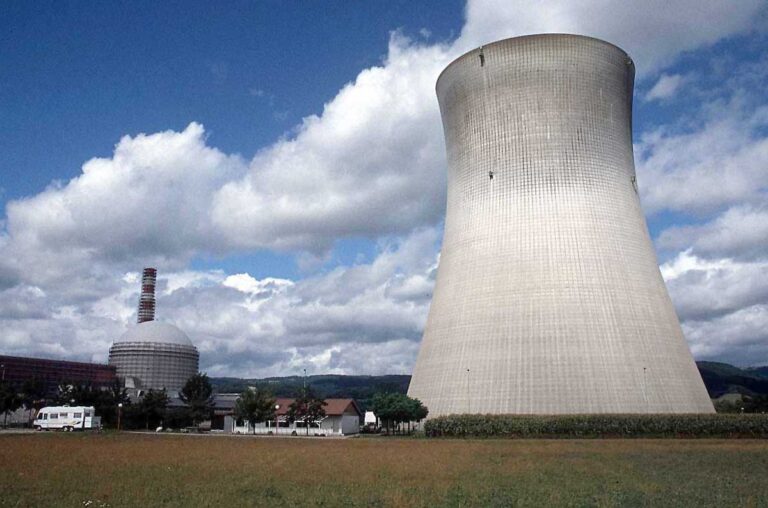
Iran Going Nuclear in Joint Nuclear Power Plant Venture with Neighbors

1

iran, nuclear, oil imageAs a source of alternative energy, some people believe that nuclear power is extremely powerful and can be a fantastic green solution to the energy problem. There are several hazards involved though:

Purifying the uranium needed to generate the energy is extremely dangerous, and if the waste is not taken care of properly it can be more hazardous to the environment than what would be saved from the use of the “clean” energy.

Another problem is that the purification of the uranium is the same process one needs to go through for the production of warhead grade uranium. Basically, if you are building a power-plant you can slip by a few nukes while you’re at it.

But all that aside, Iran still has announced that they are planning to replace their oil fueled power stations with nuclear reactors. One would think that Iran actually wants the United Nations Security Council breathing down its neck.

Source: Teheran Times

Solar Cooking Ovens: Another Eco-Solution from the Gaza Strip

7

solar coooking oven gaza strip photo

Over the past few weeks, Israel’s ongoing blockade of the Gaza Strip has intensified.  Commercial crossings are now closed, preventing the transfer of natural gas and other essential resources for Gaza’s 1.5 million residents.

We saw earlier this year, when inventors Waseem Khazendar and Fayaz Anan created an electric car, that necessity is the mother of invention.  As fuel and other resource shortages in Gaza increase, the trend toward innovation continues!

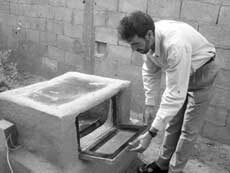
Yousef Abu Tawahina has created a solar cooking oven in his backyard in Deir Elbalah.  Using a few easily accessible materials, Abu Tawahina converted a conventional oven that runs on scarce natural gas to one that runs on abundant rays of Middle Eastern sun!

Buy Nothing Day can save someone’s life or soul

0

buy nothing day israel image photo wal-martA day before Buy Nothing Day in 2008 an American salesman lost his life, as bargain hunters in a Wal-Mart shop in Long Island trampled him to death.

No one was going to get in the way of a good deal: shoppers walked on and killed the 34 year-old, while pushing their way through the door on Black Friday, the first Friday after Thanksgiving, and when Americans start their holiday shopping.

One of the things I love about living in Israel is that people here are not driven with the same kind of consumerism you can find in North America. It’s a real relief. Maybe it’s because most of us aren’t caught up with Christmas, being mainly Jewish or Muslim. Don’t get me wrong, Israelis love a good bargain, but shopping over here –– thankfully –– has not become a religion.
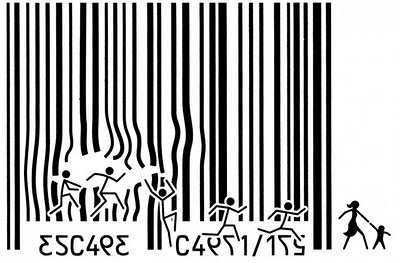
buy nothing

In light of today being “Buy Nothing Day” in North America, I’ve posted a story below, which I’d written after my first shopping experience two years ago in Bangkok, Thailand. Some food for thought about what drives us to shop, and consume:

________

Abercrombie and Fitch shorts, Birkenstock sandals, Gucci purses and Ray Ban sunglasses – I was faced with miles of aisles of goods in the shopping mall halls in Bangkok, Thailand. I looked at the products promising to make me more desirable, more pretty, more everything and wondered, do I have the power to choose not to choose?

I had anticipated the shopping experience in Thailand, where I was told that for tens – instead of hundreds and thousands of dollars, I could buy anything that my heart desired. But when faced with the prospect of what seemed like an endless sea of “knock-offs,” I started to feel pains in my stomach.

The sensory overload created by piles of clothes, stores pedaling watches, the screaming colors, the beckoning salespeople looking at me as the commodity, made me feel nauseous. What promised to be a day of shop-till-we-dropped, ended in me reflecting on the concept of the “brand” and how it drives us to consume much more than we really need.

What’s in a name brand?

According to Wikipedia, a brand is a symbol that embodies all the information about a product or service. A brand creates in our minds expectations from products. Explicit logos, fonts, color schemes, symbols, and sounds are developed to represent values, ideas, and even the personality of specific products and companies.

For instance “Just do it!” and “Because I’m worth it” are famous slogans many of us identify with. Repetition on the radio, TV and on billboards plant these words inside our head and create associations between the product being advertised and the user’s experience of using the product.

In effect, we end up buying much more than we need; and the act is not just wasteful, but has a toll on our planet by contributing to Global Warming.

But brands have an upside as well. In some cases, brands help us weed out the good from the bad. Certain electronic equipment or clothing manufacturers may have a reputation for delivering high quality goods that survive years of wear and tear. The brand helps us save time so we can know what to expect.

And other brands may communicate a superior value, or ethics, by being environmentally-friendly, or by being produced by fair trade labor practices.

Fishy tricks to get you to buy

At the end of the day, it is up to us as the consumer to decide whether or not we want to buy into a brand, but with today’s aggressive marketing campaigns, it is best to stay out of the shopping malls if you don’t want to play the game.

As an example, this past summer, while I was in the Lacoste store at Paris’ Lafayette mall, I smelled something fishy. Literally. thinking it was strange that restaurant smells would leak into such a high-end clothing store, I looked around and no restaurant was in sight. Then I moved over to Ralph Lauren and smelled fried chicken.

“Don’t you know about olfactory marketing schemes?” my friend asked me.

He went on to explain about a new and secret form of advertising used by marketing departments in companies to send customers ‘smell’ cues while shopping. Since smell is the sense most strongly connected to memory, smells are injected into the shopping experience to help sell a lifestyle; to invoke memories of youth, of love, of home.

Just don’t buy into it

Some activists are saying “no!” to mass consumerism and sneaky advertising tricks; they are advocating that people flex their consumer muscles in the areas of buying less, buying locally and buying products that support fair trade.
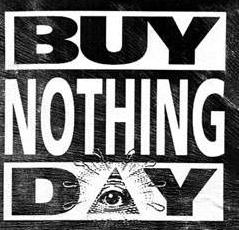
buy nothing day poster imageAdbusters, one such group, is a magazine that works to demystify the allure of the brand. They say that 20 percent of the world’s affluent population in the west are consuming about 80 percent of the world’s resources. One of their solutions is “Buy Nothing Day.”

With historical roots in Canada, Buy Nothing Day was started in 2002 by a Vancouver artist named Ted Dave who came up with the idea that people should refrain from buying anything for a 24 hour period in order to demonstrate consumer power.

Says the editorial staff at Adbusters, “Every November, for 24 hours, we remember that no one was born to shop – we make a small choice to participate by not participating.”

“If you’ve never taken part in Buy Nothing Day, or if you’ve taken part in the past but haven’t really committed to doing it again, consider this: 2006 will go down as the year in which mainstream dialogue about global warming finally reached its critical mass. The event, they believe, raises awareness to what are wasteful consuming habits of the west. In the United States and Canada, supporters demonstrate on the day after American Thanksgiving, Black Friday, as it is one of the busiest shopping days of the year.

Last year about 10,000 people in 65 countries participated in Buy Nothing Day and specifically in America they were credit card cut-up booths, no-logo parades, free food parties and concerts and bartering markets. More than 2 million people chose not to spend any money.

Now I ask myself, What can I do in the rest of the year to take responsibility for how much I shop and not contribute to Global Warming and waste?

For me at least, I avoid wearing other people’s logos on my clothes, and remove them when I can; I have also come to appreciate my aging wardrobe and second-hand finds (see this post on my magical red T-shirt). These days in particular, with a little more money in my pocket, when choosing new clothes, I buy from local designers and try to avoid the big retail outlets that manufacturer clothing for pennies in Third World countries.

Buy Nothing Day isn’t just about changing your habits for one day,” concludes Adbusters. “It’s about starting a lasting lifestyle commitment to consuming less and producing less waste – to begin setting the example.”

Image of top poster, Dave Astra

More ways to cut down on consuming:
Green Prophet on Greening Your Wardrobe
Shtaim, A Second Hand Store With a Twofold Conscience
Dumpster Diving in Tel Aviv


DIY Heating: 2 Knitting Needles Studio

5

2 knitting needles studio israel photoThe winter months are fast approaching, and more of us are feeling the need to look for things to keep us warm – whether it be soup, sweaters, slippers, or socks.  And for those of us who are trying to be green, the more we can avoid using electricity and non-renewable energy for our heating needs – the better.
That’s where the 2 Knitting Needles Studio comes in.  Started by two women – Miri and Billi – the knitting studio attempts to approach the act of knitting both from a creative and a meditative angle.  While they certainly instruct on a variety of different knitting techniques and trends, they also understand the powerful meditative qualities of knitting.

And what better way to stay warm and to keep your loved ones warm than to wrap them up in a knitted piece of your creation?  Bye bye, space heater!  And as an added bonus, creating a scarf or blanket yourself eliminates all of the energy that would have been used to mechanically create and ship a regular, store bought scarf or blanket.

California and the Better Place $1 Billion Electric Car Company from Israel

shai agassi better place electric car california image

The financial crisis is hurting Americans, but months before the hit fuel costs were already gouging into people’s pockets. Some were forced to carpool to work, others took the bus or train. While creative forms of public transportation help deal with times of fiscal uncertainty (we personally love bikes!), the long-term plan for preserving the American way of life, and its auto industry, may revolve around an Israeli businessman.

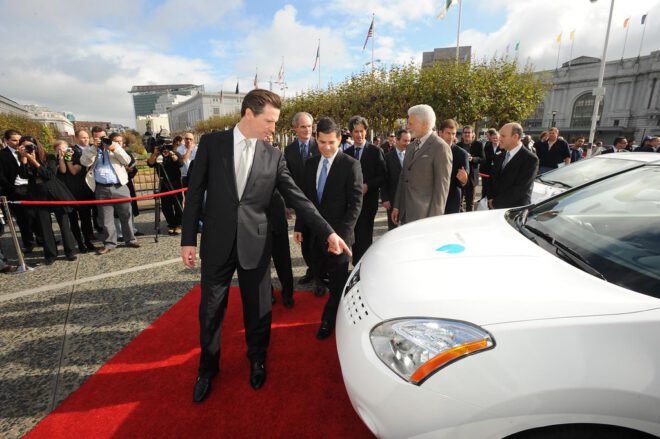
Shai Agassi, the CEO of Better Place, has big plans for America. Last Thursday, with the blessing of California’s Governor Arnold Schwarzenegger, Bay Area mayors met at San Francisco’s City Hall, along with Agassi. Their intent, they said, is to make the California region, already a green beacon in the world, an early adopter of Agassi’s electric car scheme. Israel, Denmark and Australia have already come on board.

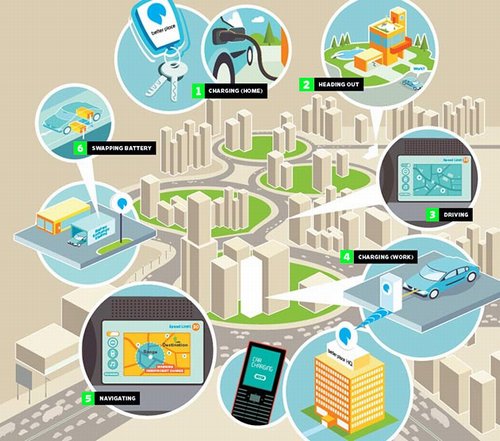
Similar to “minutes” in the cell phone industry, users will pay for leasing a car based on battery use. The scheme calls for electric battery recharging ports, and battery swapping stations throughout the region, but requires infrastructure and support for the project to work effectively.

Will Israel be the capital of electric cars?

The new $1 billion project is expected to encompass the cities of San Francisco, San Jose and Oakland. Similar deals have been signed with governments elsewhere, and now California marks the first stop in the US market. The United States is set to go electric.

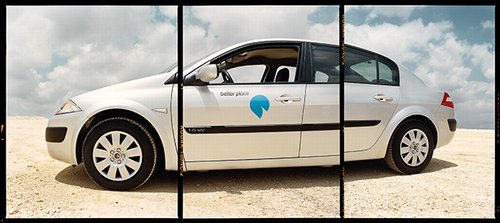
According to media reports, Better Place, which is headquartered in Palo Alto, will begin constructing the charging stations by 2010, with commercial sales beginning in 2012, a few short years away. The electric cars will be built by Renault-Nissan.

shai agassi better place electric car california image

The recent announcement to start work with the Bay area did not come as a big surprise. In Israel earlier this year, hybrid-car driving Mayor Gavin Newsom of San Francisco already showed great interest in the Israeli project.

“This is the start of a regional effort to become the capital of electric vehicles in the United States,” he told representatives from federal and state agencies, green organizations and automotive makers such as GM and Toyota, in a recent press briefing.

shai agassi better place electric car california image

With factory layoffs hitting car production plants all over America and Canada, an industry revolving around the electric car may breathe new life into the crumbing American economy.

It takes a region to make a great EV

Mike Granoff, head of oil independence policies at Better Place, and the first investor in the company told me: “Gavin Newsom and Shai have been friends for many years. The Mayor wanted San Francisco to be a leader in this, but it was not entirely up to him because our model does not work for just a city – it needs a region. He led an effort over the last year to bring the entire Bay Area on board, and ultimately the entire state.

“We are working with third parties on capital raises for Better Place Denmark and Better Place Australia. We intend to do the same thing in California. We have been inundated by inquiries about investment continuously, even through the downturn,” he adds.

“We absolutely look forward to working with additional automakers. Our goal is for all cars to ultimately be electric. The American auto industry is in shambles precisely because they have not moved toward ‘Car 2.0’.”

Earlier this week Granoff circulated an email explaining why he believes the US government’s response to the crumbling economy should be an “auto bailout, conditional on [a] rapid switch to all-electric, and then create a jobs program in parallel to put that infrastructure in.”

Plug in or swap the EV battery

In order to put the vision into practice, Better Place — already backed with about $200 million in venture capital — will raise additional capital so that charging stations in the three main participating cities, and between them, can be built. The stations will let vehicle owners recharge with ease, or in some cases swap spent batteries for fresh ones during longer trips.

The Bay area mayors are expected to use their authority to push through permits needed to create the charging stations, and also regulations that promote and offer incentives, such as tax breaks for those who install charge stations at workplaces, or who use the cars.

Gavin Newsom
Gavin Newsom and Shai Agassi of Better Place

At a press briefing, Newsom told reporters: “We’re going to get serious about advancing our local climate action plans, about getting into the business of alternative transportation. I don’t believe halfway is good enough. I’m a guy driving a hybrid (vehicle) and I don’t feel too good about that. For us to get to the next level, we need unprecedented regional collaboration.”

Aside from long-term environmental rewards, there are other benefits too: Better Place solves in part America’s dependence on foreign oil, owned by a cartel of dangerous countries that threaten global democracy. Agassi said, “We believe this is not just a model for California, but a blueprint for the United States.”

For a somewhat more critical look at Better Place, visit the Green Prophet article, Better Place’s Shai Agassi Gets Wired.