Home Blog Page 731

REVA Electric Cars May Soon Be For Sale in Israel

3
reva electric car israel photoBDO-I2I is looking to bring Indian-made electric cars onto the Israeli market. REVA Electric Car Company and consulting firm BDO-I2I are still finalizing the details, but there are reports imports could start before the end of January.
 
The news comes as Shai Agassi’s Project Better Place unveiled a protoype of its battery charging station earlier this week in Israel. The project aims to put electric cars on Israel’s streets en masse, but the project deployment date isn’t until 2010, a full year after REVA could be on the market.
 
REVA’s car is a fully-automatic battery powered hatchback that can be charged from regular 15 ampere electric outlets. A system of eight battery units form the 30 kg battery that gives the car a range of about 100 kilometers on just a six hour charge. The car is made of lightweight panels on a steel body. The manufacturer’s web site claims the cars are dent and scratch-proof, a claim Green Prophet finds a little suspicious.

Looking to the Vadose Zone to Rehabilitate Groundwater Pollution

1

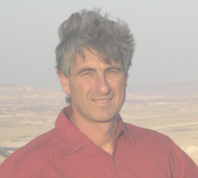
ofer dahan israel water researcher picturePlanted in Israel’s Negev Desert is an academic oasis of scientists and their students. They are studying a natural resource that may be more valuable than oil in the not-so-distant future. That resource is water.

Dr. Ofer Dahan from the Department of Environmental Hydrology and Microbiology at Ben Gurion University is one of the 26 water specialists who have uprooted their families, bringing them to the remote village of 200 homes in Midreshet Ben Gurion, in the Negev. Dahan, a hydrologist, is devoting his life to studying water in one of the driest places in the world. For him, it’s not a strange concept at all.

“You see my research is conducted at sites around Israel, in Ashdod… in Ramat Hasharon, sites in places that are not all deserts. The uniqueness of this institute is that people live and work in the same place. You can’t go shopping in the evenings; kids can’t go to the mall. Any paved roads we have here are the playgrounds. We enjoy the safety of the place,” says Dahan, who was a fisherman, before he became a water researcher.

Hebrew University Recognized as World Leader in Movement Ecology

1

Hebrew University movement ecology imageThe significant role of the Hebrew University of Jerusalem in developing the study of movement ecology has achieved international recognition through extensive coverage in the current issue of Proceedings of the National Academy of Sciences, a leading American scientific journal.

Movement ecology is a developing academic pursuit, combining expertise in a variety of fields, including biology, ecology, botany, environmental science, physics, mathematics, virology and others. And tt might help scientists predict how animals will migrate when the effects of climate change become severe.

It involves the study of how microorganisms, plants and animals travel from one place to another, sometimes for great distances and in highly surprising ways. This movement is a crucial component of almost any ecological and evolutionary process, including major problems associated with habitat fragmentation, climate change, biological invasions, and the spread of pests and diseases.

The current edition of the journal, Proceedings of the National Academy of Sciences in the USA (PNAS), contains a 76-page special feature on movement ecology, edited by Prof. Ran Nathan, who heads the Movement Ecology Laboratory in the Department of Evolution, Systematics and Ecology at the Hebrew University’s Alexander Silberman Institute of Life Sciences.

Green Prophet Interviewed in Jerusalemite

0

We’ve hit the one-year anniversary of Green Prophet, and what a year it’s been! And just in time for the event, Green Prophet’s Karin was interviewed by Jerusalemite about green spaces in Jerusalem. (Karin was also interviewed in the November issue of Time Out Israel–may the media blitz continue!)

Just to whet your appetite, here’s a sample quote,

…Everyone who visits Jerusalem goes to the Old City, the Kotel, the churches, mosques, the museums. But it’s in the Jerusalem forests where you can actually smell Jerusalem, and in its pine needles hear the faint whisper of King David.

Check out the rest of the Jerusalemite article, which also discusses new Jerusalem mayor Nir Barkat and his green right-hand woman Naomi Tsur.

For nostalgia’s sake, check out this interview with Karin back in May, when Green Prophet was just six months old: Green Prophet in the News

Eco Rabbi: Parshat Vayishlach – Waste Not Want Not

1

jordan river, parashat vayishlach
Living green is about not being wasteful. If you save up a little bit at a time it adds up! David Bach in “The Automatic Millionaire” calls this the “latte factor.” In a nutshell, if you drink a latte every day it can add up to hundreds of thousands of dollars over forty years.

But how far should a person go to avoid wasting?

In this week’s segment, Vayishlach, Jacob finds himself alone late one night on the wrong side of the tracks– well, river. The medieval commentator Rashi quotes the Talmud (Hulin 91a) and explains that while Jacob was crossing the Jordan to return to Israel he had left behind a few small jars, and went back to get them. Because he was left alone, he was attacked by an angel, with whom he fought until the morning.

Israel and China Build Israel's Biggest Solar Power Plant

4

Israel China solar power image

This week, Israel’s biggest solar power station was inaugurated in Katsrin, a place otherwise known for its archaeological sites. Generating 85,000 KWH per year, the power station represents a milestone in Israel’s adoption of alternative energy, which until now had hardly been a soaring success. But it also represents something else: A partnership between Israel and China.

The power plant was built with joint cooperation between Israel’s Solar-It Doral company and China’s Suntech Power Holdings Co., Ltd., a listed company in the NYSE, specializing in photovoltaics.

The power station has been integrated into Israel’s national grid and will be accompanied by incentives for consumers.

State officials of both countries have expressed hope that cooperation between Israel and China in renewable energies will continue. Suntech, for its part, is planning to build another solar power plant in southern Israel.

:: China View

Track Israel’s green relationship with China in previous Green Prophet articles:
Living in a Green House
Water Pact Between Israel and China

The Bedouin Ladies of Lakia Weave Together Women and Tradition

4
bedouin women lakia photo
Searching for empowerment: Bedouin women from the Association for the Improvement of Women’s Status meet with visitors from the US.

Fair Trade and preserving local craftsmanship and culture, is an important aspect of the green movement –– at least for those environmentalists who value humankind and the health of its societies. Following that notion, we think it’s appropriate to feature the women from Lakia: as their agrarian society shifts to a western one, Bedouin are getting lost in the Negev dust. Literally. But an NGO founded by Bedouin women for Bedouin women, is giving new purpose to an old way of life. Here is their story.

As the Israeli Bedouin culture, which was once partially nomadic, adapts to the fast-paced ways of modern living, its women are being left behind. Undervalued at home, and with few skills that can lead to gainful employment (most are not allowed to leave the home for outside work), not only do Israeli Bedouin women suffer from high rates of poverty and abuse, they can pass on a sense of hopelessness to their children — a cycle that never ends.

As the once nomadic people transition into the modern way of life, the women are becoming more marginalized. In the past, they had responsibilities in the house — collecting water and wood, taking care of the livestock and setting up the family tent. These are skills no longer valued in their society. But that’s changing.

bedouin women weavin in israel ancient picture

Determined to find a way to empower themselves, a group of four Bedouin women from the Bedouin town of Lakia, founded the Association for the Improvement of Women’s Status in 1992. Since creating their NGO, the women have been able to build a number of meaningful projects in their society that generate income and a sense of self-worth.

Drawing water from a new kind of well

“The women in Lakia no longer go to the well to collect water, but I tell them that the well is inside us,” says Naama Elsana, a co-founder of the association, who teaches women and their daughters the ancient Bedouin craft of embroidery, a skill that not only creates beautiful clothing and decorative items for the home, but which also transmits stories of the Bedouin way of life, inside the intricately detailed patterns.

In a bold move, the women of the Lakia association have veered from tradition and have created their own style of embroidery. In previous embroidery patterns developed by the tribe’s grandmothers, the men were at the center. (See also One World Many Beads)

“Today, we have our own pattern,” Elsana tells ISRAEL21c, as she shows her creations to a group of American executives visiting her tent as part of a tour by the non-profit foundation, Project Interchange: “In this one as you see here, the four women who have founded this organization are at the center, while the four sheiks of our community, are stitched on the outer corners.”

Women of Lakia, Bedouin woman at her well
The well in Lakia (pictured above) used to be the source of community for the Bedouin women of Lakia. Now it is locked.

This past November, Naama and Hessin Elsana, a cofounder of the association, addressed a group of high-powered construction executives from the United States, in Israel at their village. The executives are CEOs and VPs who manage multi-million and billion companies in both America’s East and West Coasts, and had come to Israel for one week, on Project Interchange — seminars which help influential leaders see and experience Israel beyond the conflict, beyond the violence they see on CNN.

In Lakia, beside the greeting tent where guests can eat a traditionally cooked Bedouin lunch, and then hear a lecture with Elsana or one of her partners, there is also a gift shop where visitors can purchase unique jewellery, clothes, wall hangings, purses and handicrafts fashioned by the local Bedouin women.

A library on wheels

The association gives fulltime work to 70 Bedouin women. Teaching the traditional art of embroidery, and then selling the products is the association’s central activity, but there are other community activities that have branched out to further strengthen their society from within.

One is an adult literacy program the women have created, a special kindergarten for their children, and a mobile library, which passes through different neighbourhoods to spread literacy, and human rights education among the town’s children.

Today, Elsana reports that Bedouin women are undergoing a transformation — while only a handful of women went to university 10 years ago, this year there are about 350.

The Association for the Improvement of Women’s Status has an “open-tent” policy, which allows visitors from Israel and the outside world to experience the joys and hardships of being a Bedouin woman. They invite outsiders to come and meet them.

For more feature stories on Bedouin in Israel, see:
Bustan and Bedouin Paint the Desert Green
A Film About A Bedouin Man and His Landscape
Sharing Water Resources With the Bedouin
Buying Fair Trade from Israeli Craftswomen
A Journey Through Bedouin Jewellery

::Desert Embroidery website

Will the Tel Aviv Light Rail Ever Happen? Do We Want it To?

11

Tel Aviv light rail imageI am not against public transportation. In fact, I am very much in favor. As a person who lives in Tel Aviv and does not own a car, I am completely dependent on my bike and the bus and train systems. What’s more, it often seems like the half a million vehicles that enter the city every day are all stuck in traffic right underneath my apartment, honking away at each other. Anything that can reduce traffic in the city has my support.

But let’s face it – Tel Aviv’s light rail is not just around the corner, and in fact it has never looked further away.

This week, the banks that were supposed to loan $1.4 billion to MTS, the consortium that won the tender for the project’s construction, announced that they cannot follow through on their commitments.

Right: A computer rendering of the underground section of Tel Aviv’s future mass transit system. (image via skyscraperlife.com)

This should not come as a huge shock. After MTS repeatedly failed to meet deadlines for securing financial backing for the project, the world financial crisis hit, taking out some of the key players: Bank of Scotland, a major lender, was nationalized, AIG, the insurer, collapsed, and the rest are now demanding fundamental changes in the tender, in light of lessons learned from Jerusalem’s light rail project. MTS will find it very difficult to make the next deadline in late January.

Tel Aviv’s light rail/subway, which has been in the planning stages since Golda Meir was in power, does not seem likely to be built in this generation. It’s time to start thinking outside the box.

Green Your Life Like Ben Franklin

2

benjamin franklin green journal pictureHow’s that journal coming along? Not always easy to keep to, eh?

Try taking a page out of one of America’s founding father’s: Benjamin Franklin.

In his autobiography B. Franklin decided upon thirteen virtues that he would like to work on. After deciding upon his goals he made a chart listing them and for each virtue a box for every day of the week. For the first week he only worked on the first virtue, leaving the other ones behind, making notes for himself on every day that he found himself working on the virtue of the week.

After thirteen weeks he was able to work through all of the virtues, developing each of them more than what he would have had he tried working on all of them at once.

When taking on a big project of self development, as greening one’s life, this is good advice to keep in mind. Make a list of all aspects of your life that you would like to green, then tackle them one at a time.

Post inspired by: “Founding Father of Self-Help”.

Looking to green your life? Find out more! Have a green-living tip to SHARE?

Project Better Place Unveils Prototype of Electric Car Recharging Station

4

Shai Agassi Project Better Place prototype

Though Green Prophet is skeptical about Shai Agassi‘s Project Better Place, we are watching the developments of the project with interest. This week, the prototype of the electric car recharging station was unveiled in Israel. The prototype was designed in San Francisco and developed in Israel with the cooperation of Nekuda DM.

The station features two sockets for the simultaneous charging of two electric cars. The plan is for 400 of these stations to be installed in various locations in Israel as part of a six month pilot program, followed by similar installations in Hawaii, Denmark, Australia and California. The projected date of deployment is 2010, so don’t get rid of your car just yet. (Unless of course you can.)

Tal Agassi, director of infrastructure products and international deployment development for Better Place, said, “In designing and deploying the charge spot, our top priority is the driver’s experience. We set out to design a user friendly and simple charging experience for the user that will encourage drivers to switch from the pump to the plug.”

:: ISRAEL21c

Breastfeeding and Judaism: Why Moses' Mother Didn't Put Bottles Into The Ark Of Bulrushes

24

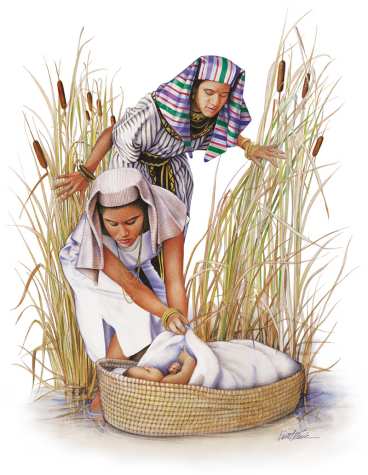
breastfeed breastfeeding in jewish culture israel pictureThe Torah doesn’t talk much about breastfeeding, as it was taken for granted in ancient times. Moses’ mother doesn’t put bottles into the ark of bulrushes she sends down the Nile to save him from Pharaoh’s evil decree (Exodus 2).

According to the midrashic commentary Moses refused to nurse from an Egyptian nursemaid, so the biblical text has Pharaoh’s daughter sending for a Jewish one. The nursemaid turns out to be none other than Yocheved, Moses’ own mother.

If the Torah and Midrash saw breastfeeding as merely a feeding method, Moses would have nursed from an Egyptian woman and the story would have ended. The rabbis recognized that without the early influence of Yocheved, Moses could not grow up to become the modest, compassionate, and dedicated leader who rescued the Jews from slavery and turned them into a nation that rejected Egyptian immorality.

An emotional bond

Mothers (and all who care for the baby), do not only tend to a baby’s physical needs. By comforting her baby in distress, a mother models empathy. A baby learns language, tone, and communication while hearing her mother’s voice. Resting in his mother’s arms, a baby gauges her emotional state as she responds to what is going on around her. As babies grow, the observe their mothers at their daily tasks and begin to imitate them. Breastfed babies must stay near their mothers, and this closeness ensures that they receive regular, if not constant, contact and interaction that all humans crave.

Green Action Events: The SAHA Project Takes Off

0

Green Action SAHA Israel PalestinianGreen Action‘s SAHA project brings together uniquely environmental and political issues promoting community trade between Palestinians, Israeli Arabs and Israeli Jews.

The project initially began with a group of Palestinian farmers whose livelihood was threatened due to the occupation and separation wall. These farmers came together and set up the Zaytun Cooperative and work with Green Action to produce fair trade, organic Extra Virgin Olive Oil.

Green Action now works with five different communities across Israel and Palestine: The Zaytun Farmers Cooperative; The Jerusalem Community Kitchen; the For You Project; The Women’s Association of Wadi Fukin and The Bridge Over the Wadi School. Their product range now includes: Syrian Pressed Olives, Sage, Organic jam and Liqueur.

The newest community is the Bridge Over the Wadi School.

Stolen Harvest by Vandana Shiva

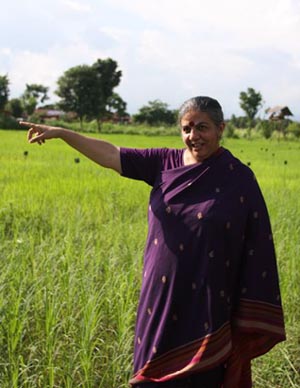
Vandana Shiva Stolen Harvest photoVandana Shiva isn’t a writer to pull punches. By the twelfth page of ‘Stolen Harvest’ (2000), she announces a damning verdict on Western food production:

“Industrial agriculture has not produced more food. It has destroyed diverse sources of food, and it has stolen food from other species to bring larger quantities of specific commodities to the market using huge quantities of fossil fuels and water and toxic chemicals in the process.”

In Israel, two percent of the population works as farmers, mostly in hi-tech, irrigated, chemically treated and globally traded agriculture, worlds away from the 70 percent of the world’s people who farm for a living.

Shiva, an Indian physicist turned food activist, is certainly not the first writer to tackle the ethics of the sprawling, mechanized, global food economy. However, as a voice from the Third World, she paints an unusually intimate portrait of the traditional wisdom and customs that stand to be swept away by the forces of genetic engineering, trawler fishing and commoditization.

‘Stolen Harvest‘ focuses on three major changes in food production: The Green Revolution, which used industrial methods to get more human food out of crops on land; the Blue Revolution, which used aquaculture to raise fish catches fourfold in the last 40 years, and the White Revolution, the feedlot approach to dairy and meat farming which has raised milk and meat yields. To Shiva, each “revolution” has come at tremendous cost.

One result of the Green Revolution in India has been replacing locally grown mustard oil with imported soybean oil, or with soybean oil produced domestically but from seeds sold by agricultural giant Monsanto. Shiva explains what used to be the norm of mustard oil production before “Soy Imperialism:”

“Indigenous oilseeds, being high in oil content, are easy to process at small-scale, decentralized levels with eco-friendly and health-friendly technologies … The bulk of oilseed processing is done by over 1 million ghanis (expellers) and 20,000 small and tiny crushers that account for 68 percent of edible oils processed … Women in the bastis, or slums, usually buy small quantities of mustard oil extracted on their local ghani in front of their eyes…Yet these community-based systems of food and health safety were quickly dismantled in the name of food safety in 1998, when local processing of mustard oil was banned and free imports of soybean oil were installed in response to a mysterious contamination of Delhi’s edible-oil supply.”

She further mentions that Indian children don’t eat soy oil, and that the soybean, which has a lower oil content than mustard seed, is poorly suited to the national needs.

The next area Shiva turns to is the ocean, where on the Indian coast large shrimp trawlers have arrived to supply the appetites of Western elites who fancy prawns. As they scrape the ocean floor with dragnets, the ships annually kill off as many as 150,000 turtles living on the seabed. They also pull up loads of fish not suitable for sale, which are dumped back into the sea either dead or dying as “bycatch” that can be as much as a third of the weight of the total sellable catch.

Where shrimp are not caught wild, they are bred in saline aquaculture pools that leach into the underground aquifers locals rely on for drinking water, and the coastal farms destroy acres and acres of mangrove trees that usually safeguard the seaside villages from heavy winds.

“The environmental destruction caused by intensive shrimp farming is one of the major factors for its spread in Third World countries, even though the main consumers of shrimp live in affluent countries. In country after country where commercial shrimp fishing has been tried, it has proven unsustainable. For this reason, this industry is known as a ‘rape and run’ industry.”

Shiva is not against all aquaculture or fishing. However, she points out the vast difference between the modern, industrial approach and the traditional methods of fish farming, in which fishermen used hand-crafted nets and woven mats, or combined a rice paddy with prawn cultivation. Whereas the traditional methods have lasted for 500 years, industrial fish catching for export has made life unlivable for many of India’s coastal villages.Vandana Shiva Stolen Harvest

Finally, Shiva looks at the livestock industry in India, which has moved toward industrially raised and slaughtered cows for export. She first grounds the readers in the significance of the traditional Indian cow, which eats crop waste and pastures on uncultivated land:

“Indigenous cattle do not compete with humans for food; rather, they provide organic fertilizer for fields and thus enhance food productivity. Within the sacredness of the cow lie this ecological rationale and conservation imperative. The cow is a source of cow-dung energy, nutrition, and leather, and its contribution is linked to the work of women in feeding and milking cows, collecting cow dung, and nurturing sick cows to health.”

And yet, seeing the cow as a milk machine or a meat factory apart from the bigger agricultural picture, as Western cattle raisers do, moves away from the Indian culture of the sacred cow, and generates the industrialized “mad cow.” Remarking on the Indian Al-Kabeer slaughterhouse, which kills 184,200 buffalo a year, Shiva writes that those same animals could have provided for the fuel needs of 900,000 average Indian families of five.

“Al-Kabeer has provided just 300 jobs,” Shiva writes. “In contrast, small-scale slaughtering for local consumption creates livelihoods and allows all parts of an animal to be used. …In large-scale industrial slaughterhouses, all these byproducts are treated as waste and become a source of pollution.”

Some of Shiva’s revelations were new to me, such as the far-reaching consequences of mass-producing shrimp. I also was shocked at how in world trade negotiations, India’s request to limit environmental damage through new regulation banning export of raw animal hides and fur was struck down as illegally limiting free movement of goods.

Finally, it was particularly sobering to read about the future of Indian wheat processing, which at press time was comprised of 3.5 million family run wheat shops providing 40 million tons of wheat flour a year. According to Shiva, less than 1 percent of flour consumed in India comes in packaged brands, because Indians prefer local and fresh ingredients. However, American-based food giants Cargill and Archer Daniels Midland seek to capitalize the industry through mechanization and branded packaging, which Shiva says will eliminate the livelihoods of at least 100 million Indians in the wheat industry.

A weak point in Shiva’s book is that despite her firm belief in traditional food raising techniques, she does not relate to the high birthrate in many of the poorer countries whose agriculture she seeks to defend. I do not know if a country such as India, or Egypt, or Israel for that matter, could feed its populace which has grown thanks to artificially abundant food, as well as medical advances that have reduced infant mortality and extended life expectancy. Whatever Shiva may make of the world’s outsize human population, she does not deal with the consequent increased demands on the resources of food.

Yet the book is a valuable look at how Western corporate agribusiness, which strips away animal and crop diversity by growing monocultures of soy, wheat, shrimp and cows, is also reducing the human diversity of the world by making traditional food raising costly or impossible. As consumers of rice, non-labeled genetically engineered soybean oil, and frozen shrimp, in Israel we certainly enjoy the fruits of industrialization in India and around the world. Stolen Harvest shows that this has come at great cost.

This book review is by Daniella Cheslow, and is posted by James. 


Nurit – Israel's First "Eco-Friendly" Town

2

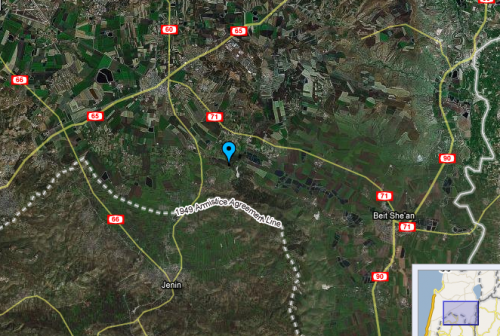
nurit-israel-jenin
(Map of Nurit, from Google Earth)

It’s one thing to adopt environmentally conscious behavior, such as recycling, taking public transportation, and saving water or electricity. But that’s not enough for the future residents of the now developing community of Nurit. They plan to live green.

That’s because the Mt. Gilboa town of Nurit is set to be the first planned, eco-friendly community in Israel, with infrastructure and services designed not just to encourage, but to actually enforce environmentally responsible behavior. If you’re planning on living in Nurit, says Danny Atar, chairman of the Gilboa Regional Council, you’re by definition willing to go out of your way to save water, avoid excess waste, and in general reduce your carbon footprint. “Otherwise, Nurit is not for you,” he says.

The idea for Nurit stemmed from discussions conducted by Gilboa Regional Council officials nearly a decade ago, as they were seeking to build tourism in the area, as well as comply with new government requirements to introduce environmentally responsible educational programs and activities.

“We are also considering putting up a new town to attract more residents here from the center of the country, and the whole project just sort of made sense,” Atar tells ISRAEL21c. “Thus was Nurit born.”

First homes ready in a year

And, after intense study and consultations with environmental experts around the world, the town is ready for prime time; work has begun on infrastructure, and the first 100 homes will be ready next year. By 2012, there will be 400 families living in Nurit, Atar says.

Located on Mt. Gilboa itself, Nurit will take advantage of the mountain’s wind and sun to generate power, and will install dozens of wind turbines and photovoltaic (PV) solar panels, enough to provide electricity for all the public buildings in Nurit – and then some.

“We recently got approved for a program by the Israel Electric Company, where residents and public buildings will be able to mount solar PV units on their roofs and sell the electricity to the IEC,” says Atar.

“Together with turbines to generate electricity from wind, we expect that the electricity we generate will be enough to light most of the schools, offices, streetlights, and park lights in Nurit – as well as save homeowners money on their energy bill, since they can get credits for the power their roof PV systems generate that they don’t use, selling it back to the IEC.” Atar says.

The regional council has a program that provides loans for residents to buy and install the PV panel setup, or residents can design the systems into their construction plans, he adds.

Trees as cooling canopy

Residents will also be asked to grow tall, leafy trees around their homes, creating a natural “cooling canopy” that will help cut down on the need for artificial cooling and heating systems, “saving electricity and reducing pollutants in the atmosphere,” Atar says. And, residents will be asked to build their homes using effective insulation systems, to further reduce the need for air conditioners or heaters. “We hope to be able to limit the use of artificial heating and cooling solutions to the hottest or coldest days of the year,” Atar says.

Nurit residents will be required to save water – naturally. “In theory, Israel gets more than enough rainfall, but much of the rain is lost to evaporation or runs off to the sea,” Atar says. “We are requiring all residents to build rain collection systems and mini-reservoirs to store rainwater. The water will then be funneled into the town reservoir, allowing us to cut down significantly on our use of water from Mekorot, which is drawn from either the Kinneret or Israel’s underground aquifers.”

With the Kinneret [the Sea of Galilee] at an all time low, and Israel scrambling to build desalination plants to make up for projected water shortages, Nurit’s efforts could serve as a model for other, non eco-friendly communities as well.

Saving rainwater is important, but saving “gray water” is even more important, say many environmentalists – and Nurit is requiring all homeowners to install a gray water collection system, which will store waster water from dishwashing, bathing, and other non-sewage (“black water”) sources.

The storage of gray water entails building a separate drainage system, which funnels the water into a tank – and is then used for a variety of purposes, such as watering gardens, decorative fountains, etc. “No one in Nurit will be permitted to use fresh water to water his or her lawn,” Atar says. “Residents will use gray water to water their lawns and run watering systems for plants or orchards.”

Unfortunately, Nurit won’t be able to encourage its residents to trade in their cars for commuting by train, because there is no Israel Railways line in the area, at least for now. But the town will have a complete complement of local and inter-city bus service for those who need to travel. Actually, it is expected that most of Nurit’s residents will work in the area, either at home businesses, in tourist-oriented services such as bed and breakfasts or restaurants, or at one of the industrial zones in the area.

“Many of the homes have been zoned for use as businesses as well, so a resident can operate a small business in their backyard,” Atar says. “There is an industrial zone three minutes out of town, mostly with light manufacturing or agriculture industry allied services. And tourism in this region is expected to skyrocket when regular horse racing begins at the Afula Hippodrome, only a few minutes from here,” he adds.

Nurit is open to anyone willing to live by the town’s eco-friendly ethos – and many Israelis are willing, apparently, because there is already a long waiting list for lots.

“We’ve already got about 700 families who have made a deposit to get into the lottery for a chance to buy a plot, with more signing up all the time,” Atar says. “The lots, which will have extensive infrastructure to support the gray water drainage and reservoirs system, cost $120,000 to $150,000 – not particularly high for people coming from the center of the country, where many of the Nurit hopefuls come from, and certainly not expensive, when you consider the cost of the infrastructure.”

Most applicants are from big cities – Tel Aviv, Jerusalem, Haifa and its suburbs. A few people from the kibbutzim in the area have signed up as well, but the majority are new to the lower Galilee. Which already makes Nurit a success, as far as Atar is concerned. “This is a beautiful part of the country to live in, and thanks to Nurit, hundreds of families are going to get the opportunity to find out just how beautiful it really is,” Atar says.

(This article was printed with permission by ISRAEL21c – www.israel21c.org)

BotanoCap Delivers Pest-Fighting Essential Oils To Make "Organic" Standard Practice

1

botanocap logo company essential oil natural pesticide photoThe chemical pesticides used in modern agriculture and in the home are poisoning our planets’ animal life, waterways and ecosystems. They enter our bodies, and can even affect unborn children. Helping humanity break from this nasty cycle of destruction is an Israeli company, BotanoCap. The company envisions a future where organic produce will be the norm, and its toxic-free pesticide delivery solution the standard.

The company, based in Ashkelon, has developed an environmentally friendly pesticide release system in order to take advantage of naturally occurring essential oils such as citronella. Especially selective, essential oils have been used by ancient societies such as the Egyptians, the Chinese and the Incas for therapeutic reasons, but they also used oils as pesticides, says Yigal Gezundhait, the CEO of BotanoCap.